A new Travel North East website has been launched at travelnortheast.uk/ which is a major step forward in integration between Buses, Rail, Ferry, and Metro.
#KeepItCalvert
A great asset of the ‘branding’ of this new website is the use of the ‘Calvert’ style, named after the famous graphic designer Margaret Calvert who designed it in 1980, and is well known for her earlier work alongside Richard ‘Jock’ Kinnear for the design of road signage still in use all over the UK.
An interview with Margaret Calvert by Silvie Fisch (Director Northern Cultural Projects) and Professor Graham Smith (Newcastle University Oral History Unit) back in July 2021 is available below:
Calvert, Fisch, and Smith 2021 interview
Margaret was also present for a short segment on the BBC’s TopGear back in c.2010 where she took a ride with James May in a Vauxhall, please see that segment below too!
The importance of the ‘Calvert’ branding cannot really be understated as part of the North East’s identity for the last 45 years or so, the black and yellow ‘M’ cube being as recognisable to Geordies as the Tyne Bridges or Newcastle Brown Ale.
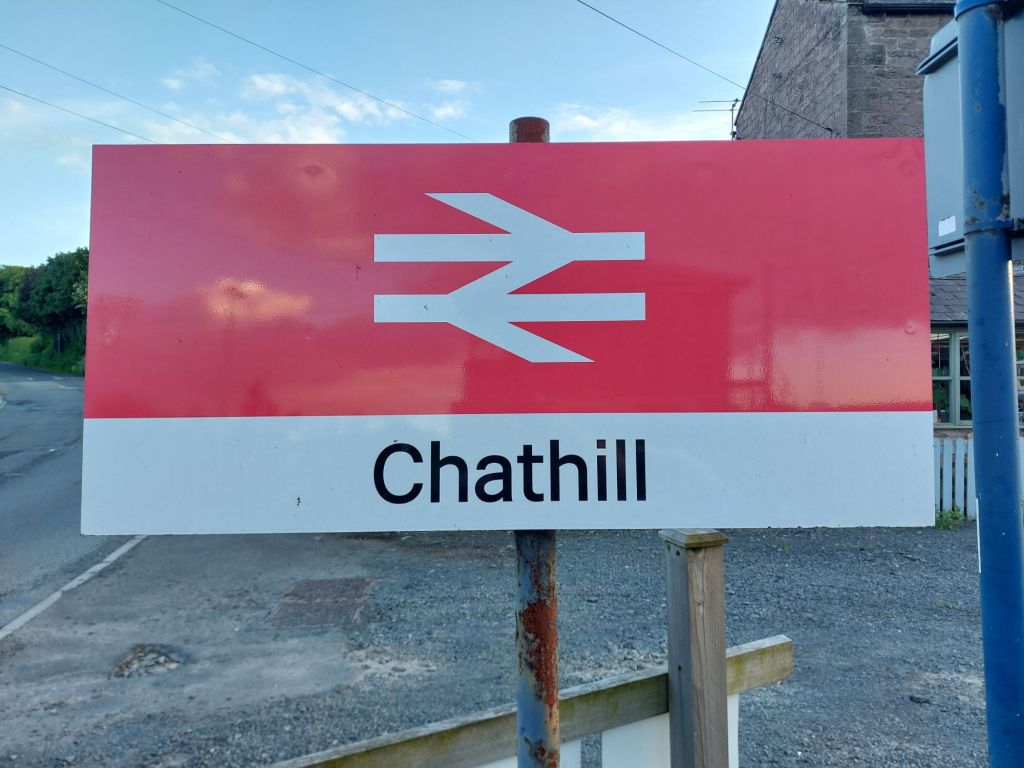
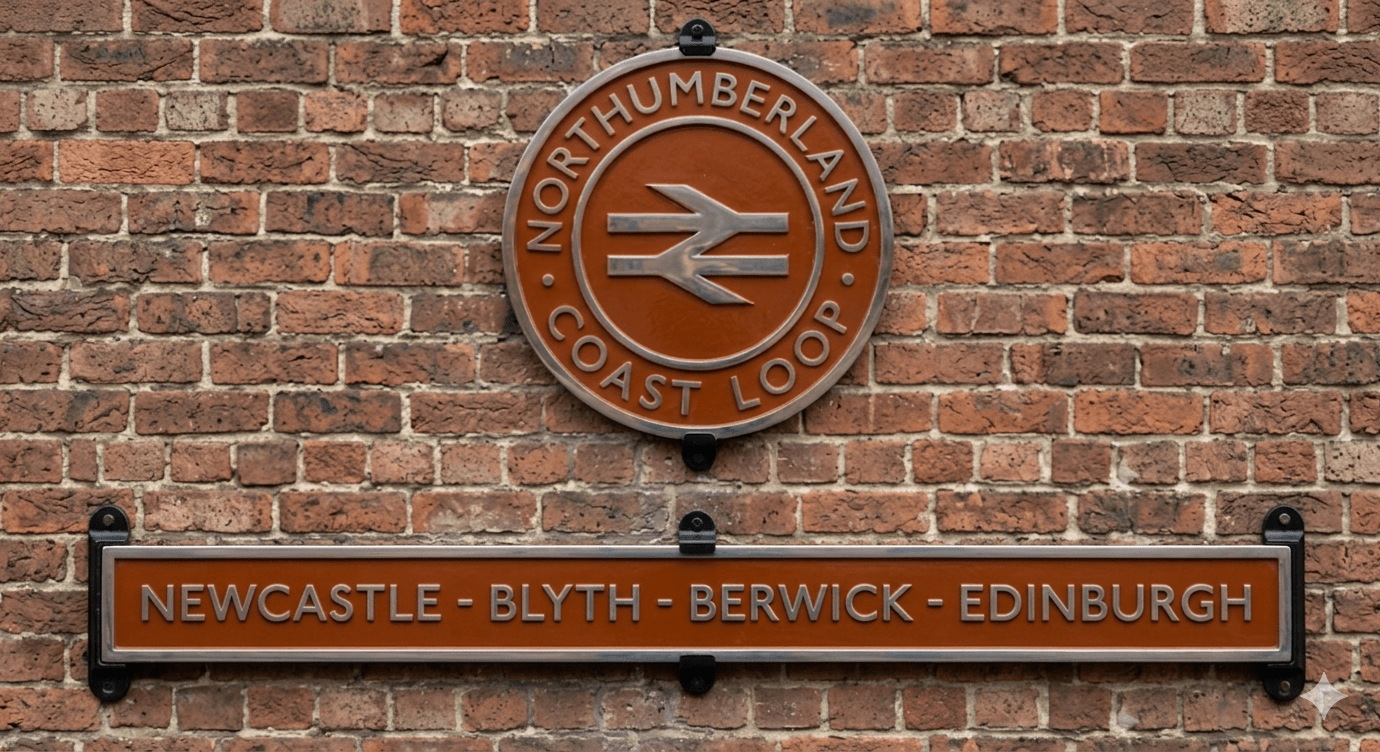
Hopefully as we roll onto a more and more integrated system, we’ll see more of the Buses and Rail logo rolled out to stations as far apart at Berwick Upon Tweed, Haltwhistle, and down into the depths of Durham such as Darlington, maybe even more of the Ferry one too if Blyth was ever to regain a passenger ferry across the Port of Blyth, to connect to a new railway station on the Cambois side of the water perhaps?
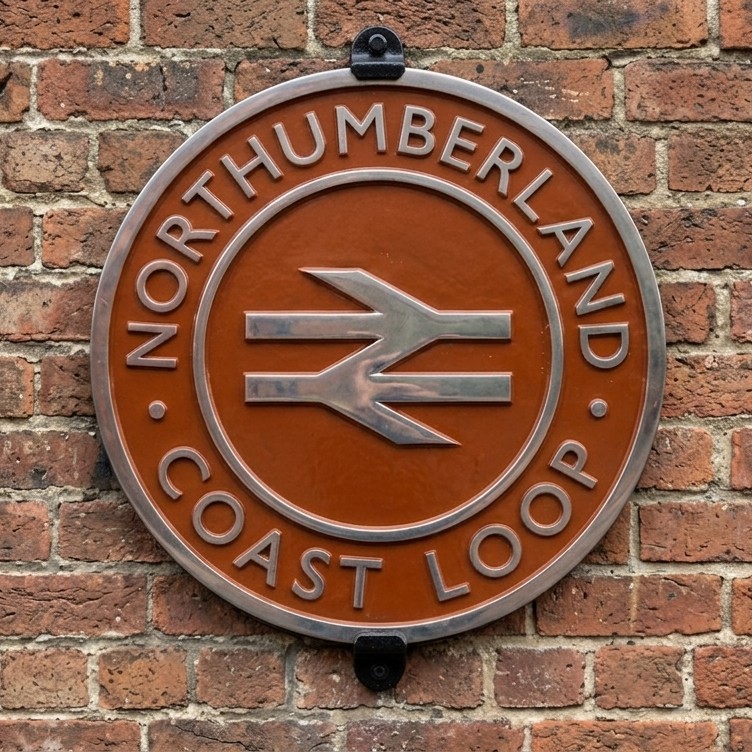
Let’s hope that over the coming months the purple rail logo will begin to roll out at railway stations, accompanied by the red buses logo for properly integrated public transport.
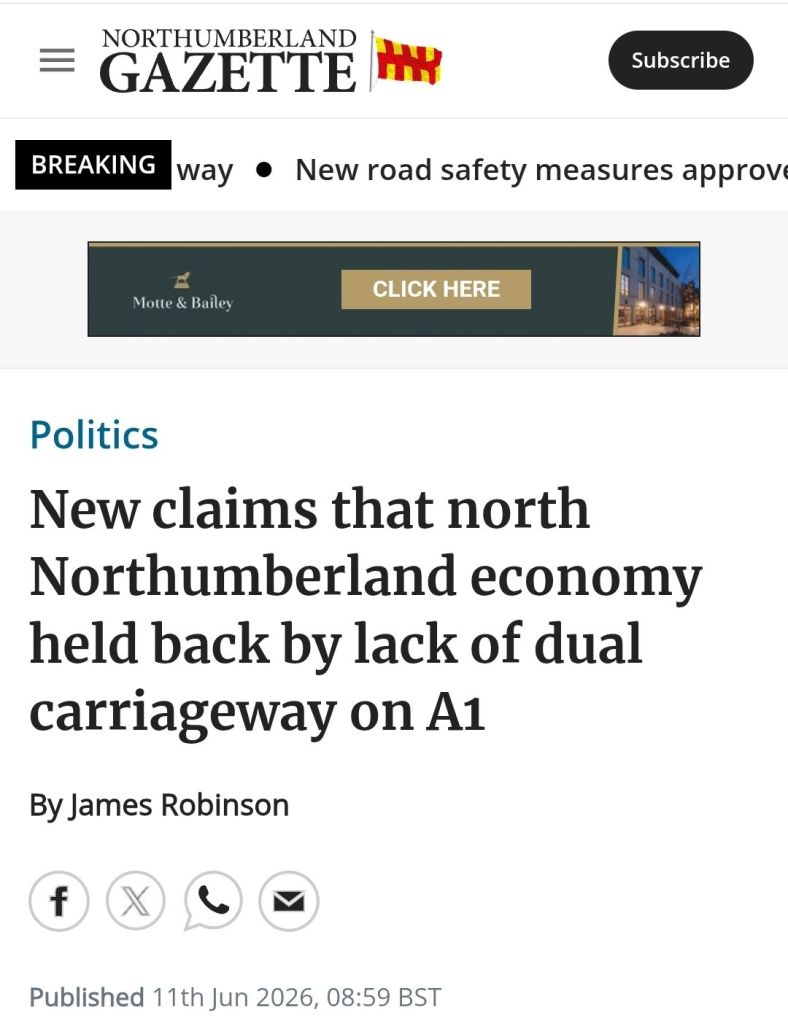
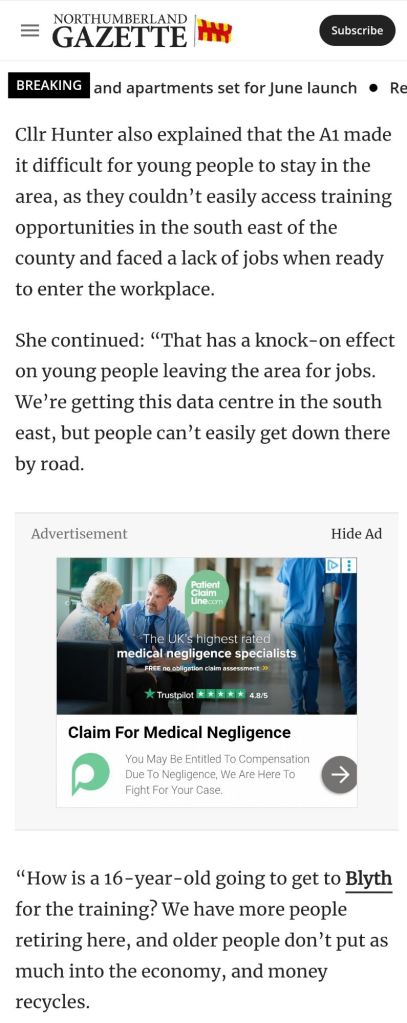
A recent article by Cllr Hunter of Berwick, who also owns a road haulage business called DHH Contracts, has joined many of the voices calling for dualling the A1.
In the article, she says that the lack of dual carriageway leads to vehicles being delayed, increasing costs such as driver hours and fuel, especially if caught in a traffic jam.
It is perfectly understandable the reasons why a road haulage business would seek to make road haulage as easy as possible by wider roads, and reduced risk of congestion (though massive traffic jams still happen even on multi-lane motorways such as the M62 which I drove on recently), but there are other contradictions in the article that seem odd to have been stated.
North to SE Northumberland: 16 year olds on the A1, or should they be on the train?
One of these points that seems to contradict itself is young people in and around Berwick travelling to places like Blyth for training, and that ‘…people can’t easily get down there by road.’ and especially “How is a 16-year-old going to get to Blyth for training?”
How many 16 year olds would have a valid licence to even drive a moped on or around their birthday? Will they have enough experience to safely handle such a long route, which can be challenging with traffic even in good conditions, let alone in poor, sometimes appalling weather.
16, 17, 18 year olds driving upto or beyond 570 miles a week?!?
Even for an experienced driver, a daily drive of an hour or more from Berwick to Blyth, a distance of 93km/57 miles is a significant round trip each day; expecting that from an young, less experienced driver is frankly absurd.
This is especially considering that for a driver of 16 years of age, they can can only legally drive a 50cc moped, quadricycles like the Citroën Ami, or agricultural tractors, with the moped being a very unsafe option anyway let alone over 100 miles a day on roads like the A1, especially in harsh wintery conditions such as fog, ice, snow, high winds, or heavy rain.
Even at 17, 18, or into their early 20’s, young drivers face prohibitively high costs of learning to drive, then purchasing, insuring, and running a vehicle again on huge weekly milage of over 570 miles a week (assuming 57 mile trip twice a day (Berwick to Blyth and back, five days per week).
Do that 39 weeks per year (term-time for schools/colleges), that would be at least 22,230 miles/year; how many insurance companies would even entertain that kind of milage from a young driver?
Rail rather than road
This is why I am actively lobbying for the Northumberland Coast Loop rail service to be implemented; expecting a young person of 16-20 to drive hundreds of miles per week, and the costs that involves is surely an unrealistic expectation, but catching a train is far more reasonable.
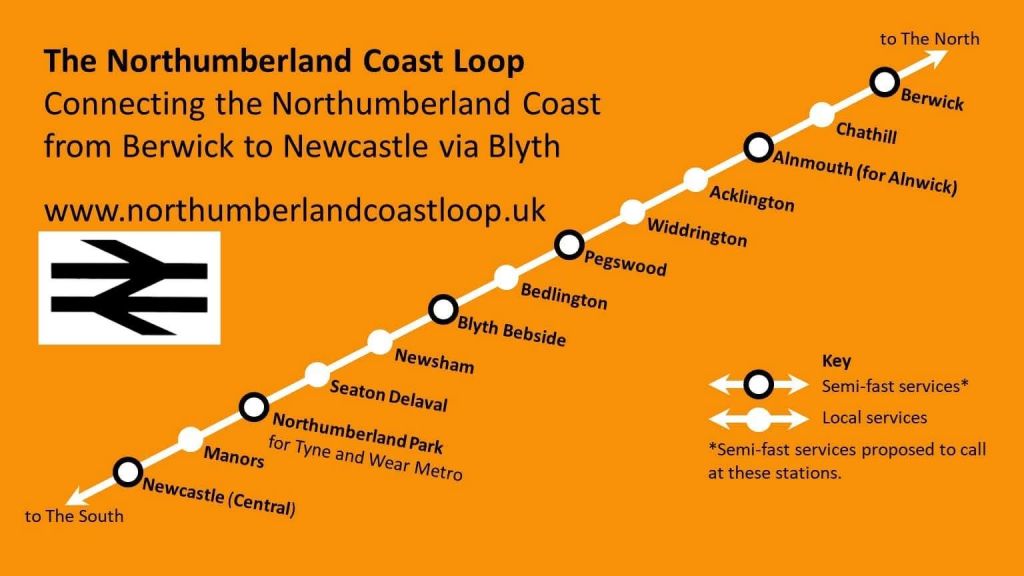
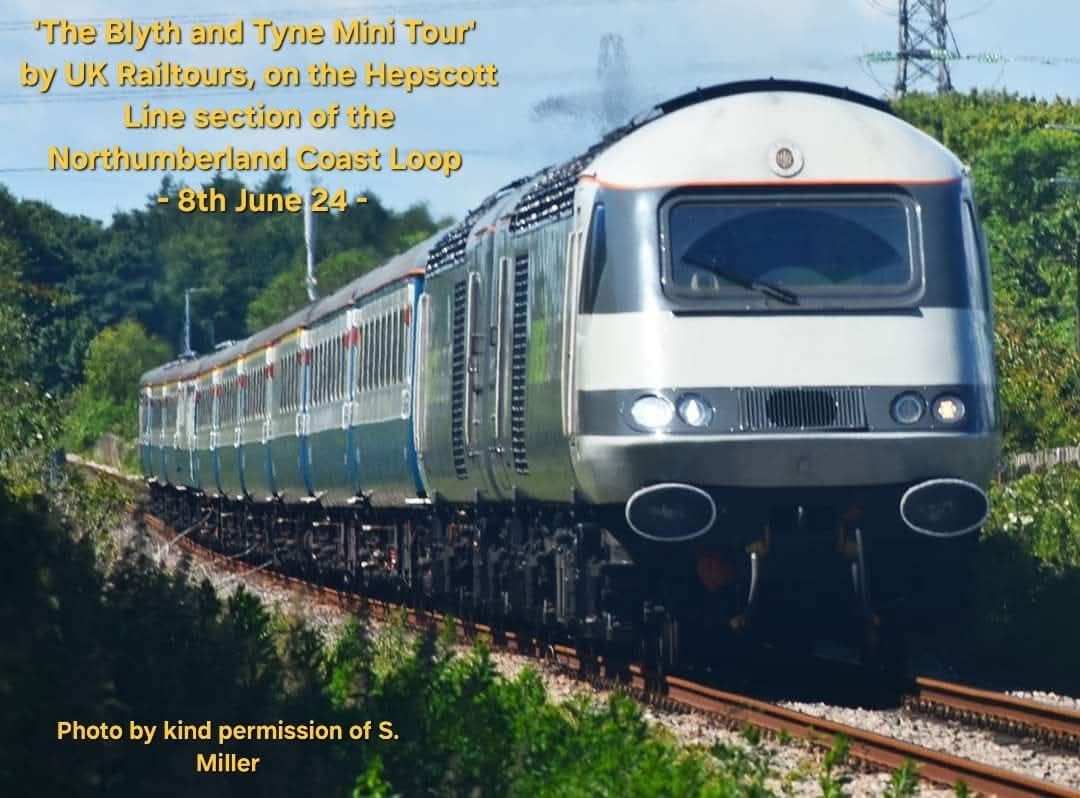
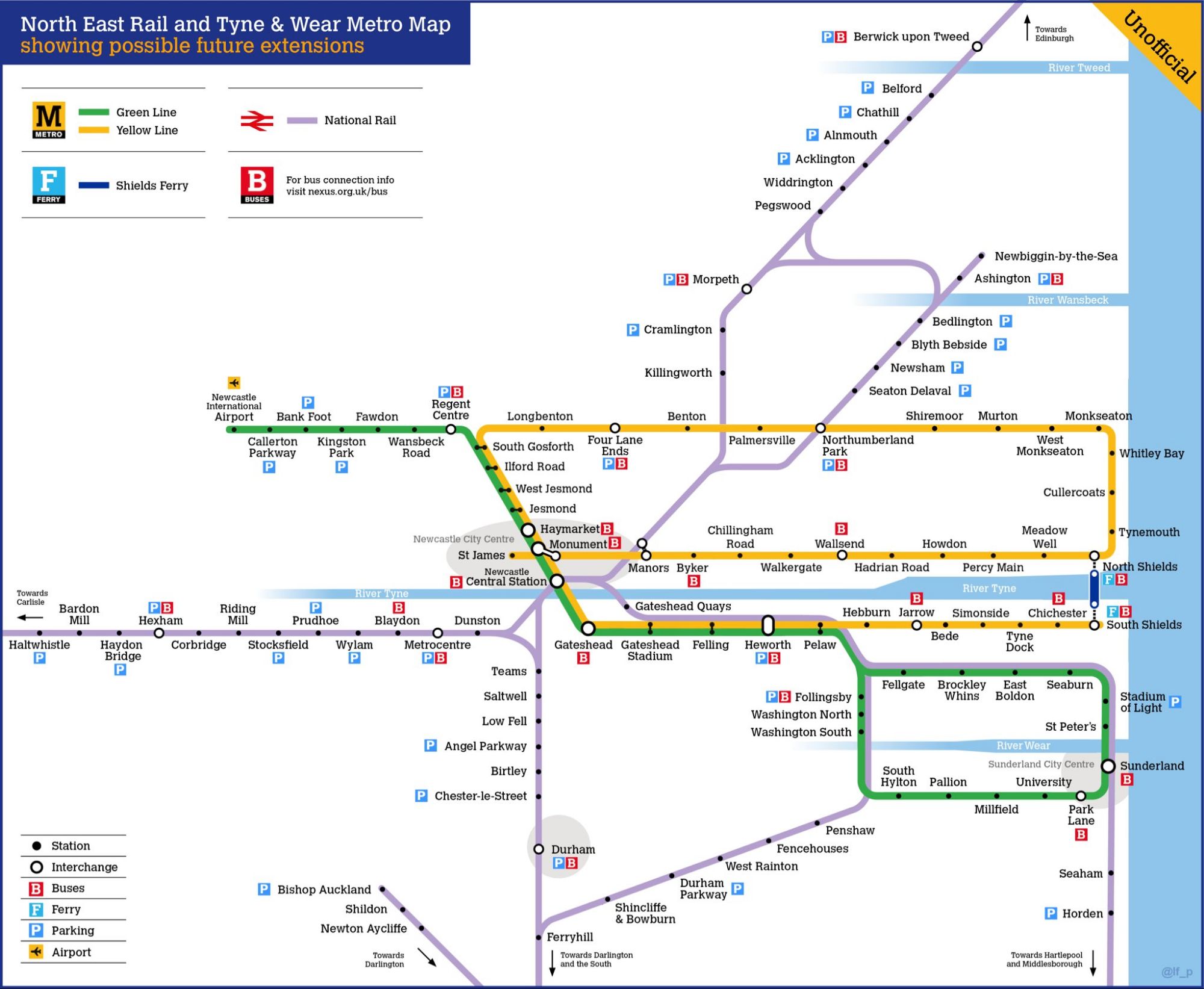
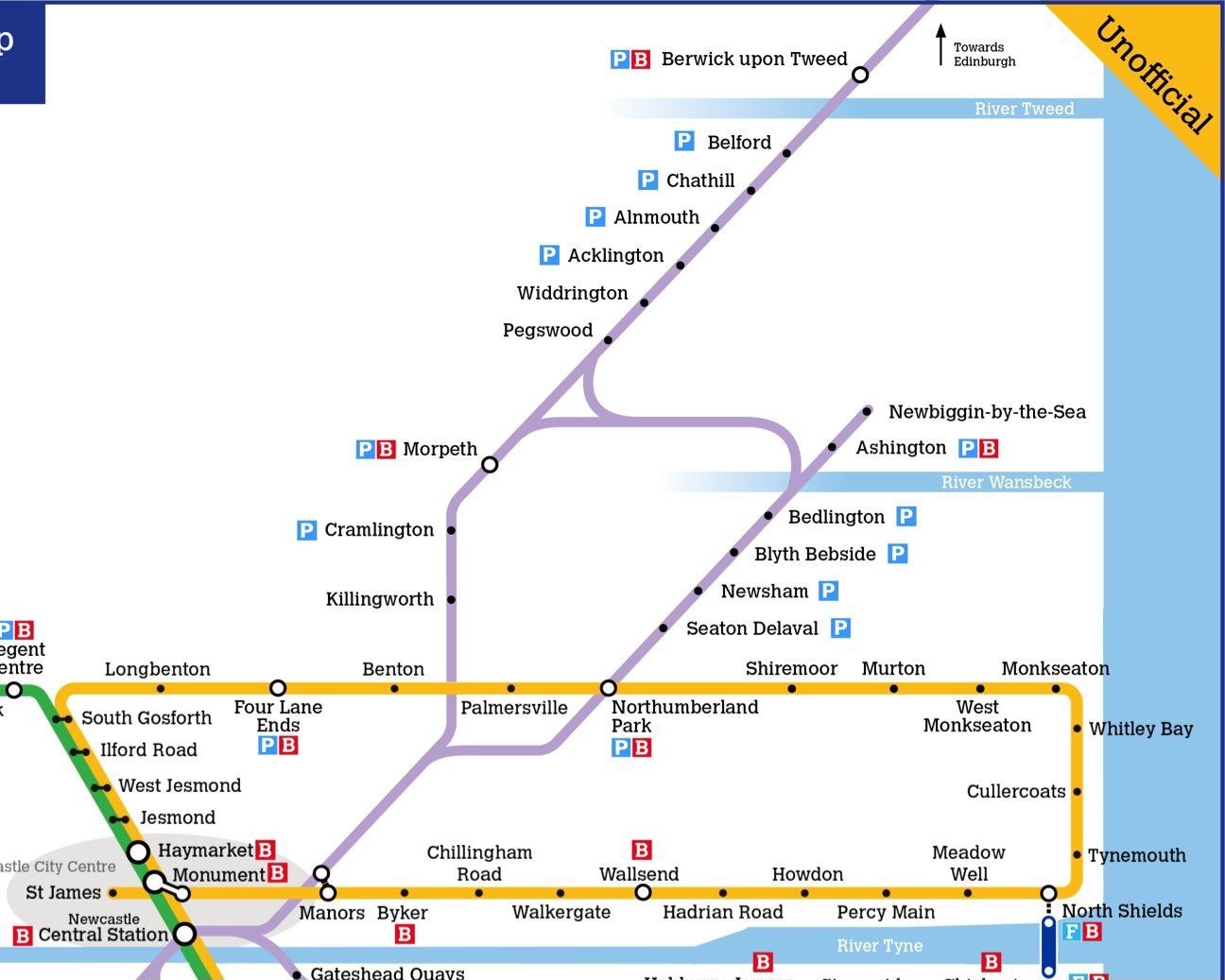
As can be seen in the images below, the route map shows the potential of a direct rail link from Berwick to Blyth via Pegswood and Bedlington, and just over two years ago, a railtour using the line through Hepscott to reach Bedlington.
Even with the largest of motorways, young people couldn’t easily get themselves from Berwick to SE Northumberland and back again using it due to the barriers of a licence and high costs of motoring at a young age.
In contrast, a rail fare is far cheaper (and could be made very affordable for a student/young person), is much safer as all trains are driven by highly trained and competent staff, and is accessible to everyone, regardless of disabilities such as visual impairment, physical disabilities, or neurodiversities.
Road isn’t really a viable option for young people, but rail really could be.
Following a spate of recent serious incidents on the A1 in Northumberland, a new safety campaign called ‘NASA’ (Northumberland A1 Safety Alliance) has formed.
While making the A1 safer is undoubtedly an admirable and much needed aim for everyone, is using the parallel ECML being overlooked as an option to reduce traffic on the A1 and transport people and goods in much greater safety?
NASA: Northumberland A1 Safety Alliance
NASA logoHeader image
Taken from their Facebook page, the campaign intends compile a record of incidents and the promises made for improvements.
NORTHUMBERLAND A1 SAFETY ALLIANCE (NASA)
It shouldn’t be rocket science.
Over the coming months, NASA will compile and publish the definitive 10-year safety record of the A1 through Northumberland.
We will document:
Fatal collisions
Serious injuries
Collision locations
Road conditions
Safety concerns raised by communities
Promises made by authorities
Progress made – or not made
This is not a political campaign.
This is not a blame campaign.
This is an evidence project.
Too many people have lost their lives. Too many families have been affected. Too many questions remain unanswered.
If you have information, reports, photographs, local knowledge, historical records, media coverage or personal experience relevant to A1 safety, we would like to hear from you.
Our aim is simple:
To produce the most comprehensive public record ever assembled on safety along the A1 through Northumberland.
NASA
A1Safety
Northumberland
The above is certainly an admirable project; get a data driven analysis of where particular ‘hot spots’ are on the A1 and what type of incidents occur at those locations, and what might be done to rectify these junctions or sections of road to make them safer.
As a regular driver of the road personally, there are many places from my own experience that are dangerous places where extra vigilance is required, for example the Swarland & Guyzance junction, where when passing a couple of days ago, a van was sitting in the central reservation, but timber tied to the roof rack was overhanging the southbound fast lane substantially.
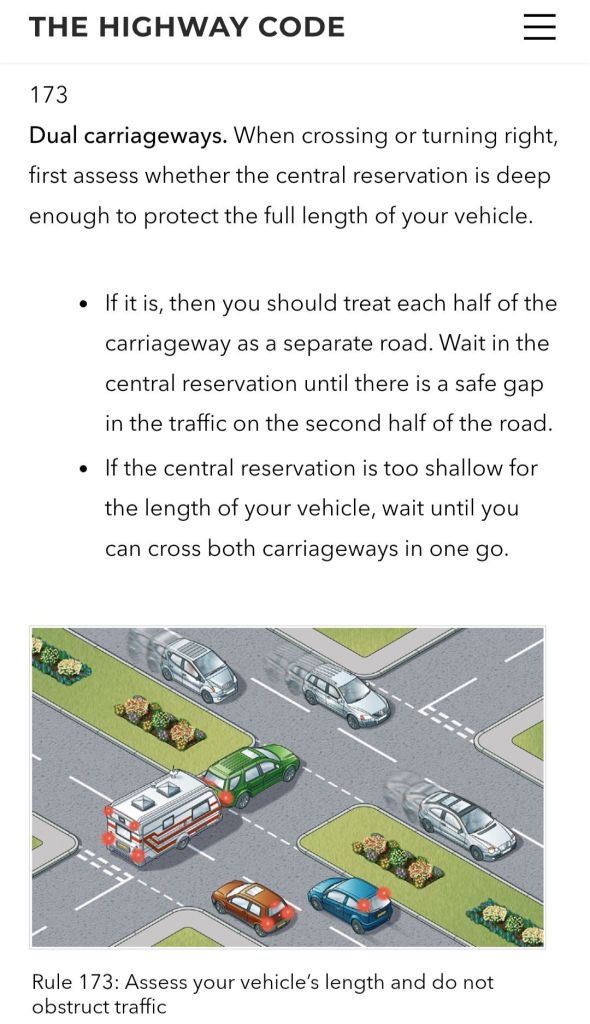
In many cases, it is likely that substantially rebuilding many of the outdated junction designs will be needed, with flat junctions on dual carriageways such as that illustrated in Rule 173 of the Highway Code being of a very outdated design and unfit for most dual carriageways in the 21st Century.
With every reported incident, the comments pour onto social media about what should be done; ‘Dual the A1 to Scotland’, ‘the slip roads are not long enough where the A1068 joins the A1 at Alnwick’, and so on, but these are not without major challenges.
Dualling has major drawbacks
Dualling just 13 miles of the A1 between Morpeth and Ellingham was forecast to cost £500m back in 2024 when the scheme was cancelled by the current Government, but had been ‘promised’ repeatedly for over a decade by that point with little real work done on the ground.
Dualling more sections of the A1 has several major drawbacks which is worth setting out as part of a balanced and holistic ‘bigger picture’ of transport to, from, within, and through Northumberland as a whole.
Induced demand is a well recognised phenomenon globally, as well as here in the UK, that when the capacity of a transport system increases, the use of it also usually increases as the ‘cost’ in journey time is temporarily reduced. A great local example is the Tyne Tunnel, where the original 1968 motor vehicle tunnel, with one lane in each direction, was long seen as a bottleneck on the A1/A19.
This prompted the building of a second Tyne Tunnel, which opened in 2011, the old one closing for several months to be refurbished, both of them opening in late 2011 as twin lane, single direction tunnels in ordinary operation, far safer than a bi-directional tunnel, and part of a response to the 1999 Mont Blanc tunnel fire in which 39 people tragically died, meaning tunnels around the world were upgraded with better safety systems.
Tom Scott visiting the Tyne Tunnels
However, one consequence of the second Tyne Tunnel being opened, and making the route four lanes throughout was the effect of induced demand; congestion dropped temporarily, so more people were encouraged to drive, meaning traffic volumes actually increased, and put more pressure on the next bottlenecks which were the Silverlink and Testos roundabouts, leading to those junctions needing rebuilt, and now pressure on Moor Farm and Seaton Burn is building.
The issue is that almost ALL roads feel the consequences of this induced demand, the traffic going through the Tyne Tunnels has to originate and terminate elsewhere, meaning other roads also tend to see a rise in traffic volumes, making those roads less safe.
The same can be seen elsewhere with ‘upgrades’ to the A1 around the Western Bypass for example, the road is now three lanes in many sections, but isn’t necessarily ‘free flowing’ as the traffic volume has simply grown to fill up the available capacity, but that traffic starts in places like Morpeth, Bedlington, Ashington, Blyth etc, putting more strain on roads like the A189, A1068, and more.
This additional traffic makes towns gridlocked, makes the roads less safe within towns where the traffic is starting from or coming back to at the end of the day.
Dualling a road like the A1 will lead to similar induced demand; more people will choose to drive because for a short while, the driving time will reduce, but that will put more pressure onto other roads like the A1068 within towns like Alnwick that are already very busy and makes those roads more dangerous as a result.
The Northumberland Line is a great example of induced demand on rail
This effect of induced demand is not only seen on roads, it can also be seen on public transport, and a clear example of this is the HUGE success of the Northumberland Line, which despite its challenges in getting completed has blown all expectations of usage out of the water with it likely to be rapidly approaching two million passengers based on passenger figures so far.
Has modal shift already happened on the A189 Spine Road/Northumberland Line corridor?
It would be interesting to see if the opening of the Northumberland Line, and its huge passenger numbers have actually decreased traffic on roads such as the A189, which seems to have much less congestion on it than prior to the opening of the Northumberland Line; figures to prove, or to disprove this theory are welcome!
Modal shift of car drivers and passengers moving onto trains was a primary goal of the Northumberland Line, so hopefully data is available and being collected to analyse this against earlier data.
Using the ECML and Northumberland Coast Loop to cut A1 traffic in Northumberland?
9Returning to the A1, it would therefore make sense to try and use the East Coast Main Line (ECML) between Newcastle Upon Tyne and Berwick Upon Tweed to reduce congestion and traffic volumes on the A1.
The proposed Northumberland Coast Loop acting to connect SE Northumberland and North Tyneside to North Northumberland and Scotland more directly, cutting journey times and making rail a more viable and attractive option, taking the trains to the people, rather than the Beeching era notion of expecting them to drive to a more distant station, itself creating more traffic issues.
The Northumberland Coast Loop route would eliminate the need to change train at Newcastle Central Station to go northwards, doing so direct on one train, and could cur the rail journey time from Blyth Bebside to Alnmouth, Berwick, Edinburgh and other northerly destinations by around 50 minutes.
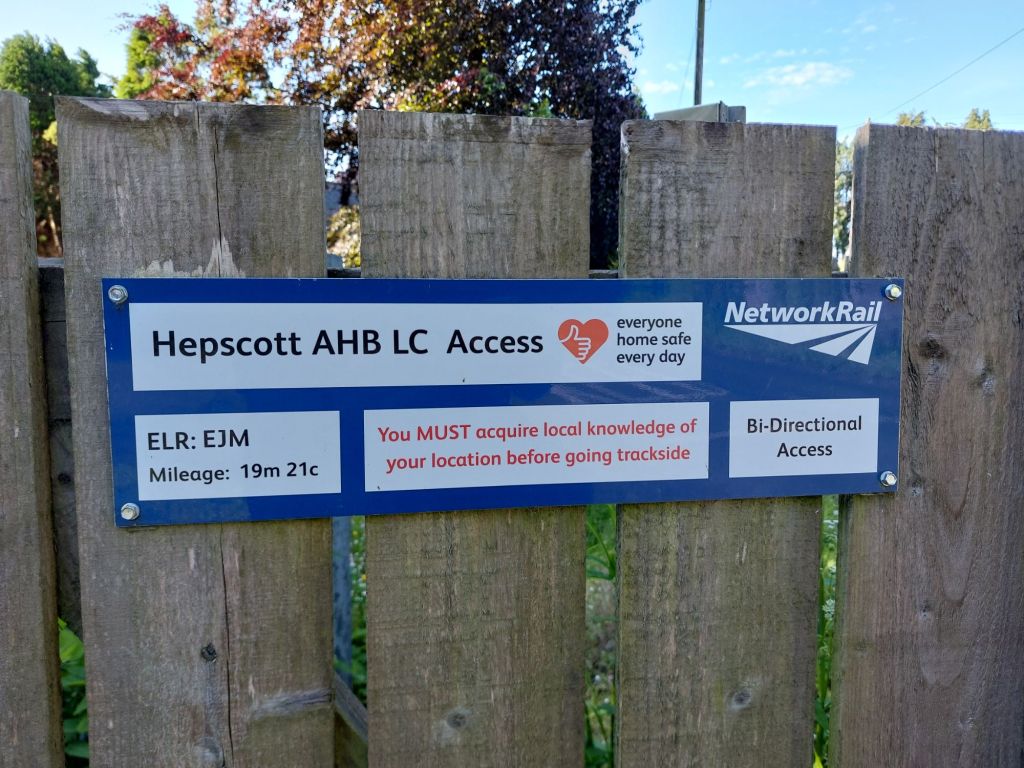
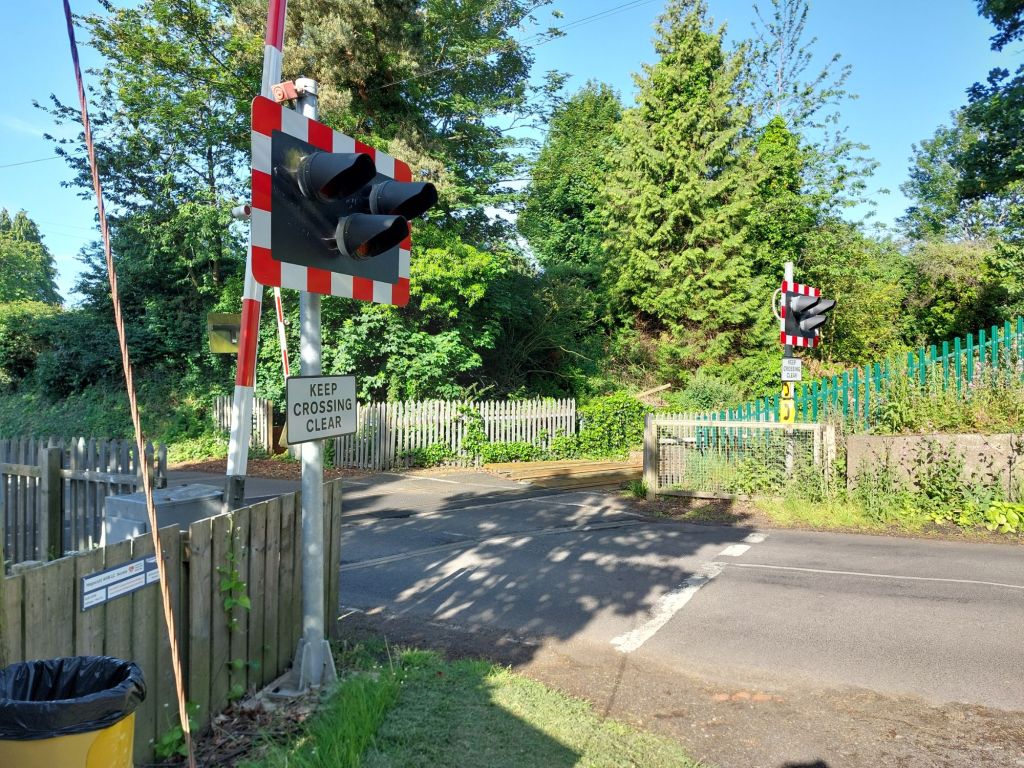
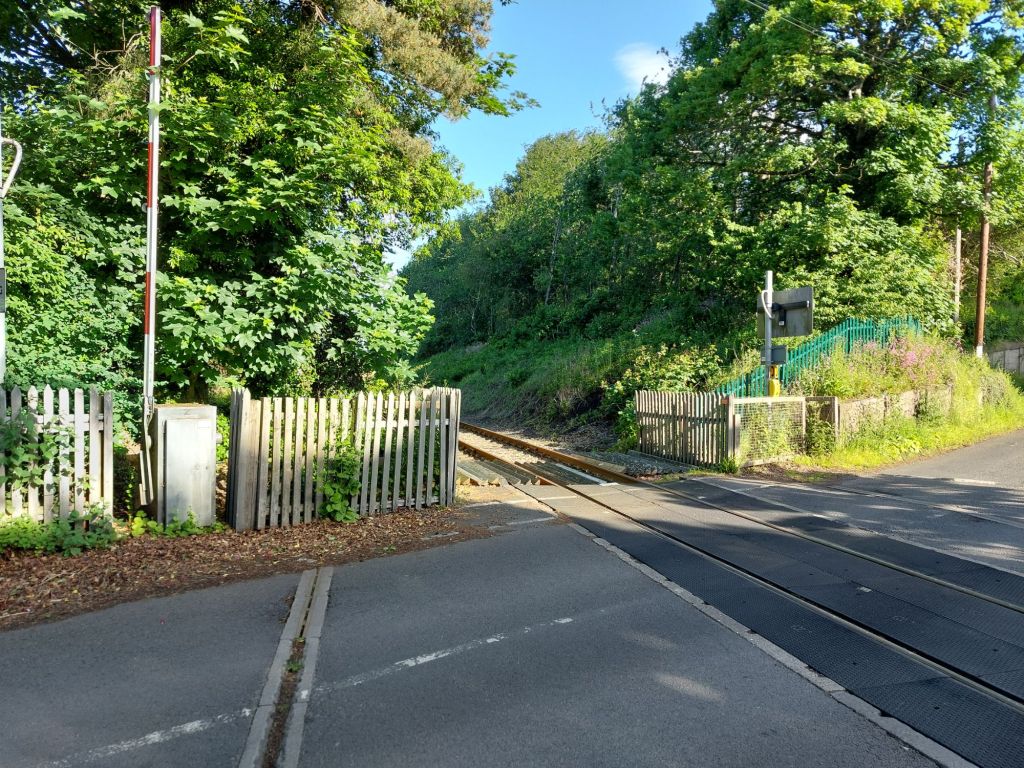
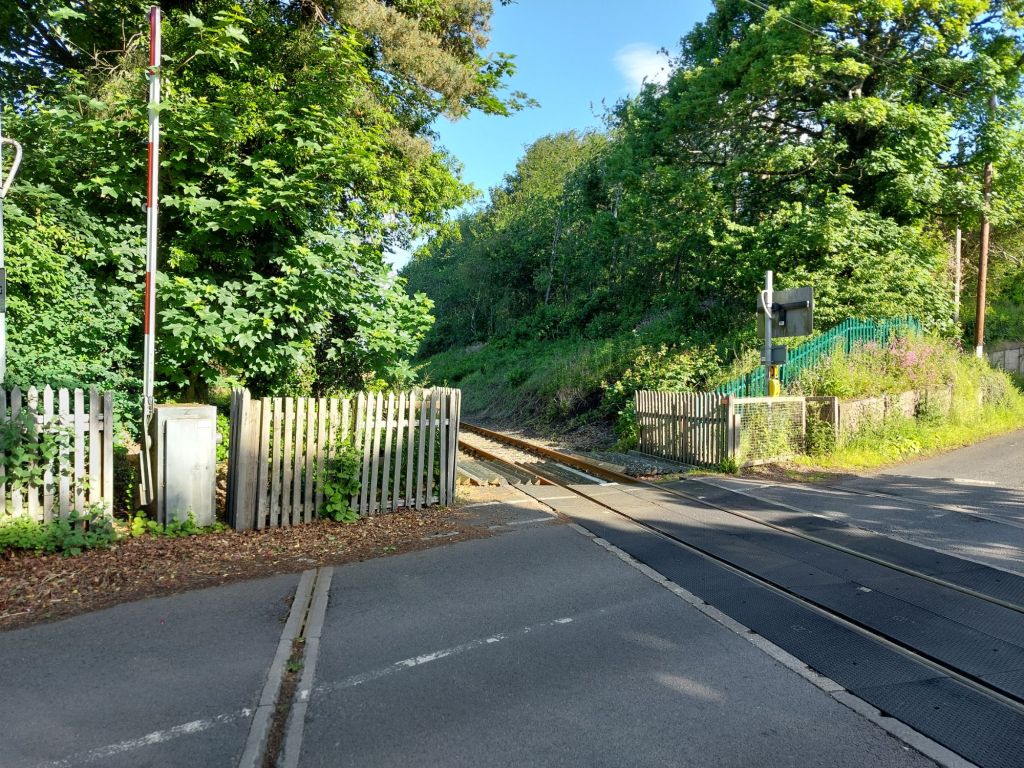
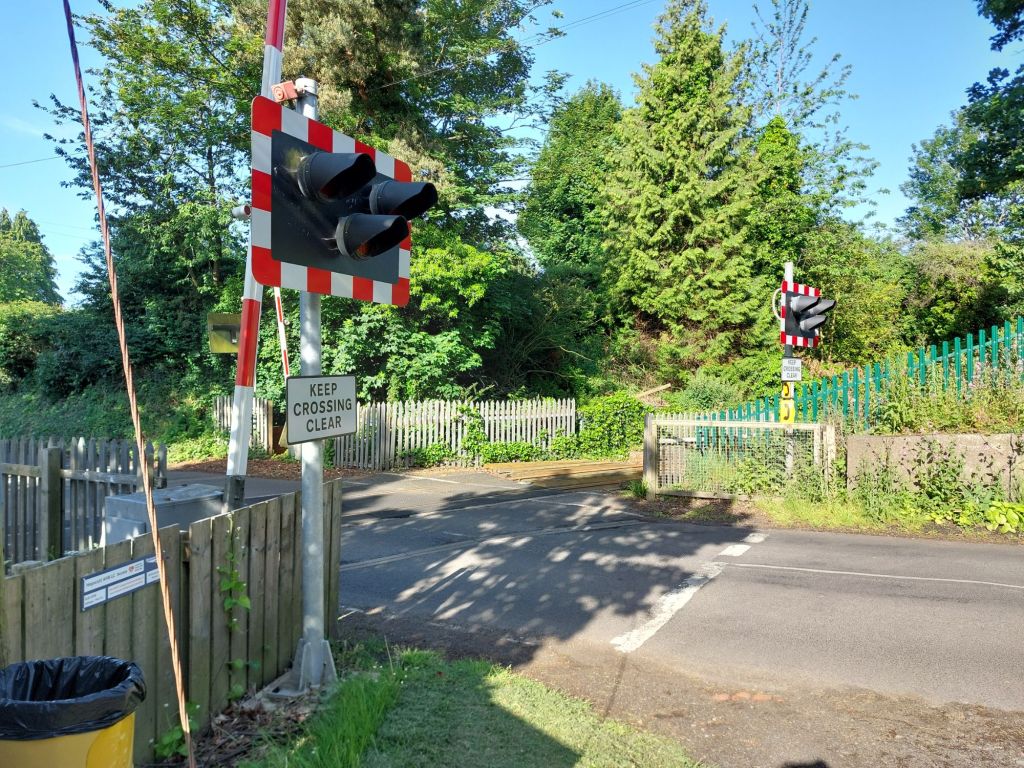
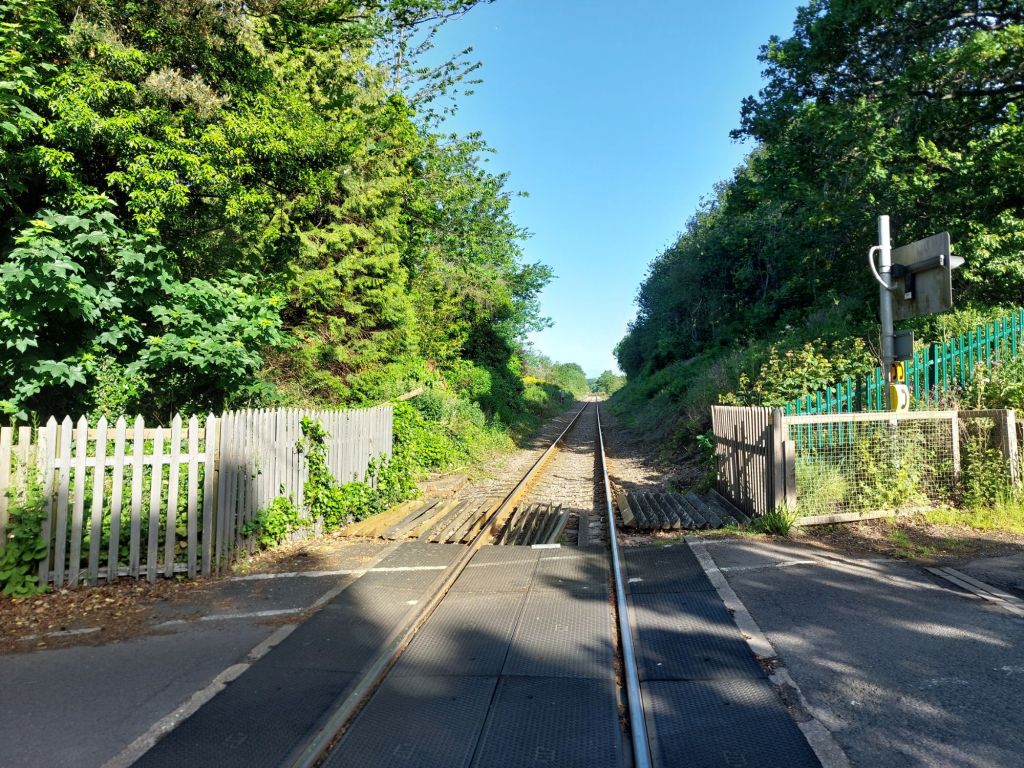
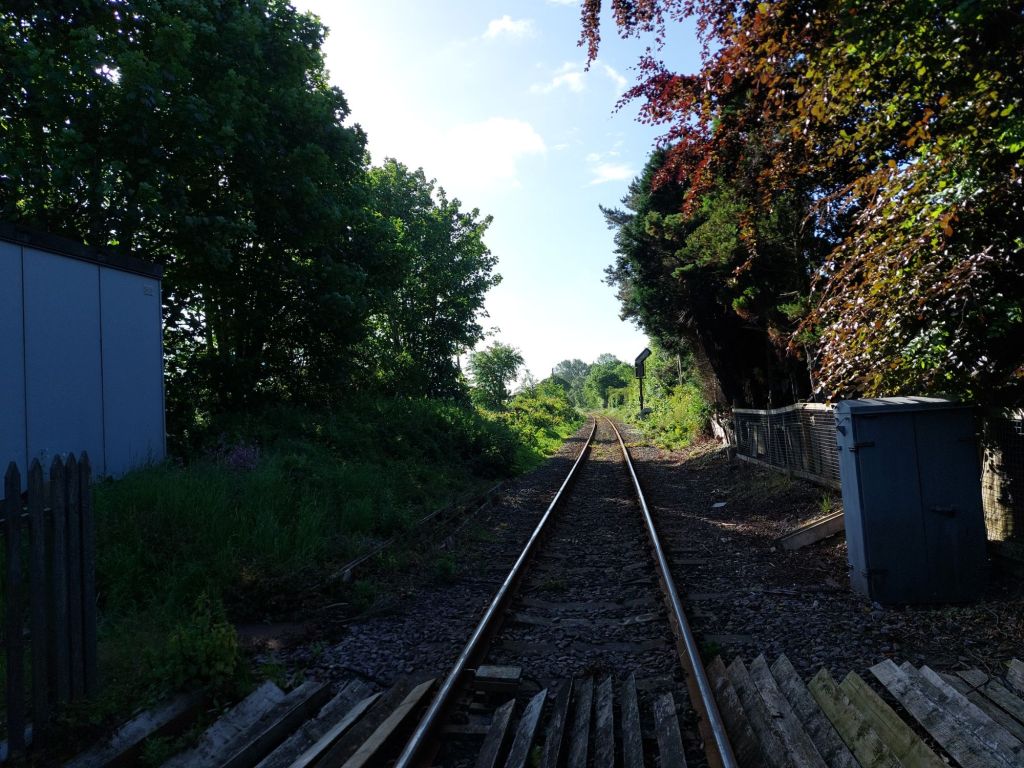
The two recent photos of Hepscott Level Crossing show the currently quiet link between Bedlington and Pegswood that the Northumberland Coast Loop route would use to send trains from Newcastle to Berwick via Blyth and Northumberland Park, a line I’ve personally travelled over on 8th March 2025 aboard ‘The Seven Counties Rambler’ railtour on the final leg of the long milage tour from Newcastle back to the end of the tour at Linlithgow, Scotland.
Network Rail sign at Hepscott Level CrossingLevel Crossing at Hepscott, part of the link between Bedlington and the ECMLAnother view of Hepscott Level Crossing
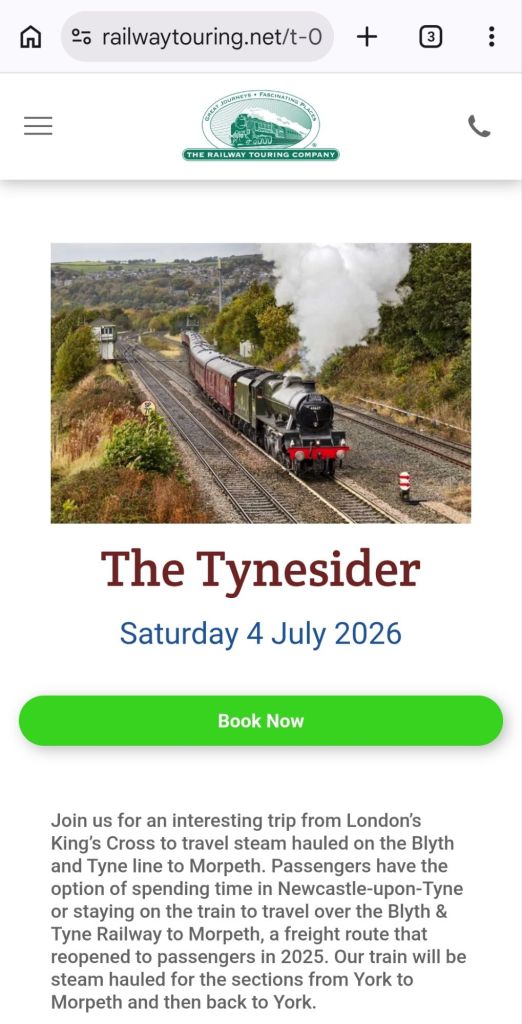
This line is clearly kept to a pretty good standard as an operating railway carrying infrequent but regular railfreight, and has some use by passenger services too, such as the upcoming ‘The Tynesider‘ railtour which will pass over this crossing headed to Morpeth on 4th July 2026.
The Butterwell Line: Future potential but derelict for decades.
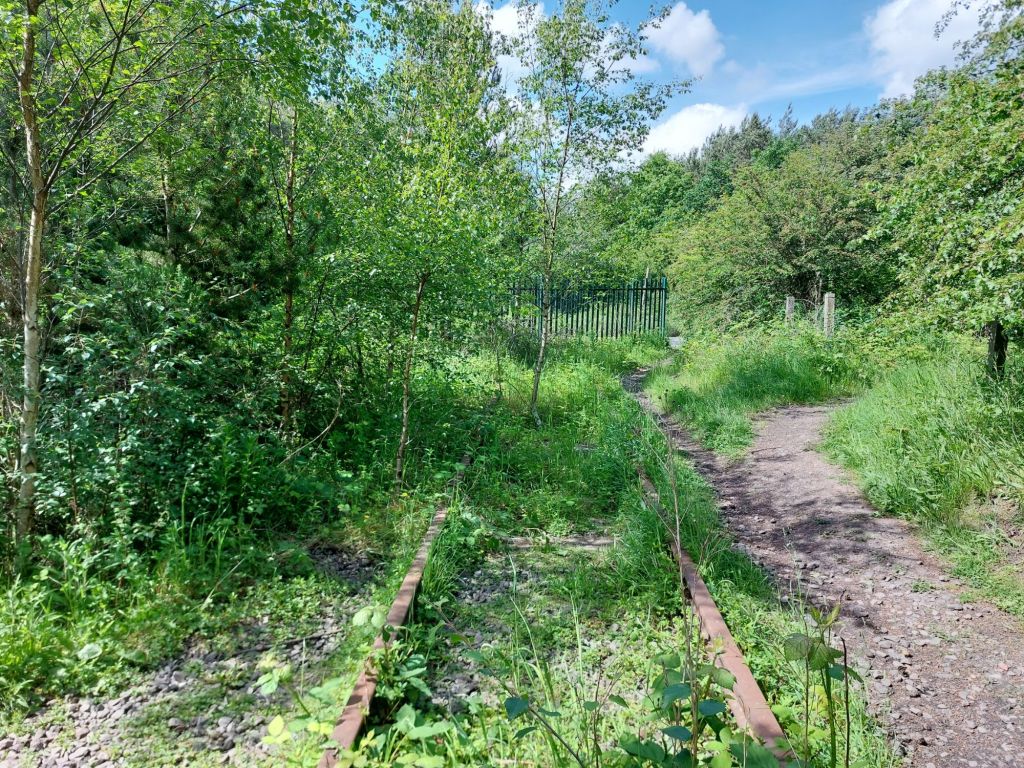
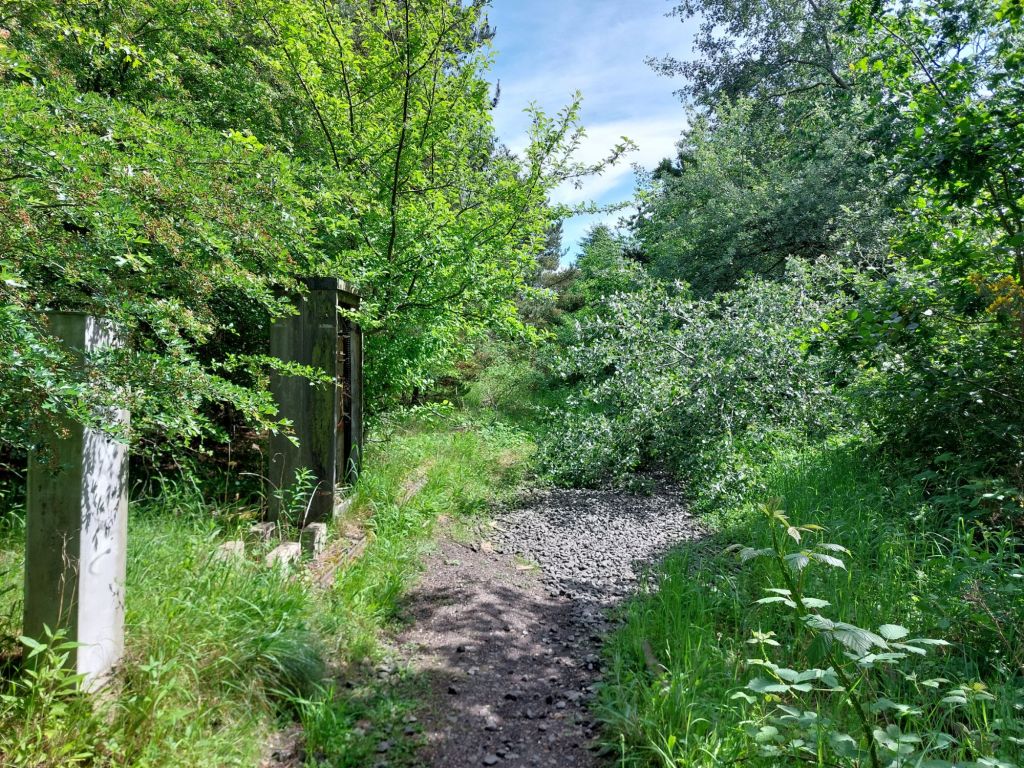
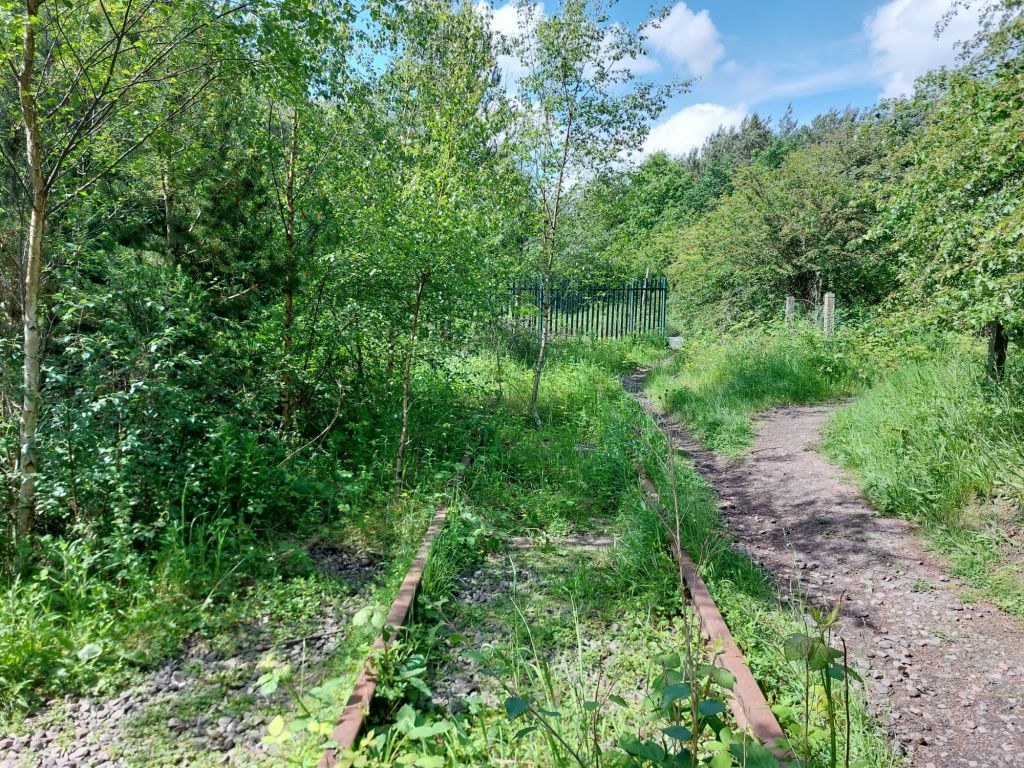
In contrast is the similar Northumberland Line to the north link via the Butterwell Line as proposed by SENRUG, but this route is clearly one that’ll need substantial work to revive long derelict sections through Ashington Community Woods (closed since c.1999-2004), and would also require a newly build curve and junction to connect trains in the right direction at the northern end.
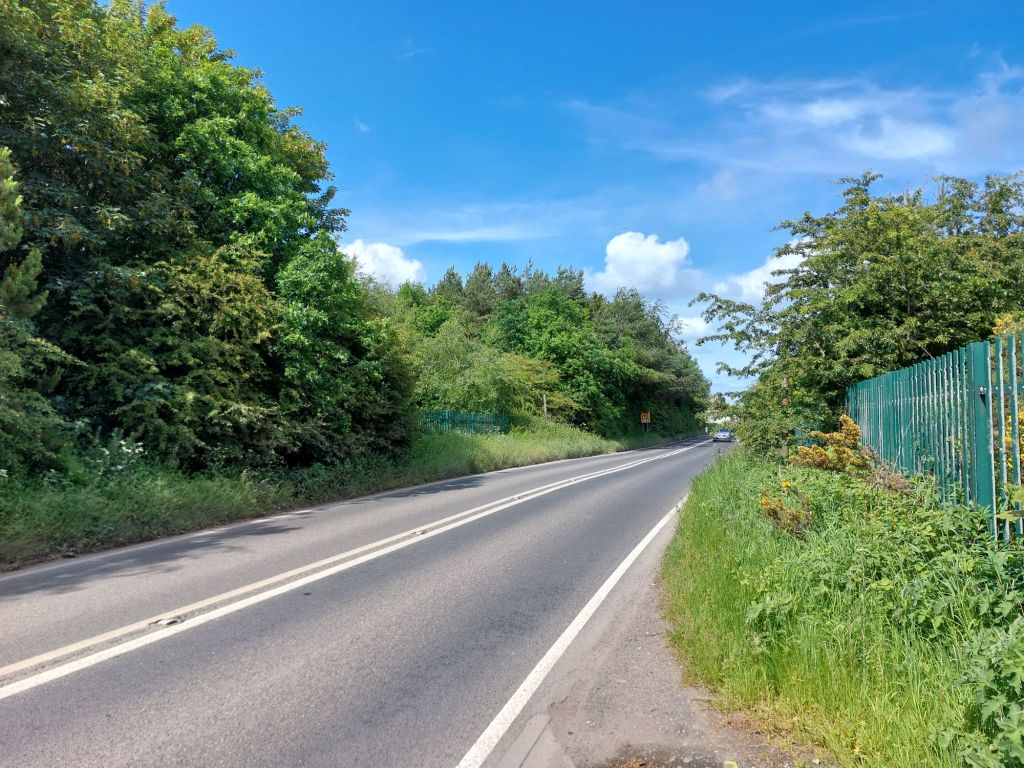
Former A1068 level crossing at New Moor, disused since c.1999-2004Towards Ashington from New MoorSite of the former level crossing, now paved overThe Potland Burn sidings, last used c.2016, but now also derelict.
It’s safer by train: 57 years since the last passenger fatality on a train in Northumberland.
The ECML, as well as other rail routes in Northumberland as a whole have a remarkably good safety record; the worst hotspot on the network being Morpeth Curve, which has seen four incidents in 1877, 1969, 1984, and 1994, with only the 1877 and 1969 incidents having any passenger fatalities.
That means that in 57 years, there have been zero passenger fatalities on trains in Northumberland due to derailment or collision, and since 1992 for train staff, when one driver tragically died after two freight trains collided due to a signalling error.
Even in the 1984 derailment at Morpeth, as serious as the incident was didn’t result in a fatality.
BBC News clip of the Morpeth derailment in 1984
These extremely rare events showcase just how safe rail travel is compared to road travel, where incidents sadly occur almost daily.
Modal shift to save lives?
Therefore, it surely makes sense that any review into safety on the A1, and how it may be improved should also take into account the benefits of modal shift away from road altogether and move people and goods by rail, especially over longer distances such as through Northumberland, or longer within Northumberland trips such as Berwick to Blyth?
1. Cut fares to encourage the switch to rail and integrated buses, similat fares on the Northumberland Line at fixed price all day, everyday.
2. Ensure a consistent, useful timetable at all stations, drive up the number of services calling at smaller stations, and deliver new routes such as the Northumberland Coast Loop to create good, direct links.
3. Market rail & buses as a way to visit Northumberland, and for residents to travel using these services.
4. Increase connections between rail and bus services.
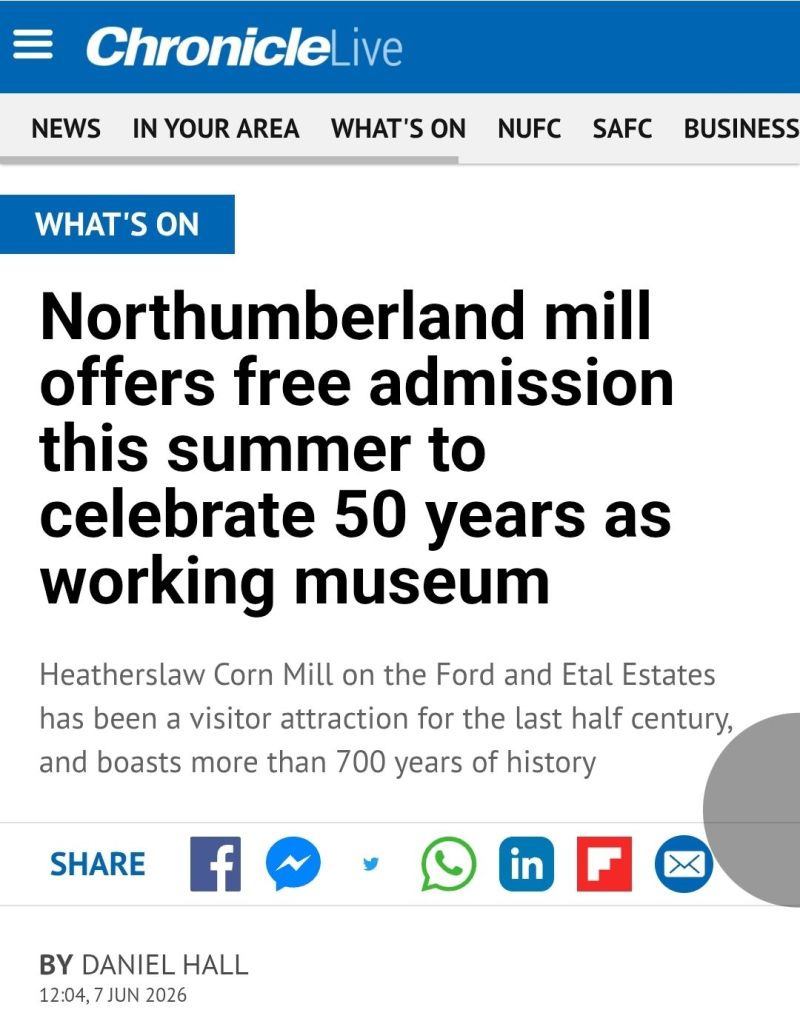
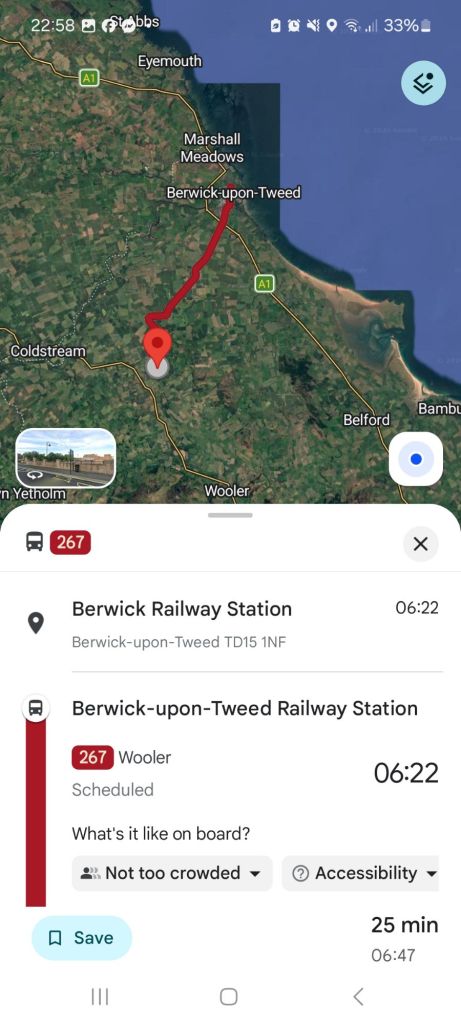
To attend the museum without needing a car, it is easy to reach Heatherslaw Corn Mill, as well as the Heatherslaw Light Railway by bus from Berwick Railway station aboard the 267 service bound for Wooler. Rail connections to Berwick Upon Tweed are also very regular throughout the day, so it could be a very viable ‘Day Out by Train and Bus’!
What do you want to see from public transport in Northumberland?
Which rail and bus routes would you like?
Would you like to see buses running earlier and later in the day, possibly even night buses?
Have you got any suggestions you’d like to put forward?
Please leave a comment below with your thoughts!
Responses:
More frequent buses to/from Wooler to Newcastle, especially to get to hospital appointments at places such as RVI.
Shilbottle to Alnmouth direct buses (more frequent)?
Bus from Alnwick/Amble to Cramlington and X20 to run on Sundays.
Bus Meets Train at Alnmouth Station.
Shilbottle to Alnmouth Station: One bus or single through ticket.
All X18 and X20 buses to run via Alnmouth Railway Station, and coastal X18 (assume headed to from Berwick) to also run via Alnmouth Station rather than Lesbury.
Night buses to/from Newcastle.
More buses between Seahouses and Alnwick, especially later in the day.
Filling the timetable gap between Alnmouth Station and Newcastle in the mornings.
What do you want to see from public transport in Northumberland?
Which rail and bus routes would you like?
Would you like to see buses running earlier and later in the day, possibly even night buses?
Have you got any suggestions you’d like to put forward?
Please leave a comment below with your thoughts!
Responses as of 10.6.26 (live list so will be updated regularly)
Blyth to Tynemouth bus service along the coast.
Better bus reliability for existing services.
A shuttle bus from Blyth Bebside station to Newsham station via key locations within the town such as shopping outlets, town centre, leisure centre, and South Beach.
Earlier services on Sundays.
More carriages on the Northumberland Line.
Bus to Kingston Park
Buses to Wansbeck Hospital from Blyth
Relocation of Blyth Bus Station more centrally within Blyth.
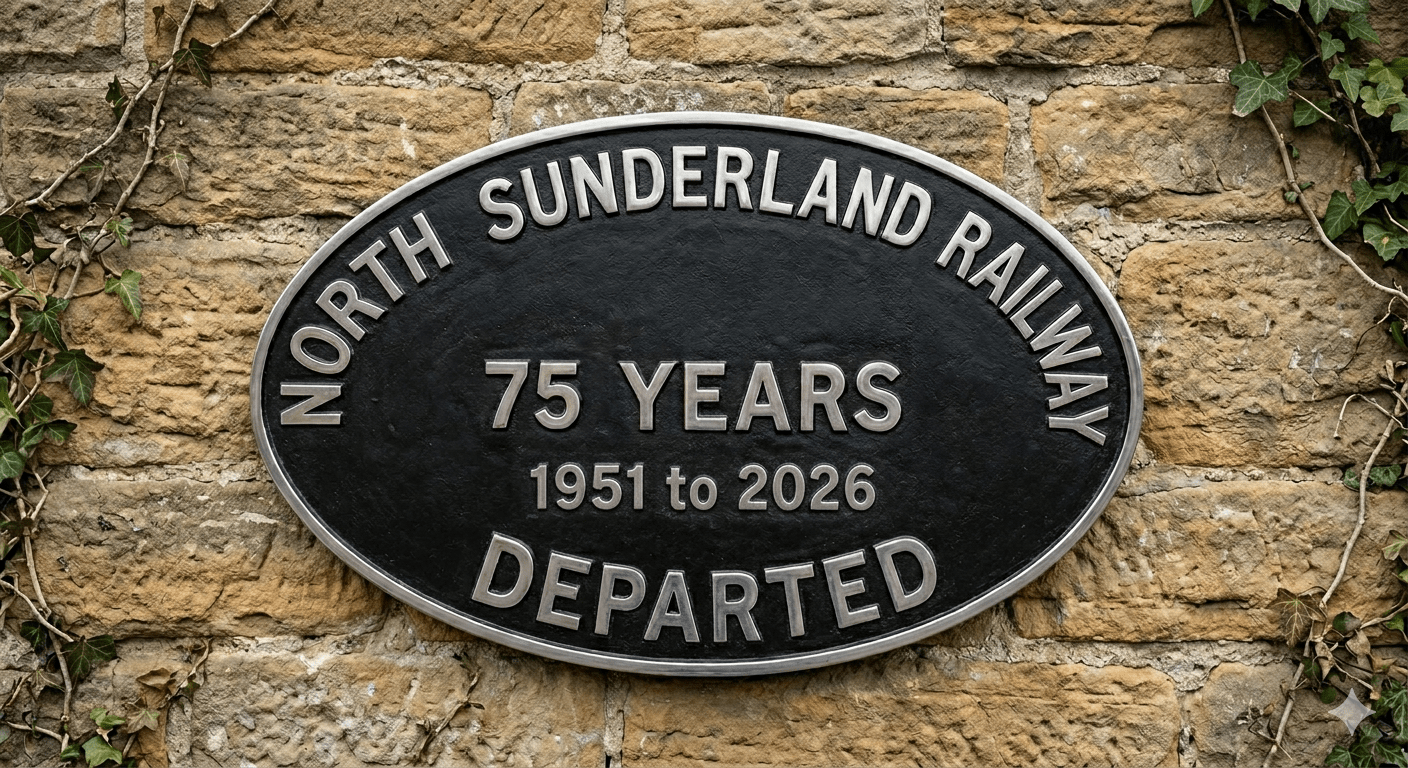
On the 27th October 1951, the North Sunderland Railway ceased operations; it had been a relatively short lived line, having opened for goods on the 1st August 1898, and for passengers belatedly on the 18th December 1898.
Below are a selection of photographs of the line in its operation life, shared via hyperlink to their original source.
Also, is this 1928 British Pathe news reel showcasing the line:
‘The Four Mile Railway’
The initial locomotive was a Manning Wardle called ‘Bamburgh‘, purchased on hire purchase due to the shaky finances of the line, with this locomotive assisted by hired in NER, LNER, and later British Railways locomotives, as well as a diesel electric shunter called‘Lady Armstrong‘, one of six built specuatively by Armstrong Whitworth and Co (the company of Lord Armstrong of Cragside and Bamburgh Castle fame), this loco being the now long scrapped D25*, with two surviving sister locomotives in the form of D21, which is painted green and part of the NRM collection, and D22 now based on the Tanfield Railway and in regular use, the North Sunderland Railway itself being part of the inspiration behind the Tanfield Railway itself.
Could one of these survivors visit Chathill and see their sister loco’s former stomping ground this year to mark the 75th anniversary?
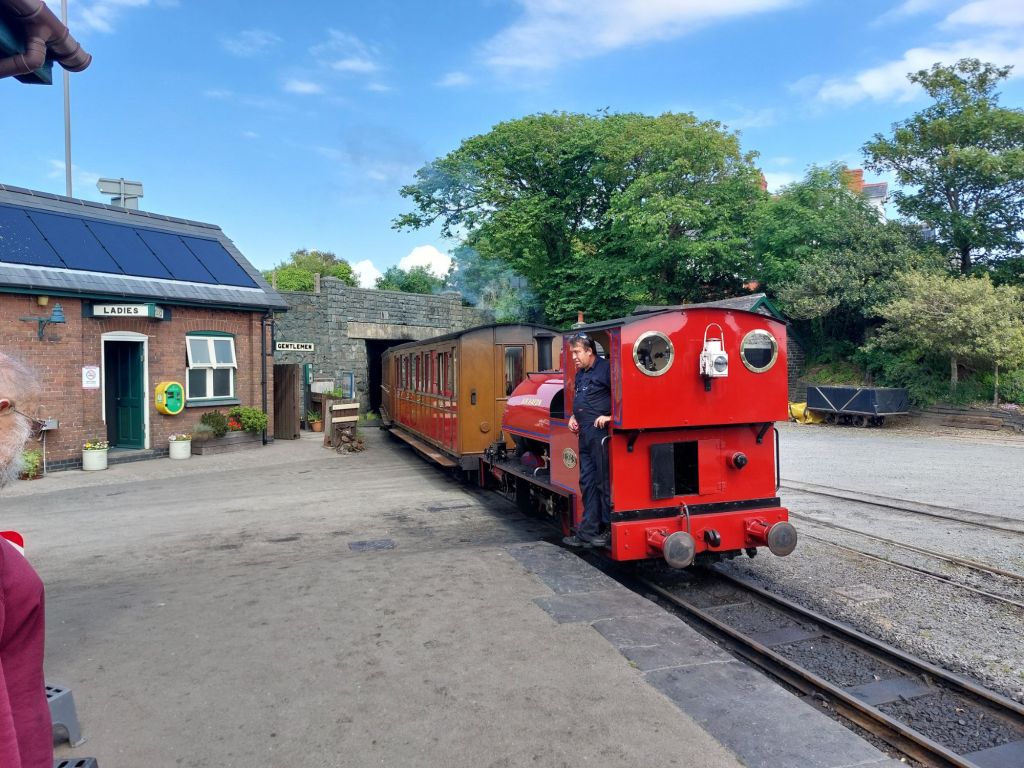
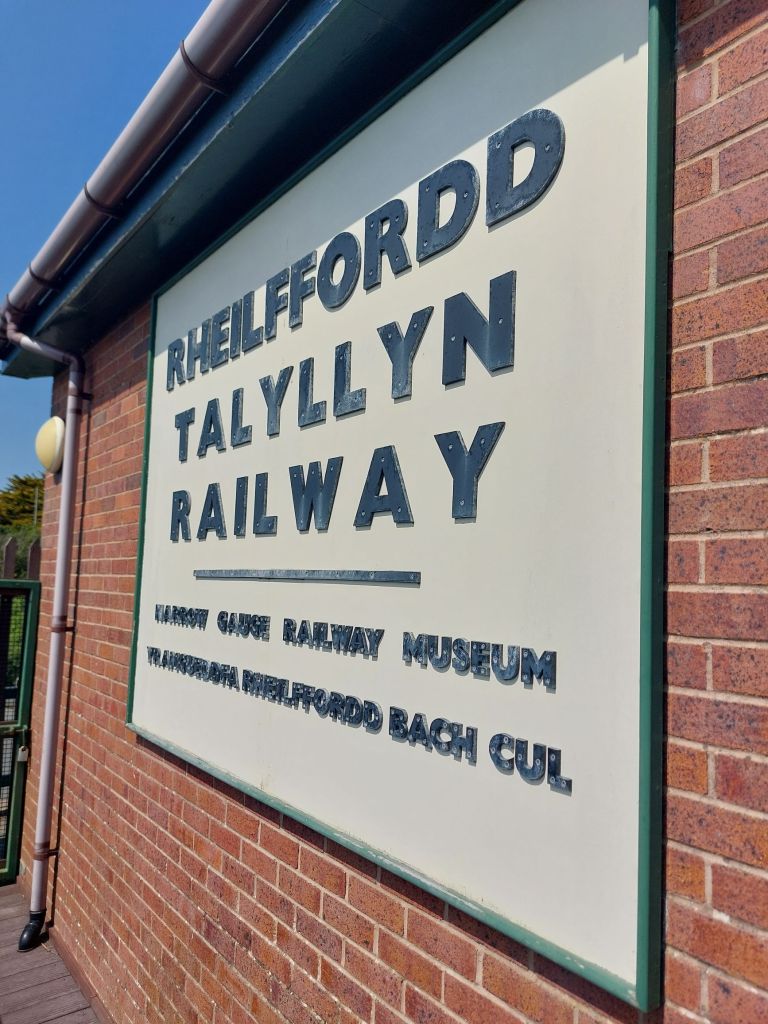
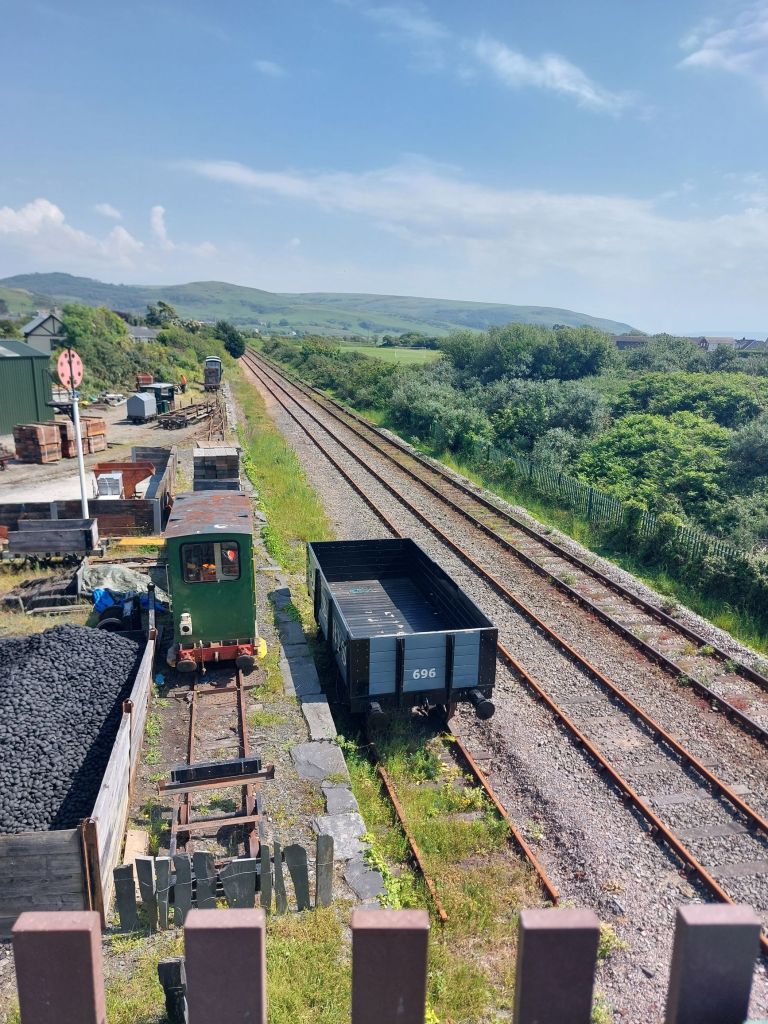
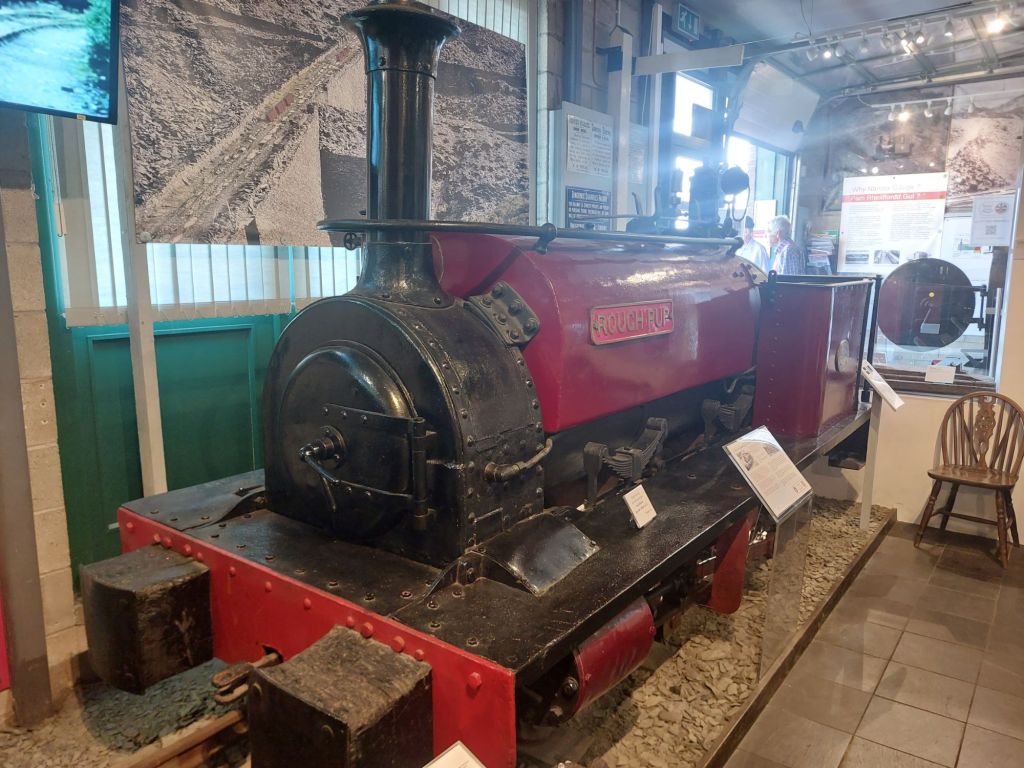
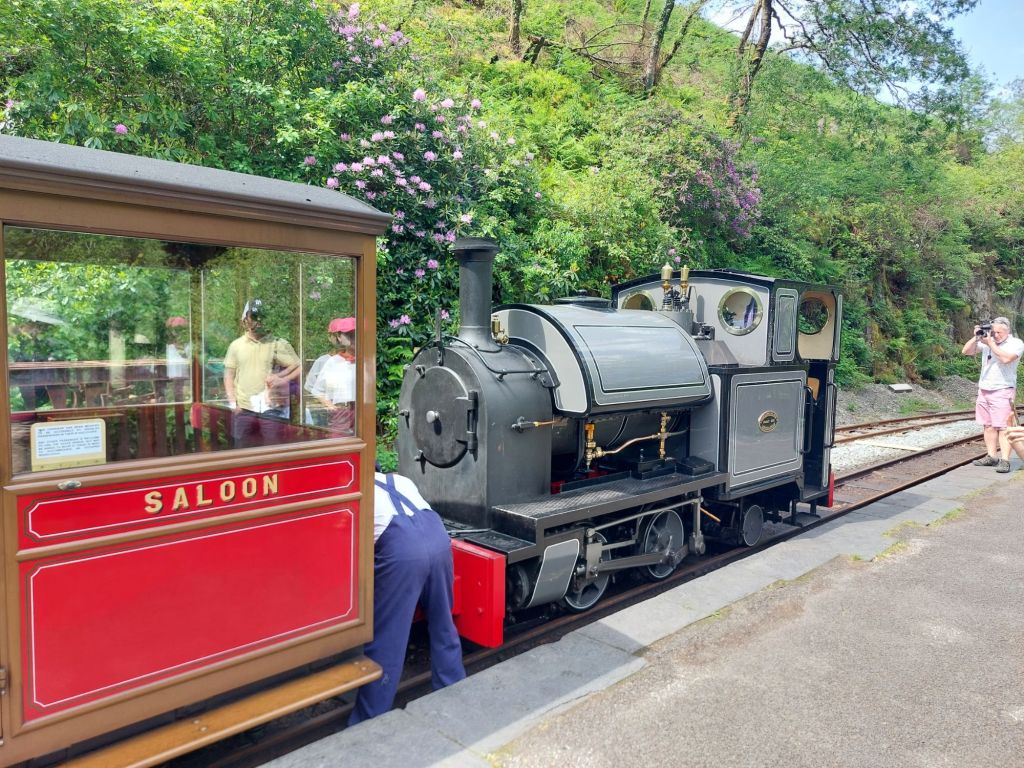
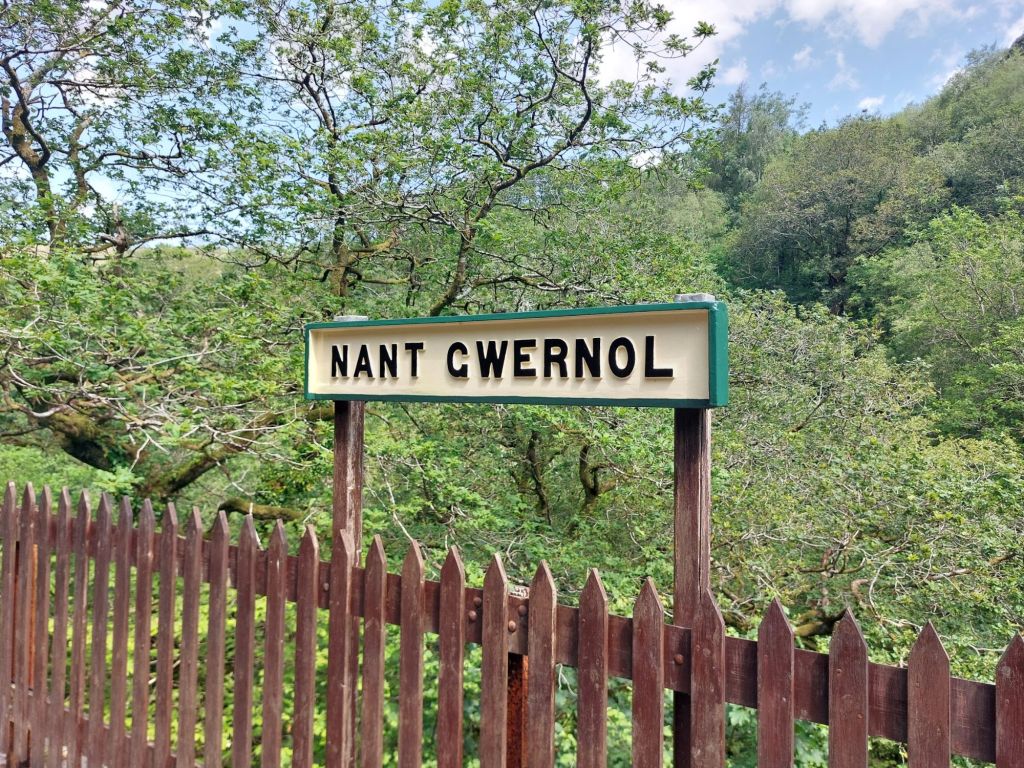
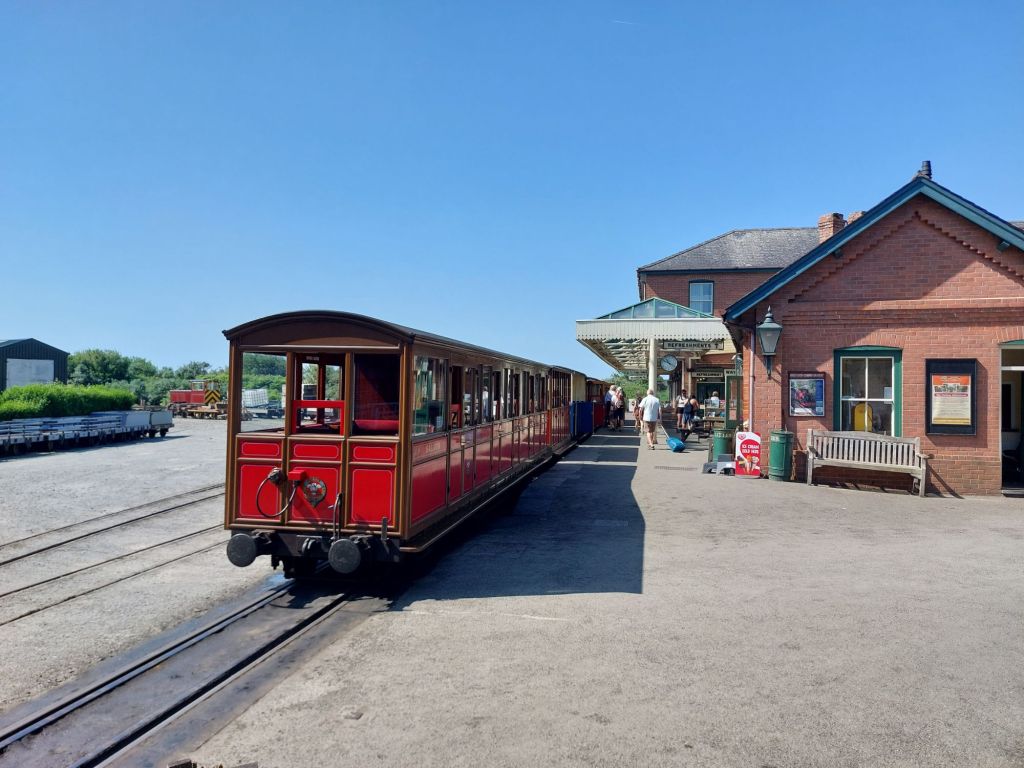
The time of the closure of the North Sunderland Railway makes for an interesting comparison with the world’s first preserved railway, the Talyllyn Railway in Wales. This line reopened on the 14th May 1951 as a heritage line, and has just celebrated its 75th anniversary, and it is somewhere I finally ticked off the ‘must do’ list just a couple of weeks ago.
For those who haven’t been, I would highly recommend a visit and I’ve included a few snaps for your enjoyment!
Had the North Sunderland Railway survived a little longer into the later 1950’s and early 1960’s, it is interesting to speculate that it might have had a chance of survival and transitioned into a heritage line.
The Bluebell Railway (one still on the to do list!) is regarded as the first standard gauge preserved railway opened on 7th August 1960, just over nine years after the Talyllyn Railway reopened, and the just before the ninth anniversary of the closure of the North Sunderland Railway.
Given the huge popularity of visiting the Farne Islands in recent years to see the Puffin colonies, seals and other wildlife, a ‘Farne Islander’ running between Chathill Station and Seahouses would likely have proven immensely popular, but sadly this wasn’t how history turned out in the end.
Chathill Station: Junction of the past and a hub for the future?
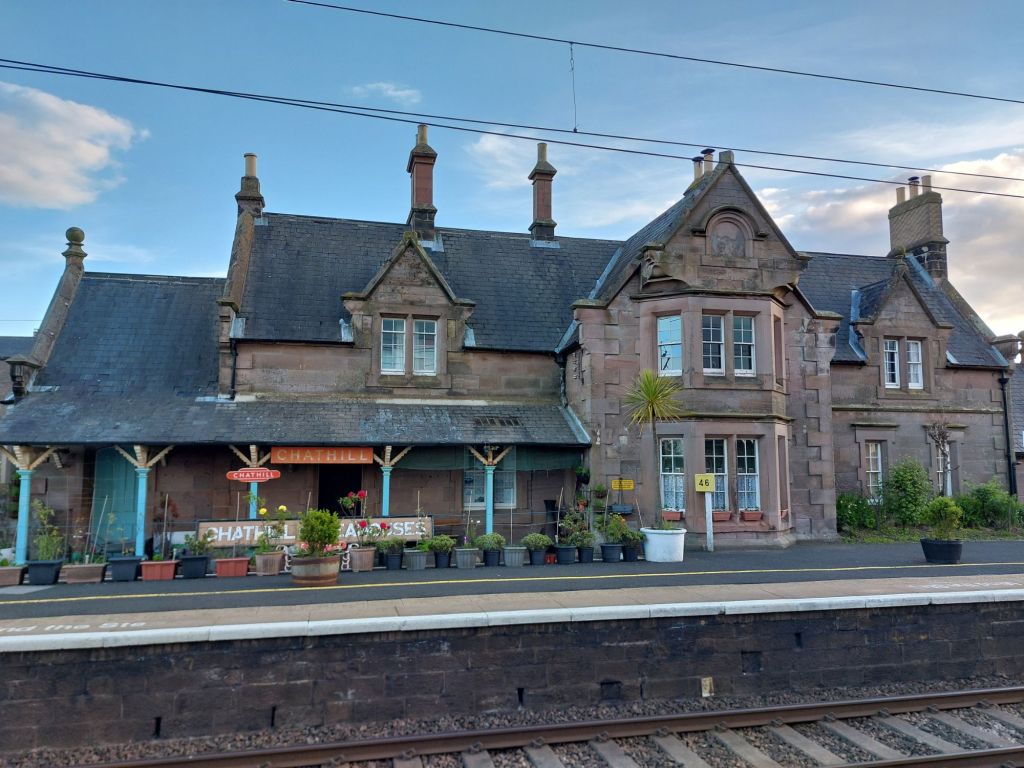
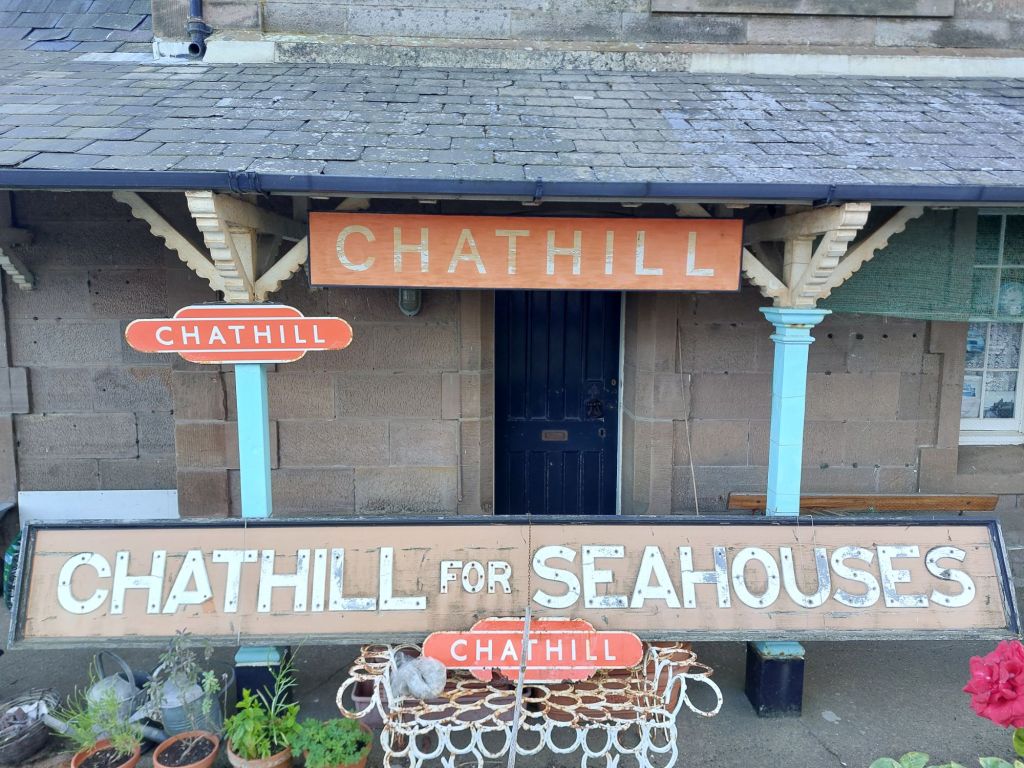
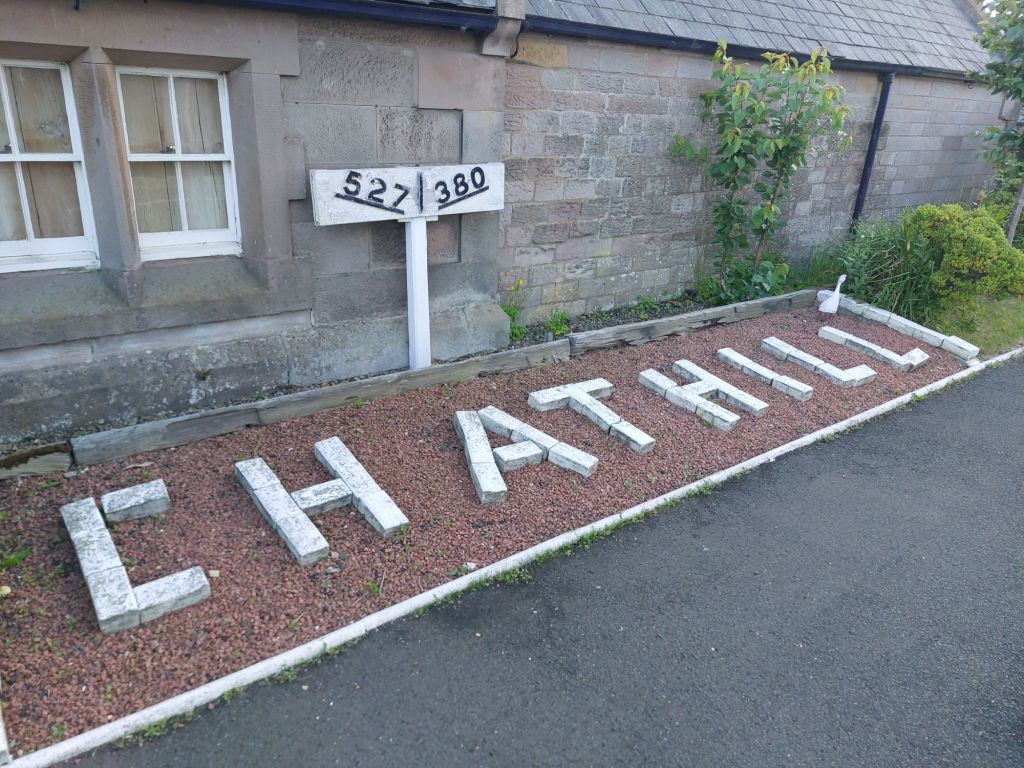
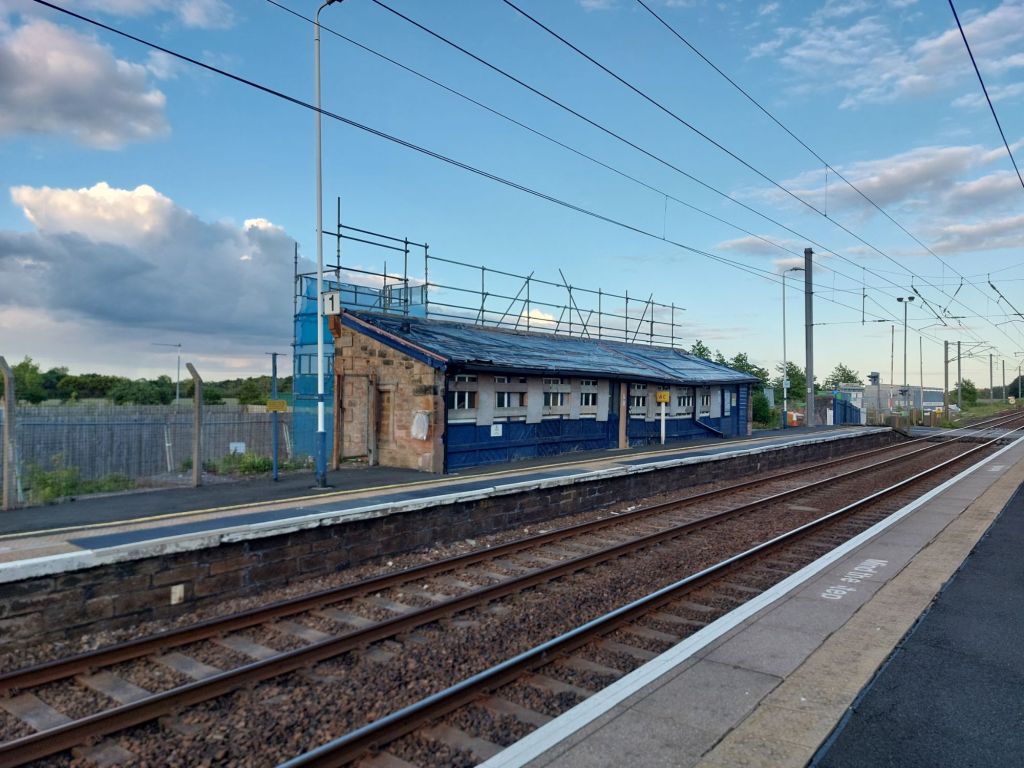
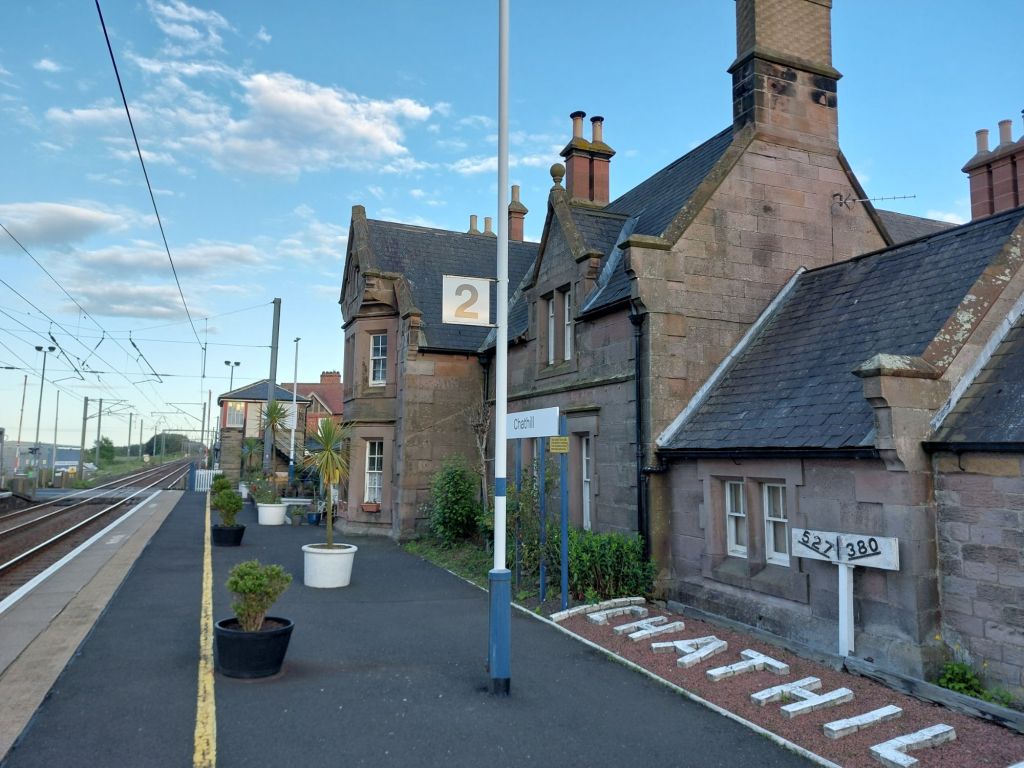
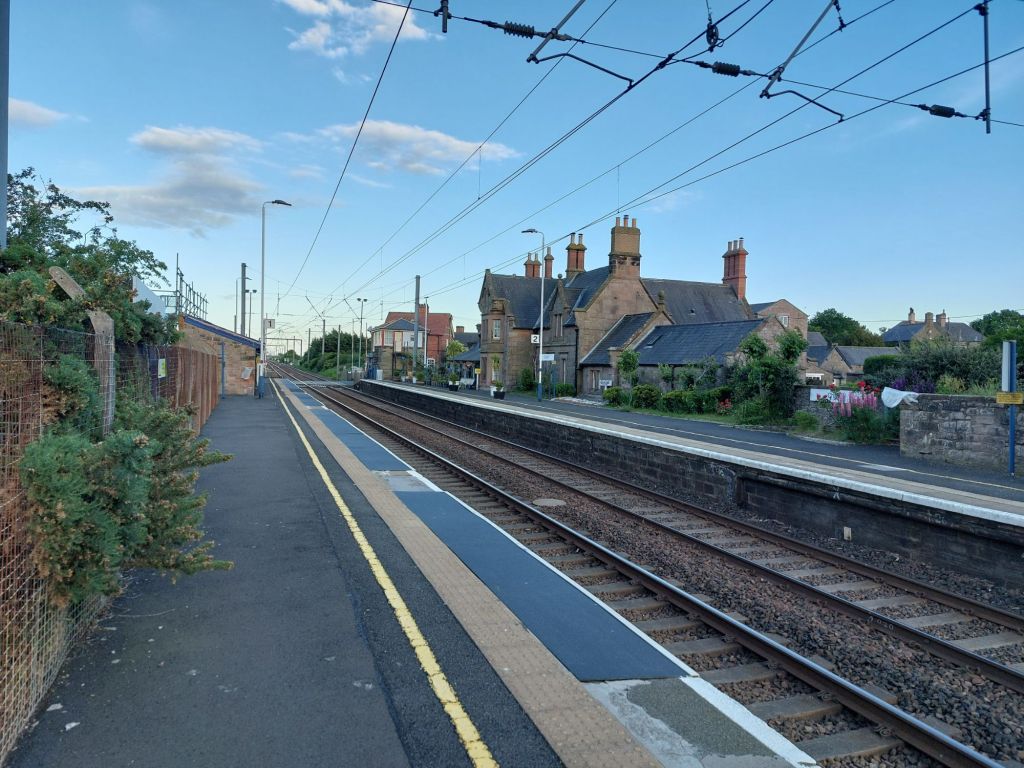
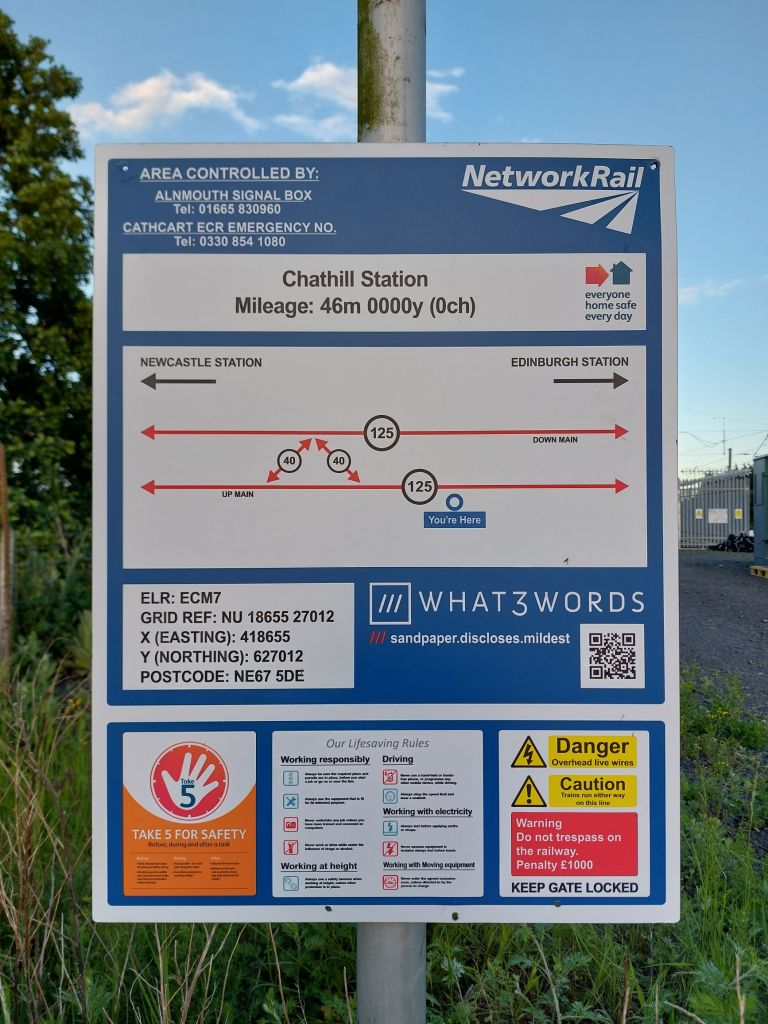
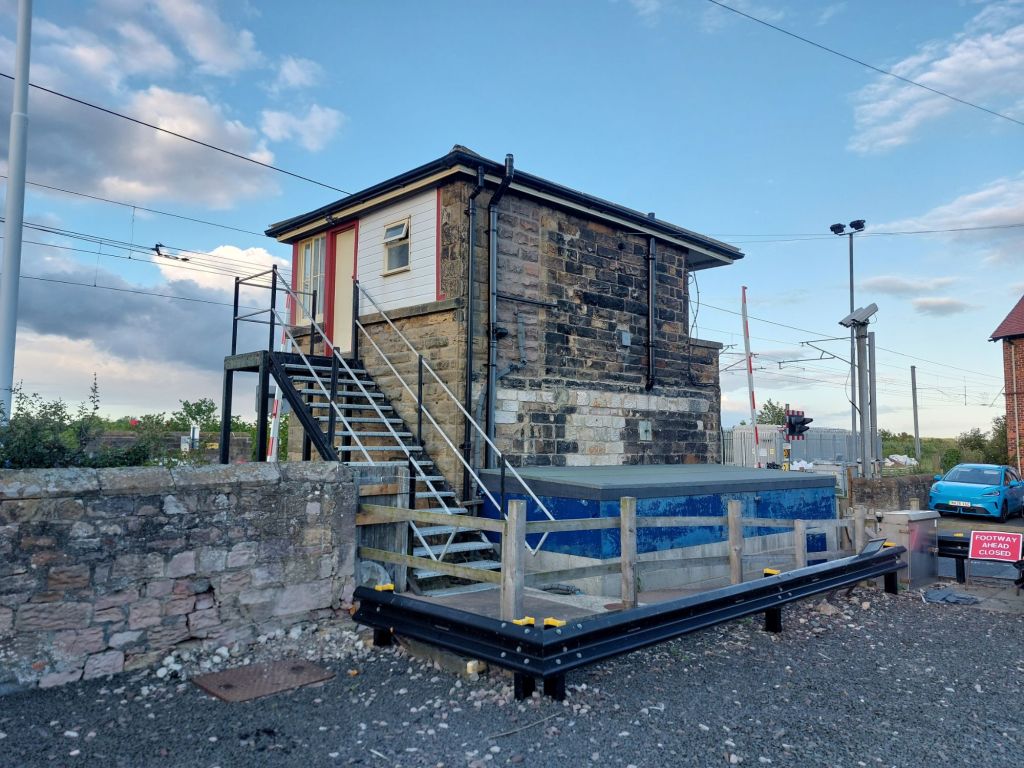
After a meeting with the Chathill Rail Action Group (CRAG) tonight (8.6.26), I decided to make a call at Chathill Station on my way home, a lovingly kept station, and definately giving a sense of its former life as a junction station between the various mainline operators (NER, LNER, & BR), who operated the mainline between 1898 and 1951.
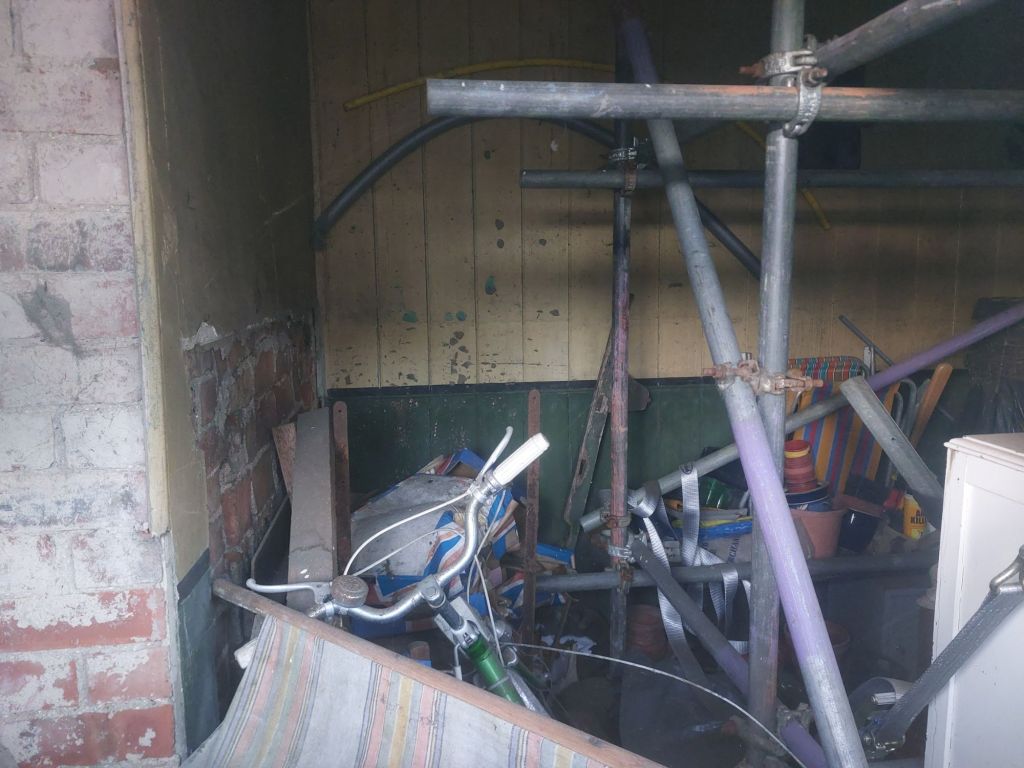
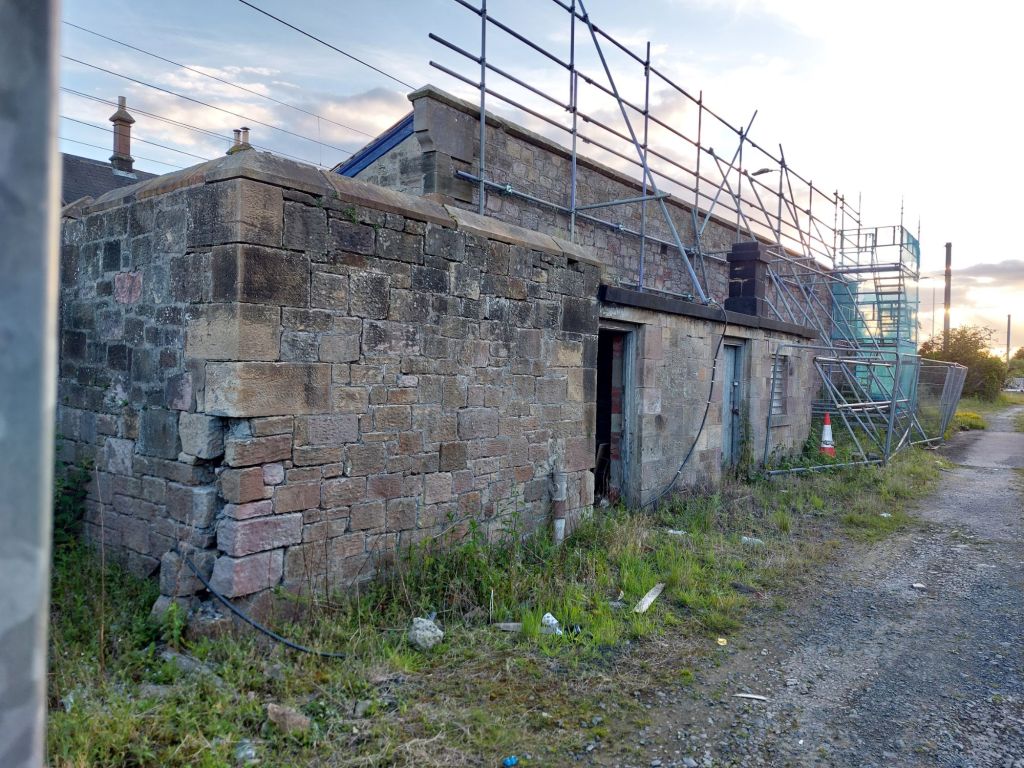
The grand Chathill station building‘Chathill for Seahouses’ – not since 1951!The damaged waiting shelter on the North Sunderland Railway side of the station, where a bay platform would have once held the train shuttling to and from Seahouses with small steam and diesel locomotives hauling ancient carriages.Inside of the waiting room through the window.Back of the waiting room 125mph through Chathill, could that have been foreseen in 1951?
Hopefully once restored, the waiting room might be able to commemorate the interesting North Sunderland Railway as perhaps a micro museum, and like the Talyllyn, an old waggon or two could maybe be displayed in the former bay platform to highlight that once this was once a junction station?
More importantly perhaps, can stations like Chathill be better served by rail once again? The North Sunderland Railway would be a long way down the list of reopenings, but Chathill could be a very useful connection to and from the North Northumberland Coast; something which CRAG is certainly pushing for!
Chathill is much more likely to be reached by bus nowadays than a small branchline running antique carriages, but it could become an important hub for local transport with just a little bit of work.
The A1 has recently and very sadly made local headlines for a number of serious and in some cases fatal incidents, some of which only happened days apart.
This has led to many calling for the 2024 decision to cancel the Morpeth – Ellingham scheme to dual the A1 to be revisited and reversed, shortly after the new government took to power and reviewed commitments by the previous government.
Dualling could help to reduce some incidents, particularly head on collisions, but still retain risks from increased traffic volumes (induced demand), as well as higher speeds being involved when collisions do occur. It is also likely that rebuilding current flat junctions into grade separated ones, and reducing the number of local roads joining and leaving the A1 would also reduce collisions, but not totally, as seen recently in an HGV incident at Stannington on an already dualled section of the A1 between Morpeth and Newcastle.
A1 dualling: a double-edged sword?
In short, dualling the A1 is a double edged sword; there may be some safety benefits to doing it, but there will still be a fairly sizeable risk to drivers still remaining on the A1 itself as the risk of collision doesn’t fall to zero, and the potential that risks on other more minor roads would rise from higher traffic volumes.
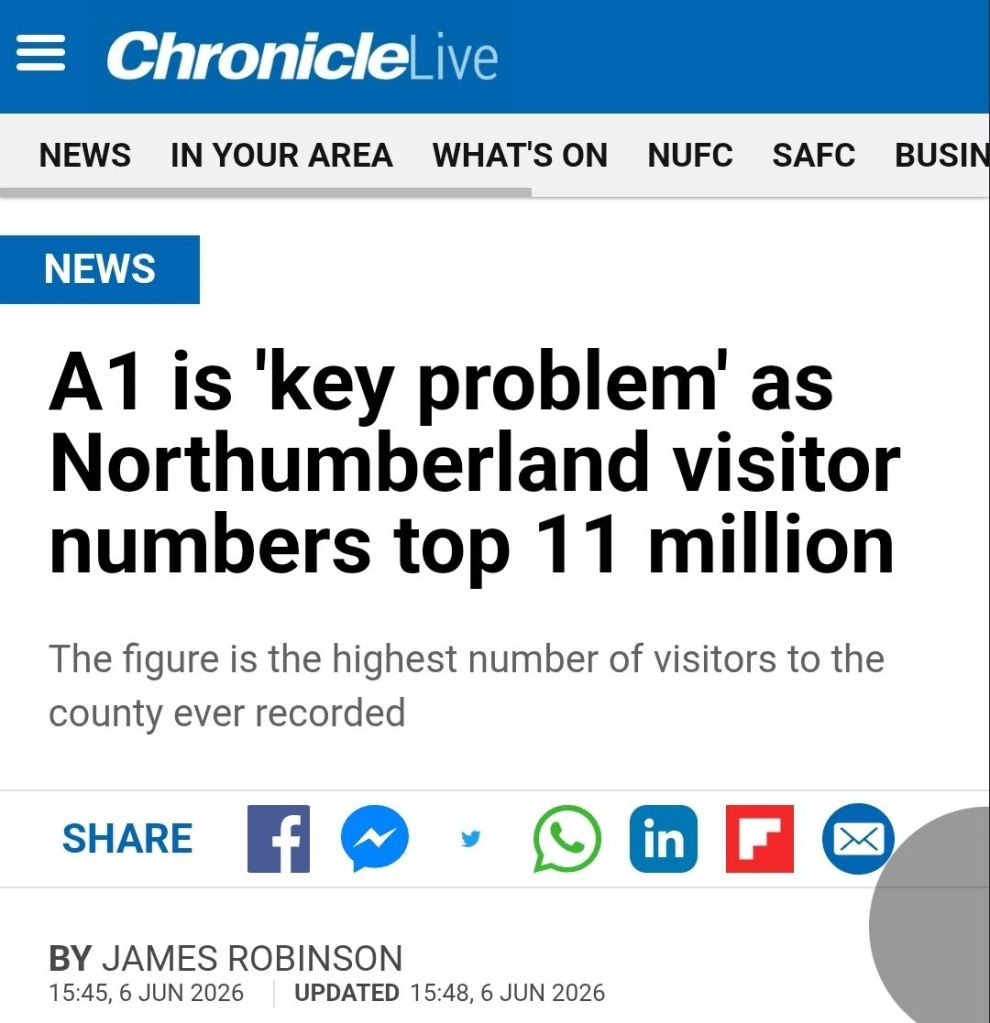
To quote Cllr Glen Sanderson from the article, he states that; “…increasing traffic on roads that aren’t up to it creates further problems for us. The key problem is the A1, which we know needs significant work to make it safe and allow the traffic to flow.
“We know that often, sections come to an absolute stop. Traffic also takes rat runs through villages and on the A697, which isn’t fit for the level of traffic either.
“The visitor numbers are a great achievement for everyone involved, but it does make it obvious for all to see that you can’t attract the level of visitors we are without looking at the infrastructure.”
The issue is that if the A1 is upgraded, and traffic volumes increase as would be expected from induced demand, it places ‘…increasing traffic on roads that aren’t up to it…’; the A1 isn’t the only road in Northumberland that struggles to cope with traffic volumes, and many of the rural roads from the A1 to coastal places are almost certainly not up to it as they currently stand, with a number of accident hotspots on these routes too.
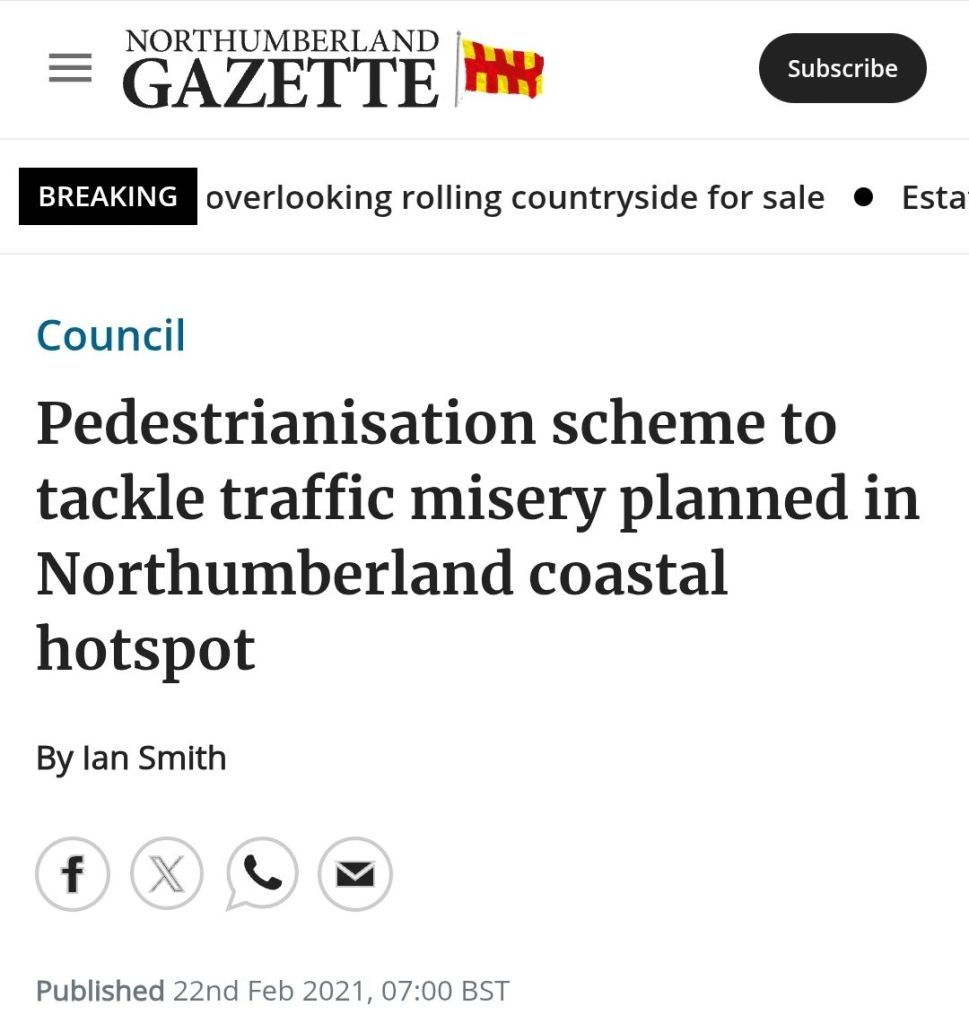
2021 article on traffic issues in Craster, Northumberland.
The estimated cost for dualling and upgrading the 13 mile stretch between Morpeth and Ellingham was costed at £500m back in 2024, so is likely going to be significantly higher today, and economic assessments give the scheme a rating of ‘poor value for money’, with a benefit:cost ratio of about 0.8, meaning for every £1 spent, an economic return of just 80p was expected, meaning that it wouldn’t cover its own costs.
With such a huge investment being proposed for revisiting, surely we need follow Cllr Sandersons suggestion but instead look at ALL of the transport infrastructure options, not just the A1 in isolation?
The A1 isn’t needed for EVERY visit.
One statement in the above article is somewhat blinkered in some respects by stating that ‘The Northumberland Coast is arguably the main tourist draw in the county, thanks to its stunning beaches, pretty villages and iconic castles. However, popular destinations such as Warkworth, Druridge Bay, Beadnell and Bamburgh all require use of the A1 to visit.‘
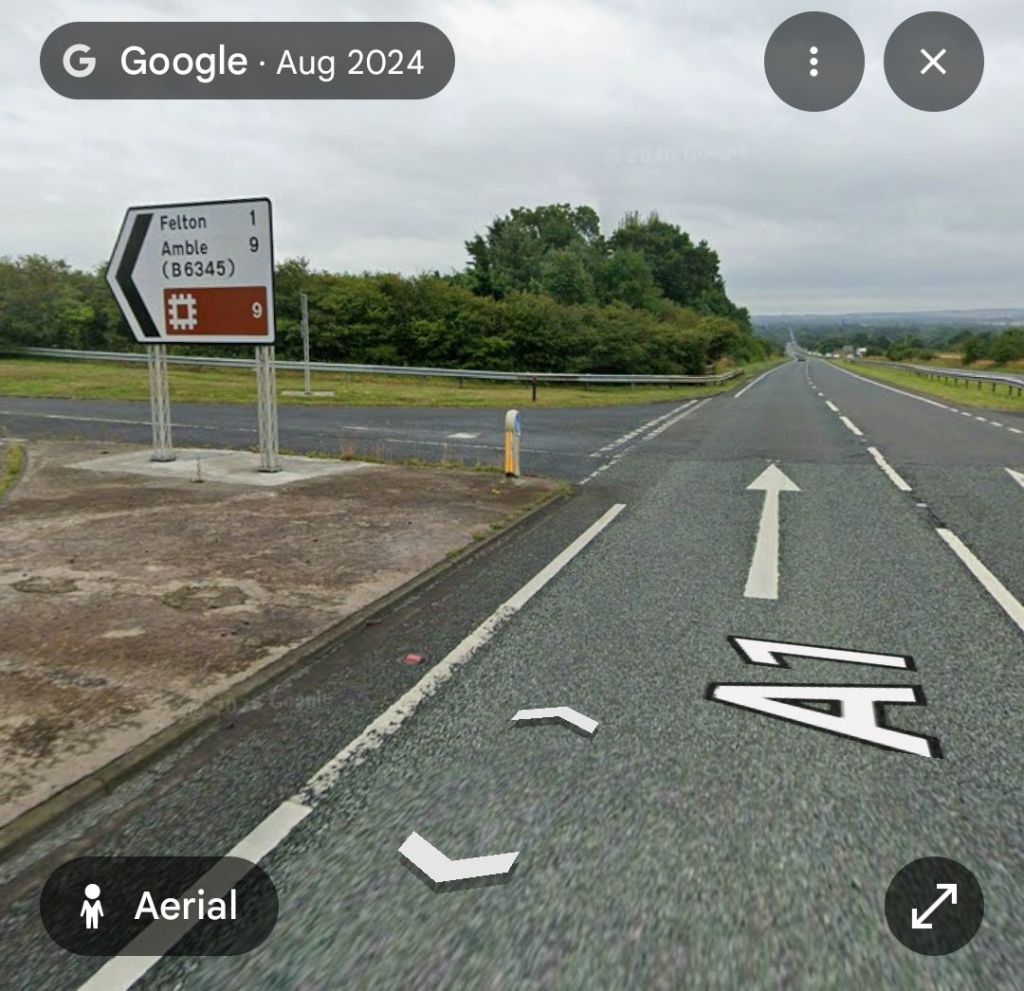
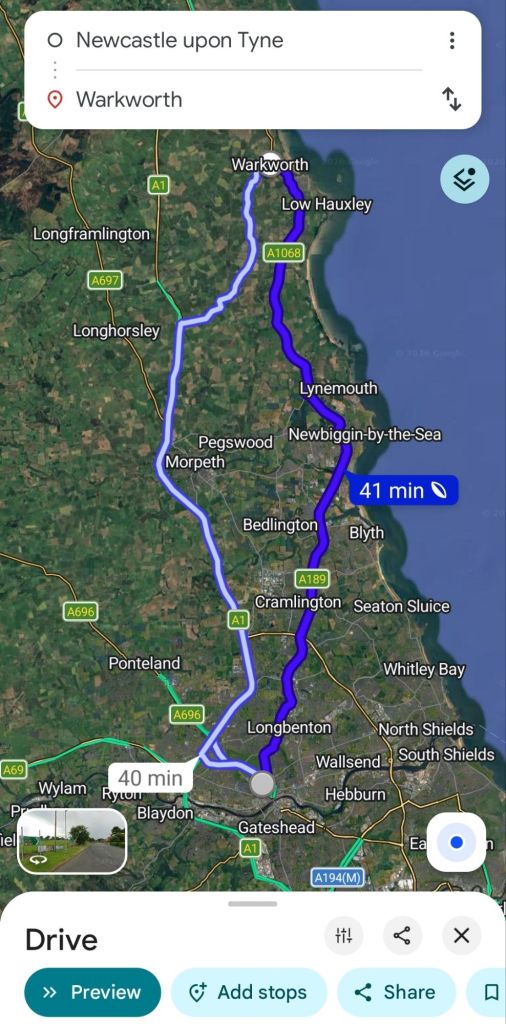
You don’t actually need to use the A1 to visit any of these places; especially for the first two, even when driving.
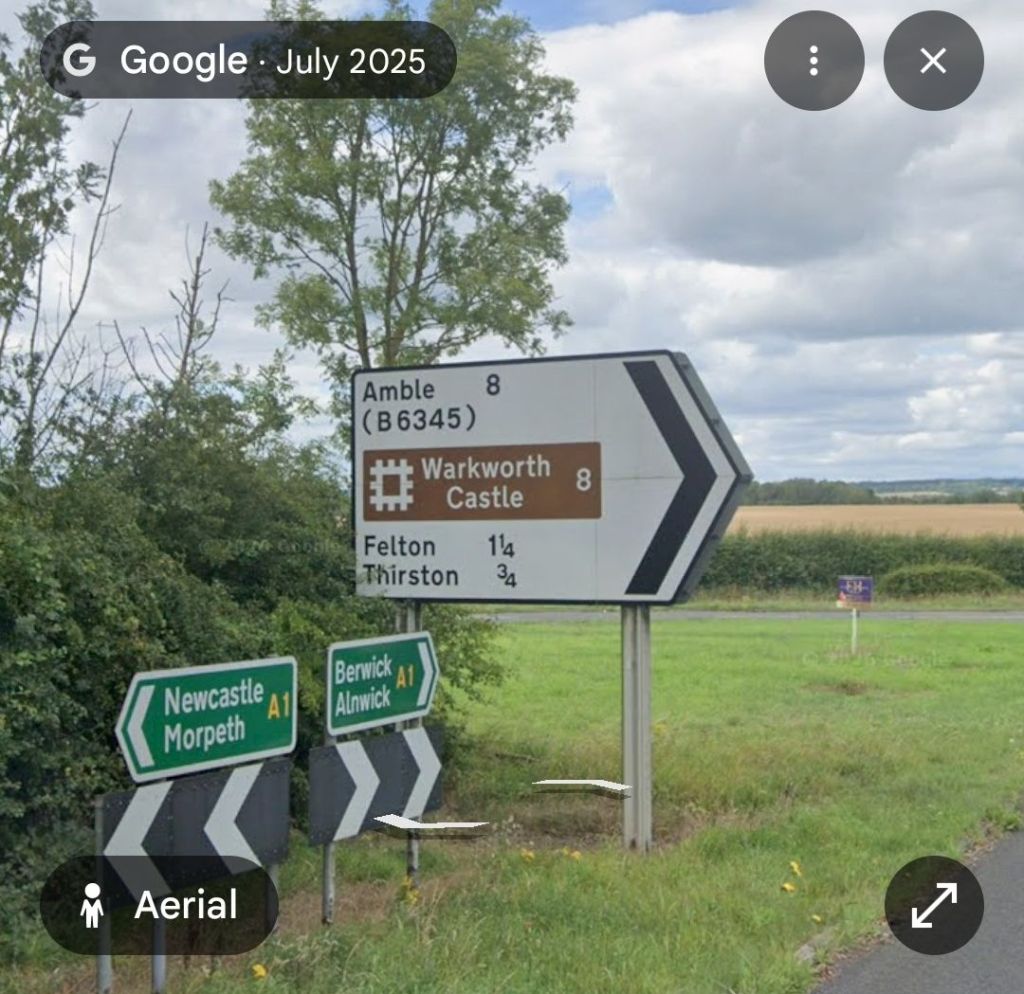
Warkworth Castle, as a central location in Warkworth is actually 7.2km/4.5mi from the A1 at its closest point as the crow flies, and is a much greater distance on the minor roads from the A1 near Felton, showing as 8miles from the southern junction on the single carriageway, and 9 from the northern one.
Using Google Maps, the most fuel efficient route from Newcastle Upon Tyne by car is suggest as actually using the A189 Spine Road, then the A1068 to reach Warkworth.
A1 Northbound showing the turnoff for Warkworth Castle at Felton on the single carriageway. A1 southbound north of Felton showing the junction for Warkworth Castle.
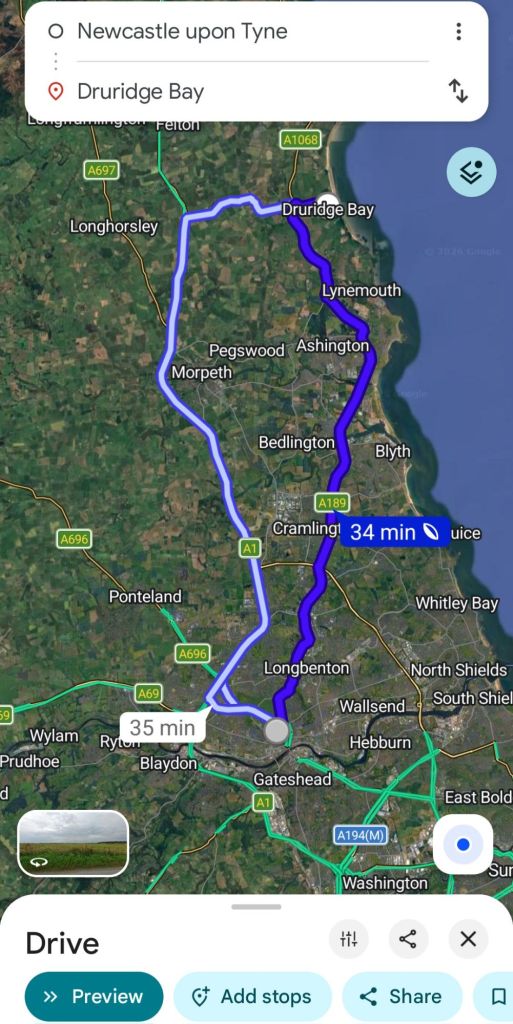
It is a similar story for Druridge Bay, even further from the A1 and south east of Warkworth, with the suggested route being again via the A189 and A1068.
For someone living in or visiting Alnwick, again the route to Warkworth Castle or Drurudge Bay would be largely on the A1068, again not an inch of the A1, but the A1068 is a route with its own issues regarding heavy traffic, and more car based tourism will only exacerbate those issues further, but proves that the A1 is just one of many possible routes, and also highlights that safety improvements and upgrades to the road network away from the A1 are also needed.
Rail and bus: a great opportunity for Northumberland? Safer travel by public transport a part of the A1 solution?
Given the sheer size of Northumberland as a county, coupled with the somewhat pedestrian pace of some long distance bus services, and the fast, but geographically limited rail network, Northumberland realistically needs to have a properly integrated public transport system between both modes.
The places where trains can reach will aways be fairly limited as many former branchlines may not be viable to reopen (i.e. The Wannie Line to Rothbury and Bellingham, or the Cornhill Line to Wooler and Coldstream). Even some stations on surviving lines may prove not to be viable to reopen either (for example Warkworth station would be between Alnmouth station and the currently very underused Acklington station), but better rail services to surviving stations, or ones strategically reopened, combined with integrated buses could be great opportunity to open up a viable alternative to driving.
This isn’t just for people who are looking at doing things more sustainably as important as that is; rail is the safest mode of land transport available in Northumberland, the last passenger train crash to involve passenger fatalities was the 1969 derailment at Morpeth, in the 57 years since, there have been zero rail passenger fatalities to the bsst of my knowledge.
The Northumberland A1 Safety Alliance, recently launched, has a slogan saying ‘because every journey should end at home‘, so surely modal shift away from driving could become part of making the road safer by reducing car traffic overall, and people instead travelling on much safer rail and bus services?
Shifting more people by bus and rail has numerous advantages over just solely fixating on the A1 as the sole transport corridor in this part of Northumberland; it would improve access for those travelling who don’t have access to cars or choose not to drive, which could be due to a number of factors such as:
Disability (visual impairment, physical impairments, or health issues that prevent driving etc). Some of these may be permanent disabilities, but also some temporary medical limitations on driving such as surgeries or particular medical conditions may only prevent driving for a certain span of time but a viable option to driving allows greater independence and access to work or leisure activities.
Economic factors such as the prohibitive cost of driving for young people or those on low incomes either learning to drive, or being able to afford to own and run a car.
Choice not to drive is also important factor, as attending and fully enjoying events where alcohol is consumed, such as a beer festival, whisky distillery tour, or a music festival is a sensible decision compared to the risk of drink driving, even if this would be inadvertent (i.e. morning after).
Less confident drivers such as older persons, who may be happy to travel a short radius around home, but may not wish to travel longer distances, or use unfamiliar and faster roads.
Building on existing success
The ECML is already a successful rail corridor, carrying many millions of people each year, and major stations like Berwick Upon Tweed, Alnmouth, and Morpeth are each already handling upwards of 300,000 passengers per year, but they could do even more with improved bus connections to act as feeder routes into the stations, a dispersal routes away from them.
For example, buses from my current home in Alnwick are a long way behind meeting the earliest trains leaving Alnmouth in the morning, the first current bus X18 not departing Alnwick until 06:48 and arriving at Alnmouth for 07:12; missing around EIGHT rail services departing between 05:53 and 07:13, and potentially a tight connection for ninth service, the 07:20 towards Edinburgh.
Ideally a bus service should run early enough to meet the first train of the day, as well as late enough to connect with the last services in the evening, with a suitable frequency (possibly as high as half hourly) throughout most of the day.
Such a service has been proposed under the AAA (Alnwick, Alnmouth, and Amble) dedicated bus meets train proposal.
To Warkworth by train and bus
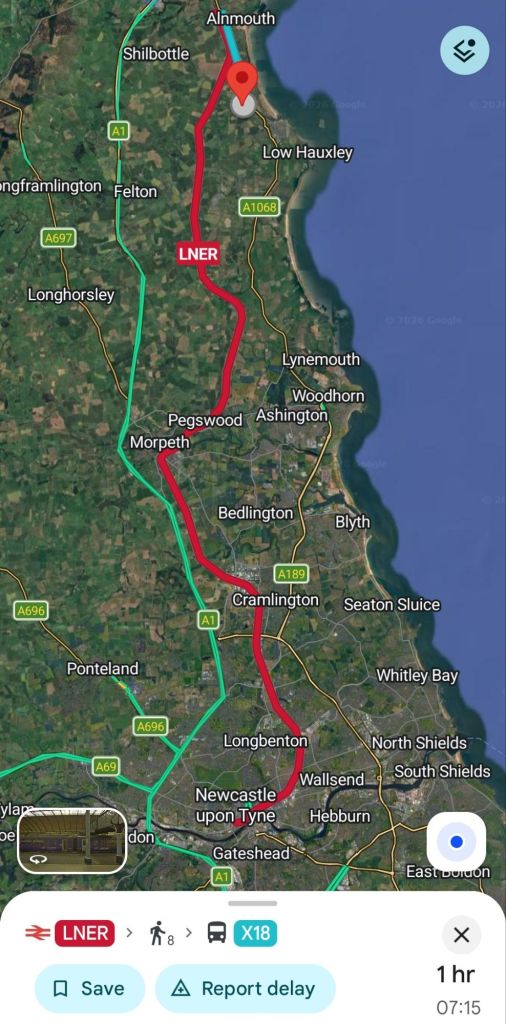
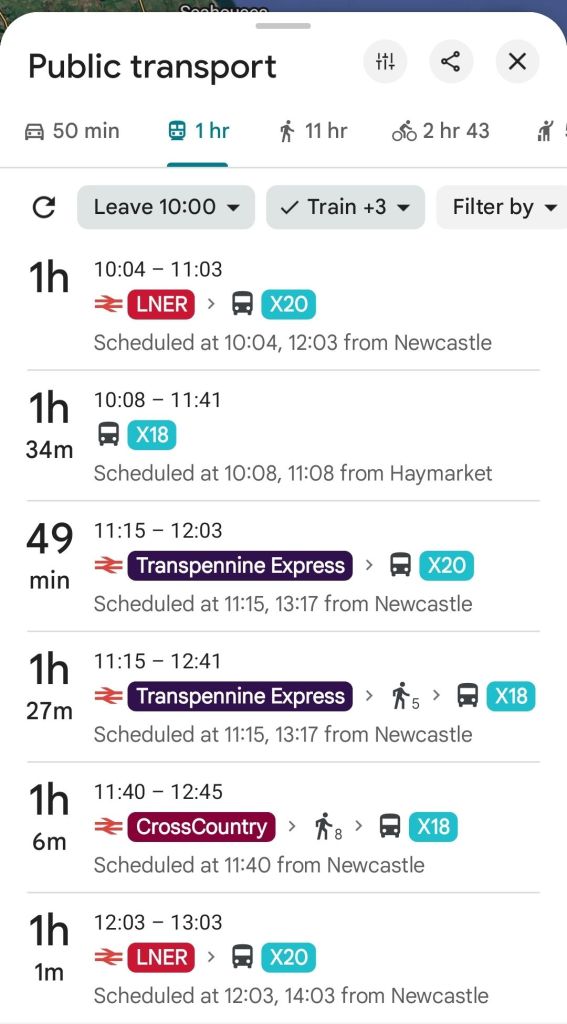
For Warkworth, access by public transport is already fairly decent; with Google Maps again giving a useful suggestion of using the LNER service to Alnmouth, and backtracking by the X18 bus to Warkworth. Journey times are already quite competitive, with many public transport journeys being only slightly longer than driving, and one connection actually being faster (11:15 TPE & X20 bus) at 49 min compared to 50 minutes of driving.
Example of a train & bus trip from Newcastle Upon Tyne to WarkworthMultiple options for public transport from Newcastle to Warkworth
Druridge Bay needs better public transport links
Druridge Bay has similar suggestion of a train to Alnmouth and bus to Hadston, or of buses direct from Haymarket bus station (X18), but both involve a substantial walk as the nearest bus stops are some distance away from Druridge Bay. This maybe could be improved by close placement of bus stops, or the bus route being amended to run closer to the destination.
Chathill Station for Beadnell, Seahouses, and Bamburgh: a £20m asset standing almost idle?
For the two more northern destinations of Beadnell, and Bamburgh, visiting by car from places like Newcastle would involve using the A1 for a realistic journey time, turning off at Denwick, South Charlton, or near Newstead to reach the two villages.
In the course of travelling from the A1 to Beadnell or Bamburgh, crossing over the East Coast Main Line is required, either via a level crossing or a bridge over the line.
One of the places where people may cross the line is at Chathill, which is arguably where one of Northumberlands most poorly used, multi-million pound assets sits quietly most of the day: Chathill Station.
The valuation of being a multi-million pound asset comes from the cost of building a new two platform station on a mainline like the East Coast Main Line (ECML) being around £20m; itself a modest sum set against the proposed £500m to be spent on partially dualling the A1.
That being said, to have an open, and ready to use yet sparsely served station sat almost adjacent to one of the most popular stretches of the Northumberland Coast seems absurd!
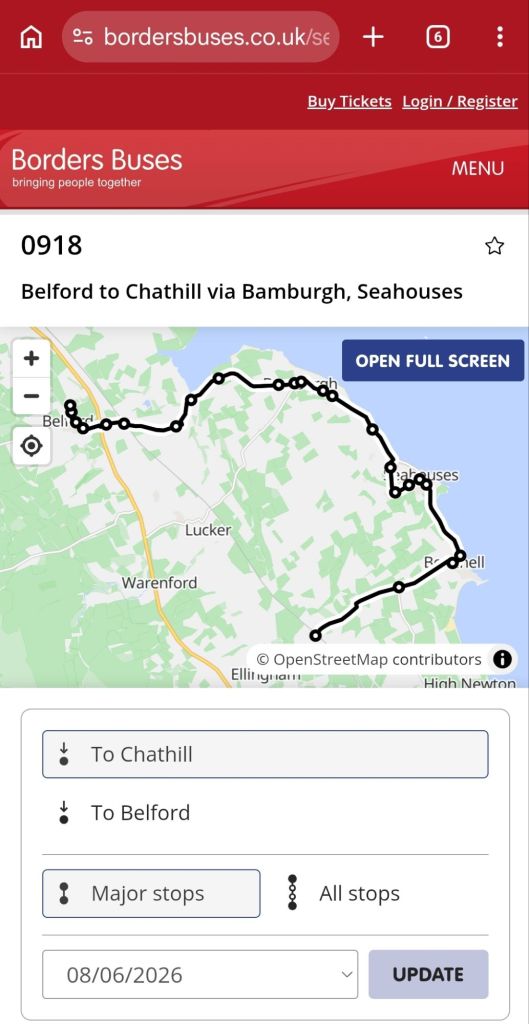
Sat at the almost intermediate point between the more well used stations at Alnmouth (for Alnwick and Amble) to the south, and Berwick Upon Tweed in the north, Chathill station could be used much more extensively to serve the coastal area of Northumberland, and is also a great case study in bus/rail integration from the limited service that it already sees, with the Border Buses operated 918 bus, which if the rail service to/from Chathill was improved, the bus could also commensurately also be improved in frequency to maintain this good connection.
To again borrow from the ‘NASA’ logo; ‘it shouldn’t be rocket science’ to run more rail services then co-ordinate buses together with it to provide a safer alternative to using the A1.
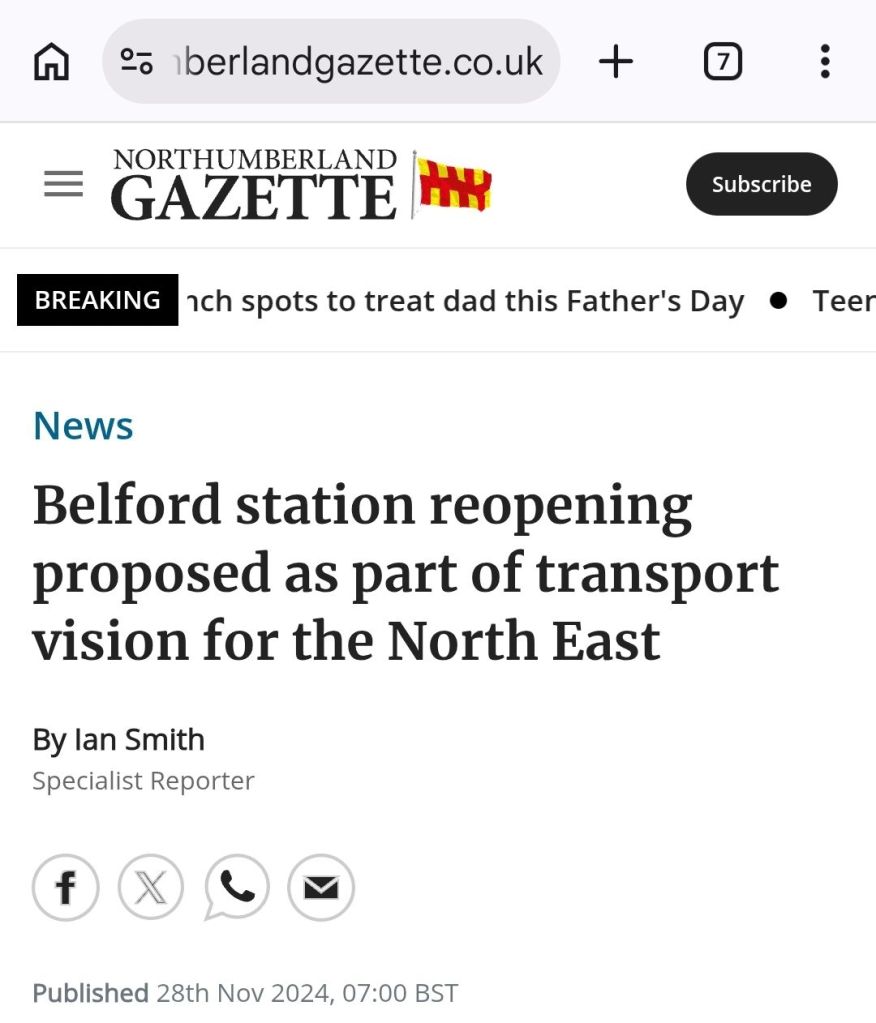
Belford Station: Already identified as a reopening candidate
With a £14m price tag in the above article, it again is a very affordable intervention to simply try and bring forward from the expected 2036 delivery date (a decade away), and in Cllr Renner-Thompsons own words as cited in the article: ‘”Hundreds of thousands of tourists visit north Northumberland each year and a station at Belford would be in the epicentre of the tourist trade.‘
A new station at Belford would still take more time than potentially getting more trains to stop at Chathill, but could be a valuable next step if brought forward by NECA, and again would offer the opportunity to give a viable alternative to the private car.
The Northumberland Coast Loop.
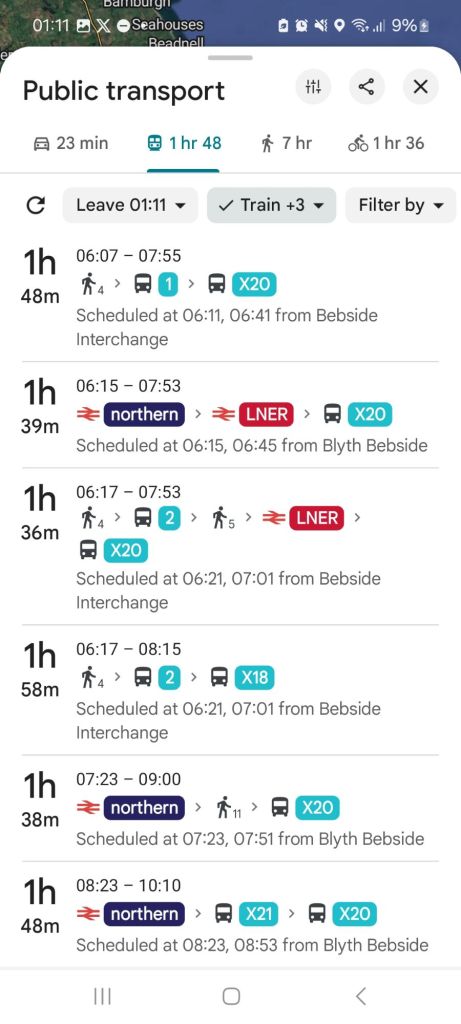
Unfortunately, a quirk of the local transport network is that major towns such as Blyth in Northumberland, which are relatively close to destinations like Warkworth compared to Newcastle actually suffers from far worse public transport links, as can be seen below.
A 23 minute drive from Blyth Bebside station to Warkworth Castle would take at least 1hr 30mins by public transport, but the Northumberland Coast Loop (N.C.L.) could be a solution to this by creating a new direct passenger rail service between Blyth, North Northumberland and Scotland.
If trains were to use the existing and operational link between Bedlington and Pegswood via Hepscott, this rail route could cut around 50 minutes from public transport journey times such as Blyth Bebside to Alnmouth station, again making rail and buses a viable alternative to driving.
Station by station route mapMetro style map showing the potential Northumberland Coast Loop
Via Hepscott vs via Linton Colliery
Below are some views of the level crossing in Hepscott taken a few days ago, but like Chathill, it is very much an under utilised asset at present, and could be transformative for rail services in Northumberland if the coast loop rail route is taken forward, offering a fast, direct connection to North Northumberland and Scotland.
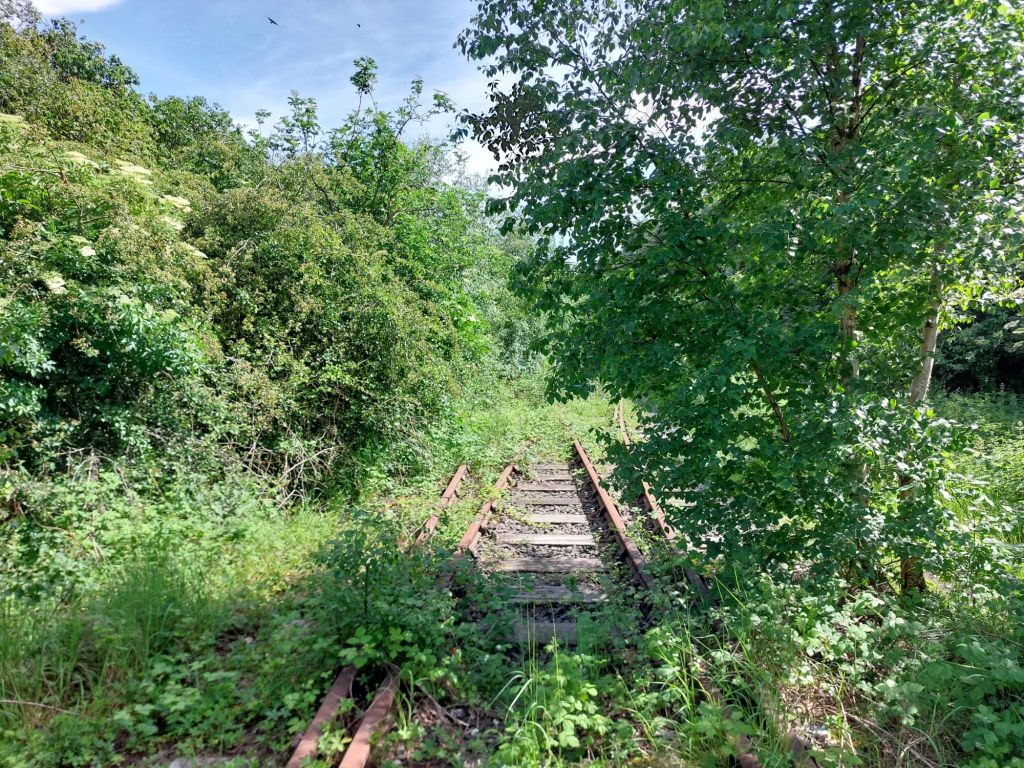
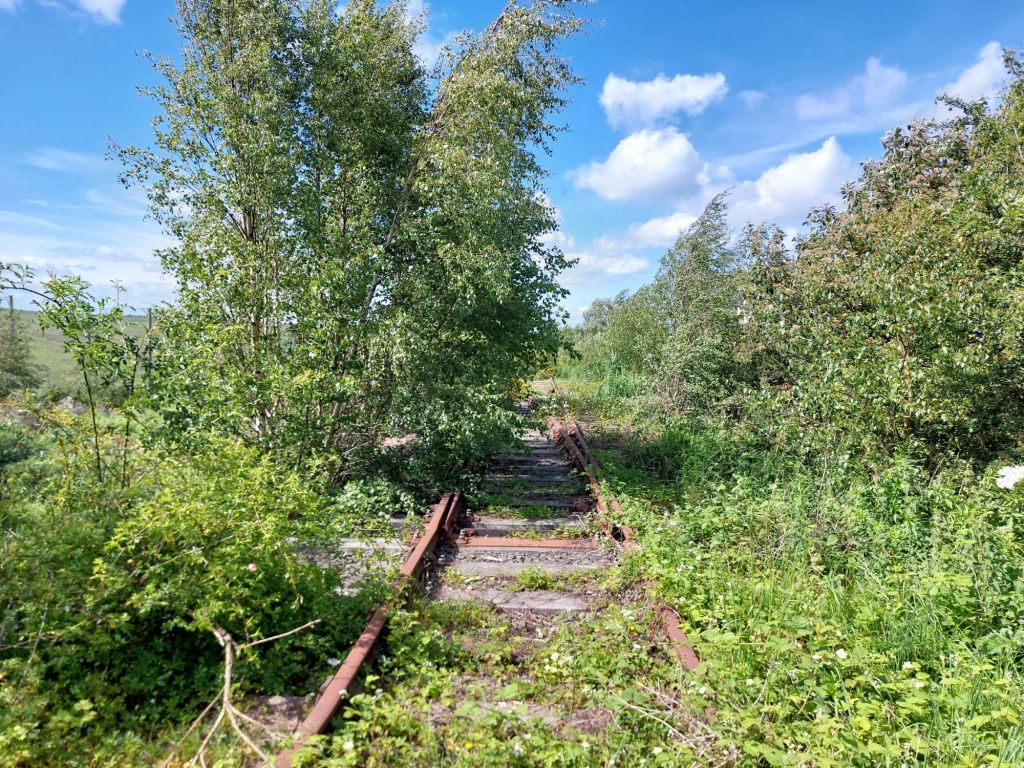
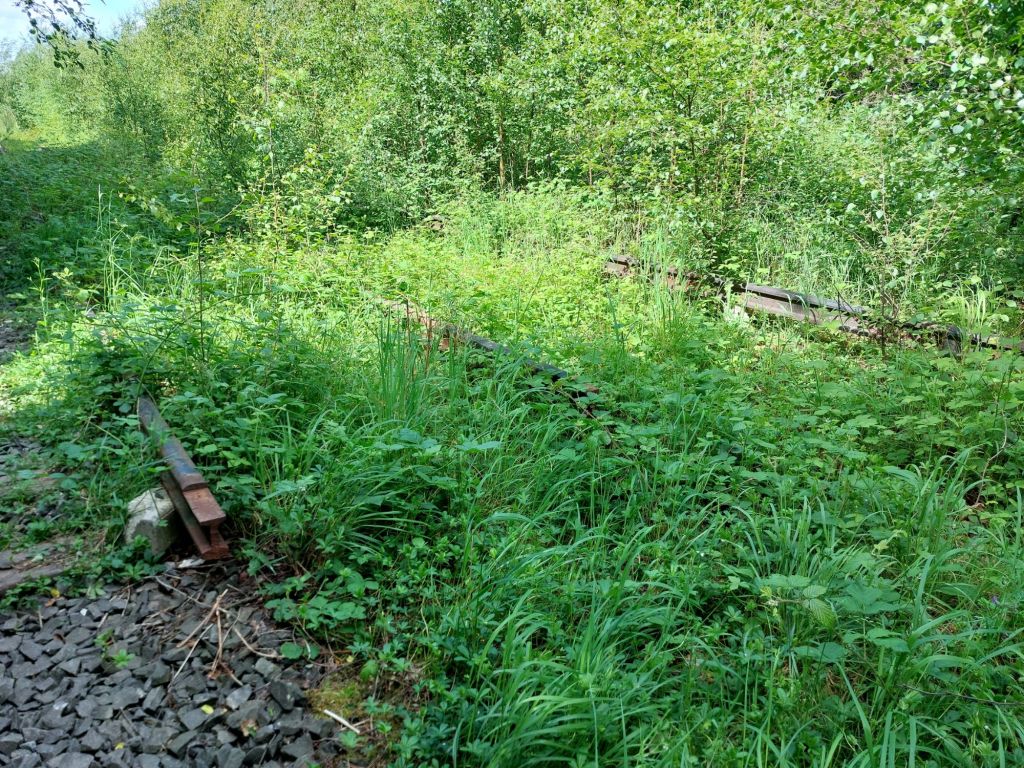
This contrasts well with the former ‘Butterwell Line’, proposed as a similar link by SENRUG which in parts has been derelict for decades, and I took some comparative photographs of the former New Moor level crossing to show the contrast between the two routes; the Butterwell Line is clearly a long way from running a train along the line, and especially considering a new junction would need built with the ECML near to Ulgham.
Looking north towards the former A1068 New Moor level crossingAlmost gone without a trace, looking towards AshingtonLooking towards New Moor cottagesPotland sidings, derelict for a decade looking south towards AshingtonPotland Sidings looking north. End of the line at Potland, just north of the former A1068 New Moor level crossing
The proposed Northumberland Coast Loop route is identical to that of SENRUG between Newcastle and Bedlington, and Widdrington to Edinburgh, the only exception is the section between Bedlington and Widdrington; the N.C.L. route uses the existing but lightly used route through Hepscott to rejoin the ECML, whilst the SENRUG route is focussed on running along the Northumberland Line to Ashington, then repurposing this derelict industrial branchline to use as a new Ashington to Widdrington link.
The N.C.L. route could, potentially be brought into use very quickly, and for a relatively low price compared to the Butterwell Line, and like other interventions on the rail network, could help to reduce the traffic volumes on the A1 via modal shift; bringing tourists in by train and distributing them by buses from stations, which would boost public transport for residents too.
Conclusion
Rather than a potentially blinkered focus on the A1 and the road network alone, lets hope our politicians and decision makers take a step back to lool holistically at the big picture of transport in Northumberland, and don’t ignore the potential role of public transport in helping move the millions of tourists visiting our county.
A few ideas of FREE things to do around Alnwick, Northumberland in 2026.
Alnwick Pastures: A free scenic walk along the River Aln from the Lion Bridge, near to Alnwick Castle, running alongside the river heading downstream to Denwick Bridge, near The Alnwick Garden. Please be aware to have sturdy trainers/boots/wellies as can be a little muddy and slippery, especially after a rainy spell.
Borderline Greenway: Covered in an earlier blog post shortly after this active travel route opened, the Borderline Greenway is a free to use path using a section of the former Alnwick and Cornhill Railway from the edge of Alnwick at Greensfield Farm out towards Alnwick Moor.
Hulne Park: A large walled section of Northumberland Estates that is typically open between 11am and 4pm to walkers (please note no cyclists or dogs allowed).
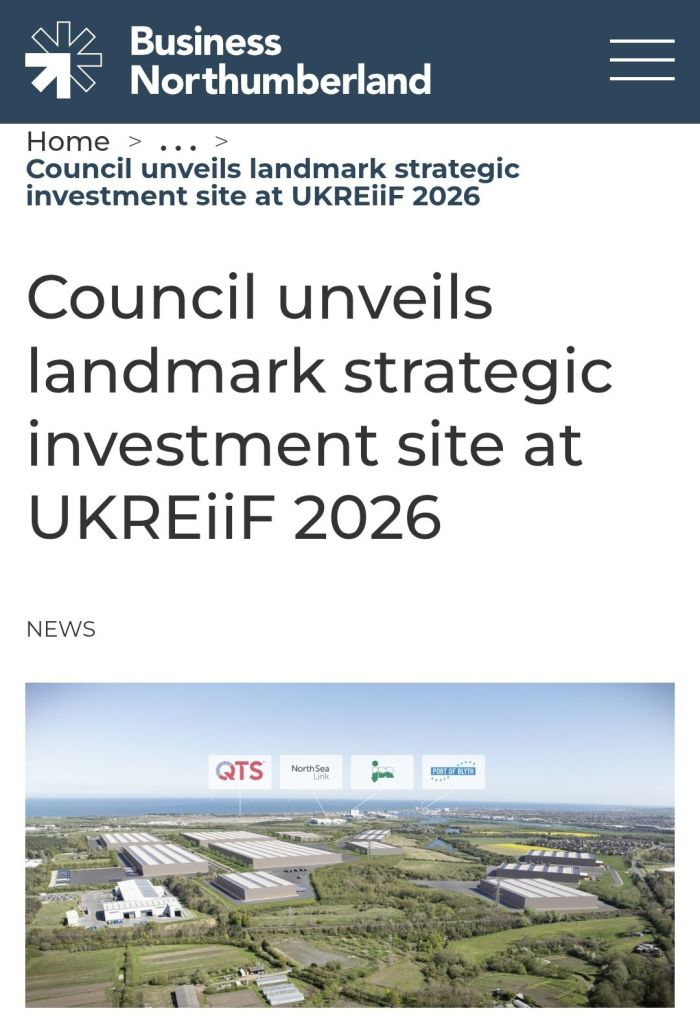
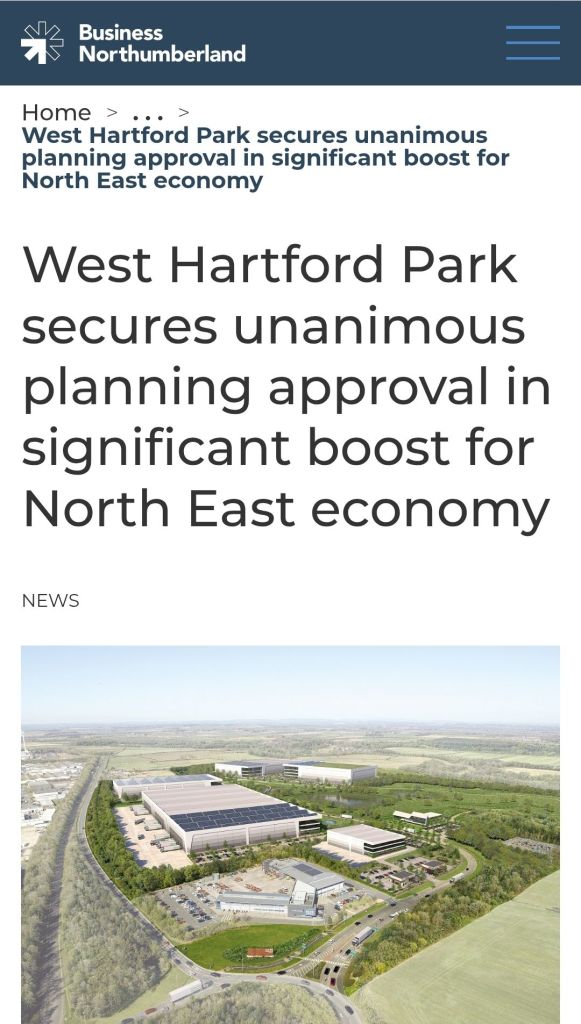
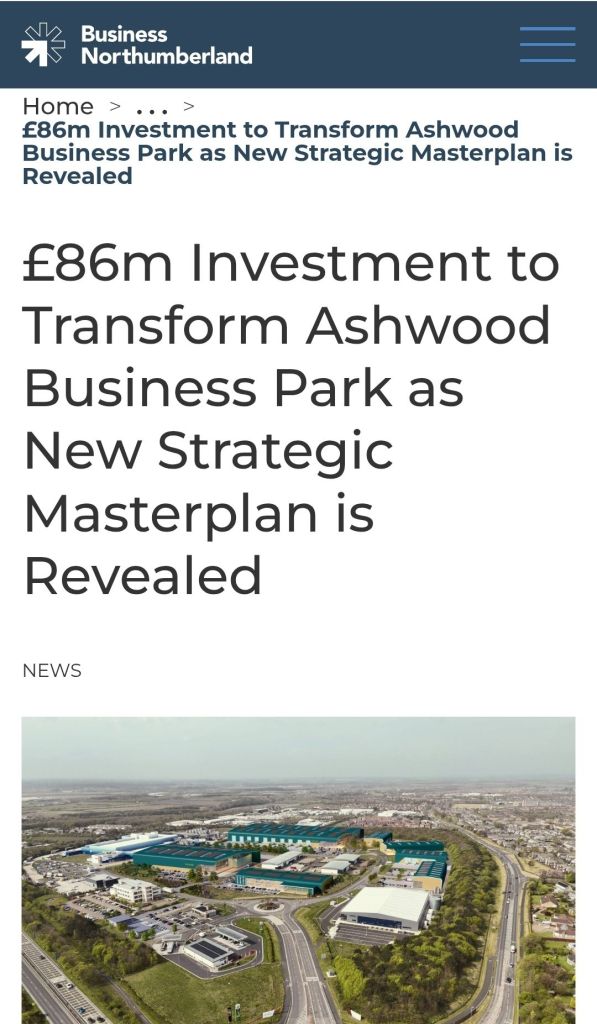
On Tuesday 19th May 2026, Northumberland County Council officially launched the ‘Northumberland Strategic Investment Site (N-SIS)‘, located in and around Cambois, Northumberland.
Quoting directly from the Business Northumberland blog page ‘…The site builds upon recent successes including the £10bn Blackstone QTS Data Centre Campus and JDR Cables £130m new advance[d] manufacturing development at the adjacent Northumberland Energy Park. Neighbouring Northumberland’s AI Growth Zone and the Advanced Manufacturing and Green Industries Investment Zone sites, designated by UK Government, N-SIS creates new large scale investment opportunity, ensuring the county’s reputation as a globally competitive destination for investment, particularly for sectors aligned with clean energy, offshore renewables, and advanced engineering...’
Connectivity – Good, but rail could play a bigger role via the N.C.L. route.
All of these sites boast of ‘great connectivity’ and in many ways they are well connected by all three being close to the A189, and therefore easy access to major routes like the A19 and then the A1, and there is mention of rail connectivity for the Northumberland Line and for railfreight, but could Northumberland County Council use the Northumberland Coast Loop (N.C.L.) route to better effect?
The N.C.L. route could be viewed as a rail route roughly in parallel to the A19/A189; obviously the A19 uses the Tyne Tunnels to pass beneath the River Tyne, where the Northumberland Coast Loop has to run via Central Station, to cross the Tyne upstream, but it cuts across from Benton Junction to pass under the A19 in North Tyneside where it approaches Northumberland Park station.
From there, it runs roughly in parallel to the A19, then the A189, before rejoining the East Coast Main Line (ECML) at Morpeth, much like the A19 joins the A1 at Seaton Burn, with connections both north and south for both modes of transport.
Developing the existing Northumberland Coast Loop rail route for passenger trains (Newcastle – Northumberland Park – Blyth Bebside – Pegswood – Alnmouth – Berwick – Edinburgh), would make connections into South East Northumberland for businesses far faster and more convenient, which would likely drive up the investment opportunities in these multi-million, sometimes multi-billion pound investment zones.
Blyth Bebside station as a strategic hub
The relatively new station at Blyth Bebside is in a VERY strategic location in many regards:
Rail access from all over SE Northumberland is easy via the Northumberland Line: Ashington, Bedlington, Newsham and Seaton Delaval are all within a few minutes of Blyth Bebside, as would be the proposed stations at Woodhorn and Newbiggin by the Sea, or even Cambois and North Blyth should that branch justify a rail service.
I would also contend that if rail services are extended from Morpeth, they should aim to reach Blyth Bebside rather than terminate in Bedlington; it is mere minutes down the line, but would then serve the largest town in Northumberland directly.
Bus routes tend to converge into Cowpen Road heading into Blyth, and fan out from Cowpen Road to other destinations, so it makes an ideal site for a bus/rail interchange with short walking connections.
Ideally, a more direct walking route between the ‘Bebside Interchange’ bus stops near ASDA and Blyth Bebside station via the west side of the ASDA supermarket could be established.
Active travel routes also converge at Blyth Bebside; the National Cycle Network Route 1 running down the coast for example crosses the River Blyth via the A189 Kitty Brewster Bridge then into Blyth near Cowpen Road, but other routes like Furnace Bank connect to Bedlington, and Hathery Lane to Cramlington (comes out near to the former Three Horseshoes Pub), with a little modification, these routes could be tied together and provide a great set of routes to/from Blyth Bebside station for walking and cycling.
Car/Taxi routes from Blyth Bebside are preferable compared to a station like Morpeth, as access onto the A189 makes access fast and easy to/from the station, and contributes far less to road traffic through other towns like Bedlington.
Blyth Bebside to Edinburgh in less than two hours by direct rail services.
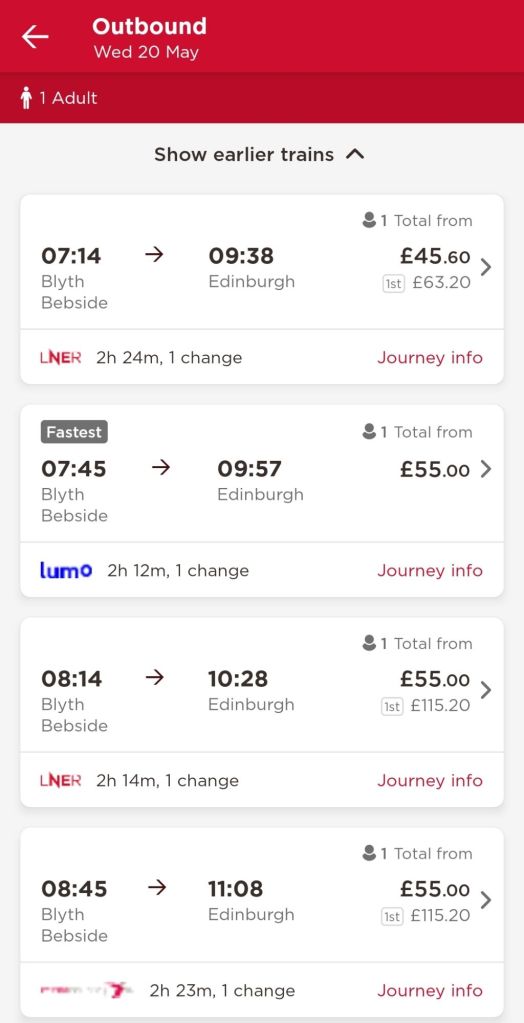
At present, even the fastest rail journey from Blyth Bebside to Edinburgh via Newcastle takes over two hours (via Lumo), but a direct rail journey could cut this by as much as 40 minutes down to around 1hr 30 mins (90 minutes) to 1hr 45mins (105 minutes) if a direct service via the Northumberland Coast Loop was to be operated.
Current rail journey times via Newcastle from the LNER app.
Making connections at Morpeth beaten too
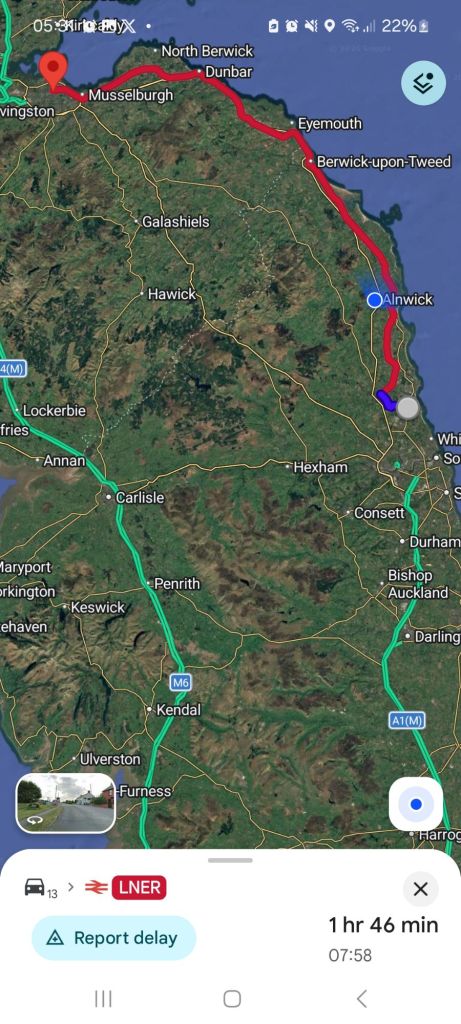
Even taking into account driving from Blyth Bebside to Morpeth Station, and catching the train there to Edinburgh, the journey time would still be 1hr 45min (105 mins), and bearing in mind that this journey was entered into Google Maps at 05:30 on Wednesday 20th May, it factors in the lower road traffic volumes in the early morning.
That drive at peak times through Bedlington and into Morpeth, particularly in the morning peak can be painfully slow due to commuters and school traffic, meaning at certain times of day, the short road journey to Morpeth station could be significantly longer.
Google Maps indication of 1hr 46min ‘mixed modes’ journey from Blyth Bebside station to Edinburgh Waverley station via Morpeth station
In contrast, the direct rail route from Blyth Bebside, through Bedlington and Hepscott, then joining the ECML at Morpeth North Junction towards Edinburgh would avoid all the headaches of road traffic through towns like Bedlington and Morpeth, and offer a reliable, fast connection to cities such as Edinburgh.
The other factor in favour of rail is that ‘time on a train is useful time‘; a person on a train can open a laptop and begin work as soon as they have sat down; so a slightly longer direct service has less impact that one needing one or more changes of train or mode of transport, where each change would mean packing bags/laptop away and the loss of working time as a result.
So whilst a passenger may be on the train a short while longer overall, that time can be usefully employed to get some work done, or can be used as time to relax on the way home after a busy day with a cup of tea or coffee, and perhaps something to eat.
No trains between Blyth Bebside and Morpeth station (yet).
As covered in my other blog post recently, there isn’t a rail connection into Morpeth station from the Bedlington direction at present, and it is unlikely to happen in the short term unless major timetable changes occur to allow the Newcastle to Morpeth service to be extended eastwards (ideally to Blyth Bebside or beyond) or new infrastructure such as a reopening of the former bay platform at Morpeth was to occur to allow services from the east to terminate at Morpeth and run back via Bedlington.
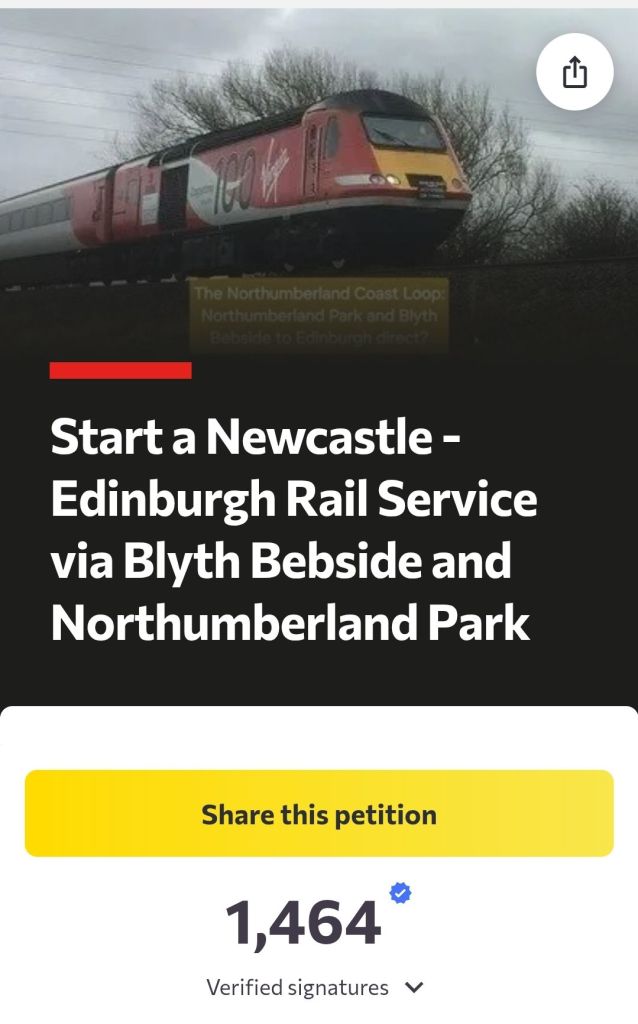
Strong support for the Northumberland Coast Loop from Newcastle Upon Tyne to Edinburgh via Northumberland Park and Blyth Bebside
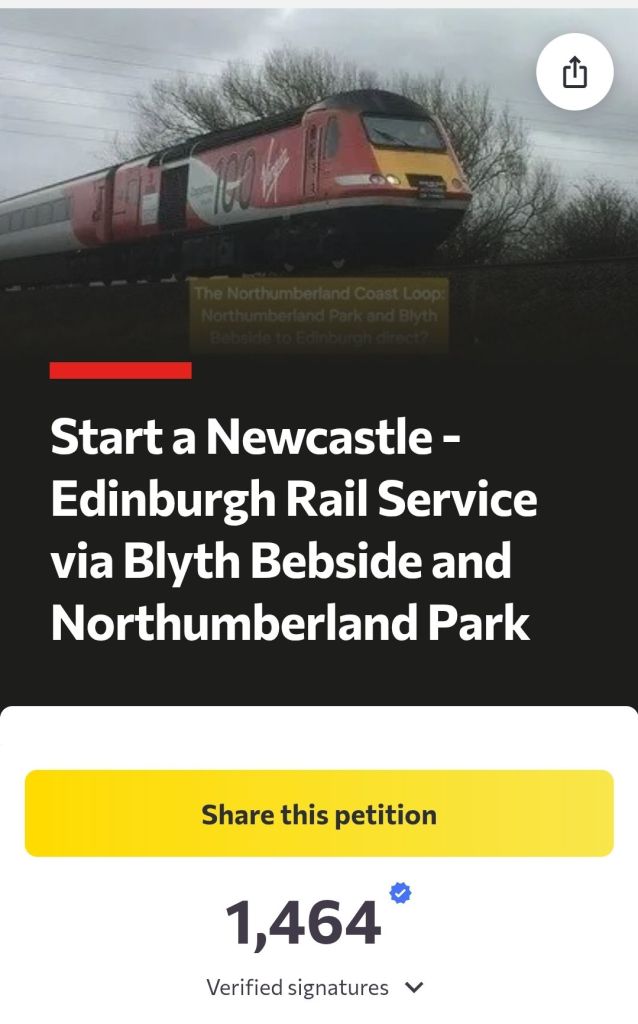
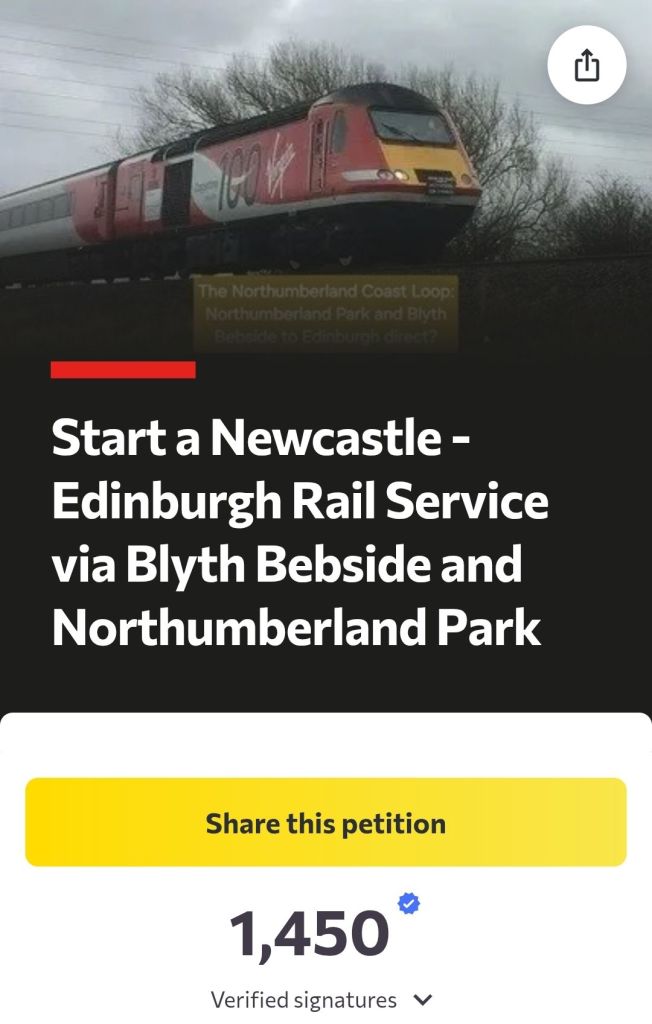
As of this morning, the petition has just reached 1450 signatures, showing growing support for the route to be at least investigated for its potential by organisations like Northumberland County Council.
I did receive a positive reply to an email I sent to Cllr Glen Sanderson in October 2024 with regards the then campaign for Newcastle to Berwick via Blyth Bebside, so hopefully the growing support for the route will be well known, but if you can email Cllr Sanderson, your local Councillors or MP’s about the ‘Northumberland Coast Loop’, it’ll all help!