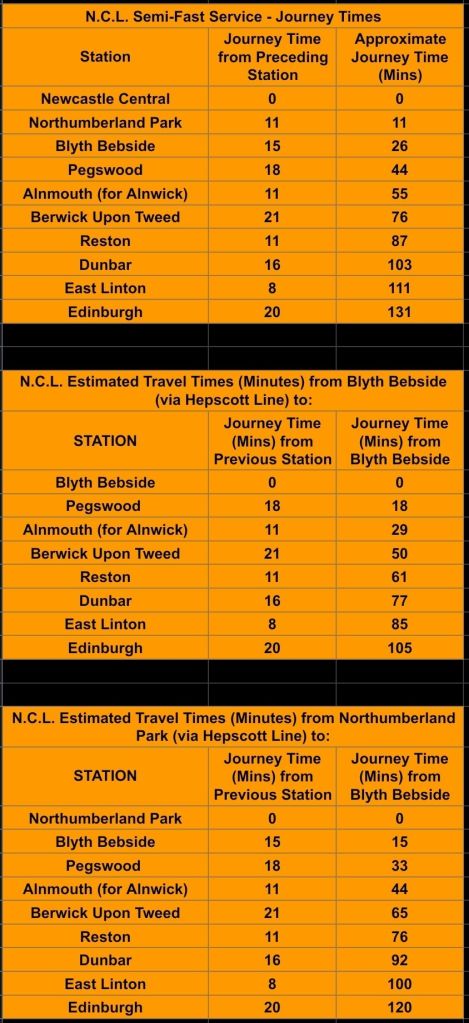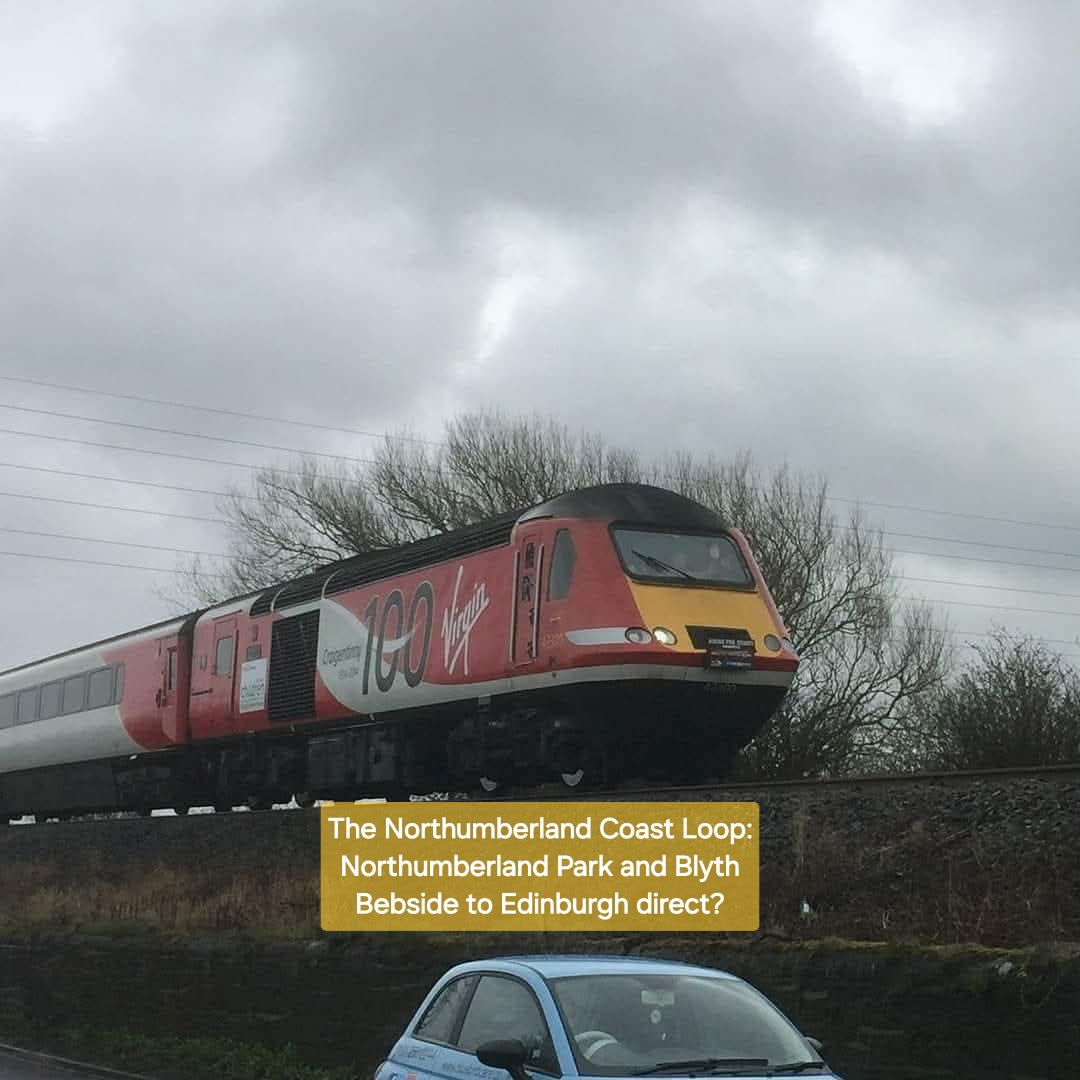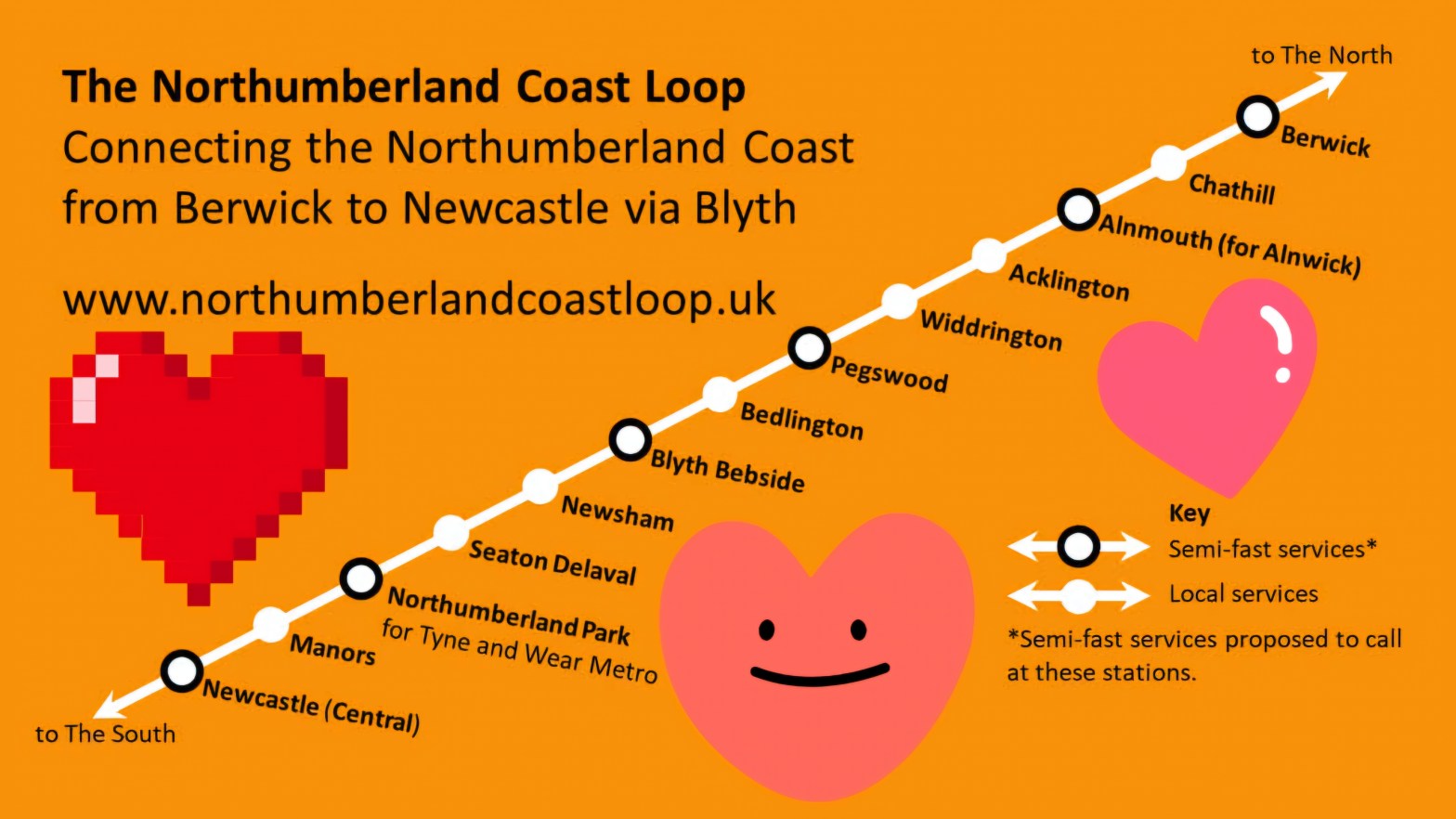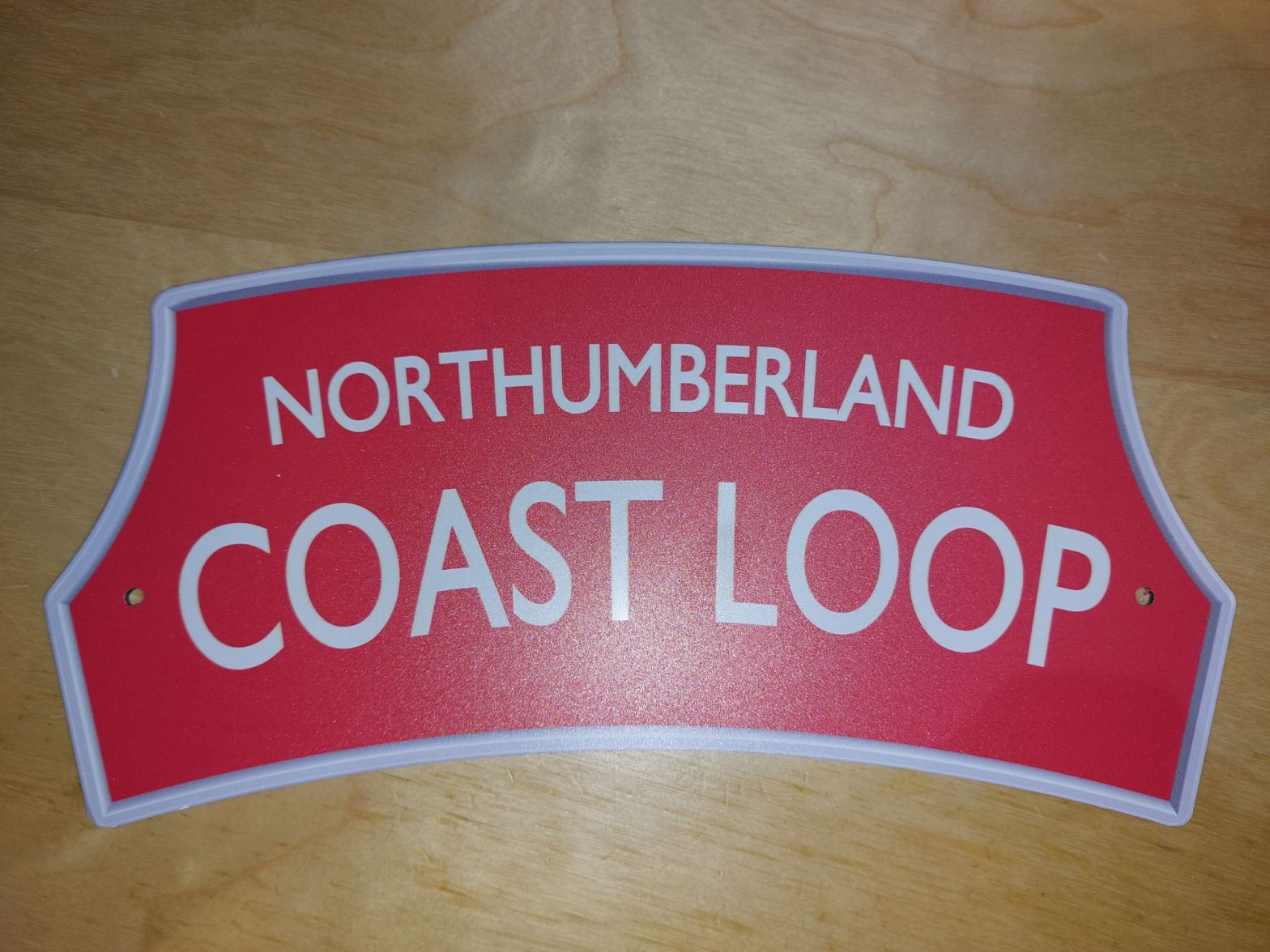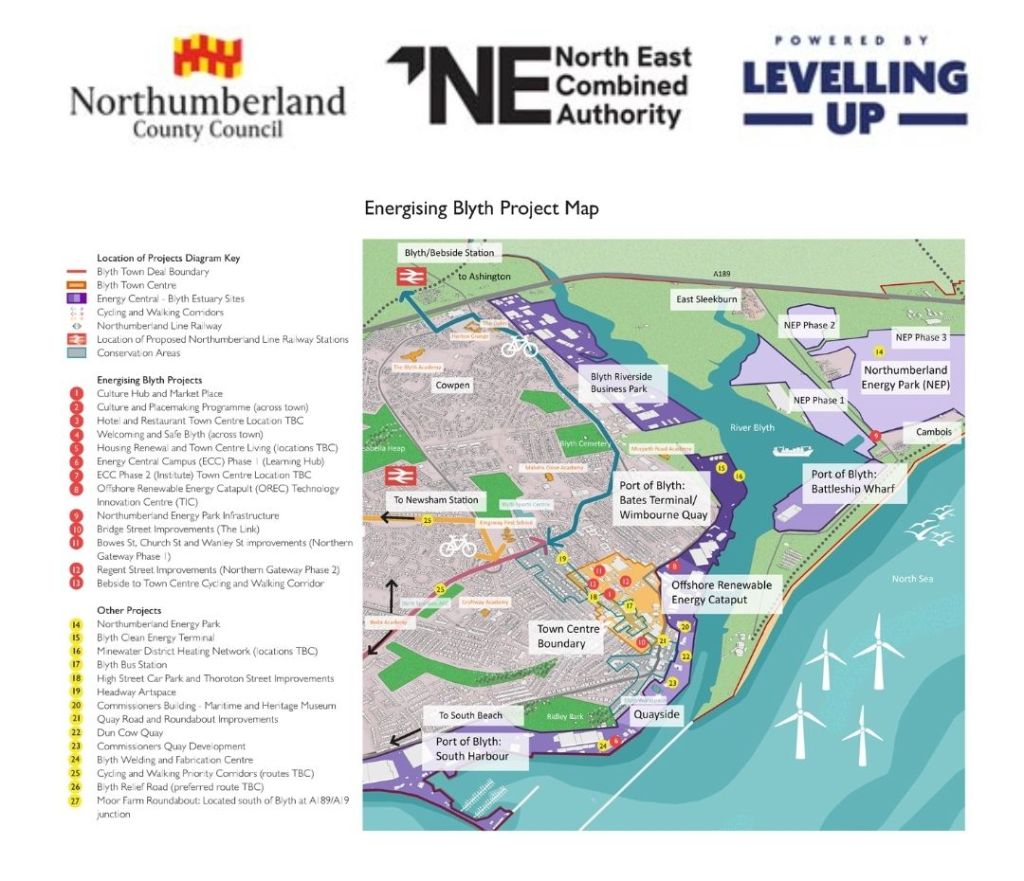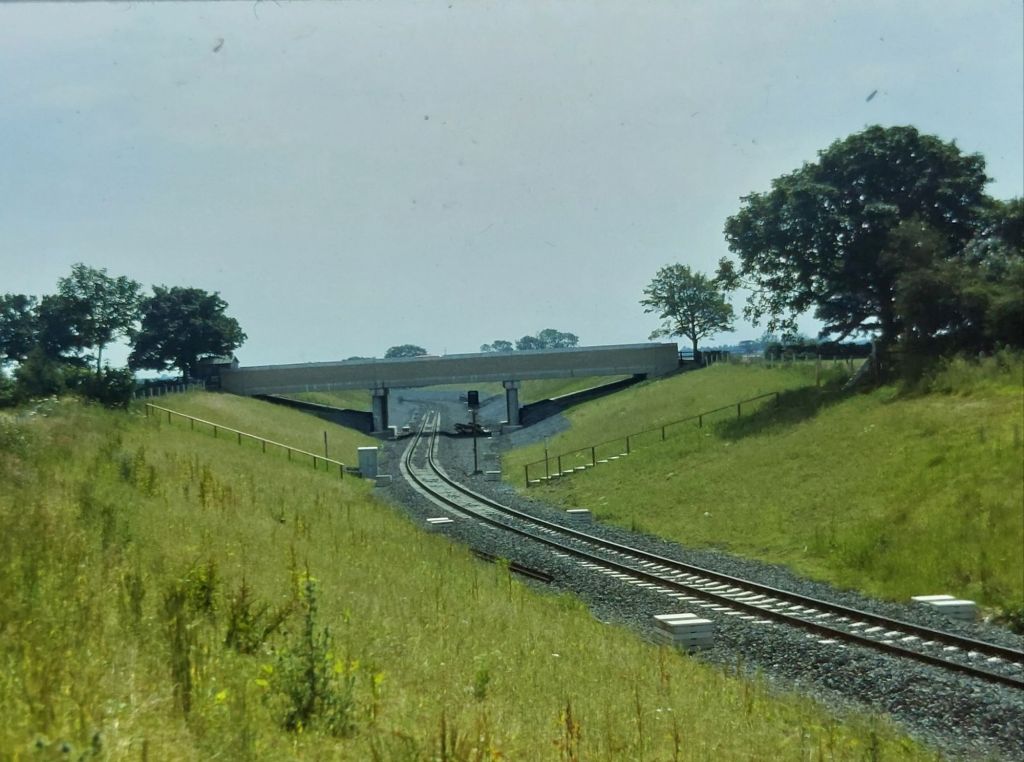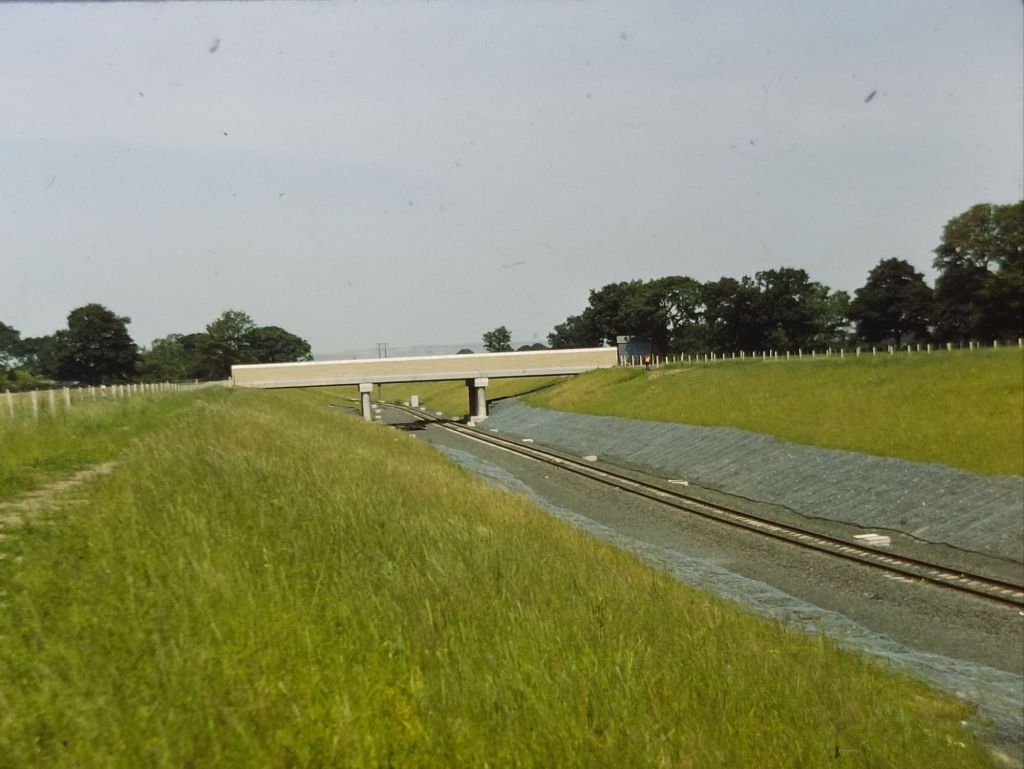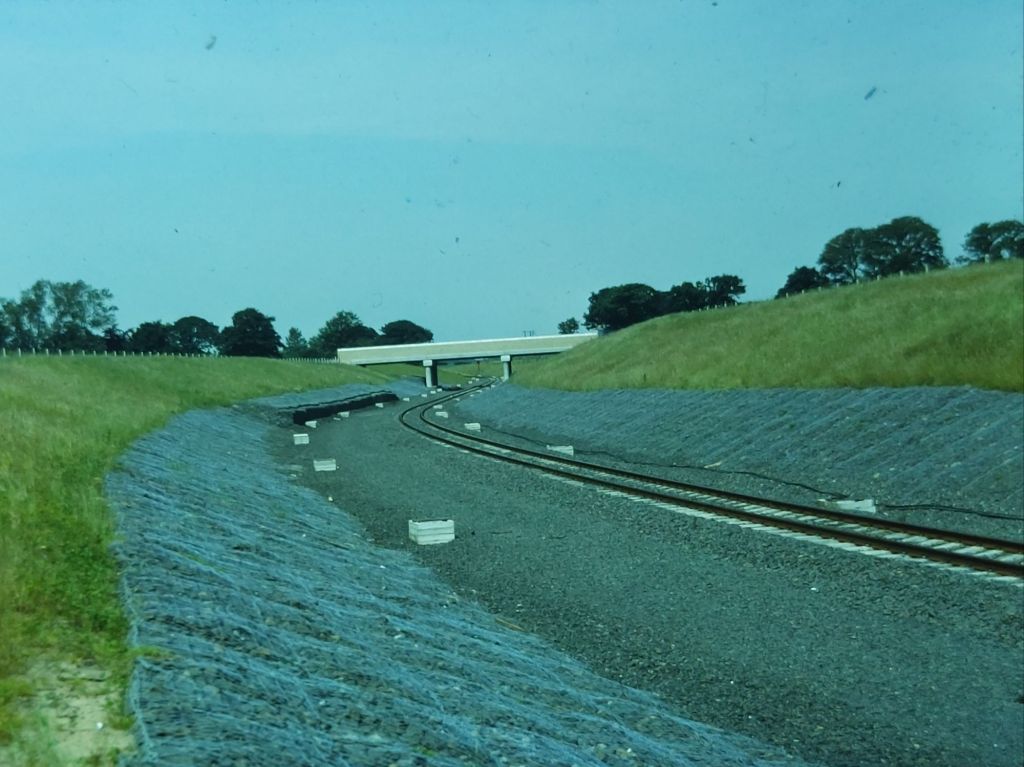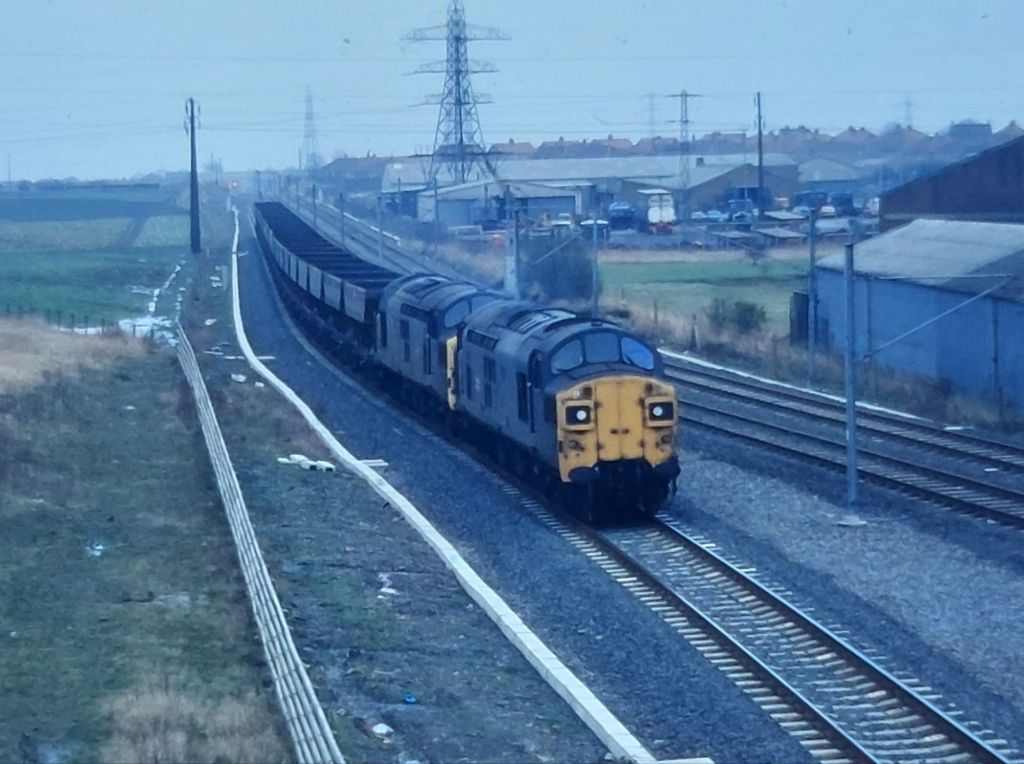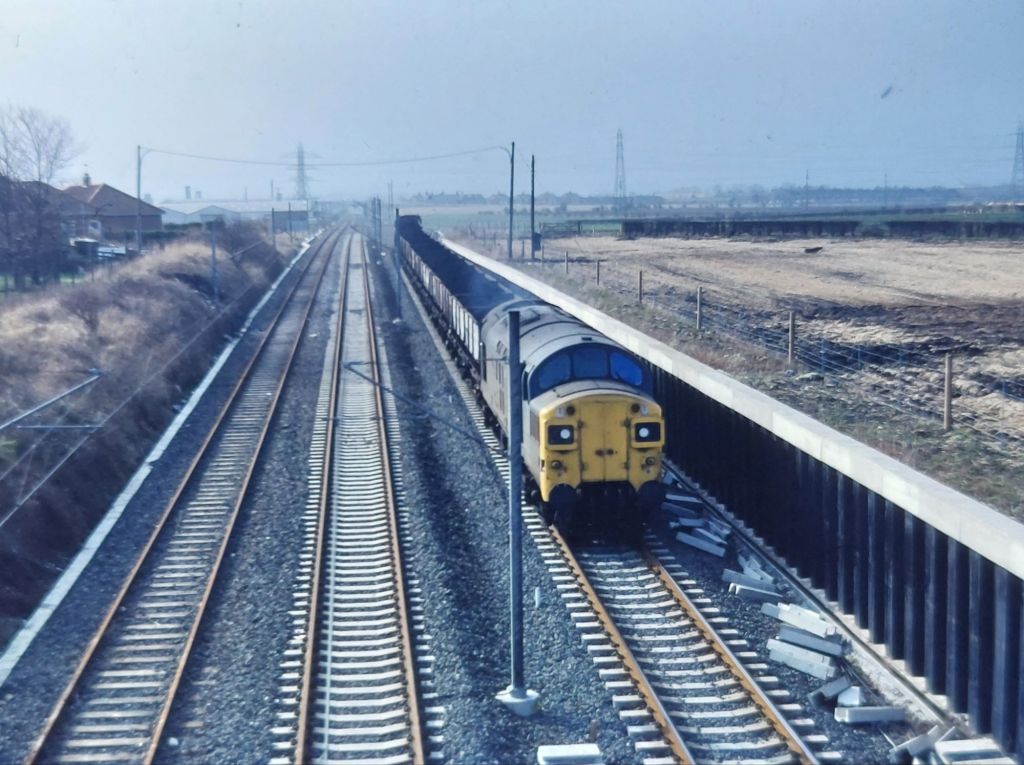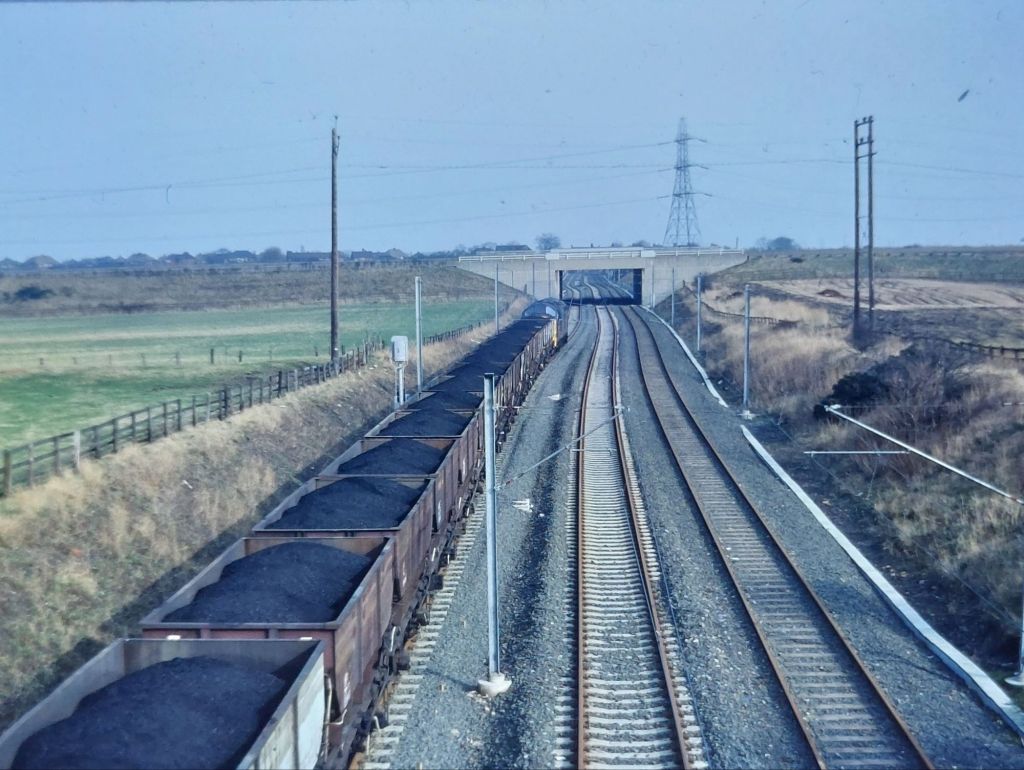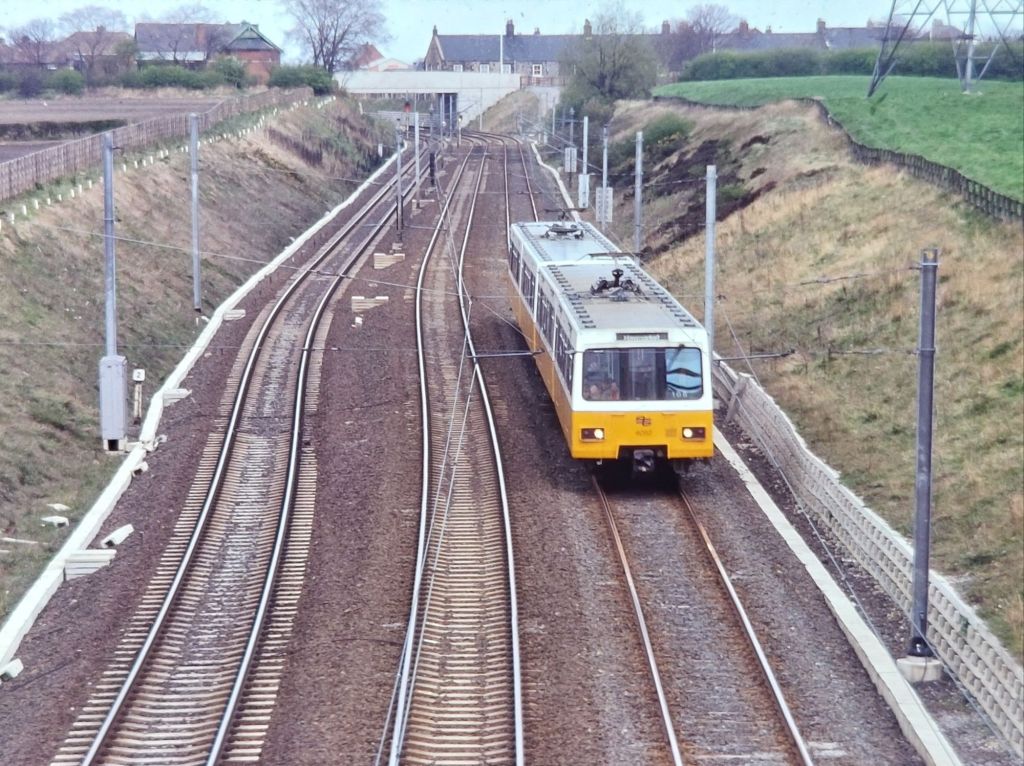
The premise of the N.C.L. is to provide large towns such as Blyth, and areas such as North Tyneside a direct rail link northwards, by using the existing freight line between Bedlington and Pegswood (the Hepscott Line) for rail services between Newcastle and Berwick/Edinburgh to run via Blyth, now that stations are opening on the Northumberland Line.
This would avoid the time penalty of heading south into Newcastle to change trains to then head north, instead allowing a direct, and therefore faster, single seat trip from south east Northumberland or North Tyneside into Scotland or North Northumberland.
As stated in above blog, the cost of the Northumberland Line is around half the cost per mile compared to dualling of the A1, so the N.C.L. route could be delivered at a fraction of the cost of dualling and delivering potentially large economic benefits to boot. The Northumberland Line is due to deliver about £1.50 back for every £1 spent.
North Northumberland needs better connectivity, but rail connectivity could deliver much more economic benefit, whilst also cutting carbon emissions, cutting congestion, and improving safety, rather than widening of roads, and overwhelming towns and villages already struggling to cope.
Let’s hope that 2025, as the Railway200 year will see a refocus on rail transport as the way forward, as once Britain did before, and led the world. Let’s lead the world once again by putting rail at the forefront of green transport?
Over the course of the past 12 months, the website has attracted visitors from across the globe, and in substantial numbers, with a little over seven and a half thousand visitors making more than nine thousand views, see the stats card below for full details.
Website Statistics 8.1.25
2025, as the nationally celebrated Railway200 year, has got off to a VERY strong start for the N.C.L website. This year has already seen around a sixth of the total traffic in 2024 in the first week of this year.
Monthly statistics for the N.C.L. website/blog
Indeed, the best ever day for the website so far was on the 5th January 2025, with a tremendous 619 views taking place.
Thank you all very much for taking the time to look at the website, and please keep coming back for more news and updates on the campaign!
A last minute find on Realtime Trains is the presumed test train starting at Middlesbrough Sidings at 08:35 this morning (8.1.25), due to reach Bedlington at 14:30, then taking the Hepscott Line towards Butterwell Junction, where presumably it takes refuge in the former disposal point sidings between 14:49.5 and 14:54.5, before heading back to Hepscott by 15:03, taking a trip to Morpeth between 15:32 and 15:34.5, then passing back through Bedlington around 15:45 to head back to Middlesbrough.
If you’re able to, why not try to catch it, especially on the rarer sections of track such as the Morpeth North Curve?
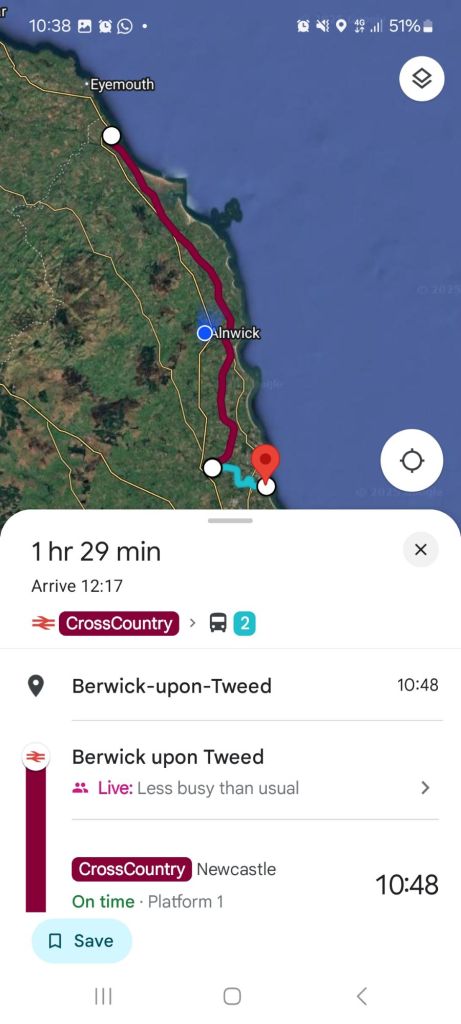
This recent article from the BBC suggests that the highly popular 08:10 CrossCountry service from Alnmouth (for Alnwick) might survive the December 2025 ECML timetable change, though this is not yet certain.
CrossCountry wish to maintain the service serving Alnmouth, and as a very popular on (around 100 daily users of this train are quoted in the above BBC article), contributes massively towards the near million rail users on the North Northumberland stretch of the ECML in the 2023/24 rail user year (please see above article for details).
Loss of the CrossCountry service at Alnmouth would therefore a massive backwards step for rail users in North Northumberland – the 2024/25 figures, yet to be released may well show over a million rail users given the trends from the preceding year; losing well used services when more people are using rail is an absurd proposition surely?
Act NOW
Please sign this long running petition by David Towns to see more local services on the ECML between Berwick and Newcastle. At time of writing (7.1.25), it has 502 signatures, lets see how quickly 1000 can be reached?
If you live in the North Northumberland constituency, please write to David Smith, MP for North Northumberland to request support for retaining the 08:10 service at Alnmouth, alongside an improved service at other stations in his area (Morpeth, Pegswood, Widdrington, Acklington, Alnmouth, Chathill, and Berwick Upon Tweed all fall within his contituency), and please mention the proposed Northumberland Coast Loop too!
SHARE this post on your social media to raise awareness and hopefully see this important service at Alnmouth retained.
This blog post sets out a few thoughts on improving the connectivity of Alnwick and Amble, both popular tourist towns to their nearest major rail station at Alnmouth on the East Coast Main Line (ECML).
Alnwick to Alnmouth Station
After sharing a recent blog post on the Alnwick Matters Facebook Group (image below), a number of comments were made about the poor state of public transport connectivity by bus from Alnwick to Alnmouth.
Comment 1Comment 2
The above comments show the dissatisfaction with the existing services by Arriva; while the service outlined below seems fairly reasonable, the reliability of Arriva buses is well known to be poor, with buses often late or failing to arrive at all on numerous occasions.
The current services are outlined below, with both running into and through Alnwick and Amble respectively already.
Bus Meets Train signage at Alnwick Bus Station, Stand 4.
X20 between Alnwick and Ashington
X20 route near to Alnmouth Station
The X20 service provides a near ‘doorstep’ connection to the station, taking a route via South View and Curly Lane in Hipsburn to serve the closest bus stops to Alnmouth station.
The service is presently approximately hourly, the with gaps between services slowly increasing during the course of the day.
While this isn’t necessarily a bad service, if late running or failing to run altogether, this would present a significant issue for those trying to use the service.
Improving the reliability and timekeeping of of the X20 service would be an immediate benefit that could hopefully be very quickly delivered.
X18
The X18 service runs through Hipsburn, but doesn’t run via South View & Curly Lane, the nearest stop being that near Hipsburn Roundabout, around 8-10mins from the station itself.
Route of the X18 near to, but not serving Alnmouth Station.
While it may require some timetable alterations, routing the X18 to Alnmouth station would seem the obvious course of action to improve connectivity between bus and rail services.
Waiting shelter (and lack thereof for Amble bound passengers) at Hipsburn Roundabout bus stop.
The lack of a waiting shelter on the Amble bound side of the A1068 would also be alleviated by running via Curly Lane, as both stops have shelters at that location, but the simple installation of one at the Hipsburn Roundabout stop should potentially be given priority too.
X18 and X20 together offers a half hourly service
If both services ran to similar timings, and both ran via Curly Lane (X18 would require rerouting), then this could offer a near half-hourly service to/from Alnwick and Amble, but unless reliability improves, then this is still unlikely to be an attractive option for many.
Dedicated Alnwick – Alnmouth Station – Amble Circular Bus
Given the popularity of both towns for tourism, with Alnwick home to Alnwick Castle, the Alnwick Garden, Lilidorei, Barter Books and more, and Amble an increasingly popular seaside town, there could well be justification for a dedicated year round bus service to link both towns to Alnmouth Station.
This could mirror the 434 ‘Northumberland Line Connector’ that was launched in February 2024 and running hourly from 7am to 7pm.
A similarly sized bus, with appropriate branding (Castles and Coast Connector perhaps?) could be similarly provided as a dedicated link between Alnwick, Alnmouth and Amble, which would also take in sites like Warkworth Castle en-route.
Timings for such a bus may need extended, perhaps until 9pm or perhaps even 10pm for evening events in Alnwick, or people returning home on late trains from Alnmouth.
The current bus timetables suggest that Alnwick Bus Station to Amble High Street would take between 27 and 30 minutes, meaning a single bus could possibly achieve a full circuit in one hour.
At a minimum, an hourly service should be provided by such a dedicated bus, and at peak times, ideally a half hourly one in addition to the X18/X20 buses, with tickets usable across all three services.
Alnwick Town Centre: Bus Priority Improvements?
Improvements to traffic management in Alnwick (particularly around Bondgate Without) could decrease congestion for buses heading towards Alnwick Bus Station (by observation and experience as a local resident) traffic often tends to queue along Bondgate Without, which is the major bus route, and buses trying to exit Hotspur Street to head towards the War Memorial also get held up in traffic.
One solution could be to make Bondgate Tower and the junctions with Hotspur Street and Greenwell Road fully light controlled, which could also improve pedestrian safety in this area of Alnwick due to busy road junctions.
A second option would be to rever the traffic priority at Bondgate Tower to heading inwards (as it has previously been, as photo below shows)
Photo of a Northumbria Motor Services Bus exiting Bondgate Tower, but showing former inward priority at the time. Credit to Brian Taylor of the Northumbria Motor Services Pictures Facebook Group for the photo.Recent image of Bondgate Tower from Google Maps showing present priority arrangements.
A third option would be to make Bondgate Tower one directional, and probably inward only (from Alnwick Playhouse side into the Town Centre), which could also potentially help to avoid the structure being impacted by oversize vehicles (easily able to turn left or right to avoid the low arch).
The third option is possibly the most preferable, as it reduces the conflict of traffic alternating direction through Bondgate Tower, allowing a steady flow through, meaning that traffic would not build up on Bondgate Without to the same extent, and it would also allow any traffic exiting Hotspur Street and Greenwell Road to have a much clearer view of any oncoming vehicles. It could also effectively calm the traffic in the Town Centre and make crossing the road easier and safer.
The above works are not strictly necessary to improve the bus services, but as a hotspot of congestion within Alnwick on a primary bus route, improvements would benefit all buses, and would also be of pedestrian benefit.
The Alnwick Branch/Aln Valley Railway
Unfortunately, the decision was made in 1968 to close the Alnwick Branch between Alnwick Station and Alnmouth. Some controversy surrounds this being reputedly linked to the building of the A1 Alnwick Bypass around that time, the closure of the line meaning that building costs of a rail bridge over the A1 could be avoided. An excellent short video of the Alnwick Branch in action can be seen here.
The Aln Valley Railway has a long stated intention of reconnecting Alnwick to Alnmouth from their new station at Lionheart (to the east of the A1 Alnwick Bypass), through to Alnmouth Station.
This rail link, once complete would be a great asset to connectivity between Alnwick and Alnmouth, especially as the A1068 can often be treacherous in adverse weather conditions due to steep hills, sharp, and often blind bends, and is frequently the site of road accidents, the railway would be a much better ‘all weather’ route.
Hopefully the AVR will not be too long from achieving this aim.
There could be an advantage in the Aln Valley Railway extending south of Alnmouth on an alignment parallel to the ECML before passing over/under the ECML to head towards a new terminus near to Birling; giving the AVR a fantastic sea view (as the ECML trains experience), and putting Amble within a fairly reasonable walking/cycling distance of a rail station? This admittedly would be a significant new branchline to build, but would be more advantageous than rebuilding a station such as Warkworth on the ECML, or to rebuild the old Amble Branch which has been largely lost.
Use of battery electric trams could allow the route at each end to be extended into the town centres of Alnwick and Amble, the latter probably having to avoid the Warkworth Castle route of the A1068 and instead cross the River Coquet between Warkworth and Amble, and curving around Birling to join the extended AVR.
Alnmouth Station to Amble
The route between Alnmouth Station and Amble is comparatively straighforward, though straightening and generally improving the A1068 from its wiggling course between Hipsburn and Birling (before entering Warkworth) would be an advantage, as would removing on-street parking on Castle Street in Warkworth, which makes the road extremely narrow for vehicles such as buses and HGV’s to negotiate. The junction of Woodlands and Beal Bank at Warkworth could also be improved, with the through route potentially following the A1068, and making the approach from Morwick Road a give way, or a small roundabout be installed at the top of Beal Bank?
Conclusion
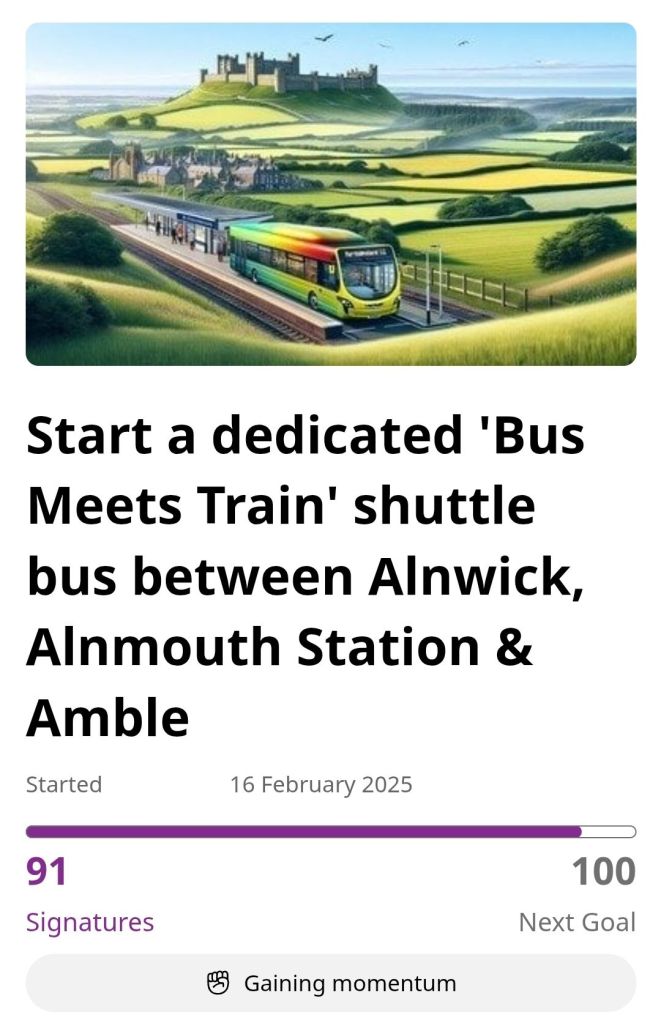
There is perhaps no reason why a dedicated Alnwick to Amble via Alnmouth shuttle bus service couldn’t be established during 2025; it is a fairly low cost and easily implemented change with low infrastructure requirements. Other buses such as the 472 Alnwick to Shilbottle bus could be extended on to Alnmouth Station too, although the 13′ 0″ height restriction on the High Buston road may restrict the types of buses able to service such a route?
In the last few days, I have sent an email to Ian Lavery, MP for Blyth and Ashington to ask for his support for the Northumberland Coast Loop proposal of a rail service from Newcastle to Berwick/Edinburgh via Bedlington and Hepscott.
While hopefully Ian will recieve the email, the automated response that came back mentions that as I now no longer a constituent of Ian’s (I now live in the neighbouring North Northumberland seat, presently held by David Smith, MP, whom I have emailed previously about the N.C.L. route), that he might therefore not be able to act upon this email from myself.
However, I know that a good number of the readers of this website and blog do live in Ian Lavery’s constituency, and if so, would you be willing to email him to seek his backing for the proposed route?
The more people who email in support of the Northumberland Coast Loop, the better chance there is of gaining traction and political support for it to happen.
The more people who can send such an email the better, so please encourage friends and family where you can to do so as well!
Below is a template (please feel free to amend and personalise as you see fit), which you may find useful to base your email upon.
Letter of Support for the Northumberland Coast Loop Campaign
Dear Mr Ian Lavery MP,
As a constituent of yours, I would like to ask for your support for the Northumberland Coast Loop, which is a proposal for new rail service between Newcastle Upon Tyne and Berwick Upon Tweed via Bedlington, Northumberland.
The website for this campaign is at http://www.northumberlandcoastloop.uk, and a recent petition for the route gained the support of 742 signatures, highlighting it’s strong level of support.
This route would build upon the recently reopened Northumberland Line to passengers, by using the currently freight only connecting line from Bedlington station, through the village of Hepscott, to rejoin the East Coast Main Line (ECML) at Morpeth North Junction, headed towards Pegswood, North Northumberland, and Edinburgh.
This rail link would give even greater advantages to rail users living in close proximity to the soon to open Northumberland Line stations at Bedlington, Blyth Bebside, and Newsham stations within your constituency, by allowing direct rail connections to North Northumberland places such as Alnmouth station, serving Alnwick and Amble, as well as Berwick. This would serve the ‘within Northumberland’ market for transport by providing much faster, safer, and greener rail connections.
If used by longer distance rail services, this route could also connect the above stations directly to major cities other than Newcastle Upon Tyne, such as direct links to Edinburgh, York, or potentially even London.
An example of the benefits of such as service can be seen by the Grand Central services between Sunderland and London King’s Cross, which have operated since December 2007, serving similar industrial towns to Blyth such as Hartlepool with long distance, direct trains up to five times per day.
The economic impact of such a service serving the new stations in our constituency could be transformative, encouraging new businesses, as well as helping existing ones to develop further.
Thank you for your time, and I look forward to your reply.
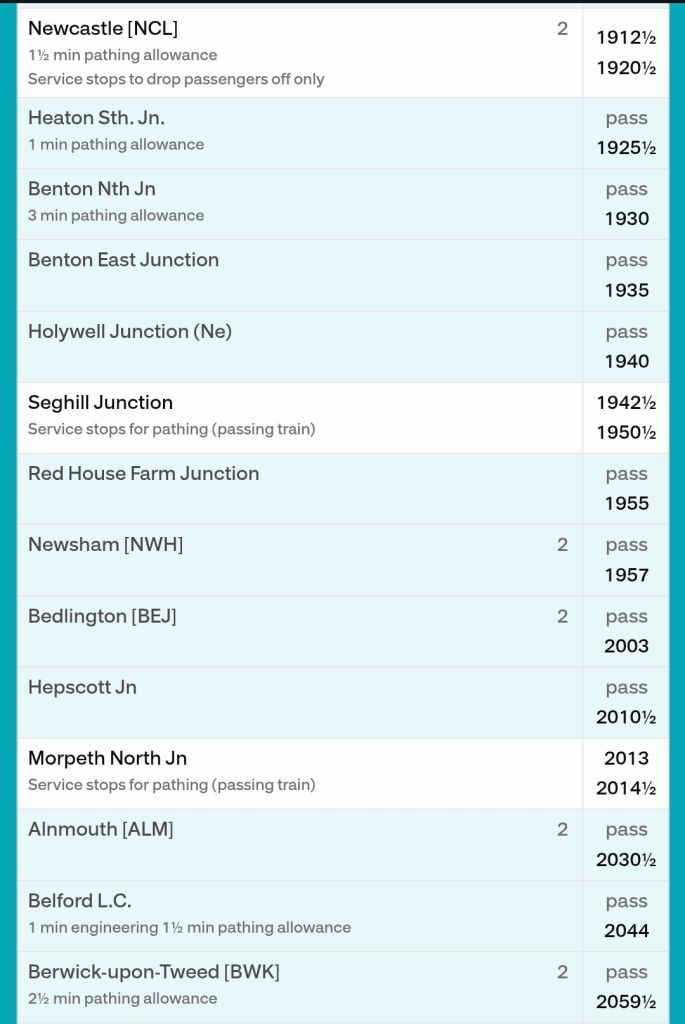
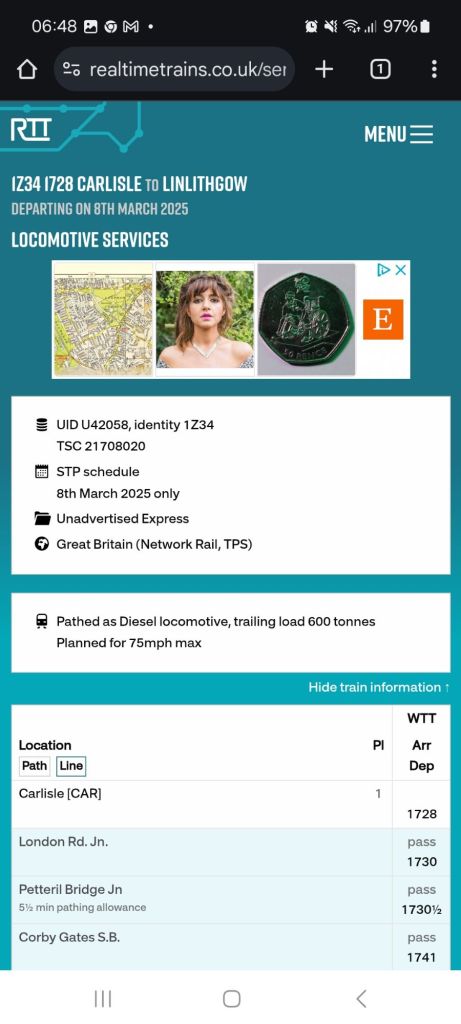
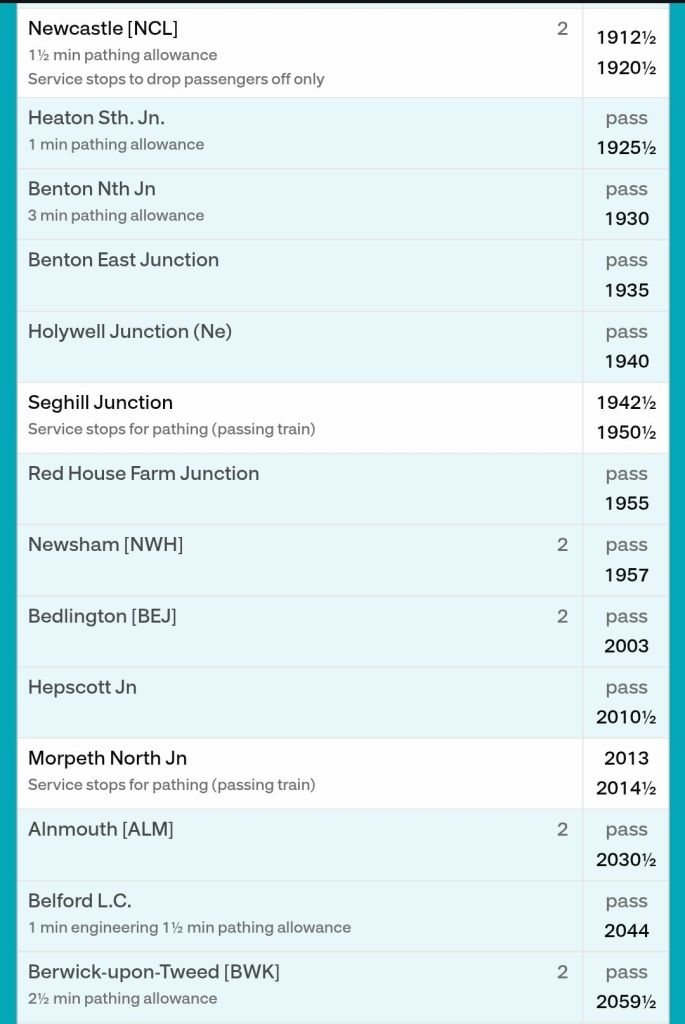
This railtour, beginning and ending in Linlithgow, Scotland will take in a number of spectacular lines on it’s excursion around Scotland and Northern England (take a look at the programme on the SRPS website, link above), with the final leg from Newcastle back to Linlithgow via Edinburgh Waverley taking in the proposed Northumberland Coast Loop route, from Newcastle to Berwick via Bedlington.
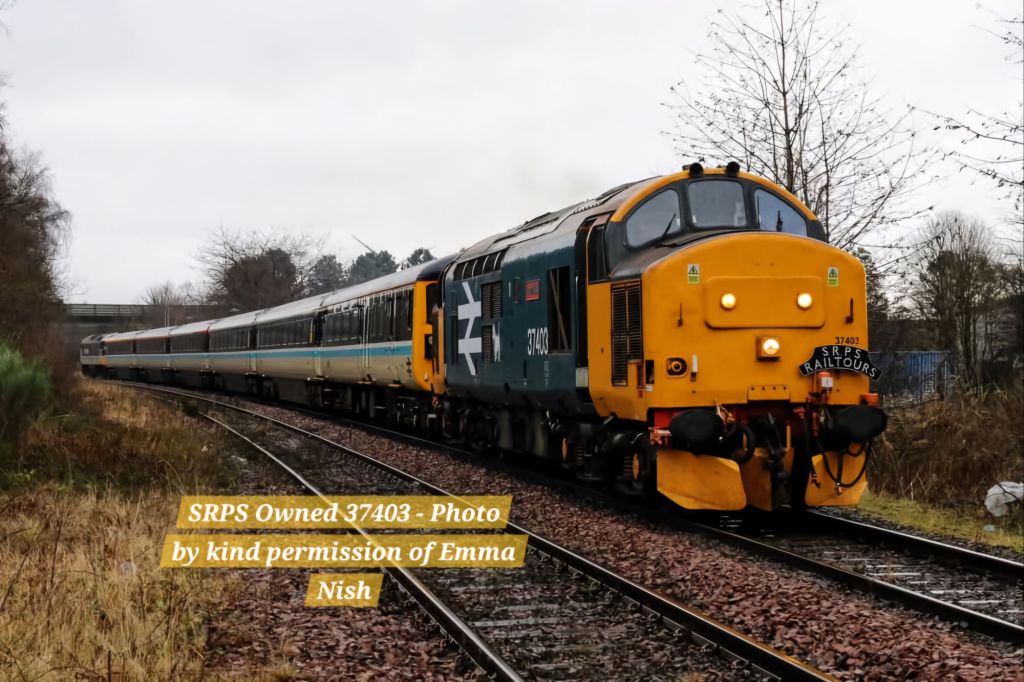
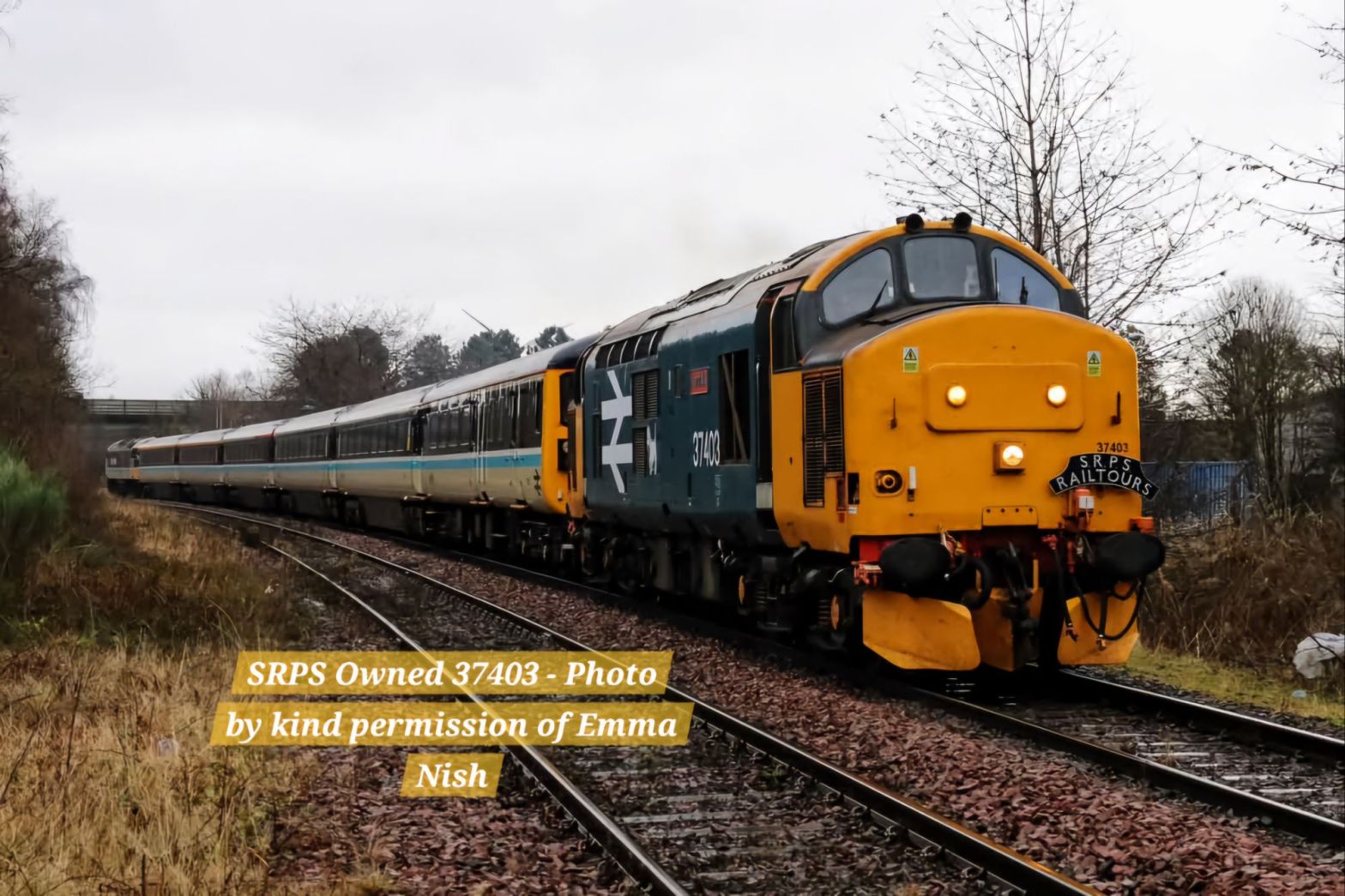
For those with an interest in classic traction, proposed haulage is a pair of Class 37 locomotives, with one being 37403 ‘Isle of Mull’.
Connecting The Northumberland Line to North Northumberland and Scotland
The concept behind the Northumberland Coast Loop Campaign is to use the existing lines that this railtour makes use of (the Northumberland Line as far as Bedlington, then the Hepscott Line to connect back onto the East Coast Main Line (ECML) to head towards Pegswood, then the ECML back to Edinburgh), for regular services.
Whilst the Northumberland Line reopening is a HUGE step forward in it’s own right, by giving the major coalfield towns a rail connection again after an absence of over 60 years to the nearest major city (Newcastle Upon Tyne), with already stated plans for direct Sunday trains to the Gateshead MetroCentre from December 2025, the Hepscott Line could similarly offer access to/from North Northumberland or even Scotland.
As can be seen from the above image (via the incredibly useful Rail Map Online website), the line from Bedlington towards Morpeth actually forms a triangular junction at its western end, allowing a train passing west through Hepscott to either turn left towards Morpeth station, or to take the fairly newly built (1979/80 built) Morpeth North Curve to take the route to Pegswood and directly head northwards.
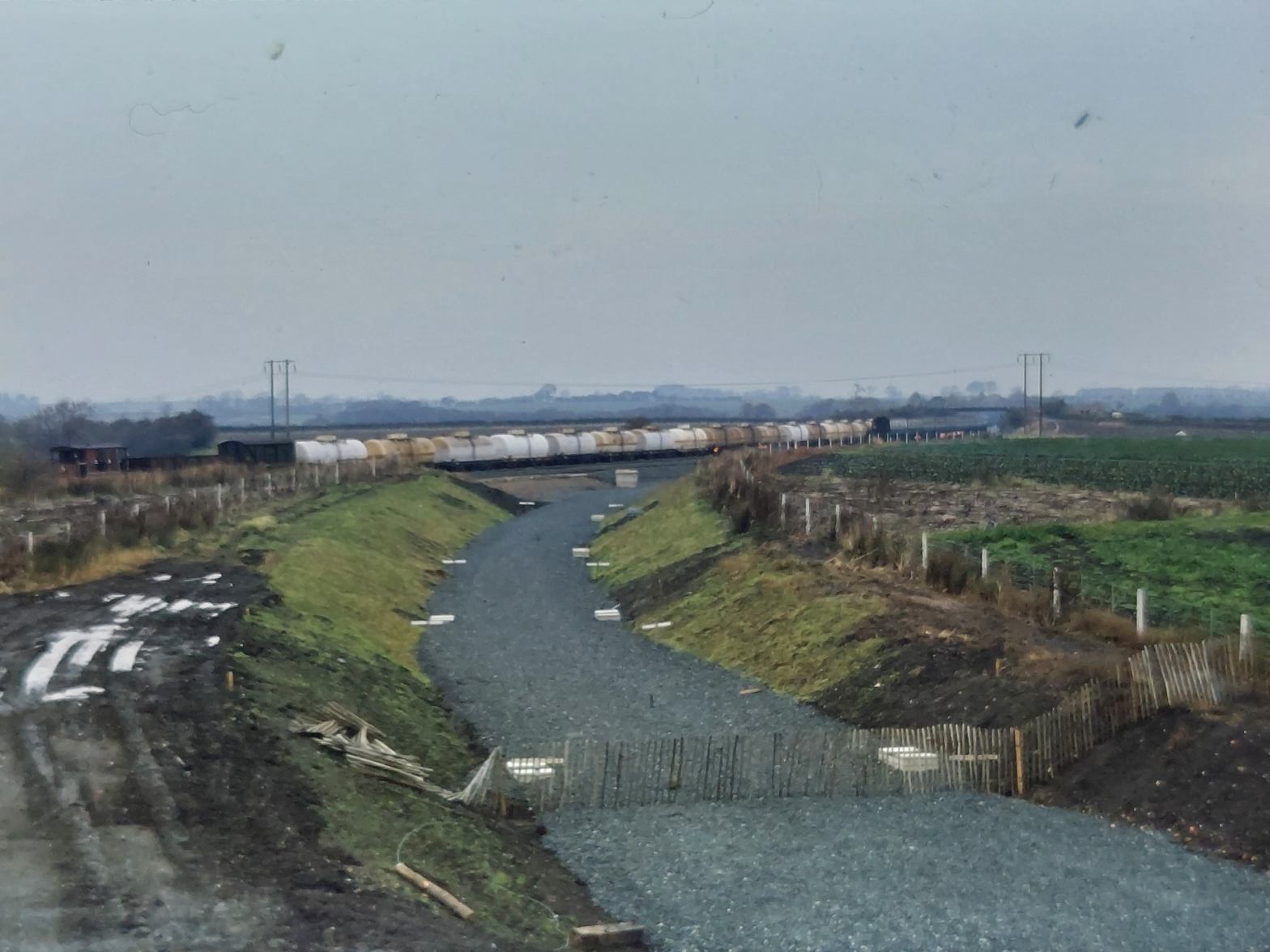
The photo above of 66301 in August 2024 by S. Lewins shows this route in its most common use; as a freight line taking the North Blyth to Fort William alumina flow into Scotland, and bringing empties back to the Port of Blyth.
Railfreight has been a lifeline for the rail network in the Ashington and Blyth area since the 1960’s, keeping much of the network alive and open, which has probably kept the door open for the Northumberland Line scheme. A total closure of the route, as has happened on the Leamside Line has proven more challenging to reverse by way of comparison.
Five Out Of Six Ain’t Bad
The Ashington to Newcastle ‘Northumberland Line’ will be six stations when fully opened, with Ashington, and Seaton Delaval already open. Bedlington, Blyth Bebside, Newsham, and Northumberland Park are due to be completed by the end of 2025, but hopefully much earlier than that.
With these stations well underway, and evidence pointing to the line being a success already, thoughts are now turning to expansions of the network.
Obvious candidates like extension to Newbiggin by the Sea, with an intermediate station at Woodhorn have been tabled already, but would require some relaying of track, as well as construction of new stations.
The Northumberland Coast Loop, by contrast would use the existing Hepscott Line link between Bedlington and Pegswood to link the existing/currently being built stations together, meaning it should be a fairly simple scheme to use this link more routinely. Freight trains run over this route several times a week; why couldn’t passenger trains also do the same?
Northern Market
From personal knowledge, a lot of people in the area of South East Northumberland/North Tyneside who’d be served by the Northumberland Line travel northwards into North Northumberland and Scotland fairly frequently; for example a day trip to Alnwick for attractions such as Alnwick Castle, The Alnwick Garden and Lilidorei, Barter Books and more are just some examples for day trip places. In the other direction, sites like Seaton Delaval Hall (National Trust) and Blyth Battery are attractions which draw visitors from North Northumberland/Scotland into SE Northumberland.
It is quite common for many in these areas to also take holidays at places such as the two large Haven Holiday parks at Haggerston Castle or Berwick, on a recent holiday at Berwick, the owner of the neighbouring caravan was a North Tyneside resident who travelled regularly between the two sites.
Given the relative distances involved (Blyth Bus Station to Berwick Railway station is 59 miles), rail is realistically needed to make public transport viable compared to driving; buses are far too slow to be competitive. A good rail connection could allow for many more trips to be made by rail as part of public transport, rather than by private car, with huge environmental, emissions and congestion busting benefits.
There could be two types of service to use this route; semi-fast (some station stops), and local (all stations). Semi-fast is probably the more likely solution in the short-term, where a limited number of stops will be made on both the ECML and on the Northumberland Line to better fit in amongst other mainline services; slower local trains are desirable, but may be less achievable in the short-term due to capacity constraints on the ECML.
The musical reference to Meat Loaf’s ‘Two out of three ain’t bad’ is that only five of the six Northumberland Line stations will be on the route; Ashington is unfortunately on a branch off this through route, and so wouldn’t be directly served.
This is counteracted quite a long way by easy interchange potential at stations such as Blyth Bebside between N.C.L. services and Northumberland Line trains.
The Northumberland Coast Loop could be potentially very easy to implement, with huge potential gains to be made at relatively low capital costs; why not get it opened up for regular services even if just as a trial?
As we usher in the 25th year of the 21st Century (scary how fast that has come from those of us who remember the nervousness changing to Y2K from 31/12/1999!), I’d like to wish all of all of our supporters, followers and readers a very Happy New Year for 2025!
Railtours over the N.C.L.
‘The Seven Counties Rambler’ by the SRPS is due along the N.C.L. Route on 8th March 2025.
Having said that, factoring in the Covid-19 Pandemic (which itself started around five years ago, with the first UK lockdown occuring on 23rd March 2025) and several other crises since, as well as the building of the Northumberland Line between those dates, it is quite understandable that not many railtours ran over the route, which has always been a quieter part of the network for them historically.
The Tynesider by the The Railway Touring Company will run from London King’s Cross to Newcastle and return on the 7th June 2025 is also due over part of the route, using the ‘balloon loop’ formed when travelling the Newcastle – Bedlington – Morpeth – Newcastle section of it’s route to allow the locomotive to be turned around for it’s run back towards York, which again will be interesting to see over the Northumberland Line/Hepscott Line.
Hopefully more tours will run over the Northumberland Line in due course over 2025, with both showing the potential ease of routine services using the route, but especially the Seven Counties Rambler illustrating how easy a Newcastle to Edinburgh via Bedlington route could be achieved?
The Northumberland Line in 2025
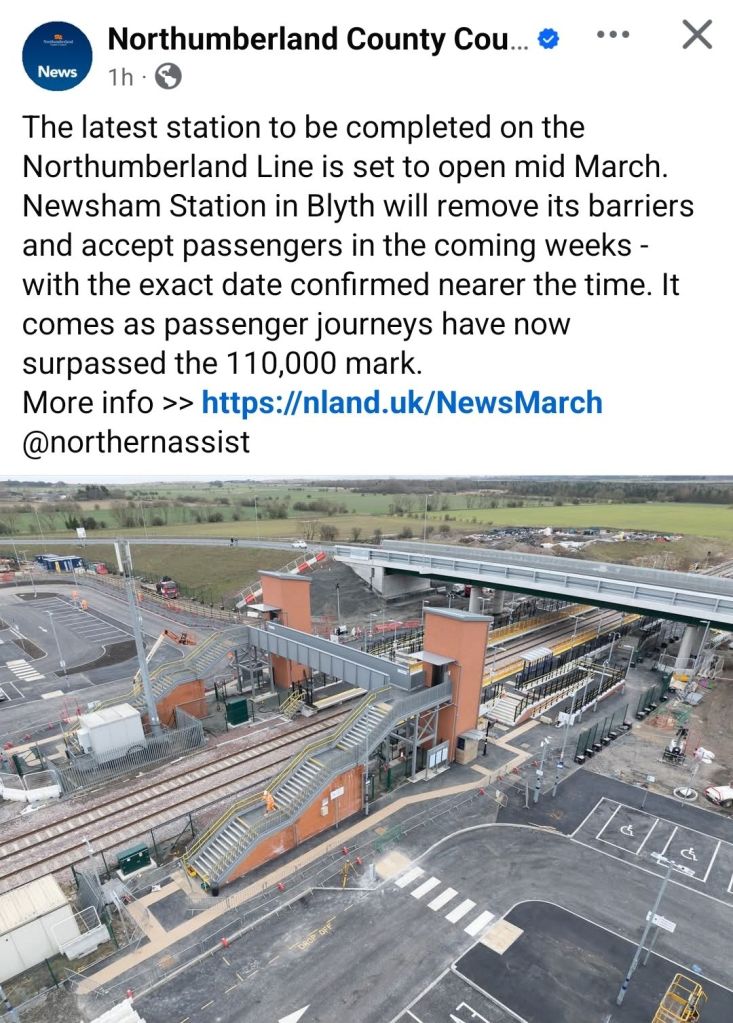
Speaking of the Northumberland Line, as it stands today only Seaton Delaval station is open on the route of the Northumberland Coast Loop thus far, having opened alongside Ashington on the 15th December 2024 with the partial opening of the whole line to passenger traffic.
So far, the other stations at Bedlington, Blyth Bebside, Newsham, and Northumberland Park are all slated for a 2025 opening, with Newsham likely to be the first station of the year in February/March 2025, Blyth Bebside potentially second (by my own judgement), with Bedlington, and Northumberland Park likely to open later 2025.
As these stations progressively open, and the Northumberland Line service establishes itself into normality, then expansions to the system are likely to become the next focus.
Extensions of the Northumberland Line
There have been multiple proposals for the ‘next steps’ of the Northumberland Line, some of which will be briefly outlined below.
1. Newcastle to Newbiggin via Ashington
A long stated aspiration has been to extend what is now known as the Northumberland Line north and eastwards to the town of Newbiggin by the Sea, the traditional terminus of passenger lines (and giving the line from Bedlington the moniker of the ‘Newbiggin Branch‘).
This route would likely see the addition of a totally new station at Woodhorn, an intermediate stop between Newbiggin and Ashington to serve the growing eastern side of Ashington, as well as providing a possible Park and Ride station with good access to the northern end of the A189 Spine Road, and also to the A1068.
The section east of Woodhorn into Newbiggin itself would require rebuilding a short length of railway into the town, but as far as Woodhorn, the line remains in use for biomass trains serving Lynemouth Power Station.
In my own view, the Lynemouth Branch could potentially another candidate to transfer to passenger use to serve the villages of Lynemouth, Ellington, and Cresswell, and serve the very popular Cresswell Beach and Druridge Bay area by rail, but this might only be reasonable when Lynemouth Power Station ceases operation.
This could lead to a ‘Y’ shaped network beyond Ashington, with one leg of the Y serving Lynemouth (for Ellington), and the other into Newbiggin by the Sea.
2. The Cambois Branch could be another potential contender for passenger services, itself branching off the Bedlington to Ashington route just north of Bedlington, and curving around the northern side of the River Blyth. This would require a totally new station in the Cambois/North Blyth area, as this line has never previously carried passengers.
This would serve the communities of Cambois and North Blyth, as well as the substantial proposed data centres in Cambois, and other industries around this side of the Port of Blyth.
With a new crossing of the River Blyth, either a bridge or perhaps more reasonably a ferry, this route could provide a station serving Blyth Town Centre too, the existing, working railhead being very close (approx 600m) to the original Blyth station, only separated by the Port of Blyth.
A pedestrian ferry service, similar to that operated on the nearby River Tyne could provide a crossing to service such as station located here, with onward rail services to Newcastle and potentially also Ashington being options.
3. The Northumberland Coast Loop would potentially be the easiest route of all to develop, as unlike the preceding two options, it would not require building any new lines or additional stations, as it simply uses existing/soon to exist stations on the existing ECML and Northumberland Line, and uses the existing route via Hepscott between Pegswood and Bedlington (as railfreight, passenger diversions, and railtours of the past, present and future show is possible).
It would also help open the door to reopening the long closed Choppington station, situated near to the busy A1068 between Bedlington and Guide Post, and could be shared with the also proposed Newcastle to Bedlington via Morpeth services.
Such as service could offer direct long distance services from large towns such as Blyth into North Northumberland and Scotland (i.e. Edinburgh), which would also benefit nearby settlements such as Cramlington (whilst having a station itself, has always struggled to achieve a decent rail service for a town of its size), and of course would be easily accessible for all places on the Northumberland Line to reach it by transfers being made at proposed interchanges at Northumberland Park and Blyth Bebside.
Successes of 2024 for the N.C.L.
The Northumberland Coast Loop had a successful year in 2024, with ending it with a number of successes.
Social Media
Strong following on our Facebook PageTwitter/X doing well
Our Facebook and Twitter following has done well over 2024, with hopefully more growth to come during 2025.
Website
The N.C.L. website and blog has done especially well during 2024, with 7,740 views by 6,440 visitors from across the globe, the majority being from the UK, but some notably high figures from the likes of the USA, Ireland and somewhat unexpectedly, Sweden, and Canada making up the Top 5 nations!
With luck, 2025 will be equally, if not more successful in terms of visitors to the website, blog and following/interactions on social media.
N.C.L. Petition
The petition for the Northumberland Coast Loop, now closed, also did very well, with 742 supporters at its end in October 2024. Thank you to all who have signed it, and it has recieved a favourable response from Glen Sanderson, current leader of Northumberland County Council, so it is certainly on the radar for the future.
YouTube Channel
The N.C.L YouTube Channel is also steadily growing as more content is added, with bigger changes planned for 2025: watch this space!
Forward into 2025
With that, there is a lot to look forward to in 2025, the return of railtours to the route, and the pipeline of future plans for the campaign is looking good, which will be announced in due course.
Again, wishing everyone who reads this a very Happy New Year, and best wishes to all!
As part of the Railway200 series written in the December 2024 edition of The Railway Magazine, on pages 18 and 19, is a feature for Railway200 entitled ‘Coal trains, first and last?’, written by Bob Gwynne, railway author and one of the team at the National Railway Museum.
Cover of the December 2024 issue of The Railway Magazine
Ancient Greece is where it all began.
Like most things, the Ancient Greeks can be said to have achieved it first, and with railways it is little different. The Diolkos near Corinth was a rudimentary portage railway, transporting goods and even entire ships over the Isthmus of Corinth for about 700 years, starting in c.600 BC, so it could be a Railway2500 rather than Railway200 in some respects?
Skipping forward two millennia to the early 1600’s, and bypassing a number of other railway developments along the way, we reach Bedlington in the every early 1600’s, when James the First, son of Mary, Queen of Scots was on the throne of England.
Beaumont, Blyth, Bedlington and Bringing Waggonways to the North East.
The relevance to the Northumberland Coast Loop is that Huntingdon Beaumont (1560-1624) came to the North East by leasing a mine in Blyth in 1608, and in 1609, had brought the waggonway technology he’d helped develop in his native Nottinghamshire to Northumberland, with this newfangled method employed to move coal from pit to port being built around Bedlington, Bebside, and Cowpen.
Whilst Beaumonts efforts were not a huge success for him to say the least, ending his life in debtors prison; what later became known as the ‘Newcastle Roads’ (waggonways) were widely adopted around the North East, examples such as the Causey Arch and Causey Embankment nearly 100 years later in 1725/6 being a prime example of the technology being adopted to great effect by others.
The Stockton and Darlington of 1825 came almost exactly 100 years after the Causey Arch, and 216 years after Beaumont brought the waggonways to the Blyth Valley, so the North East has long been a cradle of the technology, long before the famous ‘Father of the Railways’ was even born.
Facebook post from the Tanfield Railway showing the celebration of the tercentenary of the line in 2025, with RSH No. 49 (Hunslet 7098 of 1943) outside of Marley Hill Engine Shed, a local locomotive to the Northumberland Coalfield, working often on the Backworth system, just a few miles from where Beaumont brought waggonways to the North East.
I would like to echo the call for a locomotive to be named after Huntingdon Beaumont, perhaps this could fittingly be at Bedlington during 2025, which could perhaps be done in Furnaceway Sidings in Bedlington, which overlooks the valley where his technological introduction to the North East started such a massive leap of progress to the Industrial Revolution?
Stephenson isn’t ‘Father of the Railways’?
George Stephenson could be said to have been born INTO a railway world in June 1781, rather than creating them in their entirety, which is a common misconception amongst many.
Whilst he, and many around him undoubtedly played an important role in the mechanisation of railways through his work on locomotives, and the transition from waggonways to what could be more readily described as modern railways, with locomotives working throughout over malleable iron rails (themselves developed at Bedlington Ironworks, being patented in 1820 by John Birkinshaw), again showing the intensive links between railways in this part of modern day Northumberland (Bedlington was an exclave of Co. Durham until acts of Parliament in 1832 and 1844).
Railway200 is half the story?
While Railway200 recognises the 200th anniversary of the Stockton and Darlington Railway of 1825, which could be said to mark the start of a new chapter in the long annals of railway history, it is also important to recognise that two hundred years of waggonway development in the North East, beginning with Beaumont in Blyth and Bedlington, is a less well known but vital chapter to tell the story of.
What better way to tell the story of the railways in the Blyth Valley than by using the newly reopened Northumberland Line, as well as the Northumberland Coast Loop (giving connections to the North such as Edinburgh and Scotland more generally)?
The Seven Counties Rambler by the SRPS is a great example, which for part of its run between Newcastle and Edinburgh will run over the River Blyth where the Beaumont waggonways and the Bedlington Ironworks once ran.
Let’s hope more railtours and special trains will run via this route during the course of 2025 and beyond, and a regular service becoming established too?
I would like to wish everyone a very Merry Christmas, it has been a fantastic year for the Northumberland Coast Loop campaign.
Thank you for all your support and backing our proposal for regular rail services between Newcastle and Berwick via Bedlington; it is a obvious next step after the Northumberland Line, giving greater within Northumberland connectivity, as well as beyond the county if the route is extended north into Scotland, or south/west into County Durham on either the ECML or the Durham Coast, or along the Tyne Valley Line respectively.
The couple of weeks has seen the partial opening of the Northumberland Line, with Ashington, and Seaton Delaval stations now open for passengers, and appearing thus far to be well patronised, long may it continue!
Looking forward to 2025
2025 marks the 200th anniversary of the Stockton and Darlington Railway (S&DR), seen as a key landmark in the transition from the somewhat ancient technology of the waggonway (dating back to around 1609 in Bedlington alone, and itself a development of systems dating back to Ancient Greece).
One such example of ‘railways’ being in development long before the S&DR is the Tanfield Railway, which marks its 300th anniversary in 2025, built a full century before the S&DR.
With these anniversaries rapidly approaching, there will surely be a focus upon the railways in North East England more generally, so hopefully will bring a renewed positivity and ‘can do’ approach along with it.
The Northumberland Line
Looking forward into 2025, there is much cause for optimism, with Newsham station likely to be completed next in around February 2025, and further stations at Bedlington, Blyth Bebside, and Northumberland Park due for completion later in the year (as yet unconfirmed dates).
The feedback generally on social media indicates that the Northumberland Line has been very well received by the local population, with its ease of use and great ticket pricing proving highly attractive thus far.
‘The Seven Counties Rambler’ by the SRPS
Almost as if to prove how easy a Northumberland Coast Loop service could be to implement, the Scottish Railway Preservation Society (SRPS) is running ‘The Seven Counties Rambler’ on Saturday the 8th March 2025, which will see a pair of Class 37’s (one of which is due to be 37403 ‘Isle of Mull’) over the route on the evening’s return leg to Scotland.
It isn’t due to stop at any of the Northumberland Line stations, but it shows the potential for such tours to do so in the future, or for regular, ‘ordinary’ trains to run via this route in the near future, which is what this campaign in centred around, as it could allow many more trips to be made car-free by making public transport much more viable both within Northumberland, but also to reach places outside, or for inward travel to destinations along the Northumberland Line coming from the north.
December 2025 Timetable Change
The above article from the Northumberland Gazette highlights the challenges faced in the December 2025 timetable change; which while offering some improvements on some services, has also resulted in the loss of others, notably some LNER services and specifically the 08:10 service between Alnmouth and Newcastle being lost, which is an important one for local commuters travelling into Newcastle.
We would support the idea that while any improvement in long distance services running through Northumberland is welcomed, it needs to not come at the loss/slowing down of existing local services, and ideally, both should be improved together.
What we would like to see is a strategy for the ECML in Northumberland to better balance these objectives of fast, through services between Edinburgh and Newcastle ALONGSIDE the semi-fast and local services calling at smaller stations in Northumberland.
Infrastructure Upgrades
The following list is just a few ideas, and not a definitive list of interventions that might be needed on the ECML to improve capacity.
Signalling/Electrical Supply?
Are there any relatively simple fixes with signalling and/or electrical supply that might allow improvements in line capacity in the short-term? This could be tied into provision of electric trains for local services on the ECML which has long been discussed, but never openly actioned.
Platforms/Stations added to loops?
Could platforms be added to loops such as those at Chevington/Alnmouth/Belford to allow stopping trains to be stopped off the mainline, and improve line capacity that way?
Morpeth Diversion?
Does this require the long touted Morpeth Diversion to be built (which would allow fast through trains to avoid the notorious Morpeth Curve, allowing more stopping services at Morpeth itself, speeding up through trains, and allowing more services branching to/from Bedlington, both to/from Morpeth, but also for the Northumberland Coast Loop?
Just some food for thought in amongst the festivities!