Almost One Million Rail Passengers Using Railway Stations Between Pegswood and Berwick Upon Tweed in 2023/24

This Northumberland Gazette article The most and least used train stations in Northumberland as new rail passenger numbers revealeddetails the most and least used stations in Northumberland as a whole, from Acklington at 17th place, to Berwick Upon Tweed at the top. This is based on figures from April to March each year, so April 2022/March 2023 and April 2023/March 2024 respectively is referred to here.

For the Northumberland Coast Loop route, only the stations between Pegswood and Berwick Upon Tweed are relevant for the campaign, so those along the Tyne Valley Line have been excluded entirely, whilst Morpeth and Cramlington have been separated from the other stations but remain included to see the ECML route as a whole.

Berwick-Upon-Tweed and Alnmouth (for Alnwick) dominate North Northumberland Rail Usage.

As can be seen from the above table, the stations at Berwick and Alnmouth (first and fourth place for overall usage in Northumberland respectively), make up the vast majority of the 988,782 passenger entries and exits on this section of the ECML along the Northumberland Coast, in 2022/23, this figure was 898,846 persons, increasing by 84,352 for the most recent year to 983,198 entries and exits.

The ‘Chathill Flyer’ Isn’t Good Enough.

The smaller stations at Chathill, Acklington, Widdrington, and Pegswood contributed an additional 5886 passengers in 2022/23, falling by 302 overall (Acklington had modestly increased ridership by 116 users), with additional 5,584 users in the 2023/24 year.

It is worth noting that the ONLY service to call at these smaller stations is the twice daily ‘Chathill Flyer’, which doesn’t run on Sundays and makes the usefulness of these stations fairly limited, meaning ridership figures are unlikely to improve without a rail service improvement.

Campaigns like that of CRAG (Chathill Rail User Group), alongside that of Railfuture, to campaign for better services at these smaller stations could have the potential to lift these user numbers significantly.

One Million or More in 2024/25?

This gives a total for the most recent year (2023/24) across these six stations of 988,782 entries and exits, meaning only 11,218 additional rail passengers are needed to make this a one million entry/exit section of line; not even accounting for the vast majority of rail passengers who’ll simply pass through Northumberland on longer trips.

If Berwick and Alnmouth see improvements to services, it is almost undoubtedly going to result in even greater ridership figures at these two busy stations (seeing 0.63m and 0.35m each respectively in most recent figures). Especially for Alnmouth, better bus connections to towns such as Alnwick and Amble, as well as villages like Rothbury and Wooler (by extending buses terminating at Alnwick Bus Station onto Alnmouth Railway Station?) could make rail travel much more viable for the local area, especially for those who don’t drive or wish to not take the car to the station.

The biggest potential gains to be made, however, is arguably at stations like Chathill, which is well positioned to serve the so-called ‘rail desert’ between Berwick and Alnmouth, and could serve major attractions like Bamburgh Castle, the Farne Islands and maybe even the Lindisfarne/Holy Island market (about 800,000 per year visiting Lindisfarne according to this BBC article, so even a 10% shift to rail via Chathill would be 80,000, a significant lift in usage from recent 1,264 using the station!). Stations like Acklington, Widdrington, and Pegswood would similarly benefit from an uplift in rail services too; serving the more urban areas in the former Northumberland Coalfield areas, as well as beautiful stretches of coast like Druridge Bay, or developing attractions like Northumberland Zoo near Felton.

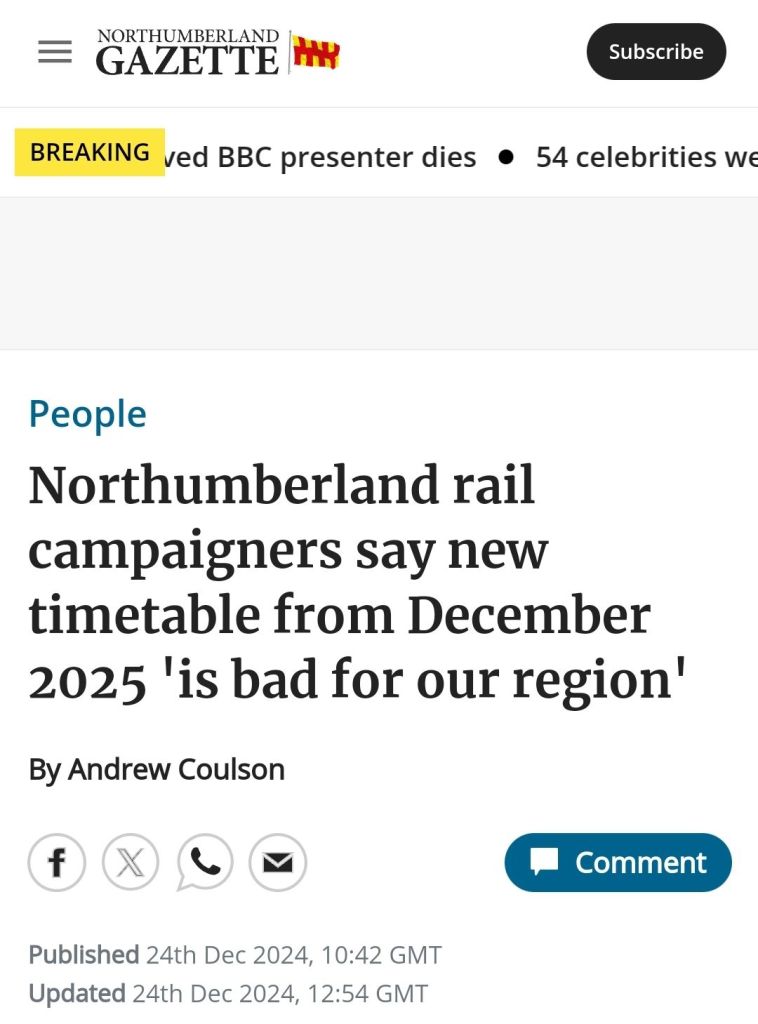
Let’s hope that in the Railway200 year that is fast approaching, we can give all of the nation’s rail network a renewed focus on developing the rail network by both reopening lines such as the soon to reopen Northumberland Line (first phase due to open December 2024, with stations opening progressively through 2025), but also better service patterns at smaller stations such as Chathill.

A further hope for the future is that this ‘million user’ stretch between Pegswood and Berwick could be linked to the potentially highly successful Northumberland Line in the near future too, proof will be in the figures over coming years, but other station openings have proven generally highly successful, so watch this space!

#NorthumberlandByRail

Northumberland Line Preview Video by Northumbria Rail

In the last few days, Northern has been offering a handful of preview trips over the Northumberland Line prior to opening, with Northumbria Rail recording a trip made on 20/11/2024 and uploaded to YouTube.

This video shows progress on the line and stations up to that date, with latest news being an announcement in next few days (at time of writing this post on 24/11/2024).

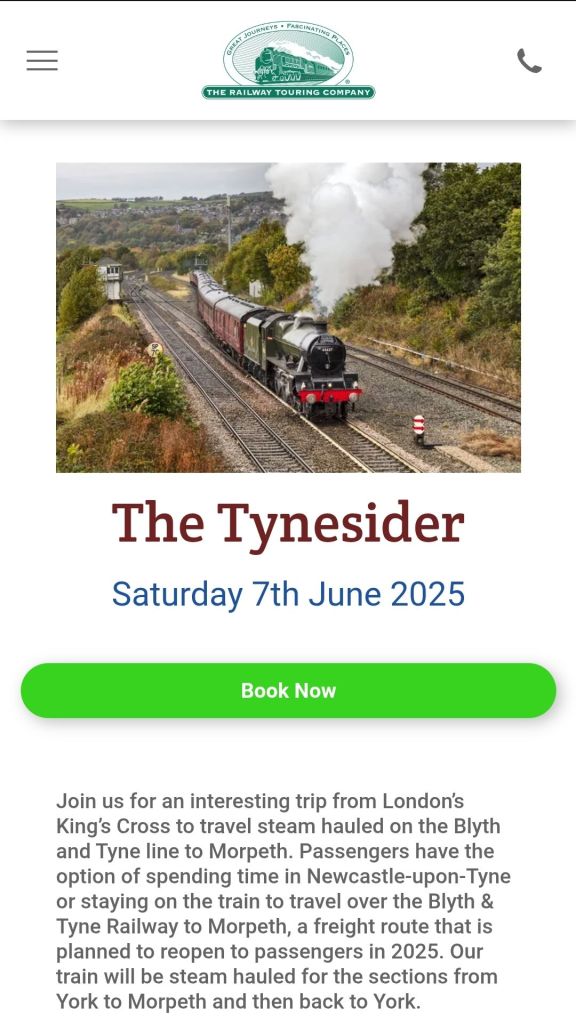
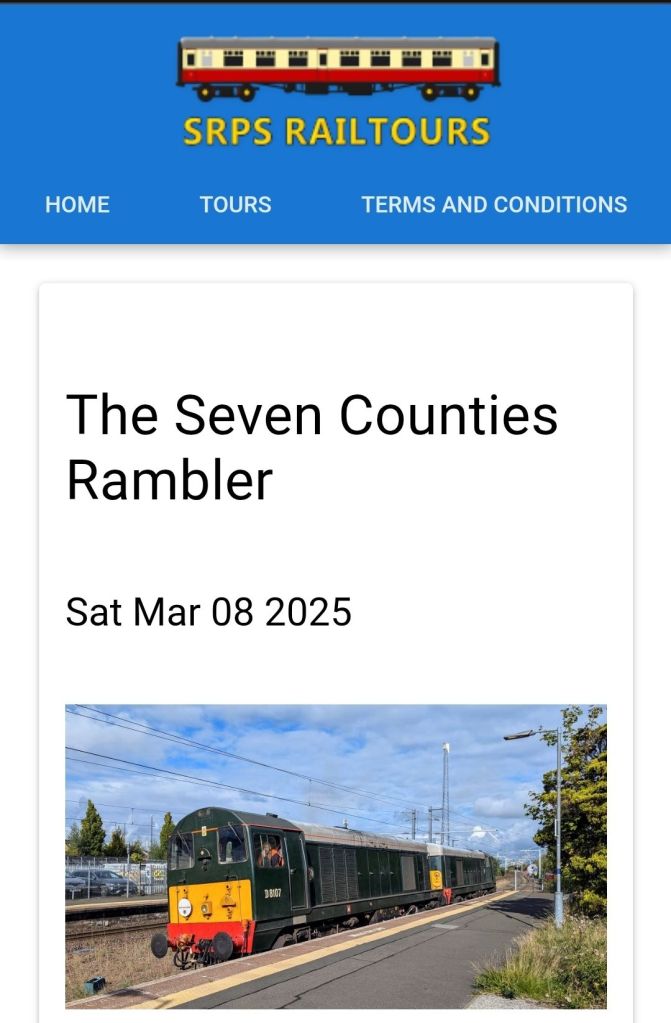
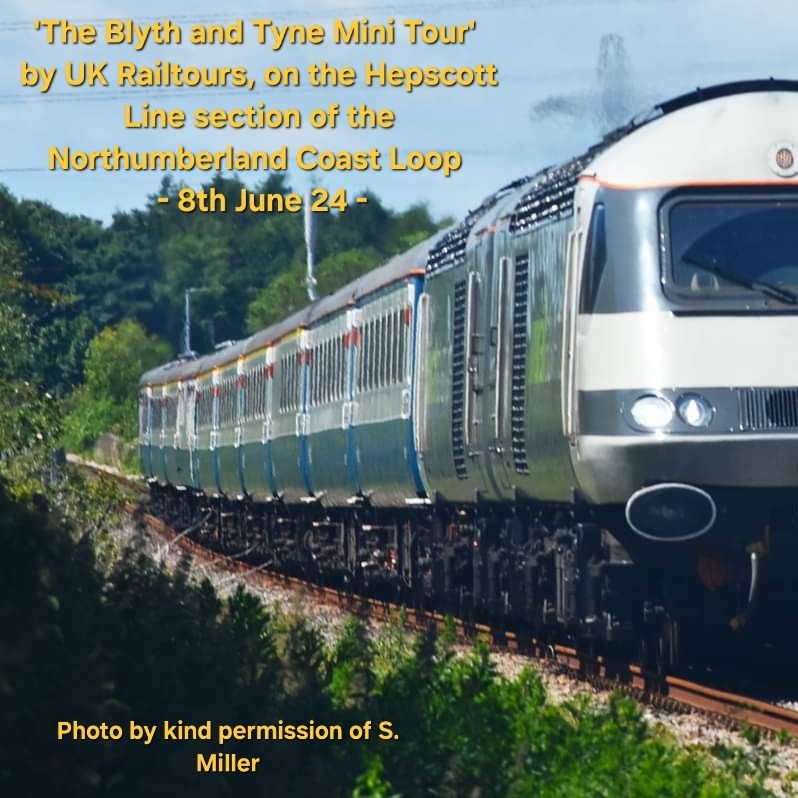
The interest in this video for the Northumberland Coast Loop comes between 17:00 to 18:40 in the video, where the train passes Bedlington Furnaceway sidings (where the railtour alluded to was the Blyth and Tyne Mini Tour operated by UK Railtours on 8th June 2024, I was also aboard and recorded my own video from Furnaceway Sidings to Morpeth).

As can be seen in the Northumbria Rail Video, the Hepscott Line branches off towards Morpeth and Pegswood, with the latter route offering the proposed connection from Bedlington towards North Northumberland and Scotland.

Whilst it is understandable that getting all six new Northumberland Line stations open (Ashington, Bedlington, Blyth Bebside, Newsham, Seaton Delaval, and Northumberland Park) is the priority in the coming months, and allowing service to establish itself, the aim of this campaign is to see trains take the Hepscott Line heading north or coming from the north of Northumberland/Scotland towards Bedlington as soon a practicable after that point.

Time on a train is not time lost

While better connections into Central Station will certainly make rail travel more appealing by making changing trains easier, there is almost certainly a market for direct services; many people, especially those less familiar with using public transport, dislike changes of transport, especially for groups such as families with young children where the ability to settle into a carriage is much more convenient, even if the trip overall may be longer.

The same can be said for those travelling for business, where the ability to work on the move (at a laptop, iPad or similar) and not having to pack up for a change of train could be advantageous. With Blyth and the surrounding area seeking to attract nationally and even internationally important businesses, then rail links to other cities beyond Newcastle could help drive that investment, and with the route already in place, it could be a relatively inexpensive option for huge economic gains.

Northumberland Line, Quiet Stations On ECML and N.C.L. Fix For The Future?

23.11.24

Northumberland Line Opening Date

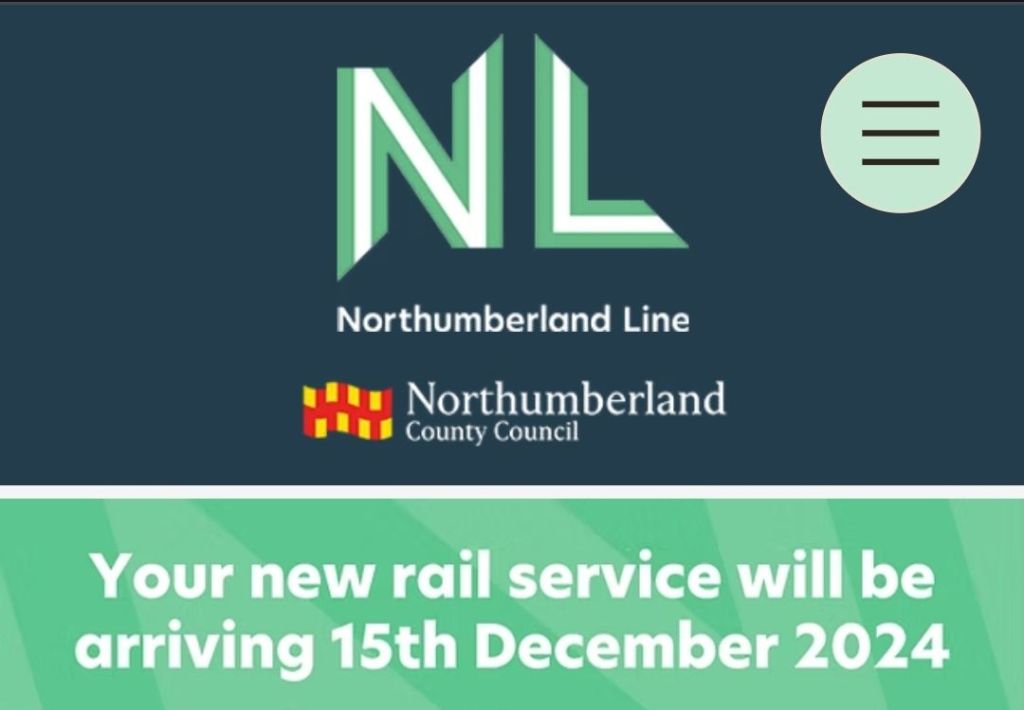
At time of writing, the Northumberland Line is due to partially open at some point in December 2024. There has not been an officially announced date as of yet, with announcement from Northumberland County Council saying this will come in the next few days, whilst Northern has updated their website with a draft version of the N1 timetable covering the area, showing December 15th as the date the timetable starts from.

Timetables on Real Time Trains give an idea of timings, but are showing only Ashington, Seaton Delaval and Manors as potential stops at present, with Newsham, Blyth Bebside, Bedlington, and Northumberland Park to come later (as yet unconfirmed dates).

Hopefully an official announcement will come soon, and the whole scheme with all six stations being open by end of 2025.

Quietest Stations on ECML in Northumberland – Better Services Needed & New Station at Belford too!

Alongside the awaited opening of the Northumberland Line, is the recent release of usage figures for already open stations in North Northumberland, with the frequently featured stations at Acklington and Chathill having 550 and 1,264 passengers respectively between April 2023 and March 2024.

This is somewhat unsurprising given the only services to call at these stations is the so-called ‘Chathill Flyer’, which runs twice a day between Newcastle and Chathill (plus an empty run from Chathill to sidings at Belford and back to Chathill to form the return service to Newcastle).

There has been a recent call by the Chathill Rail Action Group (CRAG) to see Transpennine Express (TPE) to serve Chathill, offering potentially a major boost to services with an extra eight trains a day call at the station, putting Newcastle only 40mins away, and Edinburgh 55mins away.

A new station at Belford has also been announced with, ‘The North of Tyne Combined Authority’s Local Transport Plan proposes the station would serve the village of Belford and the surrounding catchment area of north Northumberland at a cost of £14,070,000, with an estimated delivery date of 2036.

Hopefully it’ll not take until 2036 for Belford Station to be opened, especially as plans for a station there have been mooted as far back as Alan Beith MP mentioning it in Parliament in 2007.

Both of these proposals, the first simply a timetable change, and the latter a new station at Belford, would go a long way to solving the ‘rail desert’ in this part of North Northumberland which is a major tourism hotspot with Bamburgh Castle, the Farne Islands, Beadnell and wider Northumberland Coast all being within easy reach of Chathill, and would complement other services calling at Berwick and Alnmouth stations too.

Book Review: How The Railways Will Fix The Future by Gareth Dennis

This book is an excellent read for anyone in the transport advocacy world, and while my reading time has been limited by work lately, it reaffirms the view that to meet multiple challenges at local, national and international scales, we need to invest in and plan for a much expanded rail network, to allow more people to travel car-free, reduce highly damaging carbon emissions and reduce road congestion and parking problems that are developing, if not already present, in Northumberland today. 

Schemes like the Northumberland Line are a part of that picture, as is better services to small stations like Chathill, but there is a clear need to have a strategic, overall vision for what is needed in this area of Northumberland; is the ECML to be dominated by expresses between Edinburgh and London, or can a more balanced service exist where there are sufficient, good local services alongside these expresses?

Do we invest in schemes like a Morpeth Diversion to take the notorious Morpeth Curve off the ‘mainline’ and retain the old line for better local services and railfreight using the Morpeth to Bedlington or Pegswood to Bedlington routes?

We need to move people and goods by much cleaner and greener modes of transport than private car and HGV, and schemes like dualling of the A1, given the magnitude of climate change are ones we should perhaps permanently consign to the dustbin; but mobility is a right of people, so we must provide a viable alternative by much improving public transport, of which rail will be a definite major player.

2025 – The Year of the Northumberland Coast Loop?

All three of the above, I feel, link in nicely to the Northumberland Coast Loop, which would be a potential solution to many of the problems in this part of Northumberland.

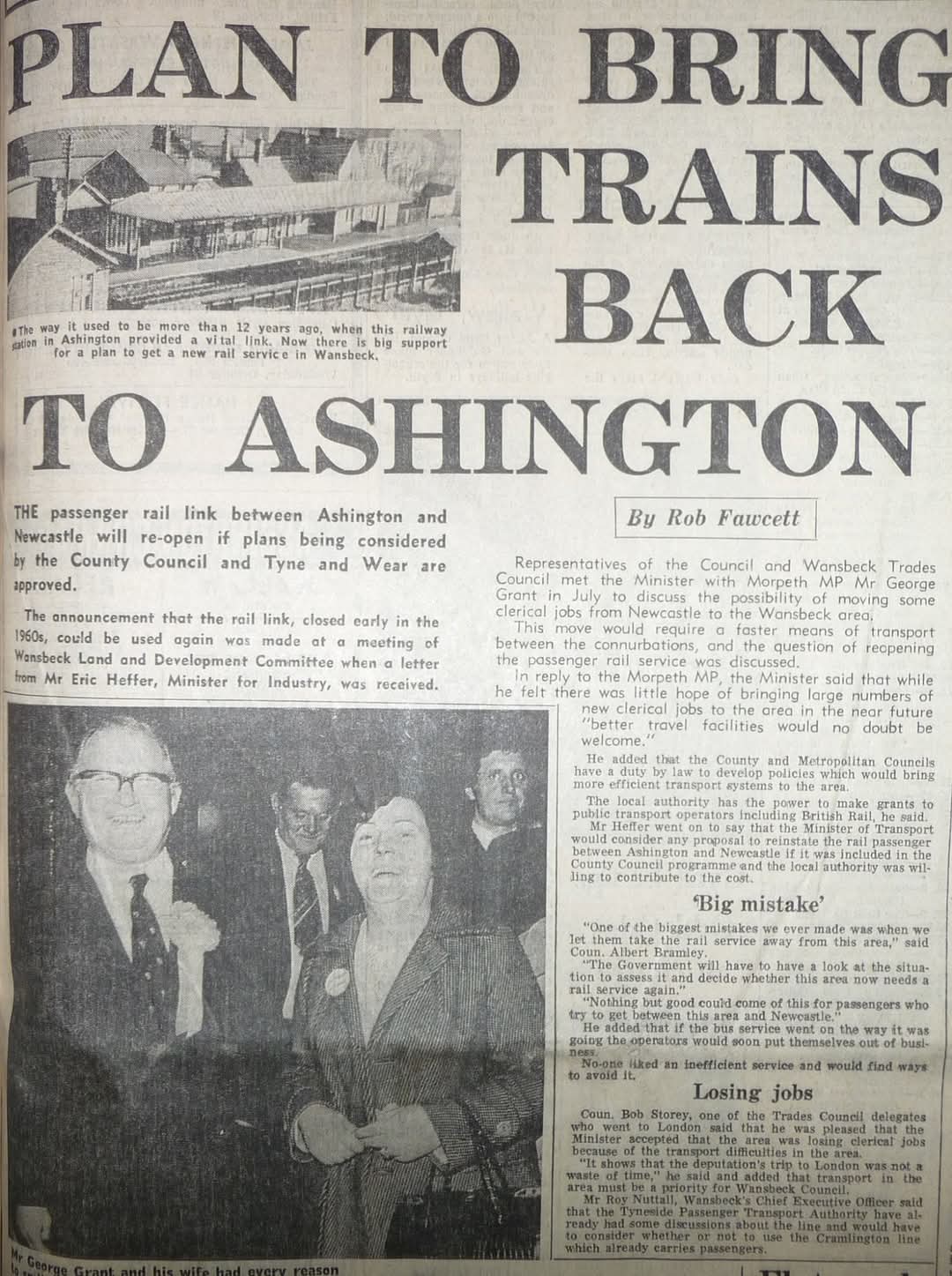
This route connects the ECML between Morpeth and Pegwood to the Northumberland Line at Bedlington via the village Hepscott, the existing line primarily used for freight currently, but potentially a useful route for passengers, not before easily done in a northward direction before, as the Morpeth North Curve that enables the direct route wasn’t built until 1980, sixteen years after the closure of the remaining Blyth and Tyne Railway stations in 1964.

The Northumberland Line, while only partially opening next month, is seeing the return of rail services to the former Blyth and Tyne route, serving the most highly populated areas of Northumberland (about 50% of everyone in N’land lives in the South East corner of the county) after a little over 60 year absence.

This places major towns like Bedlington and Blyth, major conurbations like North Tyneside, as well as smaller settlements like Seaton Delaval back onto the national network, initially with a service into Newcastle Central Station, but the Hepscott Line offers an additional option to travel directly to or from North Northumberland, the Scottish Borders, Edinburgh or even places beyond; why not use it to offer those connections as soon as possible?

The stations in North Northumberland, while remaining open have been quite poorly served for far too long, stopping trains such as TPE will go a long way as an initial step to improvement, but a more comprehensive range of services could make better connections possible, for example a N.C.L route, alongside those on current mainline via Cramlington, would offer a near direct connection from Blyth to Bamburgh Castle, or from Belford to events at Blyth Battery (WW1 & 2 Coastal Defences).

Northumberland Specialist Emergency Care Hospital (NSECH) in East Cramlington is another good example, where the NCL route to/from North Northumberland could hold advantages over the present mainline via Cramlington; as Seaton Delaval Station is only approx 1.8 miles away from the hospital, whereas Cramlington Station is approx 2.6 miles away, not worlds of difference, but illustrates that both routes would offer good options for travel.

Utilising this existing rail route could allow many more journeys between SE Northumberland, North Tyneside, North Northumberland and Scotland to be done by public transport, travelling via Newcastle, while always an option, is a bit strange when a direct route is already possible via Hepscott. You wouldn’t drive south to head north, so why would you do this on a train when looking out the window at Bedlington the route to Morpeth and Pegswood is clearly there?

The Northumberland Coast Loop route from Newcastle to Berwick via Bedlington isn’t to replace other services, but to complement them by offering faster, single seat rides to, from, or within Northumberland.

If you’d like to support this proposal, please put it forward to your local elected representatives (County Councillors, MP’s etc), contact local rail campaign groups, or submit to to the Local Transport Plan Consultation by the North East Combined Authority.

Thanks, RH.

Implement the Northumberland Coast Loop to help achieve Northumberland’s Carbon Neutral by 2030 target?

The Northumberland Climate Change November Update email dropped into my inbox yesterday (8th November 2024),

The big green button takes you to the NCC Climate Change page, where you can view the above document. For rail, little is mentioned beyond the Northumberland Line scheme, but it is interesting to note that approximately 50% of the entire population of the County lives in SE Northumberland, and could make use of the Northumberland Line.

With the Northumberland Coast Loop (N.C.L.) being a route that directly serves five out of the six Northumberland Line stations (the only exception being Ashington), then the N.C.L. would equally serve this population centre well. Ashington could be served in two ways, via simply changing train at Bedlington, Blyth Bebside or any other station onto an N.C.L. service, or travelling to nearby Pegswood station, which also offers residents of Morpeth an option to utilise the proposed rail services.

It would be a massive boost to public transport options, allowing more to travel without needing to drive, cutting CO² emissions and further reducing congestion.

The N.C.L. route would build on the existing investment in the Northumberland Line by simply offering a wider range of destinations available from the newly built stations; while the greatest volumes will tend towards Newcastle and destinations beyond, there is still a substantial market for people heading north, both for work and for leisure.

Conversely, people in North Northumberland or Scottish Borders may well be encouraged to travel to SE Northumberland for work, given the major industrial areas in that part of the county.

NSECH at Cramlington is a good example, as it is actually closer to Seaton Delaval station than it is Cramlington station, and so could be the best station to serve this major hospital for both staff travelling to/from work, and also visitors, especially since Cramlington has traditionally difficult to reach due to stopping patterns of ECML trains.

Some examples of local leisure trips could be people in SE Northumberland taking a day out to places like Alnwick for Barter Books, Bamburgh Castle and more. Equally, sites like Seaton Delaval Hall, Woodhorn Museum, Blyth Battery, Port of Blyth (hosting Tall Ships, or Galleon Andalucia which attracted several thousand visitors to Blyth during its brief visit in July 2024), would draw visitors from North Northumberland and Scotland into SE Northumberland. With thirteen stations along the proposed route between just Newcastle and Berwick, there could be a vast array of journeys met by this route.

Others will be travelling longer distances to Scottish cities such as Edinburgh, Glasgow or Aberdeen, or for smaller destinations within Scotland via these cities. An example would be to connect with flights at Scottish Airports, or at events such as Taylor Swift.

The Edinburgh Fringe is a good example of additional services being provided to cope with demand for travel to Scotland, with the N.C.L., this could mean some services via Morpeth and some via Blyth in future?

Using the Hepscott Line to travel more directly between SE Northumberland and North Northumberland or Scotland would make the option to use rail much more attractive, with reduced journey times, a single seat ride avoiding the challenges of changing trains (especially with young children, luggage etc), and being an active line already for freight, and with regular use currently by Northern DMU’s for proposed Morpeth – Bedlington service, the route should be relatively inexpensive to develop, the line is already in place, let’s just use it.

Call for Evidence from David Smith MP on ‘A1 Safety’ & N.C.L. Suggestions for East Coast Main Line Improvements

The above Facebook message from David Smith MP is a call for evidence by Monday 4th November 2024 as described in the above screenshot, as a constituent, I’ll be putting in my own email, but here I’ll also detail a few key rail improvements that could be done in parallel to complement this.

Improved rail service between Morpeth and Berwick-Upon-Tweed

There has been a long-standing campaign for an improved rail service North of Morpeth, which was studied back in 2019 and an hourly local rail service (calling at all stations) was found to be economically viable by using electric trains rather than present diesel ones, see the screenshot below for an extract from the above webpage:

This shows that the problem is known, and has a solution, it simply needs to be financed by the Government.

Note that this includes a new station at Belford, which would serve the very popular North Northumberland Coast (as highlighted in the comment below).

There has been suggestion of a Park and Ride facility at/near the former Beal station for visitors to park on the mainland and be taken by bus to Lindisfarne, this could be an ideal opportunity to have a road/rail/bus interchange there, which would also be in close proximity to Haggerston Castle, allowing some road traffic to/from that site to also be reduced?

Develop the Northumberland Coast Loop

In addition to the electric Newcastle – Berwick hourly rail service, this campaign would also like to see the Northumberland Coast Loop rail service implemented alongside the traditional ‘ECML’ services via Cramlington and Morpeth.

This route would allow for people living in SE Northumberland towns such as Bedlington, Blyth, and more to get direct access (as well as Ashington via change of train at Bedlington/Blyth Bebside), as well as a large area of North Tyneside via interchange at Northumberland Park to North Northumberland and Scotland by using the existing Hepscott Line between Bedlington, and Morpeth/Pegswood (line splits into southbound and northbound routes respectively, the latter being the Morpeth North Curve route taken by the North Blyth – Fort William ‘Alcan’ trains).

Whilst the A1 undoubtedly needs safety improvements, one of the best ways of achieving it has to be modal shift away from driving, by moving people to, from, through and within Northumberland by rail, with the known improvements as studied by SYSTRA for the ECML, as well as the suggested creation of the Northumberland Coast Loop could offer this, alongside integrated buses to/from stations for the first/final mile to reach destinations such as Bamburgh Castle or Seahouses.

A Day Trip From Alnwick to York 31.10.24

On the 31st October 2024, myself as dad (writing), mum (Mrs N.C.L), and two under ten’s, travelled from home to York for the day.

Whilst the Northumberland Coast Loop campaign is mostly focussed on the route via Blyth, Northumberland, it is also here to advocate for better services in Northumberland more generally too, especially in North Northumberland (between Pegswood and Berwick), where for destinations beyond Newcastle, the existing East Coast Main Line via Cramlington (and possibly enhanced in future by the Morpeth Diversion) is the more optimal route in most cases.

Booking the Trains

Tickets were booked through the LNER app on the 28th October, meaning it was quite short-notice before travel. With a Family and Friends Railcard, the price for two adults and two children came to £119 return, one of the cheaper fares available at the time.

A short car trip got us all to Alnmouth, with a £1.50 charge for 24hrs parking at the station, with car park quite well filled by that point. Ideally, I’d have preferred to use the bus, but integration between buses and rail at Alnmouth is fairly poor, meaning a quite excessive additional time is added if you use buses to link to the station. Hopefully this can change if/when the Aln Valley Railway also reaches Alnmouth, as proposals have long stood for a shuttle service between Lionheart and Alnmouth.

Having arrived in good time for our train, so we waited in the small but reasonably comfortable waiting room, until our trip towards York on 1V56, the 10:09 from Alnmouth with CrossCountry Voyager 220033, which left Alnmouth a modest minute late (10:10), already quite well loaded, and in Coach C, had almost every seat full on departure from Newcastle, arriving in York at 11:45 (8mins late).

Aside from the fairly tiny delay, the journey was otherwise great, for a Voyager there was no noticeable odours in the cabin, or even the loo, a known problem with these trains on occasion, and the staff on board were very friendly and helpful, with plenty of information on how the service was running etc.

We then spent an enjoyable day around York, finishing off with a quick visit to the Railway Museum to be close to the station for our return trip.

Gratuitous shot of the Great Hall, but strong local connections with the Percy Main footbridge, as well as former ECML racehorse ‘Mallard’.

While walking to the station, the LNER app informed us, rightly, that our expected train (the 16:32) was delayed, with at the worst point, it expected to leave York at 17:59. This prompted us to visit the ticket office at York, and the staff there were excellent, informing us that our ticket would be accepted on the 17:36 LNER service if we wished to travel earlier rather than on the then heavily delayed CrossCountry service. 

In the end though, CrossCountry, to their great credit mananged to provide a train only minutes later than the planned, meaning a quick dash to Platform 10 from our position near the ticket office, but in the end getting us home only a few minutes later than we’d planned aboard CrossCountry Voyager 220018 on 1S47.

Summary

Being with Mrs N.C.L. and the kids, gave quite a good perspective as critical friends giving their honest feedback.

Booking:

Very easy, useful to be able to sit together and look at times/fares at home when kids were settled and calm, and payment via PayPal made it a very easy process to have tickets etc ready.

Price:

Of all the things on the whole trip, the price was probably the biggest factor of concern from Mrs N.C.L., who asked for comparison to driving (both of us can drive and have a good family car).

To drive the 234mi with a petrol car getting about 35-40mpg would be in range of £35 to £45 in fuel cost, plus York P&R, the main driver against this being the much longer journey time and the need to make regular stops for children to use toilets, compared to be able to do on ‘on the move’ with rail travel, whilst also getting there faster.

In the words of the Mrs: ‘If trains were a lot cheaper, I’d do it a lot more’. I would certainly agree with her on that, as even with a RailCard (which arguably shouldn’t be needed at all; as everyone should get an equally good price in my view), £119 is a fairly big as for a family of four, which could have been seven had fares been cheaper as another family had thoughts of joining us and were put off by the price.

Hopefully rail fare reforms can make train fares equal to, or even below driving costs to make this a non-issue going forwards.

Station & Train Experience:

Both Alnmouth and York stations were clean, tidy and pleasant to use, Alnmouth station footbridge is getting quite shabby though with rust and spalling of the concrete structure so is in need of repair or replacement soon.

Alnmouth could also probably do with a similarly sized waiting room being added to the Northbound platform, as can be seen from the photo below, a substantial number of people were waiting to head north as we made our way to the waiting room. Having easier access to toilets on the platforms would be another good improvement.

In an ideal world, this current council car park might be improved by conversion into a bus/rail interchange (by treating Alnmouth station as a transport ‘hub’ for Alnwick, Amble, and the surrounding area), which means that waiting facilities on this side could be shared by bus/rail passengers, and the present ticket office could perhaps be relocated into such a building, with the old one forming an expanded waiting room?

Canopies could also be added at Alnmouth to provide a greater level of shelter too, as from experience, Alnmouth can be a wet and windy place while awaiting a train!

Alnmouth Station 31.10.24 with passengers waiting for a northbound service

Both trains were clean, comfortable and free of odours, which as stated was a known problem on Voyagers for a long time, sometimes being quite unpleasant on previous trips but CrossCountry must have changed something for the better, as Mrs N.C.L., and the kids, all with a with keen sense of smell never mentioned anything!

Journey Time, Punctuality and Reliability:

The journey time of 1hr 27/28mins in each direction with just three intermediate stops (Newcastle, Durham, and Darlington) is very good; and possibly highlights the potential of the Morpeth Diversion to improve this further, as since this train didn’t stop at Morpeth, not passing through it would improve on train journey times, improve capacity at Morpeth itself, as well as freeing up capacity for trains travelling to/from Bedlington either on the N.C.L. route or towards Newcastle via Morpeth too.

Punctuality wasn’t a major factor for us as a family on a day out, where timings were very relaxed and delays wouldn’t have mattered immensely to us, but for others on that train, delays of 8 minutes or more could have meant missed connections or being late to a meeting etc. This was something beyond the control of CrossCountry, and the indicated cause was a points failure, which happens within such complex systems.

Reliability was good on the day, even if we had to get a later train, I was confident we’d at least get home at a reasonable hour, and a big shout-out to the ticket office staff at York for being there for reassurance, as even when fairly familiar with the network, at times of disruption it can be comforting to speak to a member of staff to ensure tickets are valid on other trains etc.

Synopsis

Overall, it is a day out I would certainly like to do again, and was a good test for a longer trip we plan to do in the future with the kids, but I’d happily see the current Government reverse the decision to increase rail and bus fares, and hopefully introduce something along lines of a ‘Climate Ticket’.

Longer term, stations such as Alnmouth need investment in maintenance (such as repair/replacement of the footbridge soon), and perhaps seeing stations such as this a part of wider integrated transport, by integrating buses at near platform level with a good, shared waiting area.

Budget 2024: A1 Dualling Ditched, Time for the Northumberland Coast Loop and East Coast Main Line to Shine? 

Today is Budget Day 2024 (30th October), and with it comes the news that the A1 Dualling has been scrapped as ‘unaffordable’, which analysis by Transport Action Network identified some time ago, giving the scheme an adjusted Benefit to Cost Ratio (BCR) of just 0.8, meaning for every £1 invested, a return of just 80p could be expected, a ‘poor value for money’ scheme, and given a likely price tag of around £400m accounting for inflation, that is around and £80m loss to the economy.

That doesn’t mean that the Northumberland Coast between Newcastle and Berwick should still not recieve investment into it’s transport network, but that it should be the rail network instead of roads.

This is best exemplified by the Invest East Coast consortium of councils, whose report that researched the benefits of ECML investments gives a typical BCR figure of 2.73, meaning for every £1 in, £2.73 comes back in economic benefits, a win-win of economic benefit from greener, cleaner transport.

The East Coast Main Line (ECML) in Northumberland has long been identified as needing upgrades, both in line capacity (nunber of trains it can handle per hour) as well as electrical infrastructure (not enough electrical supply to the overhead wires to support more long & heavier electric trains, meaning some trains running on diesel under the wires). Upgrading this route would have immediate major benefits for existing trains (i.e. some units/railfreight running on diesel could switch to all electric operation).

A further scheme would be to upgrade the Hepscott Line, which is the link line that the Northumberland Coast Loop would utilise for the proposed Newcastle – Blyth – Berwick route.

While a public costing for this work is not available, an estimate can be deduced from the nearby Northumberland Line scheme. At eighteen miles in length, with major track, signalling, and level crossing upgrades, new bridges, and six new stations, it has cost around £298.5m, around £130m more than forecast, but is still expected to achieve a BCR of 1.5, meaning for every £1 spent, a return of £1.50 is anticipated.

With the Northumberland Line nearing completion (December 2024 for partial reopening), and the ECML a regularly used passenger route; the likely ‘worst case scenario’ costs of upgrading the approximately four miles of the Hepscott Line from Morpeth North Junction to Bedlington Junction would be fairly modest, probably in the ballpark of £80m-£100m (estimate of £20-25m per mile to relay track and double track additional sections/relay track, upgrade of signalling and level crossings or replacement (potentially needed at A1068 Choppington?).

New stations wouldn’t be required for the scheme, as it would use existing stations on the Northumberland Line and ECML, but the route would give more impetus to a new  station at Choppington, as well as those proposed in North Northumberland such as Belford.

In addition, the cost of these upgrades would be largely shared with other planned services for the Hepscott Line, such as extension of the current Newcastle to Morpeth service on to Bedlington, meaning only the Morpeth North Curve between Hepscott Junction and Morpeth North Junction is uniquely used by this proposal.

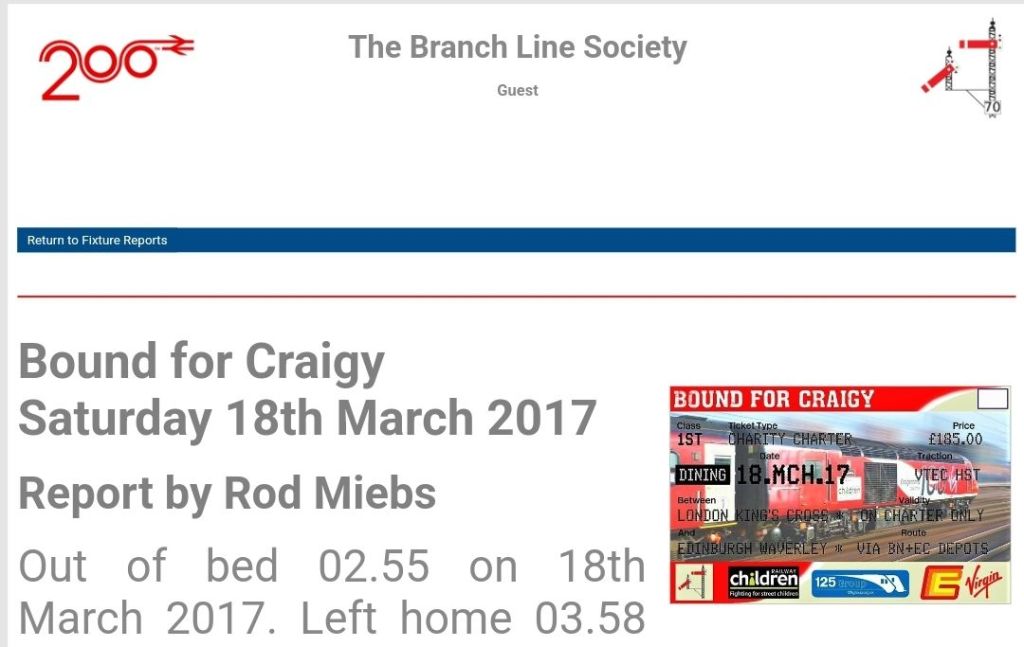
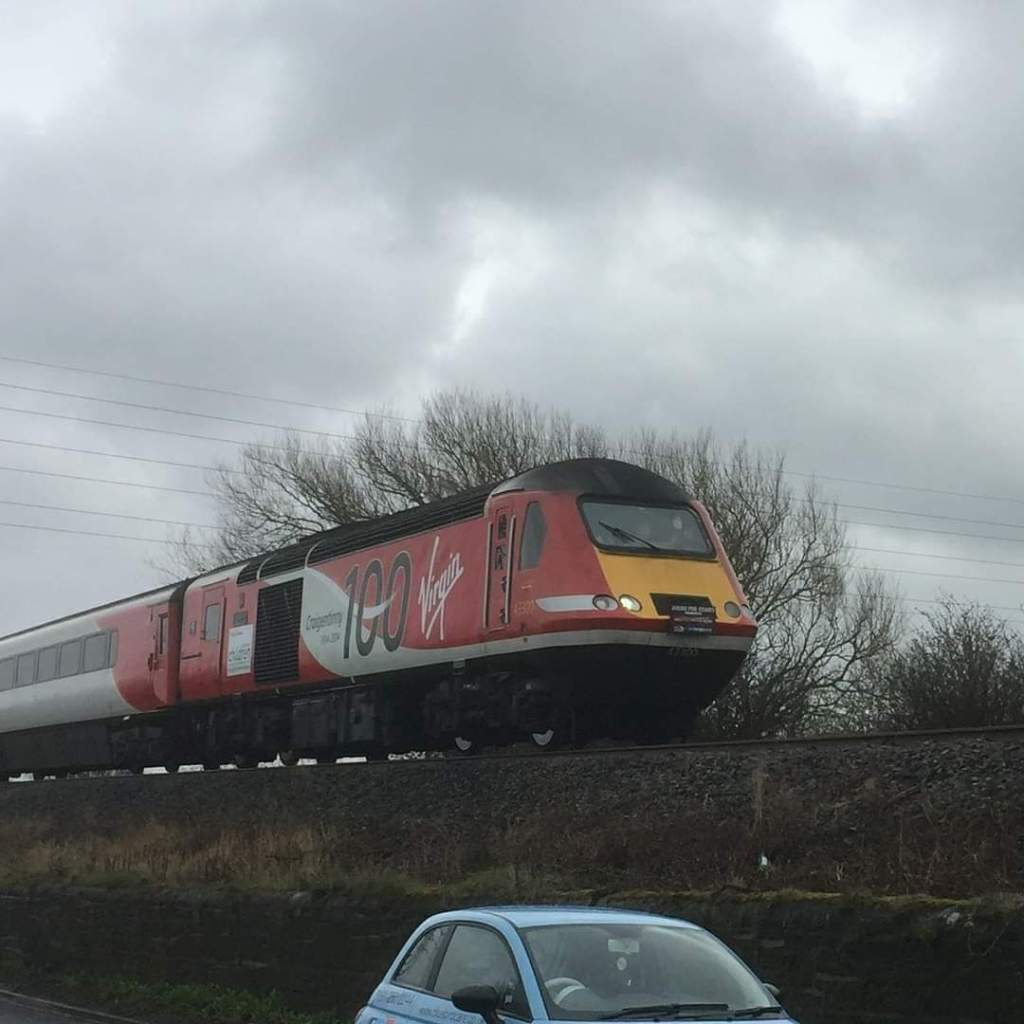
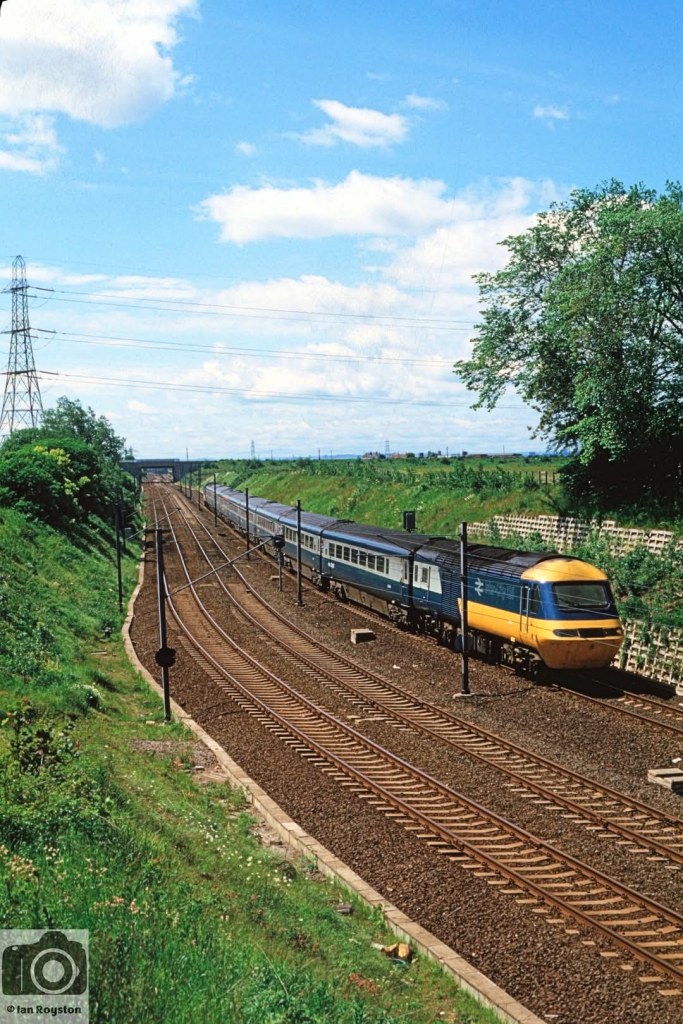
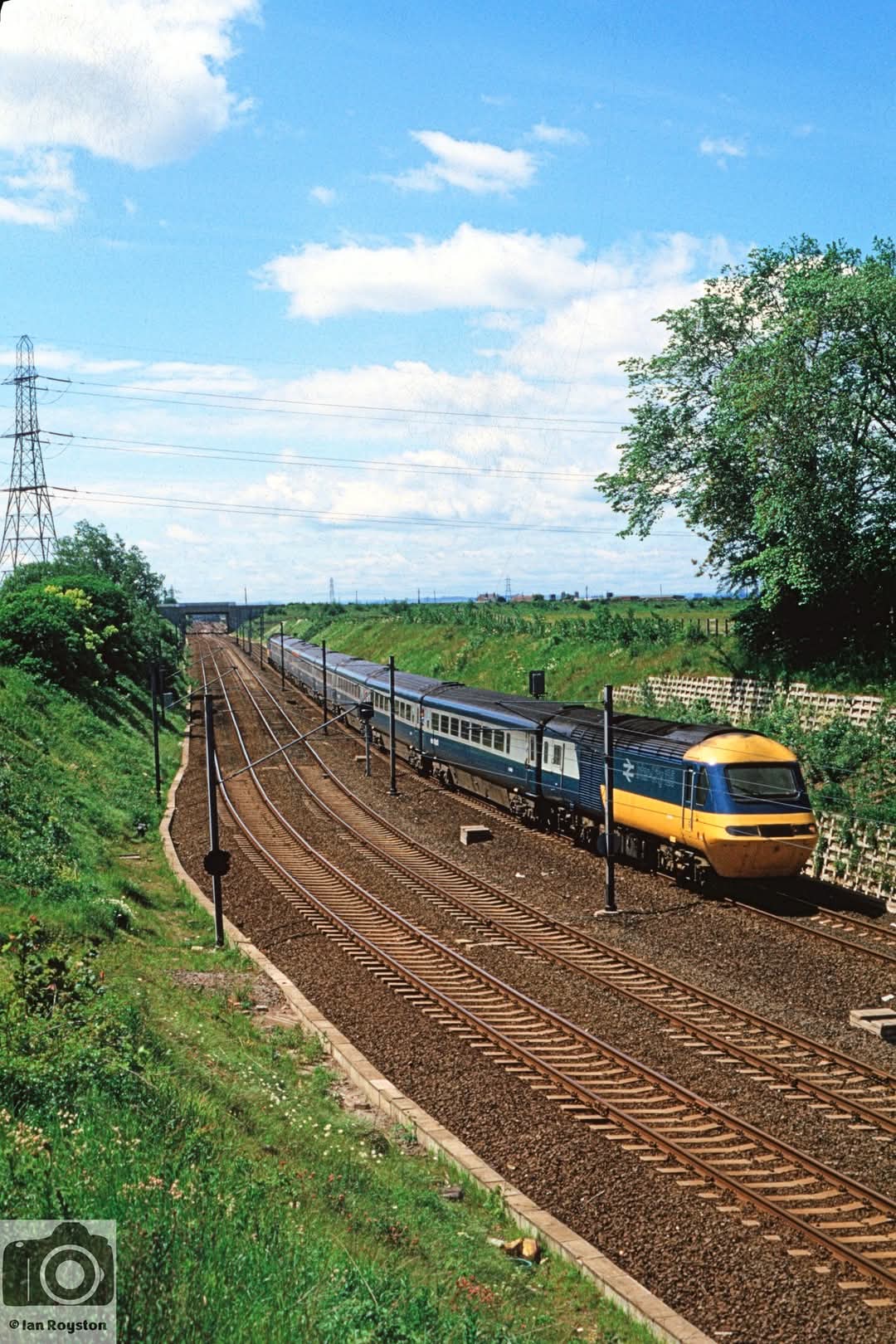
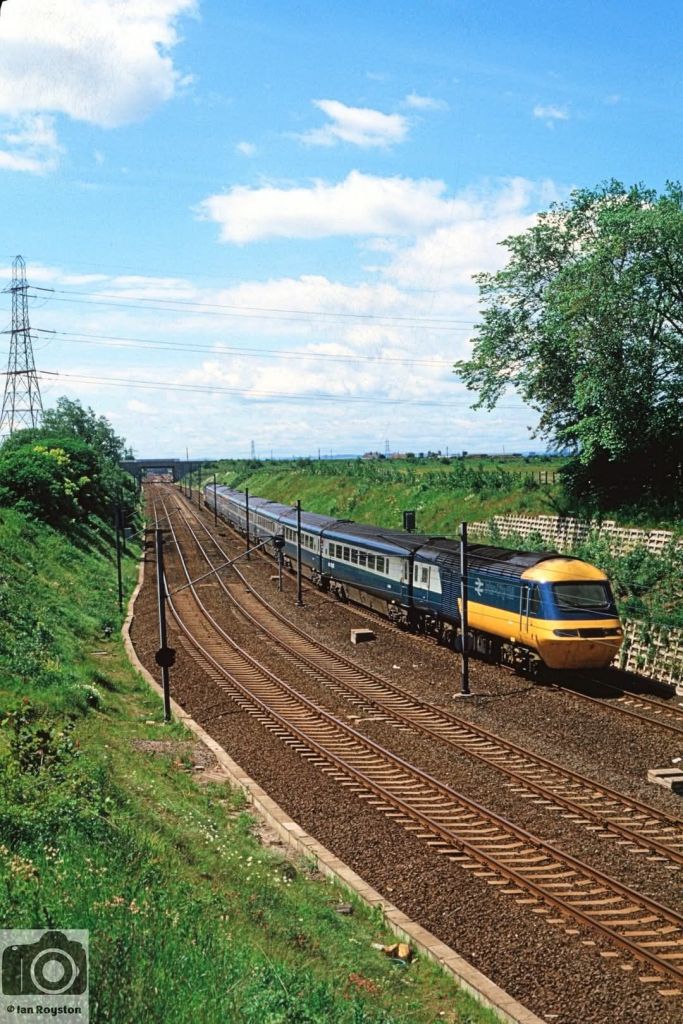
HST on the Hepscott Line, 2017

However, this option could also be seen as Jeff Bezos’ ‘two way door’, as it is an existing, presently freight only route, but having seen fairly recent railtours (2017), and being a recognised diversionary route, there might be an option to trial services without needing to commit to upgrades immediately? 

Assuming a fairly modest BCR value of 1.5, that would effectively give a net economic gain of £50m, very favourable compared to the £80m loss associated with dualling the A1?

With favourable feedback from local politicians, and broad support of the Northumberland Coast Loop petition (742 signatures), perhaps the Northumberland Coast Loop and wider East Coast Main Line might see major investment instead of the A1?

Is The Guardian hinting at the Northumberland Coast Loop?

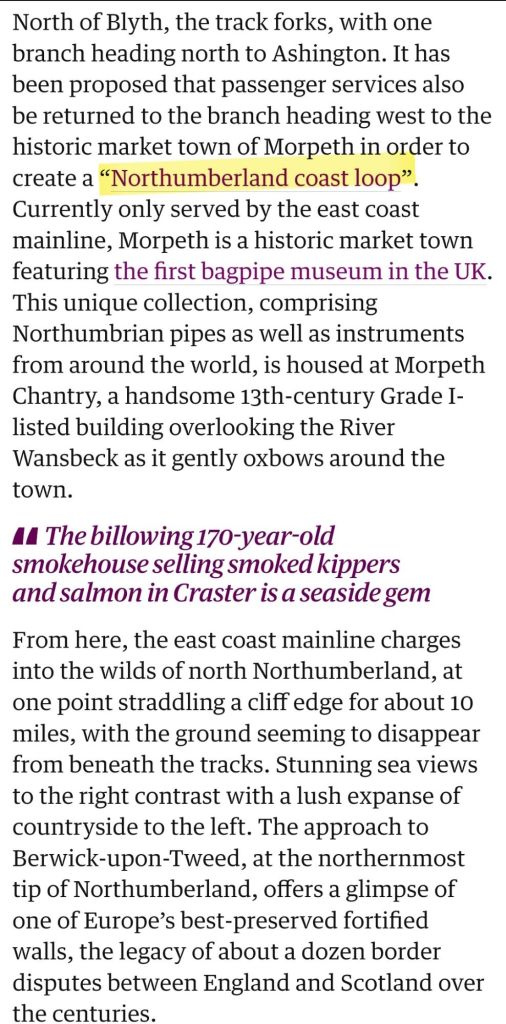
This article from The Guardian seems to infer a reference to the proposed Northumberland Coast Loop while talking about the soon to open Northumberland Line, could we see it in 2025 with just a modest further investment?

Headline and introduction to the article by The Guardian

‘North of Blyth, the line forks with one branch heading west to Morpeth’ is a great recognition of the Hepscott Line and its connectivity back onto the East Coast Main Line (ECML).

Articles such as this almost immediately sell the case for the Northumberland Line to be extended towards Morpeth and destinations north by using this existing route, but it is important to note that the Northumberland Coast Loop route wouldn’t offer a direct connection into Morpeth station itself.

This is due to the line having a second fork at Hepscott if coming from Blyth, with the left hand route going to Morpeth station and then back to Newcastle, while the right hand route would skirt the north eastern edge of Coopies Lane industrial estate and join the ECML facing Pegswood and Berwick Upon Tweed (see image below).

Rail Map Online image of the current rail network in South East Northumberland

To give access to Morpeth for places like Morpeth Chantry, the proposal would see services stop at Pegswood, a station positioned between Morpeth and Ashington,  which would allow access to places like Morpeth Chantry or Woodhorn Museum for services taking a Newcastle to Berwick via Blyth route, which would offer a ‘coastal route’ for trains using the existing infrastructure mentioned in the above article.

Route diagram showing the proposed Northumberland Coast Loop.

The possibilities of such as route are potentially huge from a tourism perspective; spending time at destinations in South East Northumberland and North Tyneside such as Seaton Delaval Hall (National Trust), Blyth Battery, Woodhorn Musuem and the Stephenson Steam Railway, then heading north to places such as Alnwick Castle, The Alnwick Garden and Lilidorei, Bamburgh Castle and many more, as well as offering a good route for commuters and leisure travellers within Northumberland itself.

In correspondence with Councillor H.G.H. Sanderson, Leader of Northumberland County Council, and the office of Kim McGuinness, North East Mayor, this proposed route has recieved a warm welcome, the track and stations either already exist or are well underway, so could we see this route in time for Railway200, even if just a few trains per day?

It might require some additional work beyond that undertaken for the Northumberland Line, but given the opportunities, could it be a quick win?

N.C.L. October Update & Two Routes Along the Northumberland Coast?

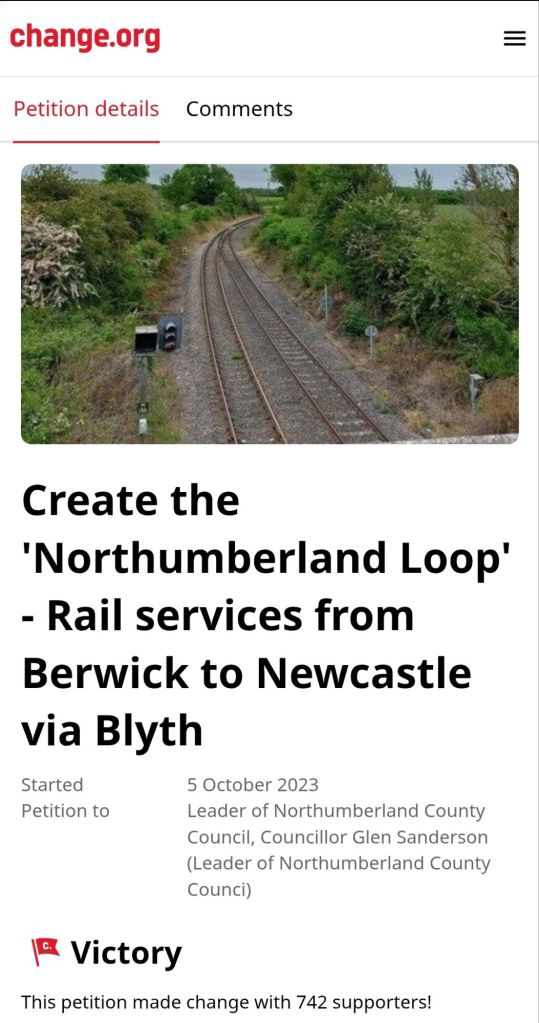
On the 6th October, the Northumberland Coast Loop petition came to a close with the support of 742 people, thank you to all who signed it!

Following the closure of the petition, I  reached out to Councillor H.G.H. Sanderson, present leader of Northumberland County Council by email. I recieved a postive response that the proposal aligns with future expansion of the Northumberland Line, and that it also aligns with projects in the North East Combined Authority (NECA) transport plans; though it doesn’t seem to mention in detail what expansions of the Northumberland Line are proposed. Hopefully this can become a definitive project in coming months/years alongside other expansions such as Newbiggin-by-the-Sea etc.

I have also been in contact with my MP, Mr David Smith of the North Northumberland seat, and discussion is ongoing there too.

A third approach was made to Jason Wade of Northern Trains at the recent Railfuture North East Branch meeting on Wednesday 16th October 2024, questions being put forward by a fellow committee member as I couldn’t attend in person that evening.

Feedback from my colleague was that the route is ‘unlikely as it misses Morpeth and Cramlington’. This might be attributed to being ‘risk averse’ with regards rail services, which I’ll explore below to offer my contention that such a route deserves a trial at the least given that the expensive element of the infrastructure is in place.

The risk of not serving Morpeth and Cramlington is understandable as both are a known and established market for passengers. The stations have never been closed, although the whole ECML itself North of Newcastle was threatened in the 1970’s and into the 1980’s with likes of the Serpell Report of 1982 proposing closures of many mainlines. Fortunately these proposed closures never happened, and the ECML has survived and thrived in years since.

In contrast, the ‘new’ stations Northumberland Line (many are on/near former stations but are essentially new) haven’t had a regular passenger service since 1964, when these stations closed, with most being entirely demolished, and the direct route from Newcastle to Pegswood via Bedlington only became possible in 1980 with the completion of the Morpeth North Curve, previously any diversions via Bedlington having to reverse at Morpeth Station.

I have previously postulated the effect of building the Morpeth North Curve as intended in 1882, and the effect that might have had on the survival of the stations. In reality though, the curve came too late to potentially have saved the stations; but with them reopening, the opportunity now exists to see a new service instituted, which as stated in many previous posts would be a massive boost to Northumberland’s connectivity as a whole.

Two routes along the Northumberland Coast?

X15 and X18 buses to Newcastle via Morpeth together at Alnwick Bus Station, 19th October 2024

A good example of fast vs slow routes complementing one another is perhaps exemplified by the X15 and X18 buses, seen this morning side by side at Alnwick Bus Station, the X15 is the ‘fast’ bus comparatively, reaching Morpeth in 50mins from Alnwick, whereas the slow X18 takes 74min for the same trip.

X15 trip to Morpeth, Saturday 19th October 2024
X18 trip to Morpeth, again on Saturday 19th October 2024

Naturally if you’re target destination is Morpeth, you’d catch the X15 for the shortest journey time, either having more time in that town itself, or being able to depart later/arrive home earlier, all else being equal; but the X15 serves fewer places (33 stops compared to 54 on the X18), while the X15 does connect smaller places such as Shilbottle, Felton and more, the slower X18 provides a through connection for the larger settlement of Amble, links to Alnmouth Station for Alnwick, Amble, and other settlements nearer the coast. It might be slower but is arguably the service that provides more connections for more people.

The Northumberland Coast Loop (N.C.L.) route proposal is very similar to the X18 concept of serving the population centres directly over end to end speed, from Berwick Upon Tweed to Newcastle Upon Tyne, the railway route via Morpeth and Cramlington is undoubtedly the faster one, but it calls at smaller settlements (Morpeth is 5th largest town in Northumberland, Cramlington 2nd)

The N.C.L. route would directly serve Bedlington (4th largest), and Blyth (largest town), while also indirectly still serving the town of Morpeth (and Ashington as the 3rd largest town) by using Pegswood Station, sited superbly between both of these settlements, and especially for Morpeth potentially more easily accessible than Morpeth Station itself. Cramlington (the town overall) would still be served quite well by using Blyth Bebside, Newsham, and Seaton Delaval stations.

In short, this route would complement the existing services on the ECML, not replace them.

The Hepscott Line, The Butterwell Line, or both?

There are two campaigns for this area of Northumberland that I feel need to be viewed side by side. Essentially, between Berwick and Widdrington, and between Bedlington and Newcastle, both routes would be identical, the middle section between Bedlington and Widdrington being the variable option, one an existing and open route, the other partially disused and requiring new sections of line to be built.

In both cases, it is important to note that neither route would go via Cramlington or Morpeth stations, and in the case of the Butterwell route, services would be further from Morpeth by also avoiding Pegswood.

The Northumberland Coast Loop would use the Hepscott Line, which is the existing and regularly used link between Bedlington, Morpeth, and Pegswood, passing through the village of Hepscott just to the south east of Morpeth itself, giving the line it’s name.

The N.C.L. proposal is for a Newcastle to Berwick via Bedlington passenger service to take the Hepscott Line to rejoin the East Coast Main Line at Morpeth North Junction (near to Pegswood Railway Viaduct). This route is regularly used by the North Blyth to Fort William Alumina trains, which change direction at Bedlington Sidings coming to/from North Blyth. This would therefore simply be using infrastructure that already exists to provide a new passenger service.

The ‘Butterwell Line‘, being advocated for by SENRUG is the name given to the collection of disused colliery lines north of Ashington, part of which ran though Butterwell Disposal Point. It has never formed a direct route north, as only formed a through route from Pegswood to Ashington for coal trains, any connection northward would need a new curve constructed near to the River Lyne, and this line is now totally disused, with the section just north of Ashington to New Moor being disused since c1999-2004 (some contradictory sources for last train over the section). This route would mean a significant investment of perhaps £50m to £100m (or indeed more) required to rebuild two junctions (that at Ashington and a new one to connect onto the ECML), as well as to bring a now long disused freight line to full passenger standards.

While this would be a useful route, and would offer Ashington a direct connection north, it would require a very substantial investment into the route to make a reality, whereas running trains via the Hepscott Line could arguably be trialled using the existing infrastructure at a fairly minimal cost to see if usage of the route would justify furtger investments in capacity.

This could be likened to the Amazon approach of one-way and two-way doors, an extract from the AWS page being below

‘Another tool we use at Amazon to assist in making high-quality, high velocity decisions is a mental model we call one-way and two-way doors. A one-way door decision is one that has significant and often irrevocable consequences—building a fulfillment or data center is an example of a decision that requires a lot of capital expenditure, planning, resources, and thus requires deep and careful analysis. A two-way door decision, on the other hand, is one that has limited and reversible consequences: A/B testing a feature on a site detail page or a mobile app is a basic but elegant example of a reversible decision.’

https://aws.amazon.com/executive-insights/content/how-amazon-defines-and-operationalizes-a-day-1-culture/#:~:text=A%20two%2Dway%20door%20decision,example%20of%20a%20reversible%20decision.

The two-way door option is using the Northumberland Coast Loop route via the Hepscott Line; it might work or it might not, but it wouldn’t take much to try it out. A low risk for potentially high reward.

The Butterwell Line would be very much a one-way door; it would be a big investment and one that couldn’t easily be backed out from once built.

If the Northumberland Coast Loop route proved itself a big success, that could open the door (pardon the pun) for the Butterwell Line, with an established market being created via Hepscott, changing the route to via Ashington if desirable could show the business case for that investment.

Let’s take a chance at trialling the N.C.L., and see what comes back? What’s to lose?

Response to David Smith MP: Scrap A1 Dualling, and spend the £390m on the ECML & NCL instead?

In a recent Northumberland Gazette article, David Smith MP for North Northumberland pressed for dualling the A1 yet again, but there is a clear argument that this is a poor investment for the future on a number of fronts; why not instead put the investment into the proven alternative of the ECML, and possibly also into the Northumberland Coast Loop, the latter being a northern connection between the Northumberland Line and the ECML headed north through Pegswood.

Can’t ignore A1 emissions.

As Space4Gosforth has also fairly recently commented in the Northumberland Gazette (April 2024), dualling would be ‘environmentally ruinous’ with 1.44m tonnes of CO2 attached to the scheme. These emissions contribute to ongoing worsening of climate change, the effect of which can be clearly seen in recent events such as a month’s worth of rainfall in Blyth just a few days ago, alongside the Hurricanes Helene and Milton that have hammered the USA with almost unprecedented effects.

So from a climate change mitigation and Net  Zero standpoint, dualling of the A1 makes zero sense to carry out, as it simply worsens the issues of climate change.

To cut emissions, making better use of the parallel, fully electrified ECML surely makes the most sense? Moving people and goods by electric trains rather than petrol and diesel cars (which still make up the majority of road vehicles).

This will require an uprating of the electrical supply to the ECML, to allow longer, and heavier trains, as well as swapping some diesel trains for electric ones, especially to provide an improved local service, but many trains, such as Class 156/158’s are near end of life anyway and due replacement.

Better solutions to road safety for the A1 and other routes.

The article above by Space4Gosforth also sets out clearly that simpler, more effective, cheaper and more rapidly deployable safety measures could be applied to the A1 to make it safer, reducing speed limits on particularly accident-prone stretches, coupled with average speed cameras have proven highly effective on many other routes to reduce accidents, injuries and fatalities. Read more here from Space4Gosforth.

There is also the benefits of modal shift, as travel by active travel and public transport is far safer than travelling within a car, either by bus or by rail. Reducing road traffic via modal shift to more sustainable modes will improve ALL roads, so the investment into routes such as the ECML will have benefits far beyond just the railway itself.

Again, rail investment as part of improving public transport makes far more sense as a road safety measure than dualling the A1, as the road scheme is only likely to increase traffic both on the A1 itself, as well as other routes, leading to more accidents and more fatalities.

Flawed economic case for dualling the A1 and rail is a better economic investment.

In the article from David Smith MP, he quotes a highly outdated figure of £290m for dualling; thiswas the price in 2014, a decade of inflation now puts the price at £390m or more.

Moreover, the ‘big picture’ costs linked to dualling, such as effects of increased emissions, could amount to as much as -£1.2bn of economic damage.

Groups such as Transport Action Network have identified that the A1 Dualling between Morpeth and Ellingham is now rated as ‘poor’ value for money, with a quoted Benefit to Cost Ratio of just 0.8, meaning for every £1 invested, just 80p would be returned in economic gain, based on the most optimistic outlook and discounting the potential for huge losses when wider costs resulting from emissions are taken into account.

By comparison, even though the Northumberland Line scheme has suffered a serious cost overrun of around £100m, it’s BCR figure is expected at 1.6, meaning that for every £1 spent, there is a gain of £1.60 to the economy.

Furthermore, groups such as the East Coast Mainline Authorities who spearhead the  ‘Invest East Coast’ campaign state that for every £1 spent on the ECML, a return of upto £2.73 can be expected.

Linking the ECML and Northumberland Line together via the Northumberland Coast Loop route could drive up the economic gains of both lines, and help drive the wider economy of the North East, of which North Northumberland is an important part.

Political mandate is also lacking?

There is also the question to which David Smith has the political backing to dual the A1 too; when campaigning before the General Election back in July this year, his commitment to dualling the A1 was conspicuous by its absence in many respects, while it was placed front and centre by the incumbent Berwick Upon Tweed Conservative MP Anne-Marie Trevelyan, who lost in that election.

While the two petitions were also far apart in time, Anne-Marie Trevelyan also launched a petition to dual the A1 back in 2012 that only recieved 624 signatures in its duration, while the recently ended (Oct 2024) Northumberland Coast Loop petition ended with 742 signatures, suggesting that improving rail connectivity enjoys a much greater level of support than dualling the A1.

Indeed in his maiden speech, he made more than one reference to railways, while not a single mention was made about the A1.

Summary

In conclusion, I’m calling for David Smith MP to change his stance from pushing for the dualling of the A1 to instead campaigning for the improvement of the ECML; which has a much more assured climate compatability by not generating emissions on the scale of dualling the A1, is far safer as a mode of transport and can help drive wider modal shift, as well as the obvious economic advantages.