A recent post from Northumberland County Council (see screenshot below) shows that the Northumberland Line is off to a very strong start, with 50,000 journeys being made in the first month since opening. This has also been published on Rail Advent.
On the day that the Northumberland Line has reached 50,000 riders, this website and blog has surpassed 10,000 views since it’s launch in January 2024. Thank you to all who’ve visited and read the website and blog!
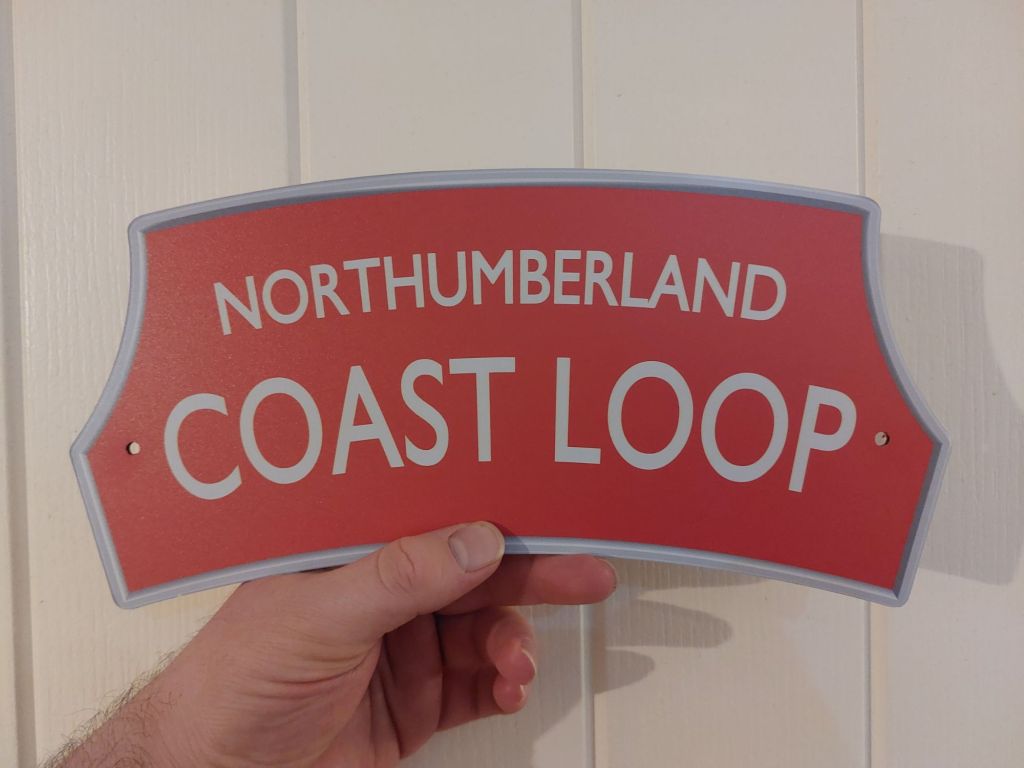
In a somewhat fitting coincidence, the Northumberland Coast Loop headboard arrived in the post today…
…which will soon be seen out and about on the route; as ever, watch this space!
This was made by JAF Graphics, who I’d happily recommend if you require your own personalised railway headboard, with excellent prices, great communication and swift delivery, there may be more in the pipeline to come!
Quiet Work Behind The Scenes
There is much quiet work also going on in the background with regards to the Northumberland Coast Loop; such as emails and other correspondence with some very positive replies. Hopefully more will be announced shortly, but on that cliffhanger, I’ll have to leave things there!
Thanks for reading, please subscribe to the blog to get all the latest updates! Yours, RH.
On 1st May 2025, Northumbrians will go to the polls to select their local county councillors, with a total of 69 across the entire county being selected by residents this year.
As candidates are now being announced, it is time to raise the route with candidates for your ward and seek their support for the N.C.L. rail route between Berwick and Newcastle via Bedlington.
The full list of the ten Northumberland stations covered by the Northumberland Coast Loop, from north to south are as follows:
Berwick Upon Tweed
Chathill
Alnmouth
Acklington
Widdrington
Pegswood
Bedlington
Blyth Bebside
Newsham
Seaton Delaval
If you live within reasonable distance of any of the above stations, and you would would like to see the Northumberland Coast Loop proposal implemented, then please reach out to your candidates and ask for their public support; any candidates who do so will be detailed below alongside the ward they are seeking to represent.
A recent social media post (shown below), from Northumberland County Council is marketing the Northumberland Line as ‘scenic journey through the heart of the county’ with ‘historic stations and breathtaking landscapes’ making it ‘a true gem of the North East’.
While the above does certainly hold true; the Northumberland Line is and will be a scenic route along good portions of it’s length, sections of the East Coast Main Line (ECML) in North Northumberland are perhaps even more outstanding; the views across to Lindisfarne on a sunny day is a very hard act to beat, but the journey through farms, woodlands, and over deep valleys in the coalfield area can hardly be described as an unpleasant trip.
Overlooked Beauty
This isn’t to disparage my ‘home turf’ of South East Northumberland, it is very pretty, sometimes surprisingly so as a local lad; you often overlook your local area in favour of places the Scottish Borders, the Lake District, County Durham, or Yorkshire, but we are blessed with beauty even near to former industrial towns like Blyth, Bedlington, or Ashington.
Once past the former Barrington Colliery Institute (once the excellent ‘Fuggles’ bar and brewery) at around three minutes in, the scenery is every bit as good as many other lines around the UK.
From Berwick, to Pegswood, then Bedlington, and finally (or not) Newcastle?
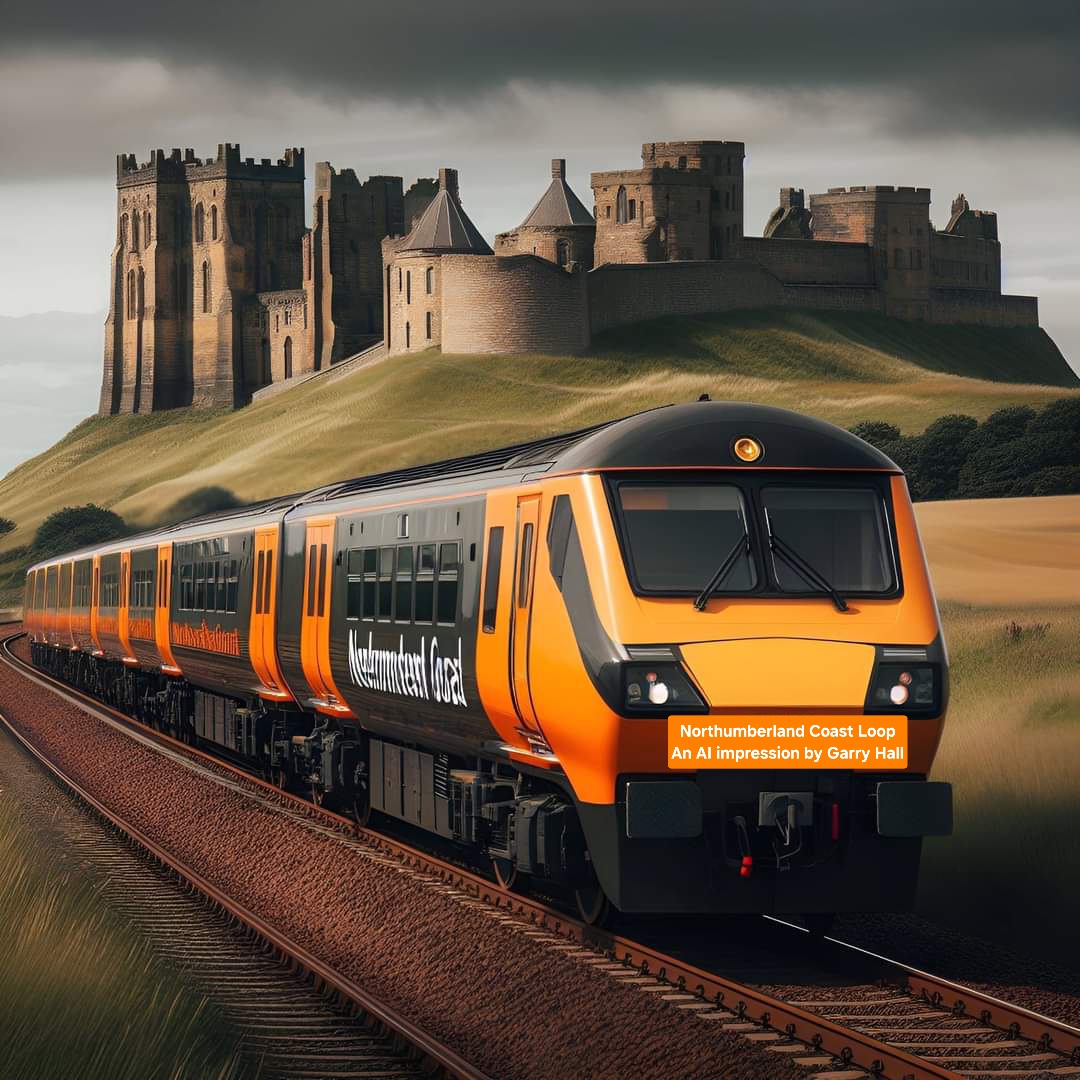
One solution could be to implement a service that links both areas together; the Northumberland Coast Loop.
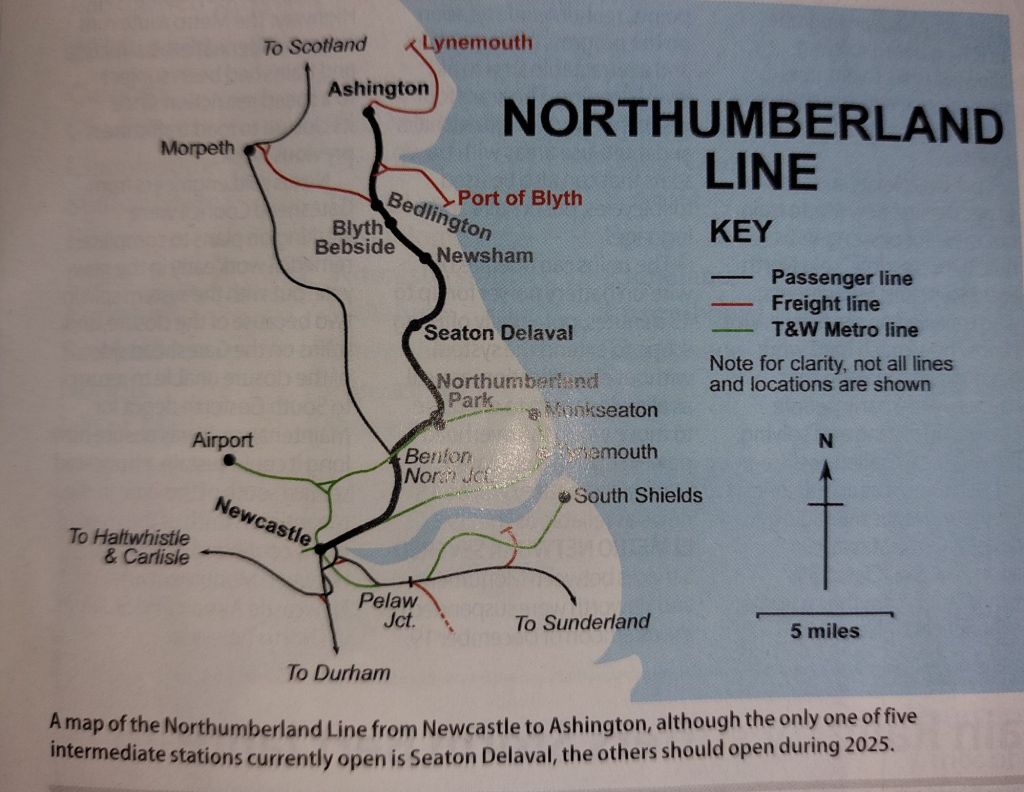
Starting at Newcastle, this route would follow the Northumberland Line for the majority of it’s length, as far as Bedlington.
At Bedlington, the train would bear left onto the Hepscott Line mentioned earlier, taking the train back towards the ECML, and by using the Morpeth North Curve, would point the service towards Berwick Upon Tweed (and potentially Scotland if the service was to continue northwards).
This link would allow rail passengers to get the best of Northumberland Coast; having as much of it as possible using the current track layout. Why not have your cake and eat it?
Northumberland Coast plus The Tyne Valley Line?
Indeed a Berwick, Bedlington, Newcastle, Hexham, Haltwhistle/Carlisle route could allow a very scenic trip taking in the Northumberland Coast from Berwick to Blyth, then the Tyne Valley Line out towarss or into Carlisle; two very spectacular routes, with the potential to link them today.
Indeed this will be the route of the often mentioned ‘The Seven Counties Rambler’ by the SRPS, due over this very route on 8th March 2025; showing how easy this could be; why not run a ‘Scenic Sunday Service’ between Carlisle and Berwick via Blyth, taking in all of these three fantastic routes?
Let’s use this existing link to showcase ALL of Northumberland’s Beauty by Rail.
On 8th March 2025, eight weeks from today, The Seven Counties Rambler, operated by the Scottish Railway Preservation Society (SRPS) is due along the proposed Northumberland Coast Loop route between Newcastle and Edinburgh, travelling via the Northumberland Line as far as Bedlington, before taking the Hepscott Line and Morpeth North Curve to rejoin the East Coast Main Line and head back into Scotland to end the trip where it started at Linlithgow.
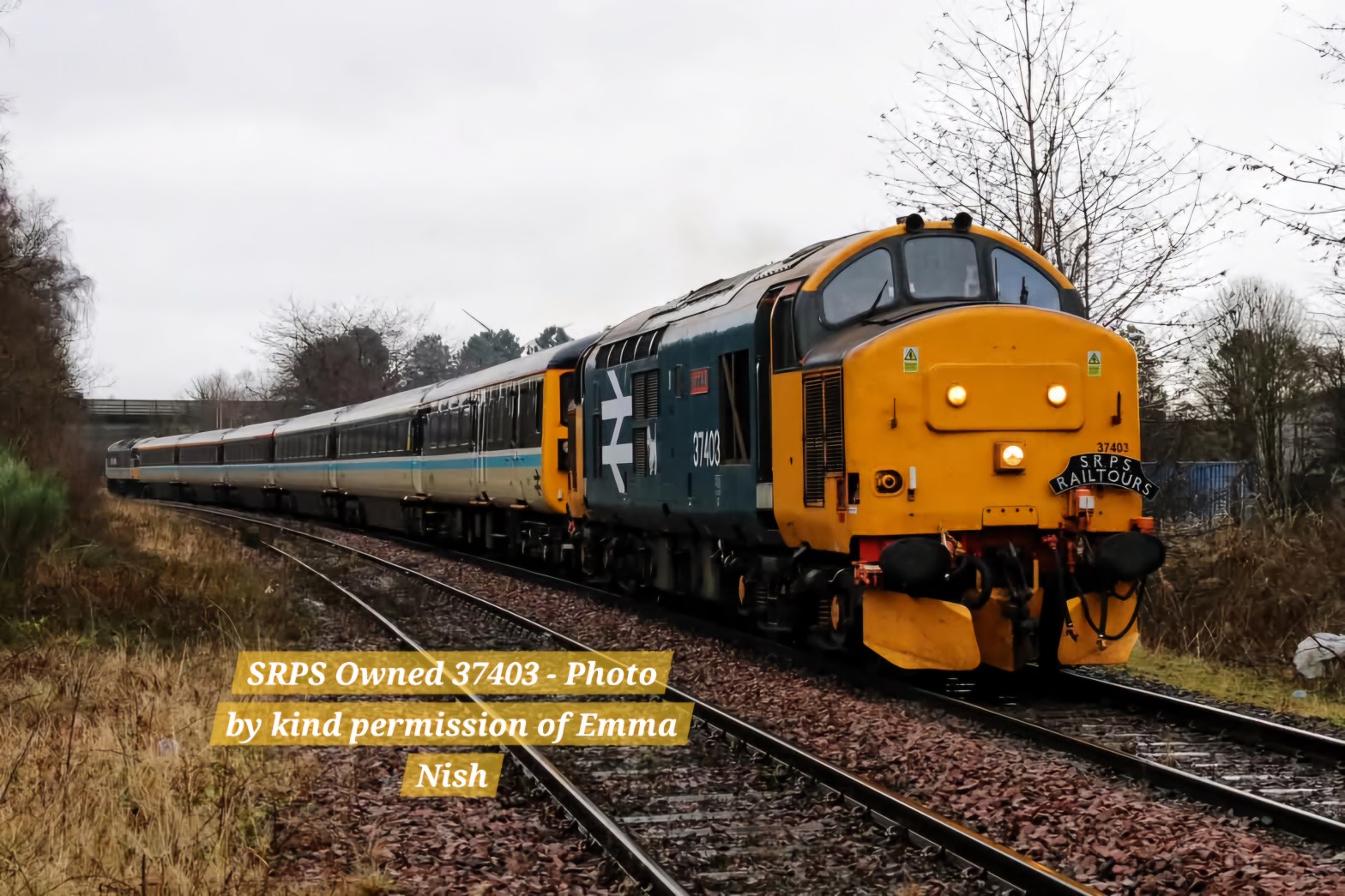
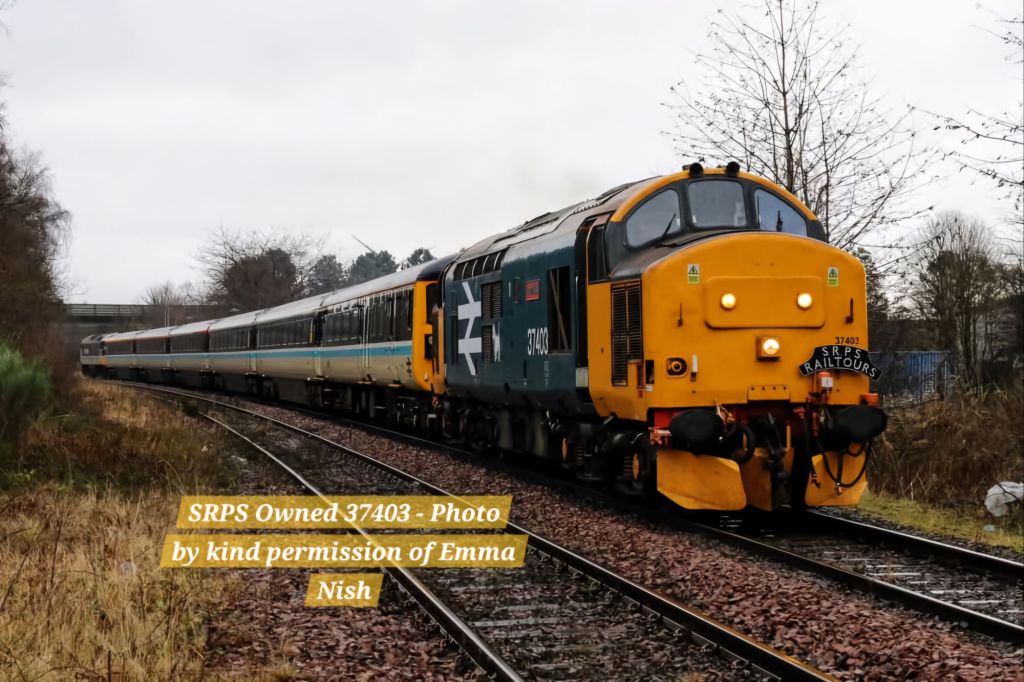
Photo of 37403 by kind permission of photographer Emma Nish
One of the loco’s due to be hauling the train will be Class 37 37403 ‘Isle of Mull’, with a second, as yet unidentified Class 37 working alongside, a photo of the loco working a different excursion is photographed above, the link to the original post is available on our Facebook page.
Rare Route Today, Regular Route Tomorrow?
A journey along this route is exceedingly rare at present for even railtours, the last to my knowledge being the 2017 ‘Bound for Craigy’ Railtour operated by the Branch Line Society (BLS) on March 18th, almost 8 years to the day before The Rambler is due along the same route between Newcastle and Edinburgh via Bedlington.
In that time, the Northumberland Line has gone from the drawing board to firm reality, with stations either completed (as is the case with Ashington and Seaton Delaval), or well underway for the remainder, Newsham potentially being open by the time The Rambler passes through.
This route was an impossible one when the stations were originally open in 1964, as the Morpeth North Curve didn’t open until 1980, long after most of the stations had been demolished during the early 1970’s, the line thankfully still busy with railfreight, particularly coal traffic until very recent times.
The Victorians Nearly Did It: The North British Railway’s Plan For Newcastle to Edinburgh via Bedlington, Scots Gap, Bellingham, and Riccarton Junction
The idea of stations like Bedlington, Bebside, Newsham and more having a connection to Scotland is not totally unprecedented in railway history; indeed it NEARLY happened in the 1860’s…
The North British Railway Company was desperate to reach Tyneside, helping to fund the Border Counties Railway (between Riccarton Junction on the then Border Union Railway (later the Waverley Route, now partly restored as The Borders Railway between Edinburgh and Tweedbank) and Hexham on the Newcastle and Carlisle, now better known as the Tyne Valley Line), as well as the Wansbeck Railway that ran westwards from Morpeth to join the Border Counties line at Reedsmouth Junction (near the village of Redesmouth in Northumberland).
The potential route for North British train between Newcastle and Edinburgh would have been quite extraordinary considering the route taken.
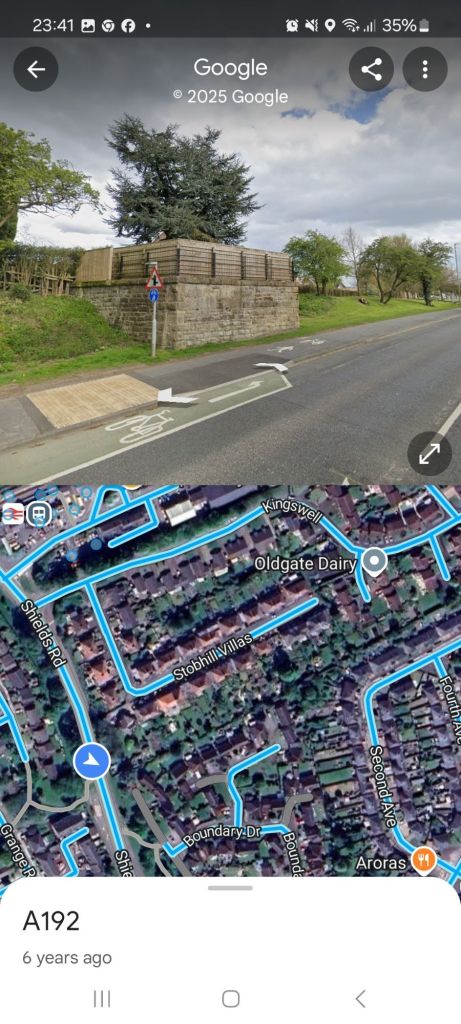
Starting at the Blyth and Tyne Railway Company’s New Bridge Street station, it would have run along B&T metals through Bedlington, before heading towards Morpeth; but not into the current Morpeth station, as the line curved off into the present day Stobhill Estate, the line of the route marked by Kingswell and Stobhill Villas, and the remains of the bridge over the present day A192 Shield’s Road still being visible (image from Google Maps below)
Google Maps image of the former B&T link to the Wansbeck Railway
After crossing the road, another bridge would have carried the line over the modern day East Coast Main Line, joining the Wansbeck Railway (the ‘Wannie Line’), the train having started at Newcastle now headed for Scot’s Gap to reach Edinburgh!
After Scot’s Gap, the train would continue broadly westwards to connect to the Border Counties Railway to head, at last towards the Scottish Border. The original intention was for the Wannie Line to curve north west, towards Bellingham and allow a direct run towards Riccarton Junction, this was, in the end, not to be, which is covered later*.
Had it been built, and worked as originally intended, this very indirect train between Newcastle and Edinburgh would pass through Bellingham, making its way towards Riccarton Junction, passing Plashetts (now beneath the waves of Kielder Water), eventually crossing the Scottish Border, joining what later became the Waverley Route and finally on its way to Edinburgh.
*In the end, however, the route was never built to a layout permitting such a direct run; the North British secured running powers from Riccarton Junction to Newcastle via Hexham, meaning the Wannie Line to Morpeth got connected at Reedsmouth Junction, not Bellingham, meaning any Scotland bound train would need to reverse at Reedsmouth as this junction faced Hexham, not Riccarton Junction.
The dominance of the North Eastern Railway (N.E.R.) which absorbed the Newcastle and Carlisle Line (giving the North British Railway running powers in Newcastle, and leading to the abandonment of the route via Scot’s Gap and Bedlington), and ultimately absorbtion of the Blyth and Tyne Railway Company in 1874 meant this plan never came to fruition.
Alternative History
Things could have turned out very differently though; the North British *might* have retained their option of an independent line to Newcastle via the B&T had the N.E.R. absorbed the Newcastle and Carlisle Railway slightly later, which would have likely meant the junction at Bellingham being built, rather than at Reedsmouth.
The famously independent Blyth and Tyne Railway (B&TR) which waited until as late as 1874 to merge into the N.E.R., might have worked more closely with the North British Railway (N.B.R.) to maintain their independence, perhaps even merging into the N.B.R. rather than the N.E.R?
If these services had become established, then towns like Blyth would likely have had a very different development; it probably would have still been a major industrial town given the large coal reserves and mineworkings to exploit it, but the presence of anglo-scottish passenger trains would probably have had a profound impact on it’s development.
The heavy involvement of the N.E.R. in development of Blyth as a port is a major factor in the later success of Blyth for coal shipment, so NOT being part of the N.E.R. might have resulted in the Port of Blyth being less well developed given the more limited resources of the N.B.R.
In the end though, this wasn’t to be, but with the need to provide better public transport and the Morpeth North Curve now in place, perhaps now is the time to implement a Newcastle to Edinburgh via Bedlington route?
The premise of the N.C.L. is to provide large towns such as Blyth, and areas such as North Tyneside a direct rail link northwards, by using the existing freight line between Bedlington and Pegswood (the Hepscott Line) for rail services between Newcastle and Berwick/Edinburgh to run via Blyth, now that stations are opening on the Northumberland Line.
This would avoid the time penalty of heading south into Newcastle to change trains to then head north, instead allowing a direct, and therefore faster, single seat trip from south east Northumberland or North Tyneside into Scotland or North Northumberland.
As stated in above blog, the cost of the Northumberland Line is around half the cost per mile compared to dualling of the A1, so the N.C.L. route could be delivered at a fraction of the cost of dualling and delivering potentially large economic benefits to boot. The Northumberland Line is due to deliver about £1.50 back for every £1 spent.
North Northumberland needs better connectivity, but rail connectivity could deliver much more economic benefit, whilst also cutting carbon emissions, cutting congestion, and improving safety, rather than widening of roads, and overwhelming towns and villages already struggling to cope.
Let’s hope that 2025, as the Railway200 year will see a refocus on rail transport as the way forward, as once Britain did before, and led the world. Let’s lead the world once again by putting rail at the forefront of green transport?
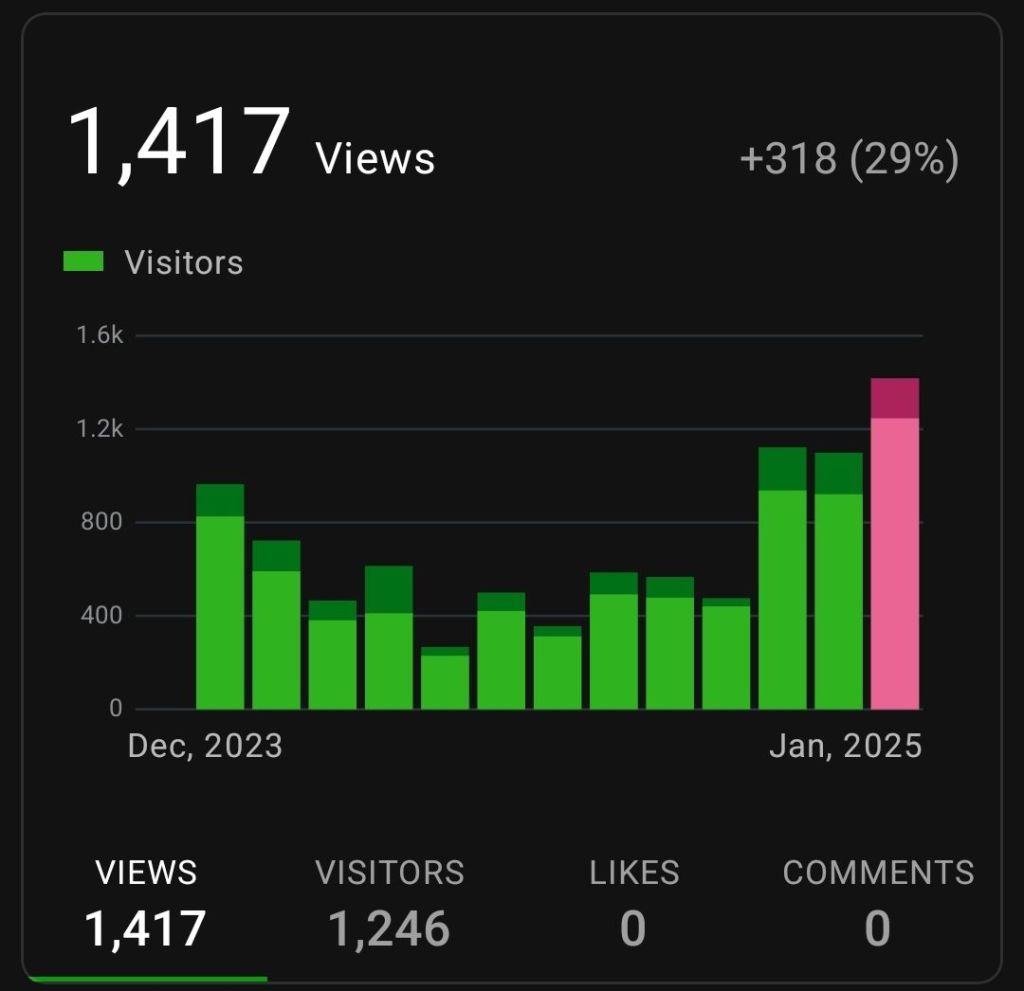
Over the course of the past 12 months, the website has attracted visitors from across the globe, and in substantial numbers, with a little over seven and a half thousand visitors making more than nine thousand views, see the stats card below for full details.
Website Statistics 8.1.25
2025, as the nationally celebrated Railway200 year, has got off to a VERY strong start for the N.C.L website. This year has already seen around a sixth of the total traffic in 2024 in the first week of this year.
Monthly statistics for the N.C.L. website/blog
Indeed, the best ever day for the website so far was on the 5th January 2025, with a tremendous 619 views taking place.
Thank you all very much for taking the time to look at the website, and please keep coming back for more news and updates on the campaign!
A last minute find on Realtime Trains is the presumed test train starting at Middlesbrough Sidings at 08:35 this morning (8.1.25), due to reach Bedlington at 14:30, then taking the Hepscott Line towards Butterwell Junction, where presumably it takes refuge in the former disposal point sidings between 14:49.5 and 14:54.5, before heading back to Hepscott by 15:03, taking a trip to Morpeth between 15:32 and 15:34.5, then passing back through Bedlington around 15:45 to head back to Middlesbrough.
If you’re able to, why not try to catch it, especially on the rarer sections of track such as the Morpeth North Curve?
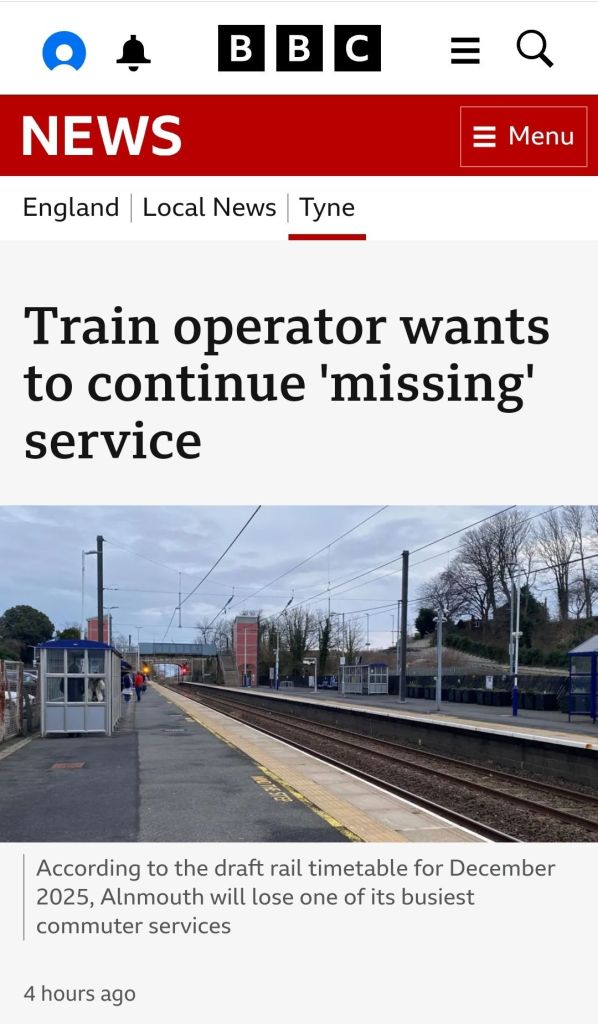
This recent article from the BBC suggests that the highly popular 08:10 CrossCountry service from Alnmouth (for Alnwick) might survive the December 2025 ECML timetable change, though this is not yet certain.
CrossCountry wish to maintain the service serving Alnmouth, and as a very popular on (around 100 daily users of this train are quoted in the above BBC article), contributes massively towards the near million rail users on the North Northumberland stretch of the ECML in the 2023/24 rail user year (please see above article for details).
Loss of the CrossCountry service at Alnmouth would therefore a massive backwards step for rail users in North Northumberland – the 2024/25 figures, yet to be released may well show over a million rail users given the trends from the preceding year; losing well used services when more people are using rail is an absurd proposition surely?
Act NOW
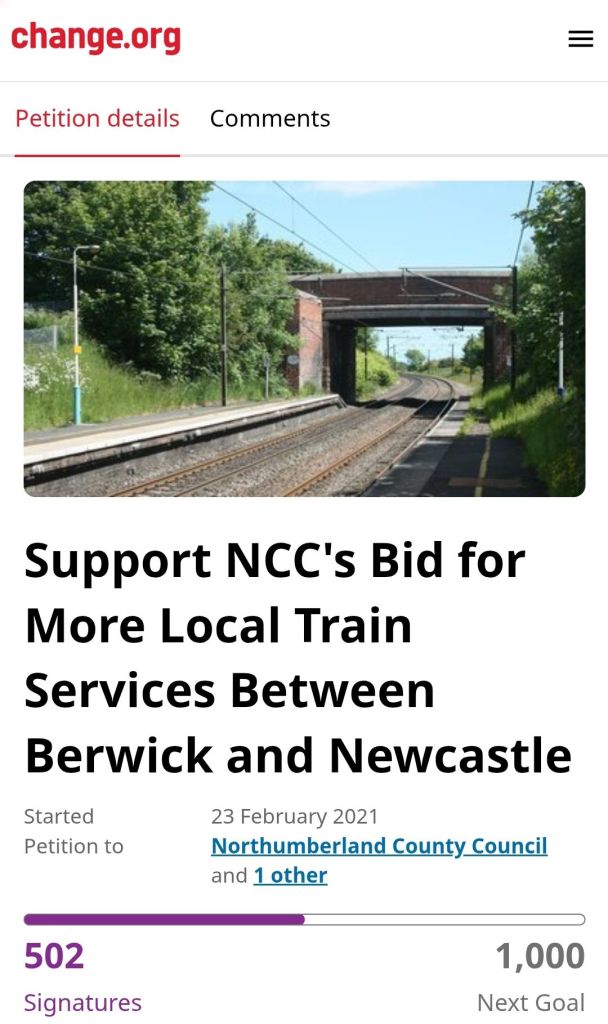
Please sign this long running petition by David Towns to see more local services on the ECML between Berwick and Newcastle. At time of writing (7.1.25), it has 502 signatures, lets see how quickly 1000 can be reached?
If you live in the North Northumberland constituency, please write to David Smith, MP for North Northumberland to request support for retaining the 08:10 service at Alnmouth, alongside an improved service at other stations in his area (Morpeth, Pegswood, Widdrington, Acklington, Alnmouth, Chathill, and Berwick Upon Tweed all fall within his contituency), and please mention the proposed Northumberland Coast Loop too!
SHARE this post on your social media to raise awareness and hopefully see this important service at Alnmouth retained.
This blog post sets out a few thoughts on improving the connectivity of Alnwick and Amble, both popular tourist towns to their nearest major rail station at Alnmouth on the East Coast Main Line (ECML).
Alnwick to Alnmouth Station
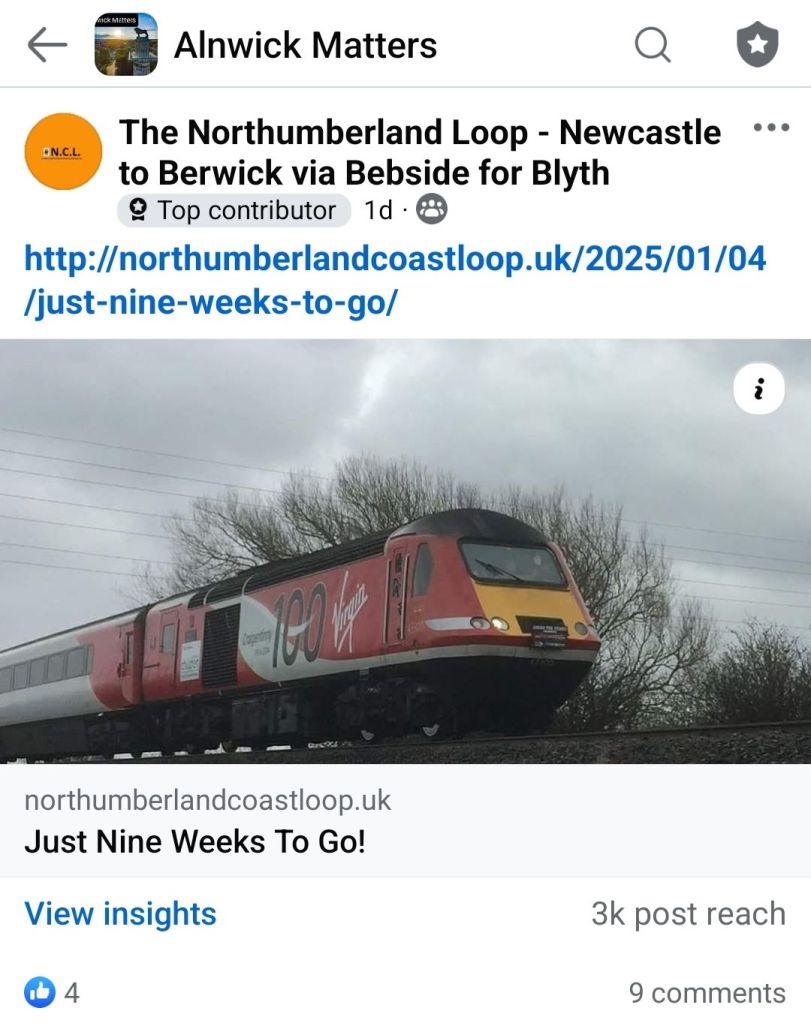
After sharing a recent blog post on the Alnwick Matters Facebook Group (image below), a number of comments were made about the poor state of public transport connectivity by bus from Alnwick to Alnmouth.
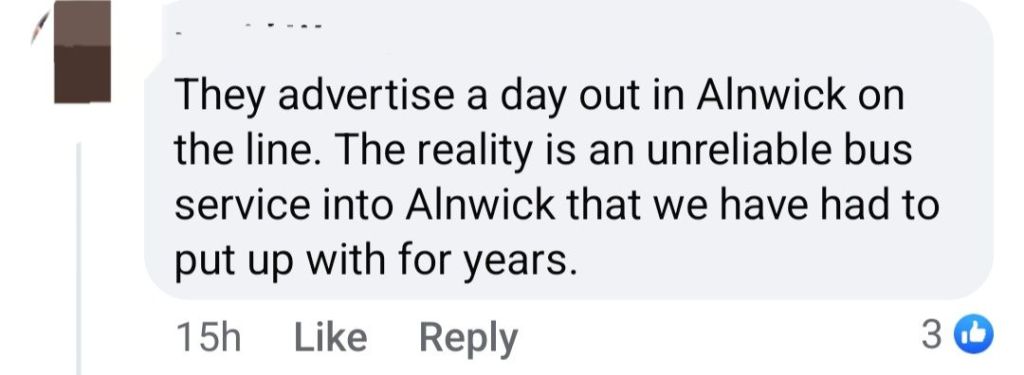
Comment 1Comment 2
The above comments show the dissatisfaction with the existing services by Arriva; while the service outlined below seems fairly reasonable, the reliability of Arriva buses is well known to be poor, with buses often late or failing to arrive at all on numerous occasions.
The current services are outlined below, with both running into and through Alnwick and Amble respectively already.
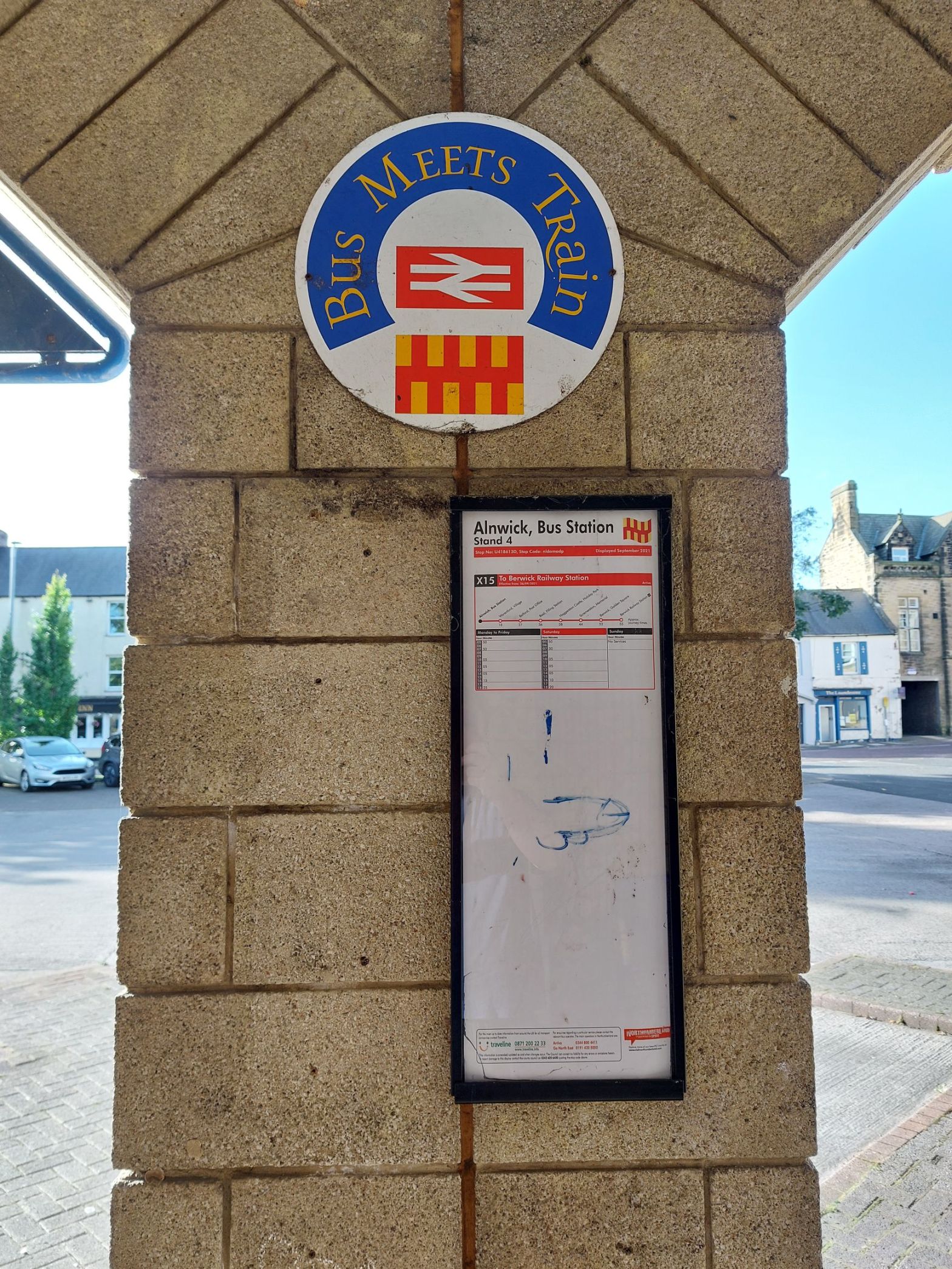
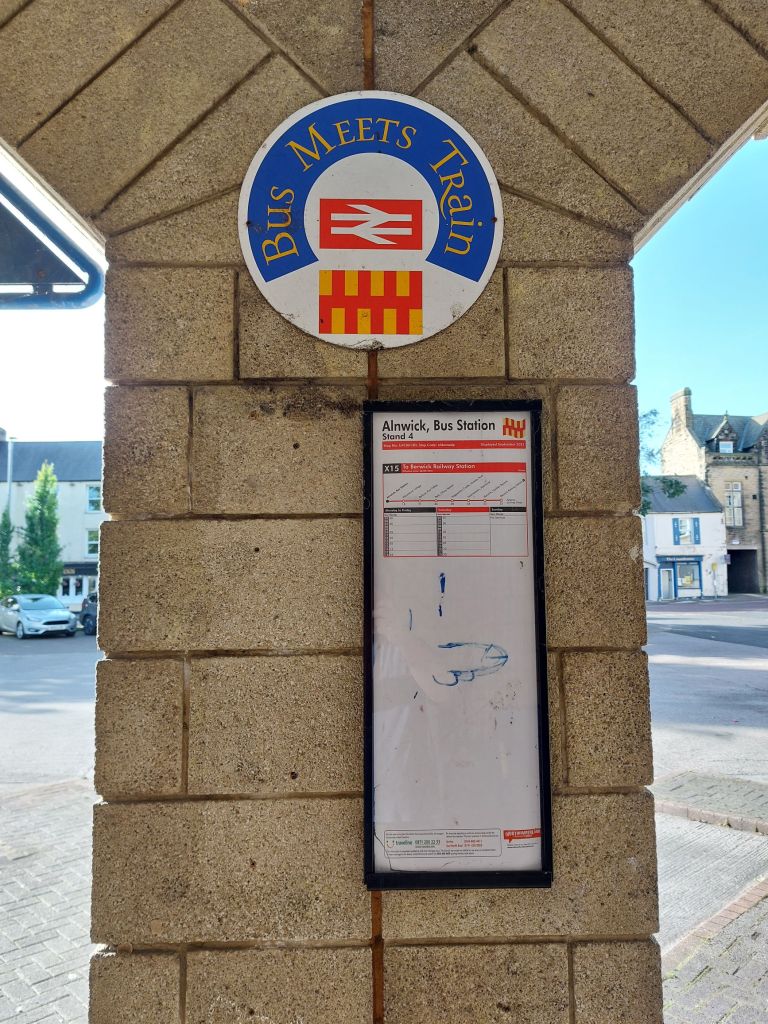
Bus Meets Train signage at Alnwick Bus Station, Stand 4.
X20 between Alnwick and Ashington
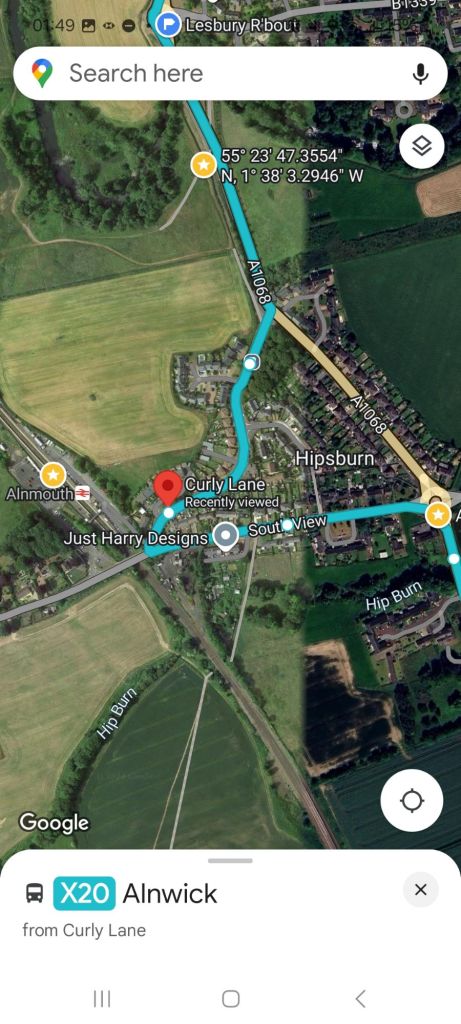
X20 route near to Alnmouth Station
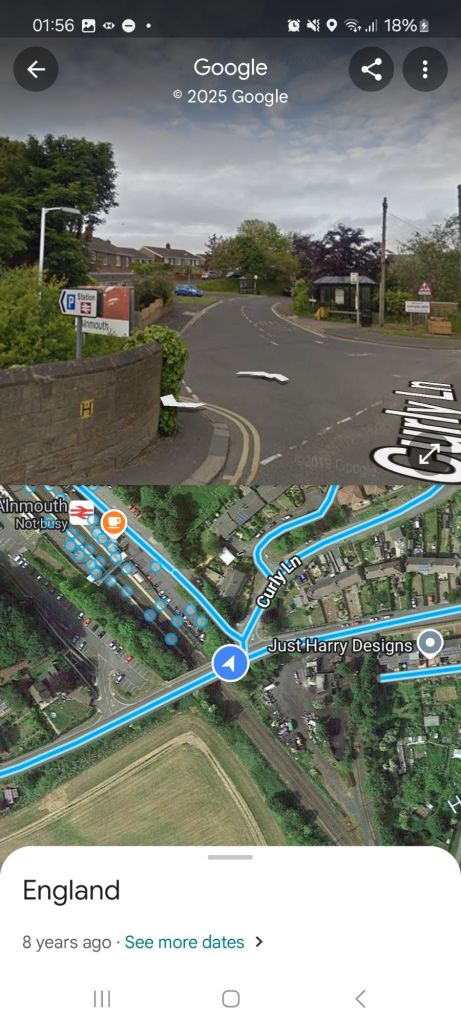
The X20 service provides a near ‘doorstep’ connection to the station, taking a route via South View and Curly Lane in Hipsburn to serve the closest bus stops to Alnmouth station.
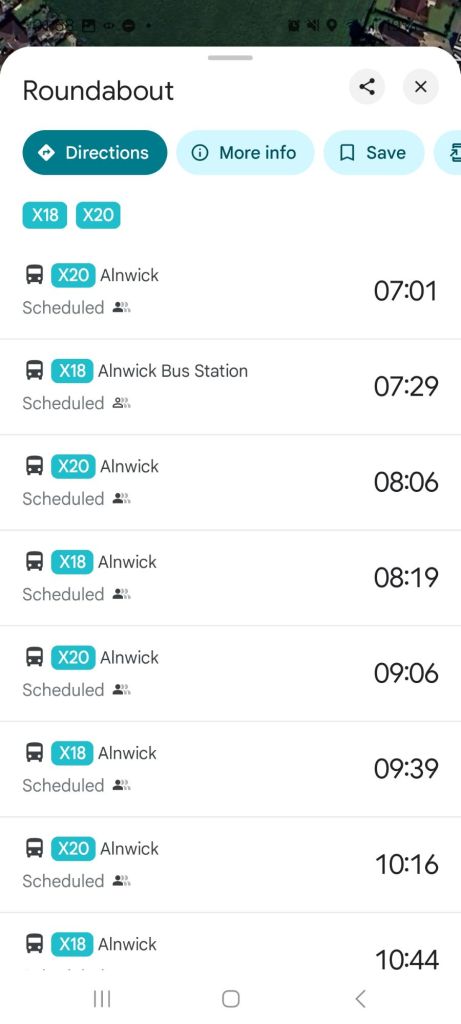
The service is presently approximately hourly, the with gaps between services slowly increasing during the course of the day.
While this isn’t necessarily a bad service, if late running or failing to run altogether, this would present a significant issue for those trying to use the service.
Improving the reliability and timekeeping of of the X20 service would be an immediate benefit that could hopefully be very quickly delivered.
X18
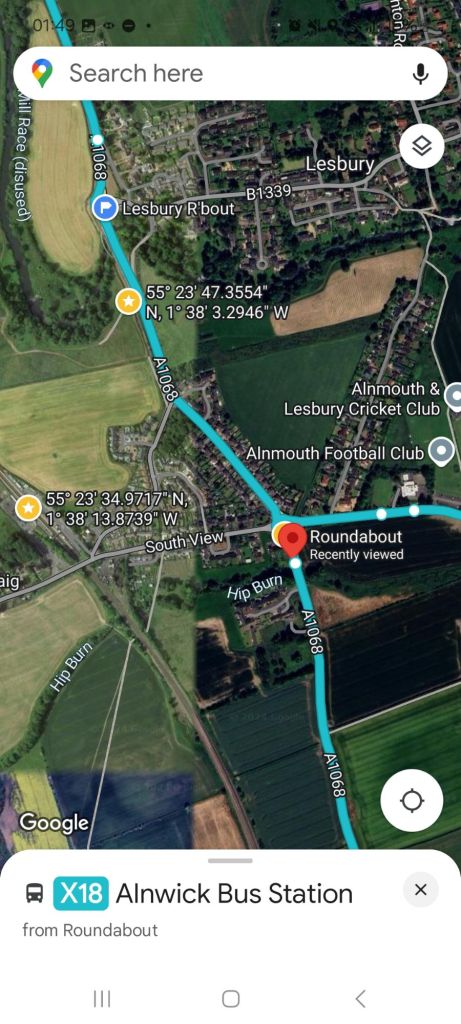
The X18 service runs through Hipsburn, but doesn’t run via South View & Curly Lane, the nearest stop being that near Hipsburn Roundabout, around 8-10mins from the station itself.
Route of the X18 near to, but not serving Alnmouth Station.
While it may require some timetable alterations, routing the X18 to Alnmouth station would seem the obvious course of action to improve connectivity between bus and rail services.
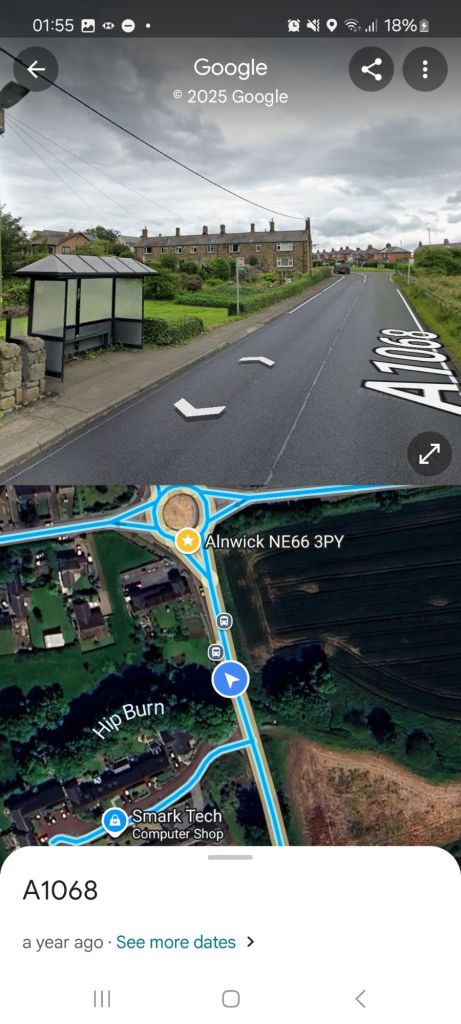
Waiting shelter (and lack thereof for Amble bound passengers) at Hipsburn Roundabout bus stop.
The lack of a waiting shelter on the Amble bound side of the A1068 would also be alleviated by running via Curly Lane, as both stops have shelters at that location, but the simple installation of one at the Hipsburn Roundabout stop should potentially be given priority too.
X18 and X20 together offers a half hourly service
If both services ran to similar timings, and both ran via Curly Lane (X18 would require rerouting), then this could offer a near half-hourly service to/from Alnwick and Amble, but unless reliability improves, then this is still unlikely to be an attractive option for many.
Dedicated Alnwick – Alnmouth Station – Amble Circular Bus
Given the popularity of both towns for tourism, with Alnwick home to Alnwick Castle, the Alnwick Garden, Lilidorei, Barter Books and more, and Amble an increasingly popular seaside town, there could well be justification for a dedicated year round bus service to link both towns to Alnmouth Station.
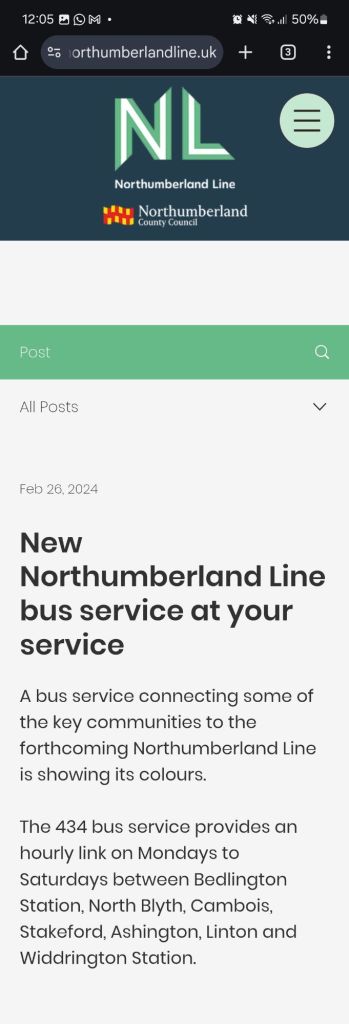
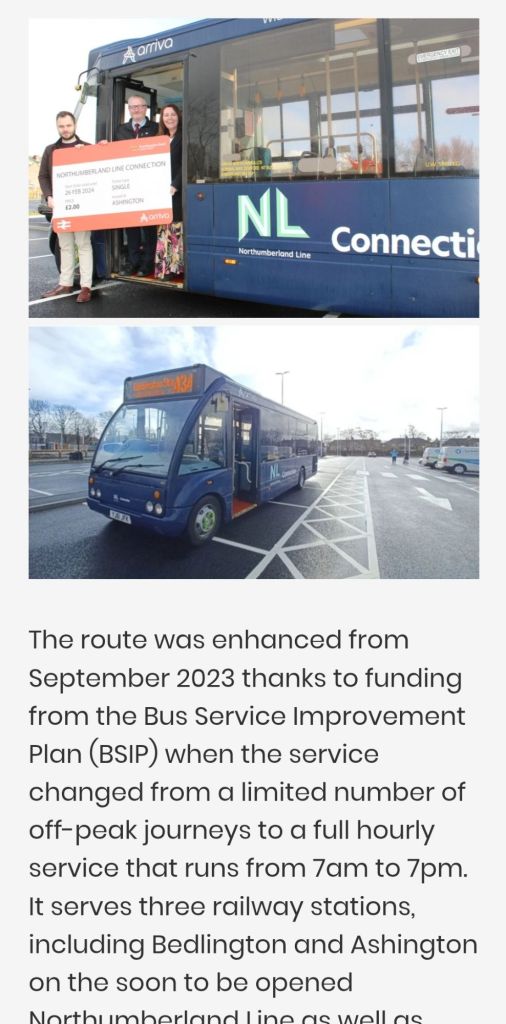
This could mirror the 434 ‘Northumberland Line Connector’ that was launched in February 2024 and running hourly from 7am to 7pm.
A similarly sized bus, with appropriate branding (Castles and Coast Connector perhaps?) could be similarly provided as a dedicated link between Alnwick, Alnmouth and Amble, which would also take in sites like Warkworth Castle en-route.
Timings for such a bus may need extended, perhaps until 9pm or perhaps even 10pm for evening events in Alnwick, or people returning home on late trains from Alnmouth.
The current bus timetables suggest that Alnwick Bus Station to Amble High Street would take between 27 and 30 minutes, meaning a single bus could possibly achieve a full circuit in one hour.
At a minimum, an hourly service should be provided by such a dedicated bus, and at peak times, ideally a half hourly one in addition to the X18/X20 buses, with tickets usable across all three services.
Alnwick Town Centre: Bus Priority Improvements?
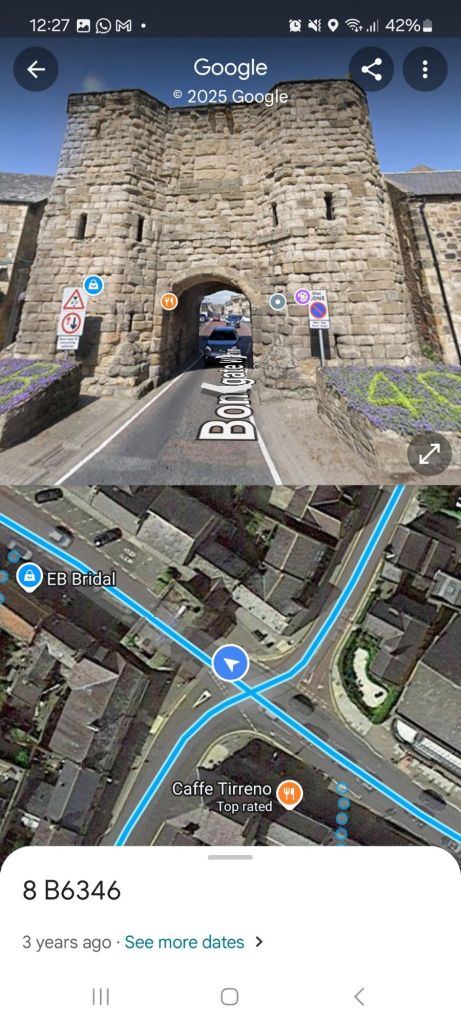
Improvements to traffic management in Alnwick (particularly around Bondgate Without) could decrease congestion for buses heading towards Alnwick Bus Station (by observation and experience as a local resident) traffic often tends to queue along Bondgate Without, which is the major bus route, and buses trying to exit Hotspur Street to head towards the War Memorial also get held up in traffic.
One solution could be to make Bondgate Tower and the junctions with Hotspur Street and Greenwell Road fully light controlled, which could also improve pedestrian safety in this area of Alnwick due to busy road junctions.
A second option would be to rever the traffic priority at Bondgate Tower to heading inwards (as it has previously been, as photo below shows)
Photo of a Northumbria Motor Services Bus exiting Bondgate Tower, but showing former inward priority at the time. Credit to Brian Taylor of the Northumbria Motor Services Pictures Facebook Group for the photo.Recent image of Bondgate Tower from Google Maps showing present priority arrangements.
A third option would be to make Bondgate Tower one directional, and probably inward only (from Alnwick Playhouse side into the Town Centre), which could also potentially help to avoid the structure being impacted by oversize vehicles (easily able to turn left or right to avoid the low arch).
The third option is possibly the most preferable, as it reduces the conflict of traffic alternating direction through Bondgate Tower, allowing a steady flow through, meaning that traffic would not build up on Bondgate Without to the same extent, and it would also allow any traffic exiting Hotspur Street and Greenwell Road to have a much clearer view of any oncoming vehicles. It could also effectively calm the traffic in the Town Centre and make crossing the road easier and safer.
The above works are not strictly necessary to improve the bus services, but as a hotspot of congestion within Alnwick on a primary bus route, improvements would benefit all buses, and would also be of pedestrian benefit.
The Alnwick Branch/Aln Valley Railway
Unfortunately, the decision was made in 1968 to close the Alnwick Branch between Alnwick Station and Alnmouth. Some controversy surrounds this being reputedly linked to the building of the A1 Alnwick Bypass around that time, the closure of the line meaning that building costs of a rail bridge over the A1 could be avoided. An excellent short video of the Alnwick Branch in action can be seen here.
The Aln Valley Railway has a long stated intention of reconnecting Alnwick to Alnmouth from their new station at Lionheart (to the east of the A1 Alnwick Bypass), through to Alnmouth Station.
This rail link, once complete would be a great asset to connectivity between Alnwick and Alnmouth, especially as the A1068 can often be treacherous in adverse weather conditions due to steep hills, sharp, and often blind bends, and is frequently the site of road accidents, the railway would be a much better ‘all weather’ route.
Hopefully the AVR will not be too long from achieving this aim.
There could be an advantage in the Aln Valley Railway extending south of Alnmouth on an alignment parallel to the ECML before passing over/under the ECML to head towards a new terminus near to Birling; giving the AVR a fantastic sea view (as the ECML trains experience), and putting Amble within a fairly reasonable walking/cycling distance of a rail station? This admittedly would be a significant new branchline to build, but would be more advantageous than rebuilding a station such as Warkworth on the ECML, or to rebuild the old Amble Branch which has been largely lost.
Use of battery electric trams could allow the route at each end to be extended into the town centres of Alnwick and Amble, the latter probably having to avoid the Warkworth Castle route of the A1068 and instead cross the River Coquet between Warkworth and Amble, and curving around Birling to join the extended AVR.
Alnmouth Station to Amble
The route between Alnmouth Station and Amble is comparatively straighforward, though straightening and generally improving the A1068 from its wiggling course between Hipsburn and Birling (before entering Warkworth) would be an advantage, as would removing on-street parking on Castle Street in Warkworth, which makes the road extremely narrow for vehicles such as buses and HGV’s to negotiate. The junction of Woodlands and Beal Bank at Warkworth could also be improved, with the through route potentially following the A1068, and making the approach from Morwick Road a give way, or a small roundabout be installed at the top of Beal Bank?
Conclusion
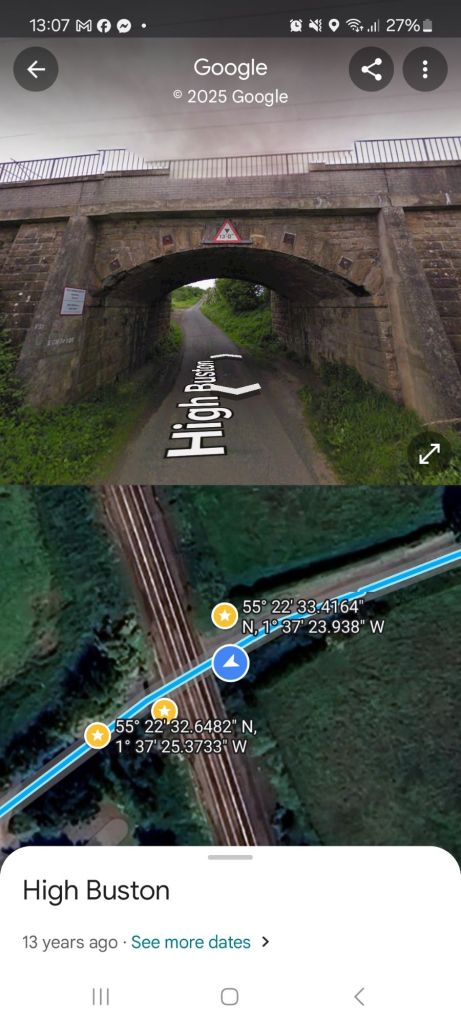
There is perhaps no reason why a dedicated Alnwick to Amble via Alnmouth shuttle bus service couldn’t be established during 2025; it is a fairly low cost and easily implemented change with low infrastructure requirements. Other buses such as the 472 Alnwick to Shilbottle bus could be extended on to Alnmouth Station too, although the 13′ 0″ height restriction on the High Buston road may restrict the types of buses able to service such a route?













 The Northumberland Coast Loop