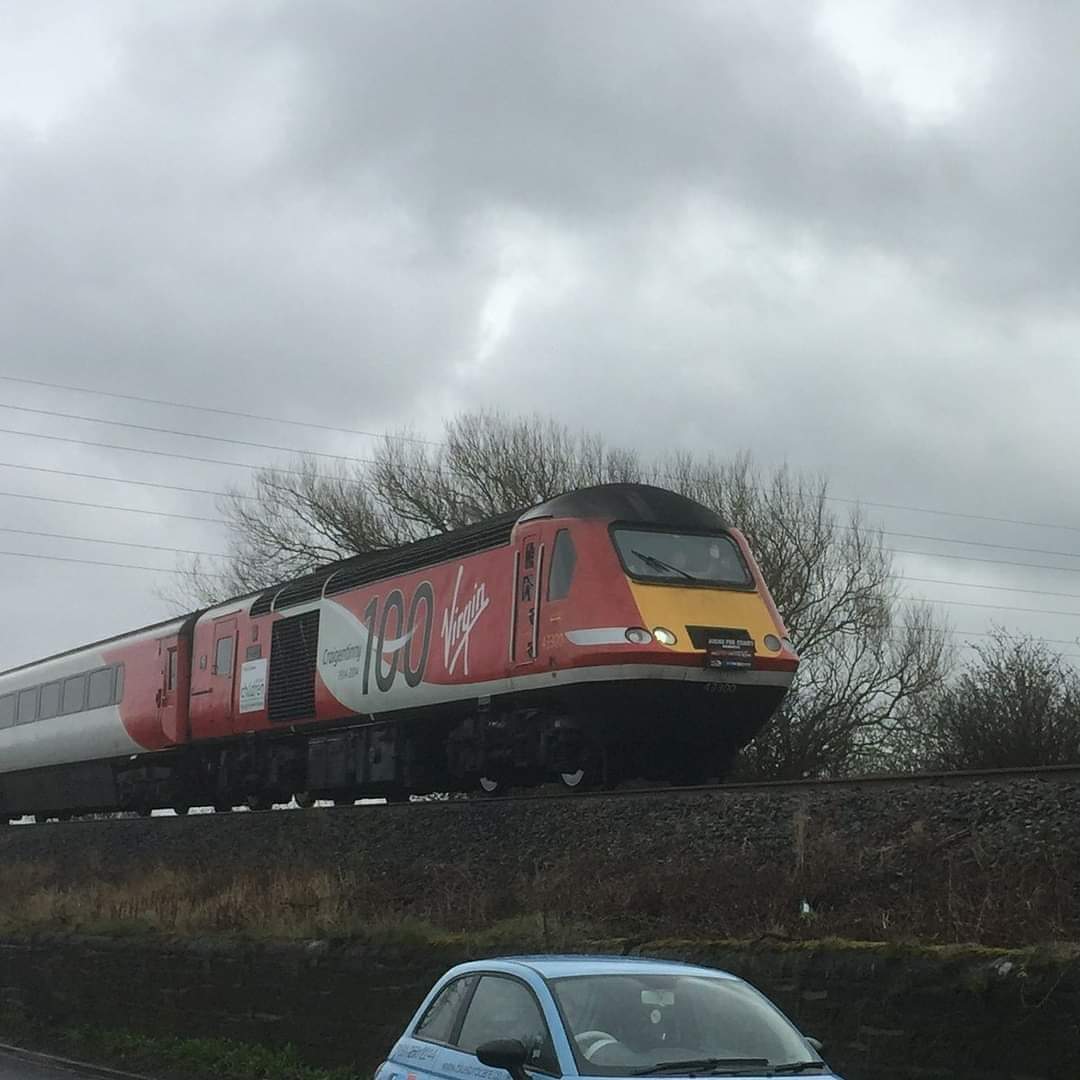
More trains to Chathill Station on 18th & 19th October 2025?

On the 18th and 19th October 2025, the Northumberland Vintage Tractor Club (NVTC) is holding their annual rally at the nearby former Brunton Airfield. A few photos from my visit in 2024 are shown below.

Please note that the opinions expressed below are those of myself, not those of NVTC or of any other organisation.

Can’t beat a steam traction engine!
A wide range of vehicles for all interests!
Blyth Battery display
Military vehicles
Tractors!
Some more unusual machines
Miniature steam lorry in Cadbury livery, everything in one perfect purple package!

Chathill to Brunton Airfield

Chathill Station is quite close to Brunton Airfield, which is in a very rural area of Northumberland; about halfway between Alnwick and Berwick Upon Tweed.

As can be seen from the image above, the distance by road is only 4.6km (2.9 miles), meaning it could be driven in around 6 minutes, walked in just over an hour or cycled in just 14mins.

Walking distance is probably erring on too far for most people, but cycling and a shuttle bus could certainly be contenders for the event.

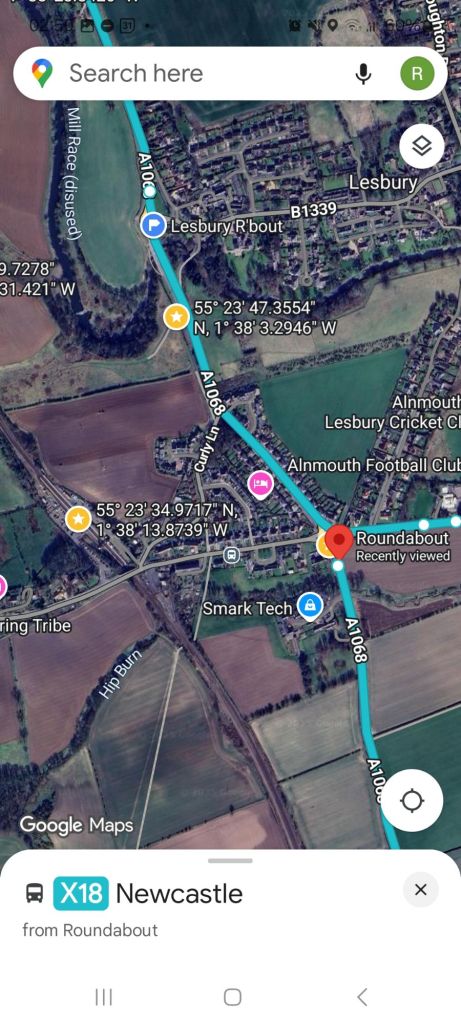
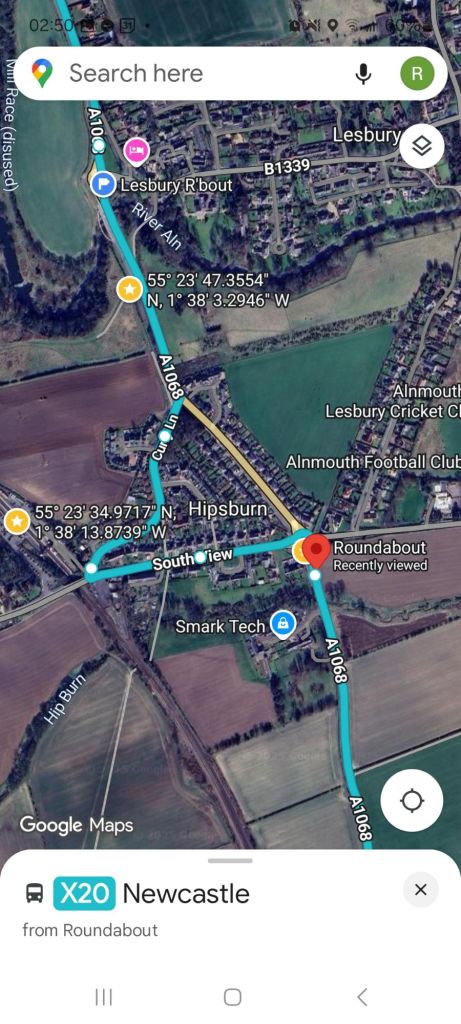
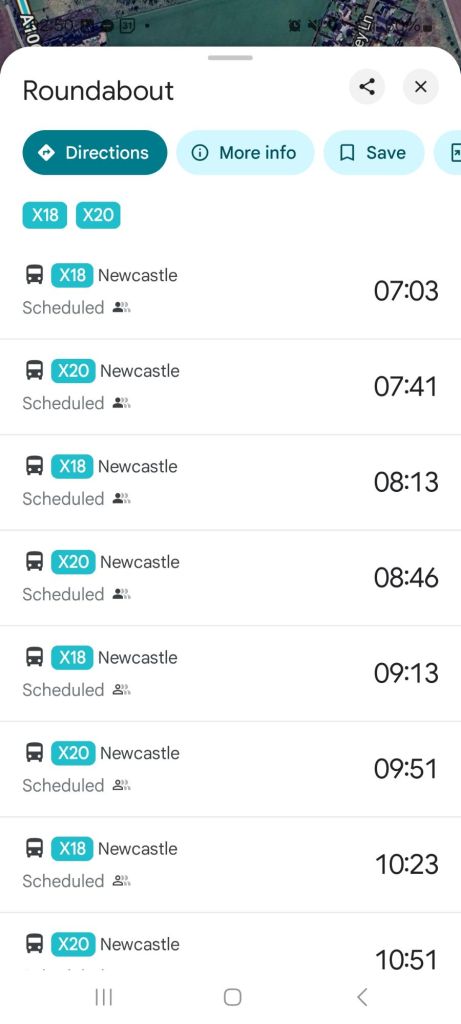
This compares very favourably to the distances involved from other railway stations such as Berwick Upon Tweed and Alnmouth, as seen below:

The problem for Chathill serving this event is the present rail timetable, which currently only gives Chathill a very basic service of one arriving train in the morning and evening from Newcastle and two departures back per day on a Saturday, with no Sunday services at all.

Whilst ideally Chathill, and many other small stations in Northumberland, would be best served by much more frequent service on seven days per week, this is challenging to implement on such a busy railway as the ECML is, so perhaps a temporary timetable, covering just this one weekend (both Saturday and Sunday) could be a quick win?

This could be achieved by any of the current operators that normally pass through Chathill simply amending their schedules slightly to allow a quick stop at this station to drop-off/pick-up passengers.

Blyth Battery to Brunton Airfield by Rail?

At the 2024 Brunton Rally, there was a display from Blyth Battery, a surviving military defence for the important Port of Blyth during both World Wars, with RAF Brunton itself being part of the WW2 coastal air defences of Britain.

This connection along the North Sea Coast highlights just some of the potential in the Northumberland Coast Loop, which could offer a direct link from Newsham Station (closest to Blyth Battery), to Chathill (closest to the former RAF Brunton), which whilst the latter is not typically open to the public, might do so more for events in the future, especially those connected to WW2 which is a major potential tourism draw as Blyth Battery proves.

Hopefully if additonal trains can be planned to coincide with this years Brunton Rally in October, perhaps it might be possible for Northern to run a Belford Siding – Chathill – Pegswood – Bedlington – Newcastle route too and give direct link between Blyth and Brunton for the event?

The data case for Edinburgh bound trains from the Northumberland Coast Loop Stations

Inspired by the latest Railnatter episode (No.  258 ‘Data, maps and how to use them (with Will Deakin), it revealed some sources of data to augment the case for direct northbound rail travel from stations now opened and soon to open on the Northumberland Line.

One of these sources was railwaydata.co.uk, which was used to gain origin and destination data for the stations below; this data is not yet available for the newly opened Northumberland Line stations, but Morpeth and Cramlington stations are strong indicators of the potential northbound flows.

Morpeth Station

The following data was obtained from this webpage: https://www.railwaydata.co.uk/odm/gbr/?dest=all&string_out=Morpeth%20[7680], which gives full details of where the original source data originates from and comparisons over several years.

The rankings of stations are obtained from the most recent year available (2023/24), which broadly follows long term trends, which is somewhat skewed by the Covid-19 pandemic where travel, especially by was much reduced due to social distancing, lockdowns, and isolation.

As can be seen from the above listings, Morpeth had as its ‘Top 10’ primary destinations the following stations, with tickets sold adjacent

1. Newcastle: 116,702

2. Edinburgh: 36,429

3. London Kings Cross: 27,296

4. Durham: 8,551

5. York: 7,315

6. Berwick Upon Tweed: 5,920

7. MetroCentre: 5,824

8. Alnmouth: 5,822

9. Cramlington: 4,704

10. Leeds: 3,723

As can be seen from the list above, destinations south of Morpeth make up the vast majority of the ‘Top 10’, taking 1st, 3rd, 4th, 5th, 7th, 9th, and 10th positions (7/10), and a total of 174,115 tickets sold to/from Morpeth.

The remaining three ‘Top 10’ stations, taking up 2nd, 6th, and 8th places where Edinburgh, Berwick Upon Tweed, and Alnmouth (for Alnwick) repectively. These stations making up 48,171 tickets sold in total.

This gives an approximate ratio of 1:3.6 between northbound and southbound trips from Morpeth, meaning for each individual passenger travelling to or from the north, between 3 and 4 will be heading to or from the south.

This is a reasonable state of affairs for a station such as Morpeth, which is near the urban edge of south-east Northumberland, beyond which is mainly rural, punctuated by a handful of towns and villages towards the Scottish Border (Alnwick, Amble, and Berwick Upon Tweed being the most notable large towns), and then into Scotland, itself a fairly low population density nation.

This data set does show quite clearly however that the volume of traffic heading northward is smaller but certainly not insignificant, making up more than 25% of the ‘Top 10’ ticket sales.

This is only just a fraction of overall ticket sales, with volumes to other stations not considered, but making up still substantial volumes.

Cramlington Station

Cramlington station is quite different in character to Morpeth with regards rail services, having many fewer direct links northward (predominatly as far as Morpeth), and is much less used that Morpeth overall.

Data sourced from: https://www.railwaydata.co.uk/odm/gbr/?dest=all&string_out=Cramlington%20[7579]

The ‘Top 10’ rankings for Cramlington are far more local in nature, with the following stations, and passenger volumes as follows.

1. Newcastle: 44,285

2. Morpeth: 4,704

3. MetroCentre: 4,318

4. Manors: 2,346

5. Durham: 1,491

6. Carlisle: 611

7. Hexham: 586

8. York: 556

9. London Kings Cross: 524

10. Edinburgh: 411

All stations except Morpeth (2nd) Edinburgh (10th) are south of Cramlington, making up a total of 54,717 ticket sales in the 2023/24 year. This compares to 5,115 northbound fares, which gives a ratio of 1:10.6 northbound:southbound, of which the vast majority are northbound passengers as far as Morpeth.

The main services calling at Cramlington are an extension of those coming to/from the Tyne Valley, and not long distance ECML services going direct to places such as York,  London, or Edinburgh etc, which is likely why destinations along the Tyne Valley Line feature in the Top 10 for this station.

From my own experience as a Bedlington born and bred man, connections to trains heading north were more likely to be made from Morpeth, arriving there by car/taxi/bus etc. It is not, in my view, unreasonable to assume that many Cramlington residents could be travelling by non-rail means to Morpeth to make onward rail connections, rather than hopping on the local service to Morpeth then changing there, especially with luggage and/or children, instead driving to, getting dropped off by friend/family/taxi or even taking the bus to Morpeth instead.

Again, like Morpeth above, this is a far from exhaustive list of origin/destination stations,  with data as granular a single trip to/from Cramlington to Yeovil Junction for example being listed on the source website.

The case for Bedlington, Blyth Bebside, Newsham, Seaton Delaval and Northumberland Park to have a northbound link to Edinburgh?

What can be seen from the data at Morpeth is that Edinburgh is a key destination, being the second most popular after Newcastle, and looking further beyond the ‘Top 10’, many other Scottish destinations like Glasgow Central (11th with 2,429 tickets), Glasgow Queen Street (14th with 1,509 tickets) and Aberdeen (17th with 1,086 tickets) feature as significant flows from this station.

What is also likely, is that Morpeth is attracting ridership from a wide surrounding area, including towns now beginning to reconnect to the national network such as Blyth, and Bedlington, wity passengers making the first/final mile to Morpeth by other means.

With the opening of the Northumberland Line, travelling into Newcastle to make interchange with services, particularly those heading southwards (towards places like Durham, York, London etc) is made significantly easier, and will likely reduce the need to travel into other towns like Morpeth to make connections to trains there, instead potentially making a transfer within Newcastle Central Station instead.

Using the direct route north, rather than via Newcastle.

While this is excellent for a southbound trip, going northward is very indirect, such as my own portion of a trip home between Newsham to Alnmouth stations on the 15th April 2025, a good example of a ‘within Northumberland’ trip that is now rail served in both places, but is inconvenient due to the indirect route, which adds time and inconvenience of changing trains and the waiting time between services.

A direct route is possible today, as was demonstrated aboard the Seven Counties Rambler railtour on the 8th March 2025, mere weeks ahead of my service train trip.

This would make travel from stations such as Newsham to Alnmouth, or a wider Blyth to Alnwick, Bedlington/Blyth to Edinburgh/wider Scotland trip far more direct, making it both faster and far more convenient.

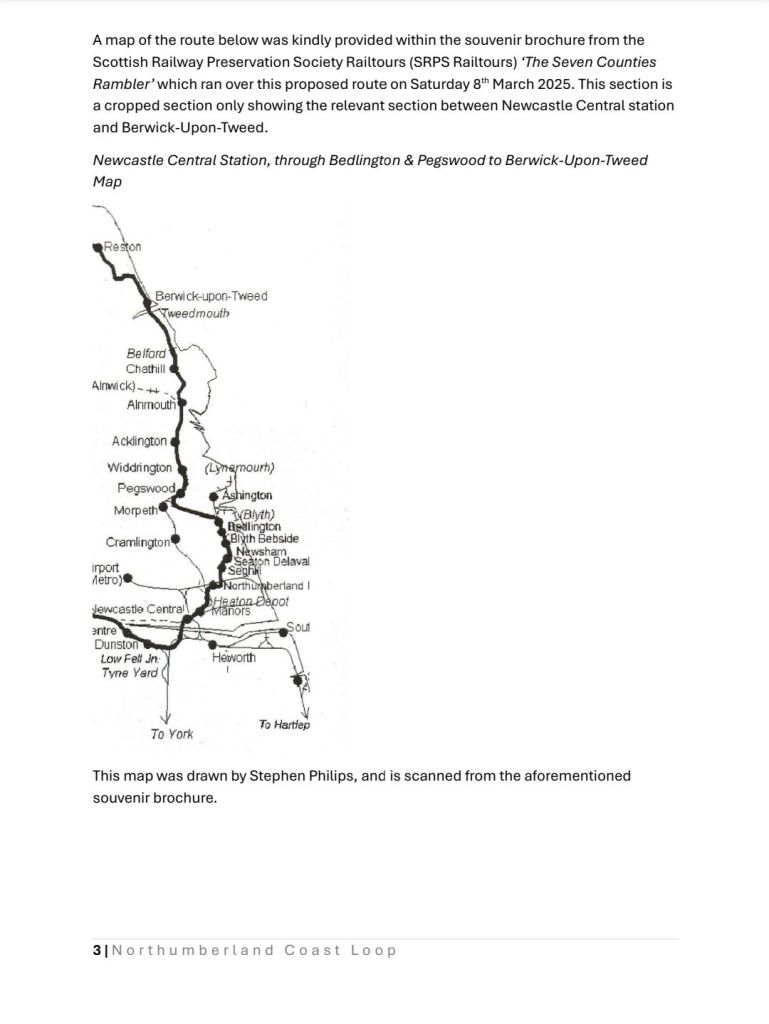
Route map of the Seven Counties Rambler Railtour of 8th March 2025, showing the direct route possible from stations on the Northumberland Line to north Northumberland and Scotland using the existing Hepscott Line.

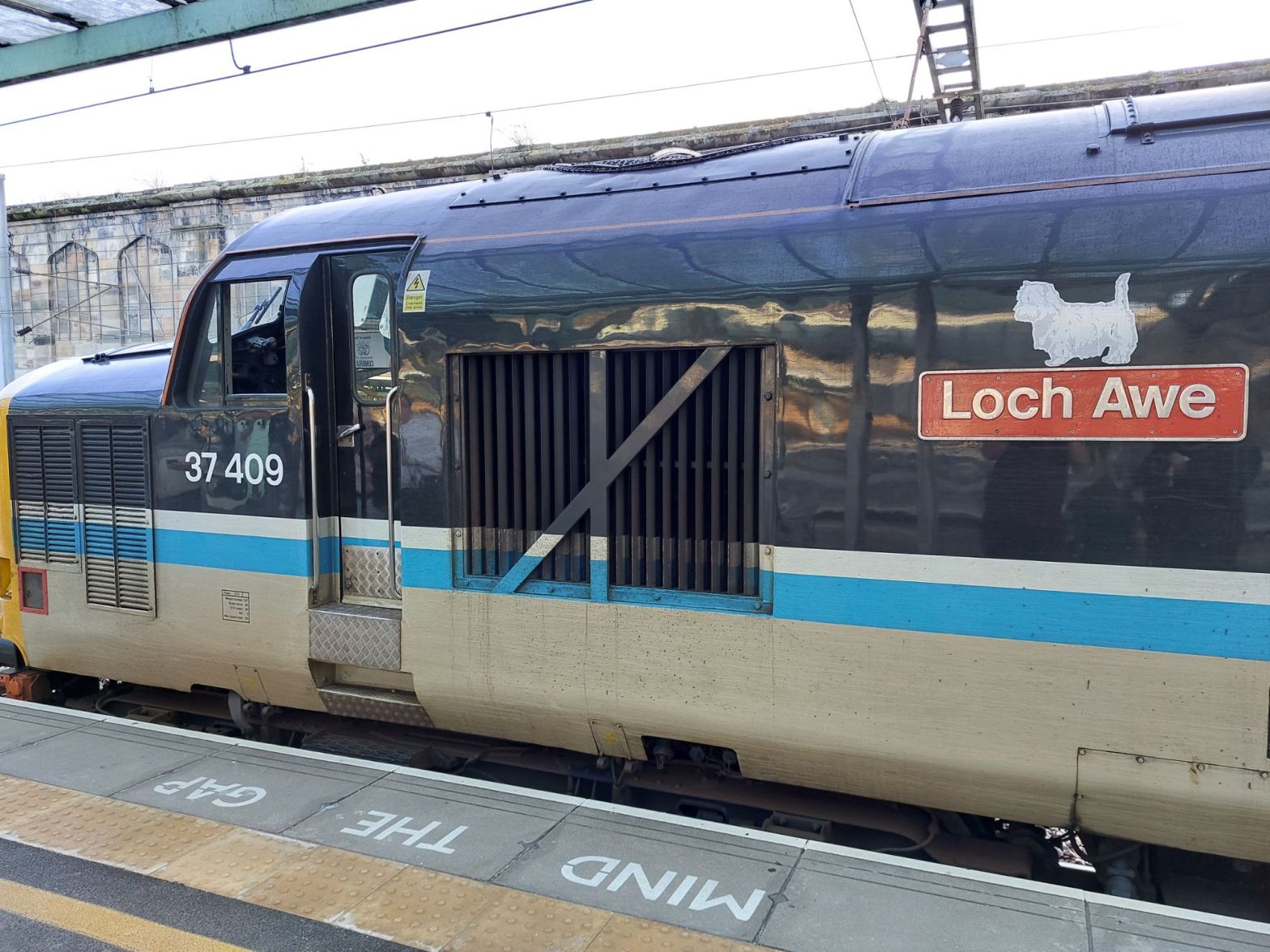
As can be seen from the table above, this railtour using two aged Class 37 locomotives, and a rake of heritage carriages was able to travel from Newsham to Pegswood in less than 23¼ minutes, meaning Newsham to Alnmouth could be reallistically a 40 minute rail trip, should the line from Bedlington to Pegswood via Hepscott be brought into regular passenger use.

It would only take the addition of a few miles of existing railway, acting as a link between the Northumberland Line and the East Coast Main Line (ECML) to be brought into regular passenger use, new stations are not required, it should be a very easy line to open, much like the Stillington Line in County Durham, which could form a faster link between Teesside and Tyneside.

20,000 passengers per year or more on the N.C.L. to Edinburgh?

Arguably, the ‘within Northumberland’ market is a small but still important part of a much larger ‘to & from Northumberland’ market for tickets, places like The Alnwick Garden, Alnwick Castle, Barter Books, Bamburgh Castle, Haggerston and Berwick Holiday Parks, and many others are immensely popular ‘day out’ destinations, much as Seaton Delaval Hall, Blyth Battery, and (indirectly) Woodhorn Museum are from North Northumberland and Scotland. 

With over 36,000 tickets sold currently from Morpeth to Edinburgh for example, even if half of this market for tickets switched to a station such as Blyth Bebside, it would mean both stations still serving over 18,000 passengers per year between SE Northumberland and Edinburgh; but a more likely result is growth of the rail market by people who presently don’t use rail services, and instead go by road or even don’t travel at all.

I know personally of a couple travelling from Seaton Delaval to Edinburgh via Newcastle by rail for a short break, so when figures for origin and destination become available for stations such as Newsham and others on the Northumberland Line, it will be very interesting to see just how big the potential market is.

Petition is progressing!

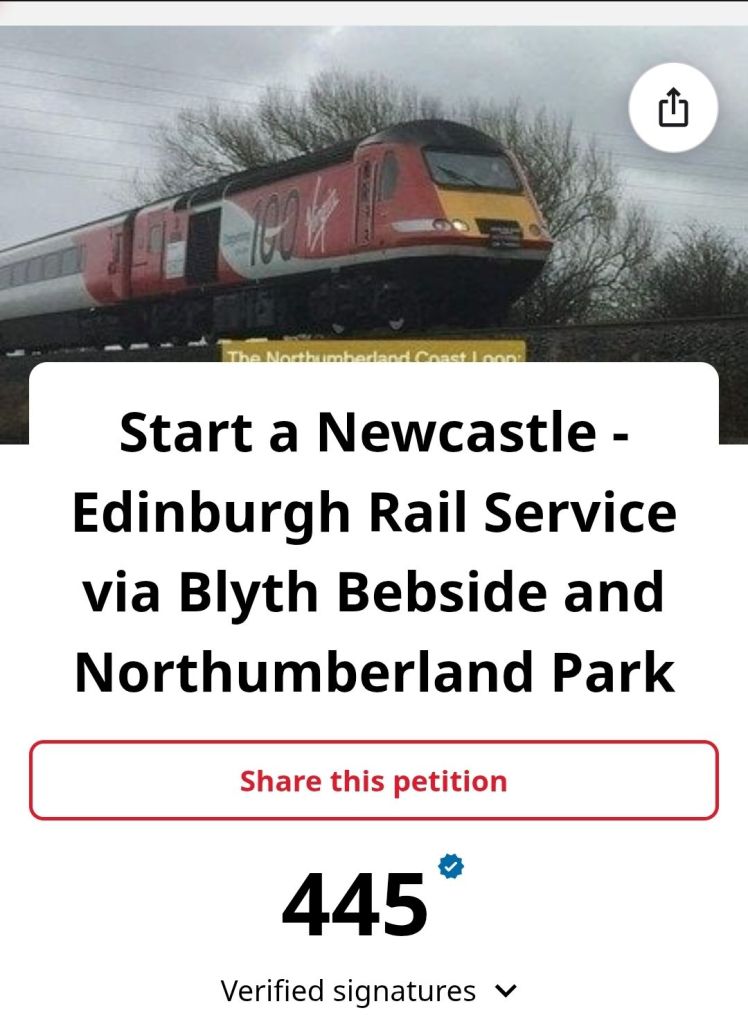
At the time of writing, the petition for a Newcastle – Bedlington – Pegswood – Edinburgh rail service is approaching 300 signatures, please add your name if you’d like to support this rail route being implemented!

Thanks, RH.

The N.C.L. an opportunity to extend the Metro Fare Zone to Berwick Upon Tweed?

The Northumberland Line has just passed the 230,000 passenger mark according to a recent headline in RAIL Magazine, and a large part of this success is likely due to the line being within the Tyne and Wear Metro fare zone, meaning a low price cap for tickets, but could this zone be extended northwards to Berwick Upon Tweed for the route to Newcastle via Bedlington?

Fixed Fares to Ashington, Why Not Extend these to Berwick Upon Tweed?

The Northumberland Line is classed as part of the T&W Metro system, having a simple and easy to understand fares structure built around single tickets, providing excellent value for money, for example the ‘peak single’ from Ashington to Newcastle is only £3, and a return is £6, with discounts for travelling off-peak and if using a Railcard.

This makes it easy to calculate the cost of travel, which on the ECML stations at places like Alnmouth or Berwick, can be highly variable by comparison, and acts to effectively discourage rail use by making the fares volatile and unpredictable.

Below are some screenshots of the Northumberland Line website to illustate the point about the simplicity of its fare structure, a key part of the success of the route.

What I would propose as an option is that for rail travel between North Northumberland and Newcastle via the Northumberland Coast Loop (i.e. route via Bedlington), a similar fixed price fare structure could be applied.

This would make at certain trains completely predictable with regards to fare prices, and if combined with a regular service pattern, very predictable journeys too.

As an example, Pegswood station might have a £3 single fare to Newcastle, being a similar distance as Ashington, with fares progressively increasing in price with added distance, for example Alnmouth might be in the ballpark of a peak time £6 single fare, which would line up quite well with the cheapest fare available today (23.4.25) via LNER on the 11:00 departure, but would represent a substantial saving compared to the 10:09 CrossCountry departure.

Rail fares on the morning of 23.4.25 between Alnmouth and Newcastle, using the LNER app.

A range in pricing from £6.30 at the cheapest, to £13.90 (more than double) at the most expensive isn’t in the best interests of driving rail use, it actively deters people away from taking the train, especially when they are on a budget, or when other modes of transport, particularly driving have a more or less fixed cost for fuel and parking etc.

The Northumberland Coast Loop route could be a way to extend a regular Northern service into North Northumberland to complement the existing, but infrequent (twice daily Monday to Saturday) Chathill service. This is not without some challenges, and may in the short-term mean that some smaller intermediate stations such as Acklington, or Widdrington might have a skip-stop pattern.

This happens already at Manors station for Northumberland Line trains, where about half of Northumberland Line services call there; but has reputedly meant that Manors is now much busier than it was before as it is still representing an improvement to services; for North Northumberland, even moving to a handful (5) of  trains per day would be a massive service improvement.

What could also be considered alongside for better integrated transport would be the previous suggestion of towns such as Alnwick, a short distance from the mainline, having a Keswick style ‘virtual railway station‘, so that a through ‘rail ticket’ can be purchased right into Alnwick Town Centre, but a bus is used for the last leg from Alnmouth Station and into the heart of Alnwick, again with a fixed price structure.

Please leave your feedback below in the comments or on our social media channels.

Thanks, RH.

Revive the ‘Coast and Castles Connection’ Brand for Alnwick, Alnmouth Station and Amble ‘Bus Meets Train’ Bus Service?

An excellent existing, but fading brand?

A few days ago, and passing through the village of Warkworth, Northumberland. I took an opportunity to stop and photograph the seemingly now defunct ‘Coast and Castles Connection’ branding still adorning the bus stop at the top of Beal Bank, Warkworth.

Bus stop at the top of Beal Bank, Warkworth, showing the prominent ‘Coast and Castles Connection’ flagpole

As can be seen in the images above, this is quite a nicely styled, existing branding, and was seemingly created by Anna Brand Creative, who refer to the two key design elements of ‘map pin symbolism’, alongside ‘Embracing Northumberland’s natural wonders’ (see their website for full details).

This brand has existed for a number of years; though sadly seems to now only be present to my knowledge at a handful of bus stops around Warkworth, having not been applied to the actual buses for some years now.

Example of the ‘Coast and Castles Connection’ brand applied to a bus (Source: https://flic.kr/p/7FGDiZ)

These bus stops already sit on a well used bus route, as can be seen by the presence of the Arriva operated X18 at the time of the photo, but as can be clearly seen, there is no ‘Coast and Castles Connection’ branding on this bus. This bus is instead liveried for the X21/X22 between Newbiggin by the Sea and Newcastle, and is therefore well ‘off the patch’ in Warkworth.

Due a revival with a renewed focus on ‘Bus Meets Train’ on the Roadside?

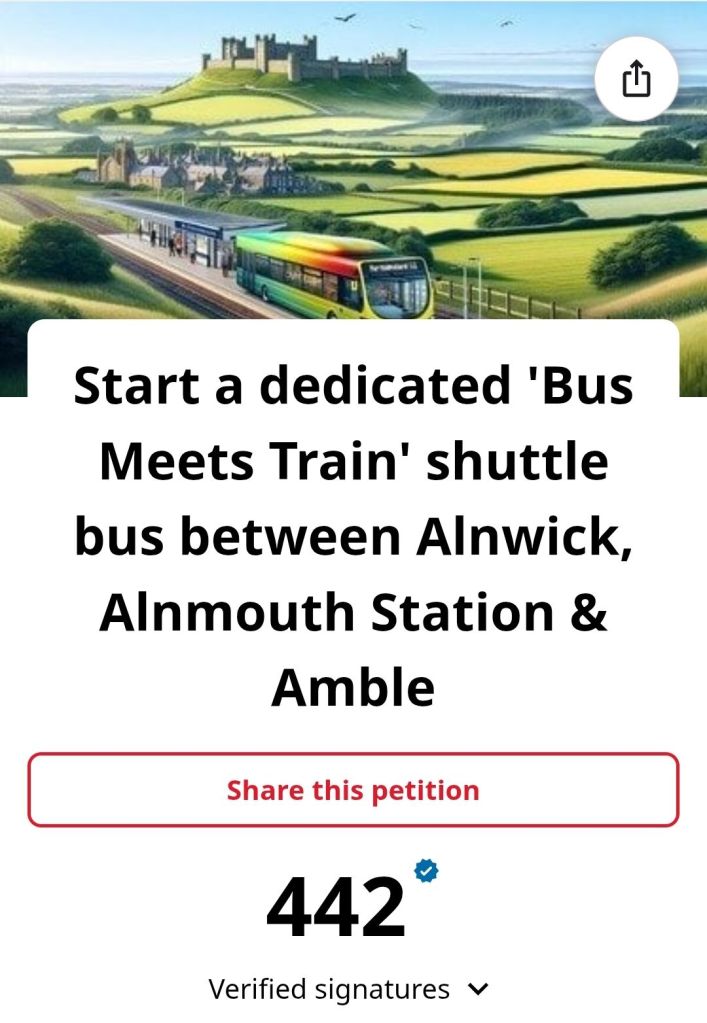
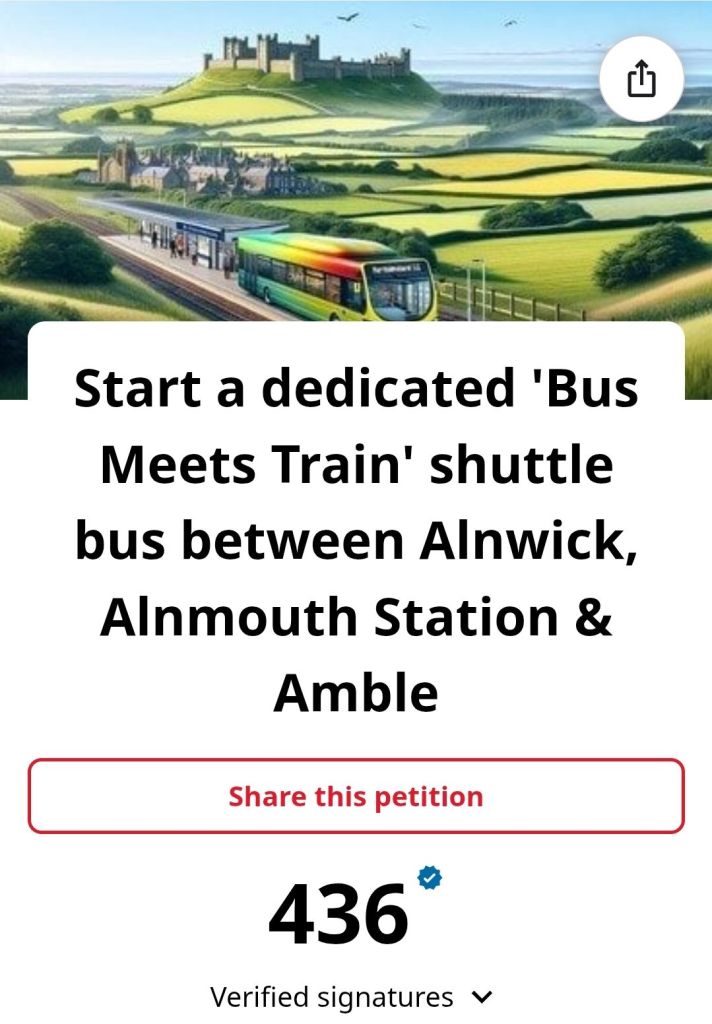
To me, reviving this already excellent brand might be a good way to start making progress, with the petition for the proposed dedicated ‘Bus Meets Train’ bus service between Alnwick, Alnmouth Station, Warkworth, and Amble currently at 428 signatures since it’s launch on the 16th February 2025.

In my view, existing location pin design element could be combined onto a single sign with the existing ‘Bus Meets Train’ logo, rather than appearing as separate signs, set at a 90º angle from one another as at Beal Bank (see image below).

My suggestion would be for alteration of the ‘Bus Meets Train’ element placed directly above the ‘Coast & Castles Connection’ on both sides of the flagpole and at 90º to the kerb, rather than a single sign facing in parallel, which is far less visible to passing vehicles.

Two excellent brands, but incorporate them onto a single sign?

This would make the direct connection to Alnmouth Railway Station more prominent, and likely to be more successful at helping raise the ‘Bus Meets Train’ concept more widely by making the signage more visible to passing road users, such as drivers, passengers, cyclists and walkers who may not notice existing signage due to its current orientation. 

A roadside revival of the branding could be done independently of any bus branding, and would have a 24/7 advertising impact, being visible all day, every day, and could be rolled out across the whole proposed route from Alnwick Bus Station to Amble High Street. Where existing signage remains, perhaps a double sided ‘Bus Meets Train’ sign could be added to reduce cost?

On Bus Branding

If and when the dedicated service was to begin, a dedicated small fleet of buses could have dedicated branding for this route, much like the dedicated branded bus for the 434 service branded as the  ‘Northumberland Line Connection’ (see below).

Let’s see what can be done!

Looking Back and Looking Forward: The Northumberland Coast Loop, April 2025

Presentation on the Past

On Tuesday 15th April, I attended an excellent presentation, hosted by Morgan Sindall and delivered by local historian Ed Orwin called ‘Newcastle to Ashington By Train: A Journey Through Time’.

This was hosted at the brilliant Energy Central Learning Hub building on Quay Road in Blyth, Northumberland, and in the room were a number of displays about the Northumberland Line, from the origins of the railways in the area, through to today.

The presentation showed the strong focus of the then ‘Blyth and Tyne’ railway in moving coal as it’s primary purpose, with passenger use very much an afterthought in many cases.

It was a very good grounding in why the railway is the shape it is today; one example being that the sheer expense of the wooden viaduct over the River Wansbeck meant that the proposed extension to Warkworth Harbour (present day Amble) was delayed, and ultimately never built. 

If you get an opportunity to see Ed doing this presentation again, please try and get to see it, it is packed with information and you can see his real passion for the topic shine through too.

Towards the end, a few teasers of future expansions were suggested, such as to Woodhorn, and Newbiggin by the Sea, both of which would be welcome additions to the network.

Forward into the Future

After leaving the meeting, I needed to make my way home by public transport, having been dropped off by my partner on her way home with the kids.

I was very kindly dropped off at Newsham Station by a fellow attendee of the presentation, if you are reading this, thanks again!

One way trip from Newsham to Alnmouth via Newcastle

The return of the Northumberland Line between Newcastle and Ashington is undoubtedly fantastic, a view obviously shared by the near 250,000 people who have used the line over the last few months since it opened, despite currently only three of the six new stations being open for traffic.

That being said, the above route shows that there could still be more improvements to be made; one of which is to use the direct route from Blyth heading north.

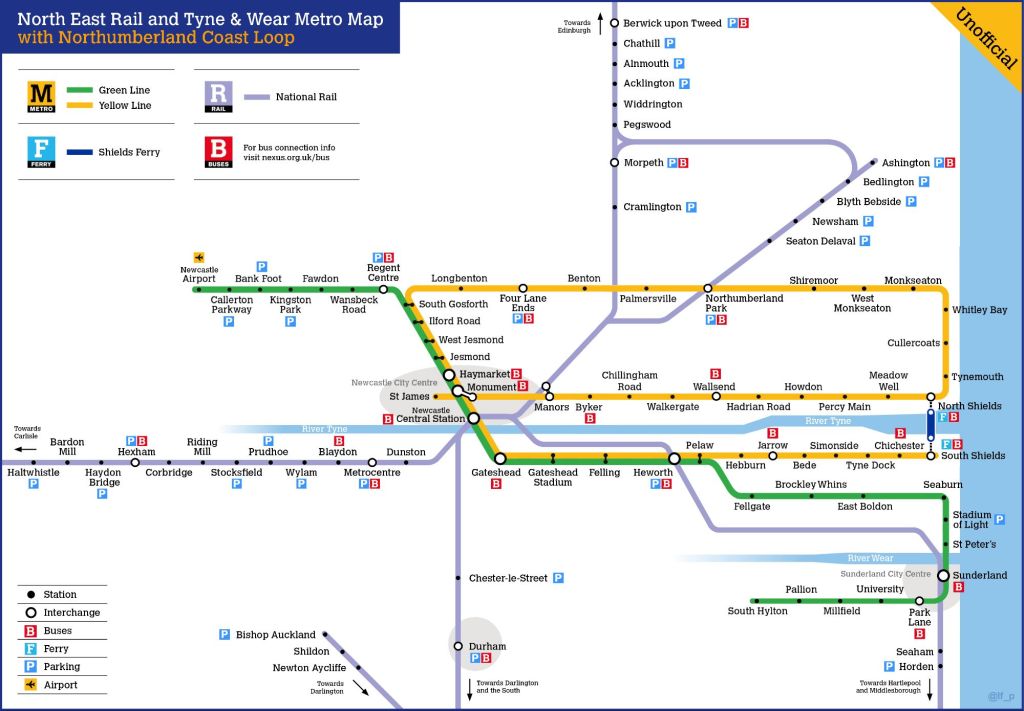
As can be seen from the map below, a connection from Bedlington back onto the East Coast Main Line near Morpeth is already possible using an existing, open line.

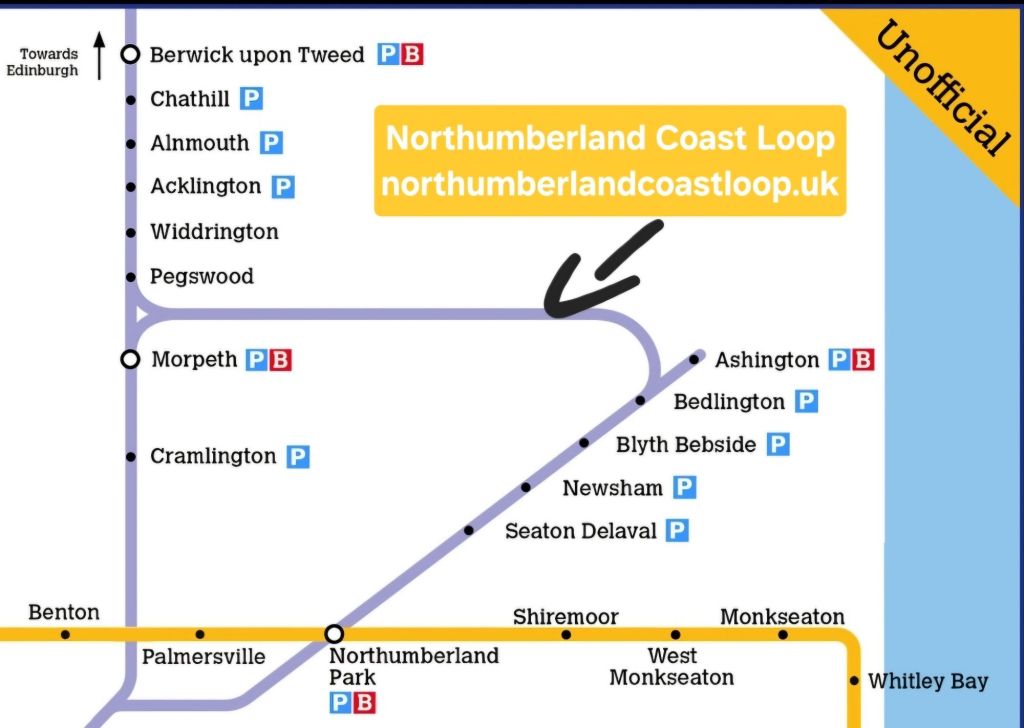
The Northumberland Coast Loop through SE Northumberland

Indeed, it is in such a state of readiness that I have actually travelled along it a little over a month ago aboard ‘The Seven Counties Rambler’ on 8th March 2025, as operated by SRPS Railtours. Whilst this was a non-stop railtour, it shows the potential of the route as an alternative link between Newcastle and Edinburgh, but serving the SE of Northumberland en-route if trains were to stop at even some of the newly opened stations.

Image of the final leg of ‘The Seven Counties Rambler’ between Newcastle and Edinburgh.
158850 from Newsham into Newcastle. While a visit to Newcastle Central is never unpleasant, it would be ideal to use the more direct route!
Arrival at my ‘home’ station of Alnmouth, but after a long-winded route via Newcastle.

There is potentially a large, untapped market for northbound travel from SE Northumberland northwards into north Northumberland and Scotland, and the petition for a rail service between Newcastle and Edinburgh to run via Blyth Bebside is gaining significant support.

Such a rail link becoming established would have a number of key benefits;

  1. It would offer better to, from, and within Northumberland connections by adding a fast rail route along the Northumberland Coast to augment bus services, or compete with car travel.
  2. It would offer a more sustainable transport option compared to driving, and would be accessible by a much wider breadth of society.
  3. The route would maintain driver and train crew knowledge in the event of disruption (Plessey Viaduct issues in October 2023 for example).

If you can, please sign the petition above, and if you’d like to support the campaign, please feel welcome to drop a donation via my Ko-fi page: https://ko-fi.com/northumberlandcoastloop

A Virtual Railway Station for Alnwick? Inspired by Keswick.

Keswick: A ‘Virtual’ Railway Station for the Lake District town?

A recent article from Rail Advent has shown an interesting way that the town of Keswick, in Cumbria, has gained a new ‘station’ on the national network, served not by trains, but by buses.

In the article, it describes how Keswick has a ‘virtual railway station’; that means Keswick Bus station is also treated as a railway station for ticketing purposes.

This allows a through, fully integrated ticket to be purchased via a number of means (full details on the original Rail Advent article) but for simplicity, is shown here as booking via the Avanti West Coast website, and using Carlisle as a starting point.

This means a simple trip by train from Carlisle (or any other station) to Penrith (North Lakes), then to connect onto local buses (X4 & X5) to Keswick, which the opposite true in reverse.

It is also interesting that local bus operator, Stagecoach, is also now offering a half-hourly bus service on this route between Penrith railway station and Keswick’s ‘virtual’ railway station.

Should Alnwick also have a ‘virtual’ railway station?

Alnwick could be a perfect contender for a similar style of ‘virtual railway station’ if offered by an operator such as LNER, and offer a through service to the town using a combination of rail and buses.

The rail link between Lionheart Station on the Aln Valley Railway and Alnmouth Station on the East Coast Main Line (ECML) is progressing, and hopefully will soon to be realised, but it is highly unlikely that the original Alnwick Station (now home to Barter Books) would ever regain trains (not impossible, but would be challenging and very costly). For now, Lionheart station, on the eastern side of the A1 Alnwick Bypass is as close as rail could reasonably get.

Alnwick Bus Station, by contrast, is within the heart of town, just a short walk from the Market Place, Alnwick Castle, The Alnwick Garden, Lilidorei and even Barter Books.

Alnwick is a tourism hotspot itself in Northumberland (Alnwick Castle has 350,000 visitors per year), and is an excellent base to reach other places by walking, cycling or public transport.

Setting up a virtual railway station, and having a half hourly bus service (as has been prescribed in our Dedicated ‘Bus Meets Train’ petition), would be an excellent way to make travelling to Alnwick by train and bus, easier, more convenient and more sustainable.

Let’s hope that a collaboration between ECML train operators such as LNER, CrossCountry, Transpennine Express and more could enable Alnwick to regain a railway station (even if only a virtual one) and see direct tickets made available.

Please sign our ‘Bus Meets Train’ petition if you haven’t already.

Thanks, RH.

Petition Progress!

A great start to April with continued progression of both petitions, and a sizeable growth in both since the last post on the blog on 4.4.25.

Newcastle – Northumberland Park – Blyth Bebside – Edinburgh Rail Service

As of 6.4.25, the rail service petition now stands at 264 signatures, great progress over the last few days with the addition of a further 15 signatures in over those two days. If you haven’t already, please add your signature too via the link above!

Dedicated ‘Bus Meets Train’ Bus Service

An even stronger performance was achieved by the petition for a dedicated half-hourly bus service between Alnwick and Amble via Alnmouth Station and Warkworth, which has gained 47 signatures over the same time period.

Thank you to everyone who has signed the either or both petitions so far, but please help maintain the momentum and keep sharing them with friends and family!

Thanks, RH.

Early April Update from the N.C.L.

There have been a number of positive news releases in recent days, so here is a short post to tie them together and a lot of optimism for the future!

Northumberland Line

Screenshot of RAIL magazine online article (link below)

The Northumberland Line continues strong performance since opening, with a recent announcement that 250,000 trips on the route are expected by Easter 2025, just four months after opening, and an article from RAIL magazine announcing that ONE MILLION journeys are predicted by the end of 2025.

This proves that the Northumberland Line was undoubtedly the right project for SE Northumberland, and with such strong usage, will give huge credibility to expansion of system capacity where possible (which this campaign suggests could be provided by Newcastle – Bedlington – Berwick/Edinburgh trains augmenting the Northumberland Line Ashington – Newcastle services, please see our previous post on this for more).

Double Win in Alnwick

Borderline Greenway Opened!

New bridge at Greensfield, the start of the Borderline Greenway on the edge of Alnwick (near to NE66 1SZ)
Rugley Road Bridge on the newly opened Borderline Greenway, looking towards Edlingham
Current end of the Borderline Greenway on Alnwick Moor
B6341 Bridge over the Alnwick and Cornhill Railway, hopefully a next phase for opening.

On Saturday the 29th March 2025, the Borderline Greenway was officially opened to the public; creating an approximately 2 mile long route utilising a section of the former Alnwick and Cornhill Railway from Greensfield on the edge of Alnwick out towards Edlingham station, the current end of the Greenway being where a change of ownership occur. 

A continuation of the route is possible at least as far as the B6341 across Alnwick Moor, allowing a large circular route to be walked, though this latter section has not yet seen the improvements that the Borderline Greenway has brought to the former trackbed via cleared drainage, vegetation cut backs and clearance of fallen trees.

Hopefully in the near future, the route beyond the B6341 will also be opened up and the realisation of the full route from Alnwick to Cornhill/Coldstream will happen.

I took a video some years ago of the route around Rugley Bridge before work was carried out, and what a transformation the current route is!

Aln Valley Railway: Stepping closer to Alnmouth Station?

In other great news recently, the Aln Valley Railway (AVR) is being assisted by Northumberland County Council (NCC) through the council’s adoption and repair of Eden Hill Bridge, which carries the U3203 over the Aln Valley Line trackbed.

This adoption means that the long standing obstacle of gaining permission to pass under the bridge can now be granted by NCC, and allow the AVR a greater chance to reach Alnmouth Station, and allow for people to once again reach the town of Alnwick by train.

The bridge required some repairs and upgrades, which is costed at around £255,000, but the benefits of reaching Alnmouth will be huge to the AVR, as well as Alnwick more generally; there could even be future potential to see railtours, and possibly even regular services to and from Alnwick (Lionheart) in the future?

Petition Progress

Both petition continue to make regular gains as time progresses, with more details below.

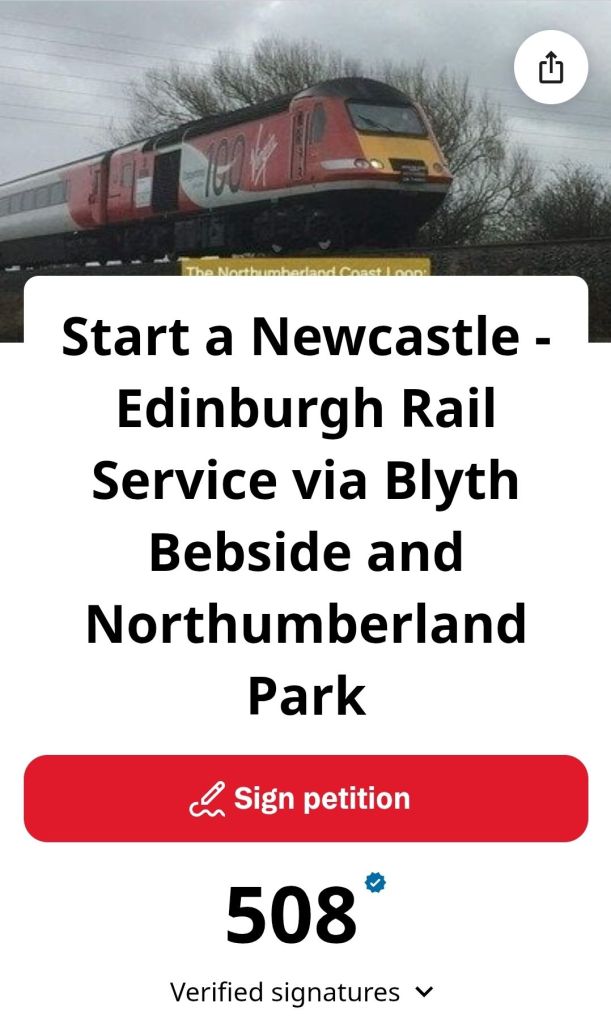
Start a Newcastle – Edinburgh Rail Service via Blyth Bebside and Northumberland Park

The above petition as of 4.4.25, has gained an impressive 249 signatures since its launch in February 2025. Thank you to all who have signed so far, and if you’d like to add your name, please do so via the link below:

Sign the Newcastle – Edinburgh Rail Service via Blyth Bebside and Northumberland Park Petition

As ever, please write to your MP if you live in a constituency on the route to show your support too. It’s as simple as sending an email, so if you can, please do so, the more support that this rail route gets, the sooner it can be implemented!

Start a dedicated ‘Bus Meets Train’ shuttle bus between Alnwick, Alnmouth Station & Amble.

This petition has performed even more strongly, with 355 signatures since being launched in February 2025. Thank you again to all who have signed so far and of you would like to add your name, please do so via the link below!

Sign the Start a dedicated ‘Bus Meets Train’ shuttle bus between Alnwick, Alnmouth Station & Amble Petition

A dedicated bus to connect to the recently opened Borderline Greenway, as well as an expanding Aln Valley Railway, as well as thriving attractions such as Alnwick Castle, The Alnwick Garden, Lilidorei and many more surely makes a lot of sense? If you agree, please sign the petition!

Behind the Scenes

There is more work ongoing behind the scenes, please keep an eye on the blog for more information soon, especially for an important upcoming meeting!

Thanks for reading, if you’d like to support me in maintaining these campaigns, please take a look at my Ko-fi page, any support would be most welcome!  https://ko-fi.com/northumberlandcoastloop

Quick guide to the Borderline Greenway in Alnwick

The Alnwick end of the route is near to Weavers’ Court Extra Care Scheme, Swordy Drive, Alnwick NE66 1SZ; this building is home to a canny little cafe within if you’d like a tea, coffee, piece of cake, or hot food before or after your walk!

To reach the Borderline Greenway, walk along the footpath towards the yellow star called Willowburn Park, along the southern edge of The Steadings.

For an in-depth look at the route, please see our previous post here.

Continue on a broadly WSW direction as the map shows below (needing a little diversion south at present to go around the builder’s compound). The Borderline Greenway star is placed approximately where the new Greensfield Bridge is.

For users of what3words, this location is the site of the Greensfield Bridge

From there, the route is clear ahead and enjoy your trip along the line!

Exploring the Borderline Greenway, Alnwick 30.3.25

Yesterday (29.3.25) at 11am, the long awaited Borderline Greenway, which runs along a currently short section of the former Alnwick and Cornhill Railway finally officially opened to the public.

Click here to view The Chronicle coverage of the opening event.

The railway on this stretch opened in 1887 for traffic as a through route from Alnwick to Cornhill. In 1948, following damage from major floods, the line was divided, with an Alnwick to Ilderton section, alongside Wooler to Cornhill (Coldstream). This section,on the Alnwick side, closed in March 1953 after just a 66 year lifespan, with the Wooler section surviving until 1965.

This newly opened route starts on the edge of Alnwick near to The Steadings (Taylor Drive) housing estate, still under construction hence the building materials on part of the trackbed which hopefully will be cleared once completed, but is easily walked around via a diversionary path.

The route is in two key parts, the Borderline Greenway, improved by the Borderline Greenway CIC makes up the majority, but for the last section towards the B6341, it is owned by the Freemen of Alnwick, which as of today has not been improved, but is passable on foot with care and if able to duck and clamber over occasional obstacles.

Sturdy boots would be recommended for undertaking this walk, and a sensible off road bicycle could certainly be used on the Borderline Greenway to Rugley Bridge and to the Freemen boundary.

For simplicity for those following this route, what3words has been used to label key locations, but is shared alongside mapping/aerial photographs to hopefully make clear where each site is.

Looking towards Alnwick Station, with The Steadings estate on the left of the image
Towards Cornhill, The Steadings now on the right hand side.

As can be seen above, the Borderline Greenway CIC has made a great job of creating a wide, smooth path along their stretch of route, which is quite dry throughout (one small patch of water running over the path was encountered).

This walk will take in the full length of the Borderline Greenway from Taylor Drive to its end well outside of Alnwick, and then the short stretch of Freemen owned land to reach the B6341 over Alnwick Moor which formed the return leg into town.

Bridge 1

Looking towards Alnwick from Bridge 1
Towards Cornhill from Bridge 1

This bridge is the first major structure on the route, with a new deck placed in recent months (previous span had long since disappeared), and crosses another minor path below, explored some days before.

Passing below Bridge 1 some days before.
Below Bridge 1 in the opposite direction.
Path leading off the Borderline Greenway headed towards Alnwick Castle Golf Course (clubhouse just visible at top of the hill, with excellent food and drink), which is on the Rugley Road, which offers a shorter ‘loop’ to return to Alnwick if desired.

Gate 1

Being in a rural area where there is a possibility of livestock being around, there are a few gates across the path.

Looking at Gate 1 back towards Alnwick

What is interesting about the whole route is how much variation there is in such short distances, going from embankments, then to cuttings, from enclosed with trees to being quite open all within quick succession and makes the route very enjoyable to walk!

The Standing Sleeper

The standing sleeper (left), looking towards Cornhill

This point is one of many where other walking routes join, leave or cross the Greenway, but the single sleeper on end was a clear landmark.

Sleeper still in situ since closure in 1953?

Near this standing sleeper was the remains of another still in the ground. With the Alnwick to Ilderton section having closed to rail traffic in 1953 (well before Dr Richard Beeching), it potentially has been there for a century, perhaps even longer? 

Gate 2

A short distance further on, another gate is encountered, and shows again the variety of scenery along the route, with wide open expanses of farmland and forest in view, and hardly a building to be seen in this area.

Rugley Burn

Here the line crossed a high, steep sided embankment over the Rugley Burn, with the minor Rugley Road jusy visible through the trees at times dropping into the valley and crossing via a ford. The scale of engineering for this line is quite remarkable for such a rural route.

Embankment over Rugley Burn looking towards Alnwick
Looking down onto the Rugley Burn
Towards Cornhill

Junction for Rugley Road

As the path approaches the minor Rugley Road, there is a very clear ‘junction’ of the paths, the left hand route, looking at the image below would take you up the cutting side to join the Rugley Road, but for us, we stay on the trackbed to pass beneath Rugley Road bridge.

Rugley Bridge

Approaching the Rugley Bridge through a deep, and quite damp cutting, we pass a large bench made from felled wood (this stretch was hard to pass due to swampy conditions and a number of trees fallen during Storm Arwen in November 2021, with windspeeds in the area reaching 98mph at nearby Brizlee Wood.

Location of Rugley Bridge
A handy place for a rest!

Rugley Bridge itself is a marvellous structure with beautiful brick and stonework; it was fairly recently threatened by National Highways to be competely infilled with concrete as the bridge at Great Musgrave controversially was.

Happily through being alerted by the HRE Group to this, and actions by many people this disasterous proposal was dropped and the bridge remained open, allowing this route to be opened in the last few days.

Beautiful skewed brickwork under Rugley Bridge
Need for good drainage along this section!

Beyond Rugley Bridge and to Bridge 2

Out onto another embankment and curving northward steadily, the path again opens up with some wonderful views! 

Back to embankment again after Rugley Bridge and the cutting.
Another change in the view, what a diverse route this is!
The second bridge to pass over on the Borderline Greenway.

Bridge 3

Another small bridge is crossed over here (no photo taken).

The end of the Borderline Greenway and beginning of the Freemen of Alnwick section (Freemen Gate 1)

As stated earlier, the route has two different custodians, the first section is the Borderline Greenway CIC, who have cleared the trackbed as far as the remains of this gate, with the Freemen of Alnwick the landowners beyond, with the trackbed in a more natural state.

Beyond this point, it is slightly more challenging to pass due to overgrown bushes and trees, with some having fallen across the trackbed in places. The drainage on this section is also blocked, making some sections quite ‘clarty’, a good pair of boots is recommended!

Remains of a gate mark the boundary between the Borderline Greenway and the Freemen of Alnwick section of the Alnwick & Cornhill Line
Spectacular views of the moors from the trackbed.
As can be seen, a much more natural path, with Gorse prevalent on this section.
Walking atop another large embankment
Pass through with care
A wild cutting
A clarty section
More clarts, but showing it is a well used path.

Fallen trees can be passed under
Or in this case over (to the left hand side)

Freemen Gate 2

This section is almost at an end now, as we approach a minor road that connects to the B6341, passing through a small gate near a cottage.

Minor road adjacent to the cottage, with the route to the B6341 heading off to the right.

The B6341 Bridge and Route towards the Summit

Whilst not in the scope of todays walk, it appears possible to continue along the trackbed under the B6341, through another gate and on towards the Summit of the line beyond, the route from Alnwick having been a constant, steady uphill gradient.

This bridge, like the one at Rugley was under threat from infilling by National Highways, but hopefully the intention to see the full Alnwick and Cornhill route become an active travel corridor will see these bridges remain safe for years to come.

Bridge carrying the B6341 over the Alnwick and Cornhill Railway
Another good example of skewed brickwork on these bridges
Another gate and the route towards Summit.
Please close the gate on this section
Simple chain to hold the gate closed.

This above route will be explored at a future date, for now, it is back under the bridge, and to walk the B6341 back to Alnwick.

Back to home Alnwick along the B6341

The above walk was a circular one from home, so it was a pleasant walk back along the B6341 on the final leg of the morning.

Heading from the cottage up to the B6341
Top of the bridge heading back to Alnwick
Over the hill on the Moor, heading toward Alnwick
No refreshments first thing on a Sunday morning, but maybe next time!

Seeing how this route develops in the coming months and years will be interesting, and that a walk or cycle the full length to Cornhill would be a fantastic trip!

Thanks for reading. If you’d like to assist me with the Northumberland Coast Loop, please visit  https://ko-fi.com/northumberlandcoastloop