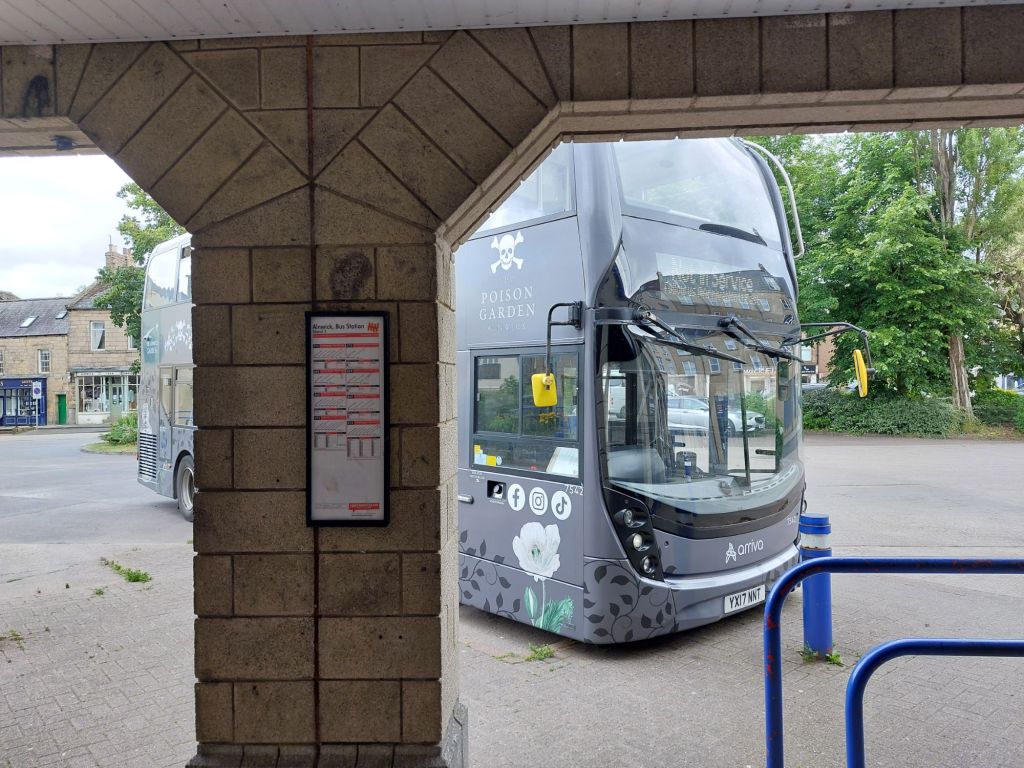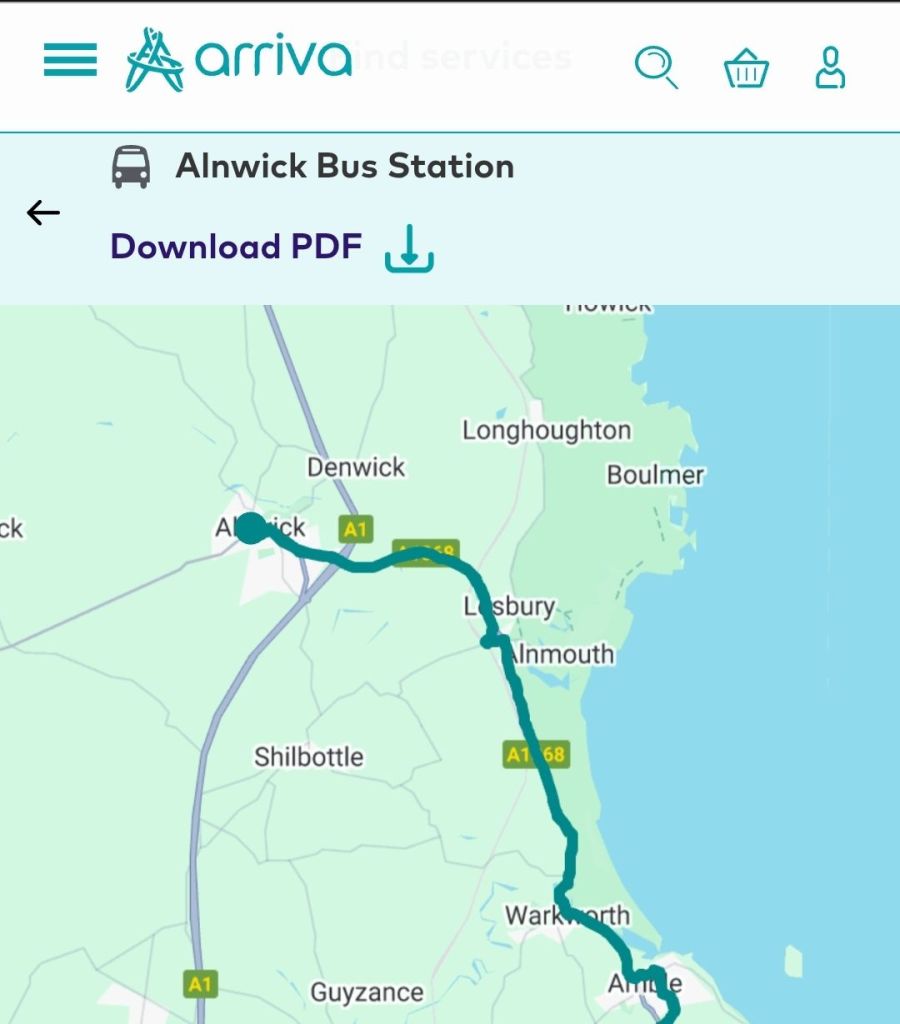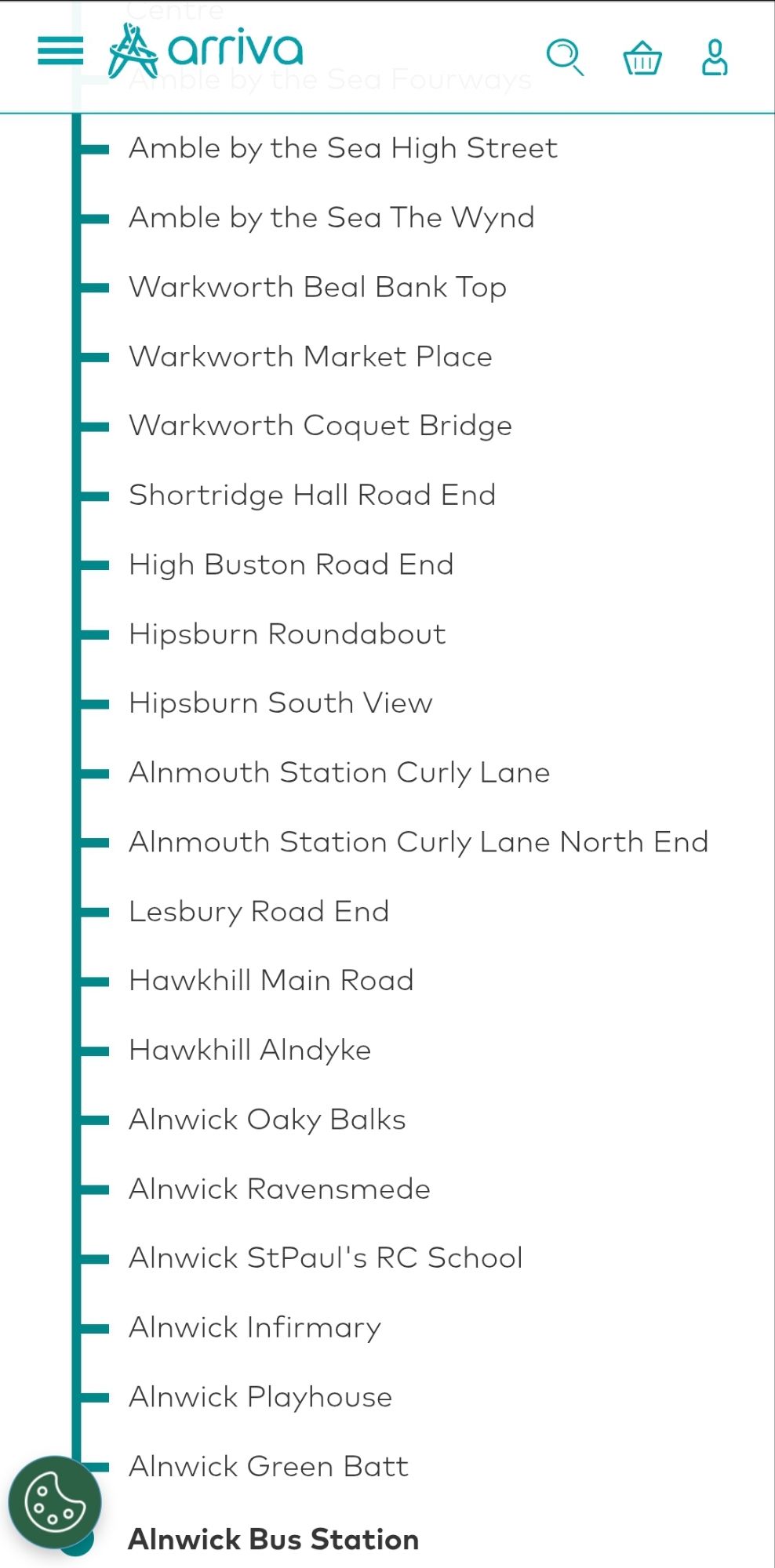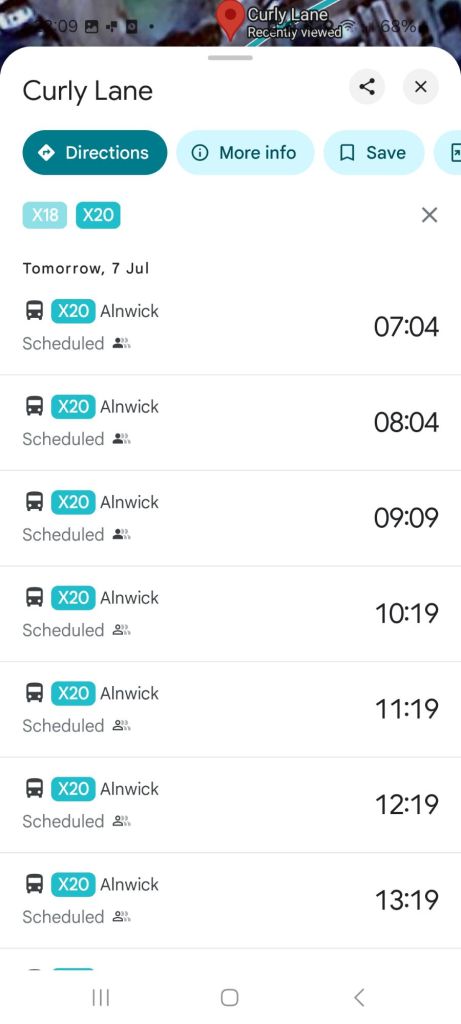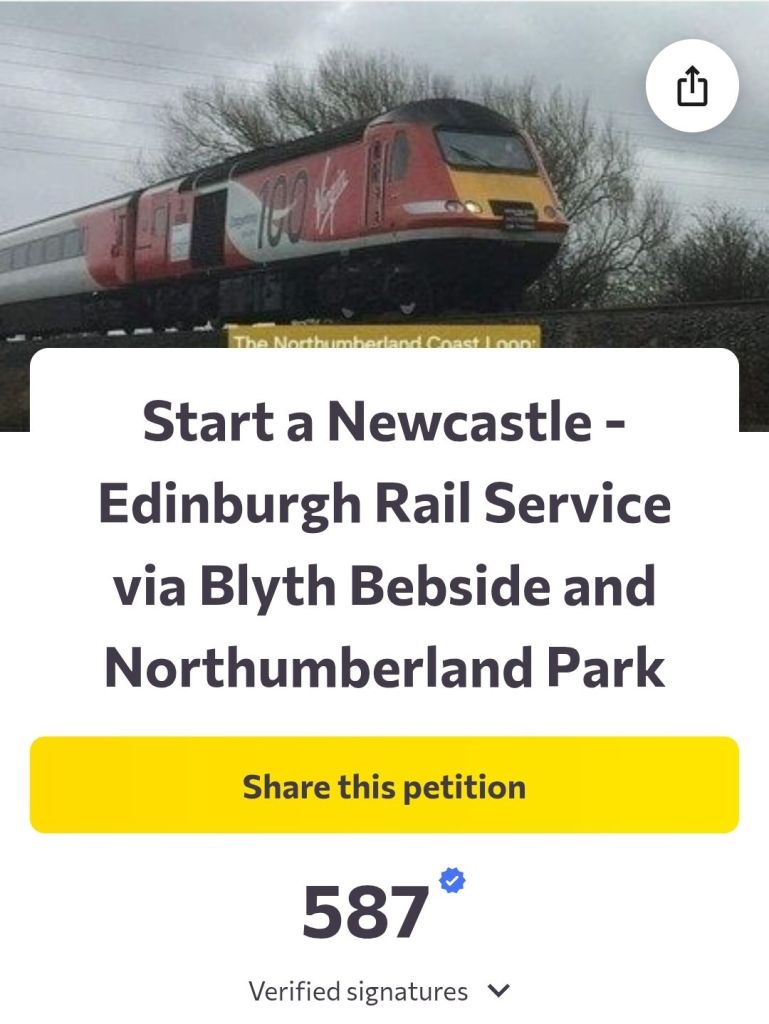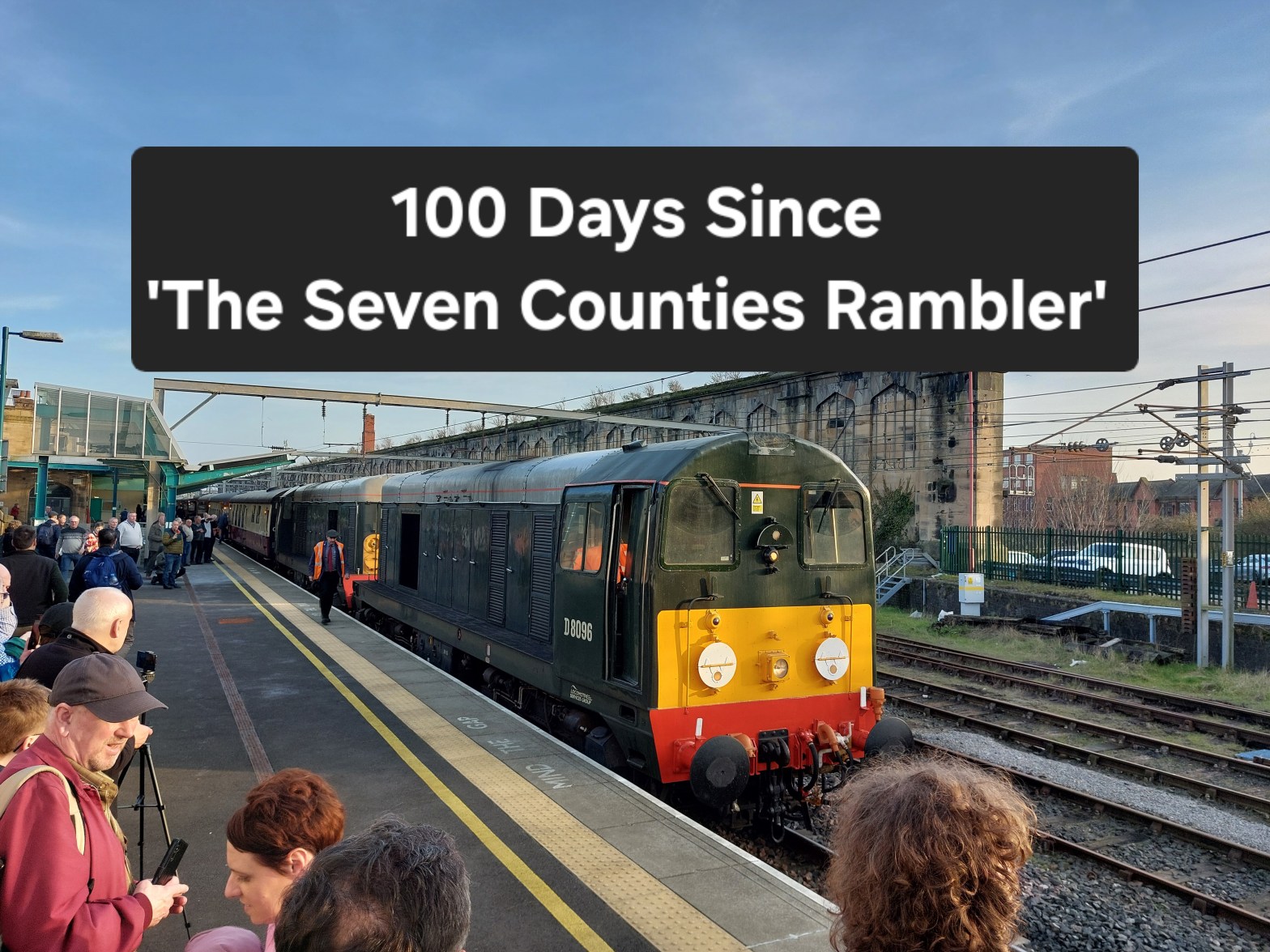
It is now 100 days since the petition calling for improved bus services between Alnwick, Alnmouth Railway Station, Warkworth, and Amble was launched, and so far, it has gained the support of 442 people.
A better bus service would make access to and from Alnwick to Alnmouth station easier to do by road, improving the present hourly service to half hourly would be the target, and for the buses to follow a ‘clockface’ schedule of xx and yy mins past the hour to depart towards the station or arrive back from it.
The service would be intended to use conventional buses, and at usual bus fares, not as some have commented online by running luxury coaches etc.
The economic benefit to Alnwick fro. road going coaches is that they bring in around 150,000 visitors to the town, with about £4.5m worth of economic value as a result (an average of £30 per visitor).
This is great news for the town, and shows that a significant number of arrivals to the town come without a car, but could a better rail & bus connection to Alnwick bring an even greater benefit to the town?
The Lost Rail Connection
Alnwick lost its passenger rail connection to the East Coast Main Line at Alnmouth on the 29th January 1968, the route closing completely on 7th October 1968, reputedly orchestrated to make the A1 Alnwick Bypass cheaper to build. Had Alnwick station survived, it is highly likely to have been a thriving one now; especially during the peak of the ‘Harry Potter’, an arrival into Alnwick Station aboard a train would almost certainly have been a very atmospheric event, especially if it was on a steam hauled railtour, but sadly this wasn’t to be.
As of May 2025, the former Alnwick Station has instead long been home to the excellent and award winning Barter Books, and whilst truncated by the A1 Alnwick Bypass, the Alnwick Branch is steadily being resurrected by the Aln Valley Railway, running over around half of the surviving route between Lionheart Station (likely the new ‘Alnwick’ terminus of the line in the long-term due to development over the route into Alnwick proper), and Greenrigg Bridge, on the route to Alnmouth Station.
The Aln Valley Railway has achieved a great amount since starting construction of Lionheart station on 27th February 2012, and officially being opened on the 30th October 2013, not quite 12 years to get from quite literally a field, to a railway reaching halfway to Alnmouth is a great achievement.
That being said, while a rail connection into/near Alnmouth station towards Alnwick will always be welcome, it does stop on the edge of town on the eastern side of the A1, with Alnwick Town Centre being around a mile to the north west as the crow flies (Hotspur Tower to Lionheart Station using Google Maps measurement tool), and with it being a volunteer run heritage line is unlikely to be able to offer a year-round, seven day service from early morning to late evening.
In an ideal world, perhaps the Alnwick Branch would have seen a ‘Northumberland Line’ style of reopening, being reopened by Network Rail and operated by Northern, but that wasn’t to be. That being said, the Aln Valley Railway, perhaps with some financial support, could in the future offer a shuttle service to work alongside an Alnwick to Alnmouth & Amble bus shuttle as proposed below.
Rail + Bus to Alnwick (A Virtual Station like Keswick?)
This would utilise the existing bus connections from Alnwick to Alnmouth Railway Station, alongside an additional dedicated shuttle service that could allow for a half-hourly shuttle service between Alnwick and Alnmouth, with the route perhaps logically also extended to Amble, so that both towns could benefit from a better integrated bus service.
In recent years, Alnwick ran an ‘Alnwick Attractions Bus’, that formed a free, circular route around Alnwick, and was sponsored by local businesses; but perhaps a shuttle to and from Alnmouth Railway Station into the heart of Alnwick could be similarly sponsored to allow rail passengers better access to major attractions?
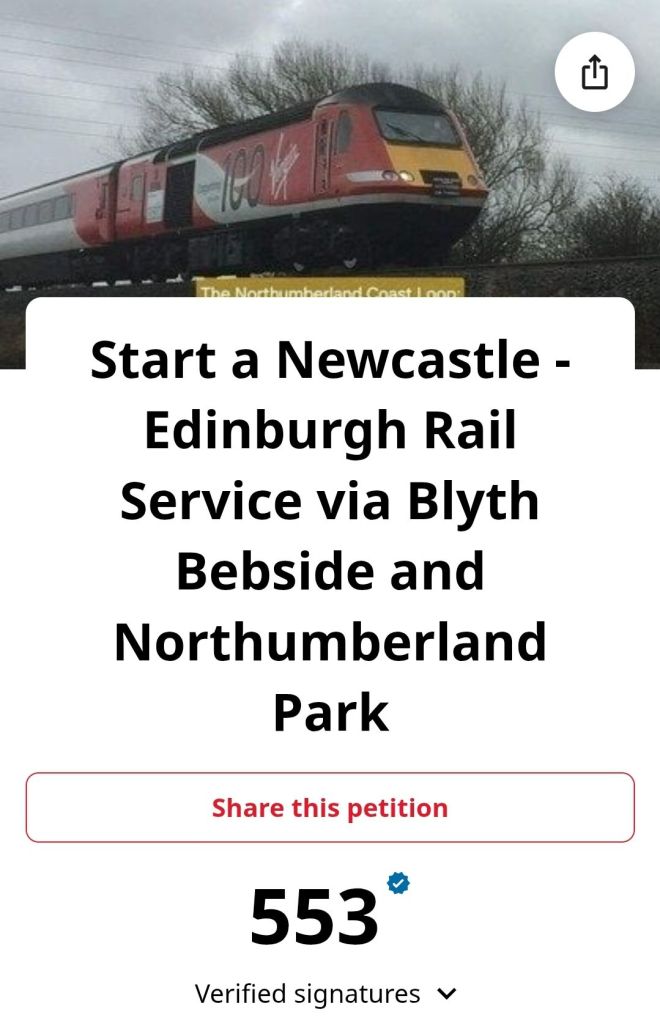
A petition launched 99 days ago on 16th February 2025 for such a bus connection has already gained 436 signatures, and tomorrow marks the 100 days since launch, how many signatures will it reach by the end of the day?
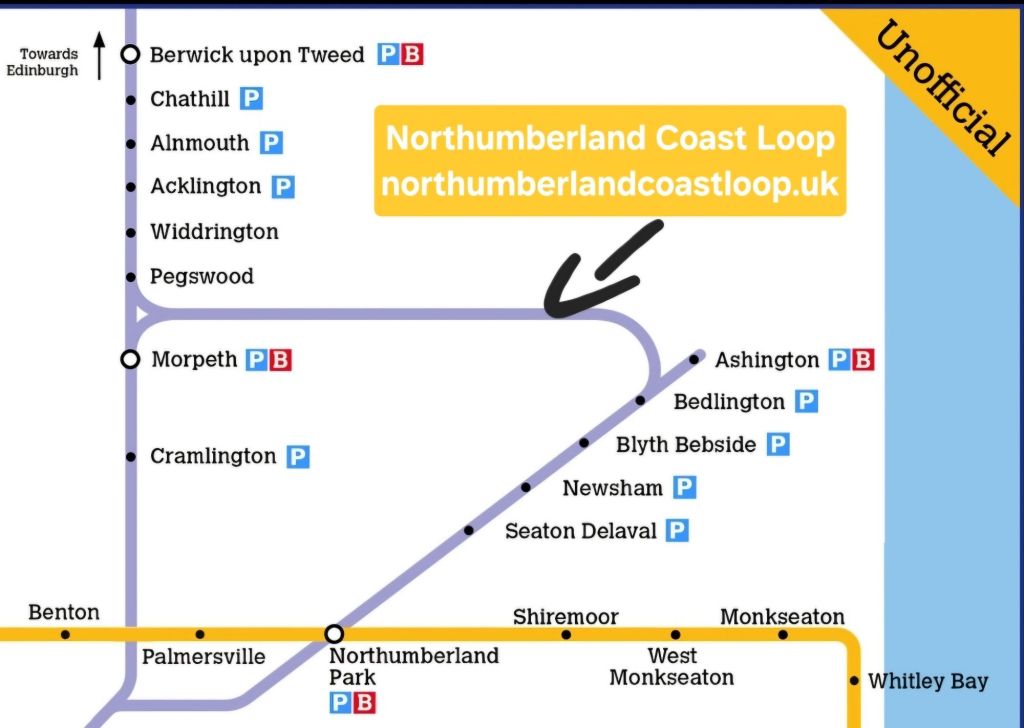
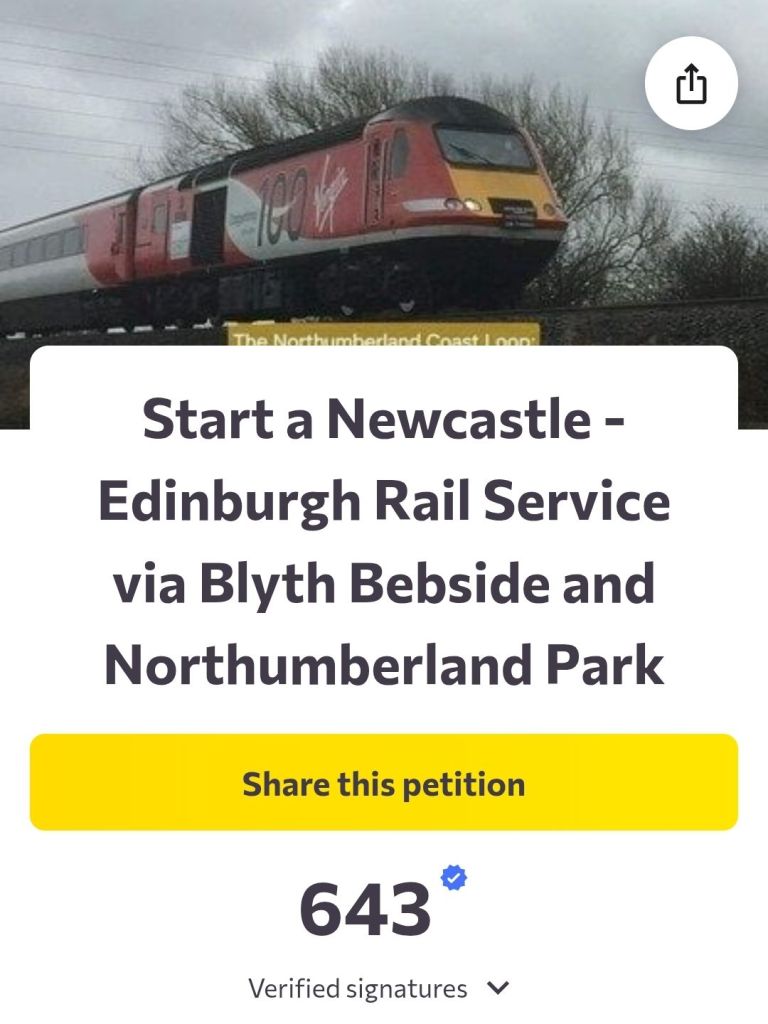
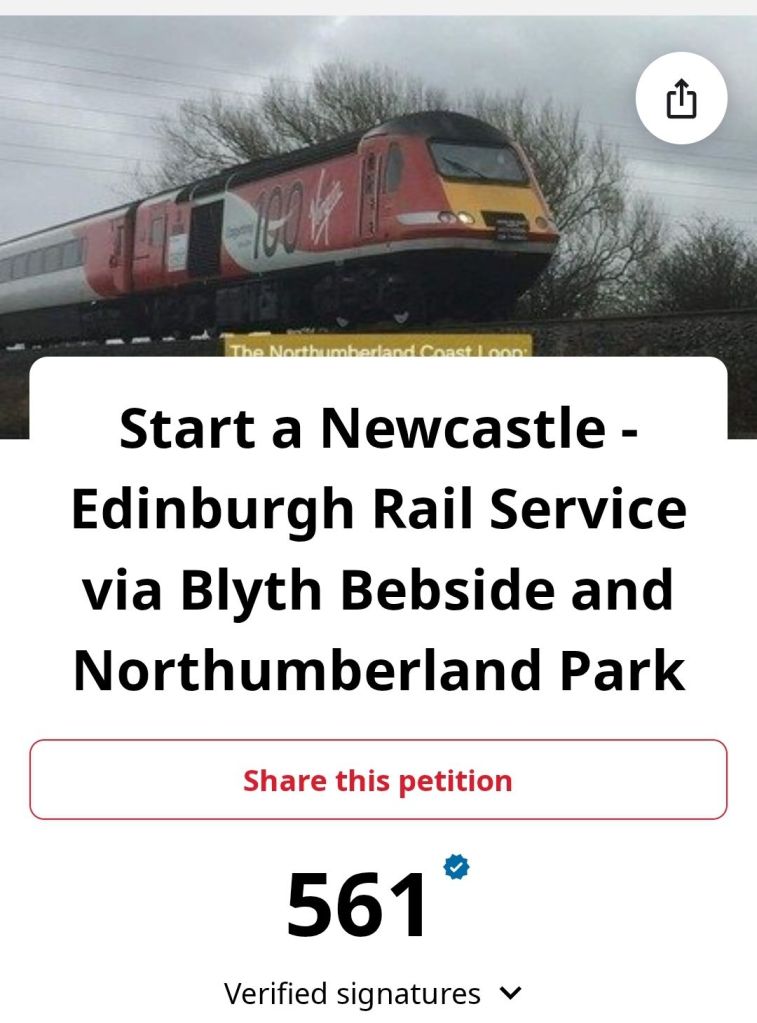
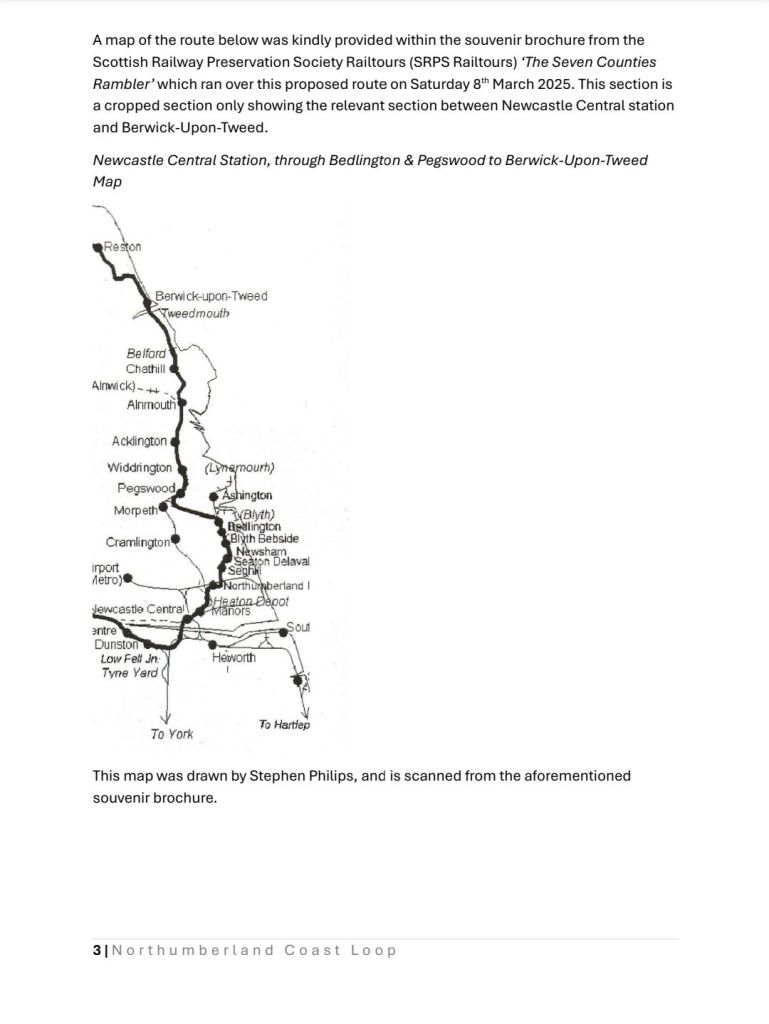
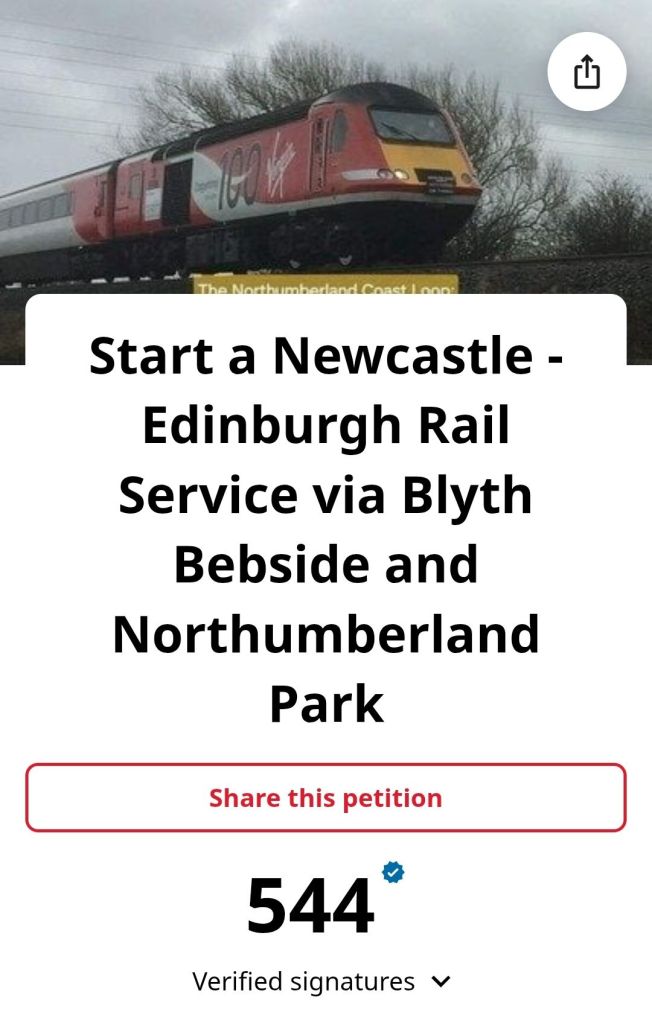
The map below, taken from the SRPS Railtours operated ‘The Seven Counties Rambler‘ souvenir brochure shows the route through Northumberland from Newcastle to Berwick, illustrating how ready the route is to enable such a service, with the header image of an HST showing the BLS organised ‘Bound for Craigy’ railtour on 8th March 2017, which inspired this campaign.
If you haven’t already, please sign the petition to help bring this route into passenger use, some of the advantages of which are:
Local Services: Making ‘within Northumberland’ trips such as Bedlington to Berwick Upon Tweed easier by providing a direct rail connection.
Regional Sevices: The above route would like major regional centres such as Blyth, home to major renewable energy businesses more easily accessible from other places within the region by rail, for example offering a direct link to Edinburgh and the wider Scottish Central Belt.
National Services: Giving areas like Blyth a comparable national service like Morpeth has long enjoyed would drive investment into Blyth, and be a major support to significant events returning such as the highly successful Tall Ships of 2016. It would also, via Northumberland Park, provide better rail connections to and from the international ferry terminal/cruise terminal at Port of Tyne.
If you live along the line of this route, please also write to your local county councillors, and MP’s in support of the Northumberland Coast Loop; the more support it gains, the more likely it is to come to fruition!
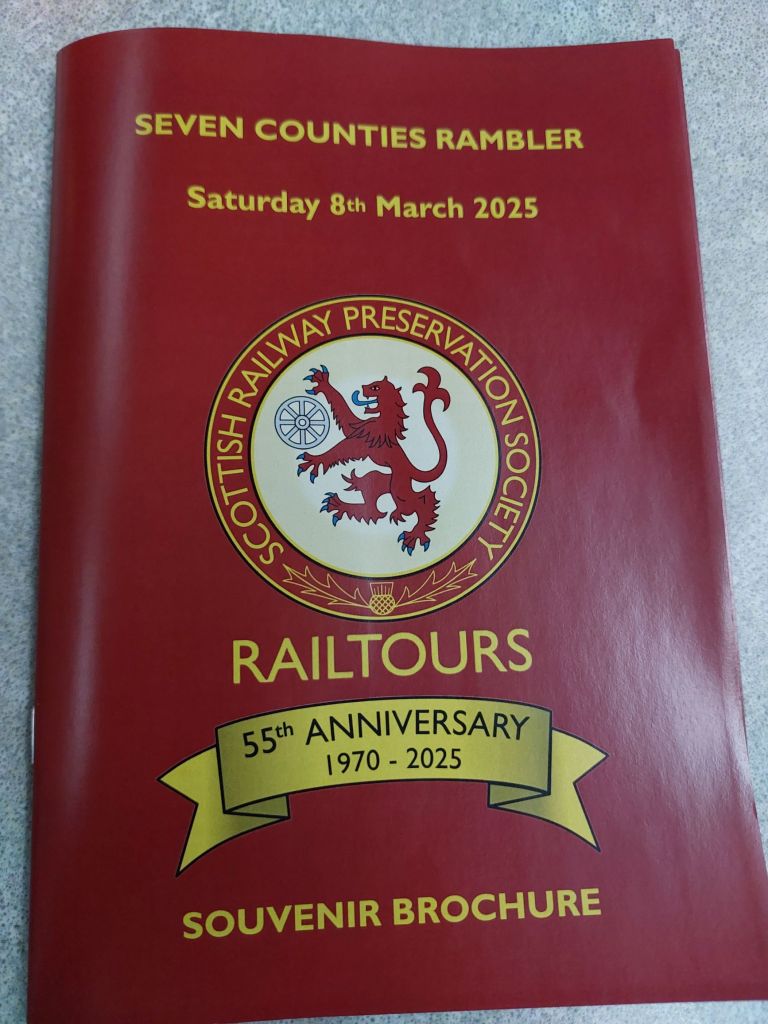
In the late evening of the 8th March 2025, ‘The Seven Counties Rambler’ operated by SRPS Railtours and hauled by Class 37’s 37409 ‘Loch Awe’ and 37043 ‘Isle of Mull’ departed Newcastle Central Station on the final leg of an epic tour of southern Scotland and Northern England, bound for Edinburgh and finally Linlithgow, where the tour would finish after an early start that morning.
This leg of the tour was of particular interest, as it took the entirety of the proposed Northumberland Coast Loop route from Newcastle to Edinburgh via Bedlington.
The map below shows this section of the route.
Section of map showing the route from Newcastle Central, up the Northumberland Line to Bedlington, then rejoining the ECML, passing through Pegswood and on towards Berwick, Edinburgh, and beyond.
The above route is largely special due to a fairly short section of ‘rare track’; the Newcastle to Bedlington section of the route is now open daily to passenger trains since the opening of the Northumberland Line in December 2024, and the East Coast Main Line (ECML) has always been open for passenger trains. The rarely available section was from Bedlington Junction to Morpeth North Junction, a distance of about five miles, which links the Northumberland Line to the ECML.
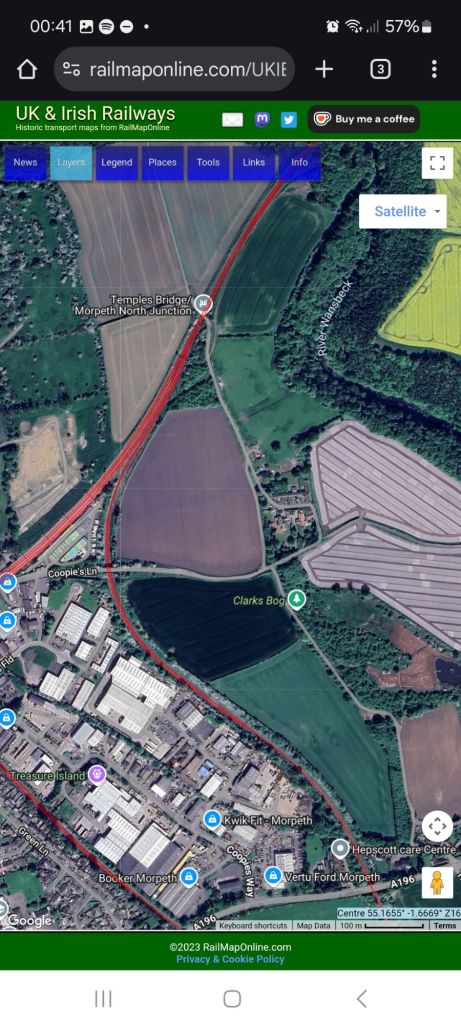
The upper map shows the overall route, leaving the Northumberland Line at Bedlington, the route heads in a west/north west direction towards and through the village of Hepscott, then curving towards the north east and rejoining the ECML.
Just after Hepscott, and as more clearly shown on the lower map, there is a second split at Hepscott Junction (near to Airspeed Vapour Blasting, bottom right of image), the N.C.L. route bears off to the right here, heading around the Morpeth North Curve (shown by the orange dots) joining the ECML near to Temples Bridge (top centre of the lower image).
The left hand direction would head towards Morpeth Station, which unfortunately, like Ashington cannot be served by the proposed N.C.L. route due to the track layout; as it would necessitate complicated operation of trains, and would reduce the benefits of the proposed direct route by lengthening journey times.
A big thank you to David Smith MP for his time, and that of his assistant Theo in meeting with me to discuss the Northumberland Coast Loop rail campaign today via a Teams call.
It was a very positive meeting, and hopefully working together into the future!
As the above document (still a work in progress) records, the spark of the proposal was seeing the ‘Bound for Craigy’ railtour on Barrington Road, Bedlington, back in 2017, hard to believe a busy eight years has now passed, later that year, I got my most important job; being ‘dad’.
The ‘Bound for Craigy’ Railtour on Saturday 18th March 2017.
The proposal was on a back-burner as a busy new parent (now of two) until October 2023, when I launched a petition for the then Northumberland Loop, it attracting 742 signatures by the time it was closed in October 2024, the results then being passed to Glen Sanderson, leader of Northumberland County Council by email, with a warm response received back.
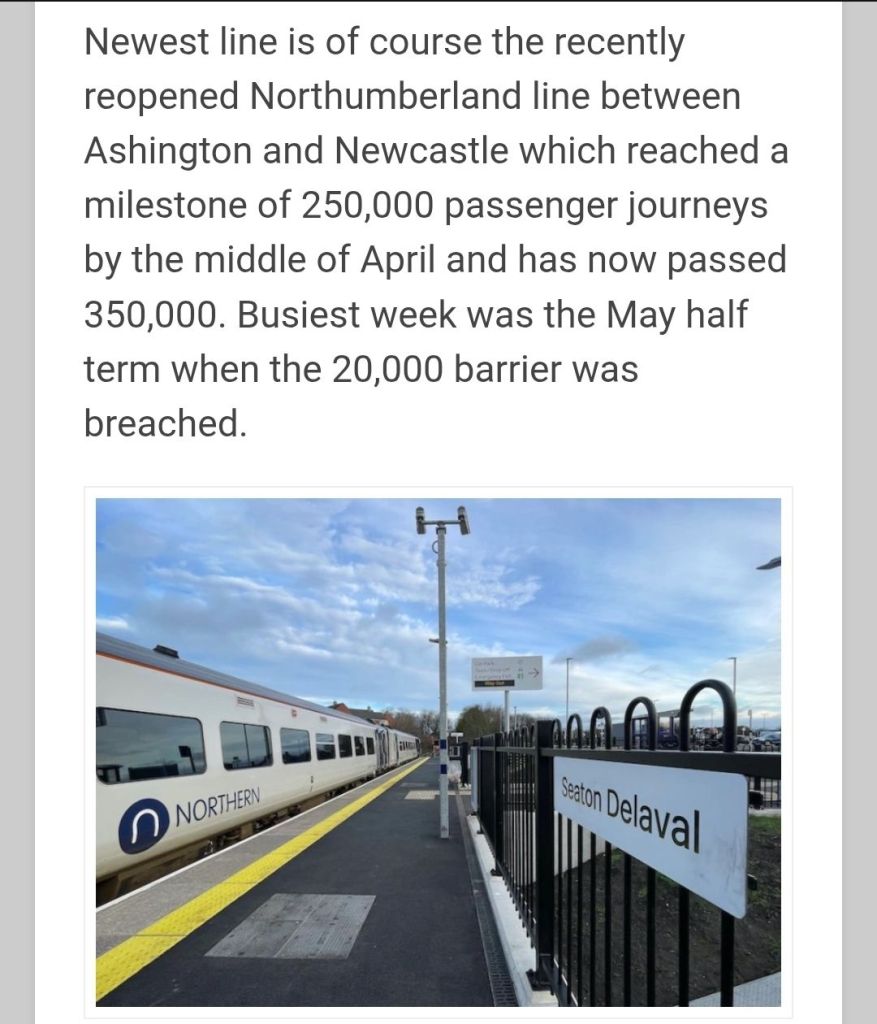
On the 15th December 2024, the Northumberland Line partially opened with Ashington and Seaton Delaval stations as an initial phase, and passenger figures were very strong right from the outset.
On the 11th February 2025, I met with Mark and Caroline from the office of Ian Lavery, MP for Blyth and Ashington, again to a warm reception, shortly before actually travelling the route on 8th March 2025 aboard the SRPS operated ‘The Seven Counties Rambler’.
Route of the Rambler, 8th March 2025, showing Newcastle to Berwick and Edinburgh via Bedlington and Pegswood
Shortly afterwards, Newsham Station opened, on the 17th March 2025, and in recent weeks, the announcement came that 250,000 passengers have travelled upon the Northumberland Line since December 2024.
Newsham to Alnmouth via Newcastle, an example of going the long way round!
On the 15th April 2025, I made a ‘within Northumberland’ trip that shows the reasoning behind the Northumberland Coast Loop, a direct rail route from Newsham to Alnmouth is possible via Bedlington and Pegswood, if only a service using the route of the Rambler was to be initiated?
Today was another big step forward with a meeting between myself, David Smith MP and Theo, and hopefully this proposal will keep steadily progressing forwards.
Thanks again to David and Theo for their time again today, and maybe it won’t be too long to see a regular service on the Northumberland Coast Loop route?
This route would better enable ‘within Northumberland’ trips by rail, such as Berwick and Alnmouth (for Alnwick (and Amble)) to or from towns such as Blyth, which are presently poorly linked by public transport.
As can be seen from the maps below, taken from the SRPS Railtours’ ‘The Seven Counties Rambler’ souvenir brochure, a direct rail route is possible today; by simply using the currently under-utilised Morpeth North Curve and Hepscott Line, this would give a Bedlington to Pegswood connection from the Northumberland Line at Bedlington to the East Coast Main Line (ECML) at Pegswood.
Route map of the Northumberland Coast Loop rail routeRoute map of ‘The Seven Counties Rambler’ railtour, operated by the SRPS, which took the proposed route of the Northumberland Coast Loop on 8th March 2025 from Newcastle to Edinburgh.
This route would also serve longer distance ‘to or from Northumberland’ trips such as Blyth to Edinburgh, Glasgow, Aberdeen etc, which there is a highly likely latent demand for, aa many people from towns in SE Northumberland such as Blyth take holidays or days out to cities such as Edinburgh or wider destinations in Scotland quite regularly.
If you haven’t already signed it, please do so to help support the route becoming a reality.
Start a dedicated ‘Bus Meets Train’ shuttle bus between Alnwick, Alnmouth Station & Amble
This second petition to ‘Start a dedicated ‘Bus Meets Train’ shuttle bus between Alnwick, Alnmouth Station & Amble‘, aims to provide a better bus connection between the non-rail served towns of Alnwick and Amble to the well-used railway station at Alnmouth (the 1000th most used of 2500+ in the UK). As of 10th May 2025, this petition stands at 431 signatures.
Together, these petitions have recieved 761 signatures of support, but it is still growing, please click the links above for more information and to add your support to these proposed routes both on rail and road.
Thank you especially to all who have supported these petitions so far!
On the 18th and 19th October 2025, the Northumberland Vintage Tractor Club (NVTC) is holding their annual rally at the nearby former Brunton Airfield. A few photos from my visit in 2024 are shown below.
Please note that the opinions expressed below are those of myself, not those of NVTC or of any other organisation.
Can’t beat a steam traction engine!A wide range of vehicles for all interests!Blyth Battery displayMilitary vehiclesTractors!Some more unusual machinesMiniature steam lorry in Cadbury livery, everything in one perfect purple package!
Chathill to Brunton Airfield
Chathill Station is quite close to Brunton Airfield, which is in a very rural area of Northumberland; about halfway between Alnwick and Berwick Upon Tweed.
As can be seen from the image above, the distance by road is only 4.6km (2.9 miles), meaning it could be driven in around 6 minutes, walked in just over an hour or cycled in just 14mins.
Walking distance is probably erring on too far for most people, but cycling and a shuttle bus could certainly be contenders for the event.
This compares very favourably to the distances involved from other railway stations such as Berwick Upon Tweed and Alnmouth, as seen below:
The problem for Chathill serving this event is the present rail timetable, which currently only gives Chathill a very basic service of one arriving train in the morning and evening from Newcastle and two departures back per day on a Saturday, with no Sunday services at all.
Whilst ideally Chathill, and many other small stations in Northumberland, would be best served by much more frequent service on seven days per week, this is challenging to implement on such a busy railway as the ECML is, so perhaps a temporary timetable, covering just this one weekend (both Saturday and Sunday) could be a quick win?
This could be achieved by any of the current operators that normally pass through Chathill simply amending their schedules slightly to allow a quick stop at this station to drop-off/pick-up passengers.
Blyth Battery to Brunton Airfield by Rail?
At the 2024 Brunton Rally, there was a display from Blyth Battery, a surviving military defence for the important Port of Blyth during both World Wars, with RAF Brunton itself being part of the WW2 coastal air defences of Britain.
This connection along the North Sea Coast highlights just some of the potential in the Northumberland Coast Loop, which could offer a direct link from Newsham Station (closest to Blyth Battery), to Chathill (closest to the former RAF Brunton), which whilst the latter is not typically open to the public, might do so more for events in the future, especially those connected to WW2 which is a major potential tourism draw as Blyth Battery proves.
Hopefully if additonal trains can be planned to coincide with this years Brunton Rally in October, perhaps it might be possible for Northern to run a Belford Siding – Chathill – Pegswood – Bedlington – Newcastle route too and give direct link between Blyth and Brunton for the event?
One of these sources was railwaydata.co.uk, which was used to gain origin and destination data for the stations below; this data is not yet available for the newly opened Northumberland Line stations, but Morpeth and Cramlington stations are strong indicators of the potential northbound flows.
The rankings of stations are obtained from the most recent year available (2023/24), which broadly follows long term trends, which is somewhat skewed by the Covid-19 pandemic where travel, especially by was much reduced due to social distancing, lockdowns, and isolation.
As can be seen from the above listings, Morpeth had as its ‘Top 10’ primary destinations the following stations, with tickets sold adjacent
1. Newcastle: 116,702
2. Edinburgh: 36,429
3. London Kings Cross: 27,296
4. Durham: 8,551
5. York: 7,315
6. Berwick Upon Tweed: 5,920
7. MetroCentre: 5,824
8. Alnmouth: 5,822
9. Cramlington: 4,704
10. Leeds: 3,723
As can be seen from the list above, destinations south of Morpeth make up the vast majority of the ‘Top 10’, taking 1st, 3rd, 4th, 5th, 7th, 9th, and 10th positions (7/10), and a total of 174,115 tickets sold to/from Morpeth.
The remaining three ‘Top 10’ stations, taking up 2nd, 6th, and 8th places where Edinburgh, Berwick Upon Tweed, and Alnmouth (for Alnwick) repectively. These stations making up 48,171 tickets sold in total.
This gives an approximate ratio of 1:3.6 between northbound and southbound trips from Morpeth, meaning for each individual passenger travelling to or from the north, between 3 and 4 will be heading to or from the south.
This is a reasonable state of affairs for a station such as Morpeth, which is near the urban edge of south-east Northumberland, beyond which is mainly rural, punctuated by a handful of towns and villages towards the Scottish Border (Alnwick, Amble, and Berwick Upon Tweed being the most notable large towns), and then into Scotland, itself a fairly low population density nation.
This data set does show quite clearly however that the volume of traffic heading northward is smaller but certainly not insignificant, making up more than 25% of the ‘Top 10’ ticket sales.
This is only just a fraction of overall ticket sales, with volumes to other stations not considered, but making up still substantial volumes.
Cramlington Station
Cramlington station is quite different in character to Morpeth with regards rail services, having many fewer direct links northward (predominatly as far as Morpeth), and is much less used that Morpeth overall.
The ‘Top 10’ rankings for Cramlington are far more local in nature, with the following stations, and passenger volumes as follows.
1. Newcastle: 44,285
2. Morpeth: 4,704
3. MetroCentre: 4,318
4. Manors: 2,346
5. Durham: 1,491
6. Carlisle: 611
7. Hexham: 586
8. York: 556
9. London Kings Cross: 524
10. Edinburgh: 411
All stations except Morpeth (2nd) Edinburgh (10th) are south of Cramlington, making up a total of 54,717 ticket sales in the 2023/24 year. This compares to 5,115 northbound fares, which gives a ratio of 1:10.6 northbound:southbound, of which the vast majority are northbound passengers as far as Morpeth.
The main services calling at Cramlington are an extension of those coming to/from the Tyne Valley, and not long distance ECML services going direct to places such as York, London, or Edinburgh etc, which is likely why destinations along the Tyne Valley Line feature in the Top 10 for this station.
From my own experience as a Bedlington born and bred man, connections to trains heading north were more likely to be made from Morpeth, arriving there by car/taxi/bus etc. It is not, in my view, unreasonable to assume that many Cramlington residents could be travelling by non-rail means to Morpeth to make onward rail connections, rather than hopping on the local service to Morpeth then changing there, especially with luggage and/or children, instead driving to, getting dropped off by friend/family/taxi or even taking the bus to Morpeth instead.
Again, like Morpeth above, this is a far from exhaustive list of origin/destination stations, with data as granular a single trip to/from Cramlington to Yeovil Junction for example being listed on the source website.
The case for Bedlington, Blyth Bebside, Newsham, Seaton Delaval and Northumberland Park to have a northbound link to Edinburgh?
What can be seen from the data at Morpeth is that Edinburgh is a key destination, being the second most popular after Newcastle, and looking further beyond the ‘Top 10’, many other Scottish destinations like Glasgow Central (11th with 2,429 tickets), Glasgow Queen Street (14th with 1,509 tickets) and Aberdeen (17th with 1,086 tickets) feature as significant flows from this station.
What is also likely, is that Morpeth is attracting ridership from a wide surrounding area, including towns now beginning to reconnect to the national network such as Blyth, and Bedlington, wity passengers making the first/final mile to Morpeth by other means.
With the opening of the Northumberland Line, travelling into Newcastle to make interchange with services, particularly those heading southwards (towards places like Durham, York, London etc) is made significantly easier, and will likely reduce the need to travel into other towns like Morpeth to make connections to trains there, instead potentially making a transfer within Newcastle Central Station instead.
Using the direct route north, rather than via Newcastle.
While this is excellent for a southbound trip, going northward is very indirect, such as my own portion of a trip home between Newsham to Alnmouth stations on the 15th April 2025, a good example of a ‘within Northumberland’ trip that is now rail served in both places, but is inconvenient due to the indirect route, which adds time and inconvenience of changing trains and the waiting time between services.
A direct route is possible today, as was demonstrated aboard the Seven Counties Rambler railtour on the 8th March 2025, mere weeks ahead of my service train trip.
This would make travel from stations such as Newsham to Alnmouth, or a wider Blyth to Alnwick, Bedlington/Blyth to Edinburgh/wider Scotland trip far more direct, making it both faster and far more convenient.
Route map of the Seven Counties Rambler Railtour of 8th March 2025, showing the direct route possible from stations on the Northumberland Line to north Northumberland and Scotland using the existing Hepscott Line.
As can be seen from the table above, this railtour using two aged Class 37 locomotives, and a rake of heritage carriages was able to travel from Newsham to Pegswood in less than 23¼ minutes, meaning Newsham to Alnmouth could be reallistically a 40 minute rail trip, should the line from Bedlington to Pegswood via Hepscott be brought into regular passenger use.
It would only take the addition of a few miles of existing railway, acting as a link between the Northumberland Line and the East Coast Main Line (ECML) to be brought into regular passenger use, new stations are not required, it should be a very easy line to open, much like the Stillington Line in County Durham, which could form a faster link between Teesside and Tyneside.
20,000 passengers per year or more on the N.C.L. to Edinburgh?
Arguably, the ‘within Northumberland’ market is a small but still important part of a much larger ‘to & from Northumberland’ market for tickets, places like The Alnwick Garden, Alnwick Castle, Barter Books, Bamburgh Castle, Haggerston and Berwick Holiday Parks, and many others are immensely popular ‘day out’ destinations, much as Seaton Delaval Hall, Blyth Battery, and (indirectly) Woodhorn Museum are from North Northumberland and Scotland.
With over 36,000 tickets sold currently from Morpeth to Edinburgh for example, even if half of this market for tickets switched to a station such as Blyth Bebside, it would mean both stations still serving over 18,000 passengers per year between SE Northumberland and Edinburgh; but a more likely result is growth of the rail market by people who presently don’t use rail services, and instead go by road or even don’t travel at all.
I know personally of a couple travelling from Seaton Delaval to Edinburgh via Newcastle by rail for a short break, so when figures for origin and destination become available for stations such as Newsham and others on the Northumberland Line, it will be very interesting to see just how big the potential market is.
The Northumberland Line has just passed the 230,000 passenger mark according to a recent headline in RAIL Magazine, and a large part of this success is likely due to the line being within the Tyne and Wear Metro fare zone, meaning a low price cap for tickets, but could this zone be extended northwards to Berwick Upon Tweed for the route to Newcastle via Bedlington?
Fixed Fares to Ashington, Why Not Extend these to Berwick Upon Tweed?
The Northumberland Line is classed as part of the T&W Metro system, having a simple and easy to understand fares structure built around single tickets, providing excellent value for money, for example the ‘peak single’ from Ashington to Newcastle is only £3, and a return is £6, with discounts for travelling off-peak and if using a Railcard.
This makes it easy to calculate the cost of travel, which on the ECML stations at places like Alnmouth or Berwick, can be highly variable by comparison, and acts to effectively discourage rail use by making the fares volatile and unpredictable.
Below are some screenshots of the Northumberland Line website to illustate the point about the simplicity of its fare structure, a key part of the success of the route.
What I would propose as an option is that for rail travel between North Northumberland and Newcastle via the Northumberland Coast Loop (i.e. route via Bedlington), a similar fixed price fare structure could be applied.
This would make at certain trains completely predictable with regards to fare prices, and if combined with a regular service pattern, very predictable journeys too.
As an example, Pegswood station might have a £3 single fare to Newcastle, being a similar distance as Ashington, with fares progressively increasing in price with added distance, for example Alnmouth might be in the ballpark of a peak time £6 single fare, which would line up quite well with the cheapest fare available today (23.4.25) via LNER on the 11:00 departure, but would represent a substantial saving compared to the 10:09 CrossCountry departure.
Rail fares on the morning of 23.4.25 between Alnmouth and Newcastle, using the LNER app.
A range in pricing from £6.30 at the cheapest, to £13.90 (more than double) at the most expensive isn’t in the best interests of driving rail use, it actively deters people away from taking the train, especially when they are on a budget, or when other modes of transport, particularly driving have a more or less fixed cost for fuel and parking etc.
The Northumberland Coast Loop route could be a way to extend a regular Northern service into North Northumberland to complement the existing, but infrequent (twice daily Monday to Saturday) Chathill service. This is not without some challenges, and may in the short-term mean that some smaller intermediate stations such as Acklington, or Widdrington might have a skip-stop pattern.
This happens already at Manors station for Northumberland Line trains, where about half of Northumberland Line services call there; but has reputedly meant that Manors is now much busier than it was before as it is still representing an improvement to services; for North Northumberland, even moving to a handful (5) of trains per day would be a massive service improvement.
A few days ago, and passing through the village of Warkworth, Northumberland. I took an opportunity to stop and photograph the seemingly now defunct ‘Coast and Castles Connection’ branding still adorning the bus stop at the top of Beal Bank, Warkworth.
Bus stop at the top of Beal Bank, Warkworth, showing the prominent ‘Coast and Castles Connection’ flagpole
As can be seen in the images above, this is quite a nicely styled, existing branding, and was seemingly created by Anna Brand Creative, who refer to the two key design elements of ‘map pin symbolism’, alongside ‘Embracing Northumberland’s natural wonders’ (see their website for full details).
This brand has existed for a number of years; though sadly seems to now only be present to my knowledge at a handful of bus stops around Warkworth, having not been applied to the actual buses for some years now.
Example of the ‘Coast and Castles Connection’ brand applied to a bus (Source: https://flic.kr/p/7FGDiZ)
These bus stops already sit on a well used bus route, as can be seen by the presence of the Arriva operated X18 at the time of the photo, but as can be clearly seen, there is no ‘Coast and Castles Connection’ branding on this bus. This bus is instead liveried for the X21/X22 between Newbiggin by the Sea and Newcastle, and is therefore well ‘off the patch’ in Warkworth.
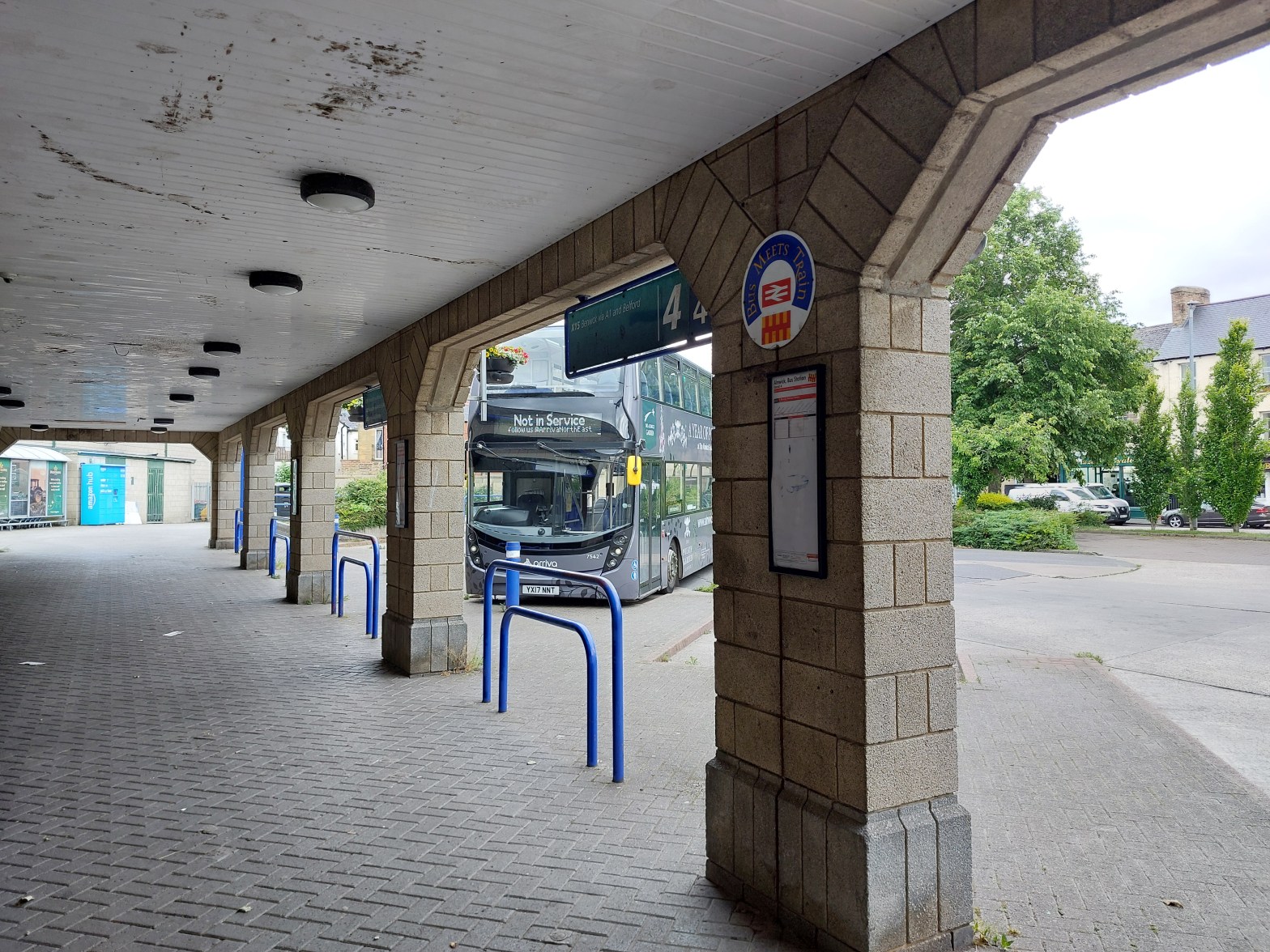
Due a revival with a renewed focus on ‘Bus Meets Train’ on the Roadside?
In my view, existing location pin design element could be combined onto a single sign with the existing ‘Bus Meets Train’ logo, rather than appearing as separate signs, set at a 90º angle from one another as at Beal Bank (see image below).
My suggestion would be for alteration of the ‘Bus Meets Train’ element placed directly above the ‘Coast & Castles Connection’ on both sides of the flagpole and at 90º to the kerb, rather than a single sign facing in parallel, which is far less visible to passing vehicles.
Two excellent brands, but incorporate them onto a single sign?
This would make the direct connection to Alnmouth Railway Station more prominent, and likely to be more successful at helping raise the ‘Bus Meets Train’ concept more widely by making the signage more visible to passing road users, such as drivers, passengers, cyclists and walkers who may not notice existing signage due to its current orientation.
A roadside revival of the branding could be done independently of any bus branding, and would have a 24/7 advertising impact, being visible all day, every day, and could be rolled out across the whole proposed route from Alnwick Bus Station to Amble High Street. Where existing signage remains, perhaps a double sided ‘Bus Meets Train’ sign could be added to reduce cost?
On Bus Branding
If and when the dedicated service was to begin, a dedicated small fleet of buses could have dedicated branding for this route, much like the dedicated branded bus for the 434 service branded as the ‘Northumberland Line Connection’ (see below).