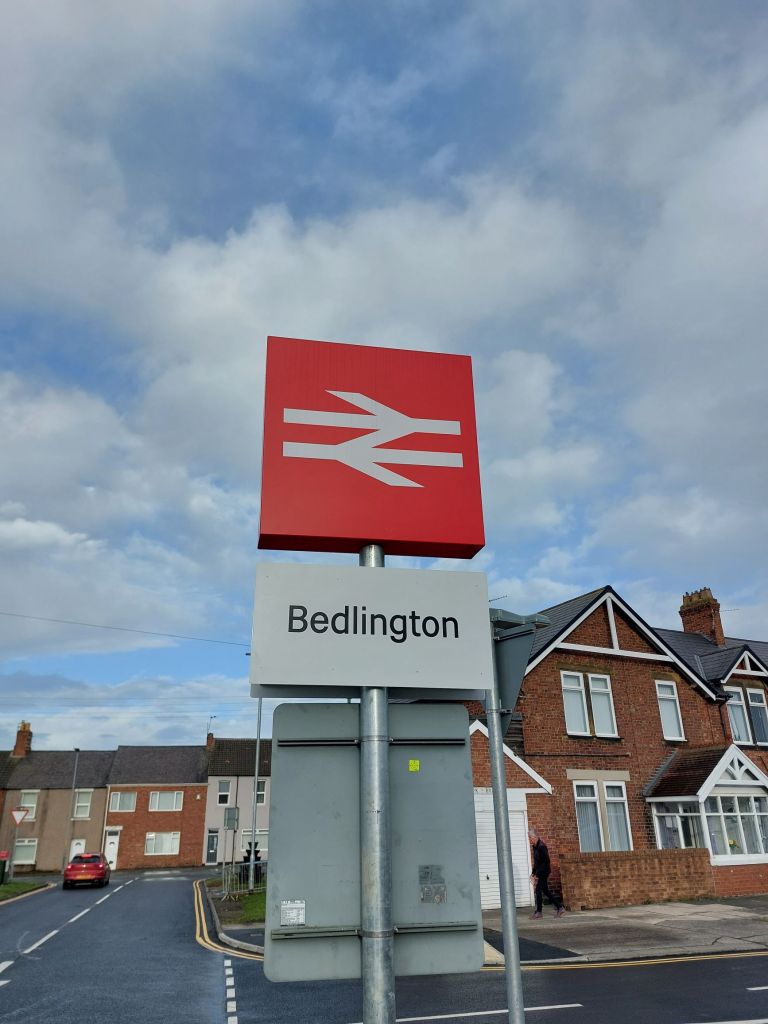
Yesterday evening, Sunday 29th March, I travelled down to Bedlington station to see the final Northumberland Line station for myself, and one close to my heart as a born and bred Bedlingtonian!
It is fantastic to see the town I grew up in once again reconnected to national network, but as the title suggests, I and many others feel that this is the ‘end of the beginning’ for the Northumberland Line; with further expansions already publically tabled by NCC and others, including this campaign for the Northumberland Coast Loop.
Bedlington, a brief history.
Bedlington station, closed on 2nd November 1964, was reopened on Sunday 29th March 2026, after a hiatus of 22,427 days, and 64,157 days (175 years, 7 months, and 27 days) since it originally opened on 3rd August 1850.
This means for a little over ⅓ of its life that the station has existed as a structure, it has been closed to passengers.
Happily that closure has now been fully reversed, and the station also has a much different layout than it did originally.
The original station was just a single platform, where platform 1 is now, as the opposite side of the line was a junction amd sidings for the two of the many collieries in Bedlington at the time, the ‘Doctor Pit’ located roughly where the current Bedlington Police Station is now, and the ‘A’ pit, a short distance SW of the railway station.
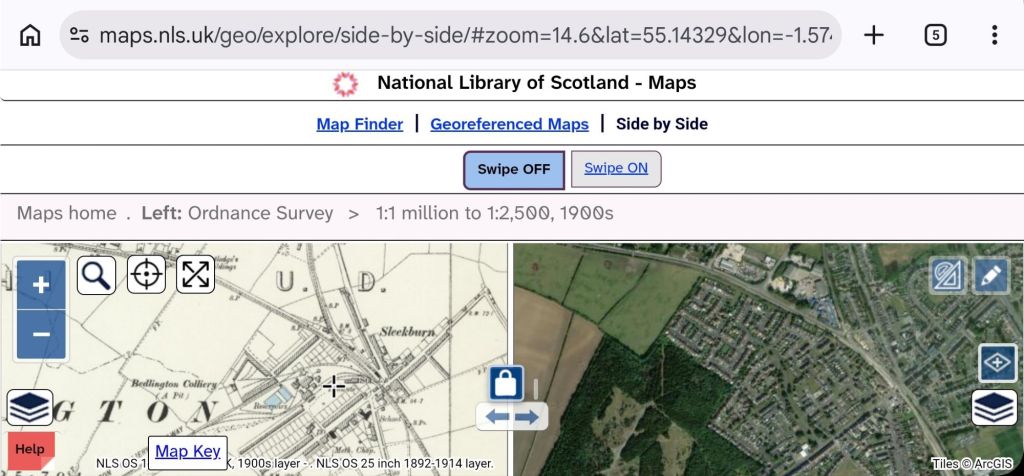
These pits closed after the railway went to freight only operation, the Doctor Pit closing in 1968, and the ‘A’ pit closing in 1971, with the sidings and junctions likely to have disappeared not long afterwards, so the new Platform 2 had to be built completely from scratch.
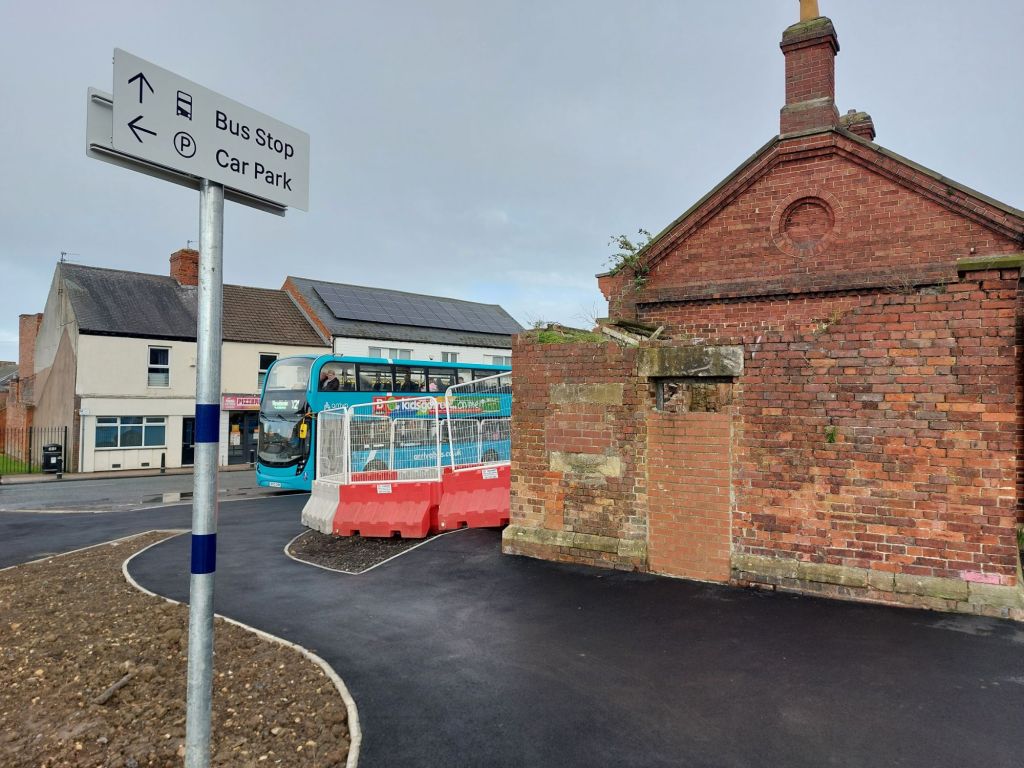
The station is quite a functional and utilitarian design, but unlike other stations on the Northumberland Line, there is quite a lot of railway heritage surviving at Bedlington giving it perhaps a bit more atmosphere than many of the totally new stations on the line where little, if any historic fabric survived at all, and sole stations are also on new sites entirely (for example Newsham).
The 1850 era station building has been saved, and hopefully will be repurposed soon to become an attractive part of the revived station, and the signalboxes (Bedlington North at the junction end, and Bedlington South near to the Clayton pub) are also likely to remain part of the station scene for many years to come.
Bedlington station: Opening Day
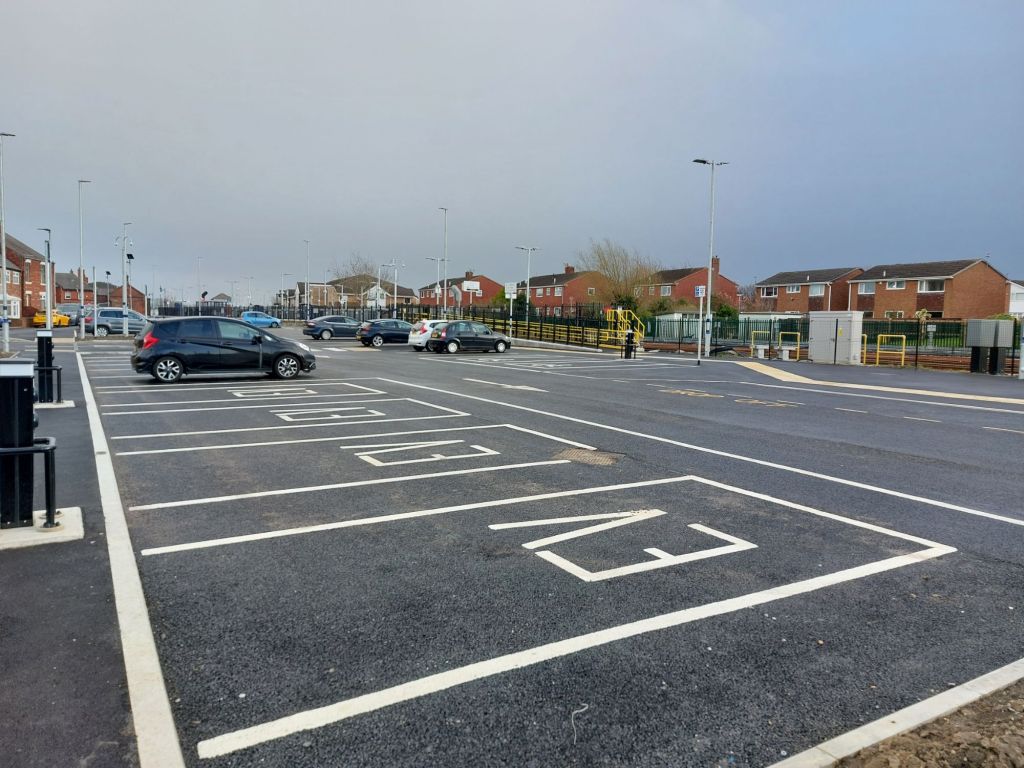
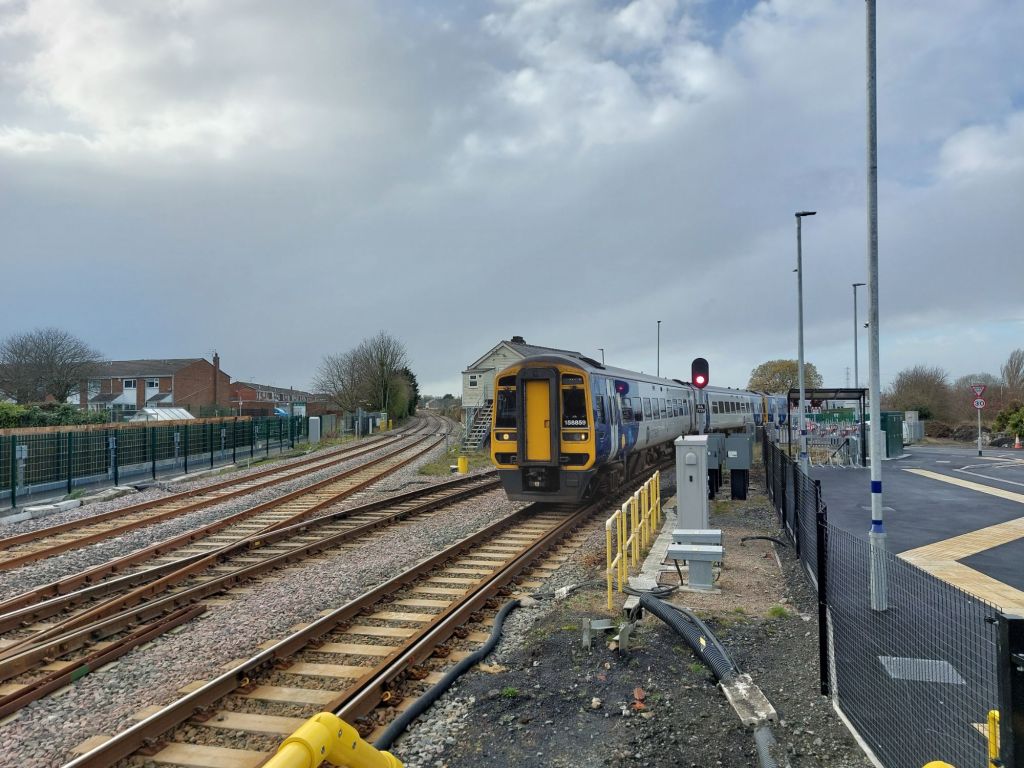
Below are a few photos of Bedlington station from my visit yesterday, which marks the completion of the first phase of the Northumberland Line.
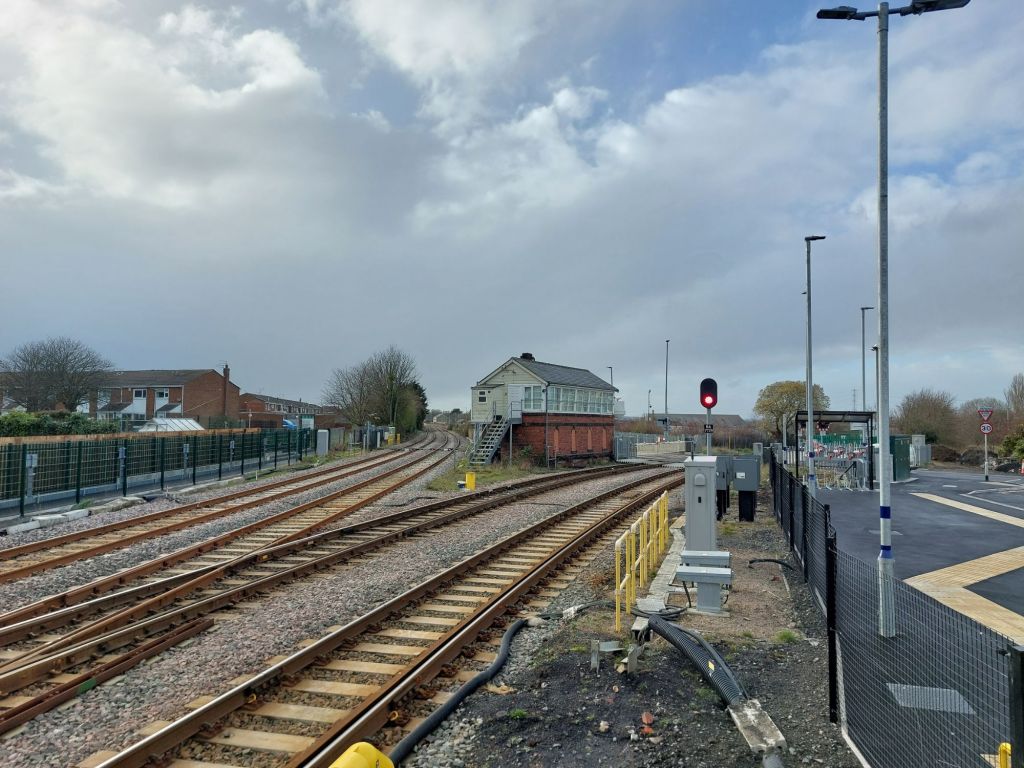
The line to the right here heads to Ashington, and could be extended to Woodhorn, Newbiggin and Lynemouth in the future, whilst the line to the left heads towards the former station at Choppington, then Hepscott, where another junction spilts the line again.
The left branch at Hepscott takes trains towards Morpeth Station, and back towards Newcastle Upon Tyne, whilst the right branch at Hepscott heads north towards Pegswood, Berwick Upon Tweed and Edinburgh
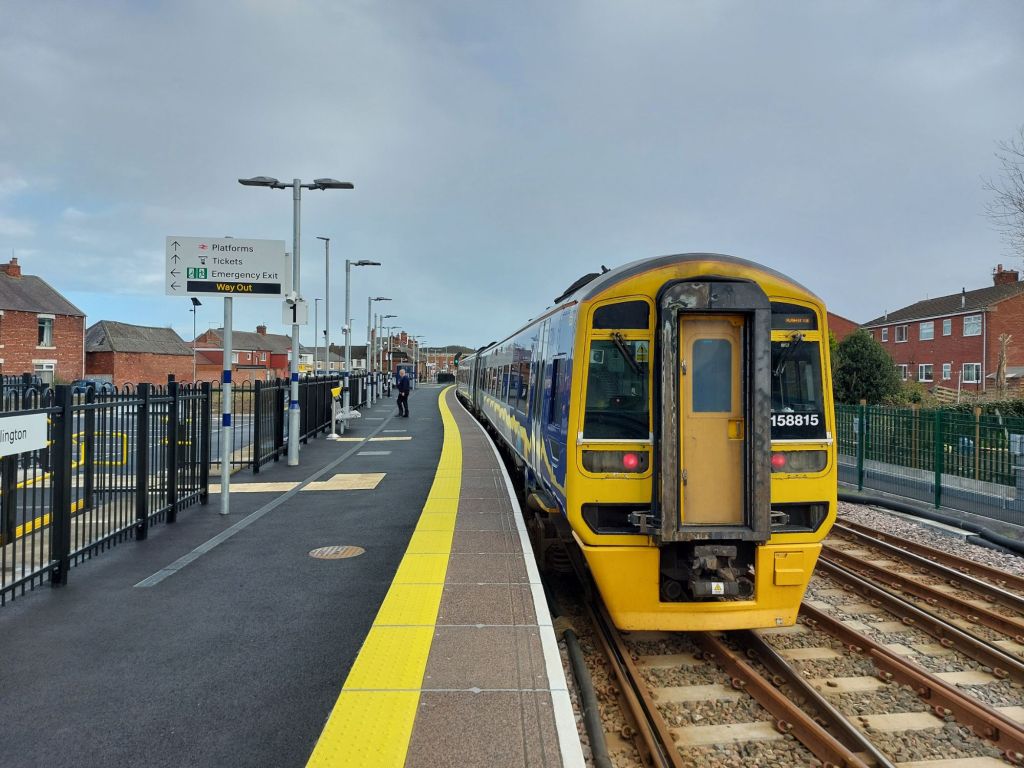
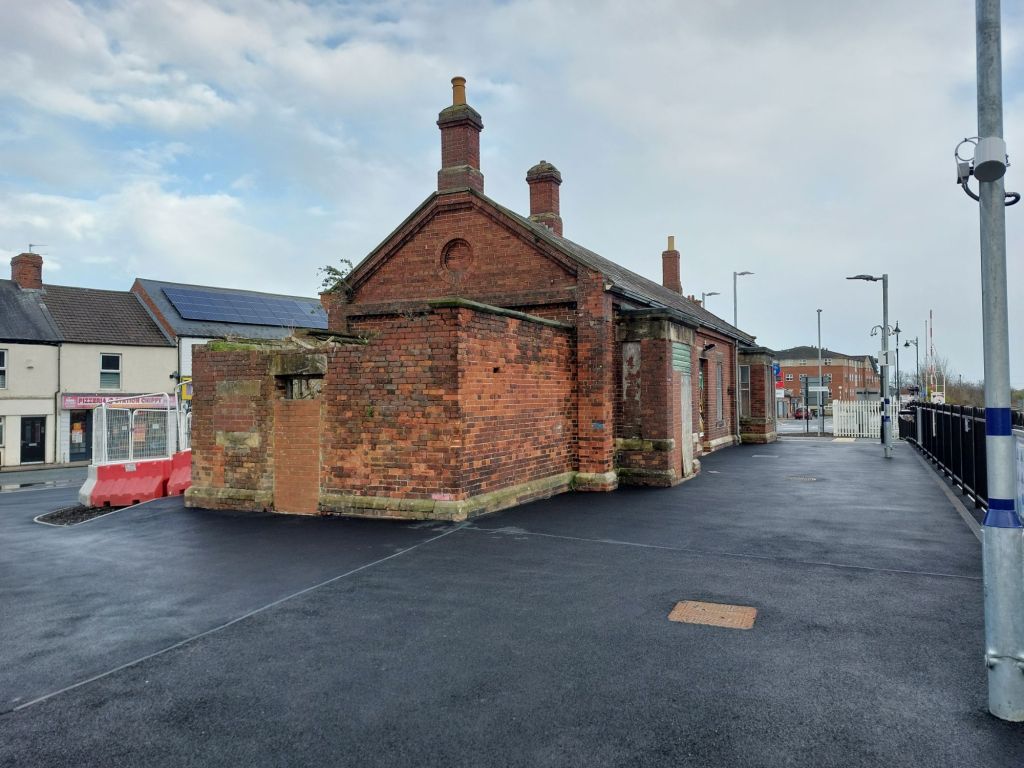
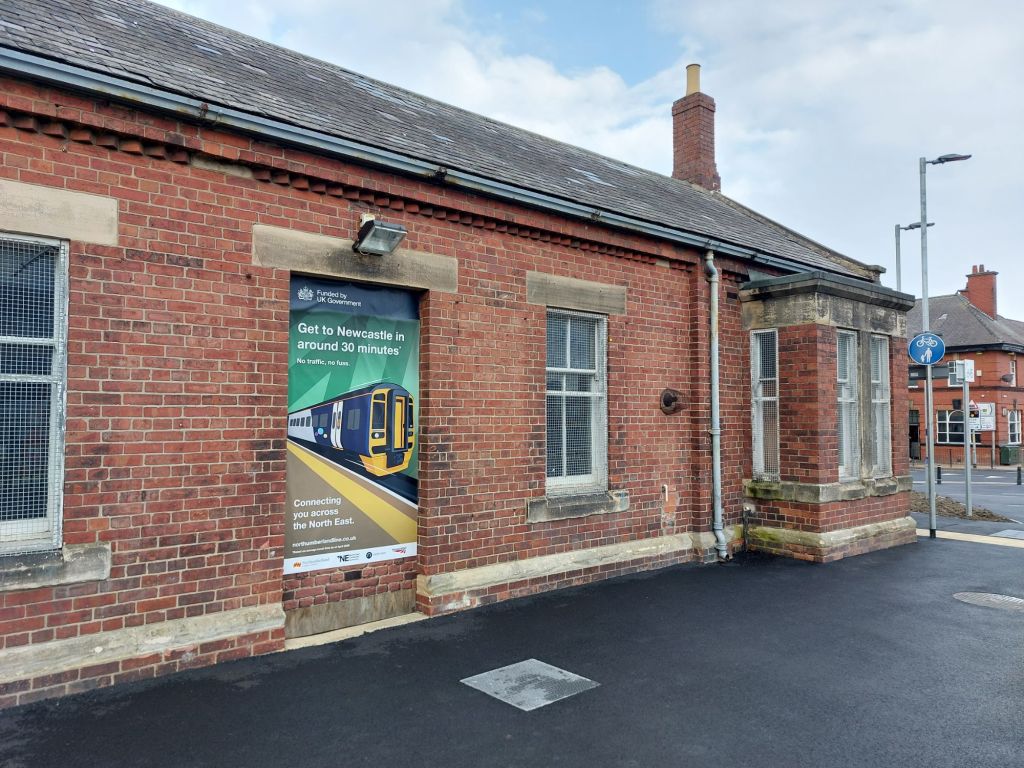
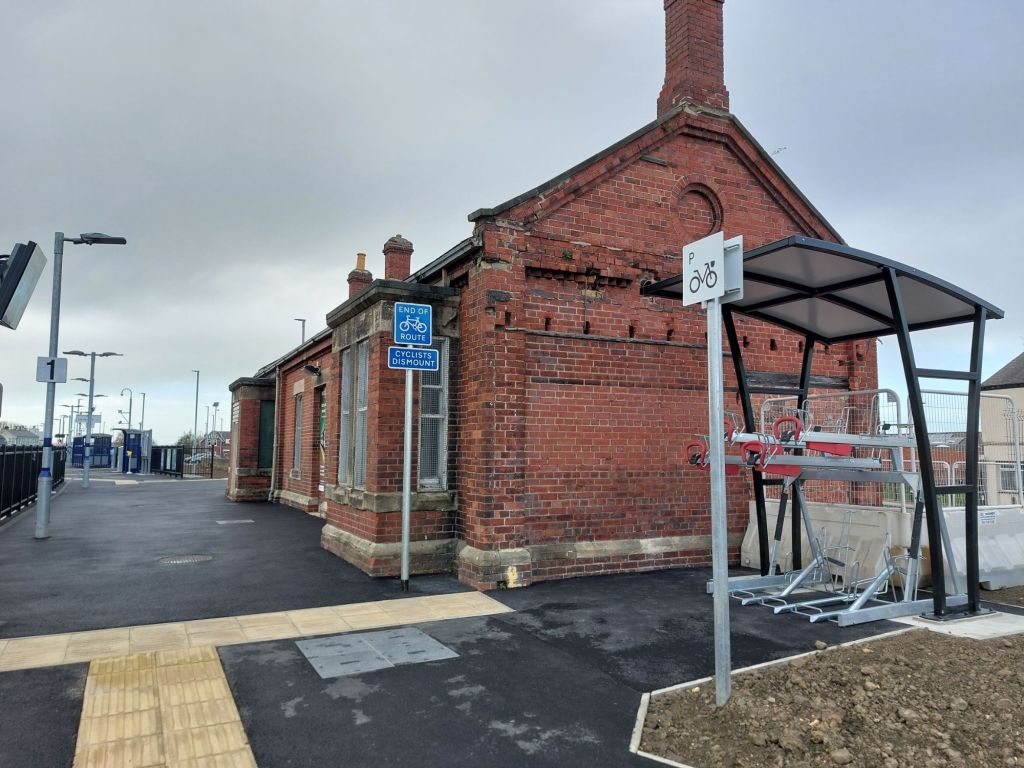
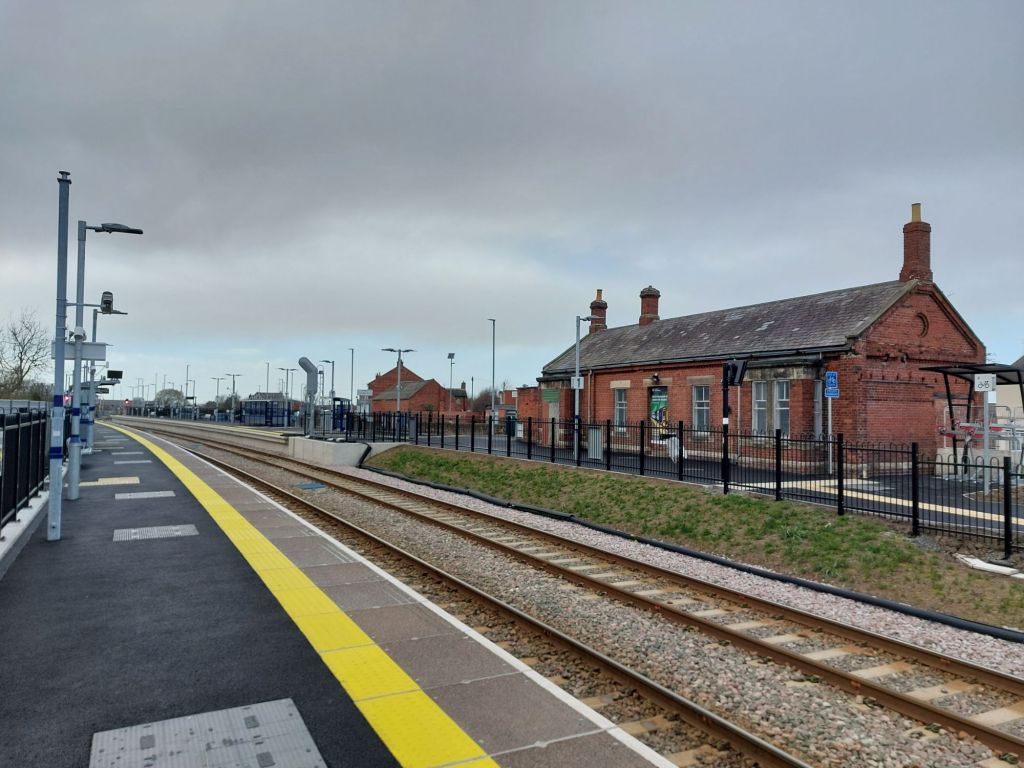
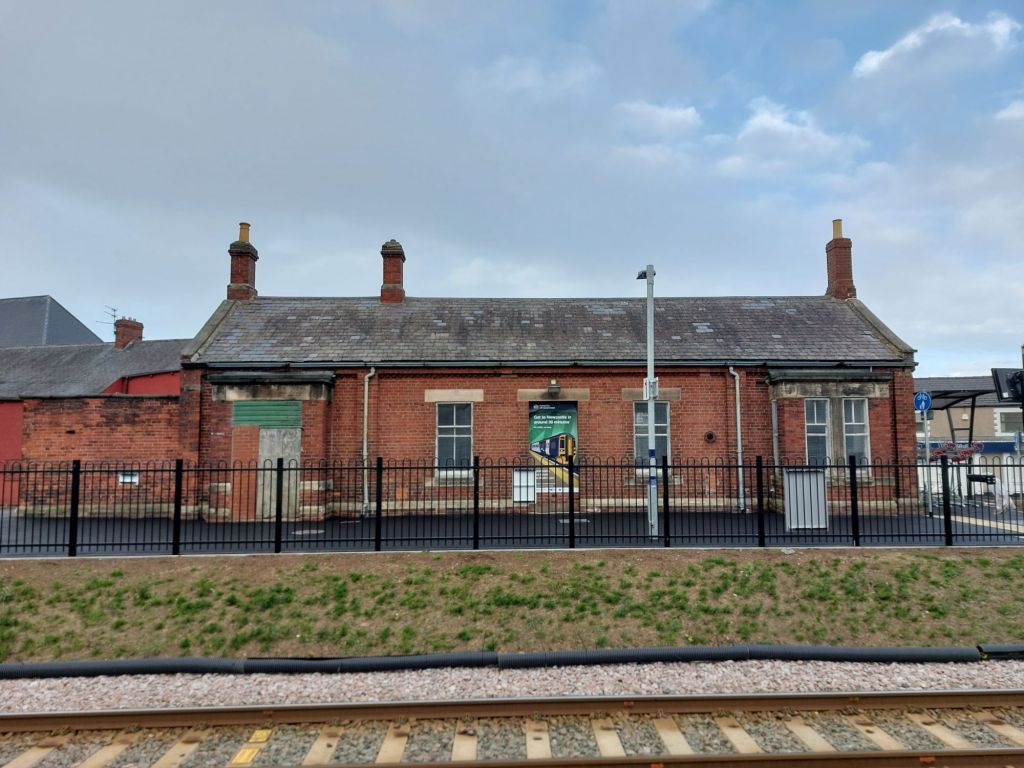
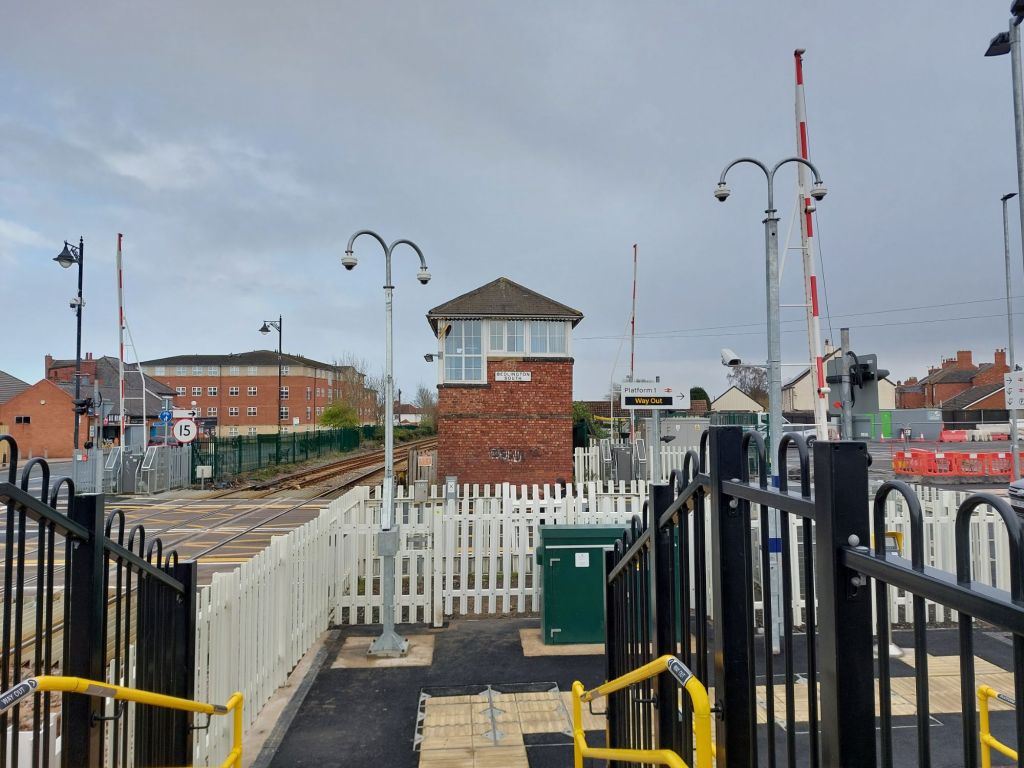
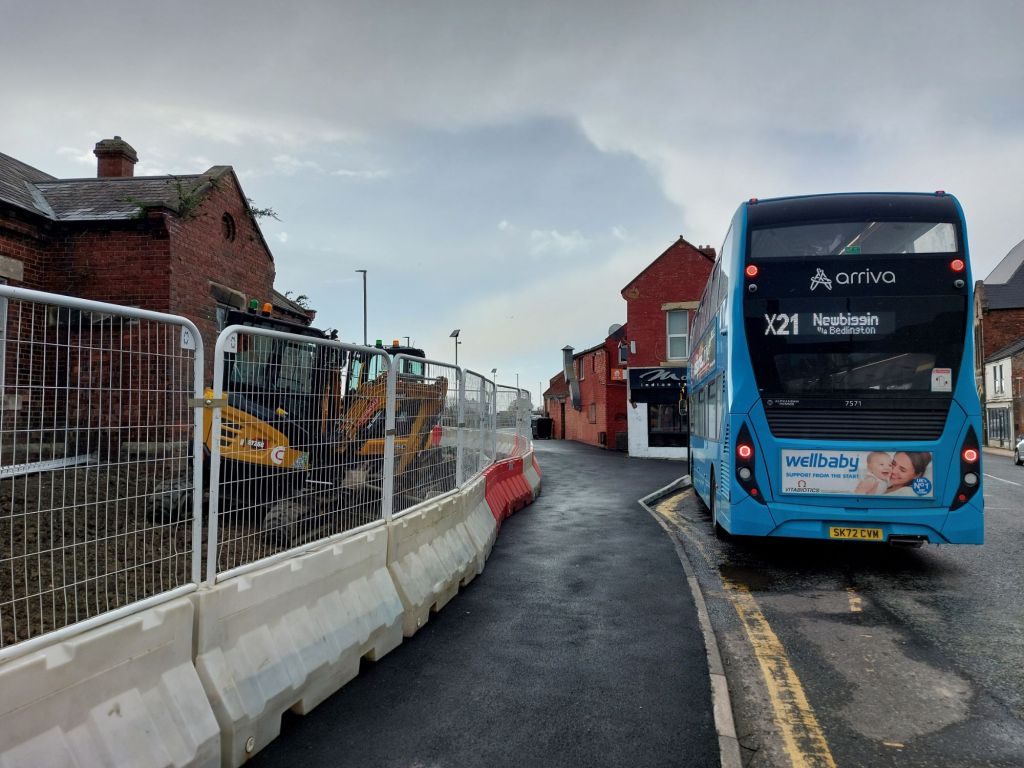
With the line having already carried 1.4m passengers in just 15 months (an average of 2,978 passengers per day, every day as a simple average of 1.4m ÷ 470 days (15.12.24 to 29.3.26), there is a clear case to expand the line further, with plans already announced for funding to explore expansion to Newbiggin by the Sea in the late 2020’s.
The Next Chapters
As stated above, the end-on expansion of the Northumberland Line towards Newbiggin by the Sea is already a clear contender, and one that this campaign supports, but there is a route that I strongly feel is being overlooked by local politicians and other rail campaigners, and is seen clearly in the photo below; the route from Bedlington, through Choppington to Pegswood, then north up the East Coast Main Line (ECML) to Edinburgh… The Northumberland Coast Loop.
Three routes between Newcastle and Edinburgh by rail
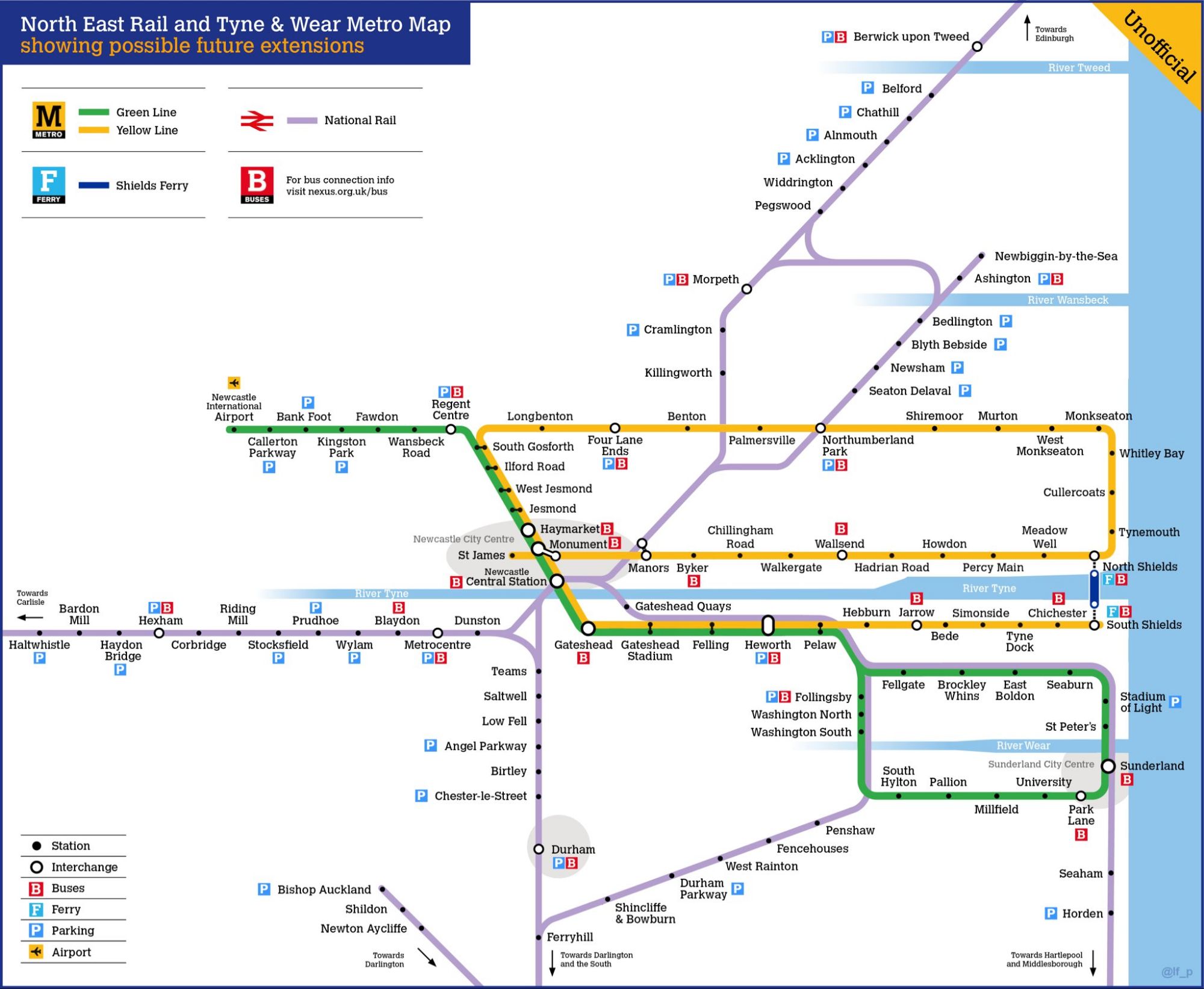
As can be seen from this map below, which shows some (not all) potential rail expansions in the North East of England, with Newcastle Central station in the centre, there are two existing routes that can be taken today between Newcastle and Edinburgh, and a third as yet unbuilt route proposed by SENRUG.
The current ECML route via Morpeth
The long established East Coast Main Line (ECML) route runs out of Newcastle, through Cramlington and Morpeth, then Pegswood, Alnmouth and Berwick Upon Tweed towards Edinburgh; dozens of trains per day and has been an established passenger route for well over a century.
The Northumberland Coast Loop route via Bedlington
As can again be seen on the above map, following the same path north from Newcastle, the alternative option via the Northumberland Line is clearly shown, passing through Northumberland Park, Seaton Delaval, Newsham, Blyth Bebside, and Bedlington, then cuts across westwards, back to rejoin the ECML, with one route into Morpeth and back to Newcastle, the other curving north to Pegswood, Alnmouth, Berwick Upon Tweed and Edinburgh.
This route has existed since 1980, when the Morpeth North Curve, first touted in 1882 was finally opened to traffic, built to avoid coal trains bound for Blyth Power Station and the Port of Blyth needing to reverse within Morpeth Station.
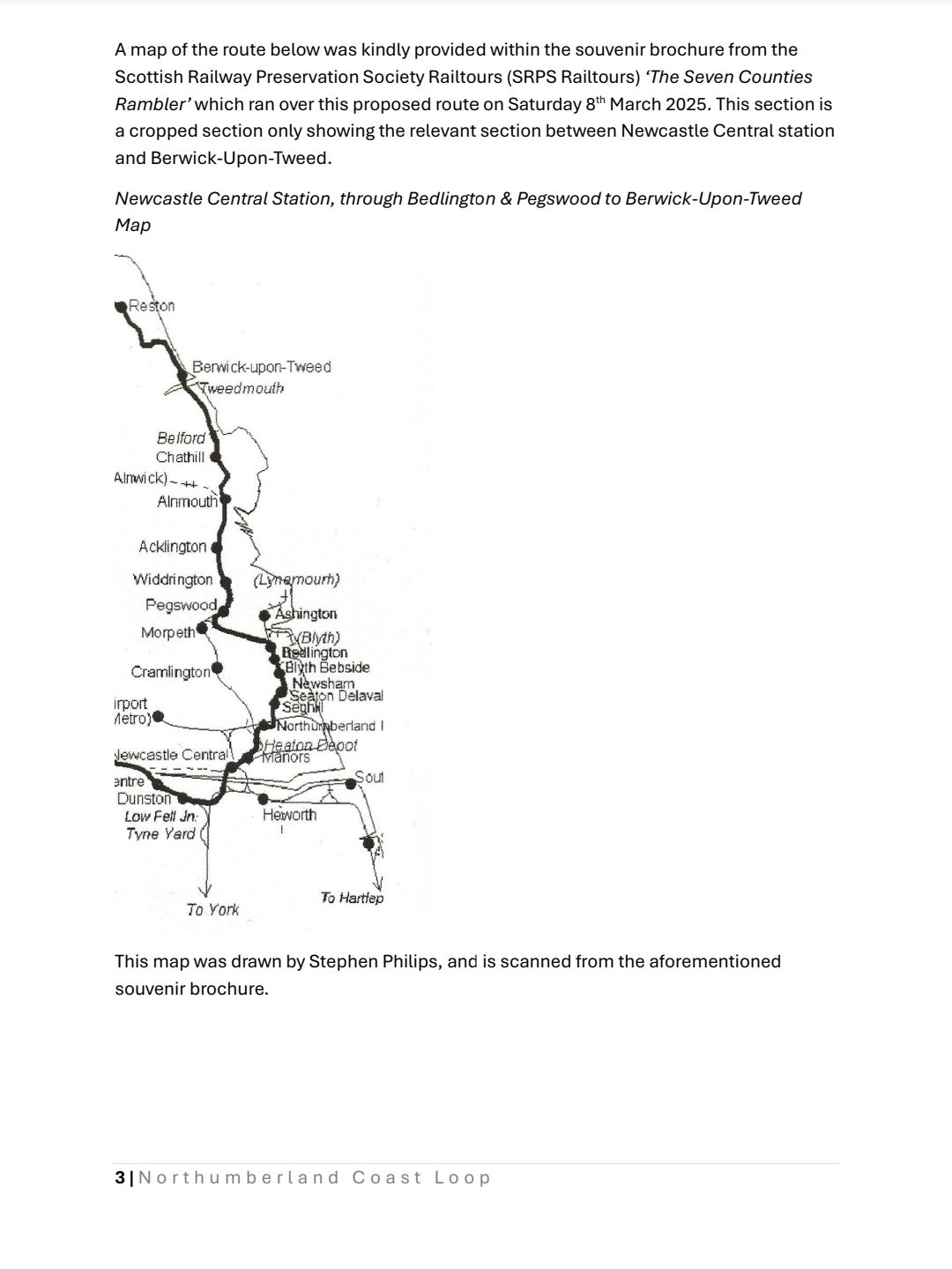
‘The Seven Counties Rambler’: Riding the Northumberland Coast Loop on the 8th March 2025
I have actually travelled by train on this proposed route just over a year ago on an SRPS railtour called ‘The Seven Counties Rambler‘ which ran on Saturday 8th March 2025 as circular tour of southern Scotland and Northern England, with the final leg of the tour from Newcastle Central to Linlithgow going via Bedlington, rather than Morpeth.
A more geographically true to layout map was included with the souvenir brochure of the trip, as can be seen below.
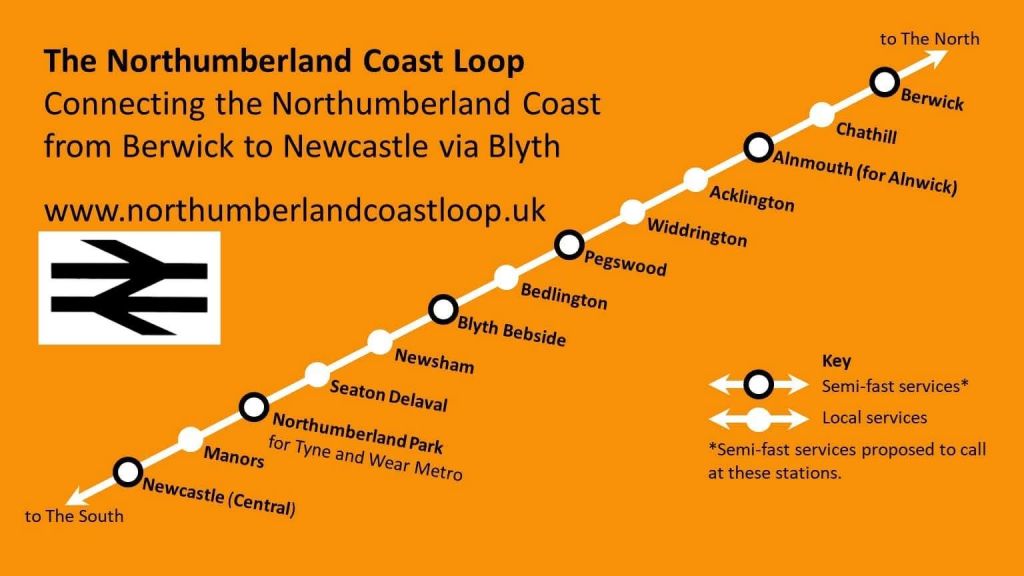
The route map below shows the stations in the order that they would be passed through by a service working the route; Ashington and Morpeth stations do not feature as they are not possible to serve via this route, but Pegswood is substituted in lieu of a call at Morpeth or Ashington.
Using this route would bring a wider range of trains, added capacity and new connections onto the ‘core’ section of the Northumberland Line; for example, if a TPE ‘Nova 1’ bi-mode was to work alongside the current Class 156 and 158 units, it would add extra seating capacity to/from Newcastle to stations such as Northumberland Park and Blyth Bebside; helping carry the many thousands of people using the line, but it would also offer a direct link to places in North Northumberland and Scotland.
The SENRUG route: Newcastle to Alnmouth and beyond via Ashington
The SENRUG campaign for Ashington – Butterwell – Alnmouth is very similar to that of the Northumberland Coast Loop, indeed the southern section from Newcastle Central Station to Bedlington Junction, and the northern section from Widdrington Station to Alnmouth (and possibly as far as Edinburgh) are both identical.
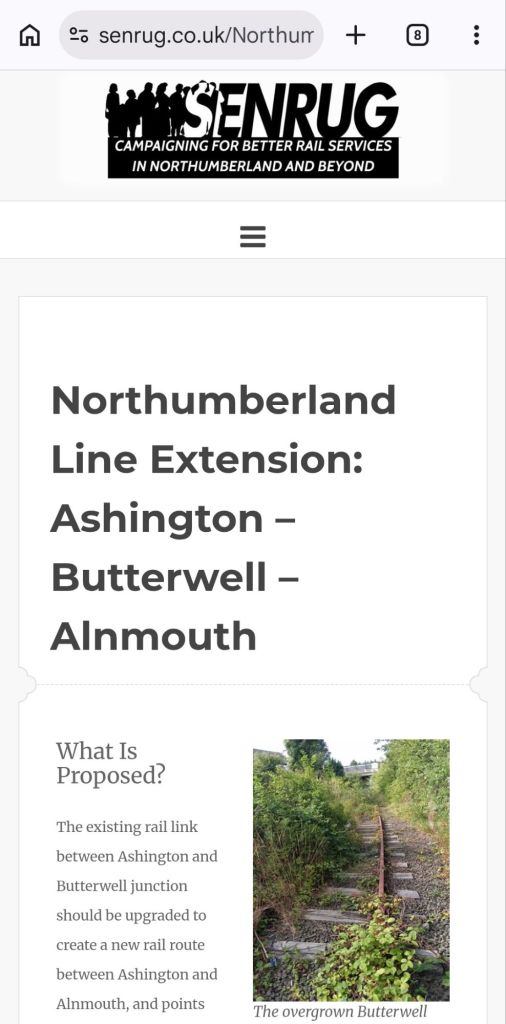
The fundamental difference between the two proposed routes is just the section between the stations at Bedlington and Widdrington, the N.C.L. route using the working and long established route via Morpeth North Curve, and SENRUG proposing a new line to connect Ashington to Widdrington directly.
This new line would likely use some of the former ‘Butterwell Line’ which dates in parts back to the 1890’s and the Ashington Colliery Railway system, parts of it actually having colliery operated miners passenger trains between Hirst station (not far from current Ashington station but separate from the mainline), and Linton Colliery.
That being said, the northern end of the line would need to be substantially new; as the curves would need to be realigned to get sufficiently good speeds, but also a new alignment is needed to create a new north-south connection, as the present link curves south towards Pegswood only, it has never had a direct northward link.
The building of this new link could have a few significant, but not insurmountable hurdles to overcome, which would make such a route likely to be both significantly expensive but also very time consuming to build.
Use the existing network better before new build lines?
The N.C.L. campaign was started as the above Ashington to Alnmouth connection would require a very substantial upfront investment to make it happen; whereas the very similar and already existing route from Bedlington to Pegswood achieves many of the same direct connections (i.e. Blyth Bebside to Berwick Upon Tweed, or Northumberland Park to Edinburgh Waverley) as the new route via Ashington would provide.
In the short-term, using the Bedlington to Pegswood route could allow the benefits of direct long-distance services to be brought to the area sooner as the route already exists and just needs to utilised.
In the longer-term, the route via Ashington could be built and services diverted over it, but using the existing link is perhaps the more pragmatic option, and also allows the market for such services to build up over time.
Bedlington to Alnmouth: via Newcastle (for now).
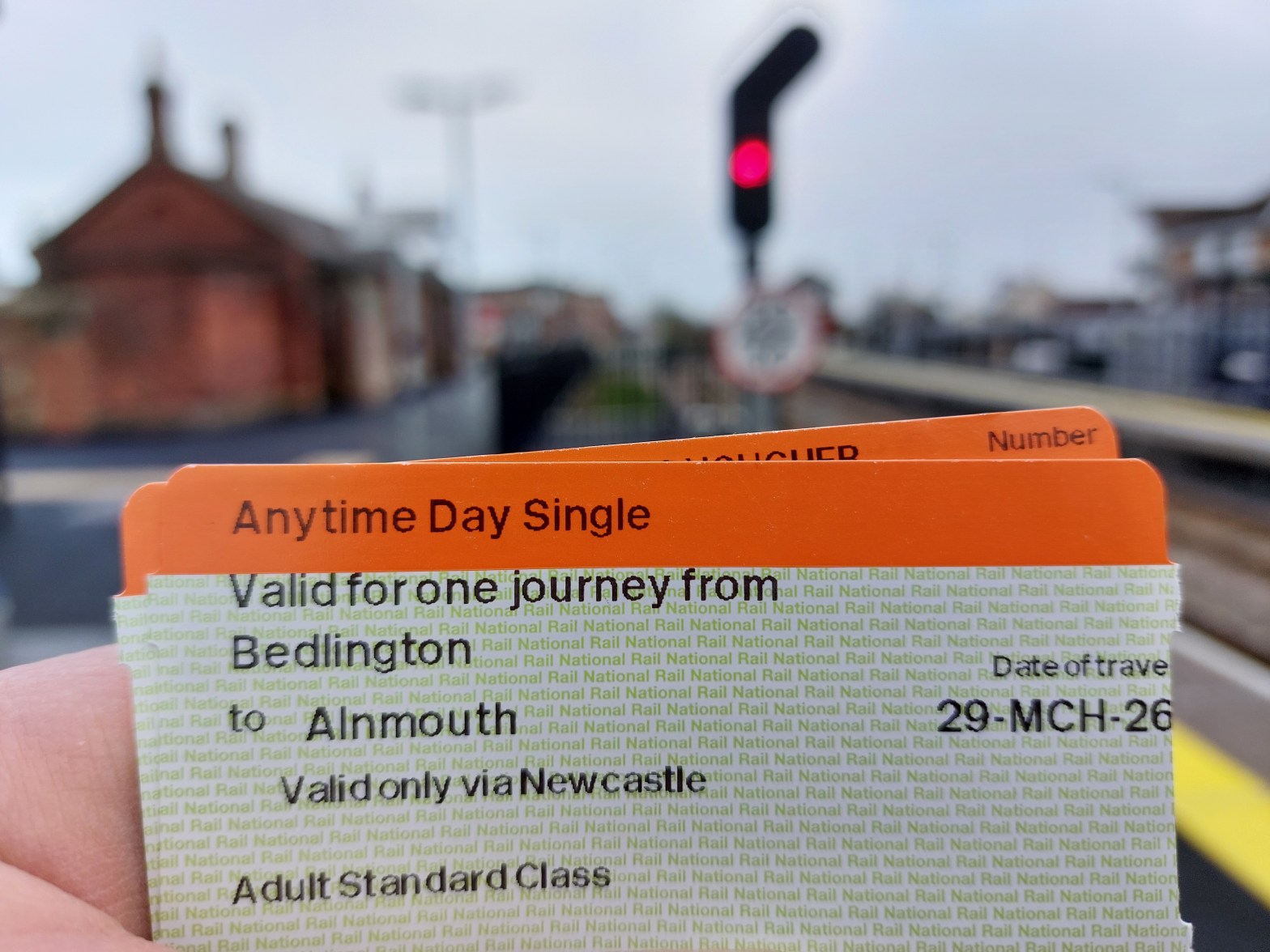
When I visited yesterday, a purchased a ticket from the Platform 1 ticket machine from Bedlington to Alnmouth, which can be seen to be clearly worded as ‘Valid only via Newcastle’.
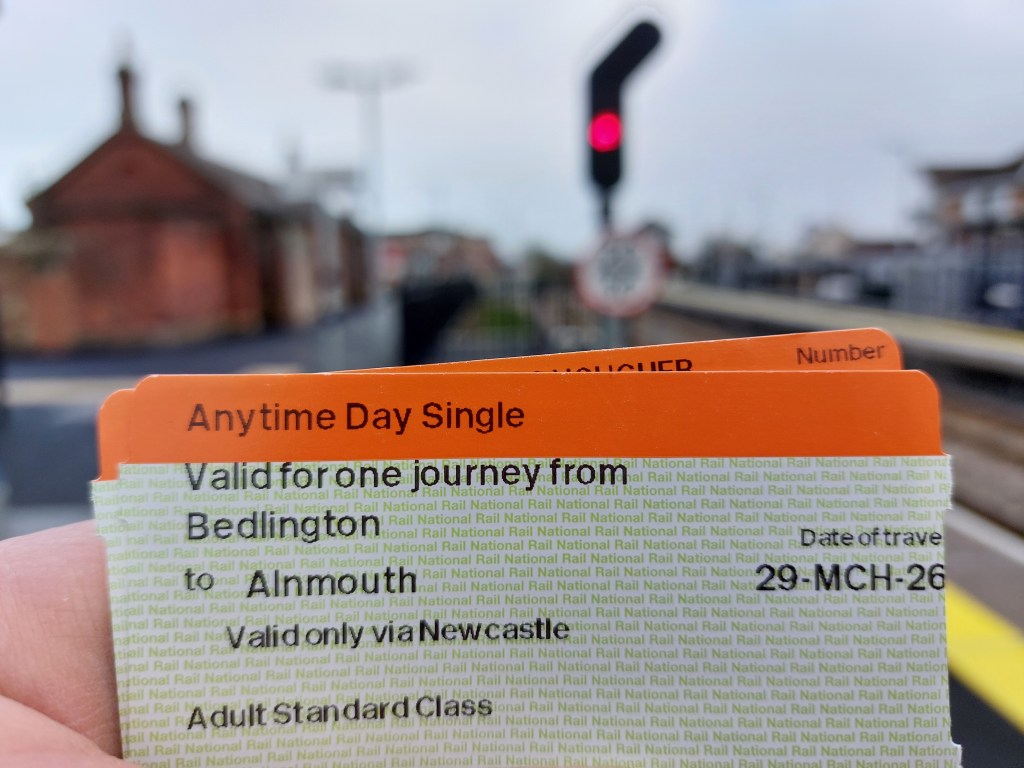
At present, that is the only possible route by rail between the two stations, BUT, given that just over a year ago ‘The Seven Counties Rambler’ took the direct route, perhaps now is the time to implement a regular timetabled service making these connections more direct?
As outlined above, the route is possible to take a train over today, and has been since 1980; and with 1.4m passenger journeys on the Northumberland Line so far, it is likely that a very substantial number of people would also use direct services heading into North Northumberland and Scotland too, given the opportunity to do so.
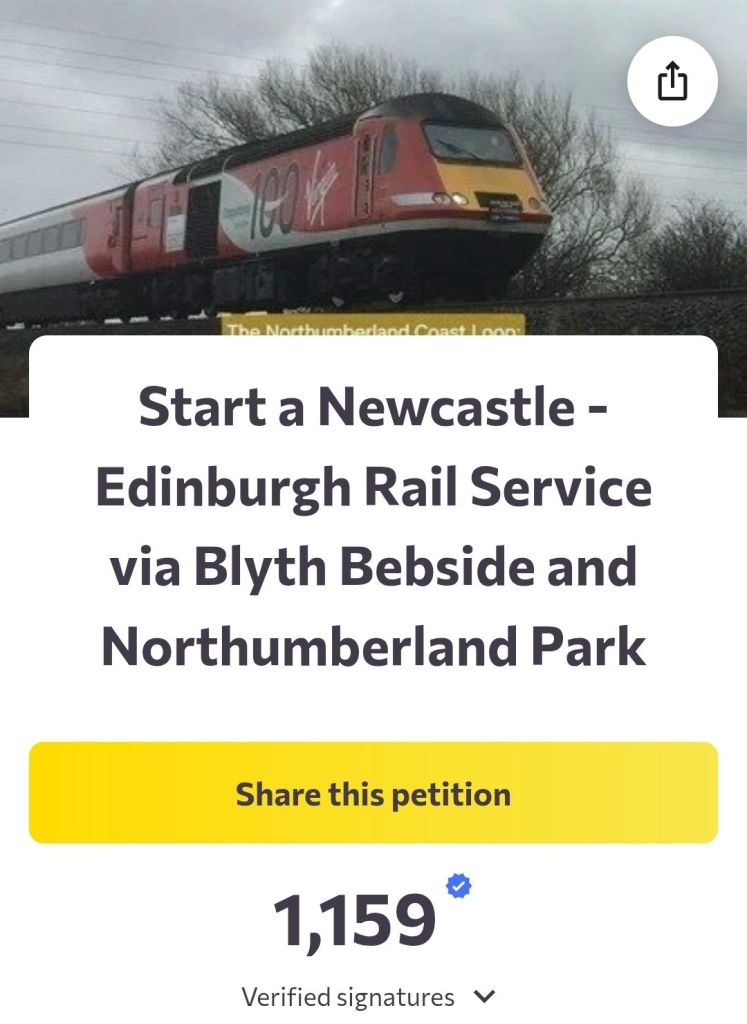
At the time of writing, the petition to ‘Start a Newcastle – Edinburgh Rail Service via Blyth Bebside and Northumberland Park‘ stands at an astonishing 1,159 signatures, hopefully this route can also be considered alongside the expansions to Newbiggin by the Sea, and implemented sooner rather than later?
 The Northumberland Coast Loop
just looking at the ticket featured on the first page of this FB post it suggests that to get to Alnmouth from Bedlington you have to go via Newcastle. I am almost sure that won’t be the case but you never know , stranger things have happened
LikeLiked by 1 person
Hi Bill, thank you for your comment but unfortunately at present the only route available by rail between Bedlington and Alnmouth is via Newcastle, as there are no regular services from Bedlington to either Morpeth or Pegswood at present.
That is why this campaign is calling for a longer distance service to run between Newcastle and Edinburgh via Bedlington to make a more direct link between the Northumberland Line, North Northumberland & Scotland.
Thanks again and kind regards, Ryan.
LikeLike