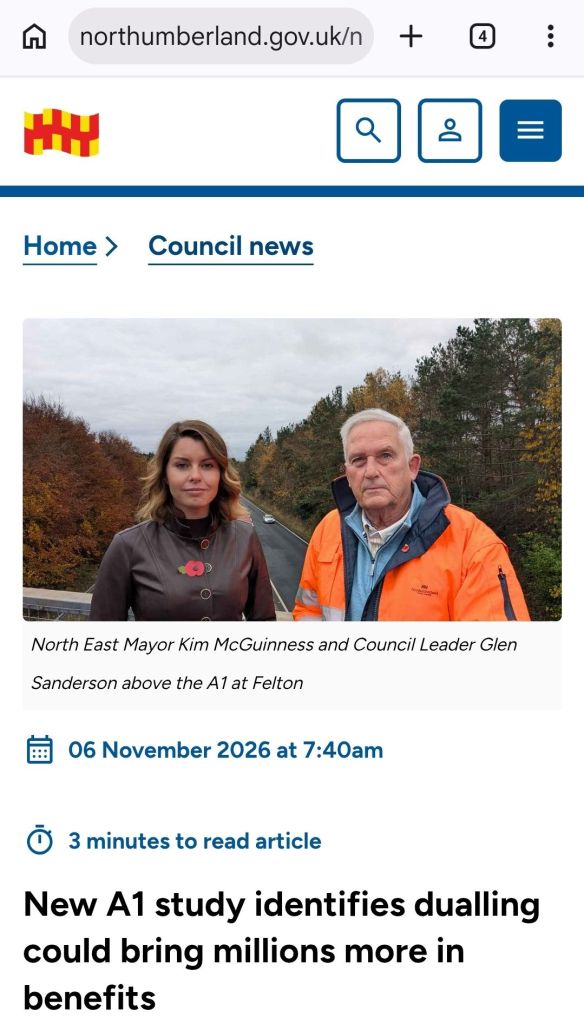
A recent technical study on the A1 has identified a further £200m to £225m in benefits that wasn’t factored into the original calculations for the road, which stood at an adjusted figure of £280m when adjusted to current rates for dualling the A1 between Morpeth and Ellingham over a 60 year period.
Still a weak economic case for dualling the A1?
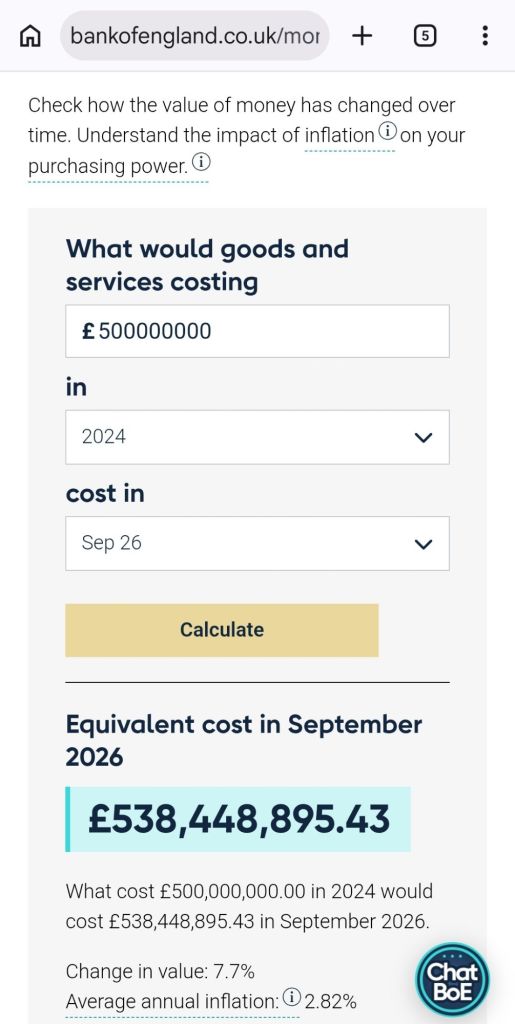
In 2024 when the Labour Government first took office, the cost of dualling the A1 was said to have risen to £500m from the £290m quoted by the then Conservative Government in 2014 under David Cameron, particularly as inflation in the contruction sector was especially high during that period.
With over two years having elapsed since then, the cost of dualling the Morpeth to Ellingham section of the A1 is likely to sit somewhere around £538.5m by the time of writing this in November 2026, as Bank of England inflation data only runs to September 2026 prices, and inflation is substantial at present due to high diesel prices followimg the Ukraine and Iran wars, which is a major push factor in rising costs, so this may even be underestimated.
Therefore, an adjusted £280m of ecomomic benefits under the original analysis, plus having an extra £200m to £225m added to it will bring the benefits of the scheme into the £480m to £505m range, still falling short of the estimated £538.5m cost to dual just Morpeth to Ellingham section of the road, thus meaning an ecomomic loss of between £58.5m and £33.5m on the dualling over 60 years.
It has narrowed the gap, but not enough to cover its own costs, and therefore would be an overall economic drag to build and maintain.
Even in the best case scenario, it means that it is loss-making infrastructure, the economic growth that it forecasts will not repay the investment costs even under the best forecasts.
That means that a benefit:cost ratio (BCR) would range between 0.89 and 0.93, or in simple terms; a return of between 89p and 93p per £1 spent on dualling the A1 between Morpeth and Ellingham.
Dualling the A1 would cost more money than it would ever return.
Interestingly, the above report mentions ‘…that drivers place a value on avoiding these conditions, and people are willing to pay for a smoother, less stressful journey.’
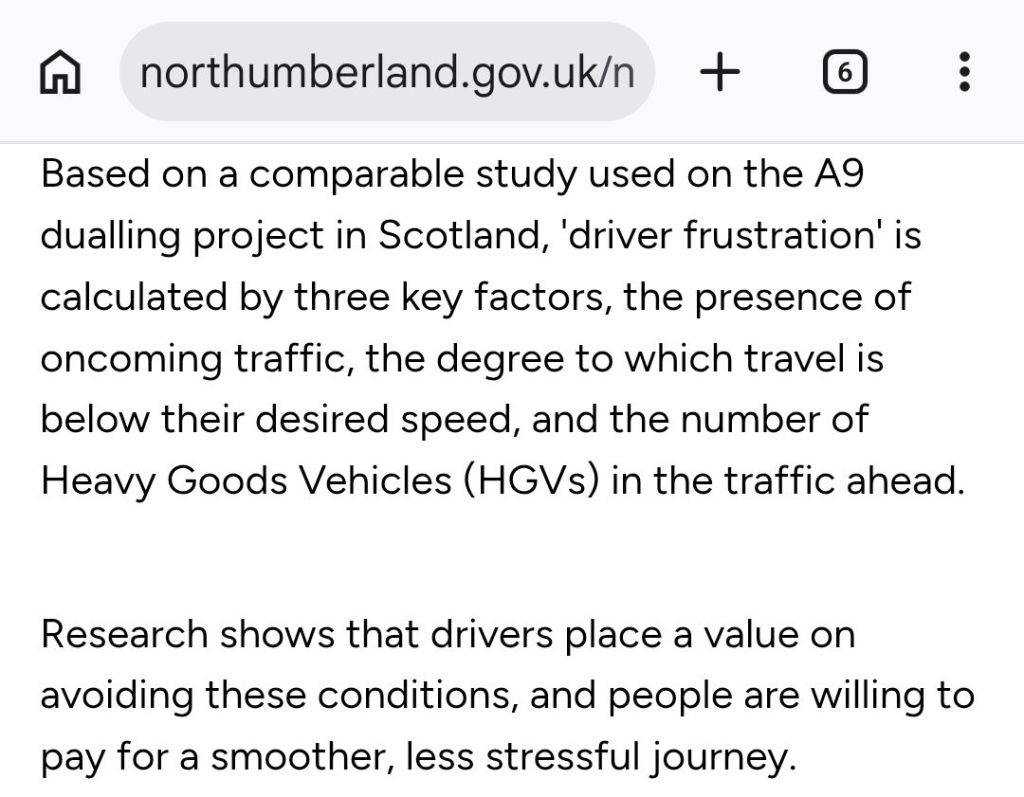
Does that mean that the A1 is to become a toll road to finance it being dualled? Routes like the M6 Toll for example prove that a toll road can work for people or businesses that rely on timely deliveries, and the decision can be made in real-time based on data ‘in the moment’ as shown by the below ‘Golden Rule’ shared by Google.
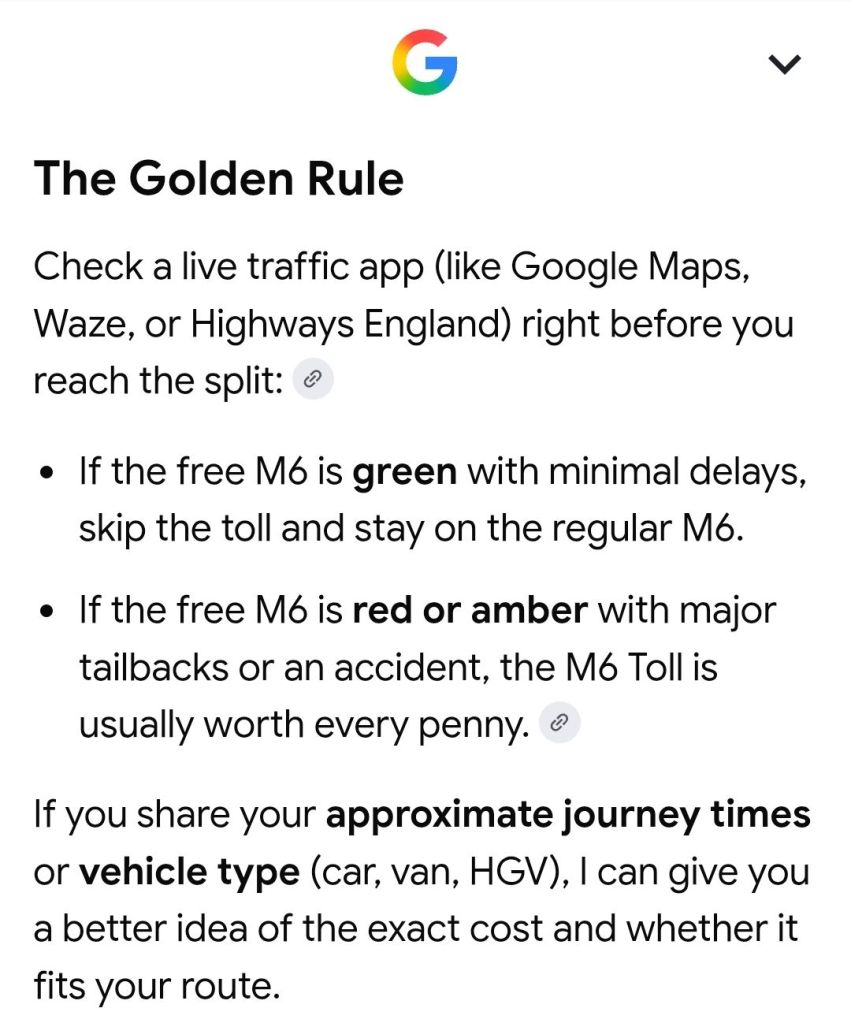
It is highly unlikely that a toll road will ever link Newcastle and Edinburgh, but it shows that drivers would pay for an alternative route by road, so a viable alternative to driving can also be considered; people can and will switch modes when it is convenient and less stressful, as proven by the Northumberland Line which so far has attracted over two million passengers in under two years, many of whom who have switched from driving to rail travel.
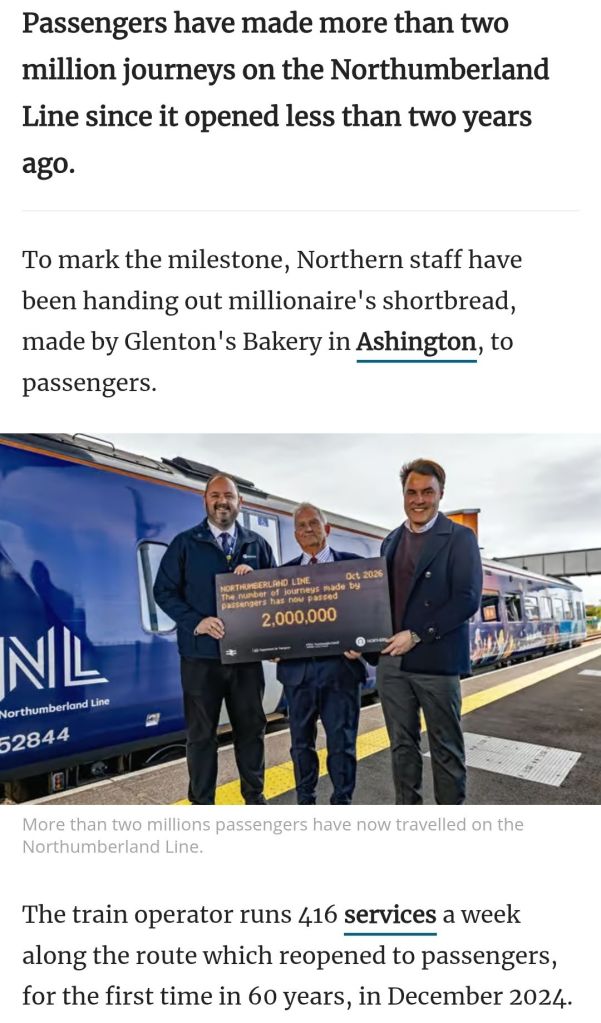
If trains can be timed to be more convenient, and with buses to connect with them, and delivered with the good value fare structure used on the Northumberland Line, many residents in North Northumberland would likely switch overnight to travelling by train rather than driving, as their counterparts in SE Northumberland have done.
Stronger case for rail investment than roads?
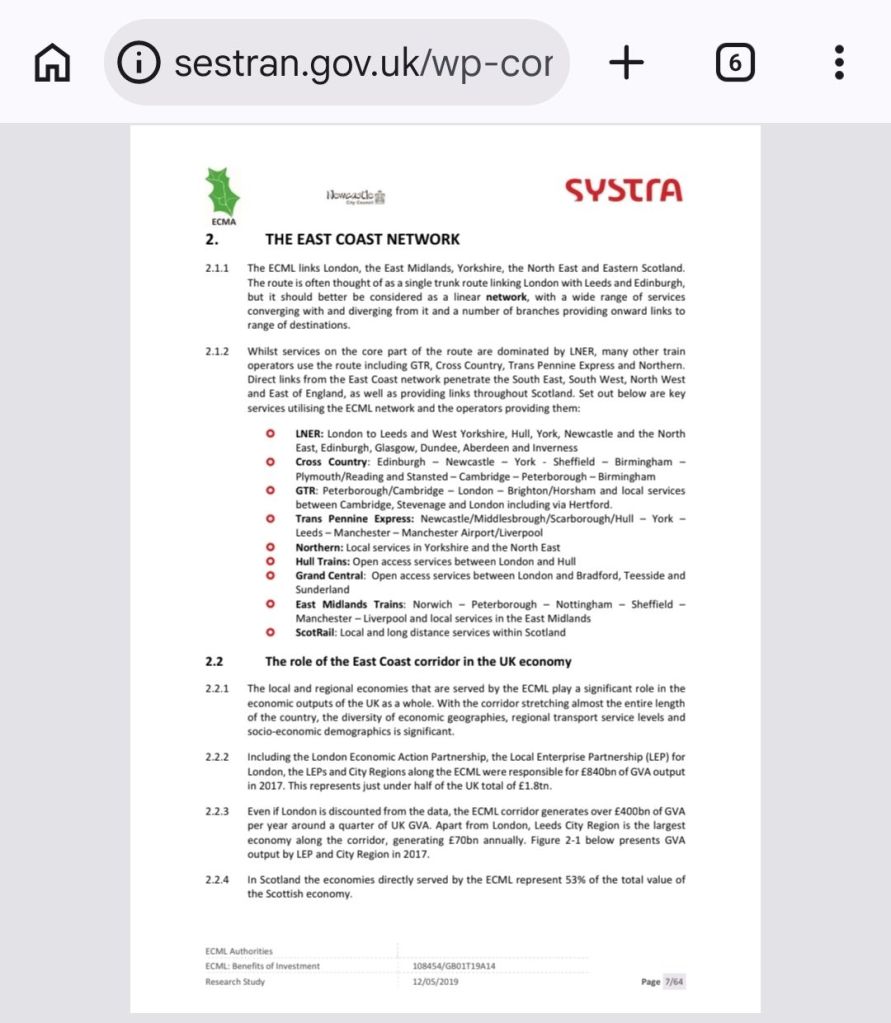
In contrast to dualling roads, it is widely accepted that rail investments have a much better rate of return; with improvements on the parallel East Coast Main Line (ECML), which runs almost adjacent to the A1, from London to Edinburgh, and the ECML is a major net contributor to the UK economy, with £840bn of GVA (Gross Value Added) across the 500 miles of route, making up just under 50% of the UK total.
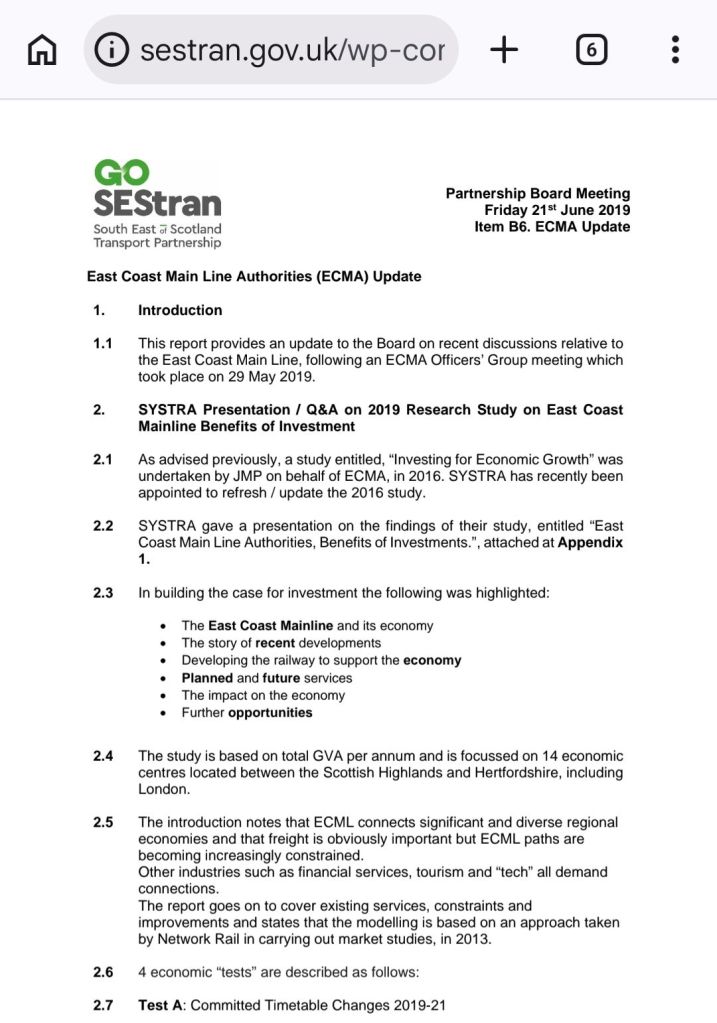
The nearest comparable major rail upgrade scheme is likely to be the Northumberland Line, running between Newcastle and Ashington, and in parallel for the most part to the A189 ‘Spine Road’ as well as sections of the A19.
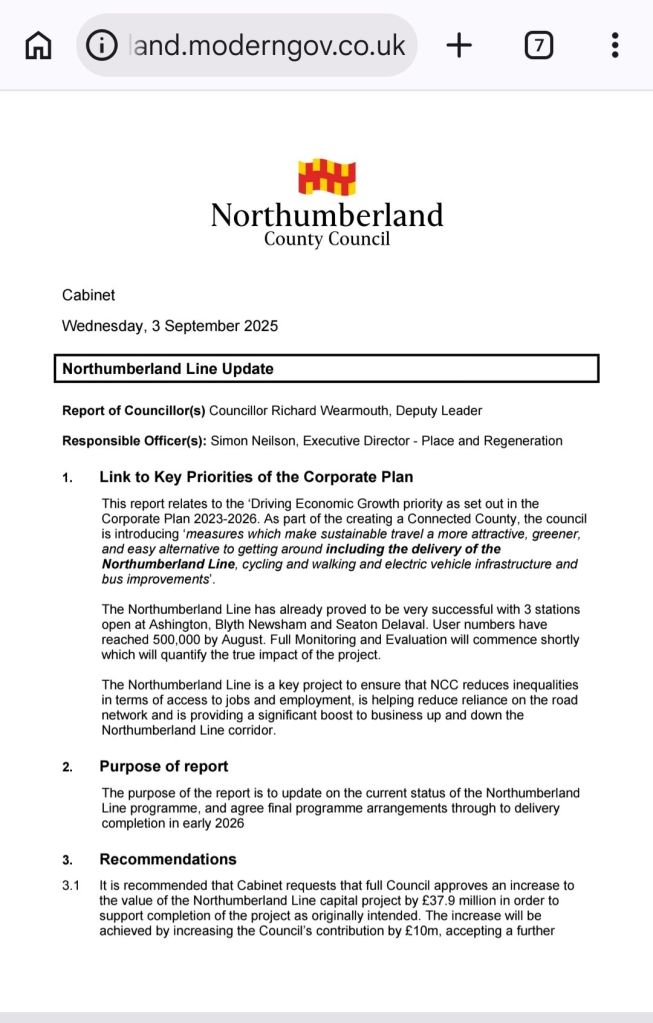
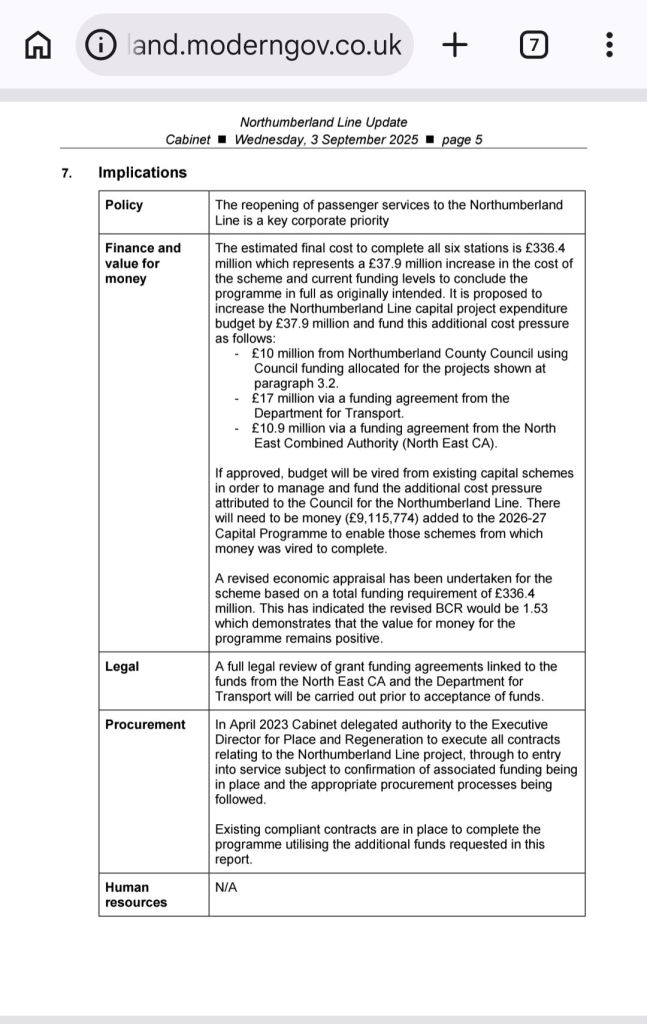
In a September 2025 report by NCC, it was revealed that despite cost overruns, the Northumberland Line still had a positive BCR expected of 1.53, and was stated to be: ‘The Northumberland Line is a key project to ensure that NCC reduces inequalities
in terms of access to jobs and employment, is helping reduce reliance on the road
network and is providing a significant boost to business up and down the
Northumberland Line corridor.‘
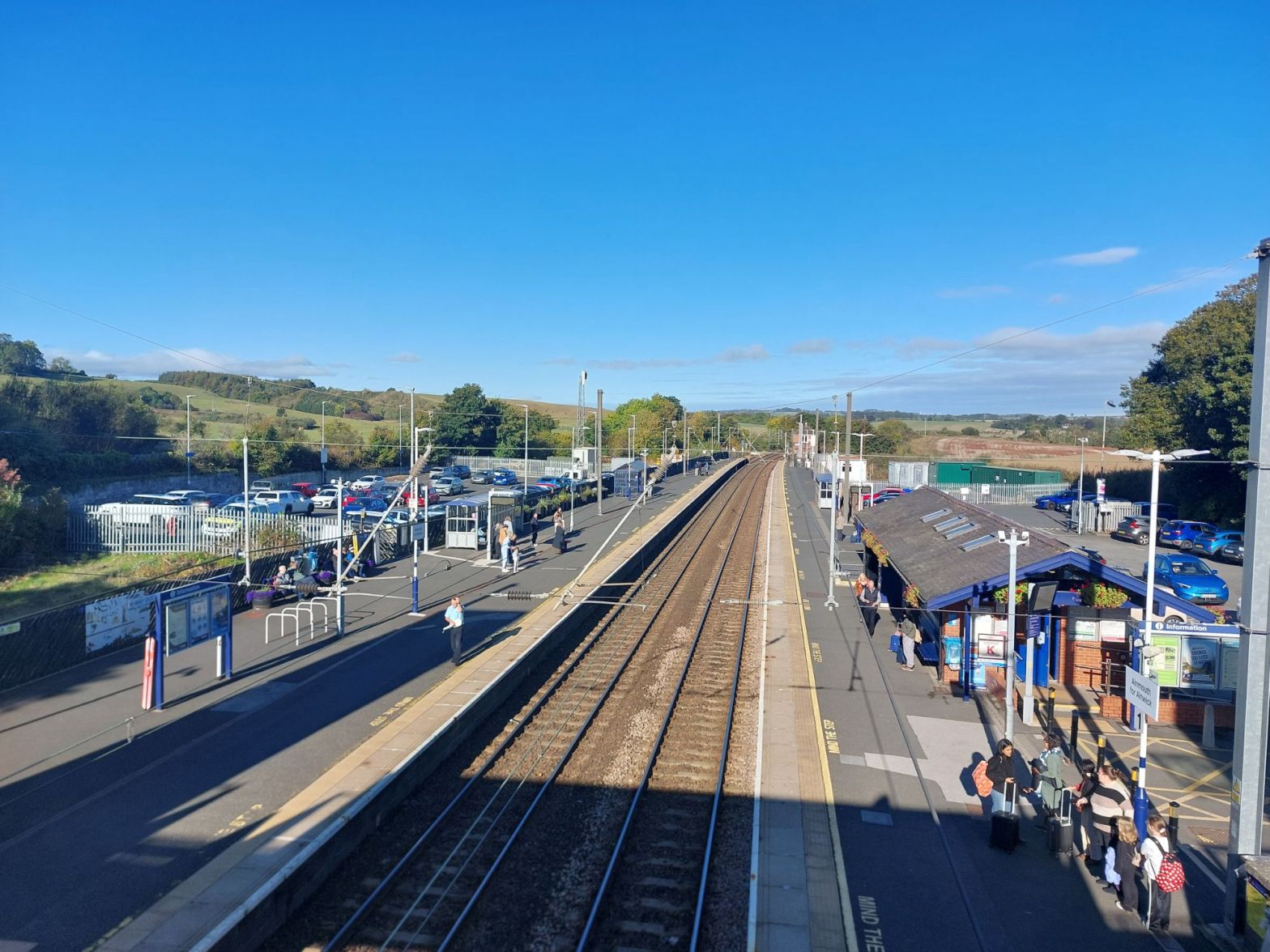
Looking at North Northumberland, the ECML corridor between Newcastle and Berwick Upon Tweed could reduce pressure in the A1, as would be a boost to businesses up and down that route if the services were boosted too.
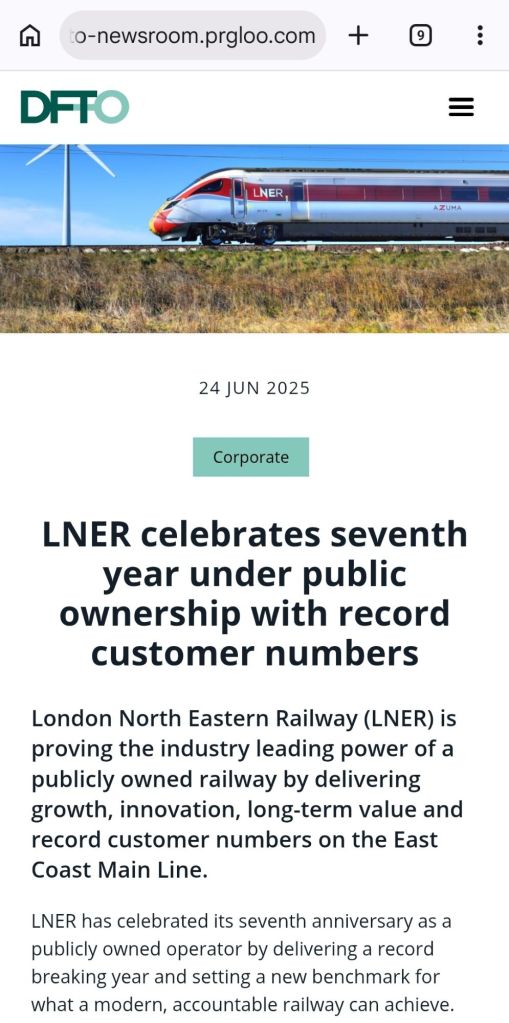
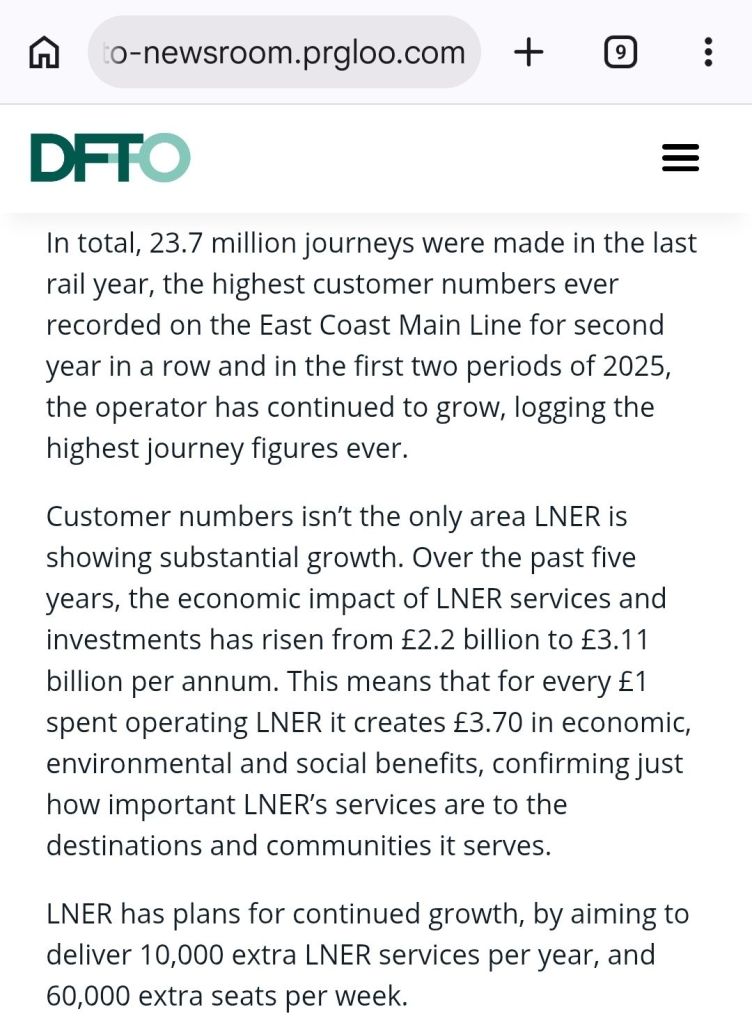
A programme of works on the ECML to improve capacity and line speeds would nearly certainly have a strong economic case; the article below from DFTO (the state run operator of an increasing number of rail ‘companies’) states that for every £1 spent operating LNER services, it has a wider positive economic impact of £3.70.
It is important to note that since June 2018, LNER has been a state-run operator; it isn’t a private company running for profit like LUMO, it is a nationalised operator, as is Transpennine Express, Northern, and many more, meaning all of these ‘companies’ are in reality are run from Whitehall and in full control of the Government.
That means that timetables, fares, and routes are within control of Government, as is the track itself through Network Rail, with the slow progress toward integration under GBR making progress, but a lot of the rail network is in hand already.
That means that altering stopping patterns and fare structures could be done quickly of the political will is there to do it. Therefore, setting ‘fixed fares’ for a Berwick to Newcastle journey is possible, and with train and track Government controlled, a new route such as the Northumberland Coast Loop could be implemented fairly quickly if desired.
Therefore, if the UK Government is to invest £500m+ into transport in Northumberland, it would be clearly be best spent on the rail network for the best return to the wider economy, and for Northumberland, would also reduce reliance on the road network by allowing more journeys to be viable by public transport.
In short, £1 invested into the rail network produces a higher return of between £1.53 for a route such as the Northumberland Line, and upto £3.70 for an operator like LNER.
Therefore, it can be seen that in a wider context, rail investment is economically profitable; an investment of £500m or so into Northumberland spent on rail could see a ‘profit’ or return in the region of £265m to £1,350m above costs across 60 years (based on a BCR of 1.53 to 3.70).
Surely that is too much of a difference to be overlooked?
Safety
There is need to improve safety on the A1, with several tragic fatal incidents in recent times, and many more serious and minor ones, and plenty of near-misses but here again a comparison with the A9 is interesting to make; average speed cameras which were controversially added to ‘The Killer A9’ have brought a major improvement on single carriageway sections of the A9 according to this article by Arnold Clark, and have also provided journey time improvements for most users of the road.
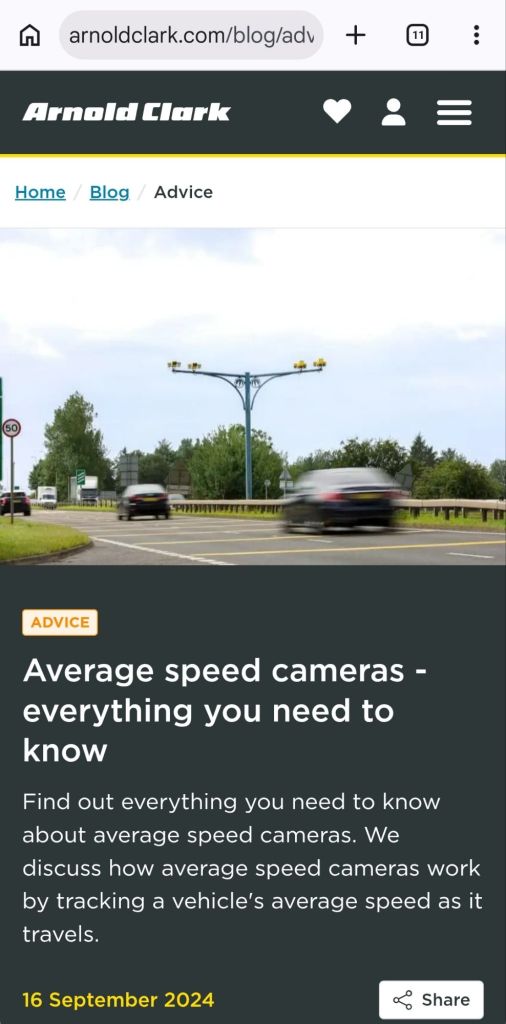
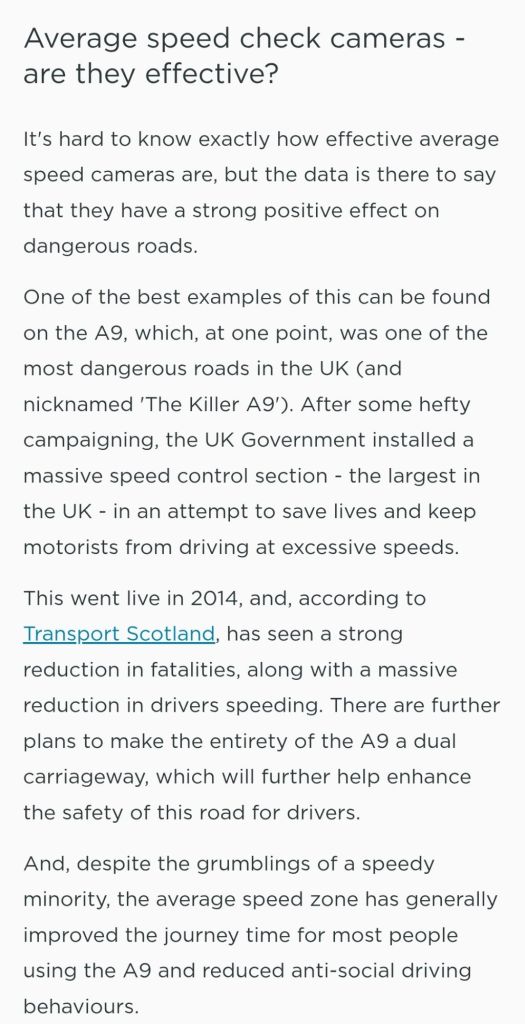
With such a strong body of evidence for such a low-cost and quickly implemented safety measure, why won’t NCC invest in Average Speed Cameras to improve the A1 today?
There is also the wider road network to consider too; many other roads in Northumberland have a dangerous safety record, such as the A697, the A69, the A189, and many more, and any road schemes that increase road capacity unfortunately leads directly to more driving, which in turn sadly leads to more incidents on the road, which is why the national figures for road casualties remains stubbornly high despite endless ‘road improvements’ around the UK.
A dual carriageway might be slightly safer than a single carriageway, but dualling is less safe than a motorway, which cannot have the lethal flat junctions, or central reservation gaps that a dualled A1 might still retain in a number of places, and more road traffic will also pour onto local roads leading to and from the A1, making those more dangerous in turn.
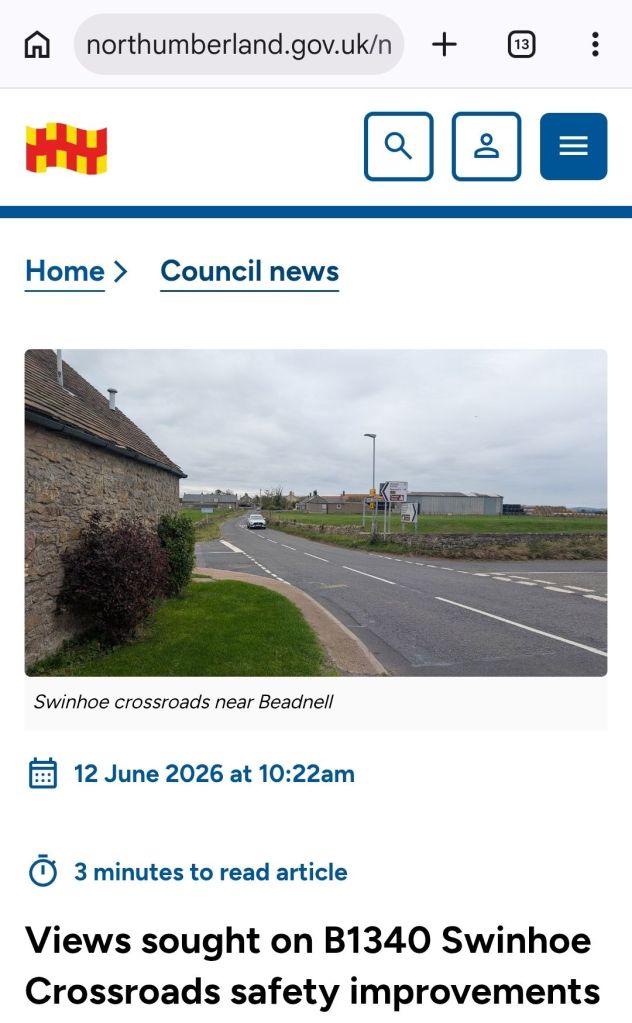
An example of the knock on effect of dualling would be Swinhoe Crossroads on the B1340 near Beadnell, a popular route for tourists; more A1 road traffic would almost certainly result in more traffic on the B1340, and would make this junction even more dangerous to use, amongst many others.
Dualling the A1 to accomodate even more road traffic, especially tourists in cars could also put even more pressure onto existing hotspots such as Seahouses, Bamburgh, and Lindisfarne that are already struggling to cope with existing traffic, let alone rising traffic from expansion of the A1.
In contrast, the last fatal passenger train crash in Northumberland occurred on the 7th May 1969, when the Aberdonian sleeper train headed north from Newcastle overturned on Morpeth Curve in the very early hours of the morning That was over 21,000 days ago at time of writing (7th November 2026). Whilst another serious incident occurred in 1984, that one miraculously resulted in only injuries.
Modal shift to rail away from road
If, however, the decision is taken to instead put long overdue investment into the ECML, it would make access to Northumberland easier by increasing rail services to stations, alongside faster journeys through it (schemes such as the Morpeth Diversion which was first tabled by Captain Henry Tyler almost 150 years ago in 1877), this would enable more ‘car-free’ tourism, where people can visit Northumberland without needing a car to get around; and has advantages in itself, a pub can sell more drinks to non-drivers than it can to someone with keys to a car, and for our hospitality industry, that would be a major bonus.
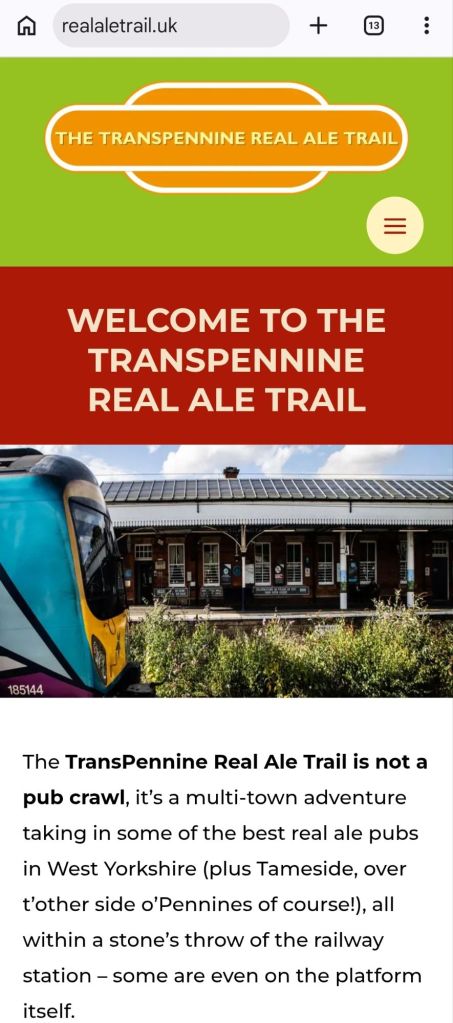
A great example of this is the Transpennine Real Ale Train, where stations are within close reach of a real ale destination (other alcoholic & soft drinks available), which could be done on the routes between Newcastle and Edinburgh (both the current ECML as well as the Northumberland Coast Loop).
Balanced investment better than everything into the A1.
In conclusion, this blog is not to say that the A1 doesn’t need some investment to make it safer; it clearly needs average speed cameras as an immediate first step, plus the longer, slower job of rebuilding junctions, and probably also reducing their overall number by consolidation of them into fewer, better laid out junctions over time, but dualling is clearly economically questionable, and may have a wider negative impact on road safety away from the route itself.
What is needed is a comparable study into what is needed on the ECML to improve its capacity, and how it serves local communities; there is clearly a sound economic case for further rail investment into the ECML between Newcastle and Edinburgh, it is a far safer mode of transport as a whole, reducing risks of road travel by replacing it with a viable alternative (especially new direct routes such as the Northumberland Coast Loop which makes more journeys by public transport viable, especially to, from, and within Northumberland trips from towns like Blyth, whereas through traffic ought to remain on the ECML).
I would call upon NCC Leader Glen Sanderson and Mayor Kim McGuinness to also make a case for continued investment in the rail network in Northumberland; the Northumberland Line has been a massive success that can certainly be the foundations for a bigger network in future, Newbiggin by the Sea PLUS the Northumberland Coast Loop could be a powerful combination.
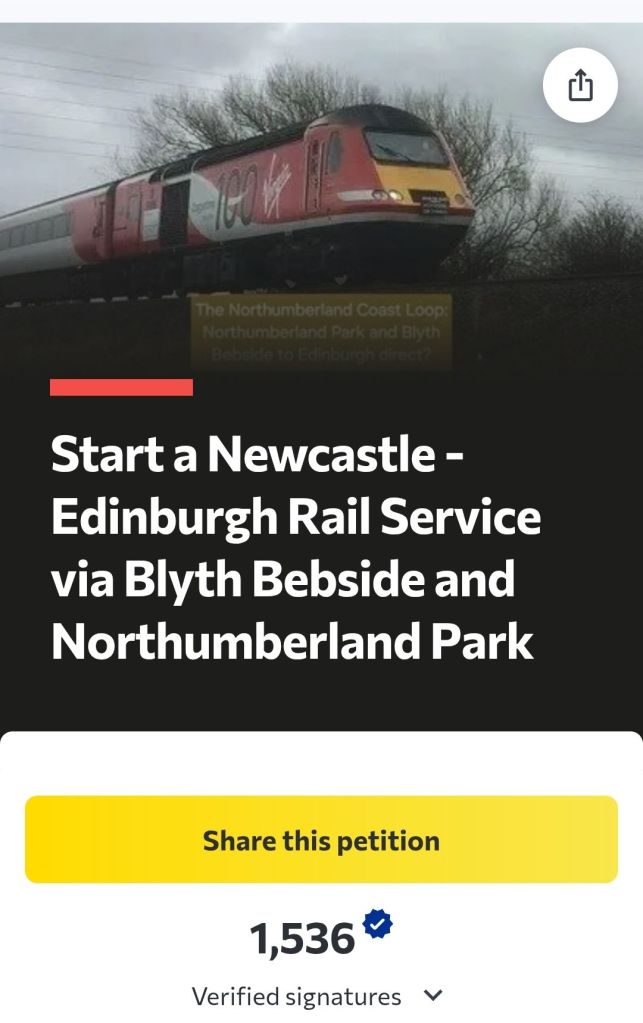
Please support my petition here; https://www.change.org/p/start-a-newcastle-edinburgh-rail-service-via-blyth-bebside-and-northumberland-park