On Wednesday 2nd September 2026, episode 319 of the long-running Railnatter series by rail engineer Gareth Dennis aired on YouTube (also available where you get your podcasts).
As ever, it was a very interesting episode, covering a brief history of the system from its origins as the Tyneside electrics running on third rail (a live power rail on the ground, a technology still used predominantly in SE England around London).
At around 14 minutes in, we come to the ‘big three’ brands currently, consisting of ‘Metro’, ‘Buses’, and ‘Ferry’, giving a strong regional identity based around the ‘Calvert‘ design language, which gives the Nexus operated system a very strong identity mostly on Tyneside and Wearside, but one hopefully due to roll out more broadly across Northumberland and Co. Durham soon too.
A short while later, we come to the full six ‘brands’ which include Metro, Buses, and Ferry mentioned before, alongside, ‘Cycle’, ‘Park’, and ‘Rail’.
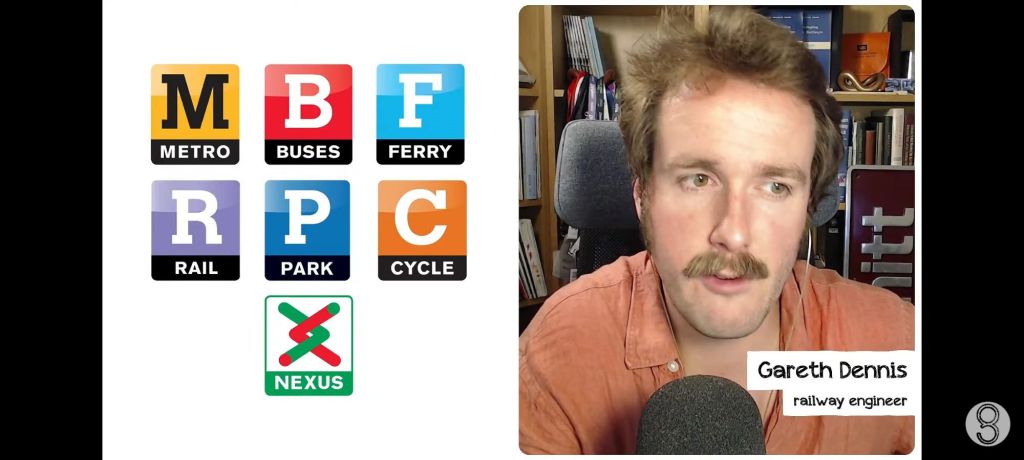
In the podcast, Gareth refers to the ‘Rail’ brand being redundant, and advocates that all rail based transport should be grouped under the ‘Metro’ identity, but on this I would disagree.
‘Metro’ branding for the 1500v DC network, and ‘Rail’ for mixed and higher speed networks.
To me as a lifelong Northumbrian, the ‘Metro’ branding is synonymous with the former Class 599 Metrocars, and now the Class 555 Stadler built replacements.
That, to me, is a clear identity for the Airport to South Hylton ‘Green Line’ and the St James to South Shields ‘Yellow Line’, we know what a Metro is going to look like and where it can, and cannot go, and for the unique 1500v DC system, that is a major limitation on expansions to the network.
However, converting existing Class 555’s to dual voltage AC/DC capability, could be a fix to this, which is explained further down.
The Northumberland Line: Should have been wired, but at 25kV AC not 1500v DC.
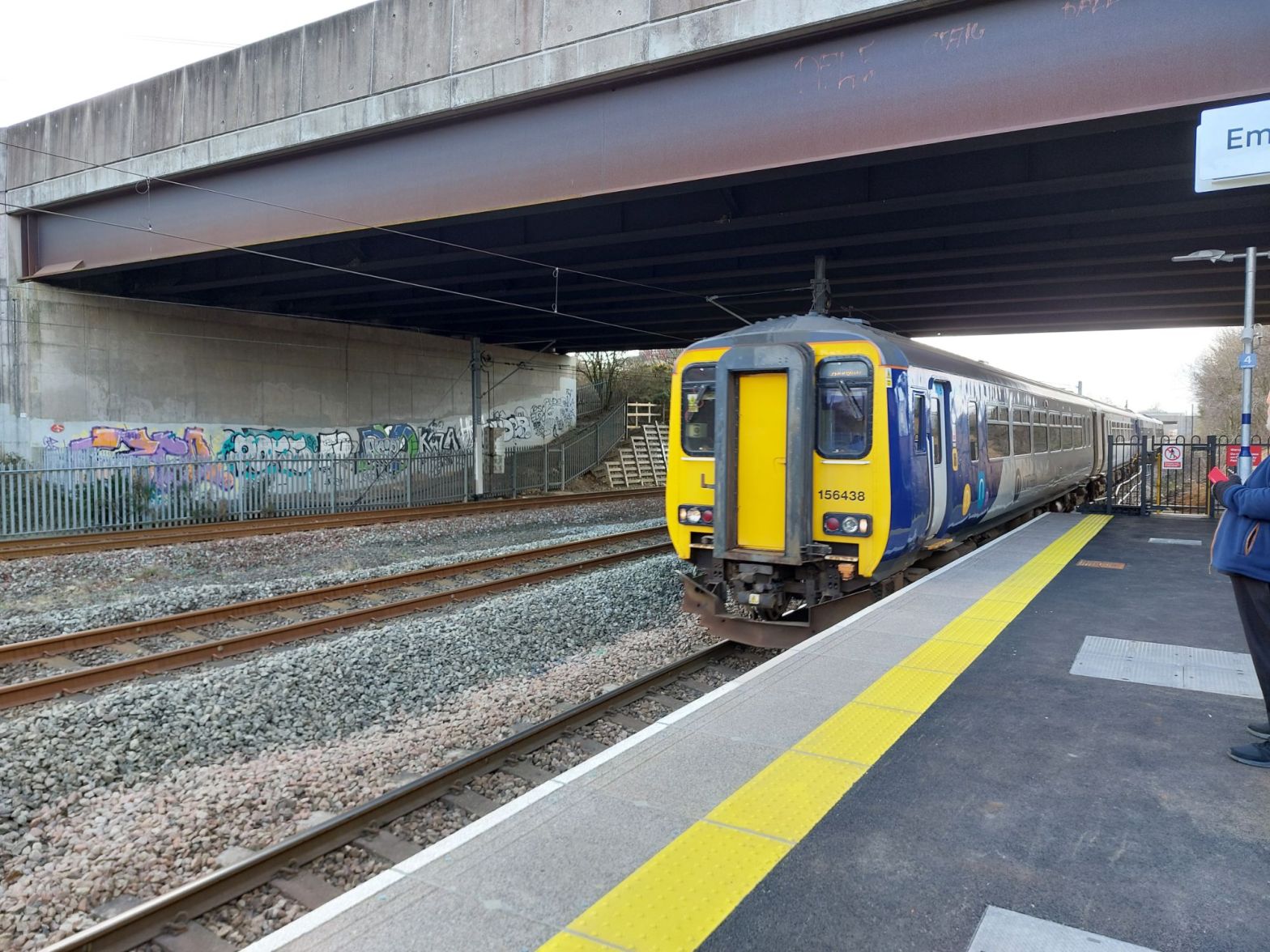
This is an important factor for the opening of the Northumberland Line; which was very much not the Metro in concept; it was developed as a conventional railway running between Newcastle Central station and Ashington, from opening in 2024 to the present using ageing diesel Sprinter units (Class 156 and 158 operated by Northern).
There was a clear logic to this, in that development of the route as a branch off the ‘Metro’ near Northumberland Park station up to Ashington, operated by Class 599 Metrocars/Class 555 Stadlers would have been substantially (around 10mins) slower overall as it would have run ‘all stops to Newcastle’ via South Gosforth and not the faster route via the ECML.
There is a trade-off with this in that as a Metro line it almost certainly would have crossed the Tyne, terminating somewhere like Pelaw, or running all the way to South Shields or South Hylton, and with the new Class 555 trains, would have meant four car trains as standard, not the often two-car Sprinters fielded by Northern.
The problem with that though is that wiring the line to Ashington with 1500v DC overheads would have locked in a non-standard electrical system on what would have been a shared Metro and Rail line like as on Pelaw to Sunderland, which would have complicated use of other electric trains on the line, especially given its potential for a diversionary route for the ECML (which this campaigns argues should be a regularly operated route to boost connectivity and maintain a broad driver knowledge base), with most mainline electrics running on 25kV AC overhead power.
Obviously the wires would have been set high enough for diesel trains to work underneath them so freight trains would have still run, but changing from 1500v DC to 25kV AC would incur significant costs if changed in future.
In my own view, the Northumberland Line (as well as the line linking Bedlington to Morpeth/Pegswood, and possibly the lines to Port of Blyth, and Lynemouth Power Station) should instead have been wired at 25kV AC (the same as the East Coast Main Line (ECML)); this would mean that electric units could have plied between Ashington and Newcastle, as well as offering a bigger fleet for working local services on routes such as the ECML between Newcastle and Berwick (both via Cramlington and via Blyth as proposed here), as well as from Newcastle southwards to Chester-Le-Street, Durham, and Darlington, with the option for a new station serving Team Valley en-route.
It is understandable that to keep costs down, electrification wasn’t considered, and in some ways may have been a good thing to have avoided 1500v DC ‘Metro’ wiring being installed, but the costs to go back in future, as well as the disruption caused will be signicant, and is a major drawback of not ‘going the whole hog’ the first time around.
There should also, again in my own view, be a push to wire other routes radiating out from Newcastle at 25kV AC standard, such as the Tyne Valley Line to Carlisle, and the Durham Coast Line to Sunderland then down to Teesside, though the latter does face an issue with the 1500v DC section between Sunderland and Pelaw, and potentially a large part of the Washington Extension too.
Wiring these routes at 25kV AC would allow for long-distance trains such as CrossCountry, Grand Central, and many more operators including railfreight to move to electric trains, and offer better performance as a result, and would make diversions easier too, not relying on bi-mode units leaving electric only trains stranded.
Rail branding for mainline services.
Used cleverly, the ‘Rail’ branding, if used across the North East, could an expansion of the Nexus network (possibly to be renamed ‘Angel Rail’?), and could be used to create a wider fixed fare network which has been so successful on the Northumberland Line, but would indicate a ‘shared system’ where other operators might operate alongside with different ticketing.
This could cover stations such as Morpeth, where local services, currently under Northern could be changed to ‘Angel Rail’ branded services; hopefully purple trains with the Calvert ‘R’ on the side similar to the Yellow with ‘M’ of the Class 555’s? Higher speed electric local trains for use on routes like the ECML would be ideal candidates for such branding.
The ‘Brian Johnson’ upgrade: dual voltage capability for the Class 555 fleet?
As mentioned earlier, the Pelaw to Sunderland stretch of the Durham Coast Line having existing overhead wires at 1500v DC is an obstacle to wiring the rest of it at 25kV AC; and will also be an issue if the Washington Extension becomes a shared Metro/Rail route too.
Therefore, I would put forward that conversion/upgrades of the Class 555 to dual voltage AC/DC capability (both 1500v DC and 25kV AC) is undertaken if possible.
That would allow for the Sunderland – Pelaw stretch to be adapted to 25kV AC, making it standardised and joined up to the rest of the national wired network, allowing almost standard electric train to run via Sunderland, but also would retain the 1500v DC system where Metro trains are the only ones running (such as through the tunnels under Newcastle which are too small for other trains).
A similar issue could arise on the Washington extension, where opening the southern part of the route towards Ferryhill has long been advocated for, and having 25kV AC throughout would be an advantage.
For a ‘Metro’ train, this would mean swapping between DC and AC electric depending if it was on exclusively Metro infastructure or shared ‘Rail’ respectively, but since the Sheffield Tram-trains (Class 399) has done this for years, there surely shouldn’t be too many obstacles to the Stadler Class 555 fleet managing it too?
Metro to MetroCentre
This AC/DC conversion of the Metro Class 555’s would also enable greater reach of them around the Tyneside rail network, for example, if even just a short section of the Tyne Valley Line was wired (say to Prudhoe), then Class 555’s could at last reach the MetroCentre, where ironically the Metro network has never reached!
Fittingly, such an option for would take these AC/DC units through Dunston, birthplace of the band AC/DC’s lead singer Brian Johnson in 1947.
There is further advantage in that then the Class 555’s could work into the main platforms at Newcastle Central Station, allowing new options for the Metro network as a whole; could a new junction between Manors and Heaton between Rail and Metro for example could be used to create a Tynemouth to Prudhoe route, or get Metro down into the Team Valley.
Metro to Morpeth: Mix of Rail and Metro on the Northumberland Line?
A final example could be taking an AC/DC capable Metro Class 555 to Morpeth, obviously it would be too slow to run along the ECML, but with the Northumberland Line wired at 25kV AC, it could make its way via a connecting junction at Northumberland Park then along the line to Bedlington and branch off through Choppington to terminate at a new platform in Morpeth (either adjacent to current station or elsewhere in/around Coopies Lane) where it would terminate, then reverse and head back towards Newcastle, possibly to Airport using the depot avoiding line to give east-west connections between the Green and Yellow lines without changing at South Gosforth.
Serving Cramlington
A key part of the rationale behind the the Northumberland Coast Loop campaign is to use the loop between Morpeth North Junction and Benton Junction as effectively an existing set of ECML slow lines, as this stretch of the ECML could be seen as being 3/4 track if the loop via Bedlington is seen as the ECML slow line through SE Northumberland and North Tyneside.
A fast, dedicated bus connection to Blyth Bebside via the A189 Spine Road could connect Cramlington easily to long distance rail services calling Blyth Bebside could be fairly easily done, especially if a direct slip road exiting the northbound A189 onto Errington Street, staying west of railway was to be built to bring buses directly into the station bus stop rather than the existing routes via Bebside Front Street. A clear connection this bus service would make would be to/from NSECH at Cramlington, and possibly also extended up to Wansbeck General Hospital in Ashington too.
Conclusions:
Top things that the Nexus network could do going forward:
1. Keep it Calvert: This existing brand is BRILLIANT, and should be widely rolled out across Bus and Rail services around the North East from Berwick to Darlington, and Haltwhistle to Hartlepool.
2. Electrify the railways at 25kV AC: Wire up routes like the Tyne Valley Line, Northumberland Line, and Durham Coast Line at the 25kV AC standard, and make sure the Washington Extension is either done to this standard, or could be converted easily. Leave the Metro only sections at 1500v DC.
3. Convert the Class 555 ‘Metro’ trains to dual voltage AC/DC capability: Convert the existing fleet to be able to operate on 25kV AC overhead power as well as 1500v DC; which enables conversion of Pelaw – Sunderland to 25kV AC, as well as allowing the Class 555 fleet to operate more widely, as electrification expands, with room to expand the fleet too.

