The Northumberland Coast Loop Petition is continuing to do well and gain signatures, now only 40 away from its next big target, please click the link above to view and hopefully join more than 500 others who have done so to date!
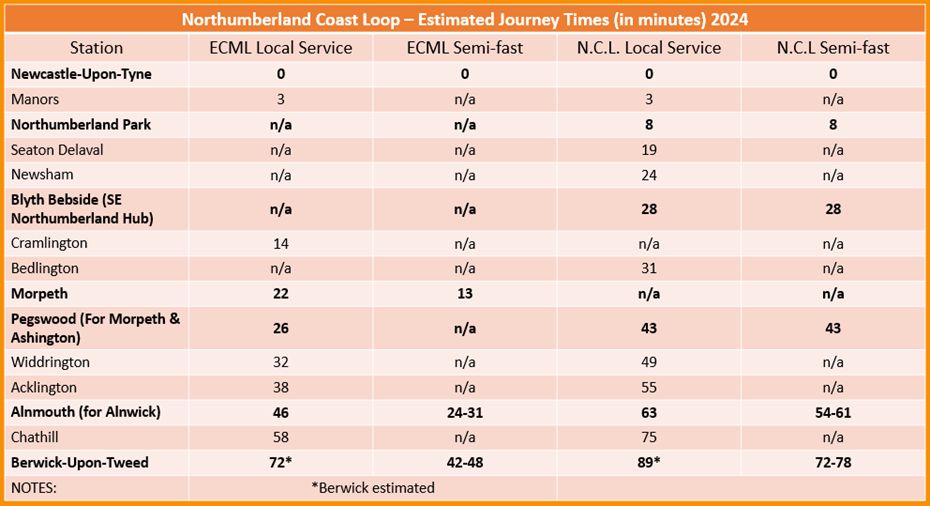
Our recent post about journey times via the existing East Coast Main Line (ECML) has captured many site visitors (about 60 each day) in the last few days using a very rudimentary table to show potential journey times, an updated table can be viewed below, which now shows a comparison between ECML local service (based on current ‘Chathill Flyer’, and semi-fast (served by multiple operators, hence range of times for Alnmouth & Berwick).
The route via Bedlington would only be, at worst case, about 35mins or so slower than ECML only services, meaning that journey times still remain highly competitive even with driving from stations such as Alnmouth and Berwick, and still much faster than buses, especially for journeys to/from SE Northumberland.
With such a relatively small time penalty incurred by this route, it could potentially be within a reasonable balance for an operator looking to extend services north of Newcastle to cities such as Edinburgh or Glasgow, but taking this route to serve the large communities of SE Northumberland more directly, and being non-abstractive from other operators?
For example, Grand Central service to/from Sunderland could be extended to Edinburgh or even Glasgow but use route via Bedlington to not abstract from other Newcastle – Edinburgh operators?
Grand Central could be a good fit for the N.C.L., as it would also give direct connectivity between the Northumberland and Durham Coast’s which is presently unserved by any operator, and could offer direct Teesside to Edinburgh connections too.
This is just one example, and any operator willing to serve the route would be welcomed.
As ever, if you have any comments or suggestions, please leave a comment here, or via our Social Media channels.
Please see below a journey times comparison for a local (all stations service), between the proposed Northumberland Coast Loop (N.C.L.) and the ‘Chathill Flyer’.
Times between trains are derived from the following timetables shown on Real Time Trains (RTT) as a publically accessible and free resource to fact check.
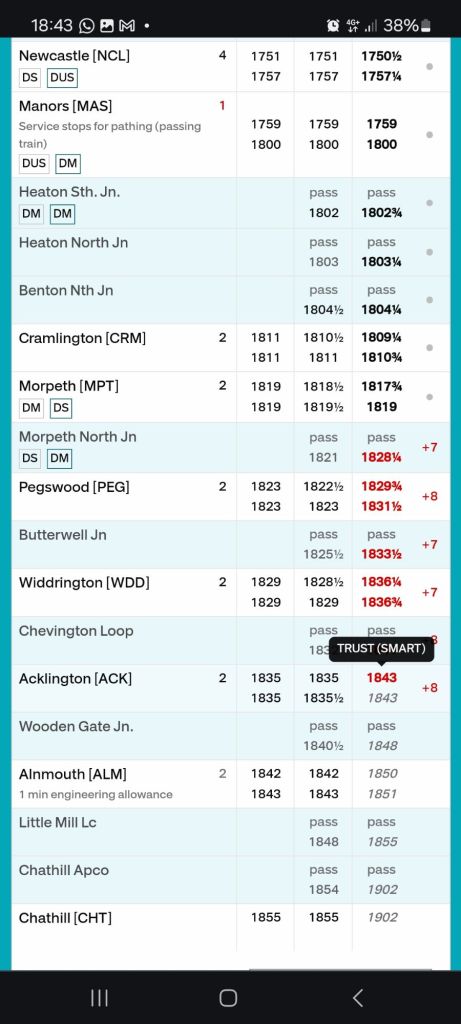
Newcastle to Chathill via Cramlington and Morpeth from the Friday evening timetable on RTT showing the Chathill service on 21.6.24.
Newcastle to Chathill ‘Chathill Flyer’ showing overall planned journey time of 58mins (21.6.24 shown with unfortunate delays showing)
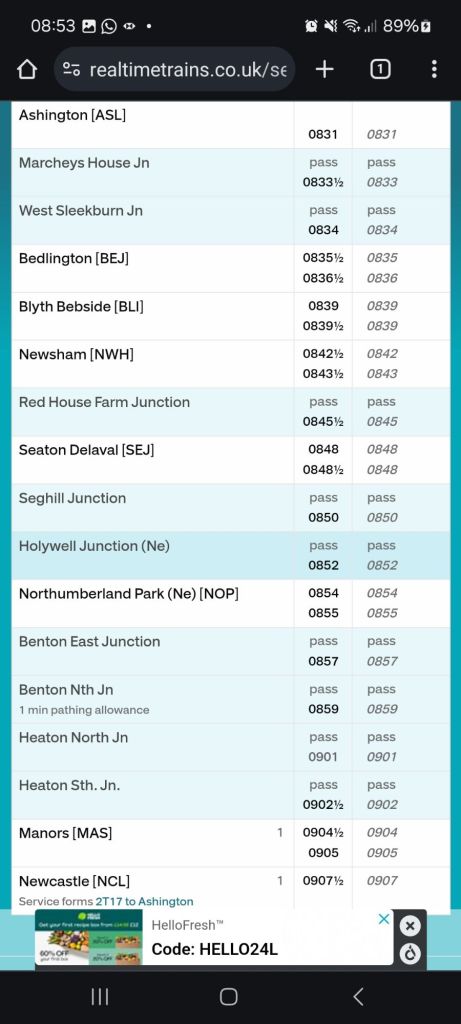
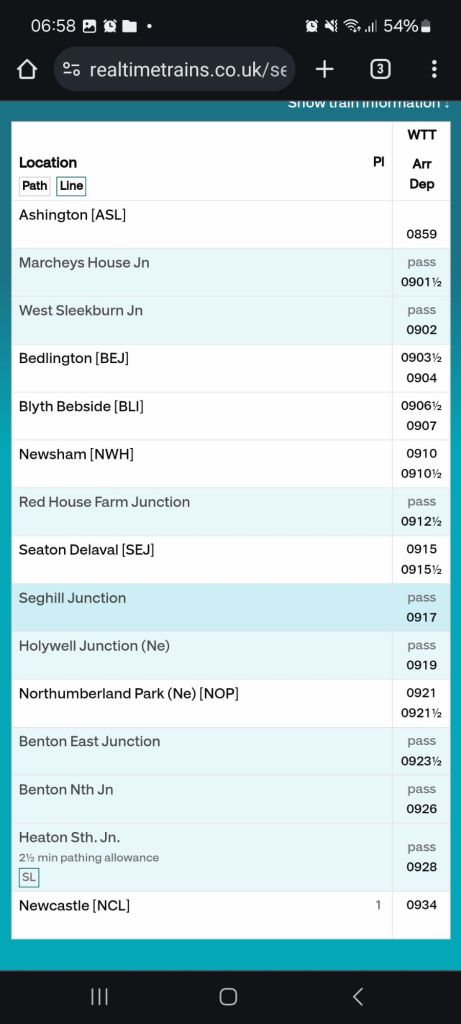
Newcastle to Bedlington from previous example timetable of the Northumberland Line sourced from RTT on 3.6.24. (Shown below)
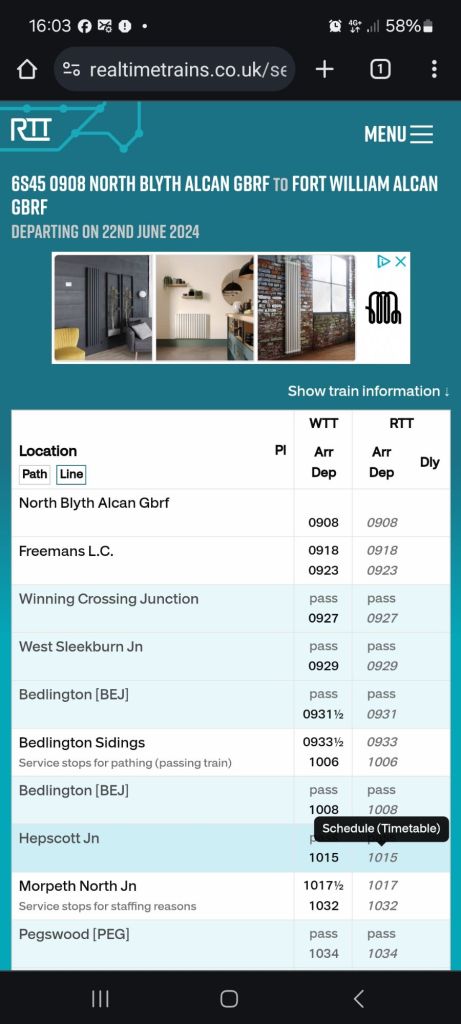
Freight timing between Bedlington (BEJ) and Pegswood (PEG) based on following timetable for North Blyth – Fort William ‘Alcan’ service minus dwell time at Coopies Lane for crew change (see below), timed at 12min assuming non-stop run.
North Blyth to Fort William ‘Alcan’ planned working on 22nd June 2024.
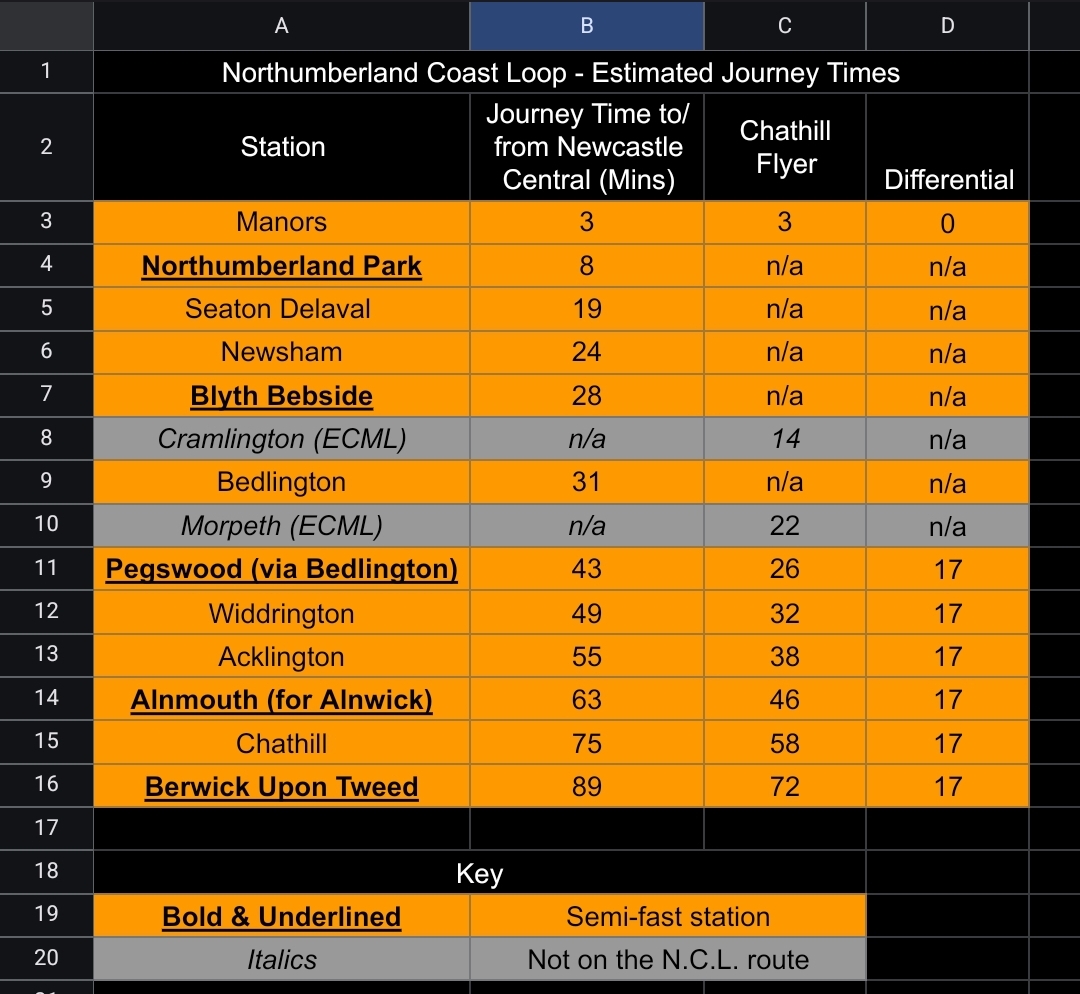
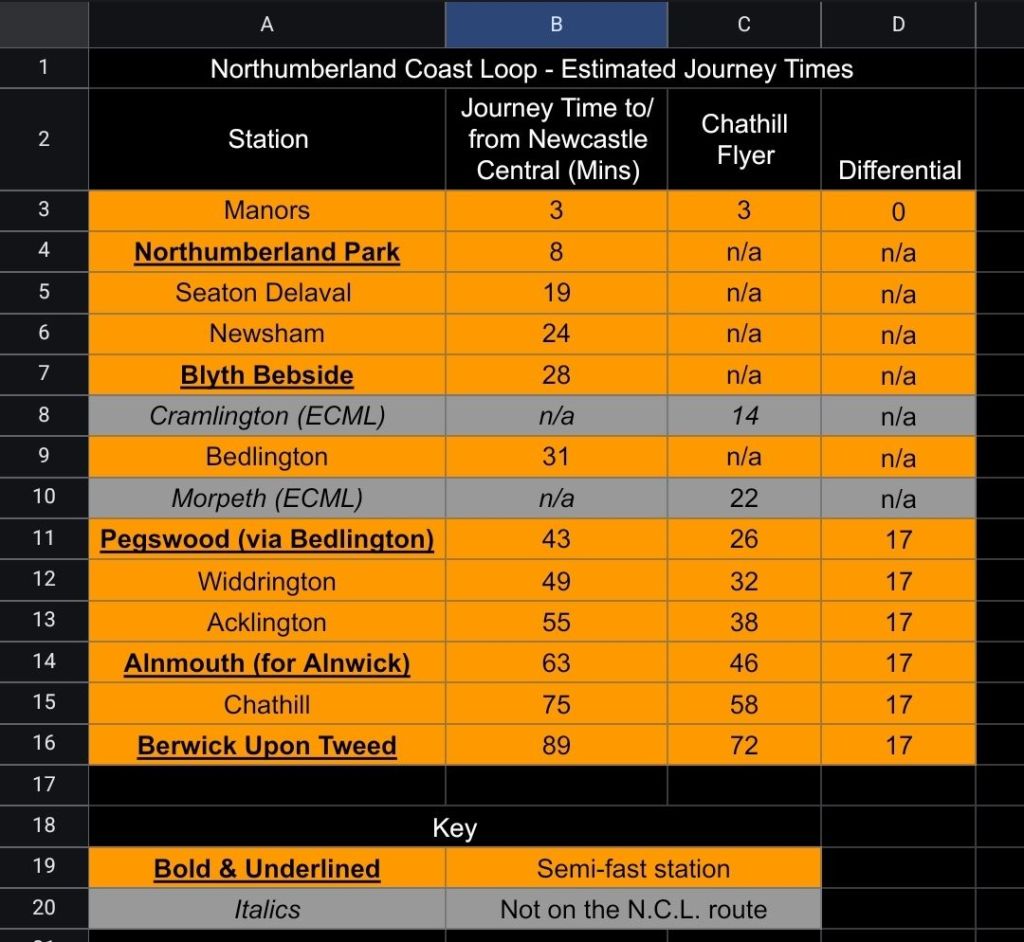
From the above data, plus an approximation of Chathill to Berwick Upon Tweed of 14mins, the following table was derived:
Estimated N.C.L. journey times compared to a ‘Chathill Flyer’, showing only 17mins additional journey time compared to ECML only route and calling at all stations.
Between Newcastle and Bedlington, the journey times would be identical or very close to ‘Northumberland Line’ journey times, with the trip between Bedlington and Pegswood on the Hepscott Line being estimated at a mere 12mins (assuming no stop at Morpeth North Junction), and from there identical timings along the ECML northwards to Berwick as any other local service.
This results in the N.C.L. route being slightly longer in overall journey times (longer and slower route due to more stops) but only by 17mins, at just 43 minutes.
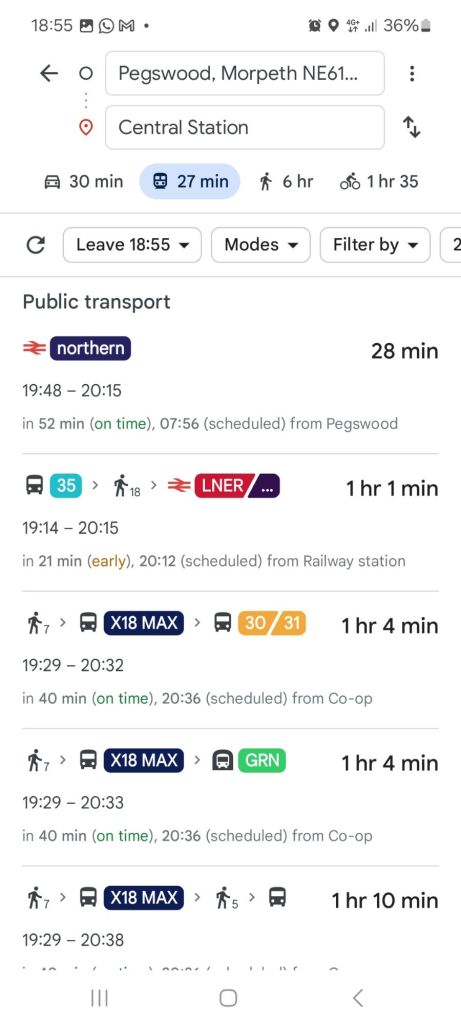
This still compares very favourably to other public transport, where aside from the Chathill Flyer, all other options to central station would take over an hour (as shown below), and even travelling by car to Central Station would take approx 30mins.
In conclusion, the Northumberland Coast Loop could be a valuable link between the densely populated SE Northumberland area and North Northumberland, with a few key journey times to pick out:
Blyth Bebside to Alnmouth (for Alnwick): 35mins.
Blyth Bebside to Berwick-Upon-Tweed: 61mins (1hr 1min).
Northumberland Park to Alnmouth (for Alnwick): 55mins
Northumberland Park to Berwick Upon Tweed: 81mins (1hr 21mins)
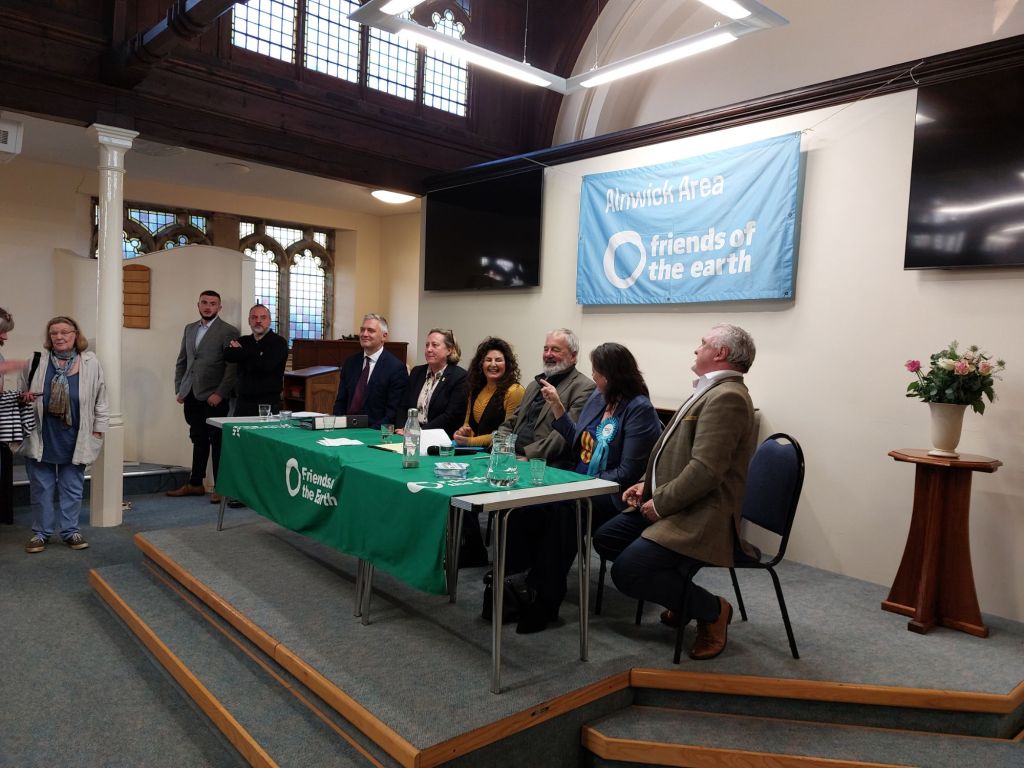
A very good meeting tonight with five of the North Northumberland MP candidates in attendance; David Smith for the Labour Party, Anne-Marie Trevelyan for the Conservatives, and the incumbent MP for Berwick Upon Tweed, Natalie Younes for the Liberal Democrats, Georgina Hill as an independent, and Jan Rosen for the Green Party.
There was an excellent selection of questions from the packed halls at St James’s Church Centre in Alnwick (two had to be run with audio link into the second due to strength of attendance).
Sadly there wasn’t an opportunity to raise the Northumberland Coast Loop directly with the candidates tonight, but the pledges to improve public transport, and making travel in North Northumberland more sustainable will certainly be a focus for any future hustings and for the successful candidate on 4th July.
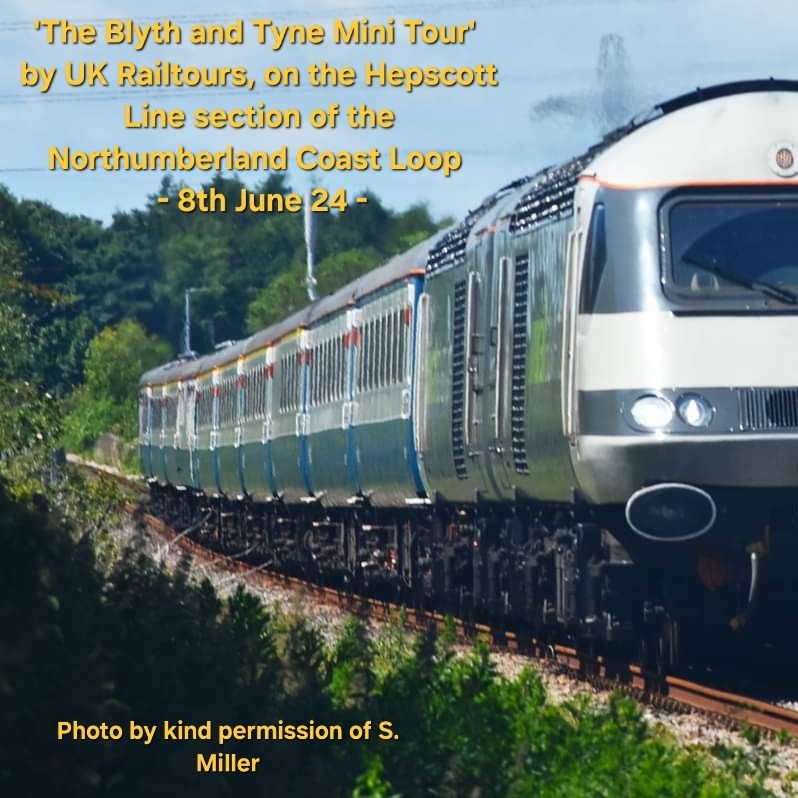
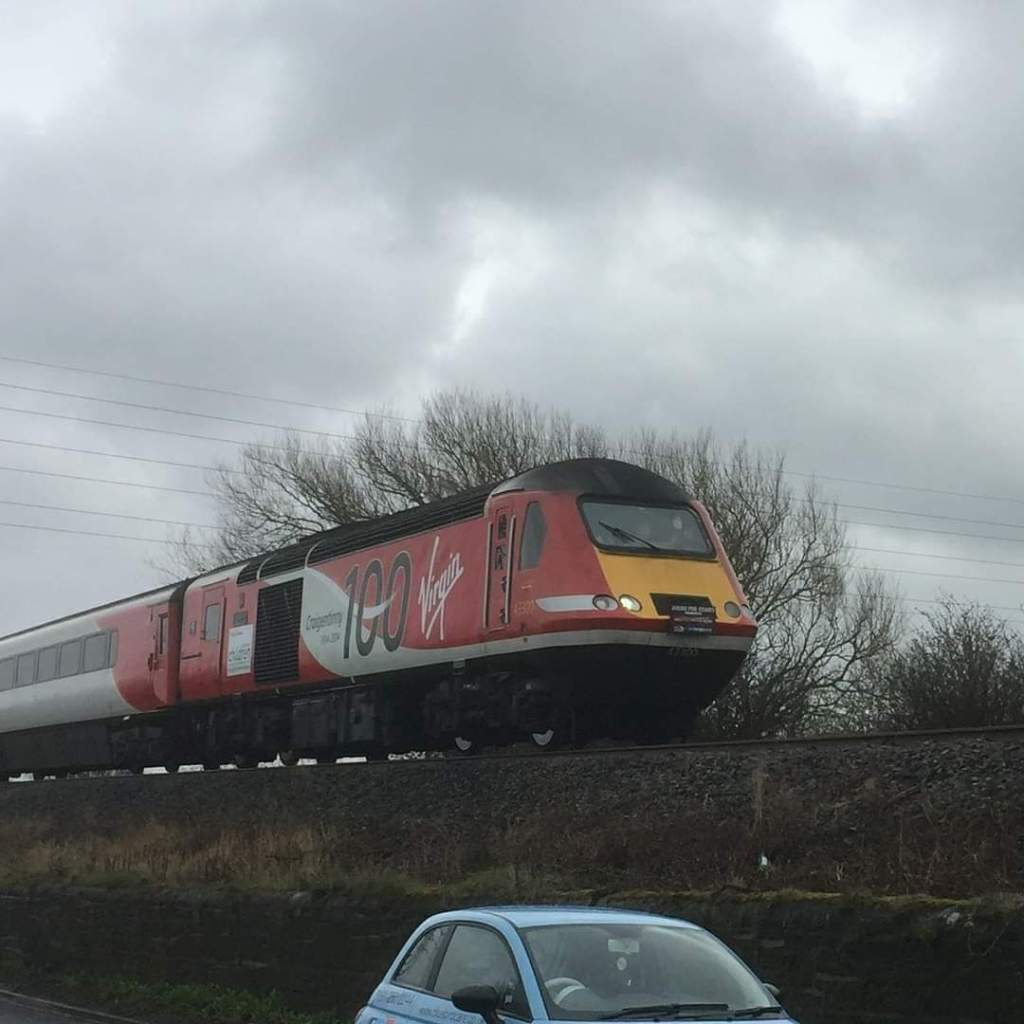
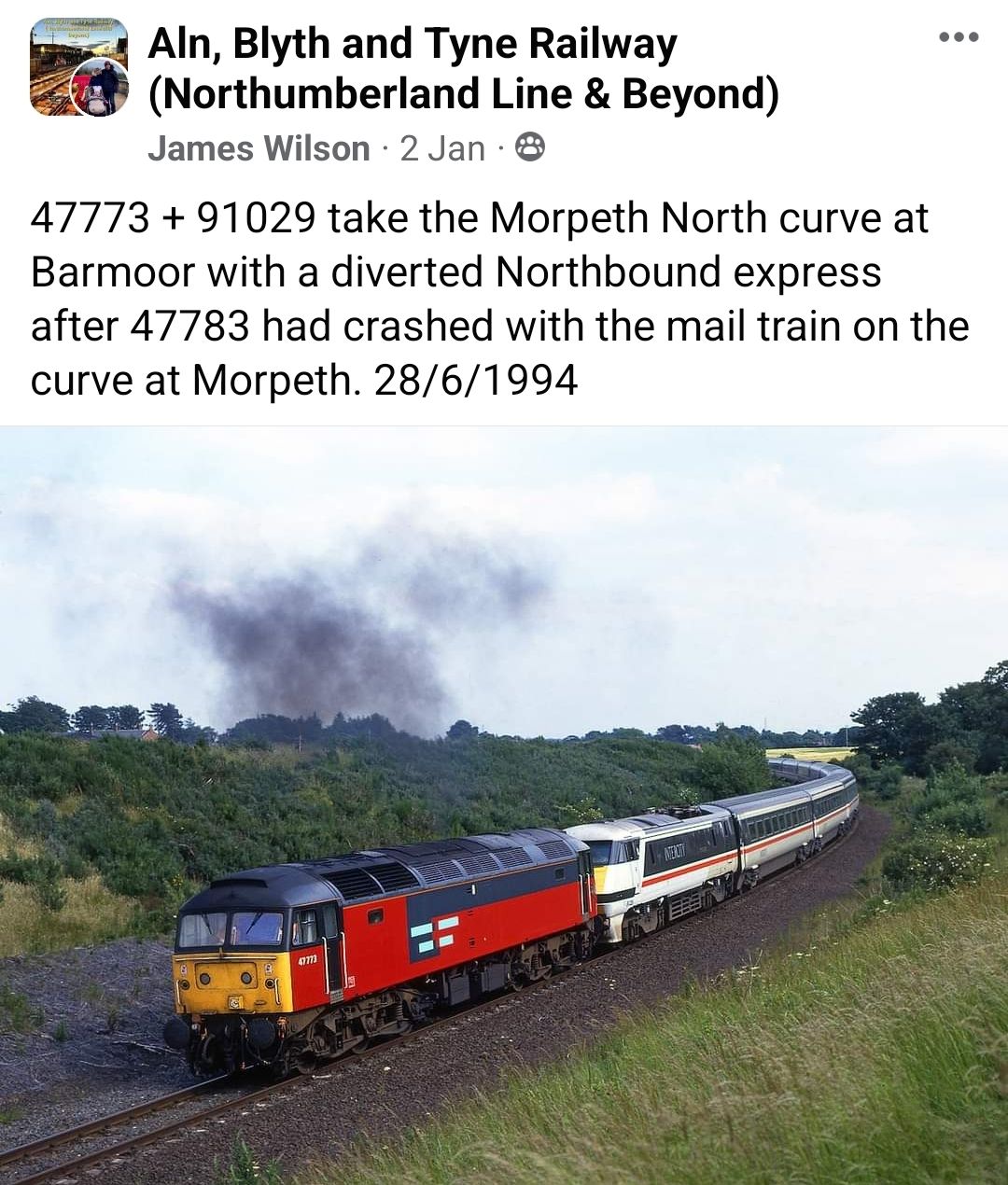
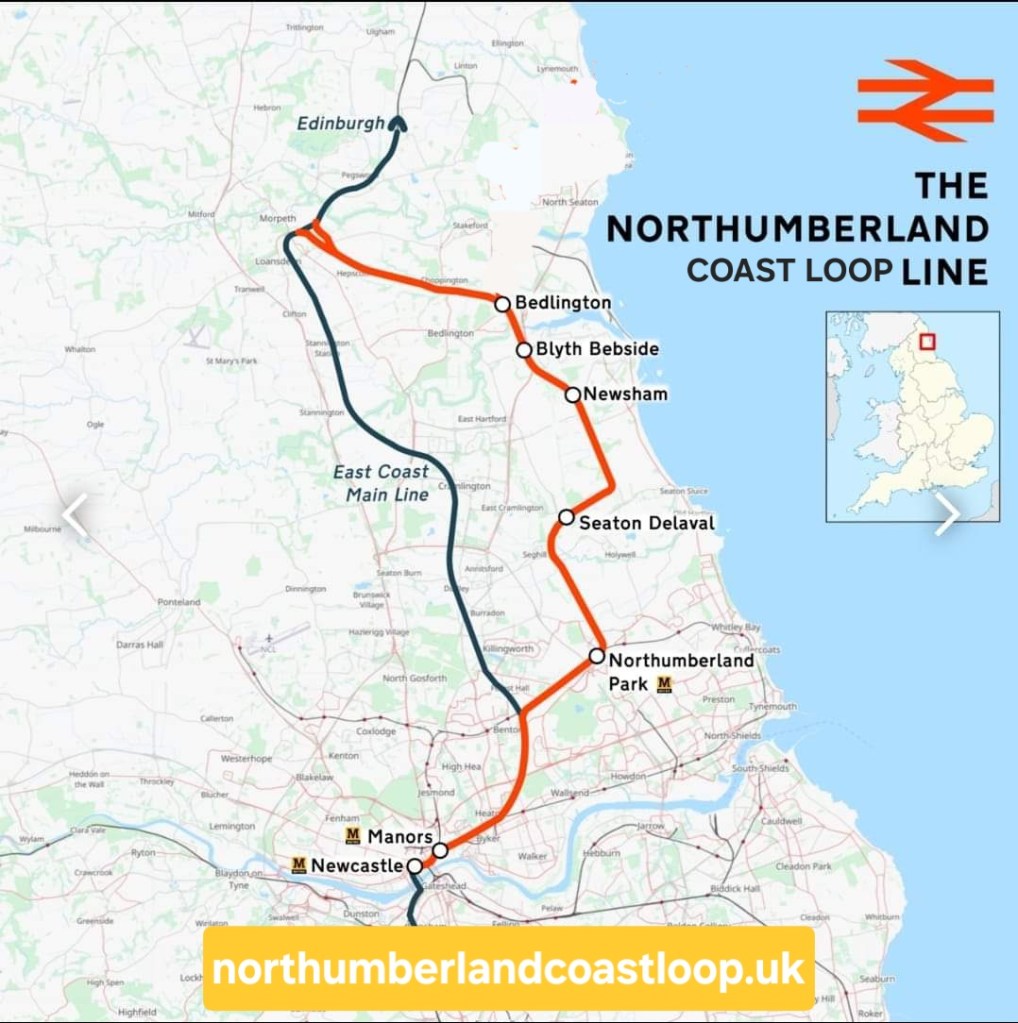
Map of the Northumberland Coast LoopRailtour on the Hepscott Line – 8.6.24Bound for Craigy Railtour – 2017 on the Hepscott LineDiverted mainline service 28.6.1994
If any of the candidates would like to reach out and contact, please feel free to do so!
Thank you to all of the petition supporters so far, and at time of writing there are have now been 538 signatures on the Northumberland Coast Loop petition.
Please take a look via the link above, and if you support the Northumberland Coast Loop, please add your signature!
A recent Chronicle article suggested that the recent investment by Blackstone into Cambois could be ploughed back into the local area to realise expansion of the Northumberland Line, in this case toward Newbiggin by the Sea.
While expansion to Newbiggin is welcomed, why not also consider the Northumberland Coast Loop (N.C.L.)?
With N.C.L. services in place, it would give the Blyth Estuary area (Bedlington, Cambois, and Blyth) better direct connections to/from North Northumberland, and Scotland.
Given that the now Blackstone owned Cambois site may bring a £10bn investment into the area; giving connections to cities such as Edinburgh, York and possibly even London could pay dividends.
The route would utilise the existing East Coast Main Line (ECML), and Northumberland Lines, joined by the existing Hepscott Line, & Morpeth North Curve to create the loop route.
It doesn’t require new track or even platforms to make happen (it would use existing ECML stations and those being built for the Northumberland Line), a few million invested into this route could bring hundreds of millions more investment along, as sites with easy connectivity around the UK tend to fare better than those without such connectivity.
Invest East Coast for example puts one third of the UK population and 47% of the UK’s economic output within 20mins of ECML stations, which typically seen as a single line of route between Edinburgh Waverley and Kings Cross; but the West Coast Main Line is more a ‘braided route’ with same start and end points but multiple options on the way. The N.C.L. could be part of a greater braiding of the ECML and bring its benefits to other places; going between Newcastle and Edinburgh could be done via two routes, one via Cramlington, but the other via Blyth, the latter slightly slower but beside a major industrial and commercial area and with major population centres too.
Importantly, it isn’t just the Blackstone site that would benefit but the wider SE Northumberland, and North Tyneside areas, which are home to many national and multinational companies, to whom easier direct connections by rail to far-flung part s of the UK could be a positive advantage. For example boosting the connectivity of Cobalt Business Park will in turn boost its competitiveness.
Make use of this existing asset to the area first?
The ‘Blyth and Tyne Mini Tour’ by UK Railtours was an excellent trip (would highly recommend using their services as they were a pleasure to deal with right from booking, through to leaving the train).
As my travel was aboard the train itself, giving an opportunity for videos of the route between Bedlington and Morpeth, I unfortunately couldn’t take any external shots in the area around Morpeth or Bedlington.
However, fortunately by the kind permission of the photographer, Steve Miller has allowed for his photo above to be used. This image shows just how close the Northumberland Coast Loop could be to reality; the route is already entirely in place to link Bedlington to Pegswood (not traversed by this railtour) and thus the ‘missing link’ between the soon to open Northumberland Line and the ECML headed north isn’t really missing at all.
Petition update: In just the last few days, the rate of signatures being added to the Northumberland Coast Loop petition has exploded, with current (22:20 on 11th June 24) figures being at 529, with Change.org stats giving 89 signatories just this week.
If you haven’t already signed, please do so using the link below 👇
The support for the idea has been phenomenal so far, and hopefully will continue to grow as time goes on!
It would be welcome news indeed if bodies such as local rail user groups, Northumberland County Council, North Tyneside Council, as well as Parish/Town Councils and the respective local councillors, County Councillors, and newly elected MP’s come 4th July 2024 could support this idea, and hopefully everyone will see this route become one of the next additions to the North East’s public transport improvements?
If you haven’t already, please sign the petition (link at bottom of this post), and please ask your local councillors, county councillors and your prospective MP candidates if you live in the area to back the Northumberland Coast Loop.
Yesterday, the 8th June 2024, UK Railtours operated the ‘Blyth and Tyne Mini Tour’ from Newcastle to Bedlington Sidings and return; this gave an excellent opportunity to ride along the Hepscott Line for the first time and take some footage of this route.
Sitting in the facing direction from Bedlington gave the clearest view of the line, and starting at Bedlington Station, the video below shows most of the route (the exception being the Morpeth North Curve with no planned charters over it as far as is known), but it does show the junction away from the Morpeth – Bedlington line, and the clear opportunity this route could present for connectivity to, from, and within Northumberland and North Tyneside.
With a journey time of about 11mins between Bedlington and Morpeth, this would suggest that Bedlington to Pegswood could be achieved in approximately 15mins, and from there would operate at similar speeds to existing ECML services (either as limited stop ‘semi-fast’ services calling at specific stations or ‘local’ trains calling at most/all stations).
This would be a huge advantage over connecting via Newcastle, which from Bedlington via Northumberland Line service to Newcastle would take 30/31 mins, approx 10mins allowance for change of train and then approx 16 mins to be passing through Pegswood, a total of 57mins.
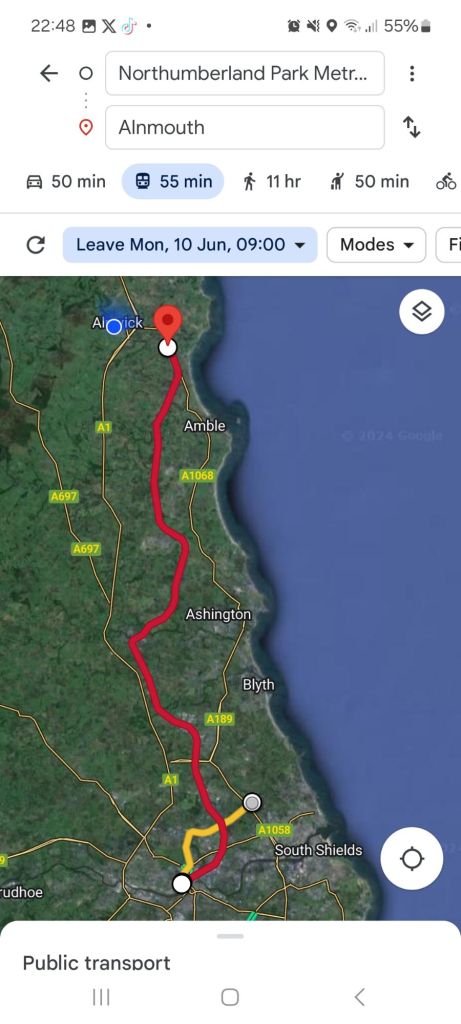
Using an example of Northumberland Park to Alnmouth (for Alnwick) by existing public transport shows clearly ‘going south to head north’, and the routes crossing over one another is shown.
A more direct rail route, via Hepscott would not only resolve the issue of going the wrong way during the trip, but could also shorten it by approximately 9 minutes to approximately just 46 minutes rather than the present 55 mins.
Bedlington to Pegswood direct would be approximately 40 minutes faster than going via Newcastle.
Typical ‘Northumberland Line’ timetable (1.7.24), showing 30min journey time from Bedlington to Newcastle.Typical ECML service (1 of 2)Typical ECML service (2 of 2) showing approx 16min journey time between Newcastle and Pegswood.
This would give the following approximate timings:
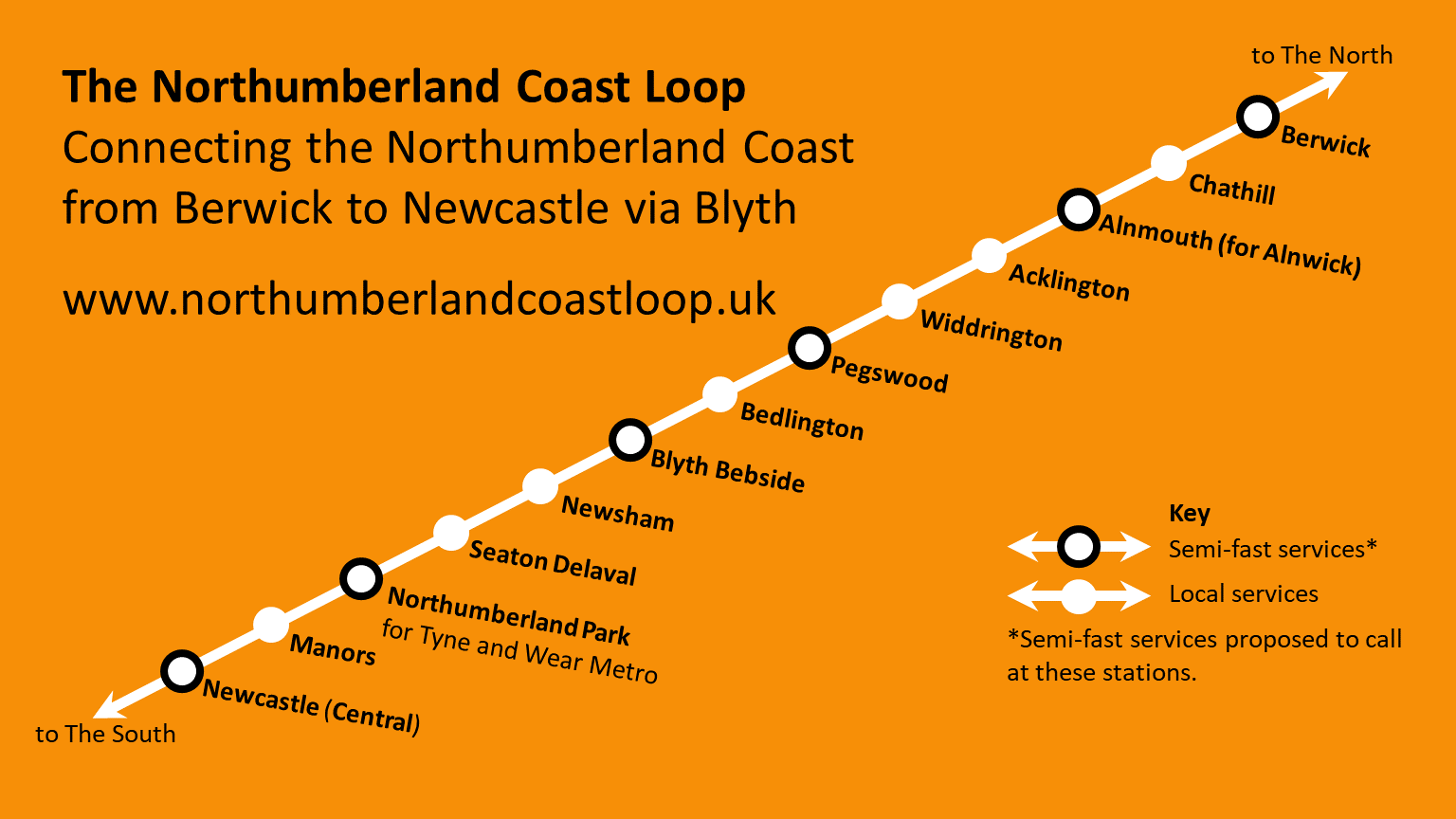
To/FromPegswoodvia Bedlington (local service & semi-fast* (Blyth Bebside & Northumberland Park only):
Bedlington – c.15mins (From Pegswood *estimated*)
*Blyth Bebside – c.18mins (3mins from Bedlington)
Newsham – c.22mins (7mins from Bedlington)
Seaton Delaval – c.27mins (12mins from Bedlington)
*Northumberland Park – c.32mins (17mins from Bedlington)
Newcastle Central – c.45mins (30mins from Bedlington)
The above timings are quite competitive to car journey times when compared on a station to station comparison, and are far faster than many existing public transport options.
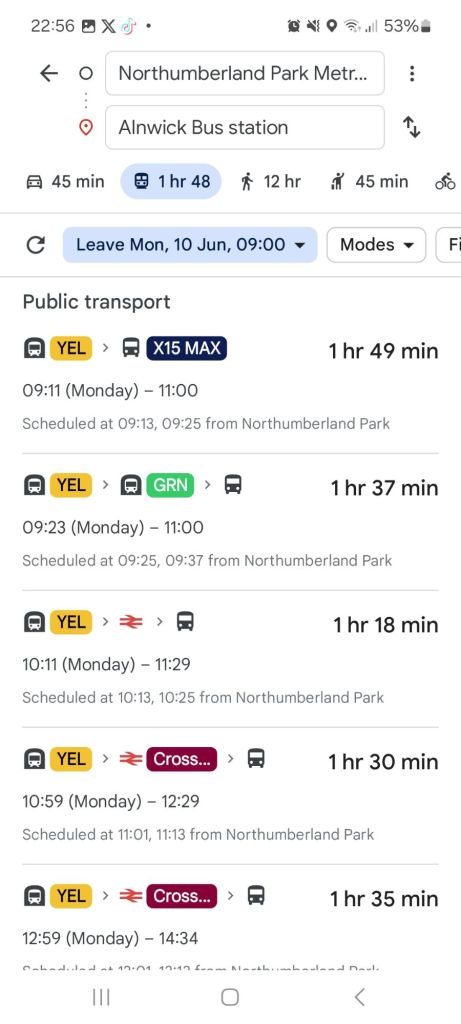
Public transport timings between Northumberland Park and Alnwick Bus Station on Monday 10th June 2024 leaving after 09:00.
As can be seen from above image of public transport connections from Northumberland Park to Alnwick Bus Station, offering a direct rail service between N’land Park and Alnmouth could make journeys both more convenient travel (fewer changes), alongside the reduction of journey times (both in more direct routing, and not having changeover time at Newcastle Central).
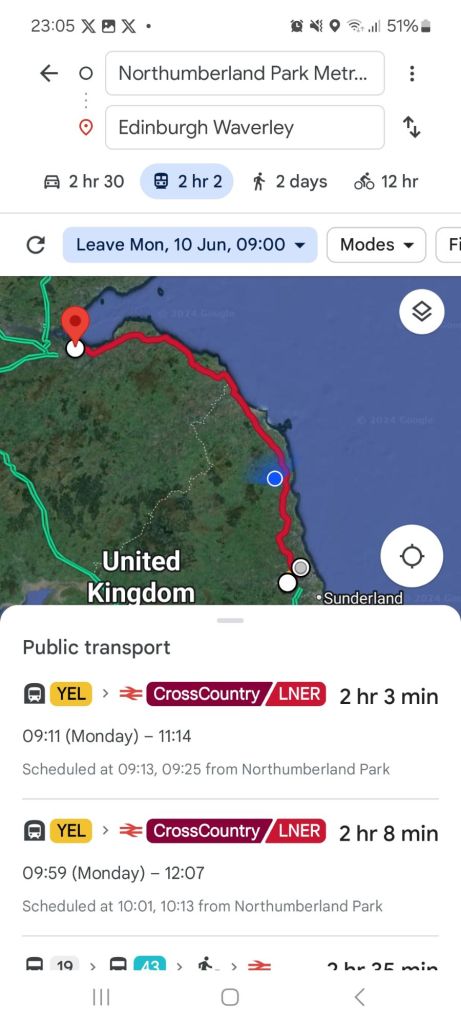
Northumberland Park to Edinburgh Waverley on Monday 10th June 2024 leaving at 09:00
Assuming that long distance, semi-fast trains via the Northumberland Coast Loop would go on to form a longer Newcastle to Edinburgh (via Bedlington) diagram, there could still be an advantage from Blyth Bebside and Northumberland Park, with shorter overall journey times and avoiding changing from T&W Metro to mainline rail at Central Station; instead using a smaller station, which may be more convenient and easier for those with luggage/young children etc (encumbered travellers) to connect to services.
Thank you to all who’ve supported the campaign, and a few quick updates thus far!
Petition: Growing fast and just 30 signatures away from its next major milestone, please take a look here at the Northumberland Coast Loop Petition.
Website: Good level of traffic, with nearly 2,500 visitors since launch at the start of the year.
Social Media: Facebook page is growing well with 268 likes and 440 followers as of today. Twitter (aka ‘X’) has 84 followers so far.
June Meet-up: The ‘Natter at Newcastle on 8th June 2024’ will hopefully offer an opportunity for supporters to meet face to face with myself and look forwards to doing more in coming months.
General Election 2024: Given the rules about campaigning ahead of an election, reaching out to politicians will be postponed until after the general election on 4th July and the MP’s either new or re-elected will be contacted after that date, alongside local councillors along the line of route and the new North East Mayor Kim McGuinness too.
Thanks as ever for your support and please share this post as well as any of our social media posts.
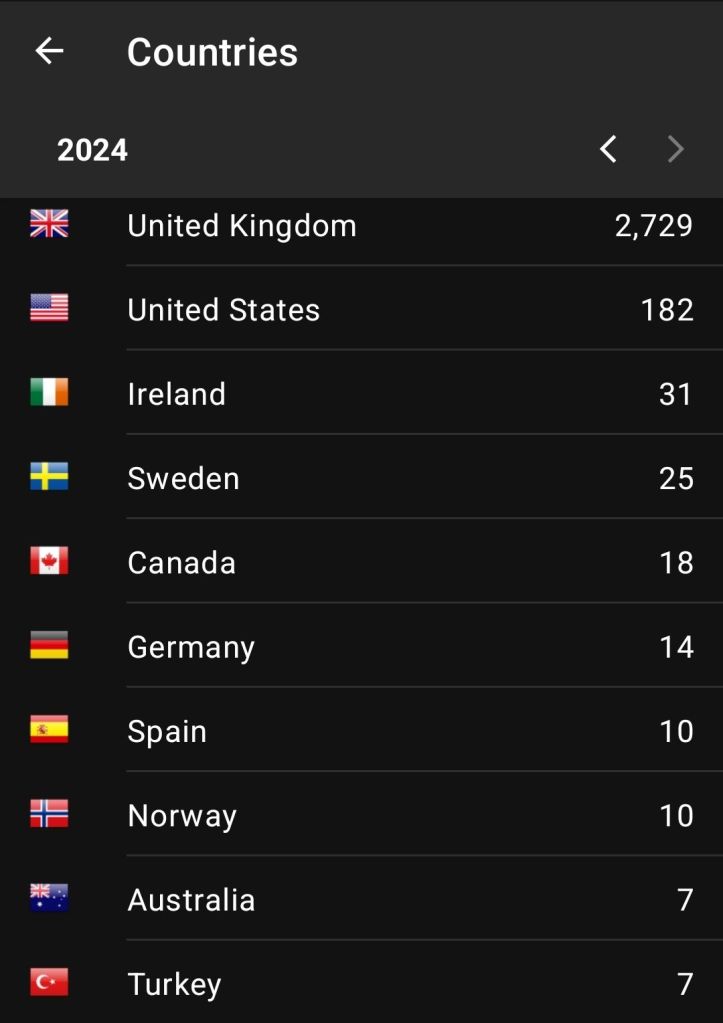
A little side interest as the campaign for the Northumberland Coast Loop continues is the website statistics, provided by WordPress, which can show a breakdown by nation.
Unsurprisingly as a UK campaign this shows at the top, with the vast majority of all visits, but the following nine nations were a little more unexpected!
In 2nd and 3rd places respectively is the USA and Ireland, as English speaking nations, alongside Canada (5th), and Austrailia (9th). This might be expats from the region living abroad but it would be interesting to know (please contact via the socials) or as a comment below.
Sweden, Germany, Spain, Norway and Turkey in 4th, 6th, 7th, 8th and 10th places respectively is obviously welcomed but very unexpected! It would be great to hear from anyone from these nations what the interest is in the campaign!





 The Northumberland Coast Loop