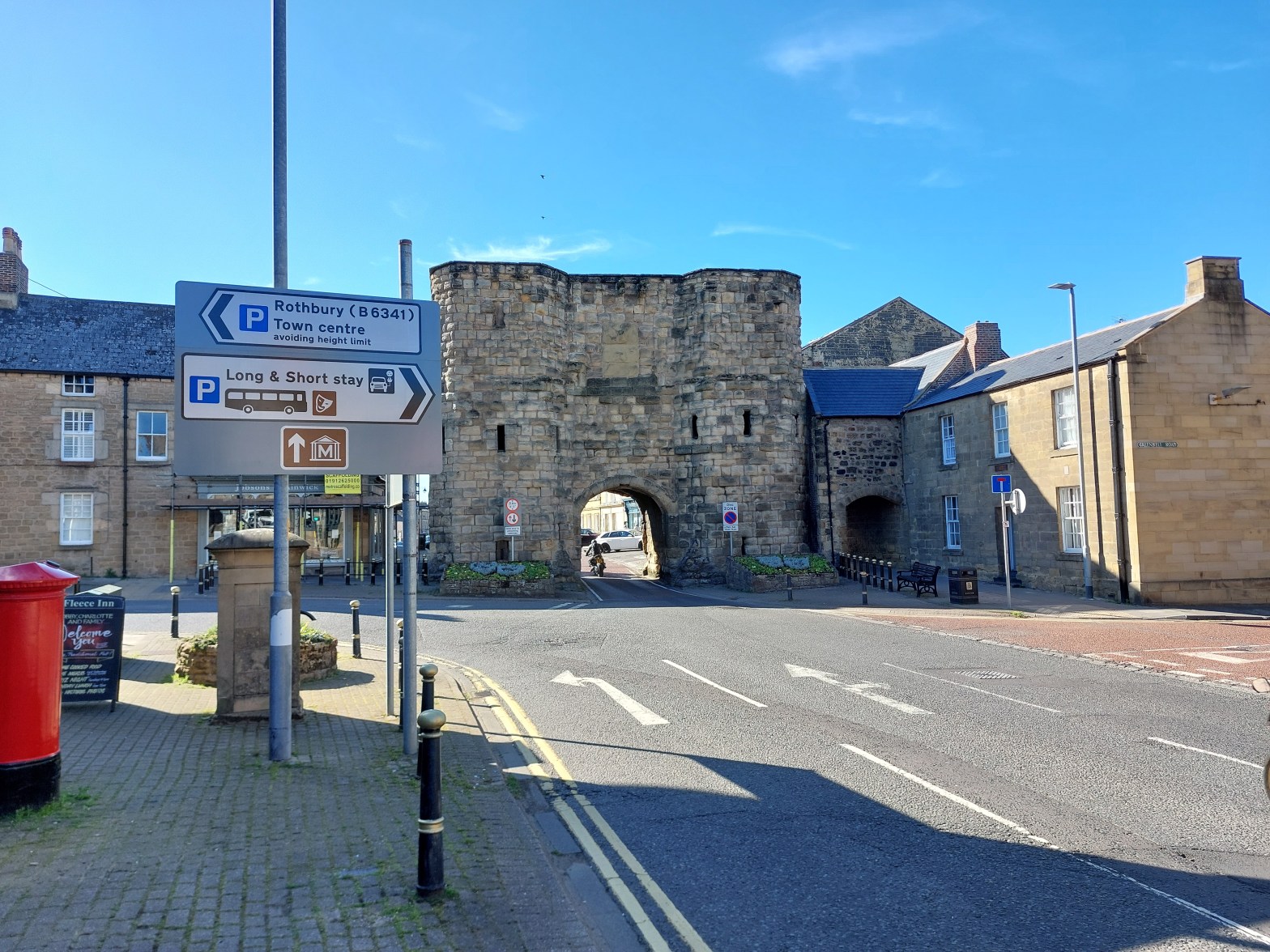
This is a circular walk in and around Alnwick, Northumberland, which takes in large parts of the historic town centre, as well as views of landmark sites such as Alnwick Castle. This route is largely sticking to public roads/rights of way, and so will not have opening/closing times, but the route is intended to be completed in daylight and during relatively good weather. No responsibility is taken for the route, it is merely a suggested walk, dogs are welcome, but on the Pastures sometimes cattle are grazing and dogs should be kept on a lead.
In this walk are places with links to two famous shipwrecks, some deadly bottles, the first ‘bloodsucker’ in England, and a stone lion that reputedly wags its tail.
Safety
Safety: Please ensure you are wearing sturdy footwear and weather appropriate clothing all is outdoors, with some areas of grass which may be uneven and slippery after wet weather, and adjacent to the River Aln so please be aware of flood potential after heavy rainfall.
Start: Tenantry Column
This historic Tenantry Column in Alnwick marks the starting location for the description of this walk, but as a circular route, could indeed be started/ended at any chosen point, and indeed many other potential walks lead off from this one with plenty to explore!
This area is very well served by bus links, with several services linking directly to and from Newcastle, as well as Alnmouth station on the East Coast Main Line, making it easy for car-free access.
This column was erected in 1816 by tenants of Hugh Percy, 2nd Duke of Northumberland, and is 83 feet (25m) in height, topped by a lion en passant (striding), with the distinctive straight tail, and four white lions at the base.
The column is situated over the road from the well known Barter Books secondhand bookshop, set up in the historic Alnwick Station, used for rail services between Alnwick and the East Coast Main Line at Alnmouth between September 1887 and January 1968, itself well worth a visit, and marks the first digression from the circular walk, of which there are likely to be many.
Down the hill to the War Memorial
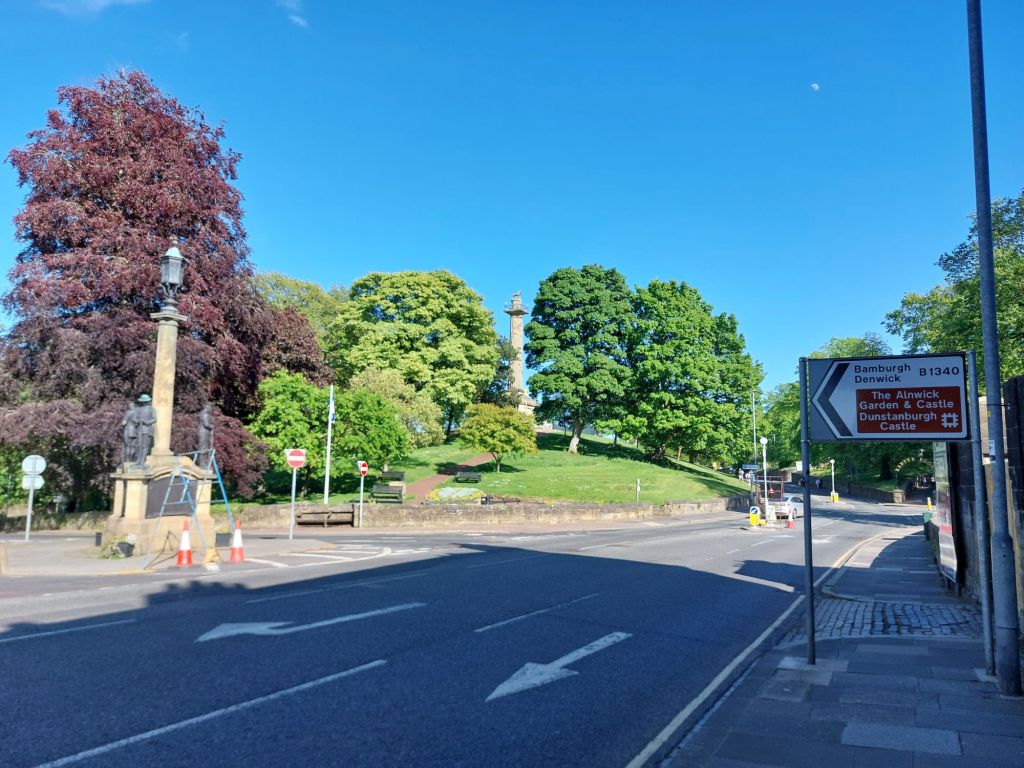
Setting off in a roughly north west direction and down the hill can be seen Alnwick War Memorial, which commemorates those lost in World War One and Two from Alnwick.
Caution: The road junction here can be very busy, and should be crossed with care.
Along Bondgate Without to The Playhouse
The route then continues along a road called ‘Bondgate Without’ in a north westerly direction past a number of public houses such as The Plough, The Ale Gate, and The Fleece.
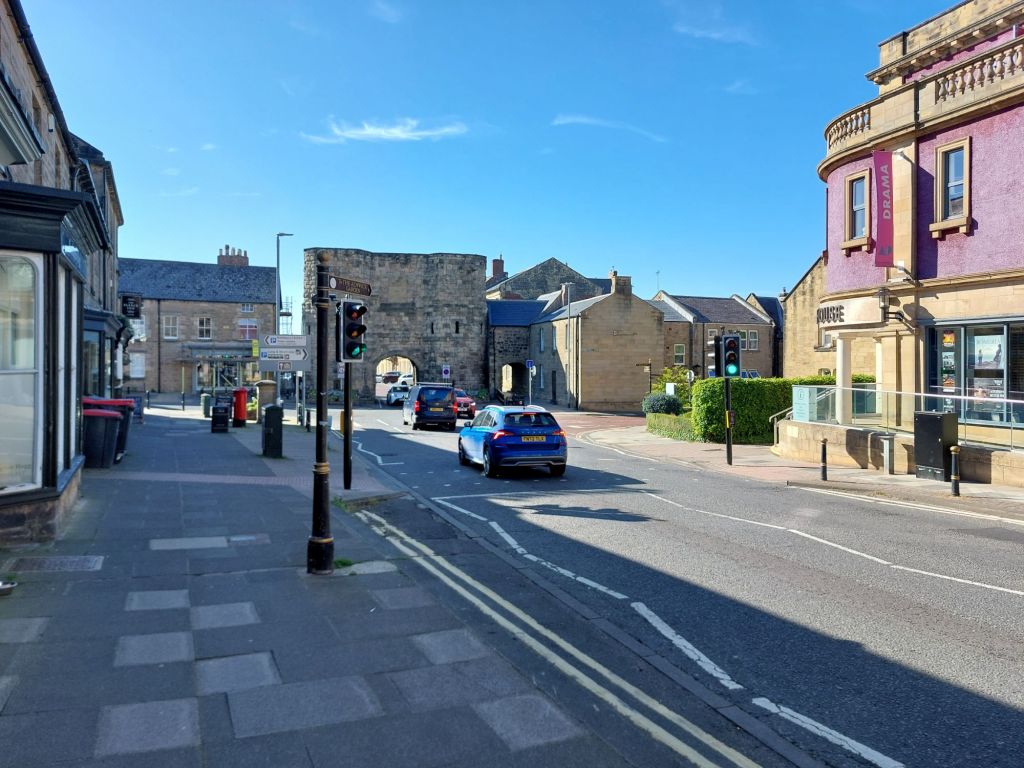
At the end of this road sits The Playhouse; which opened in 1925 as a 700 seat cinema and occasional music hall, until closure in 1979, it reopened in December 1990 and has remained open since, showing a wide range of movies, live performances, music, and more, and contains an excellent Cafe, Bar, and local library with great local info.
Crossing over Greenwell Road (again exercise caution when crossing here), this road leads to a combined entrance to The Alnwick Garden and Alnwick Castle.
Going through Hotspur Tower
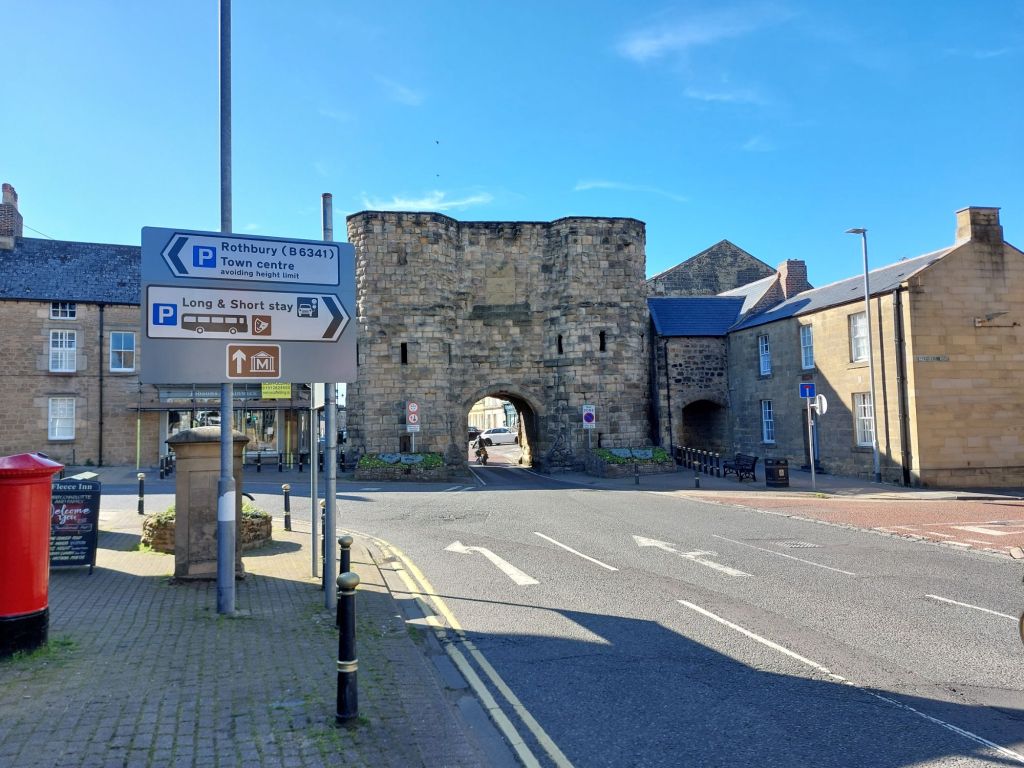
Hotspur or Bondgate Tower is one of the last remaining pieces of Alnwick’s town wall, built around 1450 and now Grade 1 listed.
As can be seen from the image above, the route from The Playhouse, after crossing Greenwell Road means passing beneath Hotspur Tower and changing from ‘Bondgate Without’ to ‘Bondgate Within’, as before you were without, or outside the old town walls, now you are inside, or within them!
Bondgate Within and the Titanic link
Just a hundred yards or so from Hotspur Tower is a strong connection to the world famous shipping disaster of 1912, ‘Titanic’ has a quite strong Alnwick connection via it’s older sister ship ‘RMS Olympic‘.
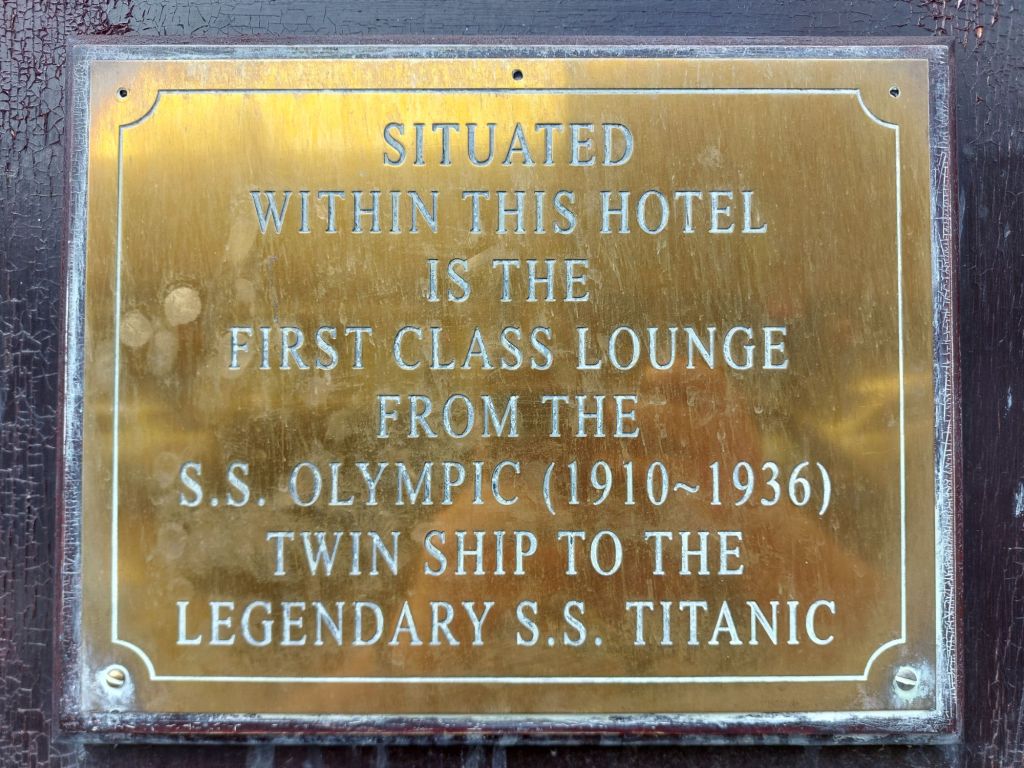
This is The White Swan hotel, which contains elements of RMS Olympic. A short video of her 27 year long epic career is outlined below in this video by Oceanliner Designs
In short, the ‘RMS Titanic‘ which famously hit an iceberg in April 1912 was one of the three ‘Olympic class’ ships built by the White Star Line, the oldest being RMS Olympic, then RMS Titanic, and finally HMHS Brittanic, of the three, Olympic was the only vessel of the three to survive afloat beyond WW1, and was partially scrapped at Jarrow on the River Tyne, leading to several sections of internal fittings being sold off second hand.
The ‘Olympic Suite’ is decorated with fittings from the first-class lounge and part of the aft grand staircase can be found in the White Swan hotel, as the then owner, Algernon Smart, was a regular traveller on the Olympic, and won an auction bid for some of the interior elements.
This lounge was identical to that installed on the sister ship Titanic, now resting at the bottom of the Atlantic ocean.
The revolving door into the White Swan itself was a unique feature of the Olympic to enter the First Class restaurant, and was a way to keep sea breezes out; due to design changes between Olympic and Titanic, such a revolving door was not needed on Titanic.
Walking beyond The White Swan, the old town can be better viewed, with a good street scene of both nationally known names such as Costa Coffee, Greggs, and many more are mingled in with excellent independent shops and cafes, many of which are personal favourites of mine.
At Newcastle Building Society, the main road veers off to the left, heading out of Alnwick towards Rothbury, but our route continues, keeping the buildings to the right, past Yorkshire Trading and on into Narrowgate.
Narrowgate: Grace Darling and the Dirty Bottles
Narrowgate has a somewhat sad link to the heroine Grace Darling of Farne Island fame, when the steamship Forfarshire was wrecked on the islands and Grace, alongside her father William embarked on a rescue in atrocious conditions.
The sad part is that at the young age of 26, Grace fell ill with Tuberculosis, and moved to Alnwick in October 1842 with her mother; convalescing with her cousins the MacFarlanes at their house in Narrowgate.
Later she moved even closer to Alnwick Castle into better accomodation that the then Duchess of Northumberland arranged, her helping to care for Grace, alongside the services of the family doctor to the Duke and Duchess. Sadly, this was to no avail, and Grace was taken back to Bamburgh where she died aged just 26 of consumption.
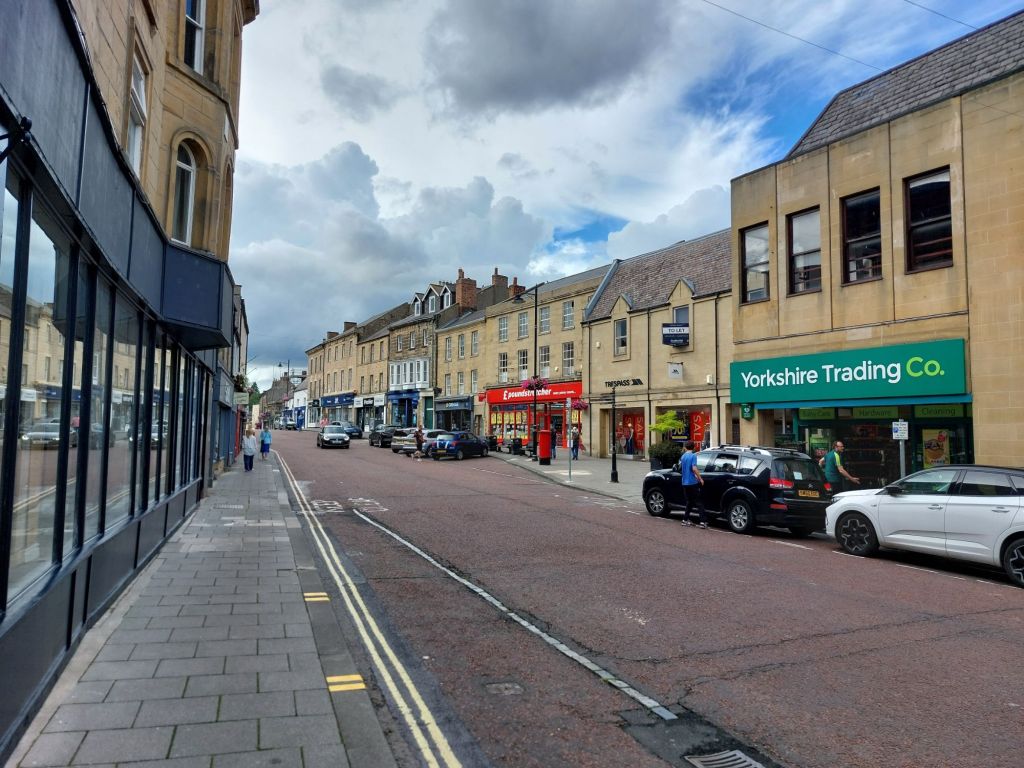
Next to The George pub is a narrow footpath leading to Alnwick Market Place, and Northumberland Hall, a currently empty Grade 1 listed building, but soon to hopefully be the new location for the excellent Bailiffgate Museum, which is currently in a converted church but the move will allow the museum to grow and secure the future of Northumberland Hall.
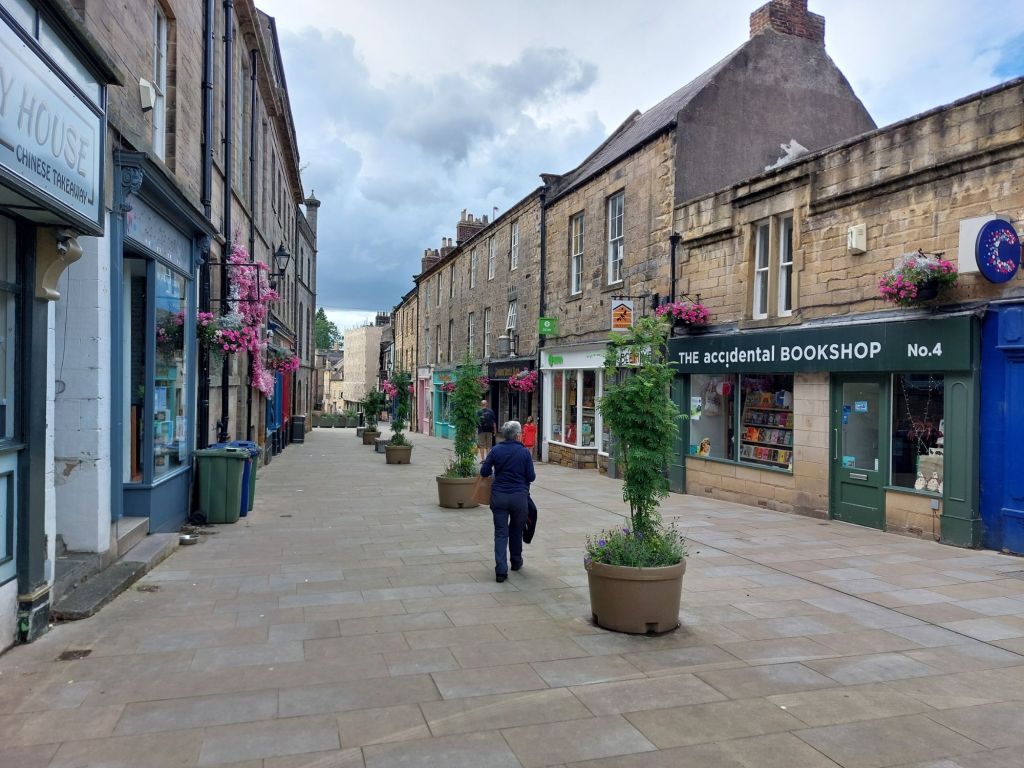
The images below capture the ‘narrow’ part of Narrowgate, pedestrianised in recent years from what was once somewhat unbelievably the route of the Great North Road and later A1, but is far better without vehicle traffic today.
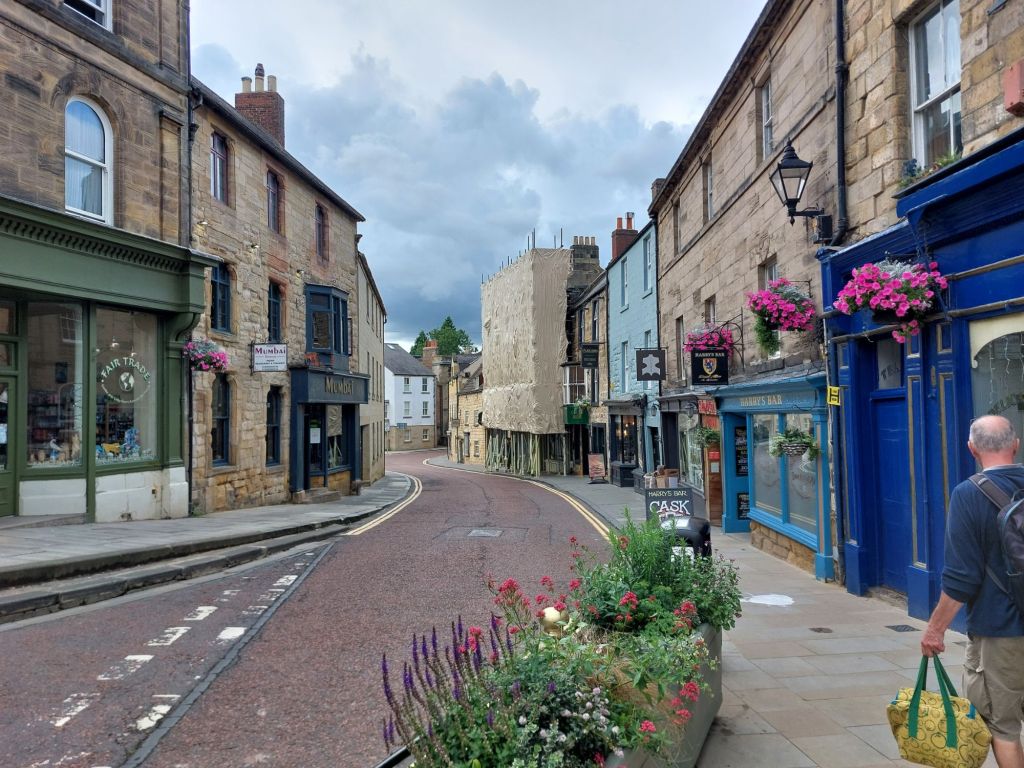
Further along Narrowgate is a pub now called ‘The Dirty Bottles‘, as is 1725, so local legend has it, the landlord of the pub dropped dead whilst cleaning the bottles in the window, and his widow proclaimed them as being cursed; they have remained untouched for the 300 years since then, suitably grimy and sealed by the glass to avoid further deaths from cleaning.
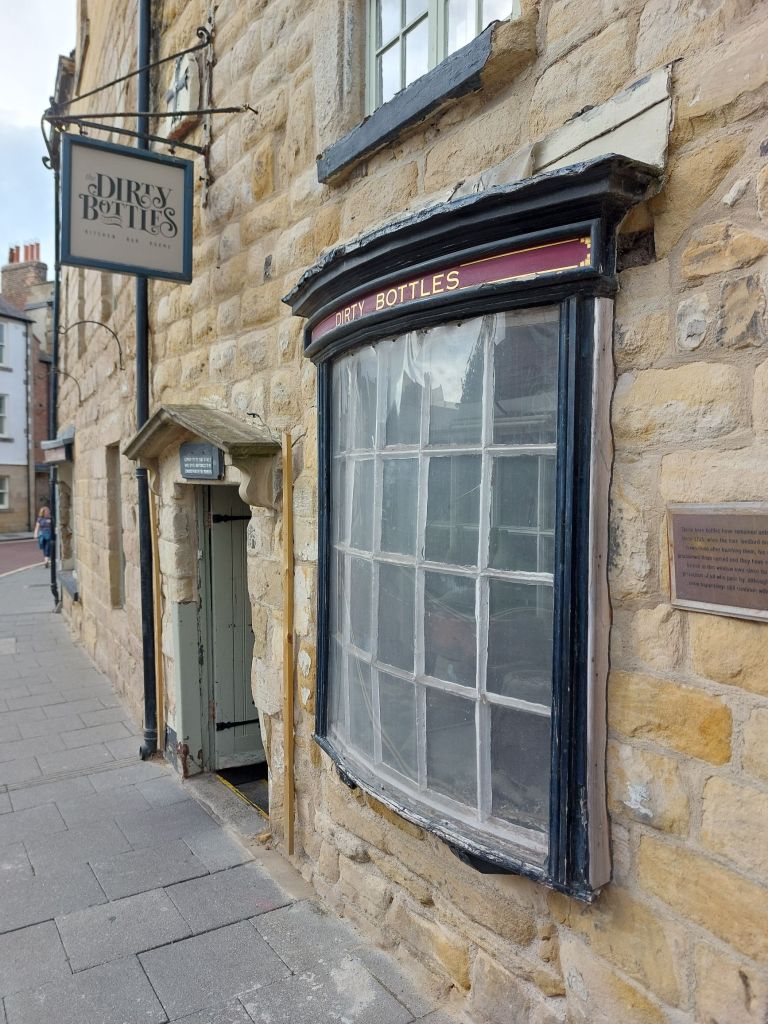
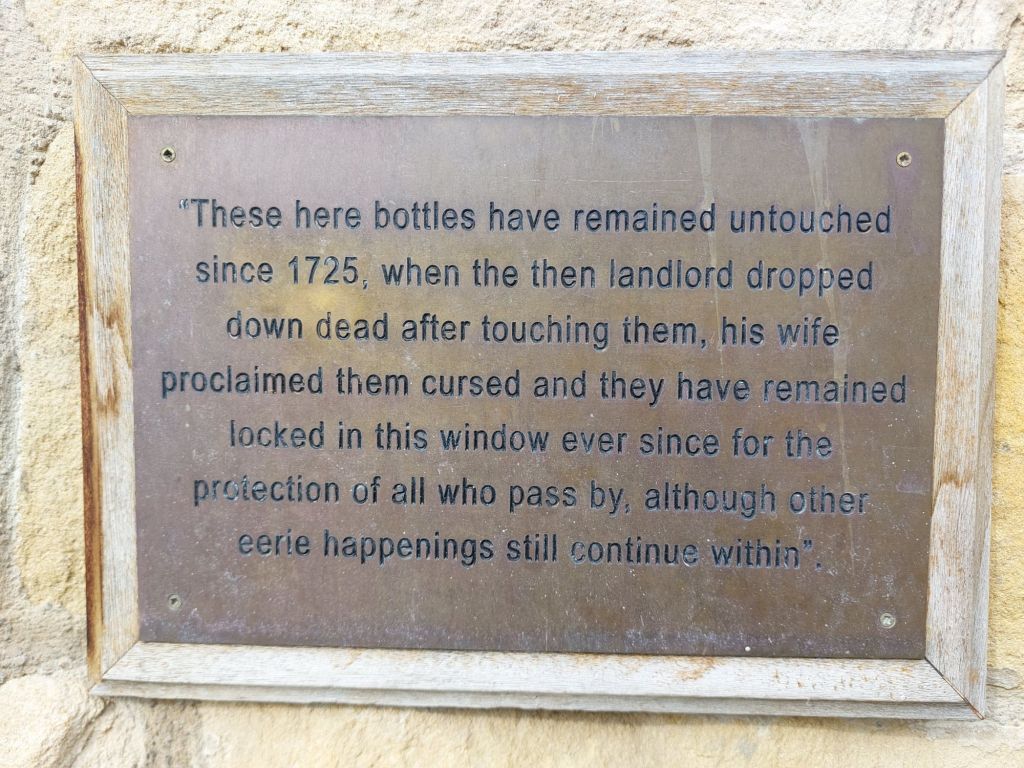
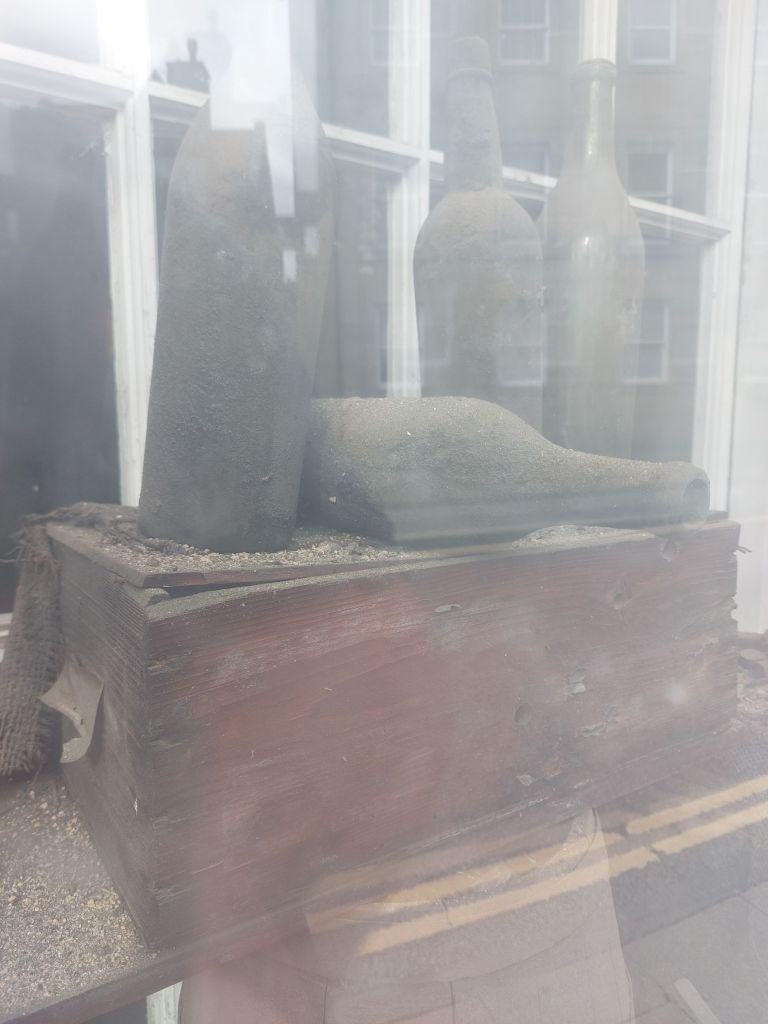
Following the road around the Dirty Bottles, a small side street called Bow Alley heads off to the right, and to the left in the middle of the road is a drinking fountain, locally called a ‘pant’, and at the top of the road (Pottergate) is another surviving part of the town wall, called Pottergate Tower.
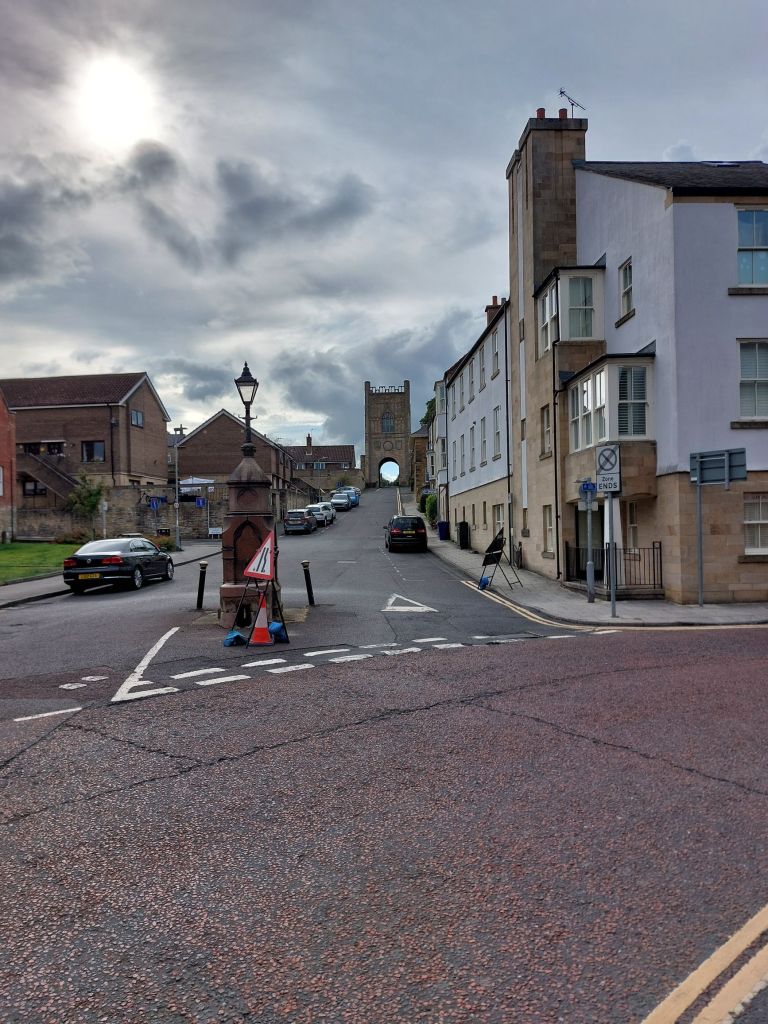
The castle walls are now on the right hand side, heading around towards the Bailiffgate entrance to the castle, with an antique dealer occupying premises set within the walls themselves.
Bailiffgate: Ancient Football & the Alnwick Vampire
This is the main roadside entrance to the world famous Alnwick Castle, known the world over after multiple major movies have been shot there, including Harry Potter, Downton Abbey, and many more.
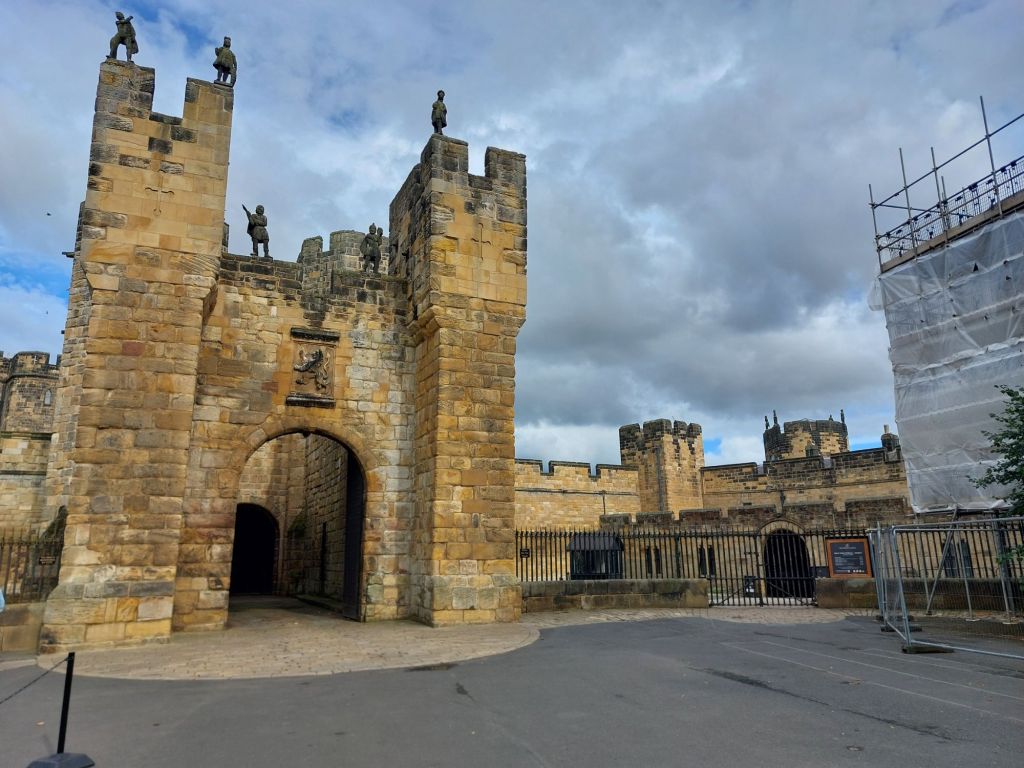
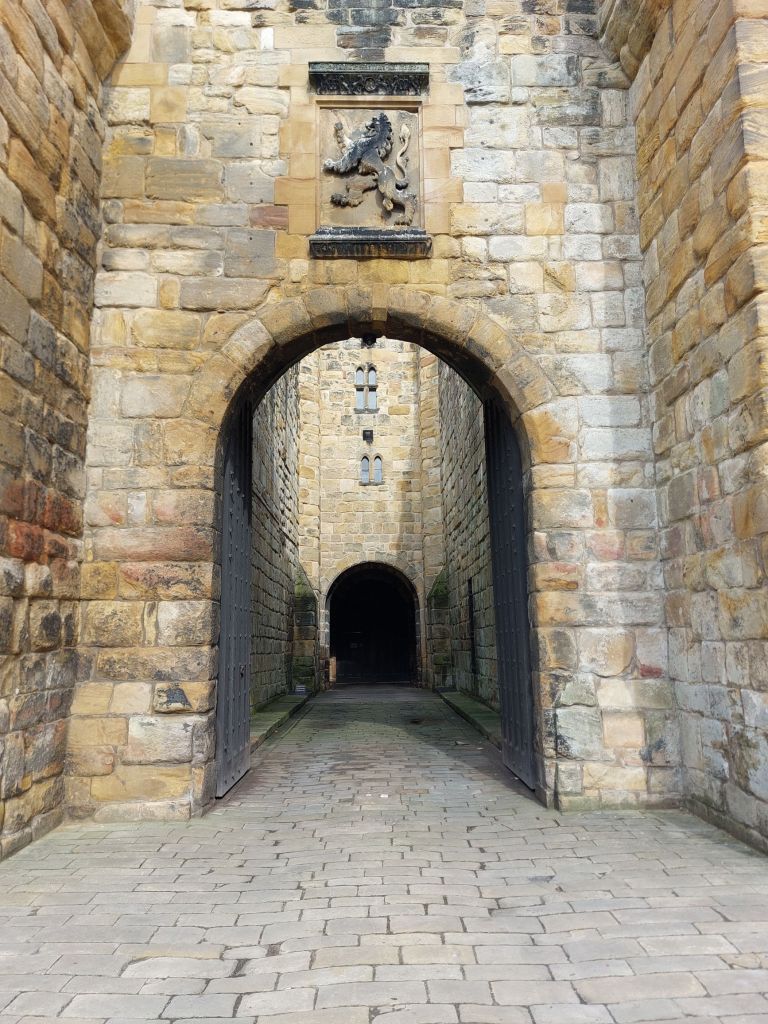
The road leading off to the left, and opposite the entrance to the Castle is Bailiffgate, on which is Bailiffgate Museum, and further along St Michaels Church, where the road again splits, with Ratten Row leading to Hulne Park; the last of three parks around Alnwick Castle remaining intact. It is completely walled despite its vast size, and is home to many other attractions such as Hulne Priory, Brizlee Tower, and Alnwick Abbey. This park was landscaped by Capability Brown.
The first recorded use of the ‘bloodsucker’ in England was referring to the Alnwick Vampire; who was reputedly a man who was in service at Alnwick Castle but died when climbing the outside of his home in an attempt to catch his wife being adulterous, his neck snapping upon contact with the ground; the full details are linked above.
Scoring the Hales, an ancient game of football is played annually on Shrove Tuesday in Alnwick, and starts at the Bailiffgate entrance to Alnwick Castle where typically the Duke of Northumberland throws the ball from the castle to the public below, and the ball is then piped down the Peth, over the Lion Bridge to the Pastures, where the game is played; two hales (goals) to win, and then the ball is thrown into the river, with the catcher allowed to keep it.
This is the route that the circular walk follows onto The Pastures, but most days are much quieter here than on Shrove Tuesday!
As an aside, the piper uses Northumbrian pipes, not Scottish Bagpipes, the former being much quieter and gentler by comparison, relying entirely on the bellows under the arm, and not blown into like bagpipes.
Lion Bridge: The Scots and a wagging tail?
After walking down the Peth, keeping the castle to the right hand side, the Lion Bridge is reached, with a stone lion, and its straight tail on the downstream side of the bridge.
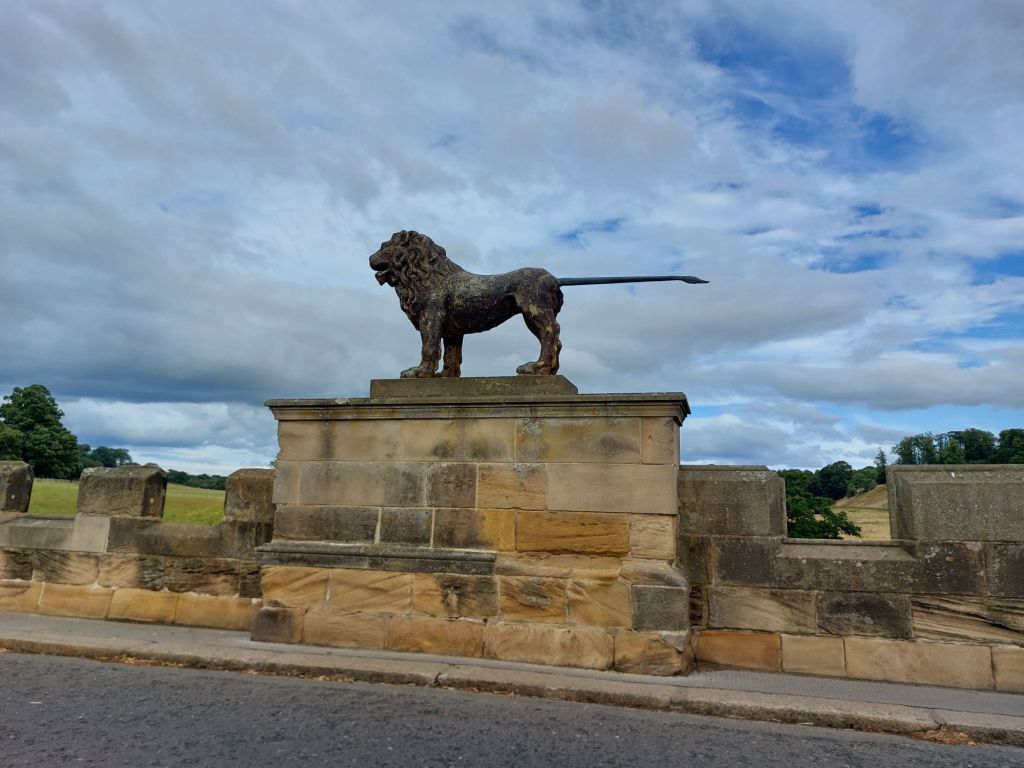
According to local legend, it is said that ‘when a Scottish person leaves Alnwick bound for home over the bridge, the lions tail will wag’!
The Pastures
After the Lion Bridge, a gate on the right allows access to The Pastures, a landscape again designed by Capability Brown, and offering fine views of Alnwick Castle itself.
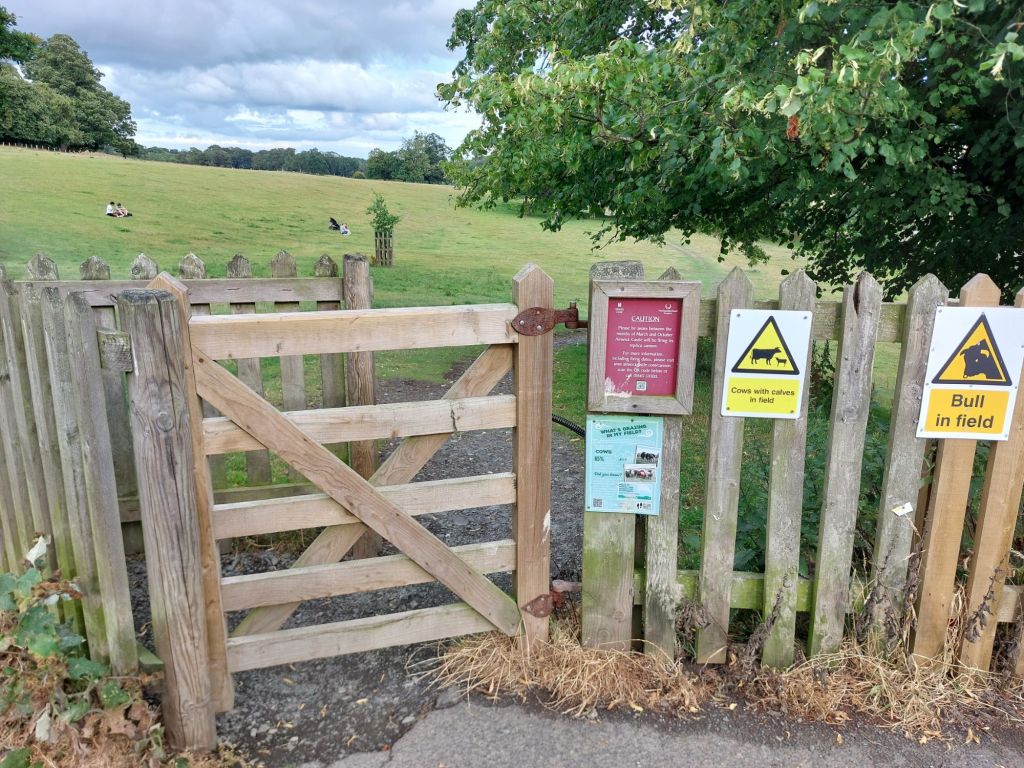
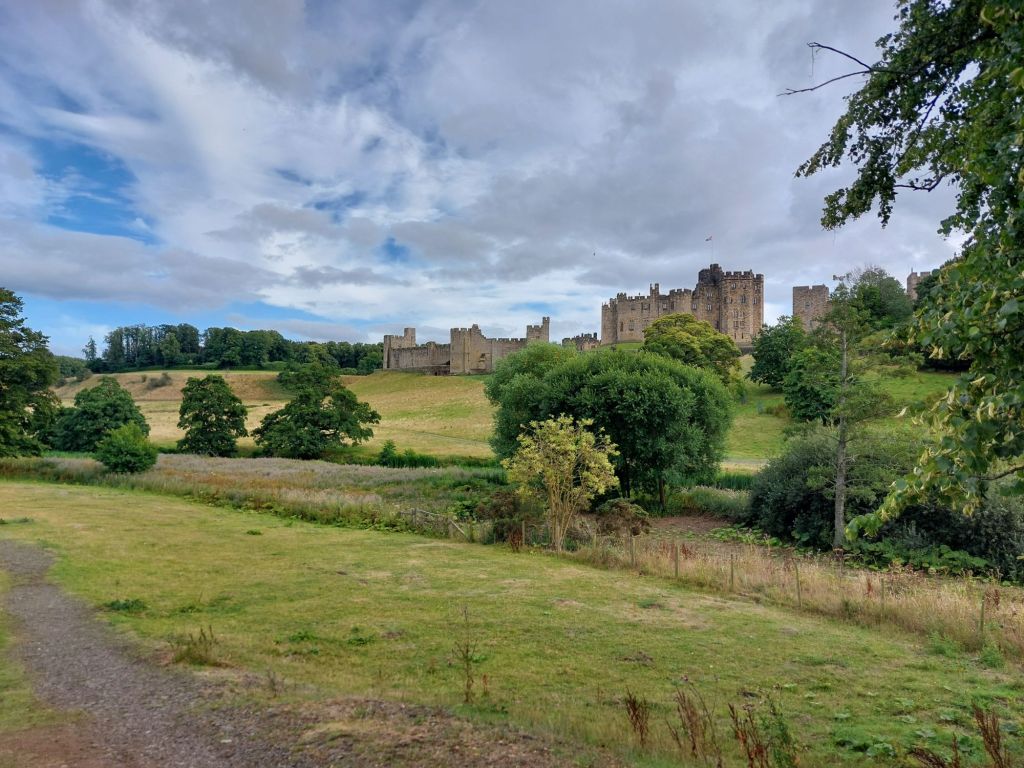
The path broadly follows the route of the river downstream until Denwick Bridge is reached.
Note that this path can be very muddy and slippery in wet weather, and sturdy shoes should be worn.
Denwick Bridge towards the Tenantry Column
Leaving the Pastures via a small gate, the road between Alnwick and Denwick is reached. Cross over the river via the bridge and remain with the road to the left and wall to your right.
This path is heading towards the vehicle entrance to The Alnwick Garden, which includes The Treehouse restaurant, and Lilidorei, which is within the walled grounds.
After passing the large wooden gates and entrance to The Alnwick Garden, cross the road either via the pedestrian crossing or the island crossing, and continue along the main road, taking extra care due to the narrow pavement, and then entering the park around the base of the Tenantry Column.
Climbing the hill, you are back to where we started with the four white lions, and a fifth atop the column.
Let me know if you complete it!
 The Northumberland Coast Loop