A recent article in the Northumberland Gazette states ‘Renewed calls for safety improvements on A1 in Northumberland after spate of serious crashes’ by local Councillor Isobel Hunter (Cllr Hunter) who represents Berwick West with Ord area in Berwick Upon Tweed, who has raised that the dualling scheme for the A1 between Morpeth and Berwick ‘should not be forgotten’.
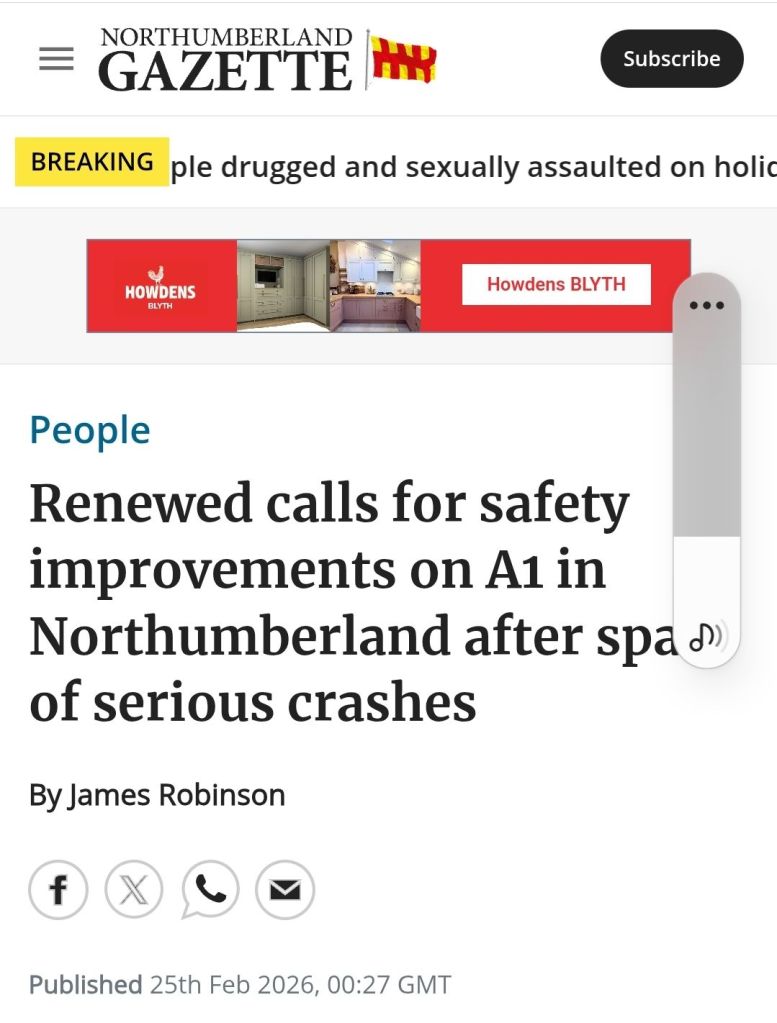
To quote Cllr Hunter from the article, ‘The Government has said it will do minor improvements, but that won’t stop all of these crashes. We need to have the A1 dualled.‘
The dualling of 13 miles of the A1 between Morpeth and Ellingham was officially cancelled quite some time ago, and was announced to be expected cost in the region of £500m, in my view, as as the case is outlined below, if safety is the main target, then transferring traffic to trains from the road is potentially the best way to deliver that outcome.
£500m being spent on the ECML between Newcastle and Edinburgh to carry out known capacity interventions could be truly transformative, and even if a sum of money in that order of magnitude was to be split between A1 safety interventions and rail capacity enhancements, it could result in great benefits for Northumberland as outlined below.
Tourism by train
Another aspect is the tourist volumes who visit North Northumberland, which puts added strain onto the A1 and importantly many of the rural roads connected to it, and the excessive volumes of cars are a separate but equally important issue for Northumberland, which is heading down the same route as the Lake District in terms of access by car bringing a huge set of issues with it.
If more tourism by rail can be encouraged, it is a clear win-win for Northumberland; tourists still visit, yet they are coming without their cars, meaning our towns and villages will be much less congested, but will still thrive from visitors coming and spending in the local economy.
If dualling is taken forward as ‘the solution’, then it puts further pressure onto rural and urban roads that cannot cope now, only exacerbating current problems with parking and traffic congestion.
If public transport is instead put at the heart of planning for the area, and rail is coordinated with buses for onward travel to places away from the railway stations and getting back again, then it can be a much more viable option.
For many establishments such as our many great pubs and bars, there is further advantages in public transport that visitors can enjoy locally brewed beers or other drinks without one in a couple of group having to be the ‘designated driver’, that responsibilty handed to the bus and train drivers, and itself a potential market for pub businesses on a circuit.
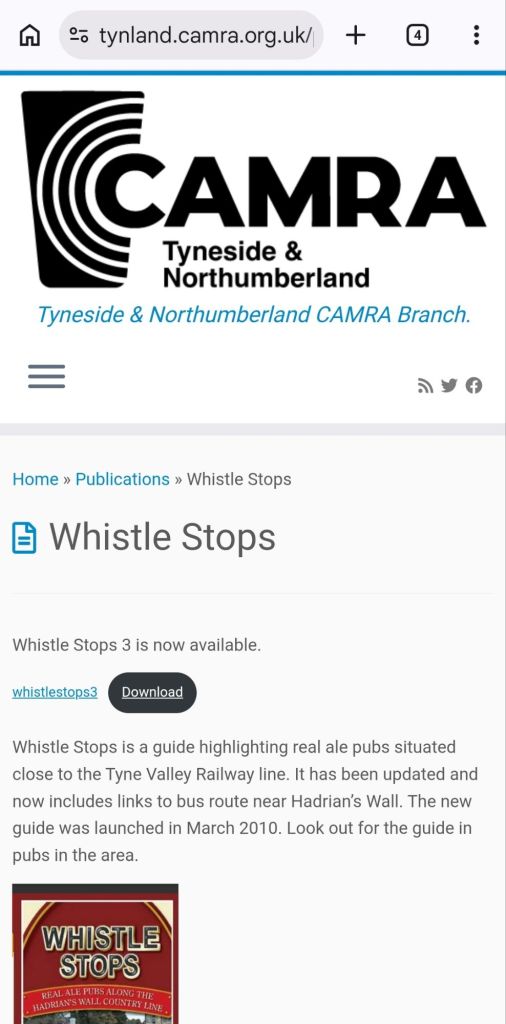
An example of this is the CAMRA ‘Whistle Stops’ guide for the nearby Tyne Valley Line, highlighting real ale pubs within easy reach of the stations on that line.
Drink and driving a car is a clear example of two things that are incompatible, and rightly shunned by society due to the devastating consequences of alcohol related road accidents.
Public transport is, however, an elegant solution to this, as punters going for pints or a Piña Coladas (other drinks are available) they can travel out to enjoy them, and importantly travel back safely for themselves and others. It would keep our fantastic venues open and thriving, whilst keeping people safe, again, a win-win surely?
Dualled roads are still deadly and dangerous
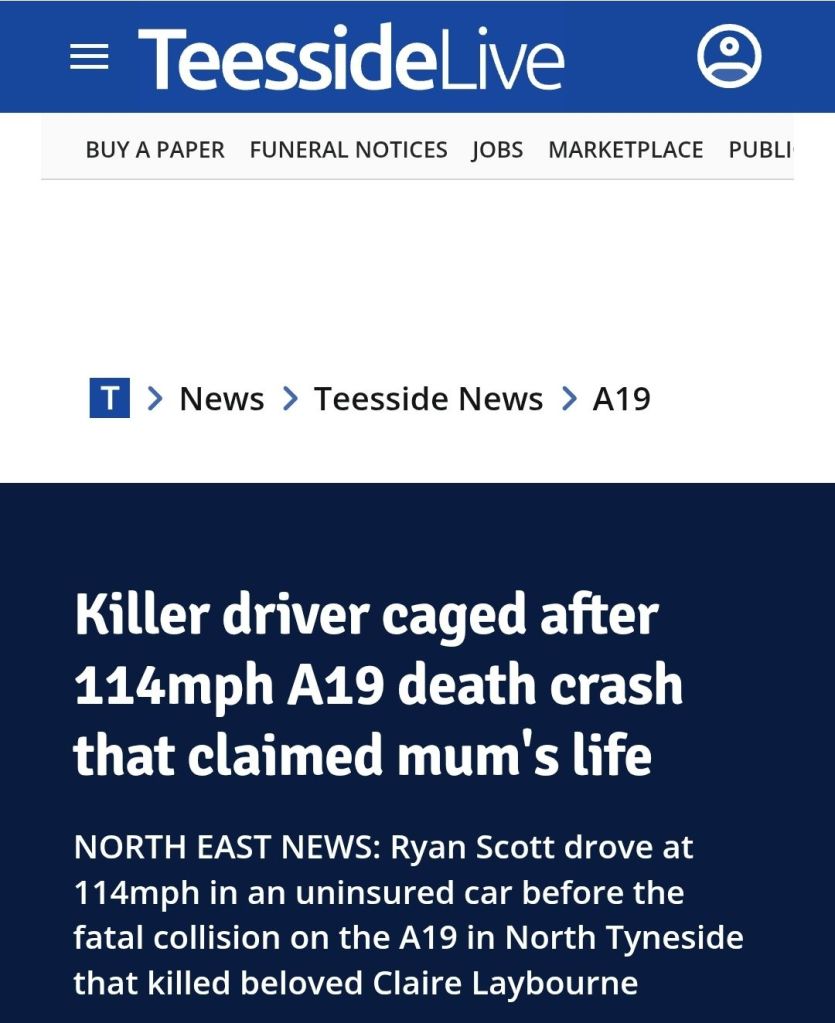
A harsh reality is that dualling alone does NOT guarantee a road becoming ‘safe’, and does not prevent serious and fatal accidents from occuring. A shocking example of this (5th December 2025) is recent tragic incident on the fully dualled A19 near Holystone in North Tyneside, caused by excessive speed, but illustrating clearly that road accidents and loss of life are sadly not prevented by dualling alone.
Every loss of life, or serious injury is a tragedy for the person involved, as well as for family and friends, and we as a society should surely always strive for the accident rate to be ZERO. Perhaps modal shift away from road transport could well be part of the toolkit to make that target a reality.
Whilst we need interventions to make roads like the A1 safer, moving more people and goods via the ECML would reduce traffic on the road, and therefore would reduce risk and road accidents.
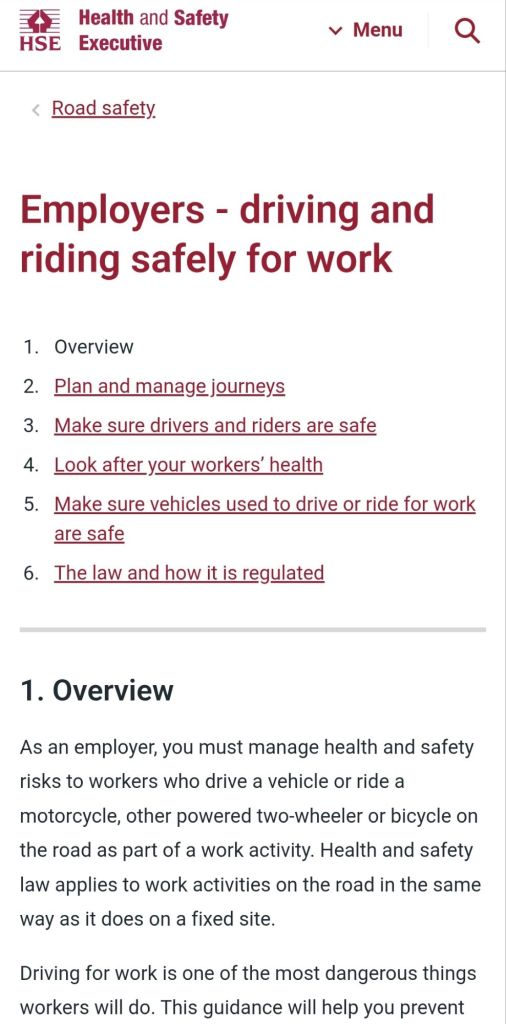
HSE: Driving for work is dangerous.
Indeed, it is recognised by the Health and Safety Executive itself that ‘Driving for work is one of the most dangerous things workers will do.’. Showing that being on the road is a dangerous place to be.
The HSE website goes further on the following webpage, and suggests that modal shift to other modes of transport could eliminate or reduce driving risks, and the hazards faced such as driving/stopping in darkness (Northumberland being a county notable for long winter nights and very dark roads due to fewer streetlights).
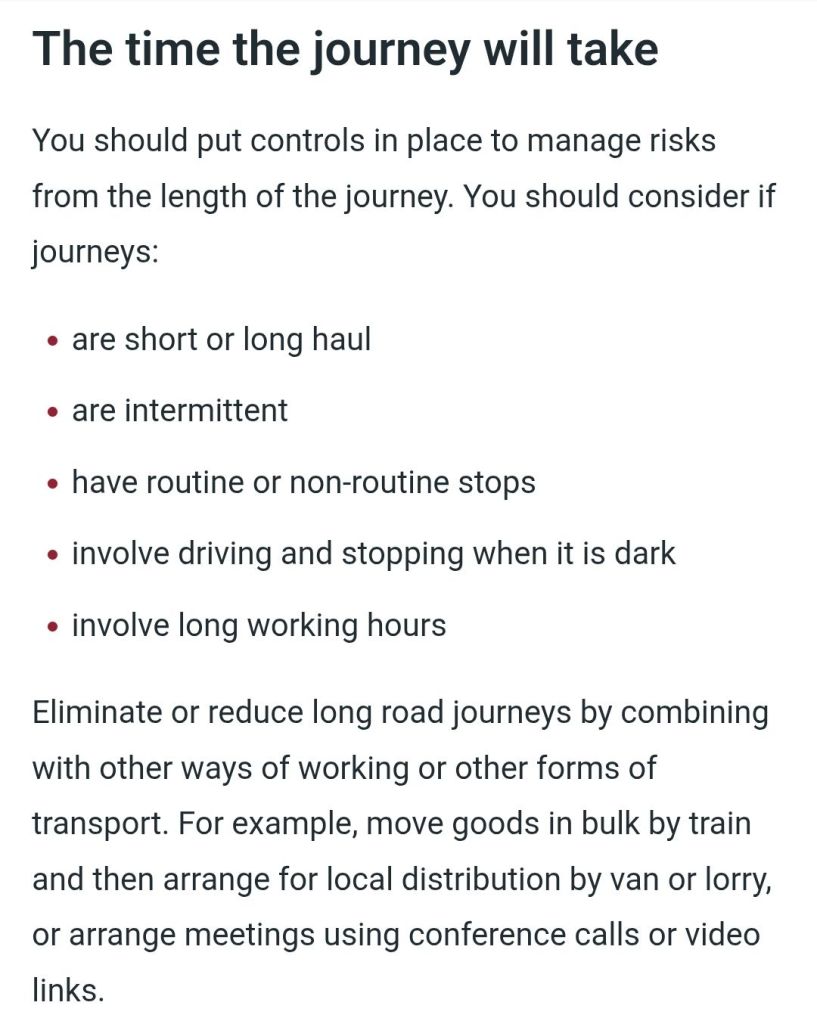
If the HSE suggests modal shift for greater safety, perhaps we should give it a very serious consideration?
Smaller safety schemes are welcome, but put the big money into modal shift?
There has been a lot of criticism of the decision not to dual the A1 in Northumberland from Morpeth to Ellingham, but at a cost stated as £500m, and one that doesn’t deliver much in the way of economic growth, and is unlikely to totally stop the serious accidents causing life changing injuries and tragic deaths, could there be a better case to invest in the parallel East Coast Main Line (ECML) instead?
There is still a clear need to invest some money into the A1 to redesign and replace some current flat junctions with grade-separated ones and tackle some bad sections of road layout, and cost-effective solutions such as average speed cameras that have proven themselves on other routes by reducing fatalities and serious accidents should also be employed, but expanding the capacity of rail routes like the ECML to carry more passengers and freight both locally and long-distance would perhaps be the best investment for the bulk of the money.
Rail transport has a great safety record, and modal shift away from road transport would save lives.
One of the safest ways to travel in the UK is taking the train; in modern times, passenger train accidents are exceedingly rare events, and fatal ones even rarer; for example the last at Stonehaven in Scotland was in August 2020 when an HST hit a landslip, and before that was the February 2007 derailment at Grayrigg in Cumbria. That these accidents are noteworthy, yet they are 13½ years apart shows how safe the railway system is in the UK.
In Northumberland, you would need to go back as far as 1969 and the crash at Morpeth of ‘The Aberdonian’ sleeper train on 7th May that year, almost 57 years ago for the last fatal rail accident involving passengers (sadly a nearby accident in 1992 killed a train driver due to mis-communication).
Since 1969, the East Coast Main Line between Edinburgh and Newcastle has carried many millions of passengers safely and swiftly, having had a very good safety record since this accident, and even when further accidents have re-occurred at Morpeth, improved train and carriage designs have meant that injuries were much less serious and no fatalities resulted from it.
The Northumberland Line has now also moved well over a million people safely, and allows people to avoid the A189 Spine Road which itself has a poor reputation for accidents, many of which have also tragically been fatal or serious with life changing consequences, but is largely dualled and has grade-separated junctions mostly (aside from roundabouts such as Moor Farm).
New routes for rail to make modal shift easier.
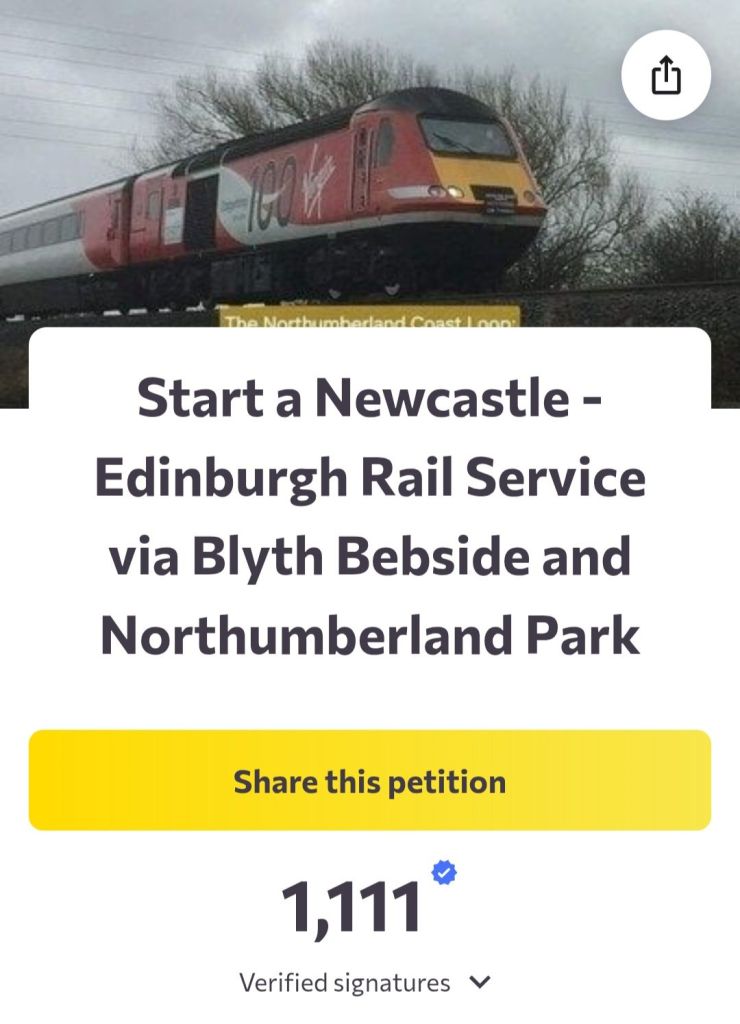
Creating new rail routes such as the Northumberland Coast Loop (Newcastle to Edinburgh via Blyth Bebside and Northumberland Park would go even further to help make rail a viable option for more journeys; making them faster by being more direct, and with fewer changes to make them easier and more convenient for potential passengers too.
This is a passenger route that would be likely to carry many thousands, if hundreds of thousands of people each year if implemented, reducing car trips and improving road safety as a result.
Whilst no mode of transport will ever be 100% ‘safe’ and it would be a Titanic mistake to claim so (the so-called ‘unsinkable’ ship now on the bottom of the Atlantic sprung to mind), the evidence shows that railways are a fundamentally much safer way to transport people and goods; professional staff who are highly trained, working in a very tightly controlled failsafe system of systems means that accidents are incredibly rare and even when they do happen, modern rail vehicles are also extremely well designed to protect their occupants.
Rail won’t replace all road journeys, but more people and goods moving by train the better.
Rail cannot replace every car or lorry trip, but a significant modal shift from busy roads like the A1, A19, and the A189 would have clear safety benefits by reducing overall traffic volumes, and enabling travel on a much safer mode of transport, meaning a real reduction in injuries and fatalities on the road network.
Hopefully Cllr Hunter and others will help to push for railways and public transport more broadly to be part of reducing road fatalities and injuries in Northumberland, with the additional benefits of supporting businesses such as pubs, reducing road congestion and parking problems in our picturesque paradise that is Northumberland?
 The Northumberland Coast Loop