
In a recent article from the Northumberland Gazette ‘Rail minister backs plans for additional carriages on the Northumberland Line‘, Lord Hendy of Richmond Hill, the Rail Minister has backed the calls for extra carriages to be sourced for the Northumberland Line.
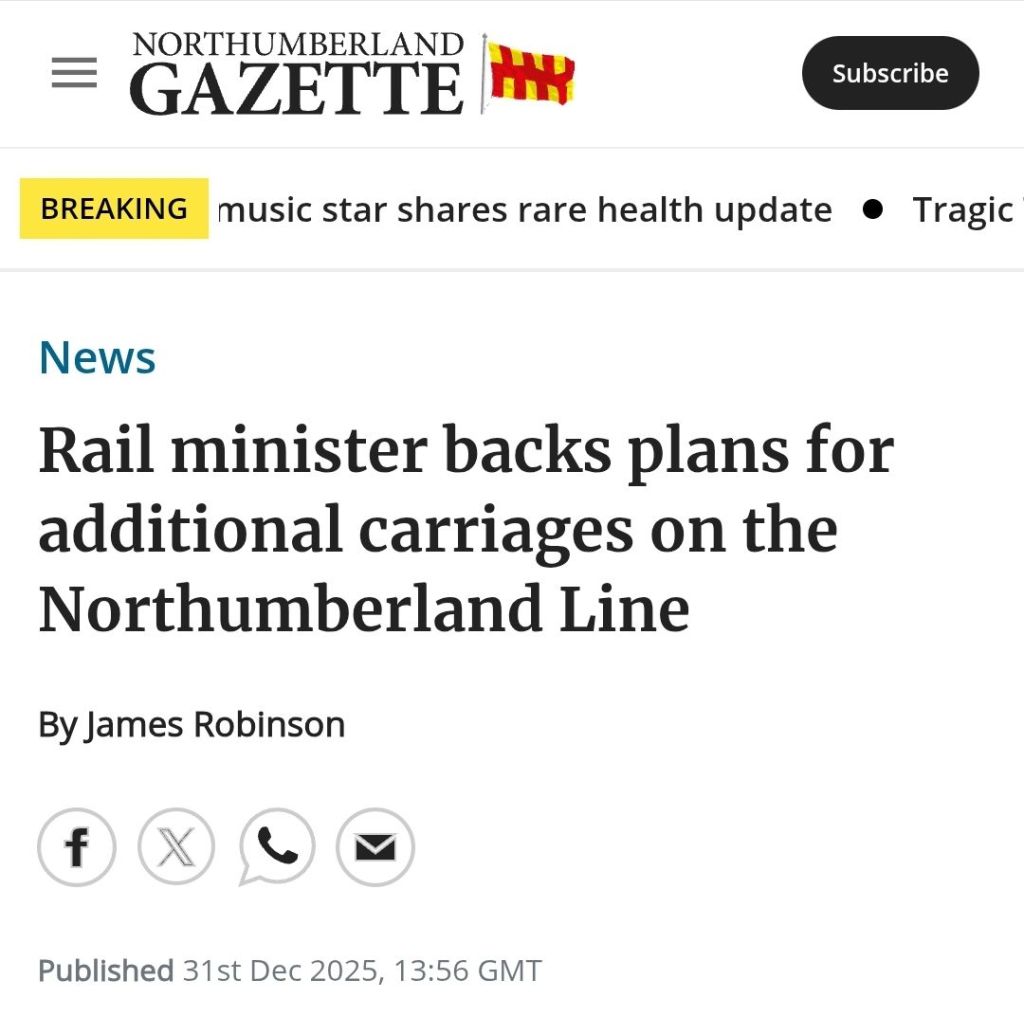
To quote from the article; ‘In the letter to Cllr Sanderson, seen by the Local Democracy Reporting Service, Lord Hendy wrote: “My officials at Rail North Partnership (RNP) have now instructed Northern to identify whether any permanent reallocations are possible. Northern is also in discussions with other operators to see what suitable rolling stock they may have available to increase capacity ahead of Northern’s new train fleet entering service in 2030.”‘
Different trains on the Northumberland Line alongside Northern 156’s & 158’s?
Of this quote, one line is particularly interesting from our campaign’s perspective: ‘Northern is also in discussions with other operators to see what suitable rolling stock they may have available to increase capacity ahead of Northern’s new train fleet entering service in 2030.’.
This suggests that trains from other operators may well be seen on the Northumberland Line, assisting the Northern Class 156 & 158 trains currently used. One option is for these extra trains just to ply up and down to Ashington, but train lengths would be limited by the bay platform at Ashington, where trains would need to reverse.
The Northumberland Coast Loop solution to improve Northumberland Line capacity issues?
A second option, and one that has now been floated for some years, indeed predating the Northumberland Line itself opening, is that a large part of the route from Newcastle to Bedlington can be part of a new through route between Newcastle and Edinburgh.
Taking a northbound train as an example, leaving from Newcastle, it could run up the line as far as Bedlington, before leaving the Northumberland Line heading west, and travelling along the existing freight line through Hepscott, then, at Hepscott Junction, curving back north, and travelling around the c.1980 opened Morpeth North Curve to rejoin and head towards the Scottish Border on the East Coast Main Line (ECML) into North Northumberland and Scotland.

Indeed, I wrote an email to Cllr Sanderson yesterday, ahead of seeing the above article, to reiterate the advantages of the Northumberland Coast Loop route, with an example given being the Transpennine Express ‘Nova 1’ (Class 802) trains being used on a Newcastle – Bedlington – Edinburgh route, with each train having 342 seats in total, comprised of 318 in Standard Class, plus 24 in First Class, though this is not the only type of train that could work over this route.
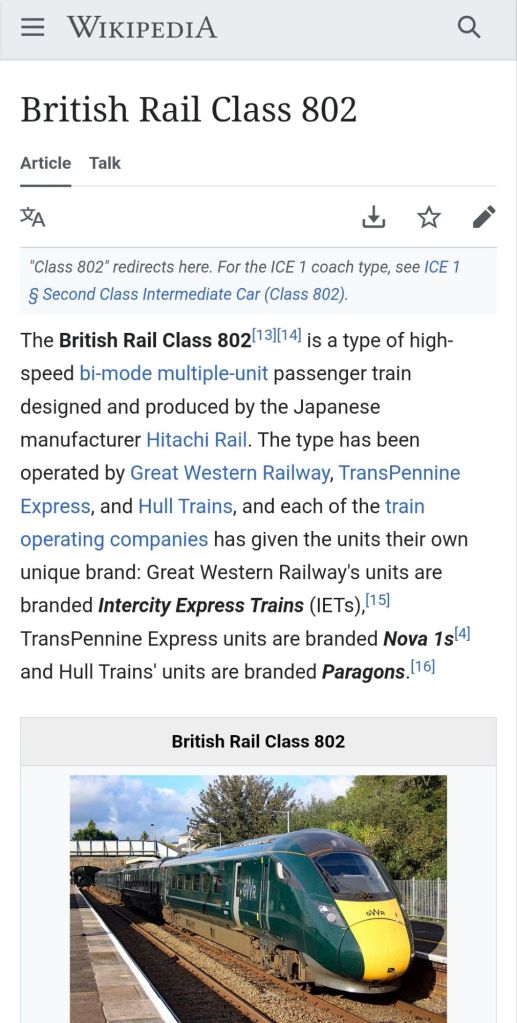
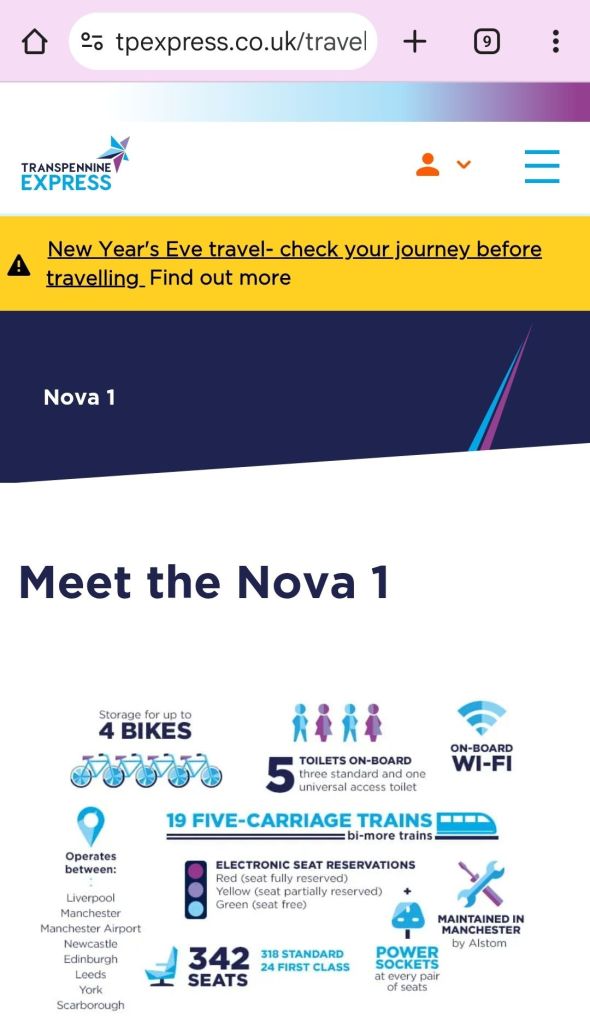
This compares favourably with two-car Class 156 trains, which have between 146 and 152 seats, so even when working in four-car sets, have a maximum of 304 seats, 38 less than the Nova 1 trains. The Class 158 trains have an even smaller seating capacity for a two-car set, with between 138 and 142 seats each, and working as a set of four carriages having just 288 seats.
Working of longer trains over the Northumberland Line, and stopping at platforms shorter than the train itself is not a major issue, as many modern trains can selectively open doors, so that only those safe to exit or enter to or from the platform will actually be opened. An extreme example of this is Beauly, near Inverness in Scotland, where even for two-car Class 158 trains operated by ScotRail, only one door is opened to allow passengers to board or exit from the very short 15m (49ft) long platform.
Different liveries but one operator behind the scenes
It is also worth noting that an ever increasing number of the ‘operators’ are effectively integrated behind the scenes, as LNER, TPE and Northern are all run directly by the Department for Transport (DfT), and have been for a number of years, so whilst a red LNER train, the silvery blue of TPE, and the dark blue and white Northern liveries, and associated staff uniforms on each train look different, the underlying operator for all of them is the DfT.
A good parallel to this is high street bank brands; Natwest is one recognisable bank brand, but is fundamentally at a higher level is the same bank as Royal Bank of Scotland, and Coutts, them all being a part of the Natwest Group.
This means that it is in the hands of the DfT, directly controlled by the Government, to decide to operate Newcastle to Edinburgh TPE or LNER trains over the proposed Northumberland Coast Loop route, but doing so has wider advantages than just increasing the capacity of the railway between Newcastle and Bedlington, Blyth Bebside, Newsham, Seaton Delaval, and Northumberland Park.
Faster journeys between SE Northumberland and the North (North Northumberland and Scotland)
An added benefit is the reduced journey times that this route could bring for rail travellers heading north from SE Northumberland or south into that area, as outlined in a recent blog post, a trip from Alnmouth to Blyth Bebside could be reduced to as little as 29 minutes, compared to the 1hr 34min trip I made on 22nd December 2025 via Newcastle.
The Northumberland Coast Loop route is faster by virtue of going directly between North Northumberland and SE Northumberland, avoiding the additional travel time and distance of going beyond the destination into Newcastle, awaiting a change of train, and back-tracking up the Northumberland Line to reach the end destination, as well as avoiding the often slow bus services that connect poorly at Morpeth station.
Better rail connections beyond just the Northumberland Line, whilst itself brilliant for the area will also help to further boost the local economy, bringing in new businesses, or making existing ones more attractive.
Resilient railway routes
A wider advantage is also the resilience of the railway as a whole; using this route regularly would maintain driver and crew knowledge of this already recognised diversionary route, which while not used in the event, was highlighted with the structural issues seen with Plessey Viaduct in October 2023, which had it been more severe, could have seen the ECML totally severed between Newcastle and Morpeth, but the route via Bedlington could have carried some traffic between Newcastle and Edinburgh to maintain a connection.
With the line at present little used, it can be presumed that few train drivers will hold route knowledge over it, but with a route running regularly, and the behind the scenes integration of the railway ongoing, perhaps all, or most Newcastle to Edinburgh drivers could, in time, be trained on this diversionary route, and drive it periodically to keep their knowledge fresh and ready in the event of any disruption?
Strong support for the Northumberland Coast Loop
As of 1st January 2026, the petition for Newcastle Central – Northumberland Park – Blyth Bebside – Edinburgh route stands at 1049 signatures, around the same as the May 2007 SENRUG petition handed into 10 Downing Street, in support of what is now the Northumberland Line; a route now nearing a million passengers after just one year.
The Northumberland Coast Loop route would likely be a very similar success; a low risk by using the existing rail link between Pegswood and Bedlington with the potentially high reward of well-filled trains to boost the local economy significantly, even a trial would be surely worth a chance in 2026 given the vast volume of passengers seen on the Northumberland Line, and the reputed success of the Sunday extensions to the MetroCentre from Ashington, perhaps a Sunday N.C.L. service could be a way to test the water on this proposal?
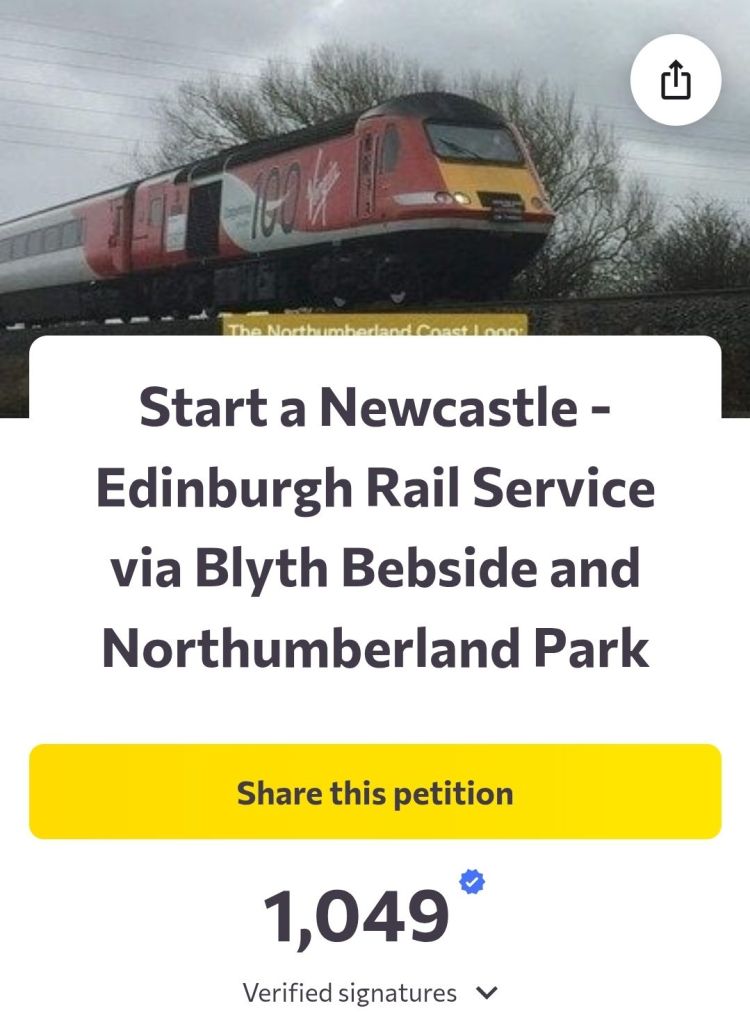
Please support the petition by clicking the link here: https://www.change.org/p/start-a-newcastle-edinburgh-rail-service-via-blyth-bebside-and-northumberland-park/exp/cl_/cl_sharecopy_490421148_en-GB/4/679068674?recruiter=679068674&recruited_by_id=f8c66ca0-ee1b-11e6-b726-5dfd818fd527&utm_source=share_petition&utm_campaign=share_petition&utm_medium=copylink&utm_content=cl_sharecopy_490421148_en-GB%3A4

