It has been another good year for the Northumberland Coast Loop campaign, but the work continues as we all head into 2026.
Petition performing strongly
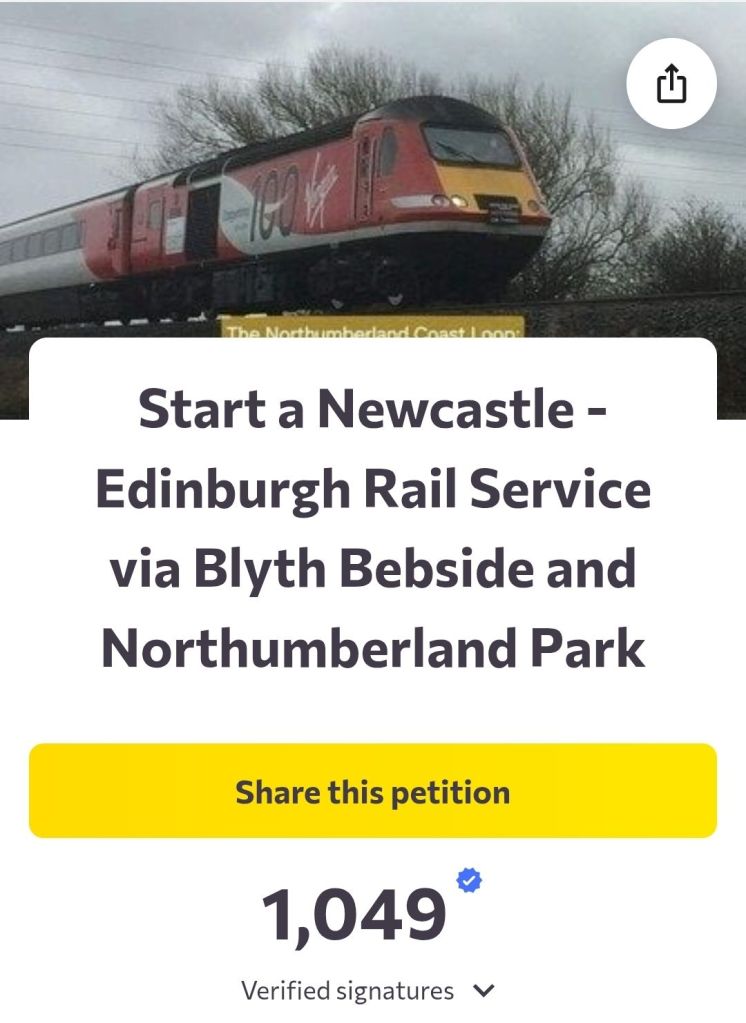
Our petition to ‘Start a Newcastle – Edinburgh Rail Service via Blyth Bebside and Northumberland Park‘ has, at time of writing gained the support of 1,049 people, thank you to all who have signed it so far, and please keep sharing with friends and family to keep the momentum going!
A year of the Northumberland Line; not enough trains…yet?
A recent post by NEPTUG ‘One full year of new Metros and the Northumberland Line.’ discusses the success of the Northumberland Line to date, with the millionth passenger soon to be expected, and talk of extension to Newbiggin by the Sea, whilst two of the stations are still awaiting opening (Bedlington, and Northumberland Park), and the line suffers at certain times from severe overcrowding, especially with short two-car Class 156/158 units being provided to carry the vast numbers wishing to travel.
The use of the line being far greater than was originally anticipated, means that the rolling stock that is available isn’t enough to meet times of peak demand, and additional units of the type used to/from Ashington are not easy to source from elsewhere, with fleets of Class 156/158 needed to run routes around the UK.
This is why some Northumberland Line trains run with only two carriages; there is a shortage of that type of train nationally, but the Northumberland Coast Loop potentially offers a solution, by using other types of train over a large part of the route to augment the existing services.
It could be said that extension to Newbiggin without running more and longer trains on at least the Northumberland Line would add to the overcrowding issues, trains would fill at the northern end of the line, leaving no space further south, as is already experienced at stations like Seaton Delaval.
Our proposal is that more trains should run via the Northumberland Coast Loop route, making more seats available and therefore adding to the capacity of the line to carry passengers, which is outlined below…
There is more than one route to travel by train between Newcastle and Edinburgh…
As can be seen from the route map below, from Newcastle there are two routes towards Berwick (and Edinburgh) that are possible, one is well established route via Cramlington and Morpeth stations, whilst the other, less well known route is the Northumberland Coast Loop route, running via Northumberland Park, Seaton Delaval, Newsham, Blyth Bebside, and Bedlington, before cutting back across through Hepscott, and rejoining the mainline headed towards Pegswood and destinations north.

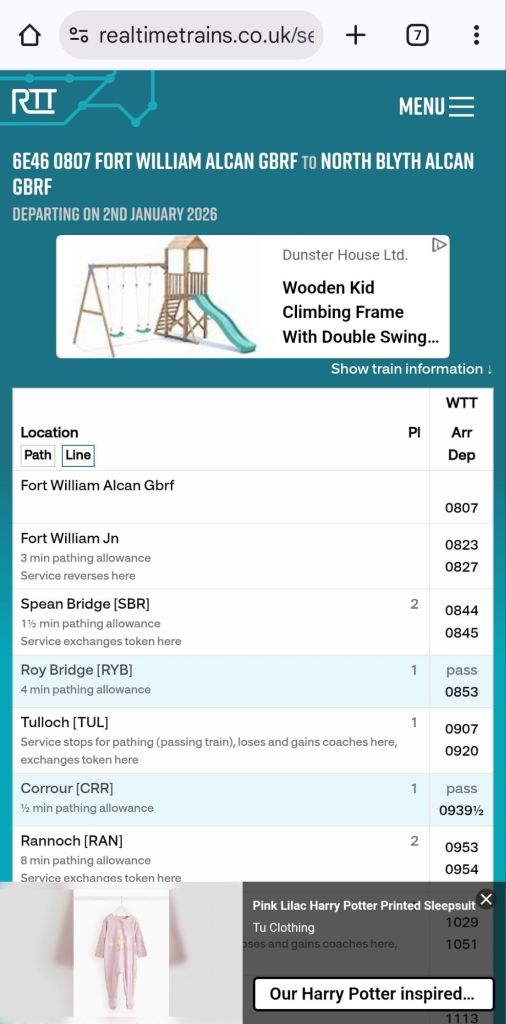
The route already exists, and is used routinely for freight, indeed the next train planned to use the route between Pegswood and Bedlington is the 6E46 GBRf operated Fort William to North Blyth alumina train, due to run later this week on Friday 2nd January 2025, which passes through Pegswood, comes off the ECML at Morpeth North Junction, and then runs to Bedlington sidings, where it turns around to head to its terminus at Cambois.
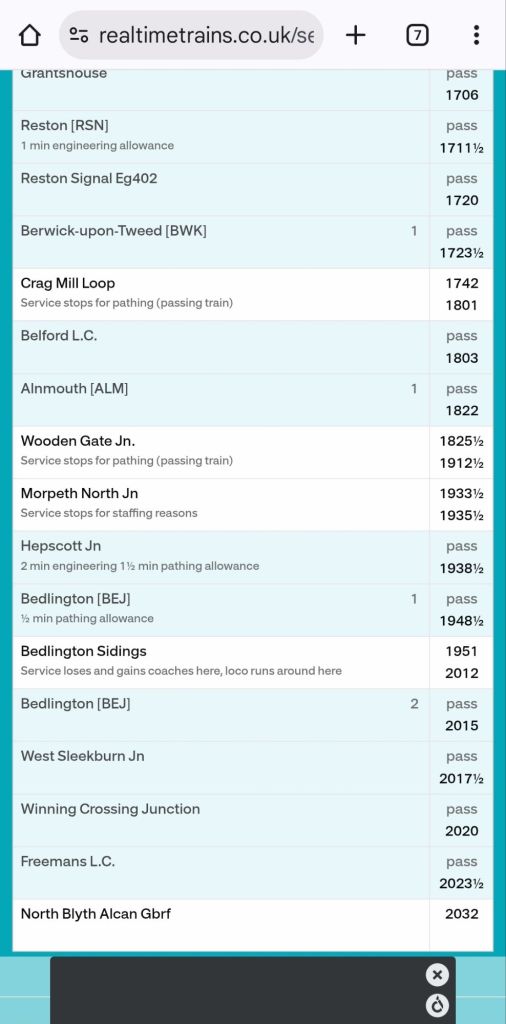
Nothing is unprecedented!
This route has also been used before during diversions around Morpeth in the 1980’s and 1990’s, as shown by the still photos below, as well as even captured on film (YouTube link, then go to about 29mins in)
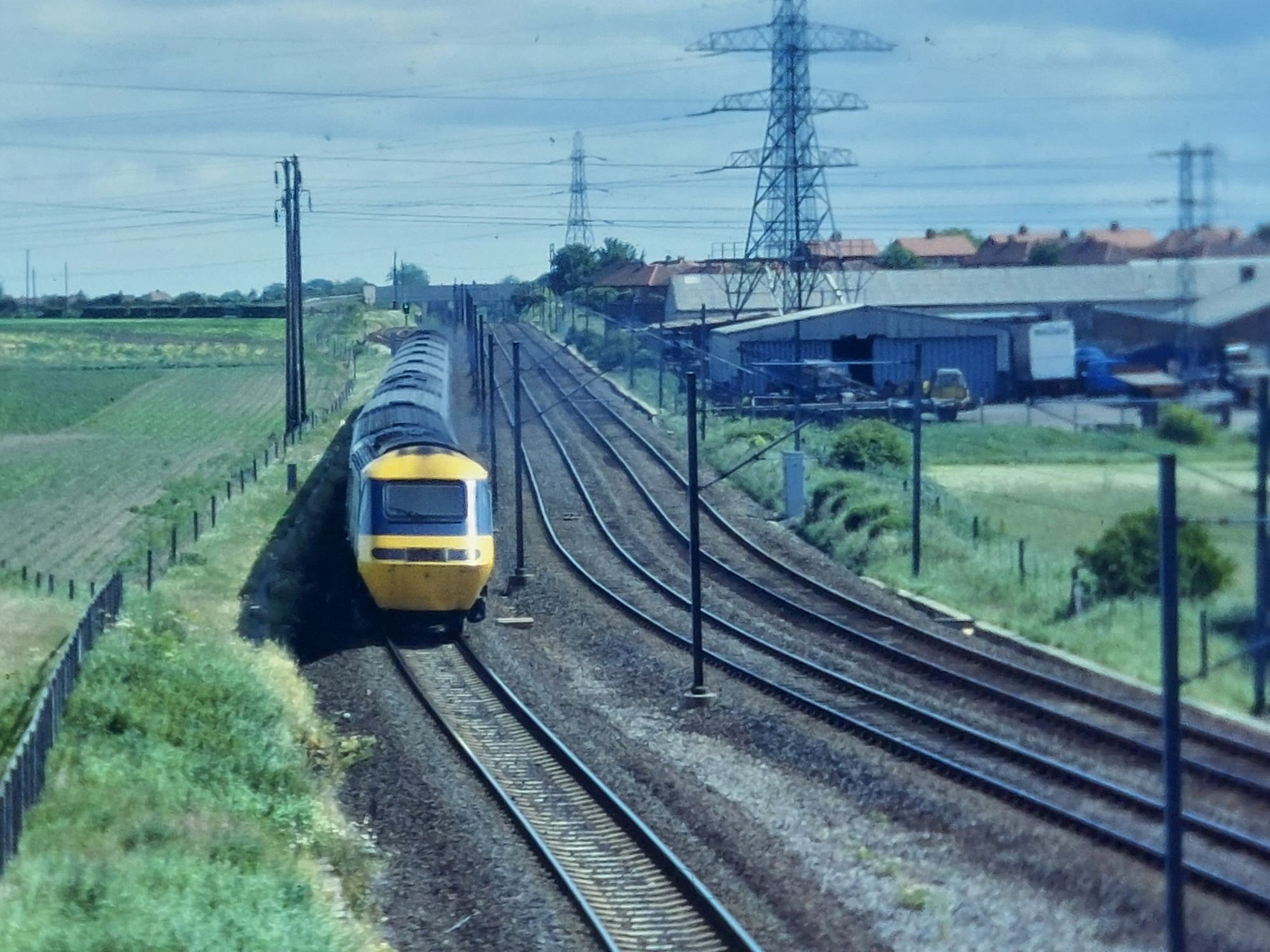
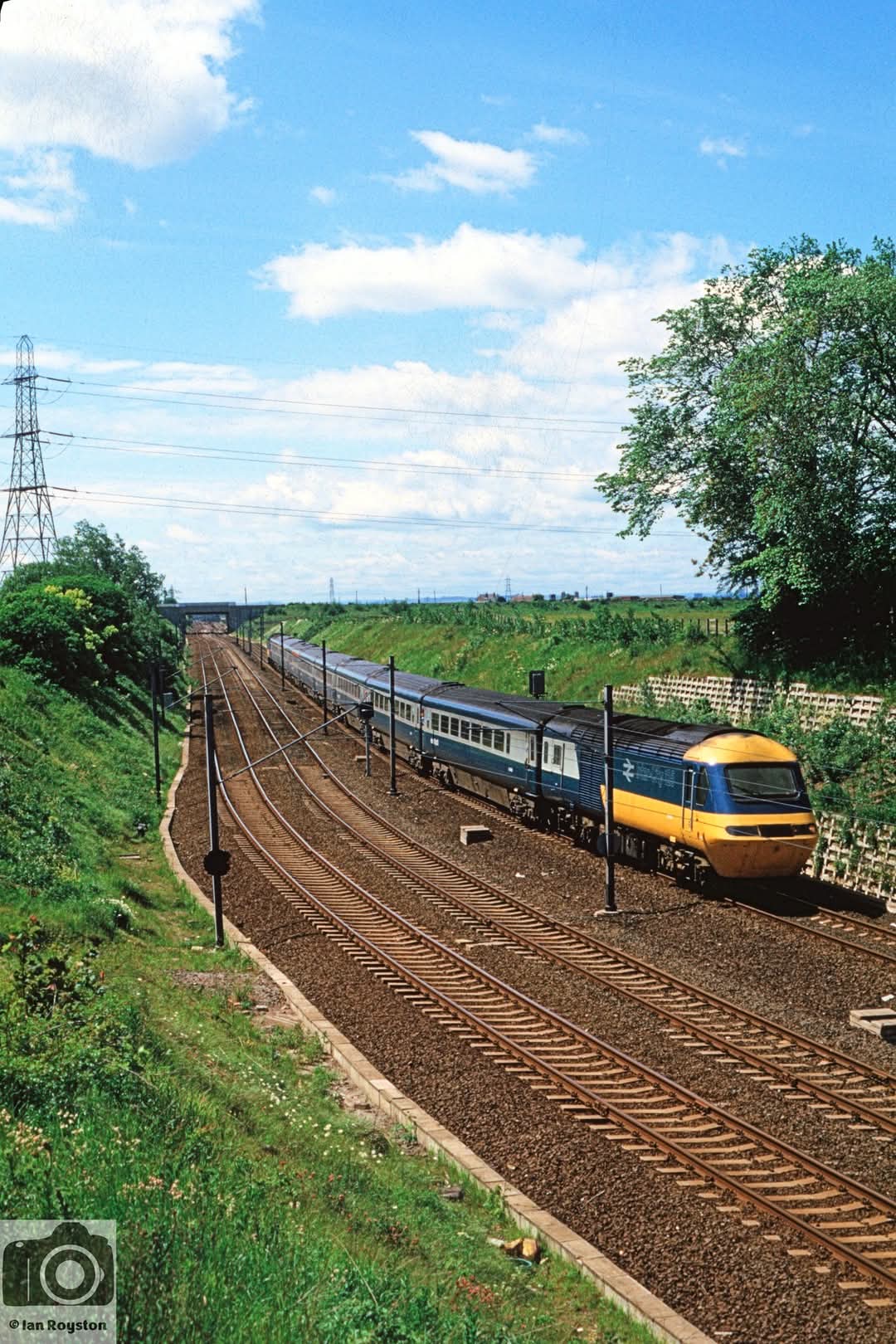

More trains that are longer than the platforms could still work to ease congestion on the Northumberland Line.
Some of you may look at the above photos of now almost retired Class 43 HST’s, or their modern equivalents in the LNER Azuma fleet, or other modern trains and rightly question that they are much longer than the new platforms are at stations such as Northumberland Park, Seaton Delaval, Newsham, Blyth Bebside, or Bedlington, and think: ‘How will that work?!?‘
For trains longer than their platform, a system known as selective door opening (SDO) can be used, meaning only those doors safely near a platform are opened, the rest remaining locked, safely keeping people within the train if they cannot safely exit onto a platform, falling out of the train onto the track isn’t going to happen by using trains longer than the platform, it will be safely managed by competent staff on board and the clever safety systems built into modern trains, you can’t reach out of the window to turn the handle like you could when the line closed in 1964.
A great example of this can be witnessed at Beauly station, near Inverness in Scotland, the UK’s shortest platform of all at just 15.06m (49ft 5in) long, and even the two-car ScotRail Class 158 trains (almost identical to those used on the Northumberland Line, just in a different colour vinyl) are much too long for this tiny platform, but manage it safely by just opening one door.
A more local example is Chester-Le-Street, where the length of the platforms means that exiting is only possible from four carriages on the train.
Beauly is still a remarkably well used station considering its minute size, being used by 33,508 passengers in the 2024/25 year. This is a far larger number of people than travel to or from many Northumbrian stations with much longer platforms, such as Acklington for example which saw just 1 passenger for every 39 who boarded or alighted from just one train door at Beauly.
Ashington is a more challenging station as it is a bay platform, so a train that is too long for the platform would potentially be foul of the line behind (the back of the train wouls still be on the through line), and might also lock the signalling system from being able to change the points for it to come back to Newcastle on the correct track.
At the ‘through’ stations elsewhere on the line, this isn’t an issue as the train will simply continue ahead after stopping.
As an example, a bi-mode (electric and diesel powered) LNER nine car Azuma could depart Newcastle, run up the Northumberland Line, calling at some stations (probably Northumberland Park and Blyth Bebside), and then continue via Hepscott to rejoin the ECML and head towards Berwick and Edinburgh.
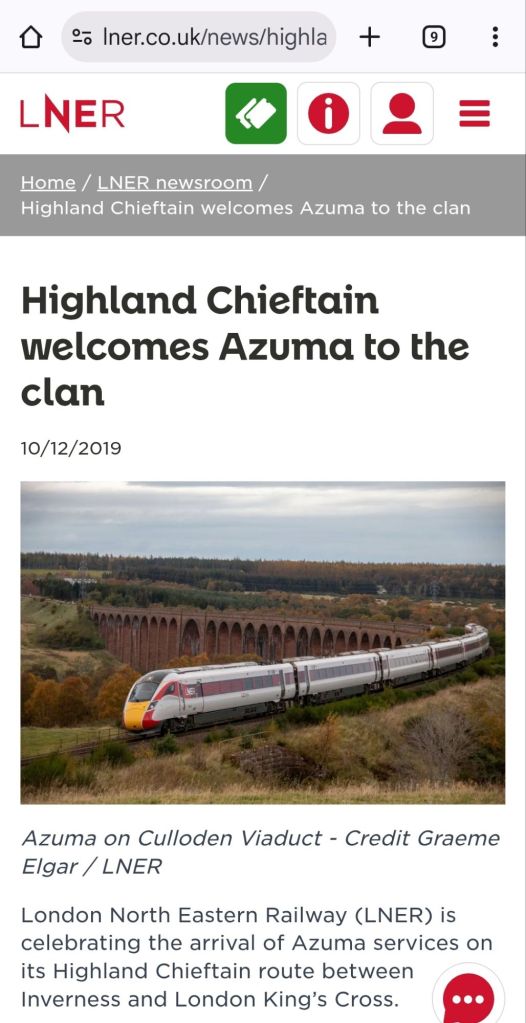
The availability of trains is probably a greater constraint than what could run over the route, but looking at a much wider range of train types might reveal some suitable units?
For example, there are reputedly six stored five-car Class 221 ‘Super Voyagers’, numbered 221 107, 221 110, 221 111, 221 112 221 113 and 221 117, 221 118 stored around the UK.
Sister members of the class are thundering daily between Newcastle and Edinburgh for CrossCountry, so could they be brought into use by Northern/TPE/LNER to run a Northumberland Coast Loop service, boost the capacity of the Northumberland Line and provide a new connection to, from, and within Northumberland?
This is of course just one potential option, and is in no way a definitive answer, but perhaps standing somewhere in a siding, a suitable fleet is awaiting a chance?
 The Northumberland Coast Loop