An article yesterday in The Chronicle, ‘Northumberland railway station pushing for more trains to get waiting room refurbishment‘ discussed the repairs being made to the southbound waiting room at Chathill Station, damaged some years ago which is currently closed, and surrounded by scaffolding.
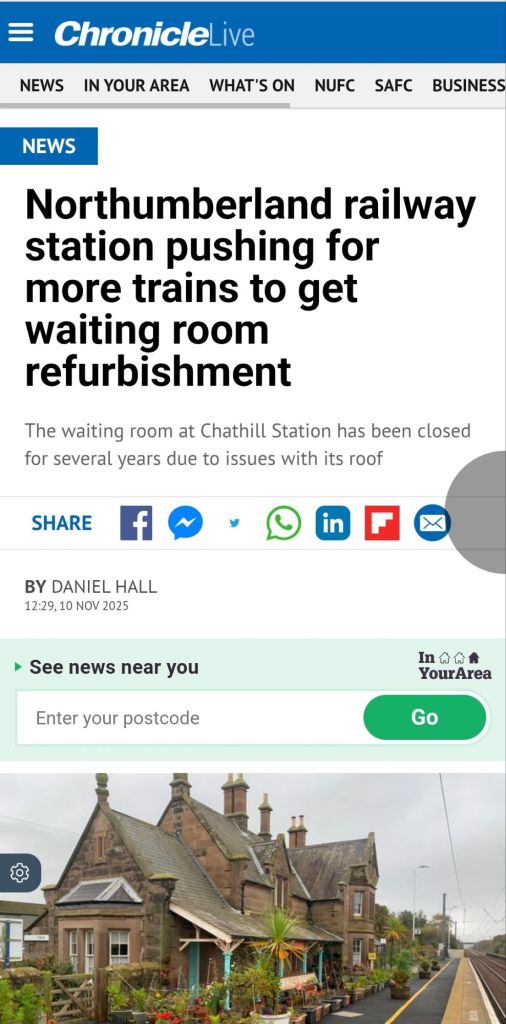
This repair is a promising sign for the future of the station, which currently only sees a very limited service from the ‘Chathill Flyer’, which serves the station twice a day in each direction.
Chathill is the current terminus for this service, the train running empty to a siding at Belford, and then returns later to run back to Newcastle.
The Chathill Rail Action Group (CRAG) intend for the station to be better served by campaigning for the Transpennine Express (TPE) trains that currently roar through the station between Newcastle and Edinburgh to stop there, and better serve major attractions nearby at Seahouses (for the Farne Islands) and Bamburgh (home to Bamburgh Castle, used in the recent 2023 film Indiana Jones and the Dial of Destiny amongst others).
To achieve these extra stopping trains, infrastructure investment into the East Coast Main Line (ECML) is likely to be required, as was outlined in our recent blog post, but was also stated in the article by Coun Martin Gannon, who states that ‘…lay-bys were being pushed for, despite being “not a perfect solution.”.’
In the wise words of Voltaire, however, it can be argued that seeking ‘Perfection is the enemy of the good’; and in terms of rail infrastructure, the relatively modest upgrading of the ECML by the addition of loops (the ‘lay-bys’) would represent a good solution; if Chathill could see even half a dozen trains per day above what it sees now, that would be a massive benefit for a huge surrounding area.
Chathill as more than just a station?
The station could be used for much more than just rail users however, as John Holwell, Chair of CRAG is quoted:
“Ultimately we’d like to see the building developed beyond a waiting room as there are other rooms in the building that aren’t used. People do come, believe it or not, cyclists come along when they use the cycle route, they’re not rail users necessarily, and it’d be nice to have a centre for tourists and other people.”
A good example of this wider use is Morpeth Station, which is now used for a number of non-railway related businesses since it was refurbished several years ago, and is also home to a quite excellent ‘Green’s at Morpeth Station’ cafe.
If the waiting room at Chathill could similarly offer a refreshments facility along the lines of those at Morpeth, and targeted not just to the small number of rail users, but also a wider clientele such as passing cyclists, walkers and even just those stopping for a break whilst holidaying in the area.
The North Sunderland Railway 1898 – 1951
Something that might be worth looking at for the refurbishment of Chathill station might be to have a display or perhaps small museum space dedicated to the quite unique North Sunderland Railway.
This little branchline ran from the junction Chathill to North Sunderland (Seahouses), but was always a private railway company, it hired in locos from the North Eastern Railway, LNER and later British Railways, the line closed in 1951, having never been an economic success; but today, would likely be a busy route given how popular a day out in Seahouses has become!
Armstrong Whitworth was a firm founded by the builder of Cragside, and restorer of Bamburgh Castle, Lord William George Armstrong, 1st Baron of Cragside.
In 1933, this firm built six small diesel locomotives, of which one D25 was named ‘Lady Armstrong’ and worked on the North Sunderland Railway until it was scrapped in 1949.
Happily, of this fleet of six locomotives, two sisters of D25 ‘Lady Armstrong’ survive, one of which, D22, is still highly active on the Tanfield Railway in Gateshead/Co. Durham, running as Reyrolles No. 2 where it spent much of its working life, but at the grand old age of 92, is still active!
Indeed, D22 has sometimes been at the head of ‘The Farne Islander’ trains at the Tanfield Railway.
D21 the other survivor is also on loan to the Tanfield Railway as a static exhibit from the National Railway Museum.
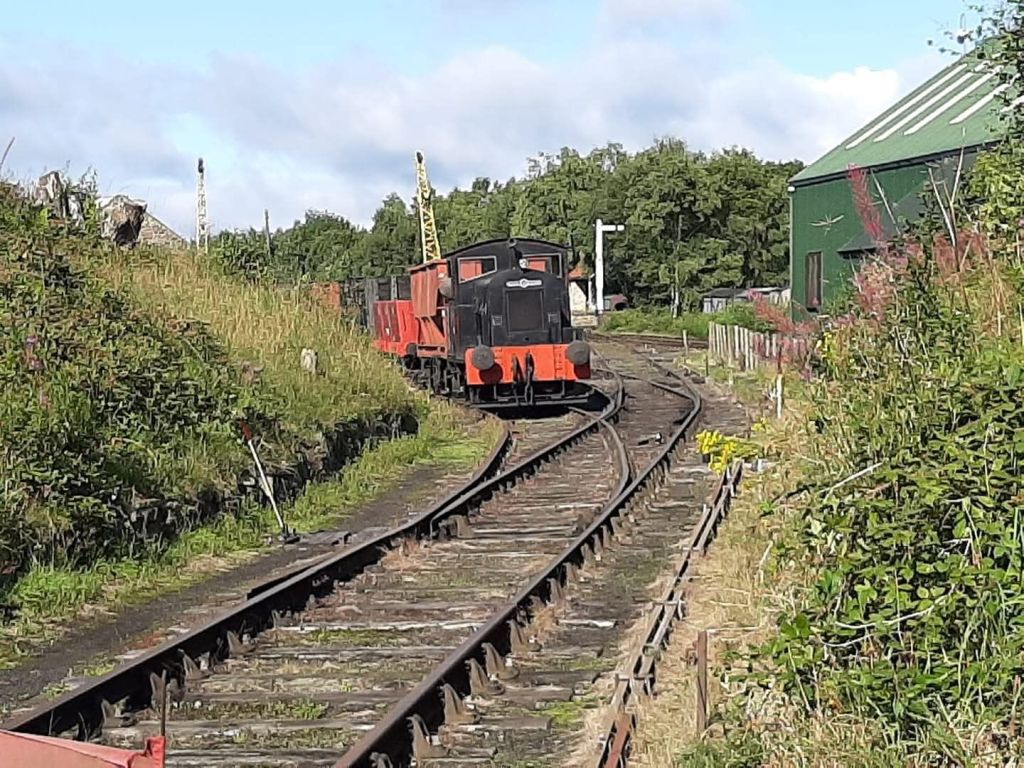
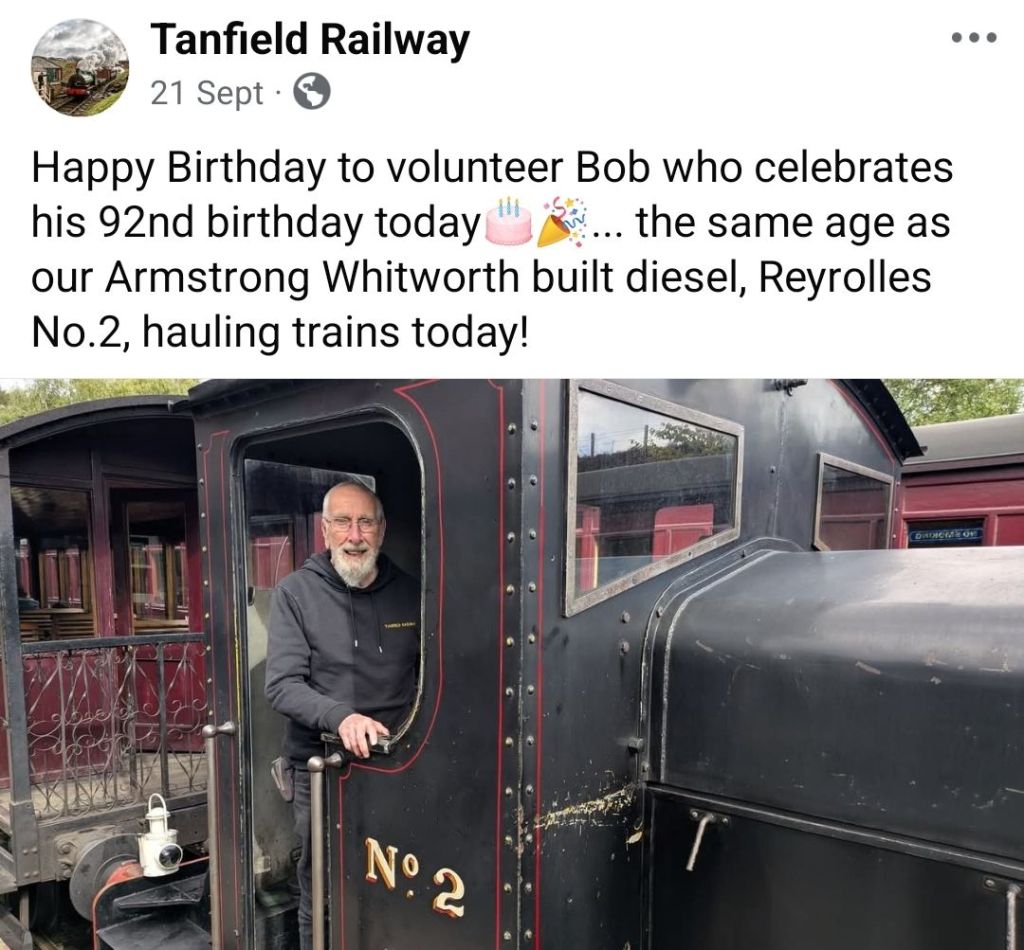
Perhaps it could be fitting for one of these survivors, given their sister D25’s close tie to North Sunderland, and the founder of the firm that built them, Lord Armstrong of Armstrong Whitworth having such a close tie to Bamburgh Castle, to visit Chathill Station at some point in the future?
It could be a fitting way to celebrate Chathill looking forward to the future, but also highlight an interesting piece of the past too?
 The Northumberland Coast Loop