
It is often said that the East Coast Main Line (ECML) between Newcastle and Edinburgh is ‘full’; running the maximum number of trains reliably and safely each day due to constraints on the capacity of the line.
The position of this campaign has always been that capacity of the ECML can grow to meet the need to run more trains, through provision of more and longer loops etc.
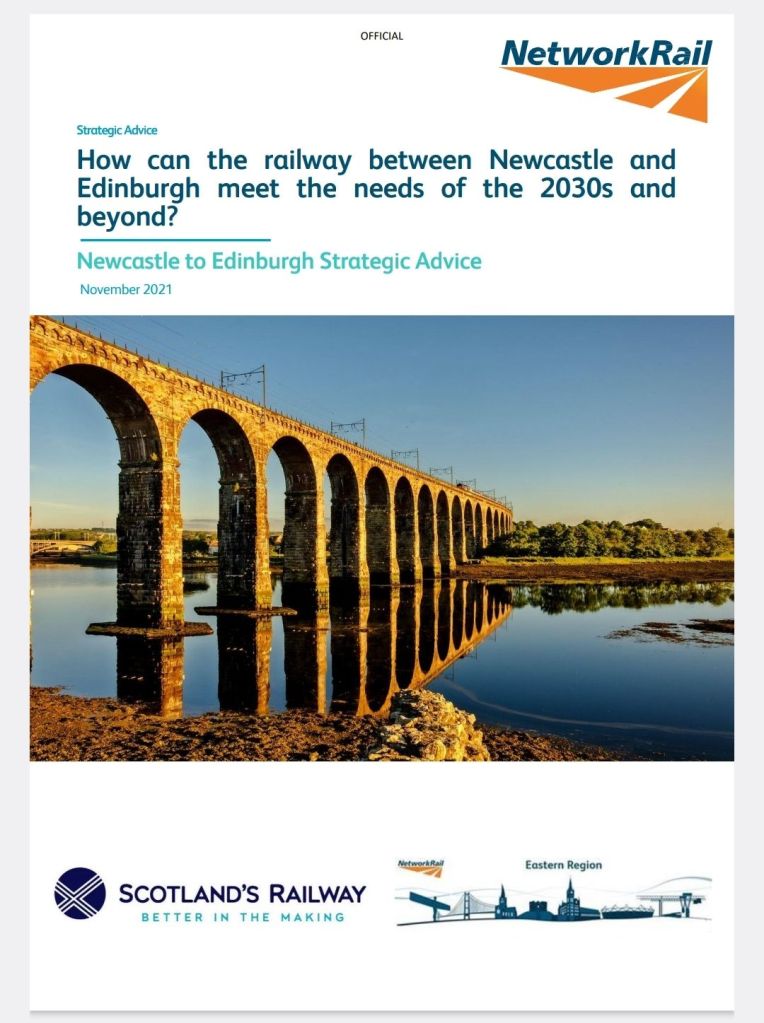
I was sent a link to the following Network Rail report which outlines the constraints but also their fixes; ‘How can the railway between Newcastle and Edinburgh meet the needs of the 2030s and beyond? Newcastle to Edinburgh Strategic Advice, Network Rail, November 2021.’
This report is focussed on the main Newcastle to Edinburgh route via Cramlington, and excludes branching traffic such as the Northumberland Line and wider Blyth and Tyne lines fall outside of the scope of the report.
This is reasonable as the report was published just over three years before the Northumberland Line opened, and rightly focusses on the core mainline route.
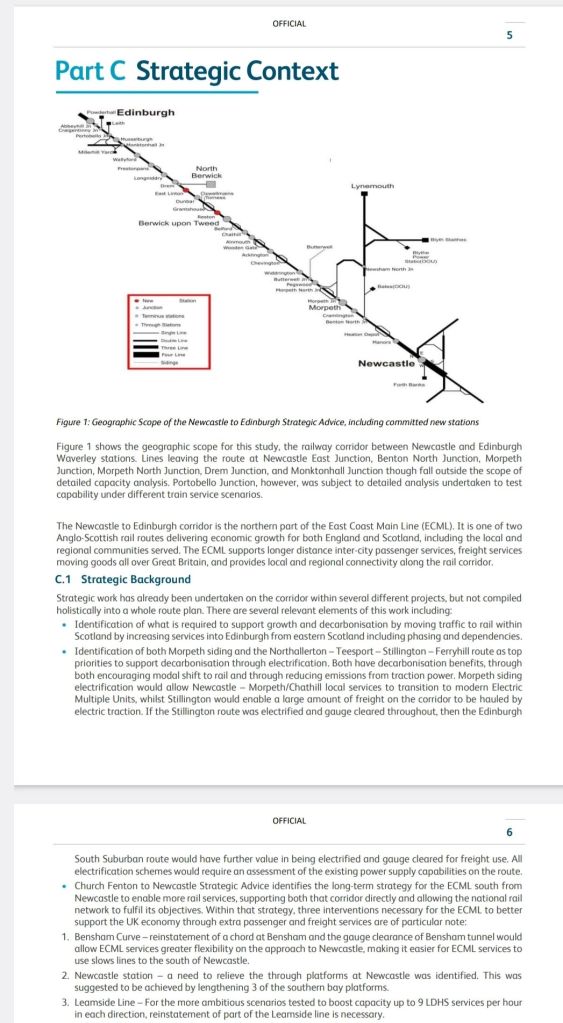
Interestingly, electrification of Morpeth Siding is mentioned on page 20 to allow the services to and from Morpeth/Chathill to be changed to Electric Multiple Unit (EMU) operation as part of this report, and would infer that in the longer term, the whole B&T route becoming electrified would be advantageous

Take trains to the people, not expect people to travel to trains
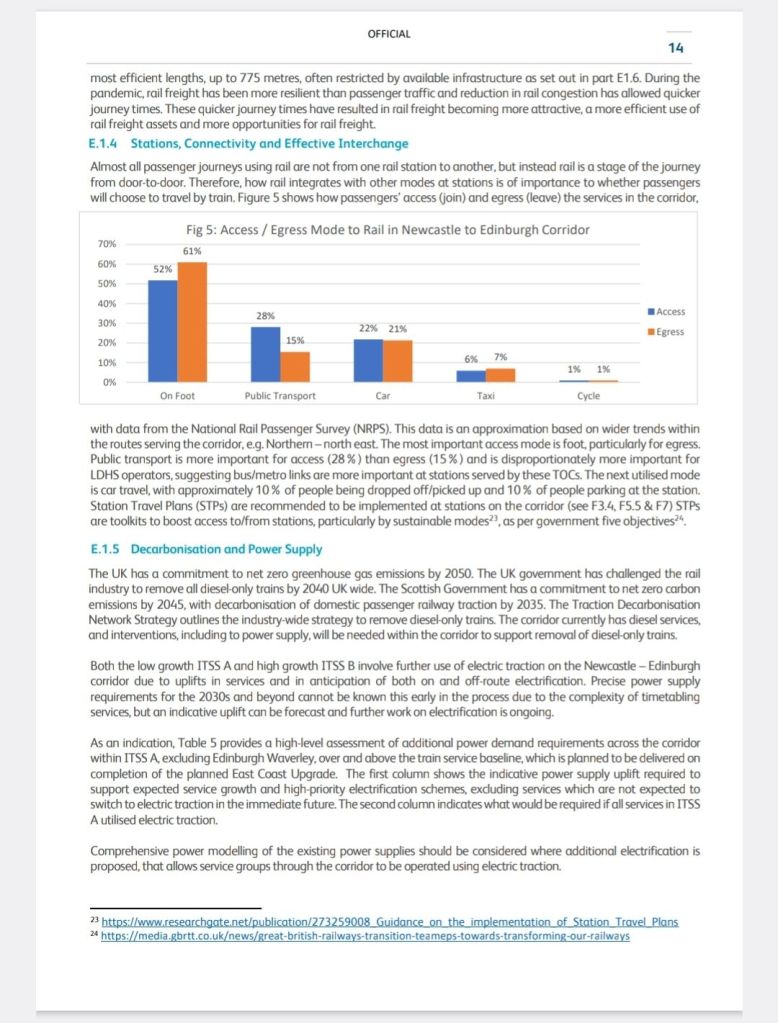
Alongside this are a wide range of assessments, such as the one below that shows rail as just a part of longer overall journeys, and how having stations within walking distance is a primary mode for both access and egress; a justification perhaps for the Northumberland Coast Loop taking Long Distance High Speed (LDHS) services to stations like Blyth Bebside and Northumberland Park, large conurbations where many more people are within walking or cycling distance, or a short bus, taxi, lift from friend/family trip, rather than the present situation of needing to travel to Morpeth or Newcastle to catch LDHS services, which isn’t required now due to stations on the route being reopened, allowing direct access to direct trains.

Capacity enhancement on the ECML
The interesting part of the report is especially focussed on the capacity enhancement, what physical infrastructure has been identified to enable more trains to run.
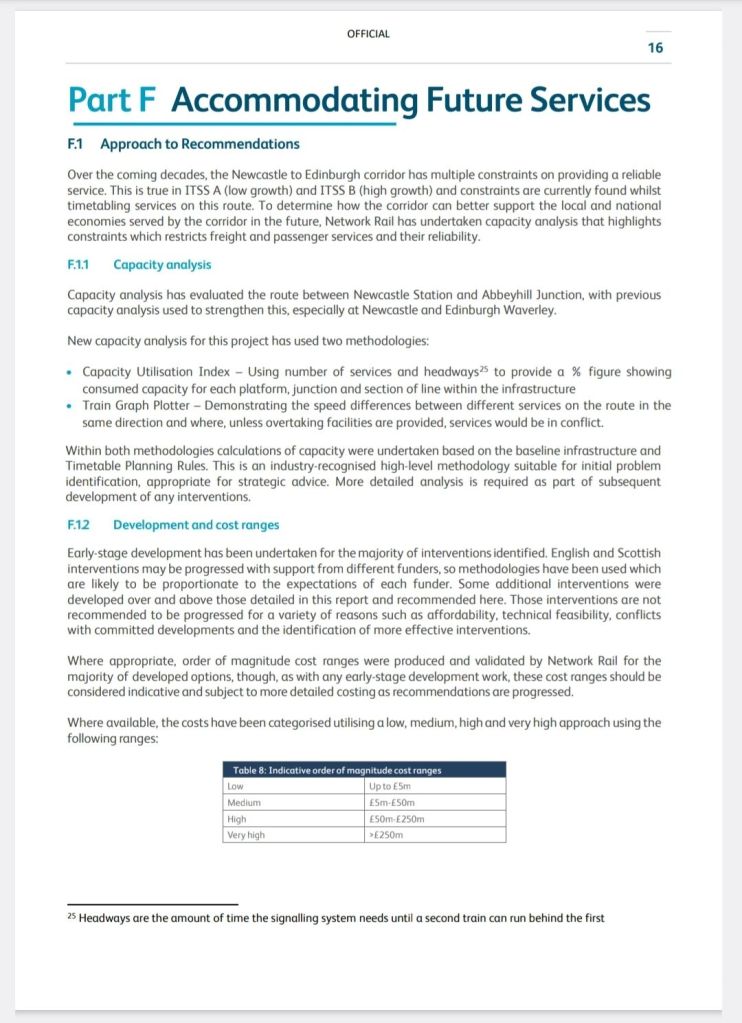
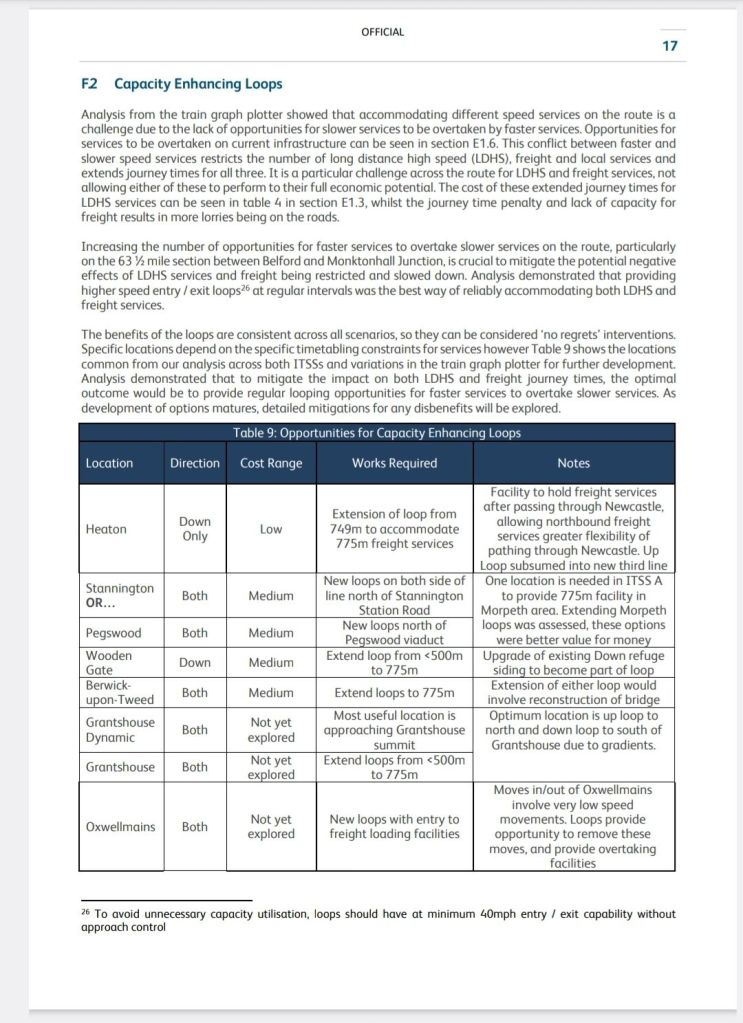
Assuming that the interventions chosen would be on the Northumberland Coast Loop route, that would potentially involve interventions with existing/new loops at Heaton (<£5m), Pegswood (£50m), Wooden Gate (<£50m), and Berwick Upon Tweed (<£50m). (All in 2021 prices)
This would mean that capacity enhancements between Newcastle and Berwick could be achieved for approximately £155m in 2021 prices (when adjusted to September 2025 prices using the Bank of England Inflation Calculator, would be c.£193m today, as prices have risen by approximately 25% in those four years).
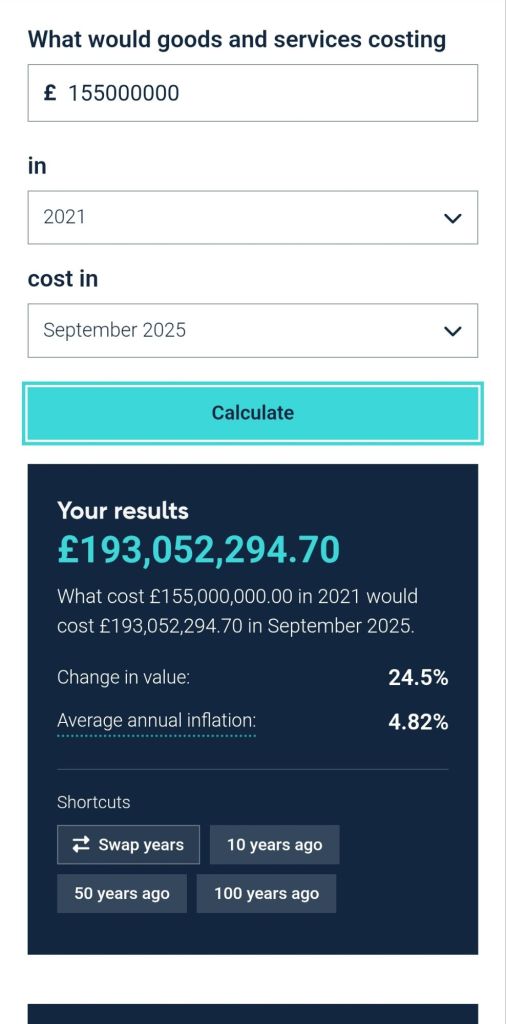
The above price, even after accounting for inflation is still under ⅔ of the price of the Northumberland Line scheme, which to date has cost £336.4m.
Newcastle and Edinburgh station upgrades
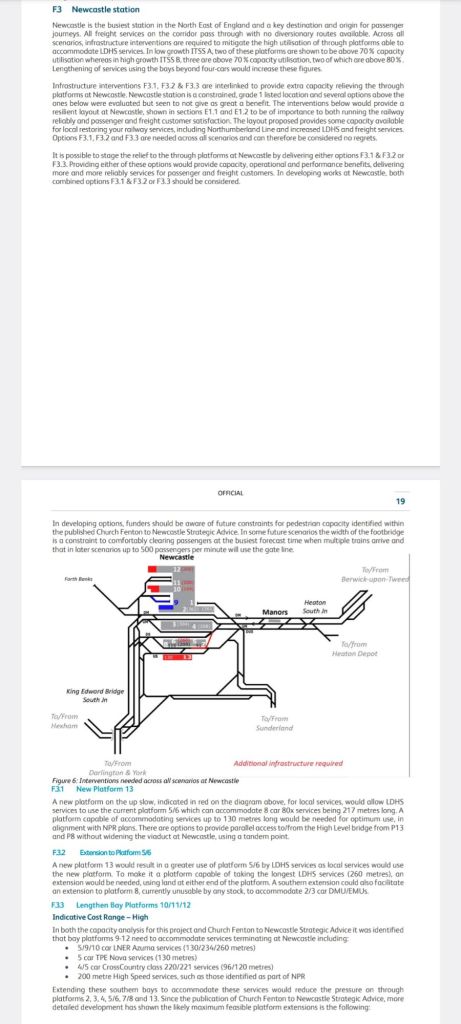
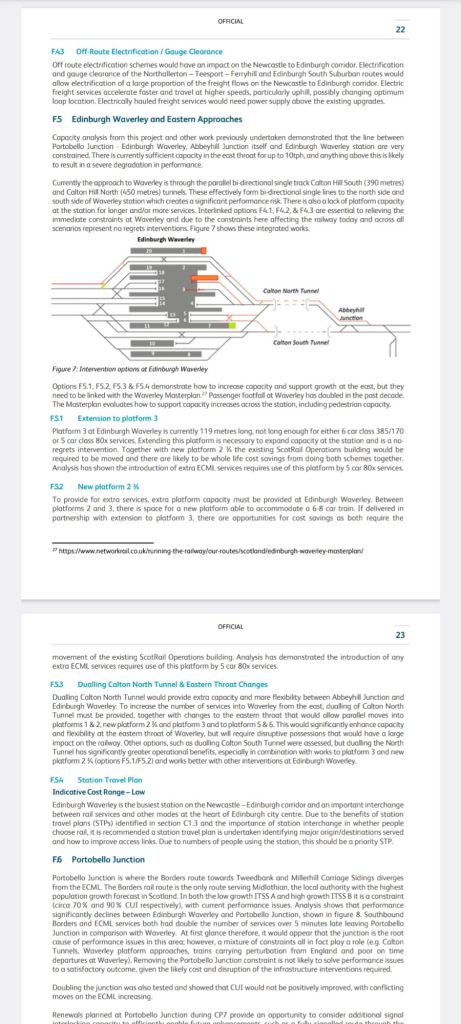
The stations at Newcastle and Edinburgh are, in themselves a bottleneck, and act to limit the number of trains able to operate on this stretch of the ECML, but once again, the report has identified potential solutions to resolve these issues, such as creating a new Platform 13 at Newcastle, and lengthening of other platforms to accomodate longer trains.
Some of these interventions are ‘high’ cost (upto £250m in 2021 prices), and some may stray into the ‘very high’ category of £250m+, but on such a busy and well-used route, again these are highly likely to be ‘no-regrets’ investments to improve capacity and enable more passenger trains and railfreight to run, boosting the economy of the region.

Larger infrastructure proposals
There are a number of larger proposals identified in this report on Pages 24 and 25, such as a third line from Heaton South Junction to Benton North, which would split the Ashington/Northumberland Coast Loop services onto a third parallel line, rather than running up the ECML to then turn off at Benton North Junction, where trains then run parallel to the Metro. This is a ‘high’ cost intervention, with expected price range of £50m to £250m, but given the huge success of the Northumberland Line to date, would again prove likely to be a ‘no regrets’ upgrade.
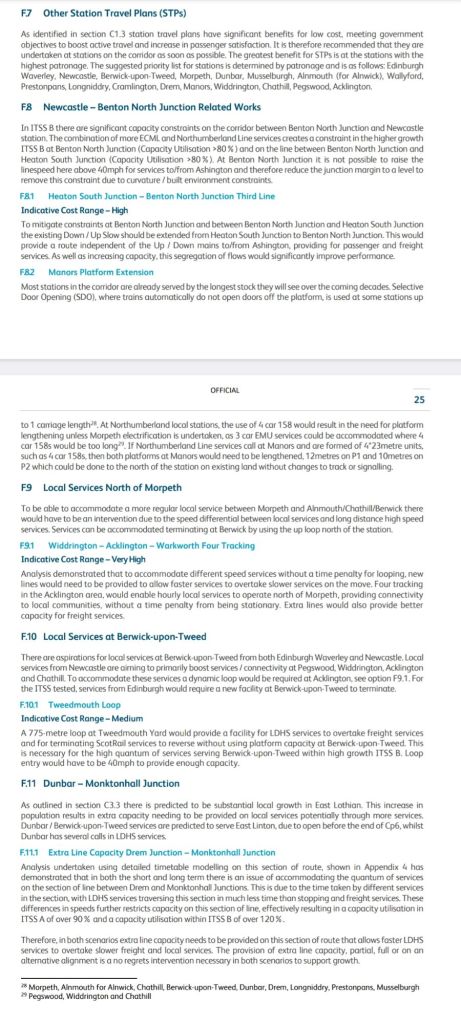
Similarly, a four tracked section in the Acklington area would be beneficial to allow slower trains to be overtaken whilst still on the move (effectively like a short stretch of dual carriageway for fast trains to overtake slower ones without making the slow ones stop in a loop), with this coming back as being within the ‘very high’ cost range (£250m+ at 2021 prices), but, like all the other options is highly likely to have a postive benefit well beyond its cost, so again should be a ‘no regrets’ upgrade.
Lets hope that this report can be picked up again, and acted upon to deliver these much needed upgrades to the ECML between Newcastle and Edinburgh?
 The Northumberland Coast Loop
One thought on “ECML capacity enhancement options between Newcastle and Edinburgh from Network Rail”