Inspired by the latest Railnatter episode (No. 258 ‘Data, maps and how to use them (with Will Deakin), it revealed some sources of data to augment the case for direct northbound rail travel from stations now opened and soon to open on the Northumberland Line.
One of these sources was railwaydata.co.uk, which was used to gain origin and destination data for the stations below; this data is not yet available for the newly opened Northumberland Line stations, but Morpeth and Cramlington stations are strong indicators of the potential northbound flows.
Morpeth Station
The following data was obtained from this webpage: https://www.railwaydata.co.uk/odm/gbr/?dest=all&string_out=Morpeth%20[7680], which gives full details of where the original source data originates from and comparisons over several years.
The rankings of stations are obtained from the most recent year available (2023/24), which broadly follows long term trends, which is somewhat skewed by the Covid-19 pandemic where travel, especially by was much reduced due to social distancing, lockdowns, and isolation.

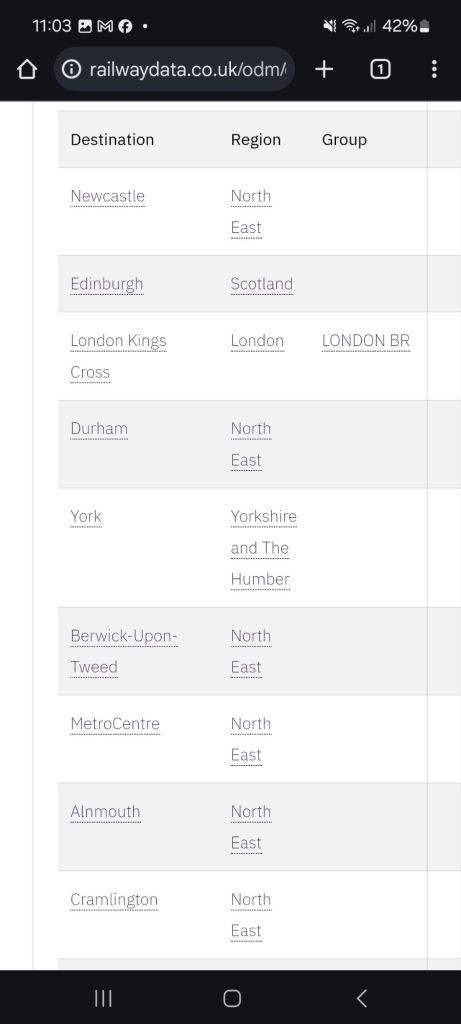
As can be seen from the above listings, Morpeth had as its ‘Top 10’ primary destinations the following stations, with tickets sold adjacent
1. Newcastle: 116,702
2. Edinburgh: 36,429
3. London Kings Cross: 27,296
4. Durham: 8,551
5. York: 7,315
6. Berwick Upon Tweed: 5,920
7. MetroCentre: 5,824
8. Alnmouth: 5,822
9. Cramlington: 4,704
10. Leeds: 3,723
As can be seen from the list above, destinations south of Morpeth make up the vast majority of the ‘Top 10’, taking 1st, 3rd, 4th, 5th, 7th, 9th, and 10th positions (7/10), and a total of 174,115 tickets sold to/from Morpeth.
The remaining three ‘Top 10’ stations, taking up 2nd, 6th, and 8th places where Edinburgh, Berwick Upon Tweed, and Alnmouth (for Alnwick) repectively. These stations making up 48,171 tickets sold in total.
This gives an approximate ratio of 1:3.6 between northbound and southbound trips from Morpeth, meaning for each individual passenger travelling to or from the north, between 3 and 4 will be heading to or from the south.
This is a reasonable state of affairs for a station such as Morpeth, which is near the urban edge of south-east Northumberland, beyond which is mainly rural, punctuated by a handful of towns and villages towards the Scottish Border (Alnwick, Amble, and Berwick Upon Tweed being the most notable large towns), and then into Scotland, itself a fairly low population density nation.
This data set does show quite clearly however that the volume of traffic heading northward is smaller but certainly not insignificant, making up more than 25% of the ‘Top 10’ ticket sales.
This is only just a fraction of overall ticket sales, with volumes to other stations not considered, but making up still substantial volumes.
Cramlington Station
Cramlington station is quite different in character to Morpeth with regards rail services, having many fewer direct links northward (predominatly as far as Morpeth), and is much less used that Morpeth overall.
Data sourced from: https://www.railwaydata.co.uk/odm/gbr/?dest=all&string_out=Cramlington%20[7579]
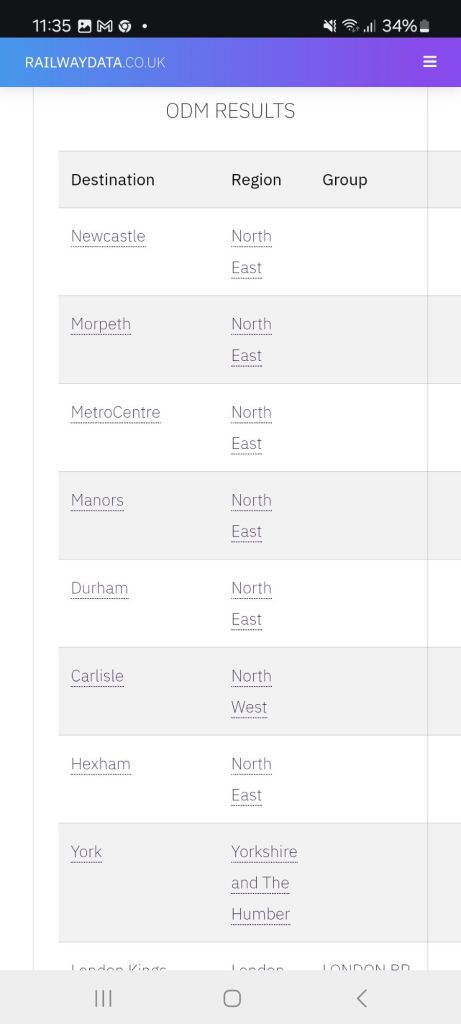
The ‘Top 10’ rankings for Cramlington are far more local in nature, with the following stations, and passenger volumes as follows.
1. Newcastle: 44,285
2. Morpeth: 4,704
3. MetroCentre: 4,318
4. Manors: 2,346
5. Durham: 1,491
6. Carlisle: 611
7. Hexham: 586
8. York: 556
9. London Kings Cross: 524
10. Edinburgh: 411
All stations except Morpeth (2nd) Edinburgh (10th) are south of Cramlington, making up a total of 54,717 ticket sales in the 2023/24 year. This compares to 5,115 northbound fares, which gives a ratio of 1:10.6 northbound:southbound, of which the vast majority are northbound passengers as far as Morpeth.
The main services calling at Cramlington are an extension of those coming to/from the Tyne Valley, and not long distance ECML services going direct to places such as York, London, or Edinburgh etc, which is likely why destinations along the Tyne Valley Line feature in the Top 10 for this station.
From my own experience as a Bedlington born and bred man, connections to trains heading north were more likely to be made from Morpeth, arriving there by car/taxi/bus etc. It is not, in my view, unreasonable to assume that many Cramlington residents could be travelling by non-rail means to Morpeth to make onward rail connections, rather than hopping on the local service to Morpeth then changing there, especially with luggage and/or children, instead driving to, getting dropped off by friend/family/taxi or even taking the bus to Morpeth instead.
Again, like Morpeth above, this is a far from exhaustive list of origin/destination stations, with data as granular a single trip to/from Cramlington to Yeovil Junction for example being listed on the source website.
The case for Bedlington, Blyth Bebside, Newsham, Seaton Delaval and Northumberland Park to have a northbound link to Edinburgh?
What can be seen from the data at Morpeth is that Edinburgh is a key destination, being the second most popular after Newcastle, and looking further beyond the ‘Top 10’, many other Scottish destinations like Glasgow Central (11th with 2,429 tickets), Glasgow Queen Street (14th with 1,509 tickets) and Aberdeen (17th with 1,086 tickets) feature as significant flows from this station.
What is also likely, is that Morpeth is attracting ridership from a wide surrounding area, including towns now beginning to reconnect to the national network such as Blyth, and Bedlington, wity passengers making the first/final mile to Morpeth by other means.
With the opening of the Northumberland Line, travelling into Newcastle to make interchange with services, particularly those heading southwards (towards places like Durham, York, London etc) is made significantly easier, and will likely reduce the need to travel into other towns like Morpeth to make connections to trains there, instead potentially making a transfer within Newcastle Central Station instead.
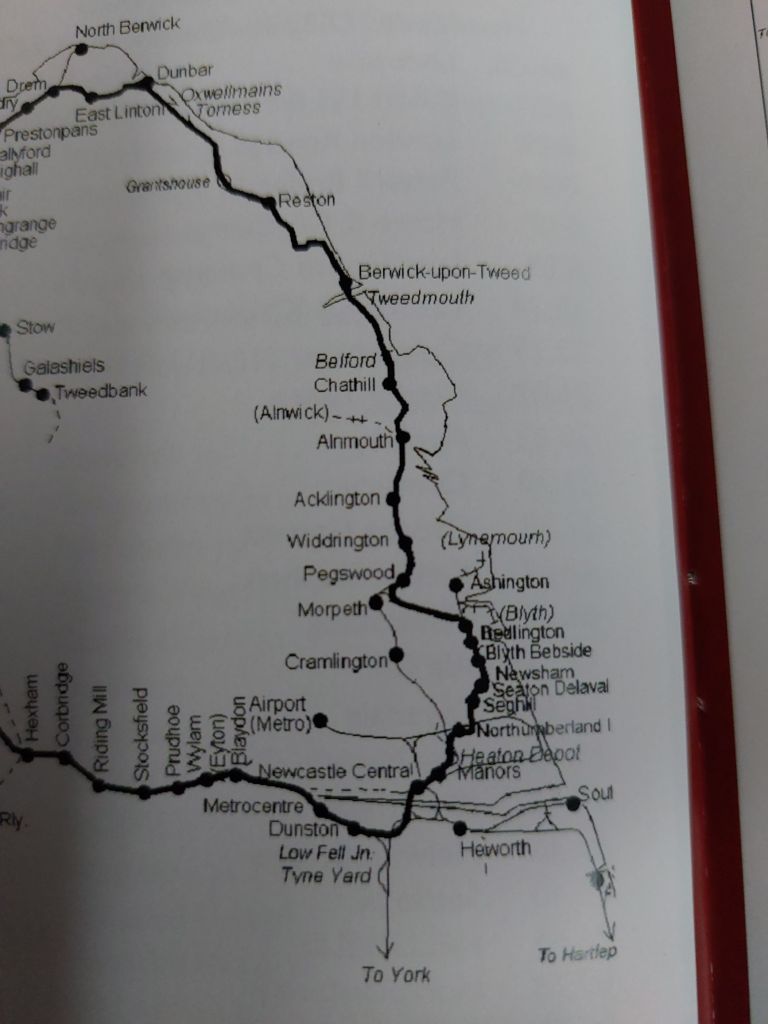
Using the direct route north, rather than via Newcastle.

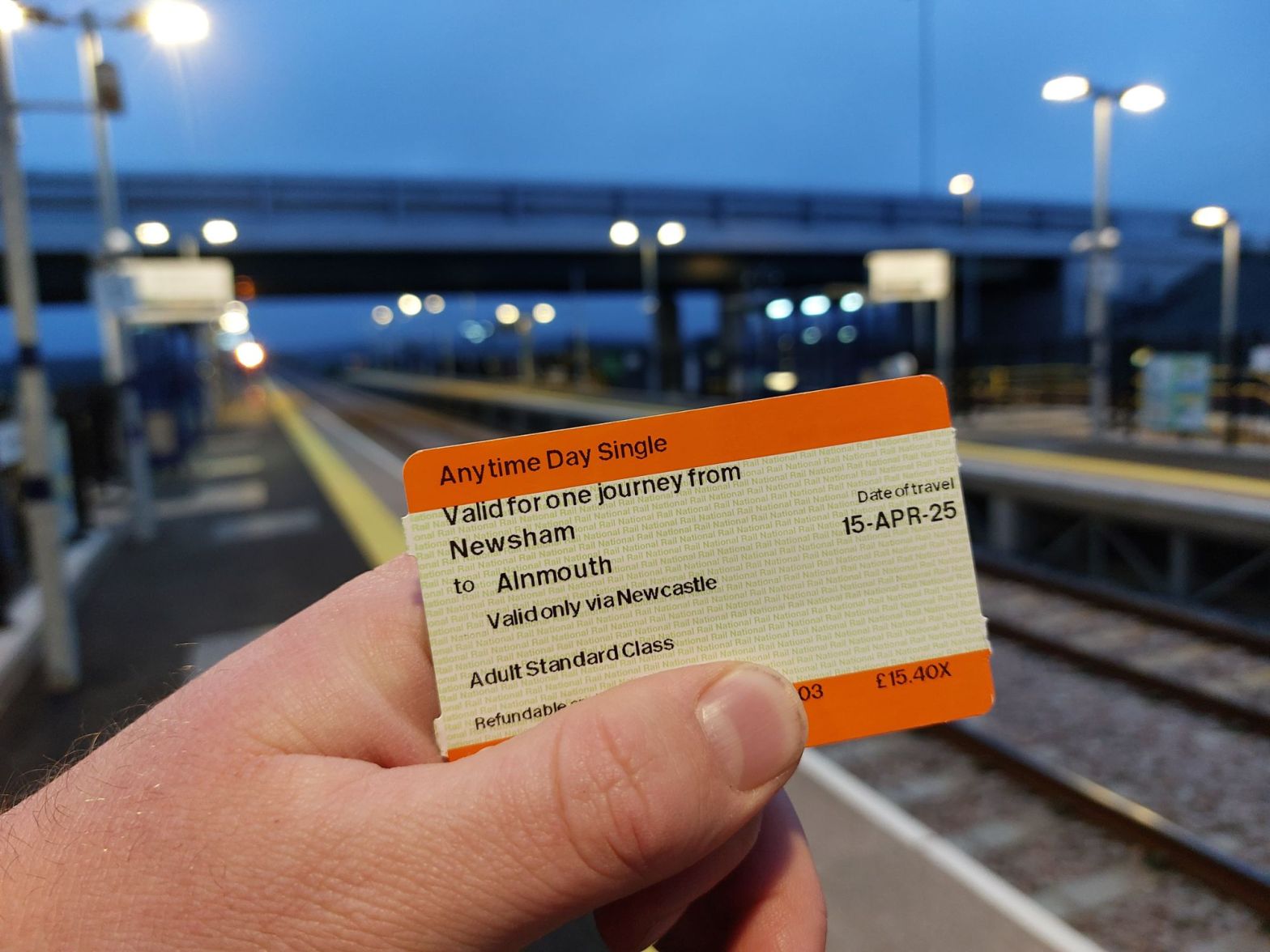
While this is excellent for a southbound trip, going northward is very indirect, such as my own portion of a trip home between Newsham to Alnmouth stations on the 15th April 2025, a good example of a ‘within Northumberland’ trip that is now rail served in both places, but is inconvenient due to the indirect route, which adds time and inconvenience of changing trains and the waiting time between services.
A direct route is possible today, as was demonstrated aboard the Seven Counties Rambler railtour on the 8th March 2025, mere weeks ahead of my service train trip.
This would make travel from stations such as Newsham to Alnmouth, or a wider Blyth to Alnwick, Bedlington/Blyth to Edinburgh/wider Scotland trip far more direct, making it both faster and far more convenient.
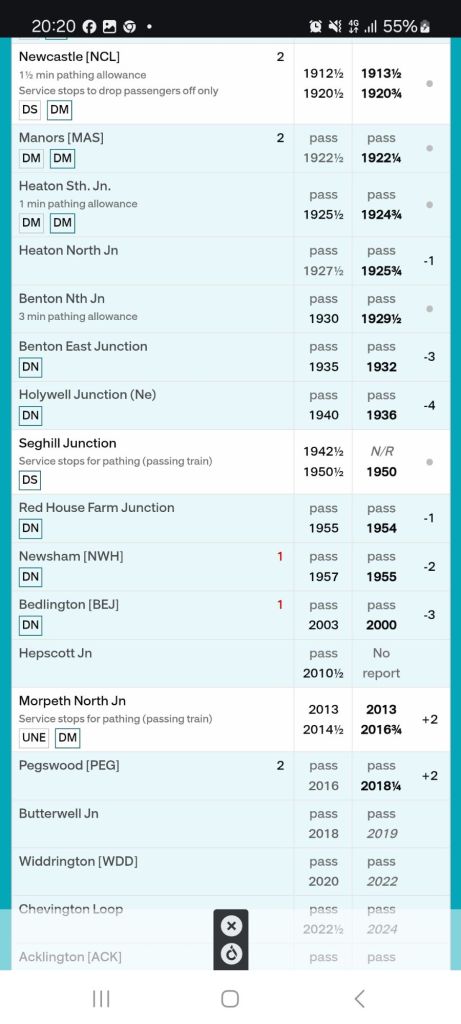
As can be seen from the table above, this railtour using two aged Class 37 locomotives, and a rake of heritage carriages was able to travel from Newsham to Pegswood in less than 23¼ minutes, meaning Newsham to Alnmouth could be reallistically a 40 minute rail trip, should the line from Bedlington to Pegswood via Hepscott be brought into regular passenger use.
It would only take the addition of a few miles of existing railway, acting as a link between the Northumberland Line and the East Coast Main Line (ECML) to be brought into regular passenger use, new stations are not required, it should be a very easy line to open, much like the Stillington Line in County Durham, which could form a faster link between Teesside and Tyneside.
20,000 passengers per year or more on the N.C.L. to Edinburgh?
Arguably, the ‘within Northumberland’ market is a small but still important part of a much larger ‘to & from Northumberland’ market for tickets, places like The Alnwick Garden, Alnwick Castle, Barter Books, Bamburgh Castle, Haggerston and Berwick Holiday Parks, and many others are immensely popular ‘day out’ destinations, much as Seaton Delaval Hall, Blyth Battery, and (indirectly) Woodhorn Museum are from North Northumberland and Scotland.
With over 36,000 tickets sold currently from Morpeth to Edinburgh for example, even if half of this market for tickets switched to a station such as Blyth Bebside, it would mean both stations still serving over 18,000 passengers per year between SE Northumberland and Edinburgh; but a more likely result is growth of the rail market by people who presently don’t use rail services, and instead go by road or even don’t travel at all.
I know personally of a couple travelling from Seaton Delaval to Edinburgh via Newcastle by rail for a short break, so when figures for origin and destination become available for stations such as Newsham and others on the Northumberland Line, it will be very interesting to see just how big the potential market is.
Petition is progressing!
At the time of writing, the petition for a Newcastle – Bedlington – Pegswood – Edinburgh rail service is approaching 300 signatures, please add your name if you’d like to support this rail route being implemented!
Thanks, RH.
 The Northumberland Coast Loop