Today, I have put forward the Northumberland Coast Loop into the North East Combined Authority’s Transport Plan Consultation.
With the Northumberland Line due to open in 10 days time (Sunday the 15th December 2024), and all stations so far being due to complete during 2025, on of the obvious things now is the ‘What’s next?‘ question.
The Hepscott Line
The Hepscott Line, that links Bedlington to Morpeth and to Pegswood is perhaps the obvious contender, it is a freight only route at present, but it will soon connect two passenger routes, with existing campaigns looking to extend the Newcastle to Morpeth Northern service at least as far as Bedlington.
The Northumberland Coast Loop proposal would use the other route at the western end of the Hepscott Line to provide a link between Bedlington and Pegswood, which would allow a direct route from Newcastle, up the Northumberland Line to Bedlington, then cutting back west to rejoin the East Coast Main Line (ECML) near Pegswood, and then head to North Northumberland and Scotland.
Newcastle to Berwick via Bedlington: The Northumberland Coast Loop
There is already an existing and proven rail market between Newcastle and towns such as Berwick, Alnmouth and more, with our recent analysis showing nearly one million rail users in North Northumberland, a significant proportion can be reasonably safely assumed to be travelling to/from Newcastle Central, with a smaller proportion of ‘within Northumberland’ trips, mostly direct from Morpeth (Cramlington having few services heading north of Morpeth).
The Northumberland Line is almost certainly going to attract new ridership from the larger towns of south east Northumberland, an area deprived of rail services since 1964, with two new stations at Ashington, and Seaton Delaval due to open this month, followed by other stations during 2025.
While travel to/from Newcastle, North Tyneside and destinations south will likely be the predominant direction of travel, there is a significant number who also travel northbound; travel to cities in Scotland such as Edinburgh and Glasgow is not uncommon, and again there is a strong ‘within Northumberland’ market, with people in SE Northumberland travelling north for days out/holidays etc regularly (i.e. families going to Alnwick for Lilidorei & The Alnwick Garden for example, or holiday parks such as Haggerston Castle being common examples).
As a relatively short, existing, and open route between two major passenger routes, and existing proposals to use most of the route for other passenger services anyway, the Hepscott Line stands out as a potential ‘quick win’ by simply using the Morpeth North Curve for routine, scheduled passenger services for the first time since it was built in 1980.
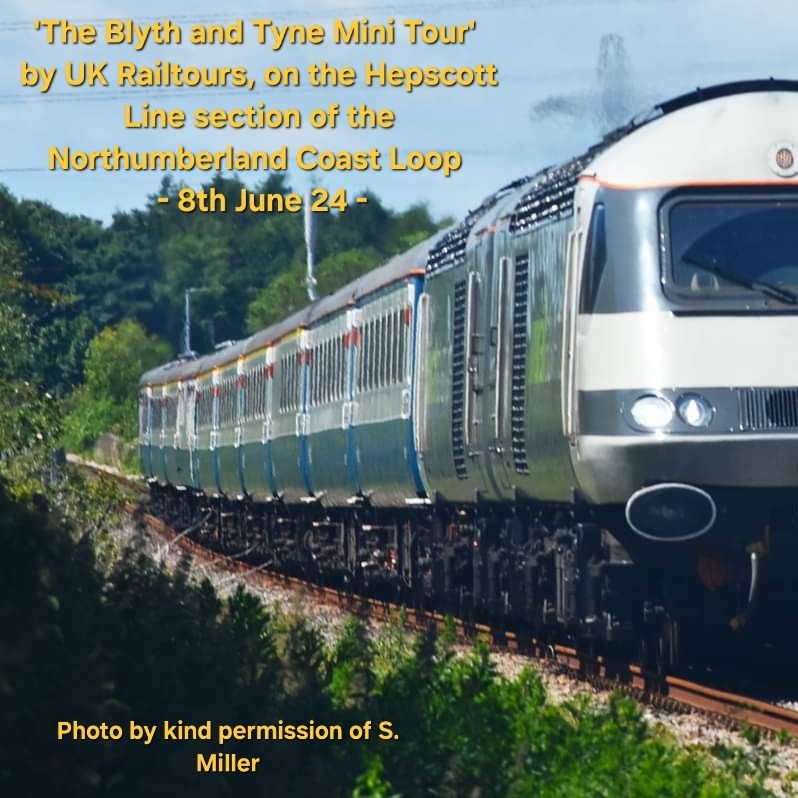
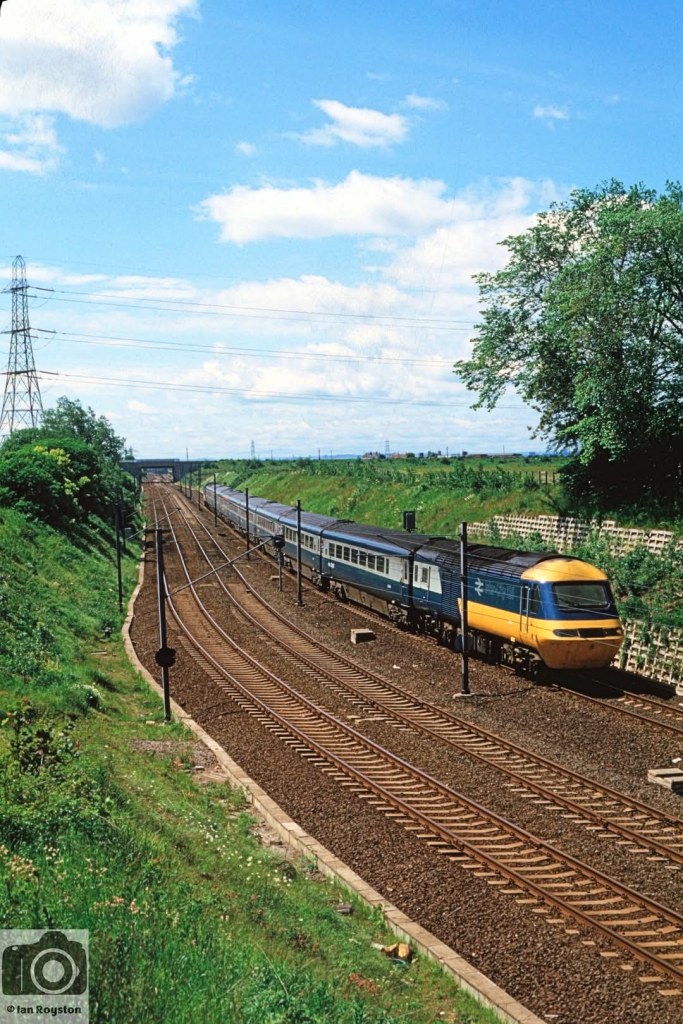
There has been history of this route being used as a diversionary route, with rolling stock such as the Class 43 ‘HST’s’ being an occasional sight over the route, as the photos below show.

A regular service, calling at stations on the route at that time wasn’t possible due to the demolition of most platforms and stations during the 1970’s, but now with the Northumberland Line scheme drawing towards completion, this is now very much changed, and trains over these lines could now call at stations en-route.
This would give towns such as Blyth, Bedlington and more a much improved connections heading North, as travelling south to go north is illogical, especially when a direct route exists, and simply needs to be implemented. Even for Ashington, while the service wouldn’t be direct, a simple change of train at Bedlington or Blyth Bebside would be far easier than travelling into Morpeth or Newcastle.
It is not a gimmick or gadgetbahn solution to a problem, it is a POTS (Plain Old Train Service), and since the route is a link between two passenger lines, it wouldn’t require any new stations to make it ‘work’; although a service on this route could serve a proposed reopened/new station at Choppington, a growing area for housing both in Choppington but also serving a large area of Bedlington better?
Regular use would also maintain diversionary route knowledge, useful in the event of issues with Plessey Viaduct if they were to occur again as they did in October 2023, which reduced the route to a single line, use of the route via Bedlington could allow the diversion of some trains to help maintain the timetable.
This adds up to the potential of a low risk, low cost route, that could offer a high reward, so why not trial it?
 The Northumberland Coast Loop