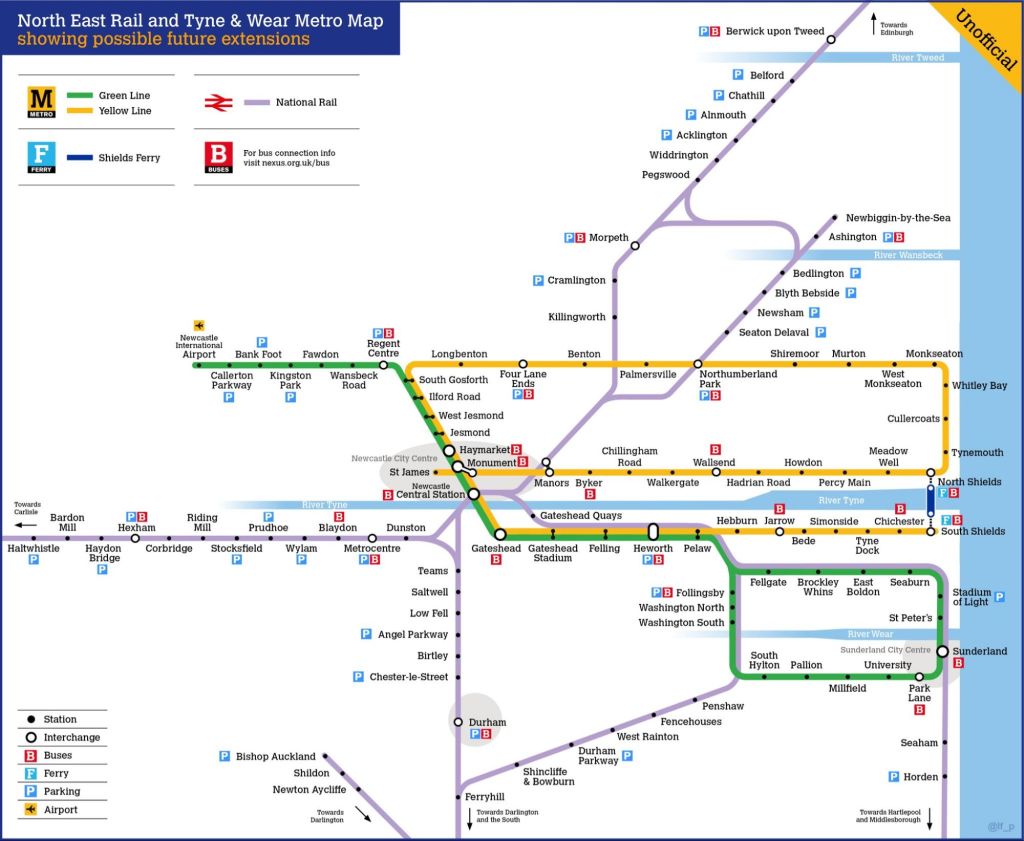
The N.B.A.B.E. is an acronym for the proposed Northumberland Coast Loop rail route, and is derived from the stations it will pass through en-route, the three letter station code is included in brackets after the station name.
Newcastle Central (NCL)
Bedlington (BEJ)
Alnmouth (for Alnwick) (ALM)
Berwick Upon Tweed (BWK)
Edinburgh Waverley (EDB)
The first section from Newcastle to Bedlington section is a large part of the highly successful Northumberland Line, passing through Manors, Northumberland Park, Seaton Delaval, Newsham, Blyth Bebside, and Bedlington stations.
The second section between Bedlington and Alnmouth has two variations of route that can be considered:
Option A: The preferred option for this campaign, is to use the existing and available route between Bedlington and Alnmouth via Pegswood. This is used regularly by railfreight carrying Alumina between the Port of Blyth and Fort William, and empty waggons coming back, as well as by occasional railtours, and some historical use for diversions too. This route could also serve a widely proposed new station at Choppington, which could better serve areas such as West Bedlington and Guide Post, Stakeford etc. A large part of this route would also be shared with proposed Newcastle – Morpeth – Bedlington rail services, so only the short section of line comprising of the Morpeth North Curve (Hepscott Junction to Morpeth North Junction) would be unique to this proposed route, every other section would be shared with other passenger services.
Option B: Put forward by others, would see new link created via Potland (the Butterwell Line) north of Ashington, which would join the East Coast Main Line (ECML) somewhere near the village of Ulgham, Northumberland by using some sections of old mineral line, now long disused, as well as some new alignments to create a link facing in the right direction, as well as improving linespeeds. This section has no firm proposals for any intermediate stations between Ashington and Widdrington as far as can be ascertained.
Challenges on this route would include a disused level crossing over the A1068 at New Moor to be re-activated or replaced by a bridge, and heavy engineering, particularly on the northern end to create a wholly new junction onto the ECML, as well as easing of very tight curves in an area constrained by a nature reserve, local roads and paths (again with level crossings), and a landfill site.
North of Widdrington, and south of Bedlington both proposals are otherwise identical, it is only the section between Bedlington and Widdrington that varies.
The third and final section from Alnmouth to Edinburgh is the existing and familar ECML route passing through Berwick Upon Tweed.
The case for linking the Northumberland Line to Edinburgh?
The Northumberland Line, from Newcastle Upon Tyne to Ashington, Northumberland has been a huge success since it opened in December 2024, in some respects almost too successful with some trains being so full that they are leaving passengers on the platforms, and some complaints from those aboard that trains are too full, many of which are two-car Class 156 or Class 158 trains.
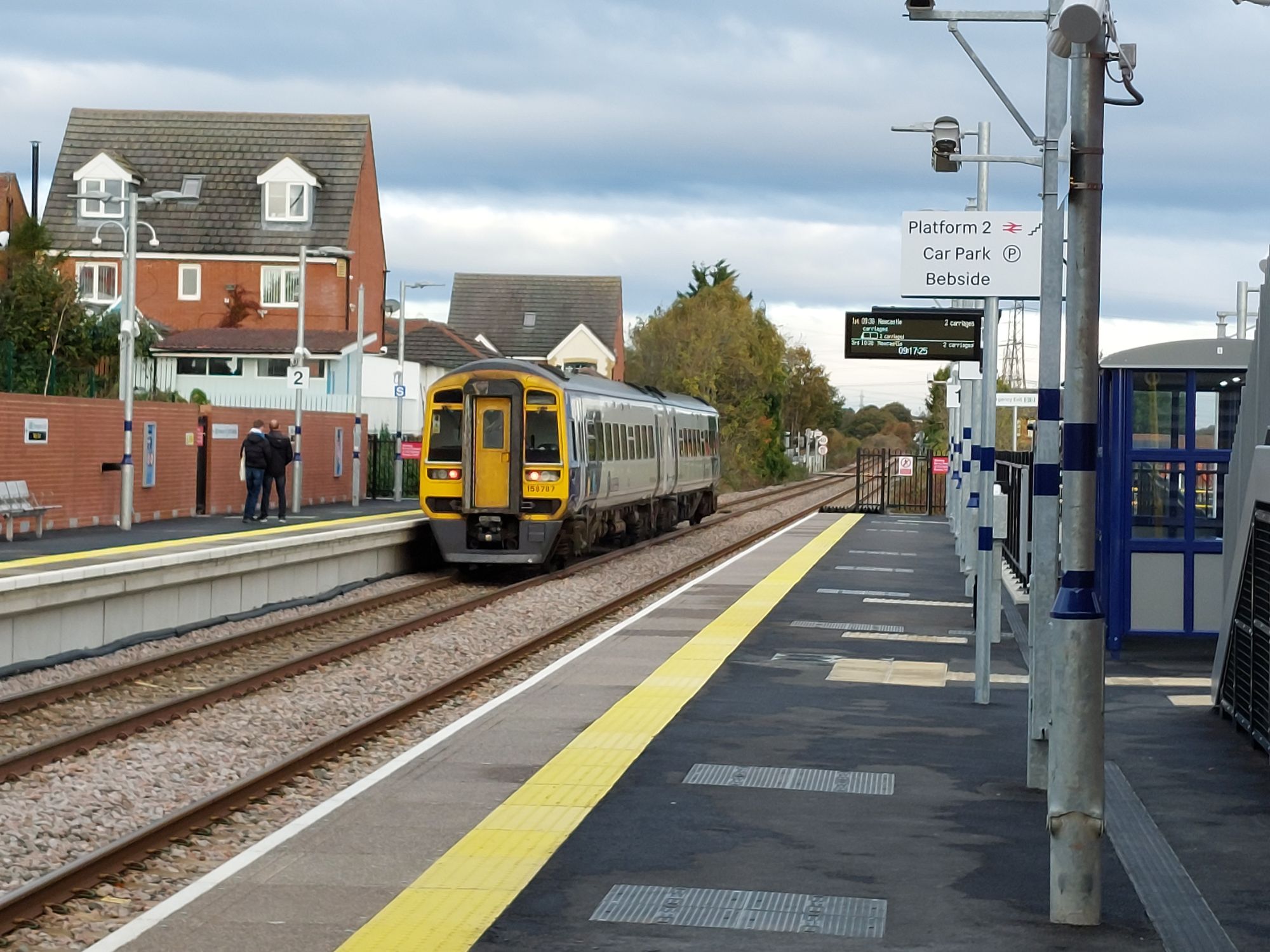
These ageing British Rail ‘Sprinters’; Class 156 and Class 158 trains built in the late 1980’s and early 1990’s, are used all over the UK, means that not only they are in constant high demand, but they are also in short supply. Many other routes would like more of these units to operate longer trains, but with an old fleet, there won’t be any new carriages built now, and new trains to replace them will be several years away.
With the sourcing of additional ‘Sprinters’ or similar units very challenging, the solution this campaign is offering is to widen the range of rolling stock regularly running over the majority of the route.
There is a much broader range of trains running between Newcastle and Edinburgh via Cramlington and Morpeth, and potentially some of these could run via the Northumberland Line to boost seating capacity between Bedlington and Newcastle if using the N.C.L route via Pegswood (Option A), and also via Ashington if the new Potland link was built (Option B)
High speed diesel and bi-modes via Bedlington?
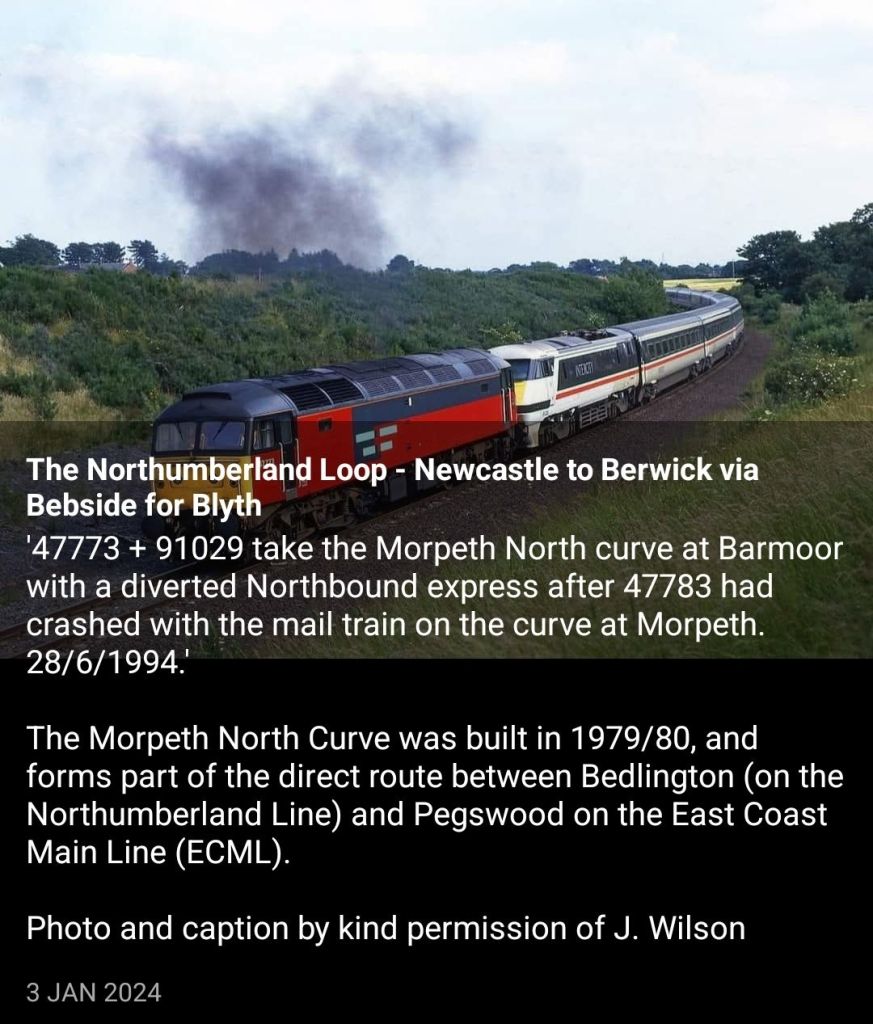
An obvious constraint of the old ‘Blyth and Tyne’ lines that makes up Northumberland Line and the connection via Choppington is the lack of overhead wires preventing 100% electric trains from working over the line without a ‘Thunderbird’ locomotive dragging them along the unwired section, as seen below in June 1994, where the red ‘Thunderbird’ diesel loco Class 47 ‘47773’ is dragging the Class 91 ‘Electra’ 91029 and carriages around the Morpeth North Curve at Barmoor.
However, there are still many trains on the ECML that are running on diesel, either totally in the case of CrossCountry Voyagers Class 220), or partially for some bi-mode trains such as the TPE ‘Nova 1’ sets (Class 80x).
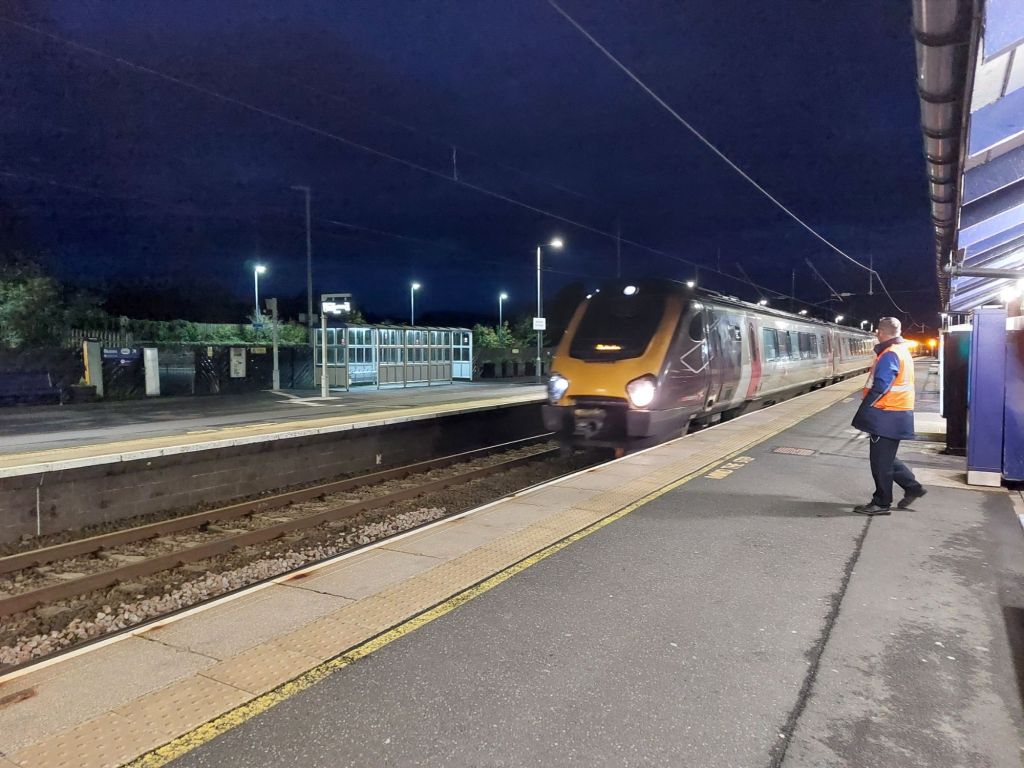
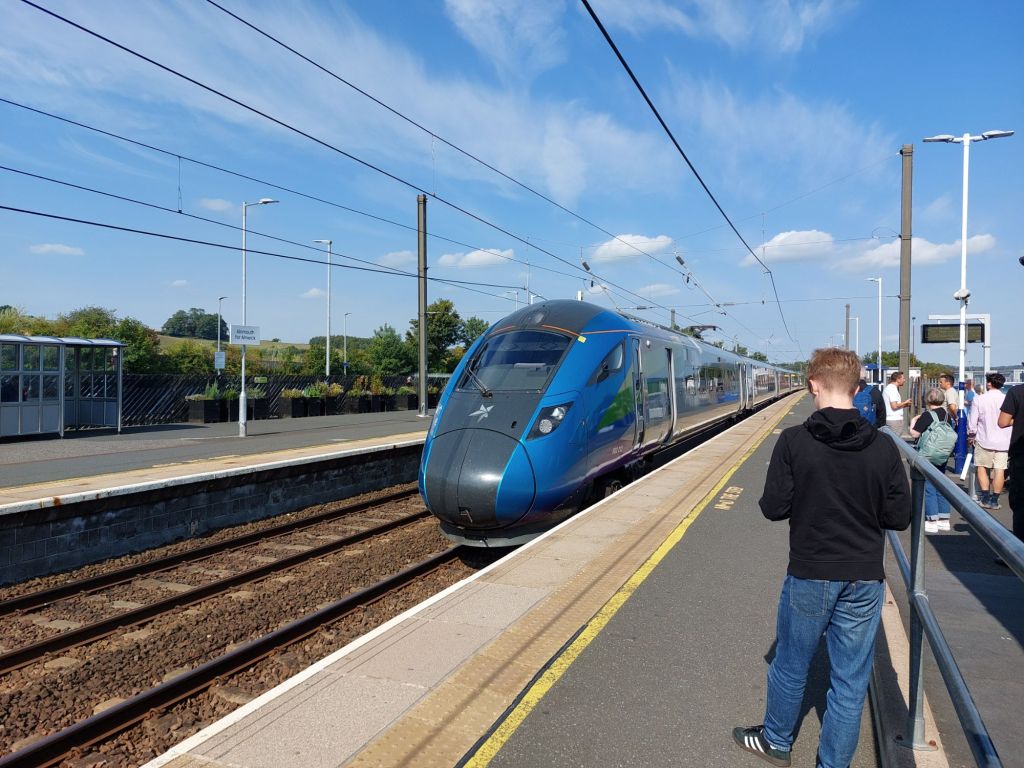
The two types of train above tend to be relatively compact at four or five carriage lengths, so likely able to still fit the fairly short platforms on the Northumberland Line, but are also capable of much higher speeds (up to 125mph) than the somewhat ironically named ‘Sprinters’ that are amongst the slowest trains operating on the Newcastle – Edinburgh route, with a top speed of about 90mph, much slower than the Voyagers or Nova 1’s.
The routing of fast trains via Bedlington is far from unprecendented; with the HST (Class 43) seen below in 2017 on the ‘Bound for Craigy’ charity railtour, but on diversions in the 1980’s and 1990’s, HST’s were used in service via Bedlington.
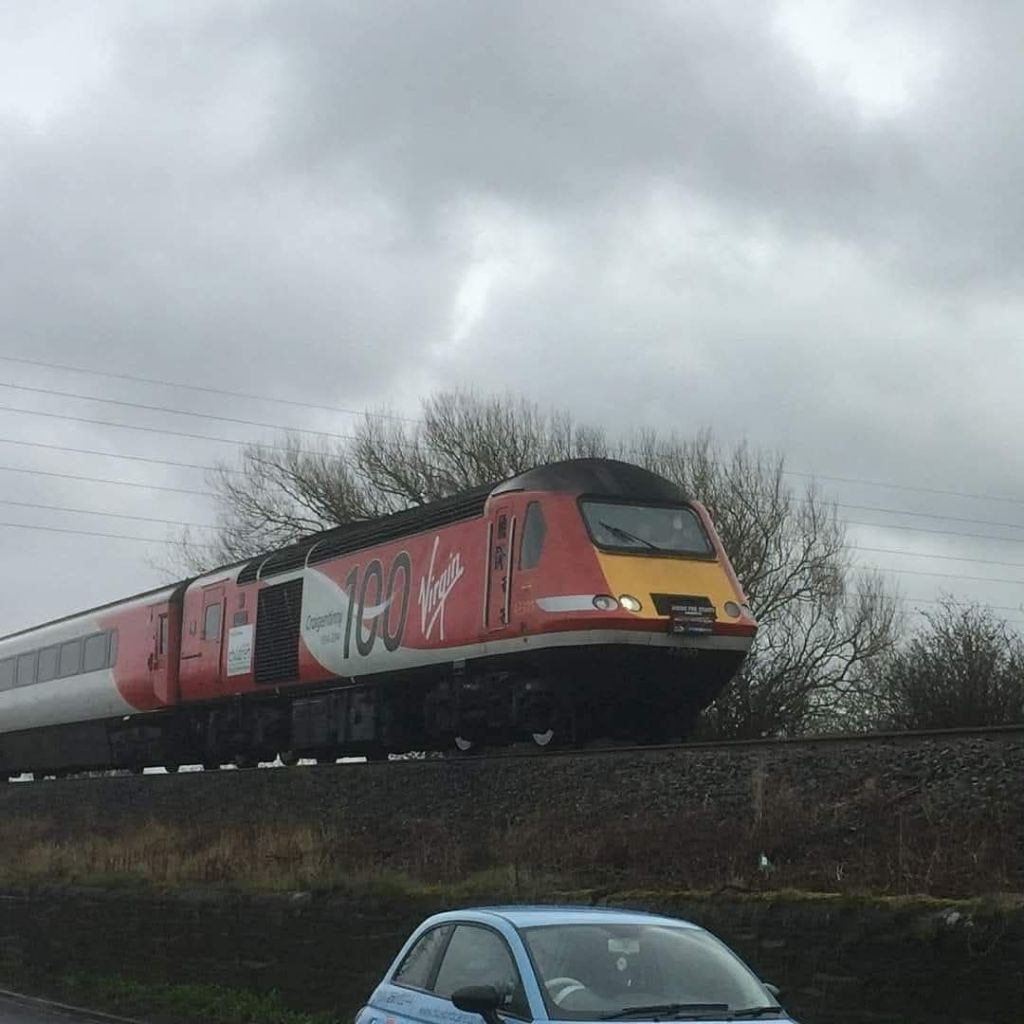
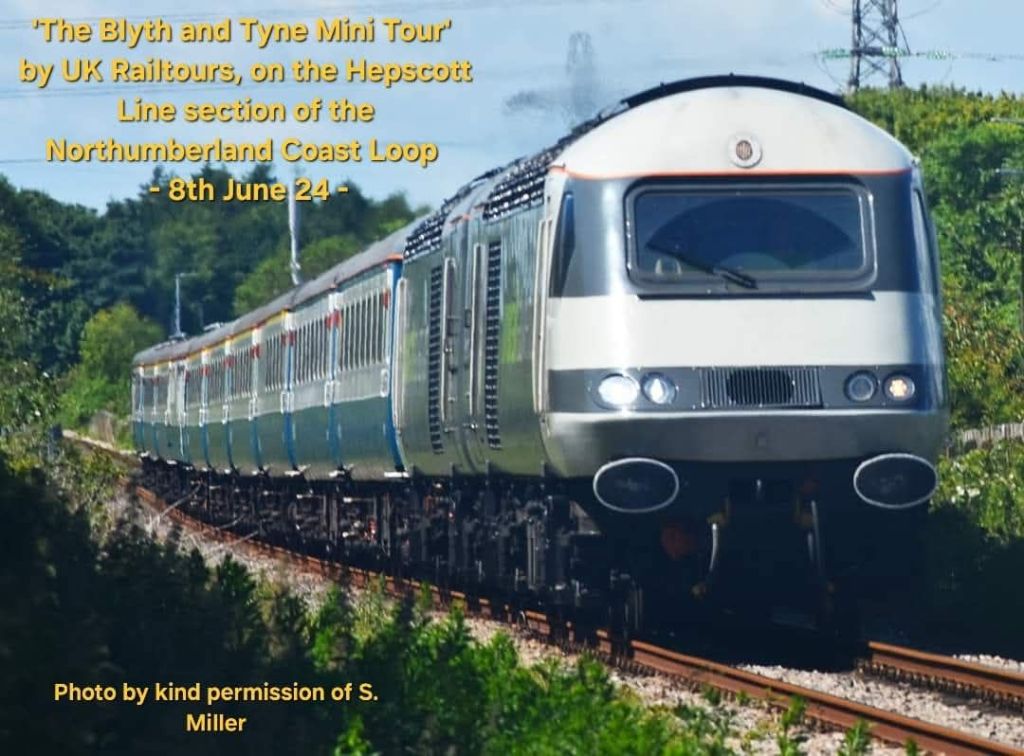
Due to Morpeth North Curve only being opened c.1980, these diverted or charter trains have only ever been able to pass through stations long closed or disappeared entirely, as all stations on the route closed in November 1964, at least fifteen years before the curve that enabled a direct route to or from the opened to traffic.
Support, and the case for the Northumberland Coast Loop
At the time of writing (Monday 19th January 2026), the petition for a Newcastle to Edinburgh via Blyth Bebside and Northumberland Park rail route stands at 1050 signatures.
Had history been different in the 20th Century, and the now Northumberland Line stations had remained open rather than closing in 1964, I feel that it is highly likely that some direct trains to North Northumberland and Edinburgh would have been started long ago; sites such as the huge business park at Cobalt, as well as regeneration of towns such as Blyth and Bedlington would very likely have spurred this on, and it could have brought a major, positive economic impact to the area had it come to pass.
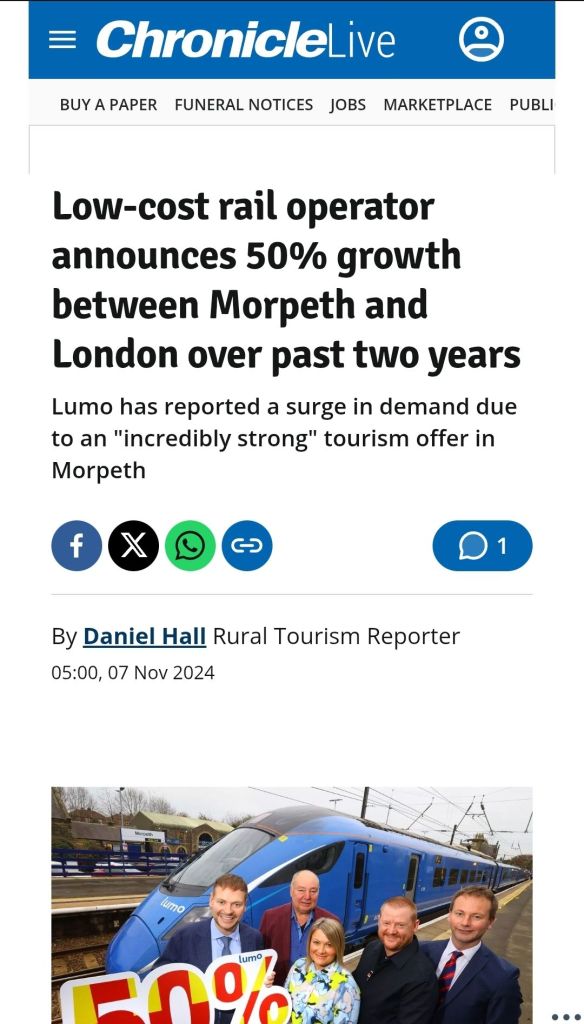
Indeed, other towns that have always been served by direct trains to both the north and south such as Morpeth or Berwick are shining local examples of places that have thrived through having good rail links around the UK, such as this example of LUMO serving Morpeth and seeing substantial passenger growth of 50% in two years.
In contrast, towns such as Bedlington and Blyth, having never had direct long-distance rail connections before, and losing their local ones in the 1960’s, have suffered greatly from demise of heavy industries that underpinned the local economies of these towns, a direct rail link between Newcastle and Edinburgh, with hindsight could have helped offset the economic decline of these areas by providing easier connections for new jobs, or helping bring greater inward investment. Now with stations reopening, now is the chance to sieze the opportunity to try a direct link?
Between the cities of Edinburgh and Glasgow, there are four electrified railway routes; the Falkirk Line, the North Clyde Line, the Shotts Line, and the Carstairs Line. If those two cities can justify four electrified lines, surely Newcastle and Edinburgh, as another city pair can justify going from just the ECML, to having the traditional ECML plus the N.C.L.? A short loop of line, that already exists, and asking for an InterCity service to run around the coast through SE Northumberland and North Tyneside is a modest suggestion for a second connection between the Scottish capital and Tyneside?
There are several places on the ‘loop’ part of the Northumberland Coast Loop (Bedlington to Newcastle) that could offer substantial tourism potential, both year round in the case of Seaton Delaval Hall (now a National Trust property), as well as smaller independent attractions like Blyth Battery. Major events like the 2016 Tall Ships Regatta at Blyth drew in 500,000 visitors, and gave a then £13.5m boost to the local economy.
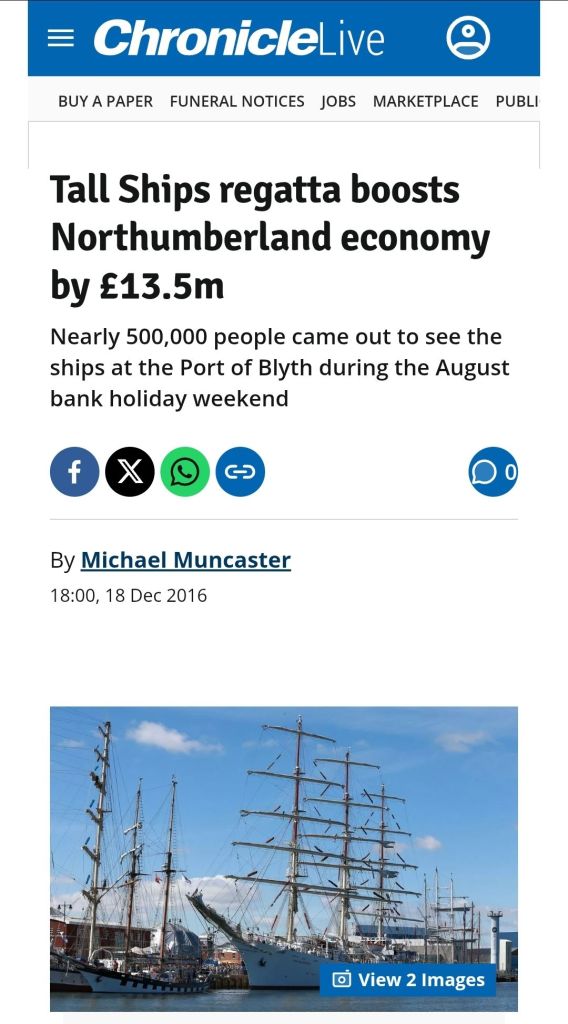
Adjusted for inflation, a similar event in August 2025 would be worth around £18.6m to the local economy, a repeat of this event, now that the Northumberland Line is open to passengers would likely bring even greater value as more people may travel to an event such as this from further afield.
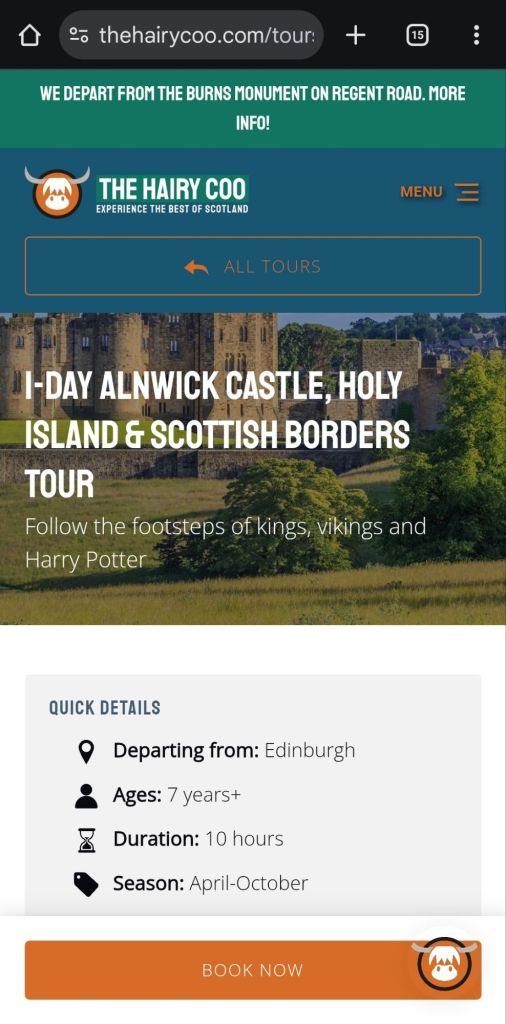
Northumberland has a great deal of tourism traffic coming from Scotland; Edinburgh based tour operators such as The Hairy Coo for example offer daily tours into Northumberland between April and October, which will only represent a tiny fraction of the overall tourist trade from Scotland into Northumberland.
A more direct rail route from Edinburgh, which is one of the largest tourism centres in the UK, could certainly benefit attractions such as Seaton Delaval Hall, Blyth Battery and more by putting them within a fast and easy connection from Edinburgh Waverley station.
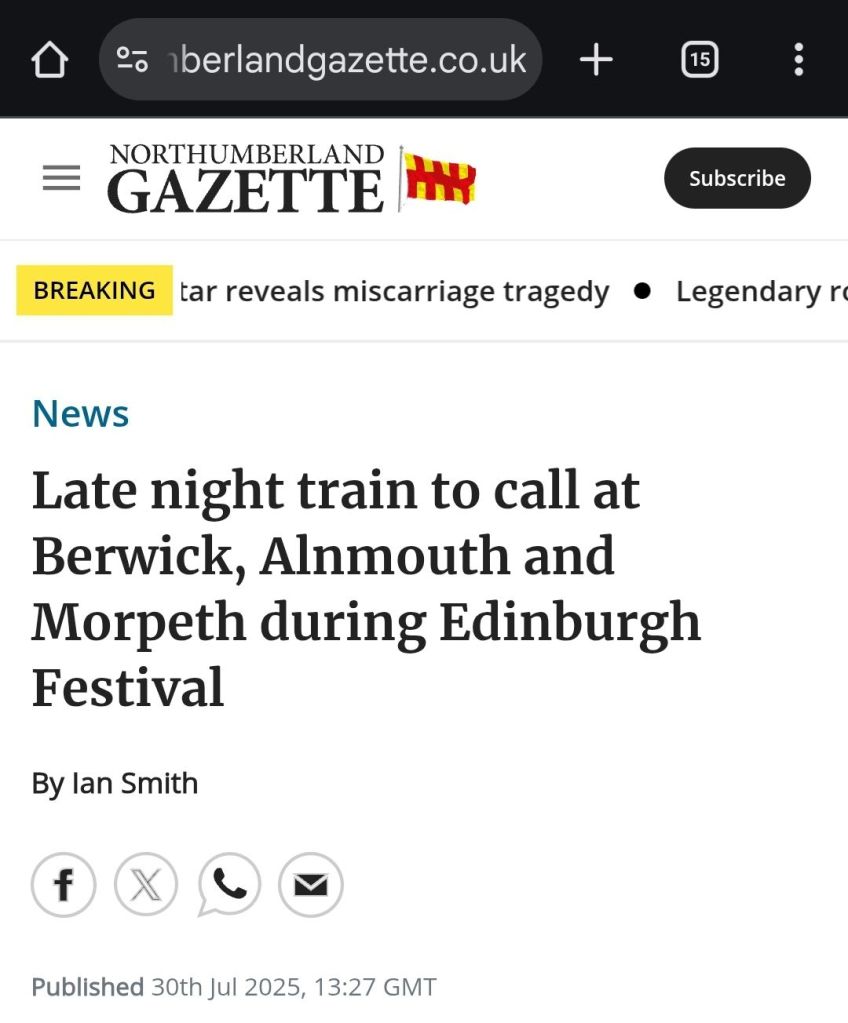
There is also the potential for towns such as Blyth to benefit from direct connections to Edinburgh during events such as The Edinburgh Fringe; it is not beyond possibility that a hotel stay in Northumberland could be combined with rail travel to visit The Fringe, as shown by the late trains run in 2025 from this article in the Northumberland Gazette, and with Blyth having hotels like The Commissioners Quay having opened in 2016, a direct rail link to Blyth could make hotels such as this more viable to visit cities such as Edinburgh, bringing more jobs and income into Northumberland from hotel stays.
A direct rail link via Choppington would significantly reduce journey times compared to the current ‘dog leg’ of connecting via Newcastle, with an estimated time saving of c.45mins due to avoiding the unnecessary travel south, as well as changing train in Newcastle Central.
The end to end journey times from Edinburgh Waverley to Newcastle Central is are fairly reasonable too, the route via Bedlington taking only around 30 mins longer than the current route via Cramlington, so it isn’t likely to deter people from using this route for end to end journeys either, especially if fares on the other route happen to be higher.
All in all, the route is possible now using the existing line via Pegswood and Choppington, and with the modest use of resources to allow some driver training to gain route knowledge, as well as trains being passed to run on the route, additional carriages could be operated quite quickly to alleviate crowding.
Hopefully something that can be taken forward by NCC and GBR?
 The Northumberland Coast Loop