
The ‘Big Tech’ influence on our lives can be quite an interesting one, and an article by Dan Jackson was a good example of what can be ‘pushed’ onto your screen when you happen to awake early on a Sunday morning!
Whlist reading Dan Jackson’s ‘Can Big Tech save Northumberland? Don’t expect a second coal boom‘, I found a lot of common ground within the article; as a Bedlington lad, I too grew up with Blyth Power Station standing tall on the horizon, being clearly visible from my classroom at Meadowdale Middle School during my tenure there, and being a massive landmark of ‘home’ much like the Angel of the North is now for many when returning from a day out, the chimneys being clearly visible from as far as Alnwick Moor, as the A697 started to drop down towards Longframlington after a regular day out with my grandparents in Kelso.
The mention of Bates Colliery is also one close to my heart, it being where my dad began his working career as a joiner and later shaftsman at that pit until it closed in 1986, and in December 2003, I stood with him and my brother as a teenager on the rubble of Bates, and watched those iconic chimneys fall. Even though they’ve been gone from the skyline for over 20 years, they were such a big landmark as to still appear to be ‘missing’ from the skyline.
Sir Daniel Gooch was also a Bedlington lad, born in 1816 when ‘Bedlingtonshire’ was still part of County Durham (it slowly rejoined into Northumberland proper in 1832 and finally in 1844). He had a close family link to the Longridge family, of Bedlington Ironworks fame, which perhaps led him on the path towards being one of the early great railway engineers, though somewhat eclipsed by his colleague, Mr I. K. Brunel.
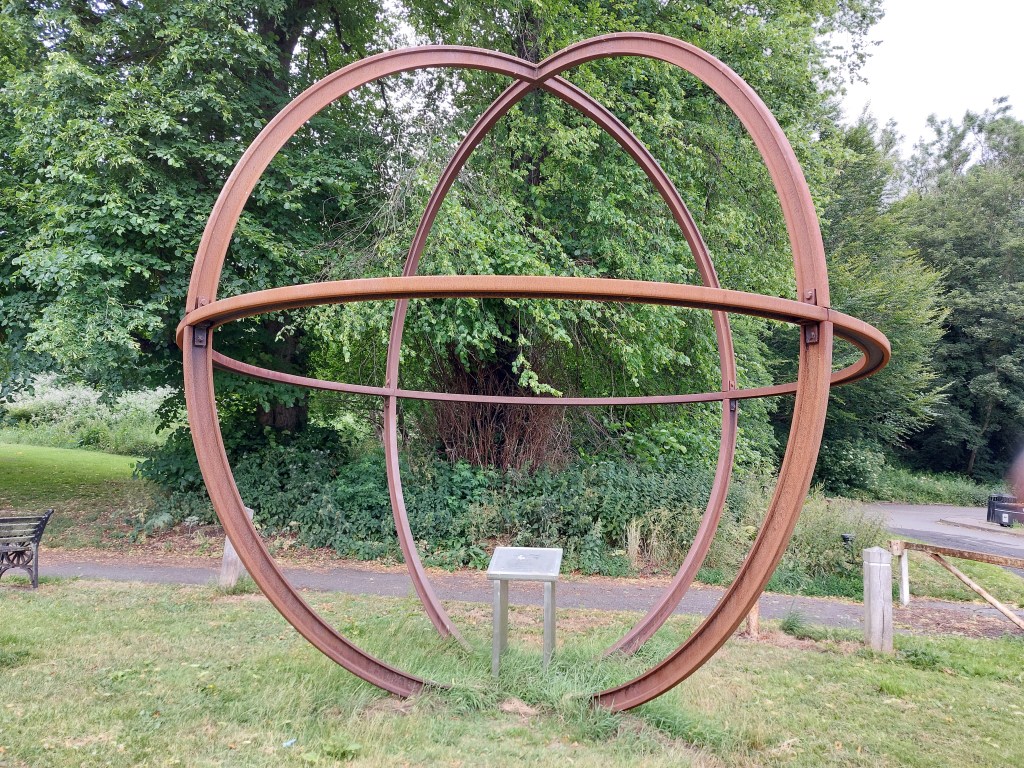
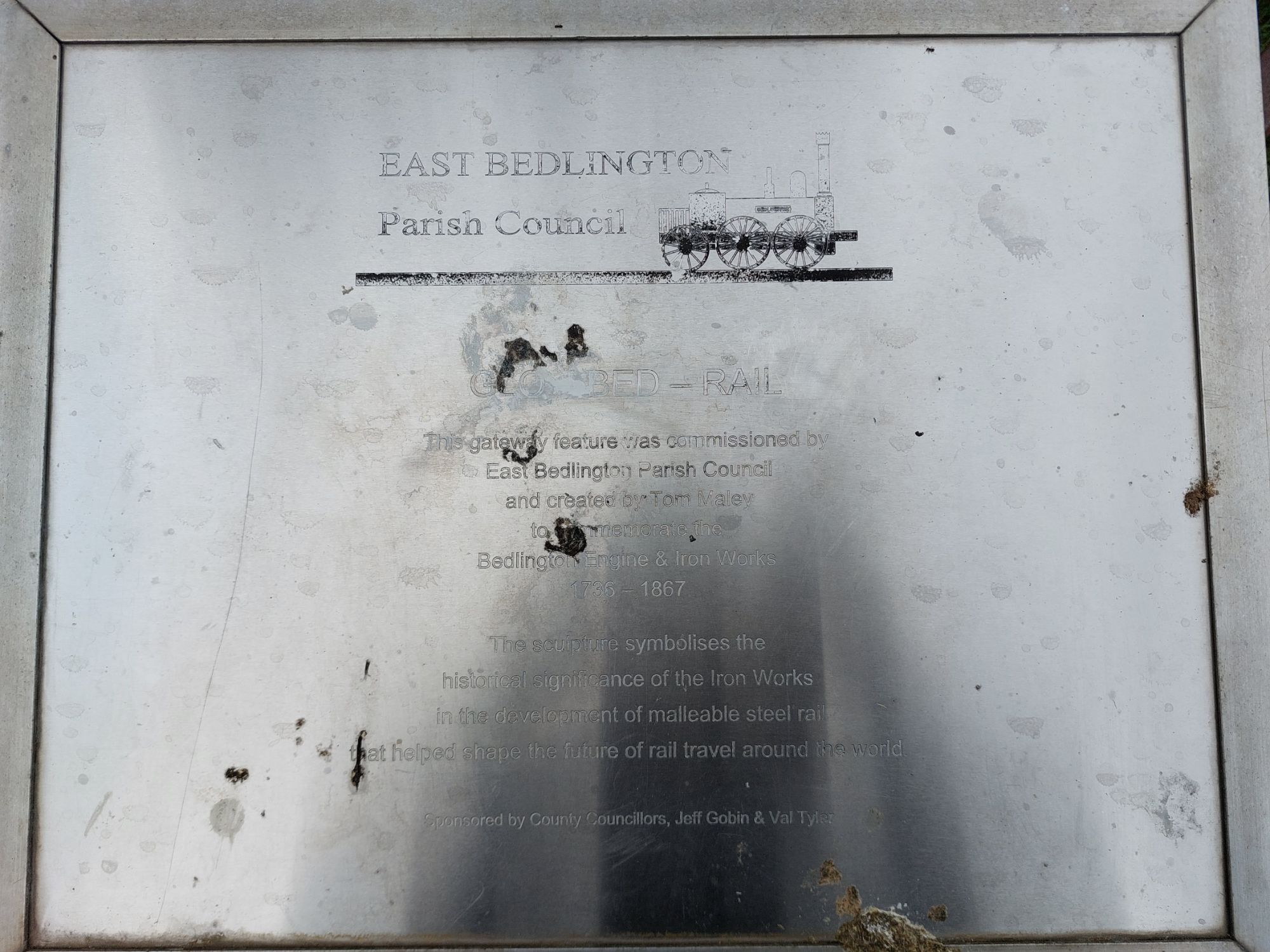
Daniel Gooch, later Sir Daniel grew up in what is now ‘The Grapes’ pub on Bedlingtons Front Street (one of my frequent haunts at one time), and he is commemorated by a plaque on the front of the pub; another part of Bedlington’s, sadly often forgotton long railway history, which dates back to Huntingdon Beaumont (from Nottinghamshire), who introduced the wooden waggonway to the North East in 1609; which steadily evolved over the next 200 years into the modern railway, with the Bedlington rails developed by John Birkinshaw in 1820 being used heavily on the Stockton and Darlington Railway of 1825, itself celebrating its 200th birthday in the coming days.
That Sir Daniel Gooch, a railway engineer, and the transatlantic telegraph cable have such a strong connection is not actually as surprising as first thought, as railways and ‘lightspeed communications’ have developed together; the need to safely signal trains, operation of which was becoming ever more complex, and they were travelling increasingly quicker speeds was a driving force in the early telegraph system, with William Fothergill Cooke presenting a design for a mechanical telegraph to the directors of the Liverpool and Manchester Railway in January 1837.
Railways and what we now regard as the internet, have a long parallel history, and in many ways were co-dependent on one another, so for a data centre to be opening in Bedlingtonshire (the area surrounding Bedlington that also includes Cambois) is quite a fitting link to Sir Daniel Gooch overseeing the laying of the transatlantic cable back in 1866.
Bedlingtonshire, and the surrounding areas like Blyth in the nineteenth century, to use a modern phrase, must have been ‘bouncing’; with the Ironworks and later engine building thriving there, coal mines developing rapidly as waggonway technology and later the early railways were built to get coal from new pits to ports for export.
This was a time when many of my own ancestors were relocating to the area around the River Blyth and River Wansbeck for work at the many local pits, coming mostly from rural Northumberland toward the coast near Newcastle, with most members of both sides of my family having been born and lived within a few miles of where I grew up for over 100 years, with almost, if not all, of the male members of my family having employment in the coal industry, I’m the first generation of many in my family to have never worked underground.
Returning to Dan’s piece, the decline of Northumberland and the North East more generally can indeeed be seen from the First World War. Coal production in the UK peaked in 1913, so whilst the industry was still vital for many decades afterwards and well into my own lifetime, with the last deep pit at Ellington closing when I was 14 years old. After Bates closed, my dad moved to other pits, but eventually left the industry when I was still very young to go self-employed, working very long hours as a builder to make ends meet.
I have many happy memories of going in his Transit to help on jobs as I got old enough to do some useful work, with Magic 1152 playing ‘Baker Street’ to the background of rattling tools, the unmistakable revving of an old Ford diesel engine, and the smells of cement, plaster, and other building materials when travelling to or from different jobs at weekends or during school holidays, but it is a tough way to make a living. Fortunately, he retired from a white collar job, after going to University and studying to change career again while I was still in school myself.
This wider ecomomic decline of the area, when looking back, was clear to see, the once majestic Wallaw cinema in Blyth felt very run-down and tired when I went there to see the first few Harry Potter films before the cinema closed and stood empty for many years ahead of reopening as a quite spectacular Wetherspoons pub. The closure of the ‘Alcan’ smelter at Lynemouth was another major blow, with it being almost the last heavy industry aside from the remaining Lynemouth Power Station, now running on biomass rather than locally mined coal.
As Dan states, the closure of the passenger stations in 1964 dealt another major blow to the area, but one perhaps offset by the then still thriving pits such as Bates, which at the time would have been assumed to be there for decades to come, well past the Millenium (if people even thought that far ahead then) but in the end the clock was ticking much faster – closing and being cleared from the landscape in less than 25 years. The major lines fortunately held on with freight use, still carrying coal until very recently, with the Port of Blyth seeing a complete reversal, and importing coal in recent decades through a new terminal at Battleship Wharf for a few years, with a new railway branch put in as recently as 2006 to handle this traffic where imported coal was blended with local opencast coal and sent to power stations.
If the railway stations had remained open, perhaps south east Northumberland would have made a better transition to other employment opportunities, other industry coming in to replace the lost pits and the power station, itself once proposed for replacement like-for-like by RWE in around 2007, which like the later battery plant, never came to pass despite the optimism that it would, though in hindsight, a new coal power station then would be highly controversial now with the ravages of climate change beginning to be felt.
On a happier note, in 2024 the passenger railway returned with the opening of the Northumberland Line, and while only partially opened so far, has proved to be a huge success, with over half a million passengers thus far in less than a year, with the fourth station at Blyth Bebside due to open in a matter of weeks (Sunday 19th October).
In my view, the Northumberland Coast Loop could very much be a part of revitalising my home area, if Blyth and parts of North Tyneside are now going to be home to multi-billion pound data centres and AI development centres; then maybe we should rethink about the railway is.
If the railway is ‘just’ going to be a shuttle service from Ashington to Newcastle Central station, with the odd trains to the MetroCentre (as great as that is to see and use), that is fine, it is pretty much what existed before in the days of coal and iron and it is still a massive step forward from where we were just a year ago without a rail connection.
That being said, do we actually think bigger and better, shouldn’t we surely exploit the infrastructure that already exists (the direct Bedlington to Pegswood route), and create a second long-distance route between Newcastle and Edinburgh via Bedlington and Blyth; one that goes through and stops in this part of Northumberland, rather than skirting around the edge of it via Cramlington and Morpeth?
If the cities of Edinburgh and Glasgow can have four different railway routes connecting them together (The Falkirk Line, The North Clyde Line, The Shotts Line, and the Carstairs Line), then surely the cities of Newcastle Upon Tyne and Edinburgh could have the Cramlington Line and the Blyth Line?
The simple question is, if several billion pounds are being invested into data centres, then why not invest a few million more into the railway to make it connect Edinburgh and Newcastle via Blyth and North Tyneside alongside the existing mainline via Cramlington and Morpeth? The multiple lines between Edinburgh and Glasgow give the Scottish Central Belt an economic ‘bounce’, the same could be done in Northumberland and Scottish Borders?
It might not be a ‘silver bullet’ to make the area bounce again, but it could certainly give it a damn good chance?
If you’d like to support the petition, please do so here: https://chng.it/zThXj8HBpY
 The Northumberland Coast Loop