As we start July, a quick update on the Northumberland Coast Loop campaign, with thoughts on the long history of rail in Northumberland, and its bearing on its future…
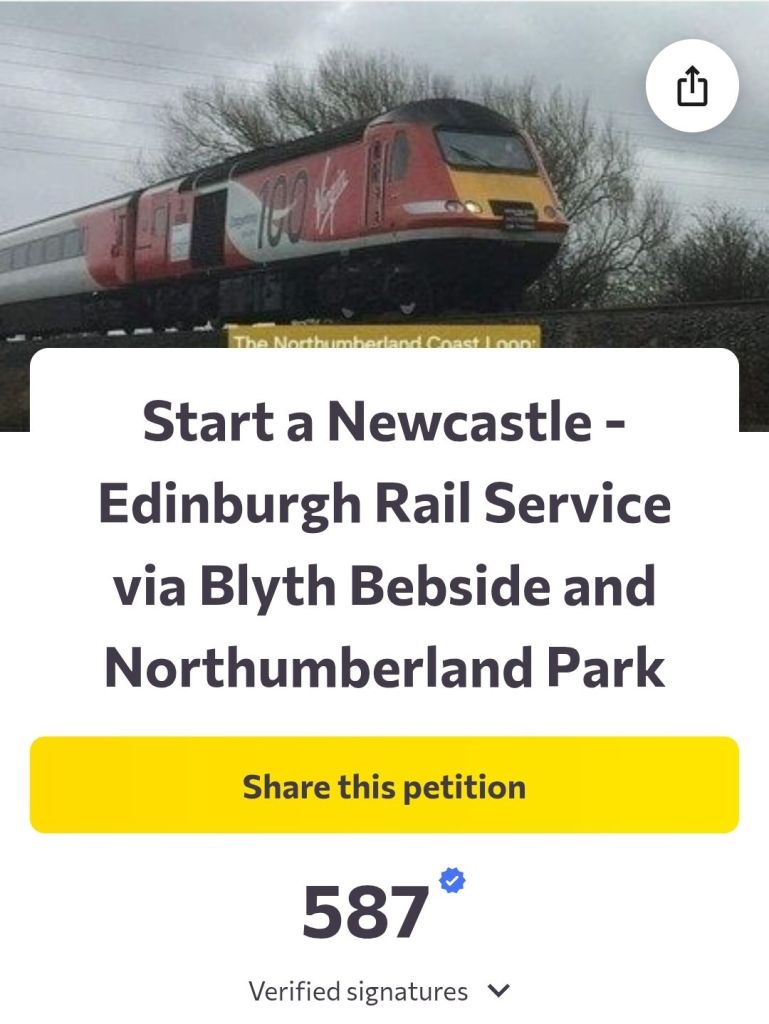
Newcastle – Northumberland Coast Loop – Edinburgh Rail Service Petition
The petition continues to do well, with 587 signatures since it’s launch in February 2025, hopefully 600 signatures will be reached in the coming days, if you haven’t already signed it, please do so here: https://chng.it/wbhpn9ffpJ
‘The Northumbrian‘ Naming at Ashington, and Northumberland Line Continued Success
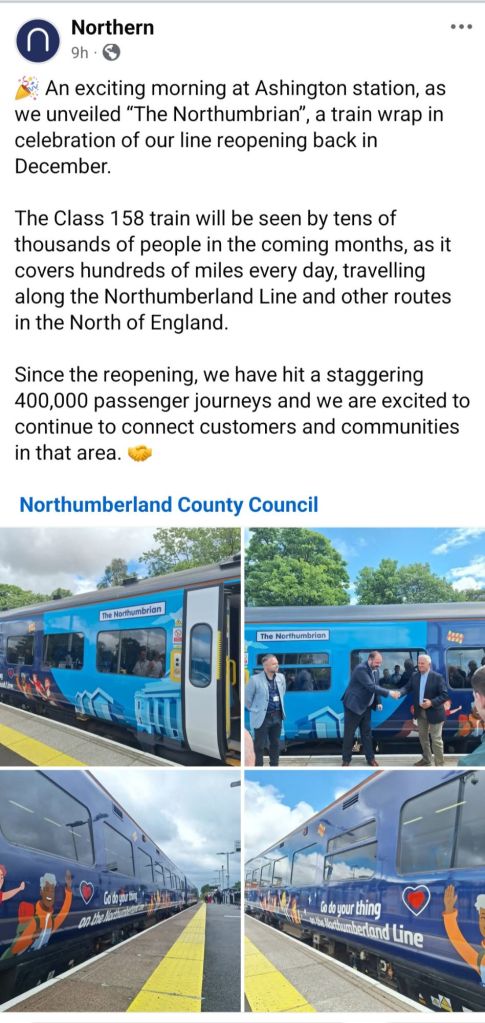
On Thursday 26th June, one of Northern’s Class 158 trains (158 844) was named ‘The Northumbrian’, and adorned with artwork depicting landmarks, famous persons such as George Stephenson, and more from Northumberland and the wider North East on the vehicle sides.
This article in The Chronicle also states that the Northumberland Line continues to achieve huge passenger numbers, having now topped 400,000 a sign indeed of the massive success of this route despite delays and as yet still only partially open.
Once the remaining stations at Bedlington, Blyth Bebside, and Northumberland Park are opened, it is likely to see a further surge in passenger use, perhaps a million passengers per year might be possible?
The Northumberland Coast Loop one of the potential alternatives to ‘Dinosaur Schemes’ for the A1 and A19?
The enormous success of the Northumberland Line does beg the question of expansion at the northern end back onto the East Coast Main Line (ECML), and enhancment of the ECML towards Edinburgh as alternatives to the massive proposed investments into Moor Farm Roundabout on the A19/A189 and Dualling of the A1 north of Morpeth.
This question was posed in a recent article in the Northumberland Gazette, where North East Sustainable Transport argue that these schemes will bring little real benefit but will add to pollution problems, which especially in the case of the A1 dualling has already been modelled by the Government itself.
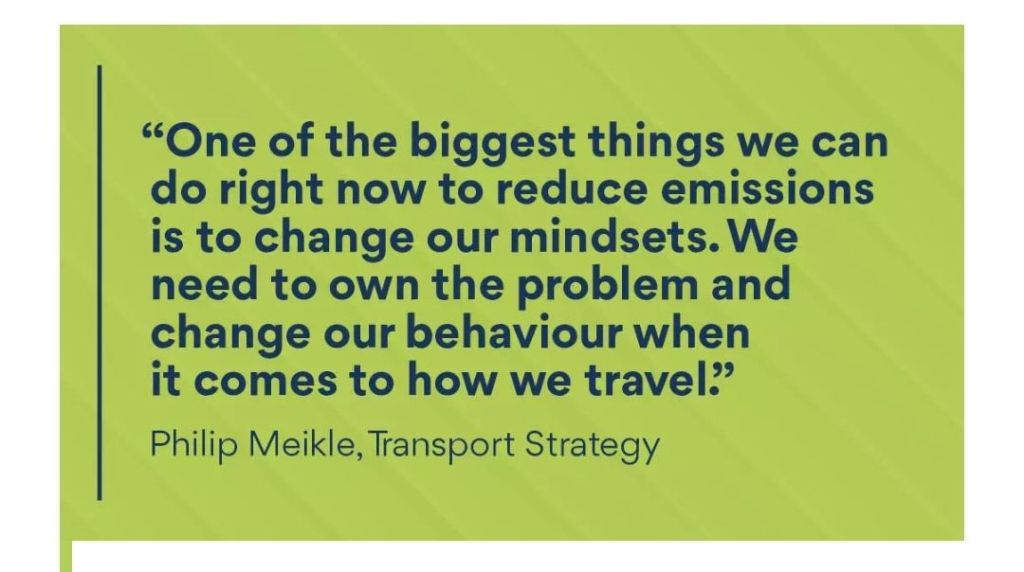
Net Zero North East states on their homepage that transport accounts for 30% of North East Greenhouse gas emissions, and Philip Meikle, Transport Strategy Director at Transport North East is quoted as saying (image below).
The Northumberland Coast Loop could work well to provide a direct rail route in parallel to the road network, with the Northumberland Line being parallel to the A19 and A189, stations such as Northumberland Park being adjacent to the A19, and Blyth Bebside adjacent to the A189, and the existing link between Bedlington and Pegwood offering a direct connection onto the A1/ECML corridor heading northwards into North Northumberland and Scotland.
With modal shift of passengers and freight onto the proposed Northumberland Coast Loop route (and other rail routes such as the ECML via Morpeth and Cramlington too), and away from road transport, the traffic volumes, and consequent pressure on junctions such as Moor Farm Roundabout and routes like the A1 in Northumberland will be reduced, as will emissions, as will the reduction in road accidents, as rail travel is by far a safer mode for both passengers and freight.
Let’s put more travel to, from, and within Northumberland onto rail, not road.
As can be seen from the Northumberland Line investment, rail travel has proven to be highly popular and attractive, with a clear, high, latent demand for it, let’s enable it further by continuing to invest in Northumberlands rail network, adding new connections such as the Northumberland Coast Loop, which would enable a direct rail journey from Blyth to Berwick-Upon-Tweed or beyond.
It would indeed be a fitting honour in the Railway200 year for areas like the Blyth Valley to be better served by rail; not only as a general improvement to transport service, but also to reflect the long railway heritage of the Blyth Valley; which beginning with Huntingdon Beaumont in 1609, who introduced waggonway technology from his native Nottinghamshire, through to John Birkinshaw, who is 1819 patented a new ‘malleable’ iron rail, which was used for two-thirds of the Stockton and Darlington Railway due to its superiority compared to cast iron.
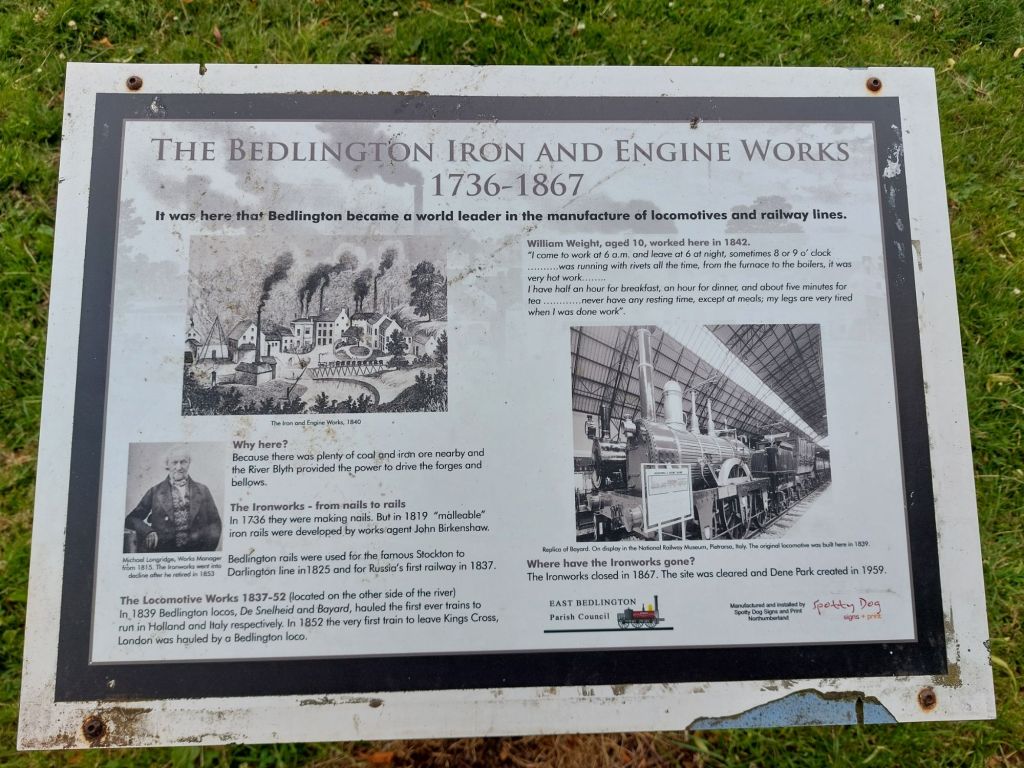

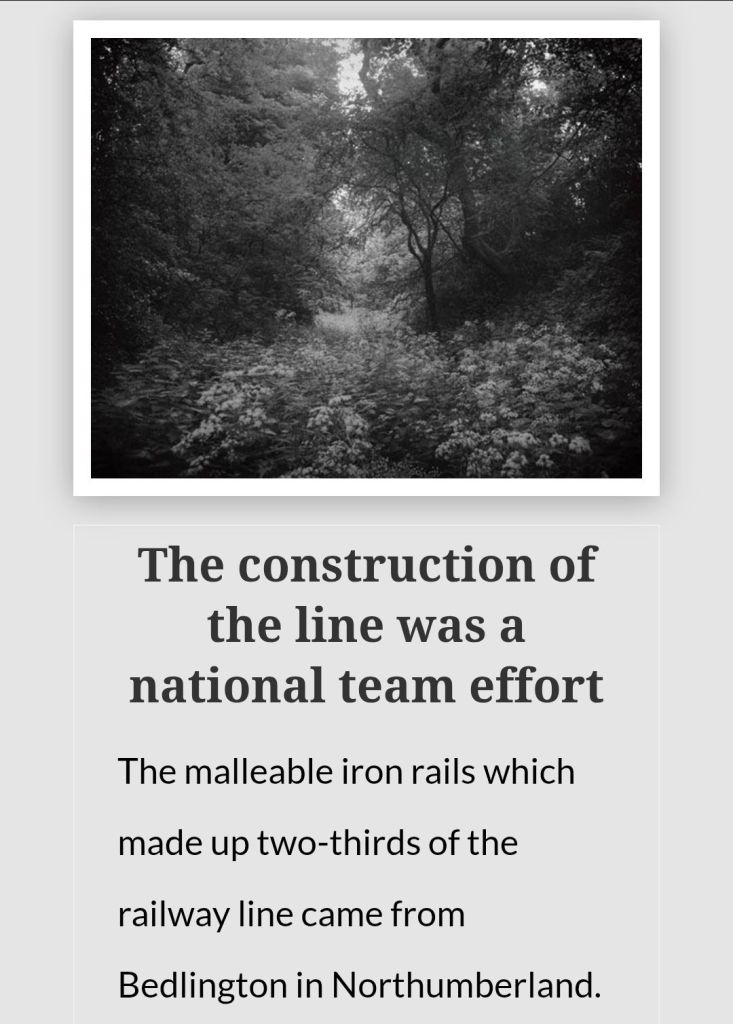
The Northumberland Coast Loop ties together many different elements of railway heritage, but also of its future; railways evolved in Britain from the earlier waggonways, which developed largely in the North East as a means to get coal from pit to port, but now can play a vital role in decarbonisation and modal shift away from road transport.
The introduction by Beaumont of waggonways in the Blyth Valley in 1609 was pivotal in their wider adoption and continual improvement around the North East, with a near direct path from the Beaumont Waggonway, through major waggonways like the Tanfield Waggonway (now part of the Tanfield Railway, itself celebrating 300 years this year) through to the Stockton and Darlington Railway in 1825, with Bedlington Rail being a key part of the success of that line, and then the wider growth of the rail network in the UK after that time.
George Stephenson was very much born into a waggonway world, by the time of his birth in 1781, the Causey Arch, the worlds oldest railway bridge, had stood for 56 years by that time, and Huntingdon Beaumont had been dead for 157 years (died in 1624).
George Stephenson wasn’t a sole ‘great man’; there were many of his peers, both local and far distant such as Trevithick, who also helped develop the humble waggonway into the modern railway we would recognise and actually still use today, such as the East Coast Mainline between Newcastle and Berwick, that George set out.
The role of the railways hasn’t ended though despite the near end of coal trains in the area and UK overall, indeed recent figures suggest that rail travel has recovered following the Covid-19 pandemic, if not already exceeded it, and railways could play a vital role in decarbonisation of the transport system, with even ageing diesel trains still more efficient than cars.
The book below ‘How The Railways Will Fix The Future‘, written by rail engineer Gareth Dennis, is an excellent source on how putting rail at the heart of a better public transport and active travel system could help to solve a multitude problems both locally in places like Northumberland, but also the wider UK as well as worldwide.
It is well worth a read!

It is clear from the success of the Northumberland Line that investment into rail is a sound one, and for Northumberland, would represent building on over 400 years of success on rails, lets take the railways forward for another 400 years by putting the investment in today!
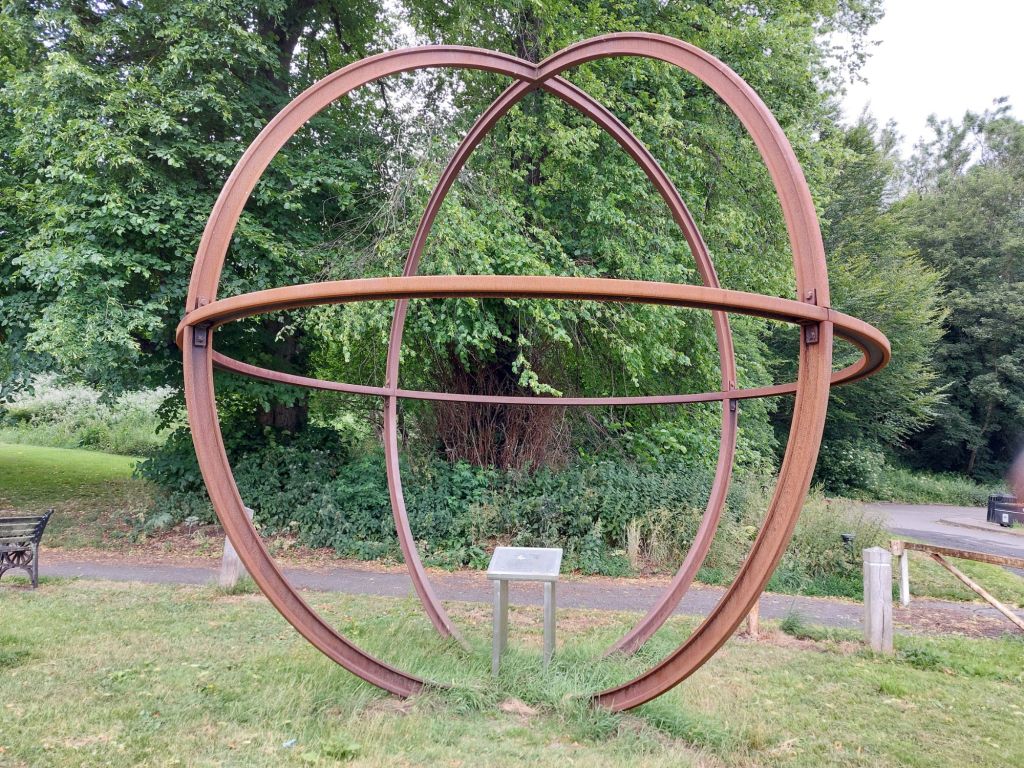

 The Northumberland Coast Loop