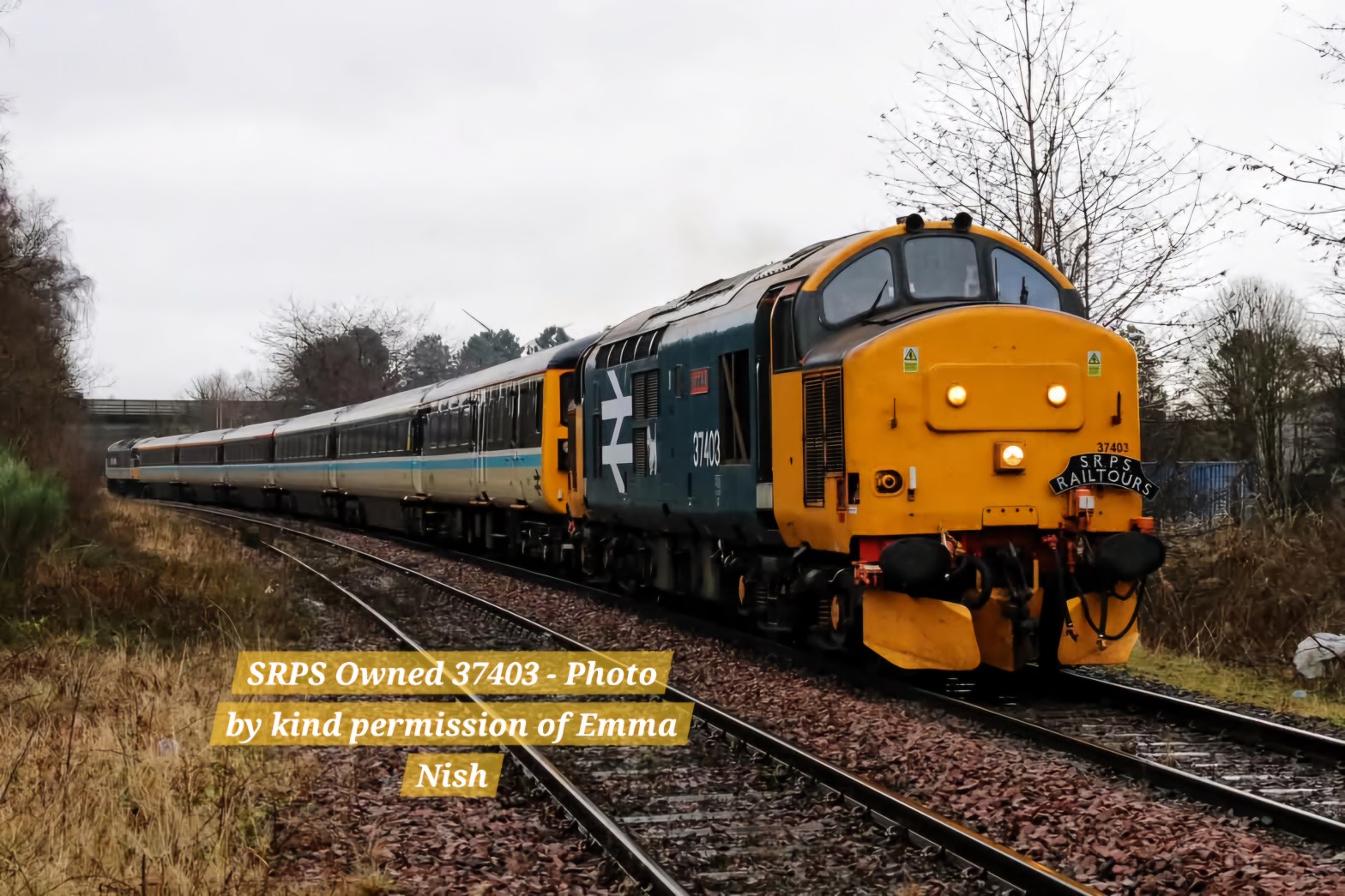
On 8th March 2025, eight weeks from today, The Seven Counties Rambler, operated by the Scottish Railway Preservation Society (SRPS) is due along the proposed Northumberland Coast Loop route between Newcastle and Edinburgh, travelling via the Northumberland Line as far as Bedlington, before taking the Hepscott Line and Morpeth North Curve to rejoin the East Coast Main Line and head back into Scotland to end the trip where it started at Linlithgow.
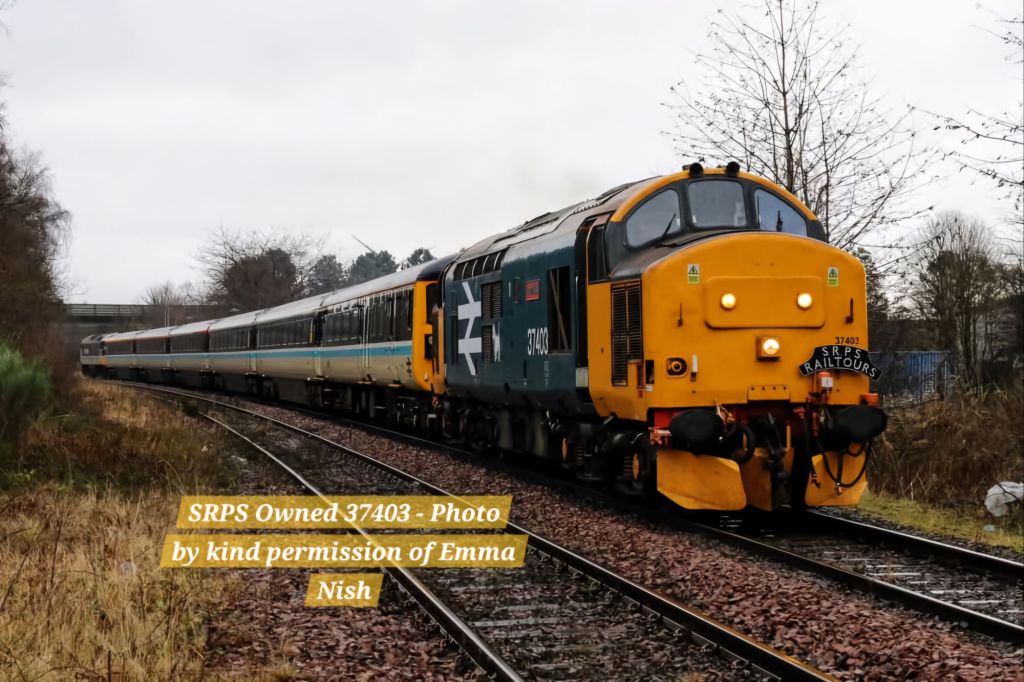
One of the loco’s due to be hauling the train will be Class 37 37403 ‘Isle of Mull’, with a second, as yet unidentified Class 37 working alongside, a photo of the loco working a different excursion is photographed above, the link to the original post is available on our Facebook page.
Rare Route Today, Regular Route Tomorrow?
A journey along this route is exceedingly rare at present for even railtours, the last to my knowledge being the 2017 ‘Bound for Craigy’ Railtour operated by the Branch Line Society (BLS) on March 18th, almost 8 years to the day before The Rambler is due along the same route between Newcastle and Edinburgh via Bedlington.
In that time, the Northumberland Line has gone from the drawing board to firm reality, with stations either completed (as is the case with Ashington and Seaton Delaval), or well underway for the remainder, Newsham potentially being open by the time The Rambler passes through.
This route was an impossible one when the stations were originally open in 1964, as the Morpeth North Curve didn’t open until 1980, long after most of the stations had been demolished during the early 1970’s, the line thankfully still busy with railfreight, particularly coal traffic until very recent times.
The Victorians Nearly Did It: The North British Railway’s Plan For Newcastle to Edinburgh via Bedlington, Scots Gap, Bellingham, and Riccarton Junction
The idea of stations like Bedlington, Bebside, Newsham and more having a connection to Scotland is not totally unprecedented in railway history; indeed it NEARLY happened in the 1860’s…
The North British Railway Company was desperate to reach Tyneside, helping to fund the Border Counties Railway (between Riccarton Junction on the then Border Union Railway (later the Waverley Route, now partly restored as The Borders Railway between Edinburgh and Tweedbank) and Hexham on the Newcastle and Carlisle, now better known as the Tyne Valley Line), as well as the Wansbeck Railway that ran westwards from Morpeth to join the Border Counties line at Reedsmouth Junction (near the village of Redesmouth in Northumberland).
The potential route for North British train between Newcastle and Edinburgh would have been quite extraordinary considering the route taken.
Starting at the Blyth and Tyne Railway Company’s New Bridge Street station, it would have run along B&T metals through Bedlington, before heading towards Morpeth; but not into the current Morpeth station, as the line curved off into the present day Stobhill Estate, the line of the route marked by Kingswell and Stobhill Villas, and the remains of the bridge over the present day A192 Shield’s Road still being visible (image from Google Maps below)
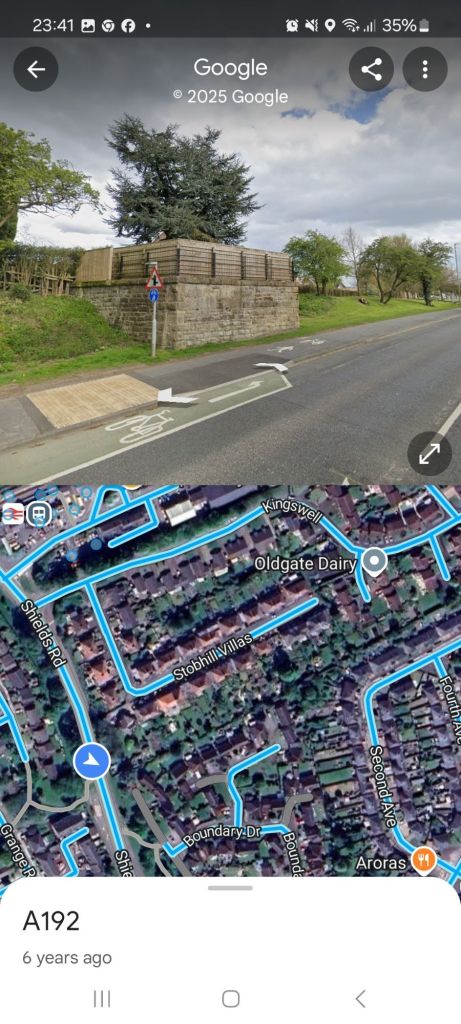
After crossing the road, another bridge would have carried the line over the modern day East Coast Main Line, joining the Wansbeck Railway (the ‘Wannie Line’), the train having started at Newcastle now headed for Scot’s Gap to reach Edinburgh!
After Scot’s Gap, the train would continue broadly westwards to connect to the Border Counties Railway to head, at last towards the Scottish Border. The original intention was for the Wannie Line to curve north west, towards Bellingham and allow a direct run towards Riccarton Junction, this was, in the end, not to be, which is covered later*.
Had it been built, and worked as originally intended, this very indirect train between Newcastle and Edinburgh would pass through Bellingham, making its way towards Riccarton Junction, passing Plashetts (now beneath the waves of Kielder Water), eventually crossing the Scottish Border, joining what later became the Waverley Route and finally on its way to Edinburgh.
*In the end, however, the route was never built to a layout permitting such a direct run; the North British secured running powers from Riccarton Junction to Newcastle via Hexham, meaning the Wannie Line to Morpeth got connected at Reedsmouth Junction, not Bellingham, meaning any Scotland bound train would need to reverse at Reedsmouth as this junction faced Hexham, not Riccarton Junction.
The dominance of the North Eastern Railway (N.E.R.) which absorbed the Newcastle and Carlisle Line (giving the North British Railway running powers in Newcastle, and leading to the abandonment of the route via Scot’s Gap and Bedlington), and ultimately absorbtion of the Blyth and Tyne Railway Company in 1874 meant this plan never came to fruition.
Alternative History
Things could have turned out very differently though; the North British *might* have retained their option of an independent line to Newcastle via the B&T had the N.E.R. absorbed the Newcastle and Carlisle Railway slightly later, which would have likely meant the junction at Bellingham being built, rather than at Reedsmouth.
The famously independent Blyth and Tyne Railway (B&TR) which waited until as late as 1874 to merge into the N.E.R., might have worked more closely with the North British Railway (N.B.R.) to maintain their independence, perhaps even merging into the N.B.R. rather than the N.E.R?
If these services had become established, then towns like Blyth would likely have had a very different development; it probably would have still been a major industrial town given the large coal reserves and mineworkings to exploit it, but the presence of anglo-scottish passenger trains would probably have had a profound impact on it’s development.
The heavy involvement of the N.E.R. in development of Blyth as a port is a major factor in the later success of Blyth for coal shipment, so NOT being part of the N.E.R. might have resulted in the Port of Blyth being less well developed given the more limited resources of the N.B.R.
In 1882, the N.E.R. had drawn up proposals for what later became the Morpeth North Curve (Warn 1976 p. 35/36), so it perhaps isn’t outlandish to presume that such a connection might have been made to the B&TR to perhaps offer an alternative Scottish route via Berwick Upon Tweed to the North British one via Scot’s Gap and Bellingham?
In the end though, this wasn’t to be, but with the need to provide better public transport and the Morpeth North Curve now in place, perhaps now is the time to implement a Newcastle to Edinburgh via Bedlington route?
 The Northumberland Coast Loop