
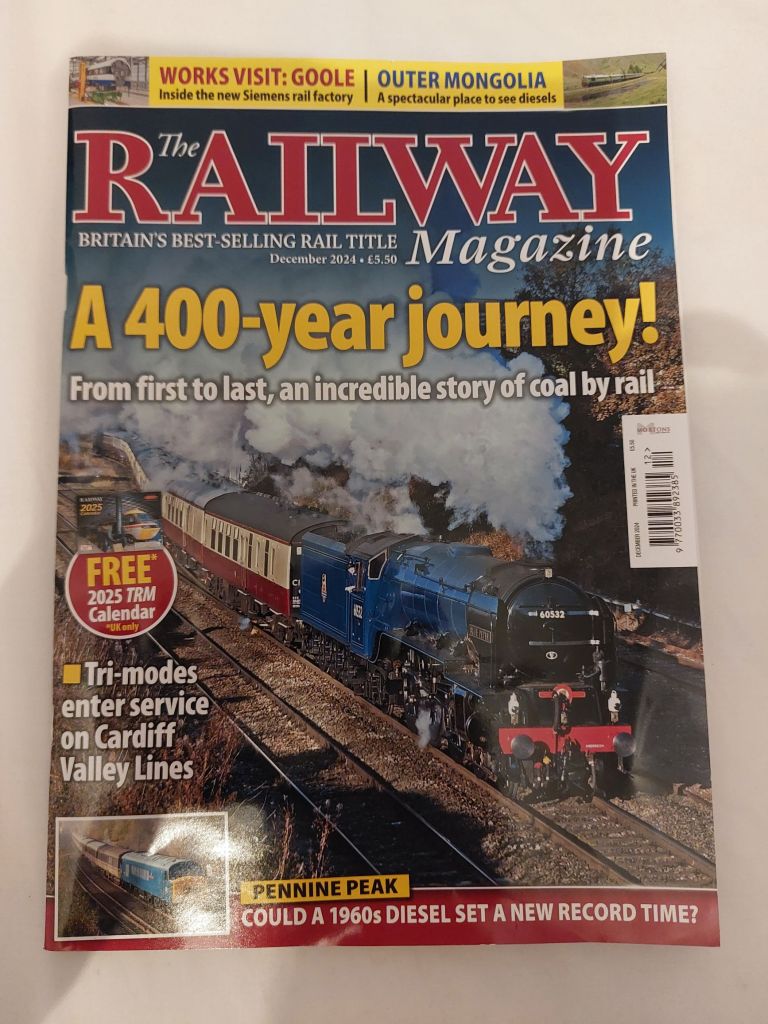
As part of the Railway200 series written in the December 2024 edition of The Railway Magazine, on pages 18 and 19, is a feature for Railway200 entitled ‘Coal trains, first and last?’, written by Bob Gwynne, railway author and one of the team at the National Railway Museum.
Ancient Greece is where it all began.
Like most things, the Ancient Greeks can be said to have achieved it first, and with railways it is little different. The Diolkos near Corinth was a rudimentary portage railway, transporting goods and even entire ships over the Isthmus of Corinth for about 700 years, starting in c.600 BC, so it could be a Railway2500 rather than Railway200 in some respects?
Skipping forward two millennia to the early 1600’s, and bypassing a number of other railway developments along the way, we reach Bedlington in the every early 1600’s, when James the First, son of Mary, Queen of Scots was on the throne of England.
Beaumont, Blyth, Bedlington and Bringing Waggonways to the North East.
The relevance to the Northumberland Coast Loop is that Huntingdon Beaumont (1560-1624) came to the North East by leasing a mine in Blyth in 1608, and in 1609, had brought the waggonway technology he’d helped develop in his native Nottinghamshire to Northumberland, with this newfangled method employed to move coal from pit to port being built around Bedlington, Bebside, and Cowpen.
Whilst Beaumonts efforts were not a huge success for him to say the least, ending his life in debtors prison; what later became known as the ‘Newcastle Roads’ (waggonways) were widely adopted around the North East, examples such as the Causey Arch and Causey Embankment nearly 100 years later in 1725/6 being a prime example of the technology being adopted to great effect by others.
The Stockton and Darlington of 1825 came almost exactly 100 years after the Causey Arch, and 216 years after Beaumont brought the waggonways to the Blyth Valley, so the North East has long been a cradle of the technology, long before the famous ‘Father of the Railways’ was even born.
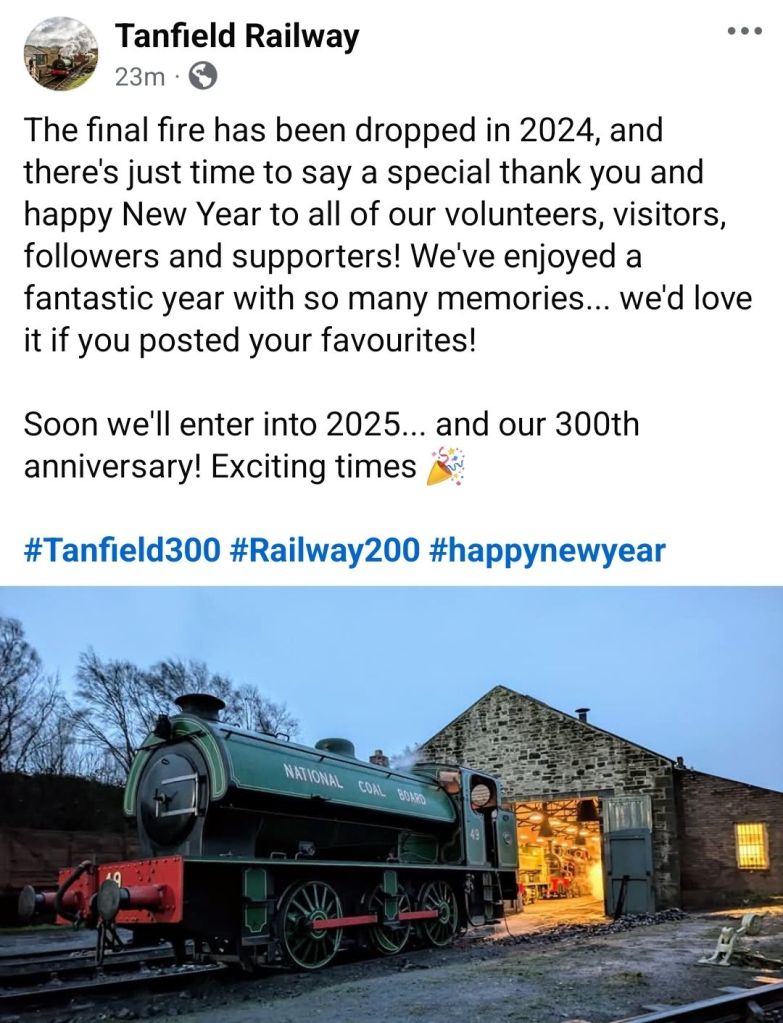
I would like to echo the call for a locomotive to be named after Huntingdon Beaumont, perhaps this could fittingly be at Bedlington during 2025, which could perhaps be done in Furnaceway Sidings in Bedlington, which overlooks the valley where his technological introduction to the North East started such a massive leap of progress to the Industrial Revolution?
Stephenson isn’t ‘Father of the Railways’?
George Stephenson could be said to have been born INTO a railway world in June 1781, rather than creating them in their entirety, which is a common misconception amongst many.
Whilst he, and many around him undoubtedly played an important role in the mechanisation of railways through his work on locomotives, and the transition from waggonways to what could be more readily described as modern railways, with locomotives working throughout over malleable iron rails (themselves developed at Bedlington Ironworks, being patented in 1820 by John Birkinshaw), again showing the intensive links between railways in this part of modern day Northumberland (Bedlington was an exclave of Co. Durham until acts of Parliament in 1832 and 1844).
Railway200 is half the story?
While Railway200 recognises the 200th anniversary of the Stockton and Darlington Railway of 1825, which could be said to mark the start of a new chapter in the long annals of railway history, it is also important to recognise that two hundred years of waggonway development in the North East, beginning with Beaumont in Blyth and Bedlington, is a less well known but vital chapter to tell the story of.
What better way to tell the story of the railways in the Blyth Valley than by using the newly reopened Northumberland Line, as well as the Northumberland Coast Loop (giving connections to the North such as Edinburgh and Scotland more generally)?
The Seven Counties Rambler by the SRPS is a great example, which for part of its run between Newcastle and Edinburgh will run over the River Blyth where the Beaumont waggonways and the Bedlington Ironworks once ran.
Let’s hope more railtours and special trains will run via this route during the course of 2025 and beyond, and a regular service becoming established too?
Happy New Year and Best Wishes, RH.
 The Northumberland Coast Loop