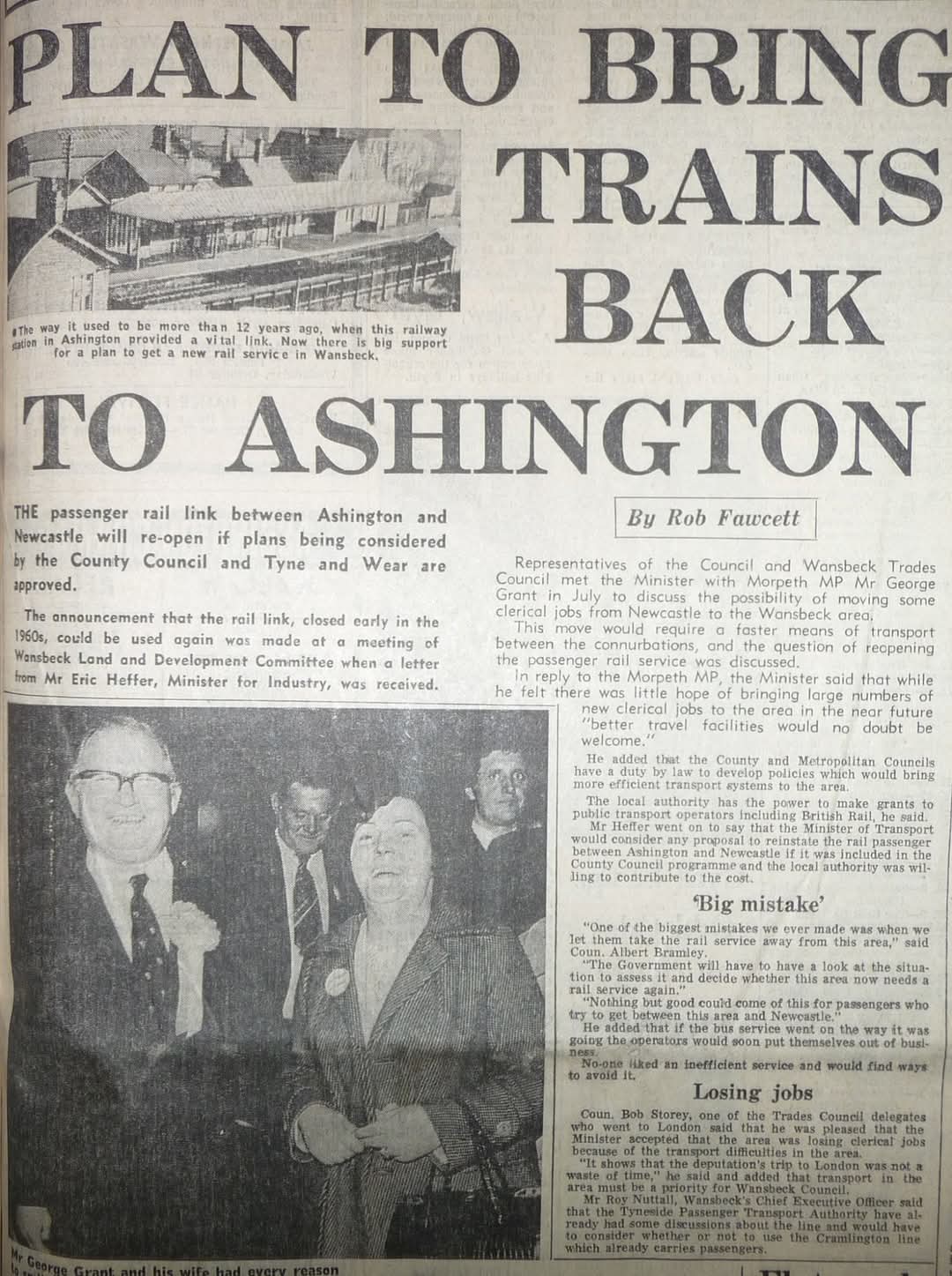
While this is of course welcome, and would see the original ‘Newbiggin Branch’ returned to its original length, with a new intermediate station likely to be added at Woodhorn (near to the long established Woodhorn Museum) between Ashington and Newbiggin, there perhaps is an even better case for the Northumberland Coast Loop, which will be outlined below.
N.E.R.’s Newcastle, Backworth and Morpeth Line and the Newbiggin Branch.
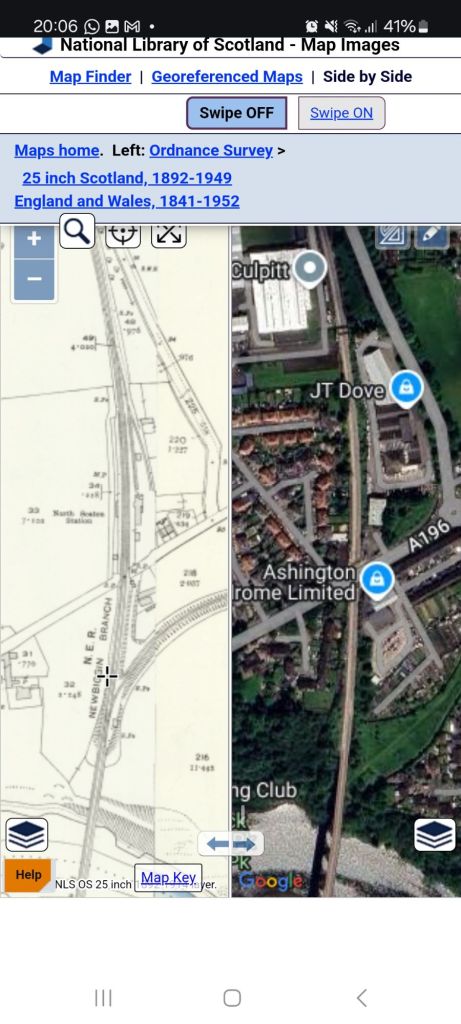
As stated above, the line to/from Newbiggin By The Sea was described by the OS 25 inch maps of 1892-1914 as the ‘Newbiggin Branch’, which diverged from the Newcastle, Backworth and Morpeth route at Bedlington. The two photos below show this from the excellent National Library of Scotland side by side map resource.

Ad-Hoc Railway Development in South East Northumberland
Cutting a long story very short, the lines in and around this part of Northumberland developed from a complex series of amaglamations and extensions of colliery lines, some of which began in the waggonway era, the area being the first part of the North East to gain waggonways back in 1609, being introduced by Huntingdon Beaumont from Nottinghamshire.
This as-hoc development of the area’s railways meant that many lines were only strategic in as far as getting coal from pit to port, or other consumers, with passenger routes being very much a secondary consideration, and which is why using these routes is often a source of various compromises for modern-day passenger routes as the lines were built for coal traffic, not passengers.
Returning to area around the River Blyth in the 19th Century, the Blyth and Tyne Railway Company began to incorporate a number of the colliery railways into a more unified system between the 1850’s and 1870’s.
There were plans to extend as far as Warkworth Harbour (the modern day town of Amble on the Northumberland Coast), but the massive costs of building timber viaducts over the River Blyth and River Wansbeck delayed the building of the line, and when the B&TR was bought out in 1874 by the larger North Eastern Railway, which had already built the Amble Branch (now closed), there was no appetite to build a new line to Amble, so the line only ever reached Newbiggin ultimately.
The ad-hoc nature of the area’s railways still holds true today, with the route to Lynemouth Power Station being an example, an amaglamation of a former National Coal Board route and the majority of the Newbiggin Branch being combined into a single route serving the power station.
Morpeth North Curve: Pegswood to Newcastle via Bedlington…DIRECT!
A North East Curve at Morpeth was actually proposed by the North Eastern Railway in the 1880’s, as mentioned by C.R. Warn in his 1970’s books on the area’s railways, which was presumably to give pits in North Northumberland easier access to the Port of Blyth for coal shipping. Oddly for such a rich company as the North Eastern Railway, and since it was in total control of the rail network at that point, this line wasn’t built until nearly a hundred years later in 1980.
Had this curve been built back in the 19th Century, it is highly likely it would have been intensively used for coal traffic, but also likely would have seen some passenger workings alongside, which could perhaps have allowed the route to develop as an alternative route to the East Coast Main Line, and may even have prevented total closure to passengers during the 1960’s, as at that time, towns such as Blyth were still thriving hubs of heavy industry, and simply retaining stations such as Bebside and/or Newsham might have been more likely had the route seen regular through passenger traffic, and the area could have developed very differently had that been the case.
Post-war Passenger Closures and Railfreight Decline
In reality however, what became the Morpeth North Curve wasn’t built until 1980, and the Morpeth to Bedlington ‘Hepscott Line’ lost it’s regular passenger trains in 1950, and the rest of the lines in 1964.
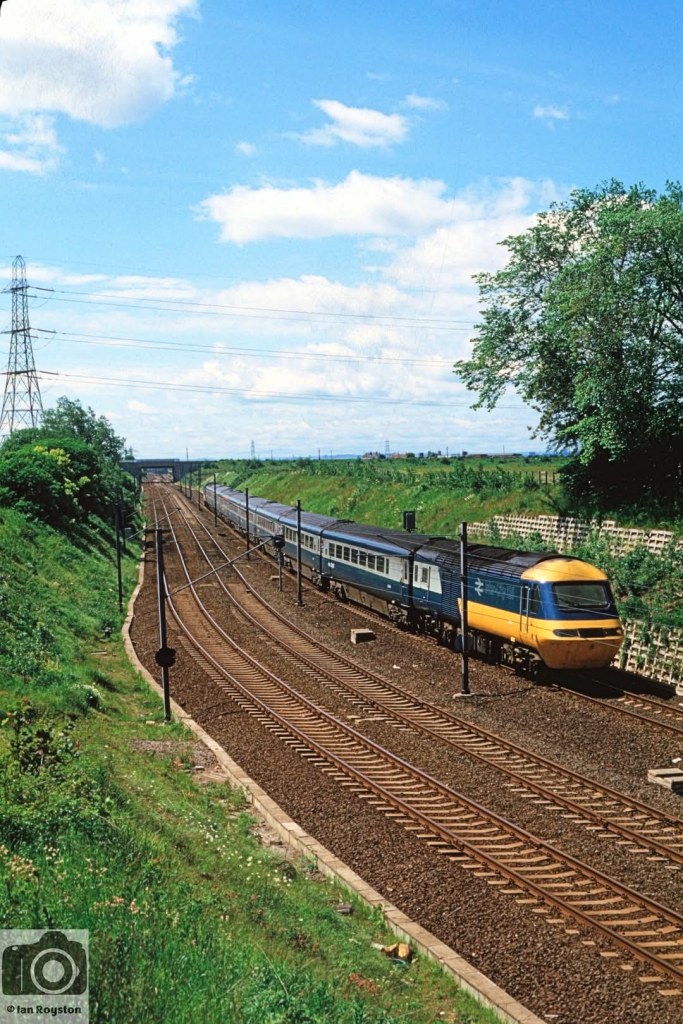
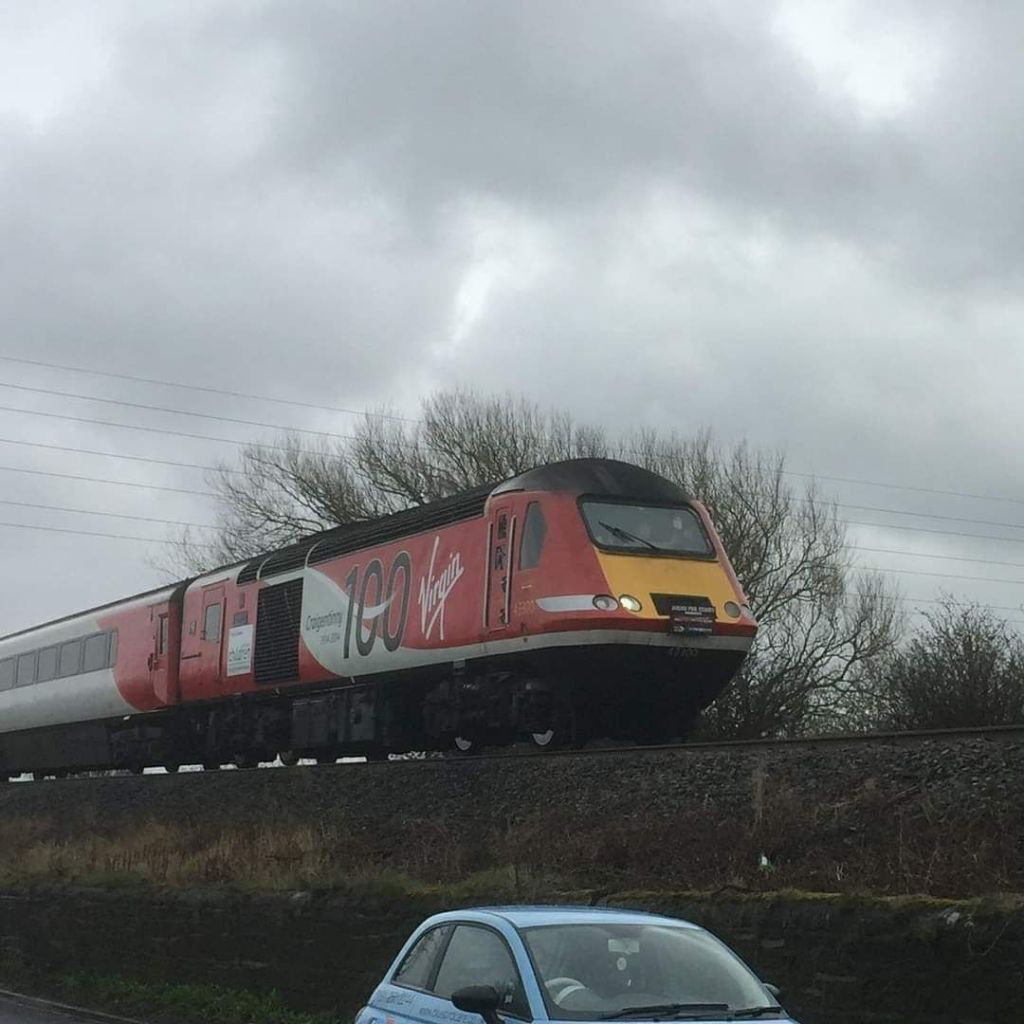
The lines have seen occasional use for diversions during engineering works, emergencies like the accidents on the Morpeth Curve and for the odd railtour, as well as continued use for freight, but even this traffic has waned considerably with the decline of coal mining both in deep mining and opencasting. The last regular flow along the Hepscott Line now being the North Blyth – Fort William Alumina trains, and the biomass trains serving Lynemouth Power Station usually using the route via Newsham, but were for a time divered via Hepscott due to line closures for the Northumberland Line works.

Passenger Revival: Ashington to Newcastle

In perhaps what is a case of ‘last closed, first reopened’, the Ashington – Newcastle stretch is due to reopen a little over 60 years after closure in November 1964 on Sunday 15th December 2024. This is a very welcome return of passenger services to the area, much anticipated by local residents and is likely to prove highly successful based on the evidence of other reopening schemes such as the Borders Railway, the Levenmouth Link etc.
The article above (original source unknown, image shared publically on a Facebook group) shows that as far back as 1974, the closure of Ashington – Newcastle for passengers was regretted, and sought to be reversed. Sadly it came to naught, but shows that the reopening has been proposed for around 50 years, and lends weight to an earlier reopening being plausible had more stations survived intact into the mid-70’s.
Newbiggin Extension
As stated at the very start of this post, the Newbiggin extension is already ‘on the radar’ and investments in Cambois by Blackstone for upto £10bn on datacentres could help finance this (as well as potentially seeing the Cambois Branch become a passenger route too?)
The Hepscott Line: Two potential use cases?
The Hepscott Line is perhaps the most interesting proposition; with a long-standing intention to use the line to extend Newcastle to Morpeth services onto Bedlington once that station is opened, with no additional stations required for it to work, but opening up the potential to reopen Choppington Station, which closed in April 1950 to passengers, and totally in March 1964, having seen some very occasional use for special trains.
With the Morpeth North Curve now in place since 1980, so itself celebrating 45 years of existence in 2025, there could be scope to use this route for the proposed Northumberland Coast Loop, allowing the Newcastle, Backworth and Morpeth route to perhaps become the Newcastle, Blyth and Berwick route?
Such a route could offer much better connections to major Northumberland towns like Blyth, even potentially for Cramlington; which whilst having its own station, is within easy reach of the Northumberland Line to the east, and suffers from a relatively poor service on the ECML, especially headed north.
The semi-fast (limited stop) N.C.L. service could allow traffic from Blyth, Cramlington, Bedlington, and Ashington, Woodhorn, and Newbiggin to be concentrated at a station such as Blyth Bebside which is within easy reach via rail, buses, cycling, and walking. Similarly, Northumberland Park, would serve North Tyneside well via T&W Metro interchange, local buses, alongside it’s good cycling and walking connections. The semi-fast option should be more comfortably be able to fit within the constraints of the ECML timetable.
An all stations service alongside a semi-fast service would offer even better ‘within Northumberland’ connectivity, but is likely to be more challenging given the capacity constraints on the ECML.

Similar to the proposal for the extended Morpeth services to Bedlington, the Northumberland Coast Loop would simply make use of the Hepscott Line to link existing and soon to exist stations, meaning it could be implemented just as quickly as Morpeth – Bedlington services given pathing on the ECML being made available.
While not shown on the above map, this route would further add to the case for Choppington Station, which would serve the rapidly growing areas of Choppington and Bedlington for housing.
As such, it is felt that this route could be delivered ahead of the Newbiggin extension, by simple virtue that the infrastructure is already in place to deliver it, it just needs the service.
Support for the Northumberland Coast Loop is building
The Northumberland Loop online petition was a success with 742 signatures, with email correspondence between myself and Cllr Glen Sanderson being very positive with regards to the route, and liaison with other organisations is ongoing.
Share for Success!
If you can share this post, or others onto your social media, or sending links to friends and family, you’ll help boost awareness of the route and hopefully see it brought into reality sooner!
Let’s hope that 2025 will see big progress on the route being implemented!
 The Northumberland Coast Loop