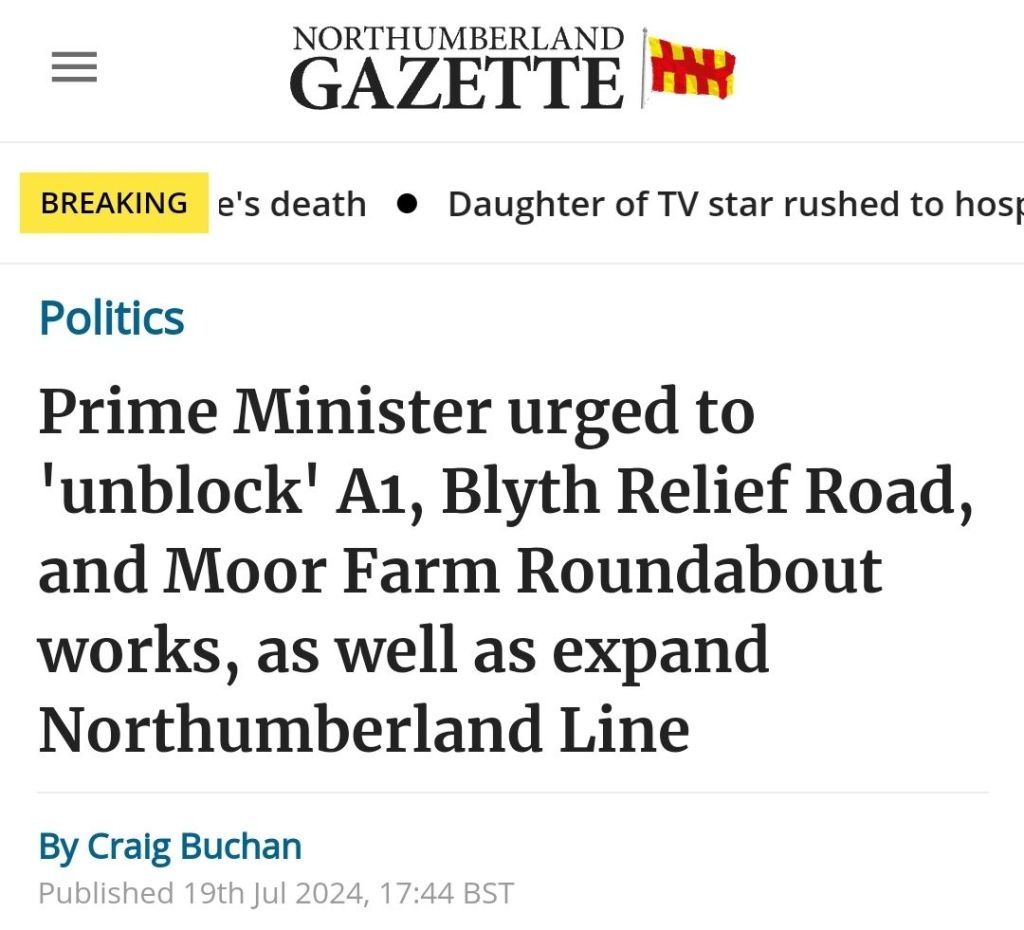
While investment in Northumberland is indeed welcomed, we need to ensure such investment is right for targets needing met, and not running contrary to others, which is where our response opposes schemes such as the A1, Blyth Relief Road, but back an extended Northumberland Line (the N.C.L. itself is potentially an ideal fit for this).
A1
Probably the main headline project for Northumberland for decades, it is probably one to shelve permanently for a number of reasons:
Emissions is the main contradiction that this scheme has with other targets set both locally and nationally, with the widely known figure of 1.44m tonnes of CO2 forecasted to be released by the project. How this can sit with Net Zero targets when transport is UK’s biggest sector for emissions and roads make up the vast majority of the sectors’ emissions seems a backward step.
Economic contribution is also debatable, with documents advocating for dualling showing a very low benefit/cost ratio (BCR) of between 0.8 & 1.4, meaning per £1 invested, a return in the range of 80p to £1.40 could be expected, so there is a sizeable amount of the range where it could be a loss maker. Indeed if a full carbon cost figure of around £800 is applied (cost per ton of carbon to mitigate effects of climate change such as requirement to build/upgrade flood defences, lost agricultural productivity etc), then the dualled A1 would be a net negative of c. £1.2bn, meaning a large scale economic loss. (Figures from SPACE for Gosforth).
Local impacts of more car-based travel is also a major concern, with places such as Craster, Bamburgh, Alnwick etc all facing major problems with existing traffic volumes, as stated in a previous post, Northumberland faces a choice with a growing tourism sector – fall into the same trap as places like the Lake District, or do better and use the potentially fantastic public transport network (rail and bus) plus active travel corridors to deliver much more sustainable tourism access.
Union Connectivity was explored back in November 2021 by Sir Peter Hendy, now Minister of State for Rail, with the conclusion of ‘conducting an assessment of the East Coast rail and road corridor to determine appropriate investments for better connectivity between England and Scotland‘.
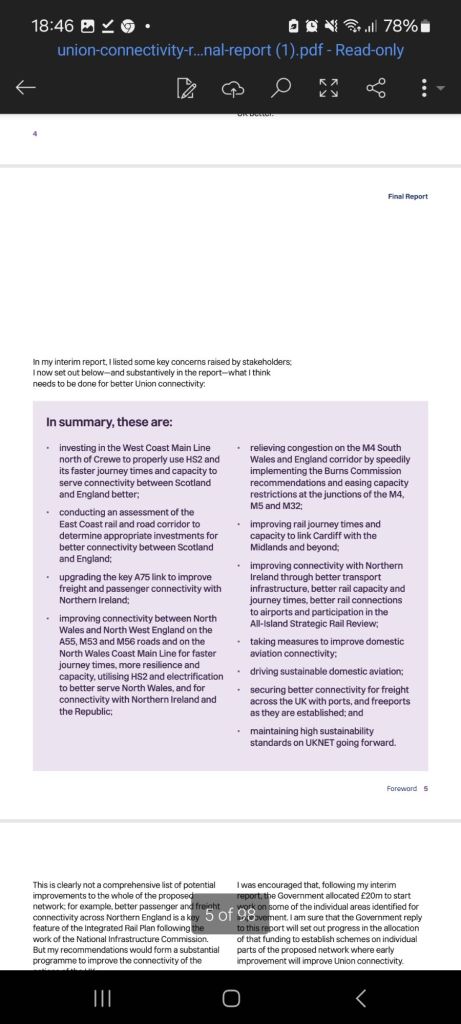
It would appear such a review has never been carried out, and given the need to meet Net Zero targets, any projects being taken forward should have to consider this as part of the wider economic and environmental considerations?
Let’s see such a review take place before commitment to the A1 being dualled.
Blyth Relief Road
Again, widening roads such as the A1061 to dual carriageway will carry a high carbon cost (more motoring using petrol/diesel cars leads to more emissions), and will put further pressure on internal roads within Blyth, as well as connecting routes such as A189. The logic behind the Northumberland Line itself is to reduce traffic and improve air quality by simple means of less driving, this road scheme contradicts that approach by encouraging more driving.
Given that the Northumberland Line is due to open within next few months, perhaps a fuller assessment of modal shift away from driving by active travel or integrated rail and bus services would be a better option than commitment to wider roads and more road transport.
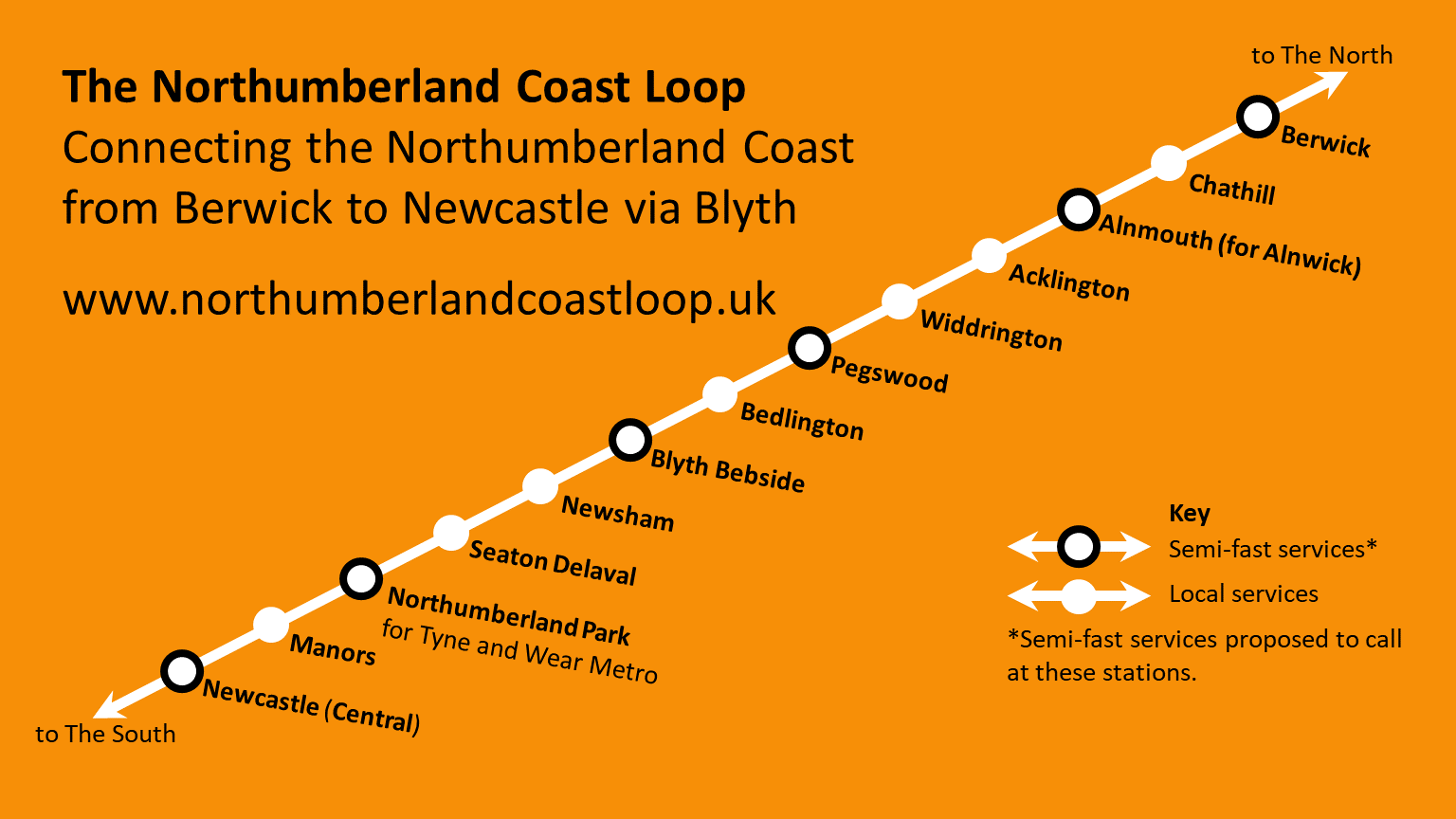
Additionally, utilising the Northumberland Coast Loop proposal to connect Blyth to Berwick/Edinburgh by using the existing Hepscott Line/Morpeth North Curve could help drive modal shift towards rail for a greater number of present car journeys to places in North Northumberland and Scotland.
Moor Farm Roundabout
Again, modal shift away from motoring is probably the cheapest and least disruptive option by reducing vehicle volumes on the A189 through modal shift; less traffic = less congestion.
New sections of [Northumberland Line] to other stations
This is a proposal that has fullest backing, and one of the obvious contenders is the Northumberland Coast Loop itself, which, by utilising the Hepscott Line could connect Bedlington, Blyth Bebside, Newsham, Seaton Delaval and Northumberland Park on the Northumberland Line, to Pegswood, Widdrington, Acklington, Alnmouth (for Alnwick), Chathill, Berwick and even Scottish stations to Edinburgh.
In summary…
…lets see an honest appraisal of rail options compared to roads with a holistic costing of each with regards Net Zero/carbon neutrality, air quality, traffic issues etc and equality for those who can’t drive for economic or health reasons.
 The Northumberland Coast Loop